NEW YORK (AP) — Millions of Americans saving for retirement through 401(k) accounts could have the option of putting their money in higher-risk private equity and cryptocurrency investments, according to an executive order signed Thursday by President Donald Trump that could give those financial players long-sought access to a pool of funds worth trillions.
There is no immediate change in how people invest part of their work earnings. Federal agencies would need to rewrite rules and regulations to allow the expanded choices, and that would take months or more to complete. But once done, employers could offer a broader array of mutual funds and investments to workers, according to the White House. New plans could invest in alternative assets, particularly private equity, cryptocurrencies and real estate.
The Republican president's order directs the Labor Department and other agencies to redefine what would be considered a qualified asset under 401(k) retirement rules.
Americans' retirement plans are governed by a law known as the Employee Retirement Income Security Act of 1974, better known as ERISA. Employers are required by law to offer retirement options that are in the best interest of their employees, not Wall Street. Most retirement plans for Americans are made up of stock and bond investments, and to a much lesser extent, cash and heavily traded commodities such as gold.
Trump's move rewards both the $5 trillion private equity industry, which for decades has wanted to compete for a role in retirement plans, and the cryptocurrency industry, whose executives strongly supported Trump’s 2024 campaign as they aimed for more mainstream acceptance among Americans.
The price of bitcoin was up 2% on Thursday to $116,542 and has nearly doubled since Trump was elected.
Under Democratic President Joe Biden, federal regulators were to treat cryptocurrency investments with “extreme care” because of the extreme volatility of crypto. It is not uncommon for bitcoin, ethereum and other big cryptocurrencies to move up or down 10% in a single day, whereas a 2% or 3% single-day move in the stock market would be considered historic.
For cryptocurrency companies, which donated millions to Trump’s campaign as well as his inauguration, one goal was to get their industry qualified under ERISA. Coinbase, one of the largest crypto companies in the United States, was also a major donor toward Trump’s military parade in Washington this summer. Under Trump, the Securities and Exchange Commission dropped its lawsuit against Coinbase, where the Biden administration said crypto should be treated as a security.
Crypto is particularly popular among young Americans. While volatile, bitcoin has generally moved upward since it was created by an anonymous programmer nearly 20 years ago.
“It was inevitable that bitcoin would make its way into American 401(k)'s,” said Cory Klippsten, the CEO of Swan Bitcoin. “As fiduciaries realize bitcoin’s risk-adjusted upside over the long term, we’ll see growing allocations, especially from younger, tech-savvy workers who want hard money, not melting ice cubes.”
Private equity firms rely heavily on high-net-worth individuals and state and private pension plans, which have extremely long investment timelines. But having access to Americans' retirement assets would open up a deep pool of cash.
Blackstone CEO Steve Schwarzman has told investors going back to at least 2017 that it was a “dream” of his and the industry to be able to draw upon these retirement assets. Previous administrations, Republican and Democrat, have agreed that private equity investments, which can be riskier, more expensive and less liquid than traditional stock and bond market mutual funds, should not be included in 401(k) plans.
The average historic annual return on private equity assets going back to 1990 is roughly 13%, net of fees, according to Cambridge Associates. The S&P 500 index has had an approximate annual return, including dividends, of roughly 10.6% in the same period of time. However, private equity assets tend to be locked up for years, because the companies underlying the assets have to be sold on the private market, making them highly illiquid compared to stocks, which can be sold in a day.
“We look forward to working with the Trump Administration on a thoughtful framework that expands access to alternatives for retirement savers, offering Americans more diversification and investment options with appropriate investor guardrails,” said Bryan Corbett, the president and CEO of the Managed Funds Association, which is the trade group for the private equity industry.
Even after the regulations are written, it will take time for major retirement plan companies, such as Fidelity, Vanguard, T. Rowe Price, and others, to develop appropriate funds for employers to use. Employers are unlikely to revise their retirement plan options quickly, so it may take several years before crypto and private equity investments become mainstream in an individual’s retirement plan.
“While Vanguard has not committed to launching a product for defined contribution plans, Vanguard is dedicated to educating retirement investors to ensure a clear understanding of the opportunities and risks of investing in private assets,” the company said in a statement.

President Donald Trump speaks with reporters before boarding Air Force One at Lehigh Valley International Airport, Sunday, Aug. 3, 2025, in Allentown, Pa. (AP Photo/Julia Demaree Nikhinson)
It was at a relatively minor event in upstate New York in September 2022 that Ilia Malinin, the self-anointed “Quad God" who was fast becoming the biggest name in figure skating, finally landed the jump that so many people had thought impossible.
Others had tried quad axels in competition over the years. All of them had fallen. That extra 180 degrees of rotation — necessary for the only jump in skating that starts with a forward-facing entry — proved to be a half-revolution too much.
So when Malinin landed it inside the arena made famous by the U.S. hockey team's upset of the Soviets at the 1980 Winter Olympics in Lake Placid, it not only sent shockwaves through the tight-knit skating community but made headlines around the world.
“My mind was just blown,” said two-time Olympic skater Jason Brown.
Yet by conquering the gravity-defying jump, Malinin also raised an important question: What comes next?
The six main jumps in figure skating have been standard since the early 1900s. The only difference between then and now is the number of revolutions. Dick Button landed the first double axel in 1948, and the first triple jump four years later. Kurt Browning landed the first quad, a toe loop, in 1988, and it was 10 years before Timothy Goebel landed the first quad salchow.
By landing the quad axel, Malinin may have maxed out the boundaries of human performance. Most sports scientists agree that the speed and amplitude necessary for five-revolution jumps truly is impossible, leaving figure skating at a crossroads, where a dearth of innovation threatens to take the shine off a sport already fighting to maintain popularity.
“I think it's kind of natural that we were going to get to this point,” said Malinin, the overwhelming favorite to win gold for the U.S. at the Milan Cortina Olympics. "But I haven't reached my top, whether it's in the technical and how much I can jump and spin, but also in the creativity.”
Malinin, 20, points to his signature “raspberry twist,” a somersaulting spin unlike anything that anybody else does. He created it himself, and it tends to bring down the house whenever he throws it down near the end of his programs.
Yet the flashy maneuver also underscores one of the inherent problems with trying to be creative: It doesn't get rewarded.
The International Skating Union has rigid requirements for both short programs and free skates, and it rarely pays off to deviate too far from the script. Malinin might not get a lot of extra points for landing his raspberry twist, for example, since it is not one of the six standard figure skating jumps, but a failure to land it could cost him dearly.
“Absolutely, there are a lot of things I've wanted to try,” Malinin told The Associated Press, “because I think it would be really cool and appealing. But it's a bigger risk for the program itself, and the system and scoring means it doesn't make sense.”
In other words, what's the point in trying to innovate?
“There are so many rules in your programs that you don't have too much wiggle room,” said Alysa Liu, the reigning world champion. “A lot of these rules really restrict us. Like, all of our spins look the same now, but they could look so different."
“One of my training mates, Sonja Himler, does these incredible programs," added Amber Glenn, a three-time U.S. champion, and along with Liu one of the favorites to win Olympic gold for the American team in February.
“Like, she spins the other way, jumps the other way — really cool things that, you know, someone who's watched a little bit of skating will be like, ‘Oh, I’ve never seen that before,'” Glenn said. “Whereas if I go and do, you know, the norm, and do it well, versus what she does, my scores will be better, even though what she does is way more impressive, in my opinion.”
Justin Dillon, the manager of high performance at U.S. Figure Skating, acknowledged having had hard conversations with some skaters about their programs. They may have planned something unique or interesting, but the risk wouldn't be worth the reward.
“I encourage individuality, and bringing it to the ice,” Dillon said, “but if they do something so avant-garde that it doesn't check those boxes, then it really doesn't serve them. It doesn't always mean throw it out, but what can we do to make it a home run?”
To its credit, figure skating's governing body has loosened some restrictions in recent years. The backflip, which was long banned in competition because of its inherent danger, is allowed now, though it also doesn't carry a whole lot of scoring weight.
Is that hold-your-breath element of risk and uncertainty the next big step in skating?
“I mean, you're cringing. It legit scares me," Glenn said of the backflip. “If you can do it, great. I think it's so fun. I want to learn it once I'm done competing. But the thought of practicing it in like, a warmup or in training, it just scares me.”
Brown has never been able to consistently land quad jumps in competition. Instead, he relies on near-perfect execution of triple jumps, along with arguably the best artistry in figure skating, to consistently challenge for podium placements in major competitions.
Maybe, Brown mused, the next innovation in figure skating has nothing to do with extreme feats of athletic ability.
“I have so much respect for the ways in which people are pushing the sport technically,” he said, "but I think the more that people fixate on executing an element, the less risk people take artistically, because they’re already taking these risks technically. And it is very hard to do both. So maybe the next step for figure skating is to reward the story we're trying to tell."
AP Winter Olympics: https://apnews.com/hub/milan-cortina-2026-winter-olympics
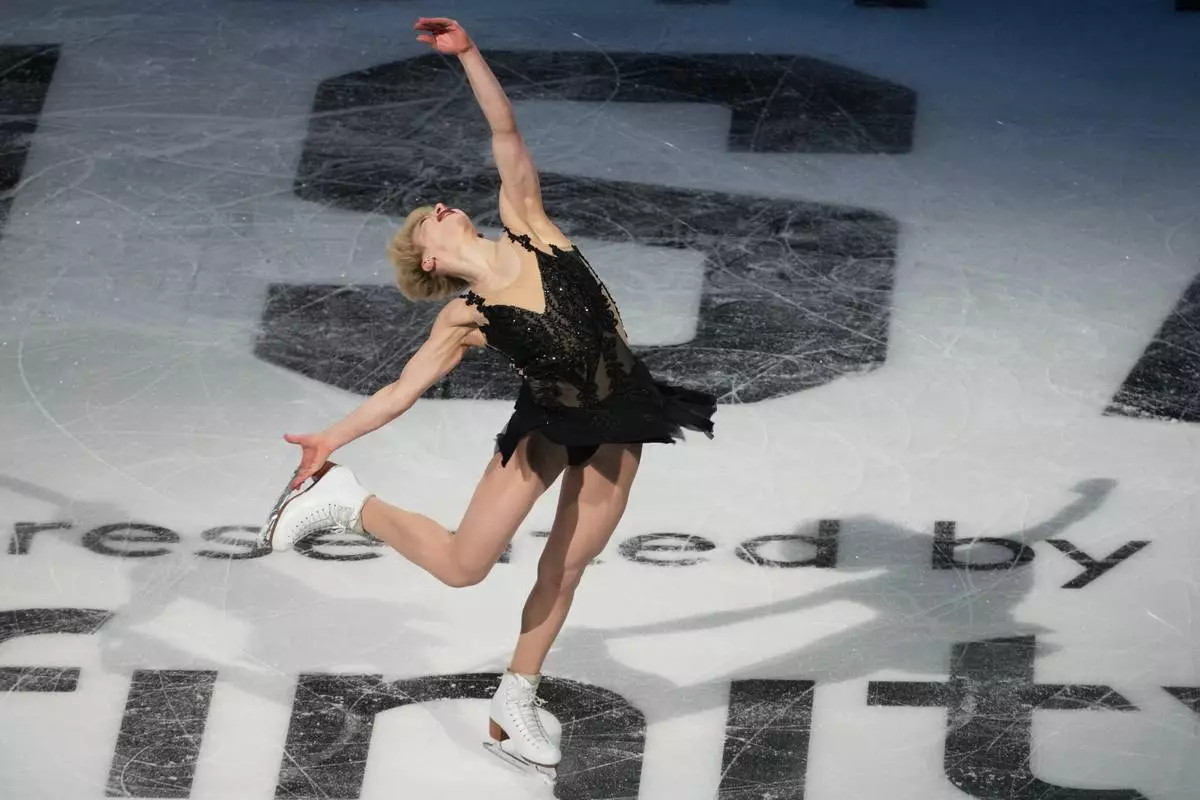
Amber Glenn skates during the "Making Team USA" performance at the U.S. Figure Skating Championships, Sunday, Jan. 11, 2026, in St. Louis. (AP Photo/Jeff Roberson)
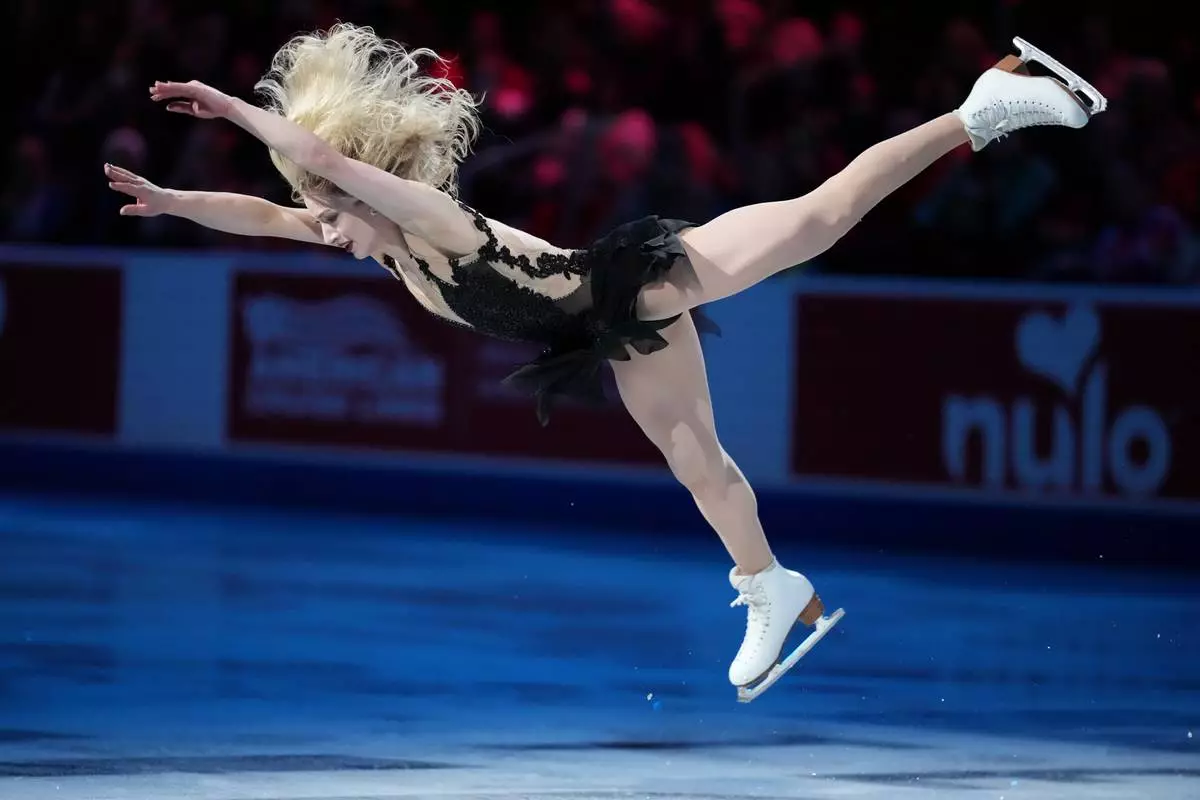
Amber Glenn skates during the "Making Team USA" performance at the U.S. Figure Skating Championships, Sunday, Jan. 11, 2026, in St. Louis. (AP Photo/Stephanie Scarbrough)
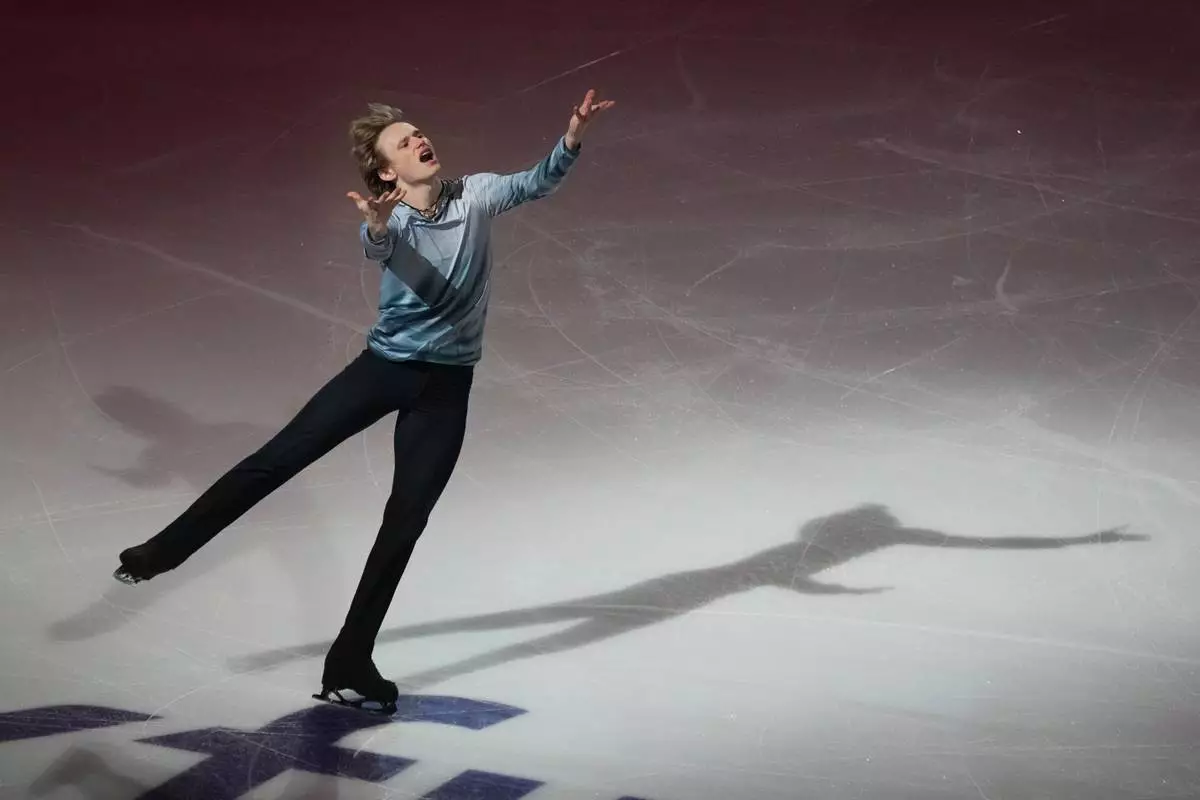
Ilia Malinin skates during the "Making Team USA" performance at the U.S. Figure Skating Championships, Sunday, Jan. 11, 2026, in St. Louis. (AP Photo/Jeff Roberson)
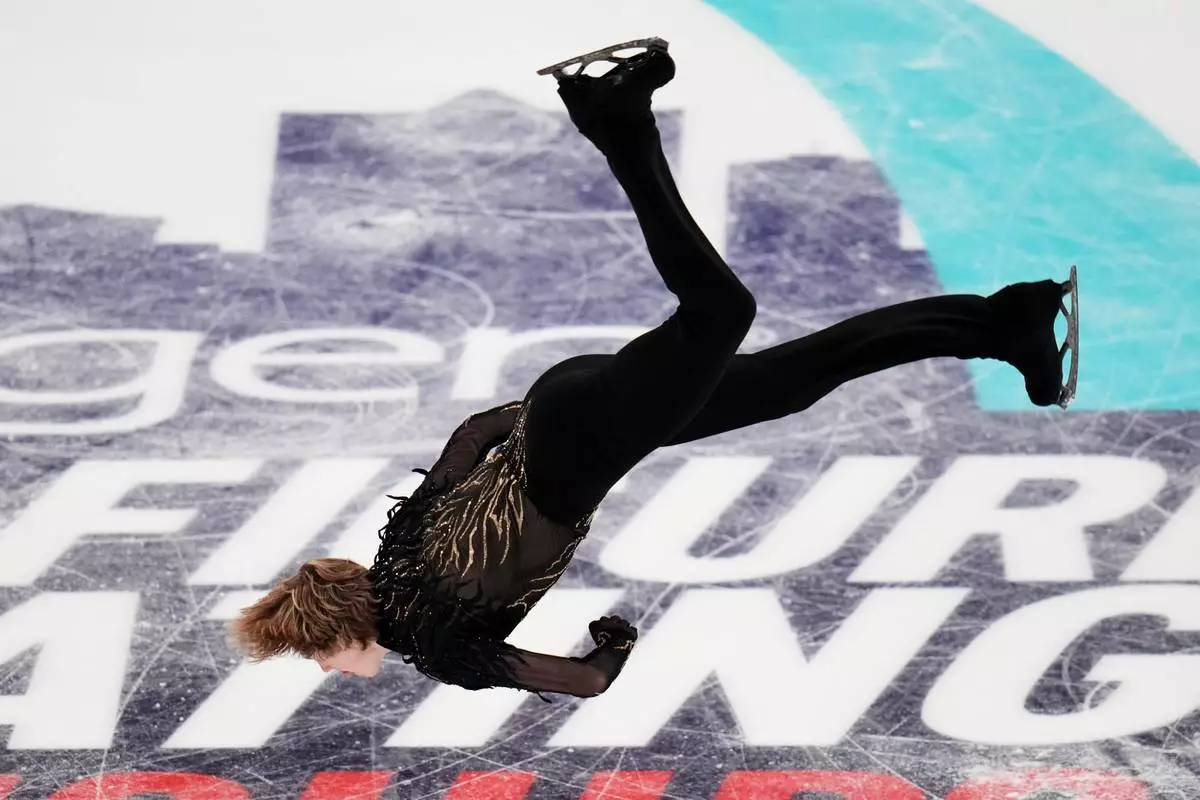
Ilia Malinin competes during the men's free skate competition at the U.S. Figure Skating Championships, Saturday, Jan. 10, 2026, in St. Louis. (AP Photo/Jeff Roberson)

Ilia Malinin competes during the men's short program at the U.S. Figure Skating Championships, Thursday, Jan. 8, 2026, in St. Louis. (AP Photo/Stephanie Scarbrough)