Skip to Content Facebook Feature Image

From Stephen King to New Jersey diners, History Press books cover local lore around the US

ENT

From Stephen King to New Jersey diners, History Press books cover local lore around the US
ENT

ENT

From Stephen King to New Jersey diners, History Press books cover local lore around the US

2025-08-08 21:49 Last Updated At:22:01

NEW YORK (AP) — With deep knowledge of Stephen King's books and curiosity about their inspirations, writer Sharon Kitchens began a journey around Maine. As she learned about the real-life settings and people behind such fiction as “IT” and “Salem's Lot,” she arranged them into an online map and story she called “Stephen King's Maine.”

“It was amateur hour, in a way,” she says. “But after around 27,000 people visited the site one of my friends said to me, ‘You should do something more with this.’”

More Images
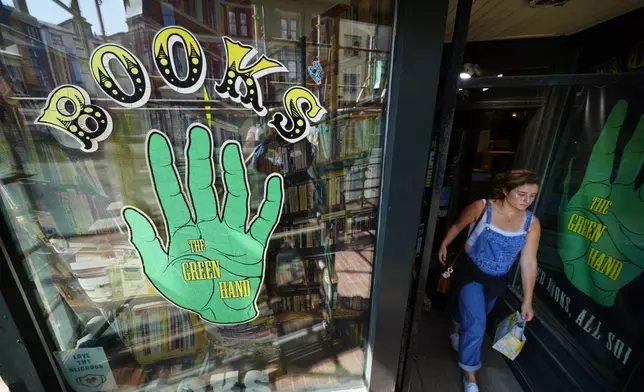
A customer leaves the Green Hand Bookstore in Portland, Maine, on Thursday, Aug. 7, 2025. (AP Photo/Robert F. Bukaty)
A customer leaves the Green Hand Bookstore in Portland, Maine, on Thursday, Aug. 7, 2025. (AP Photo/Robert F. Bukaty)

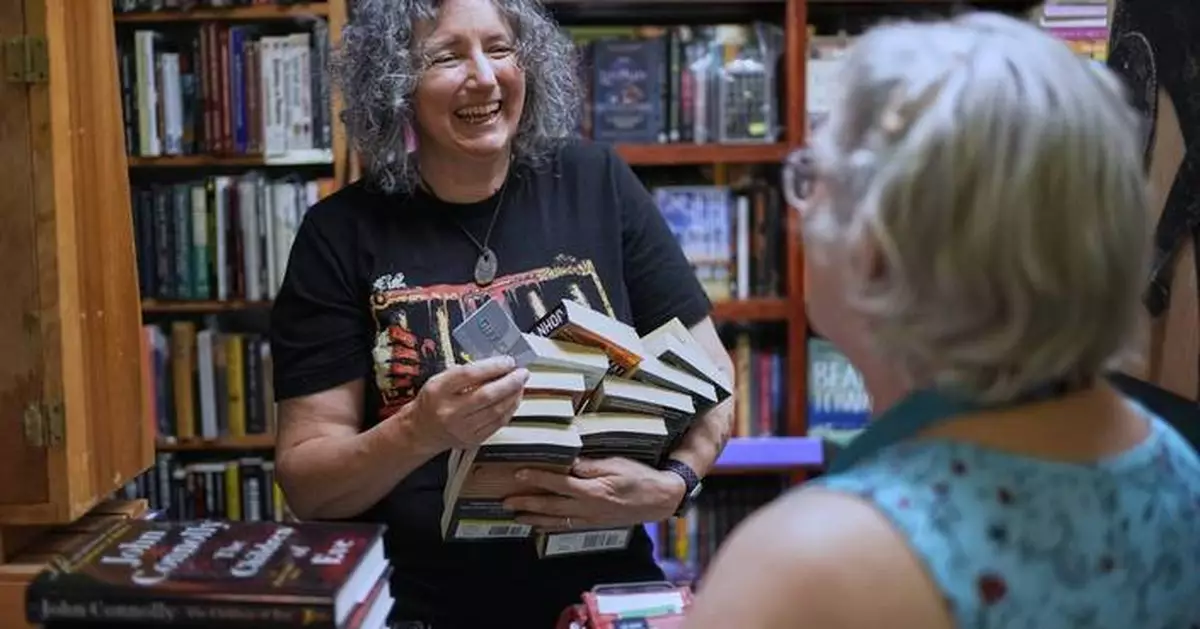
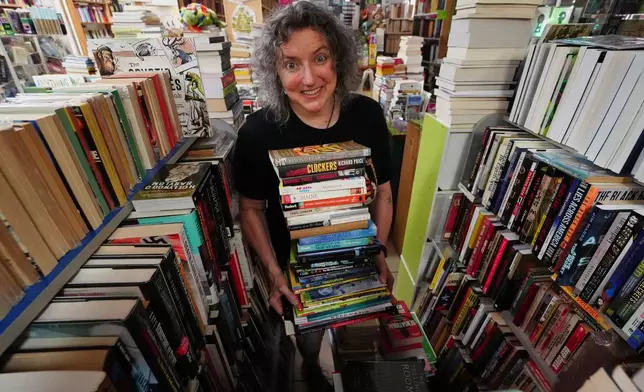
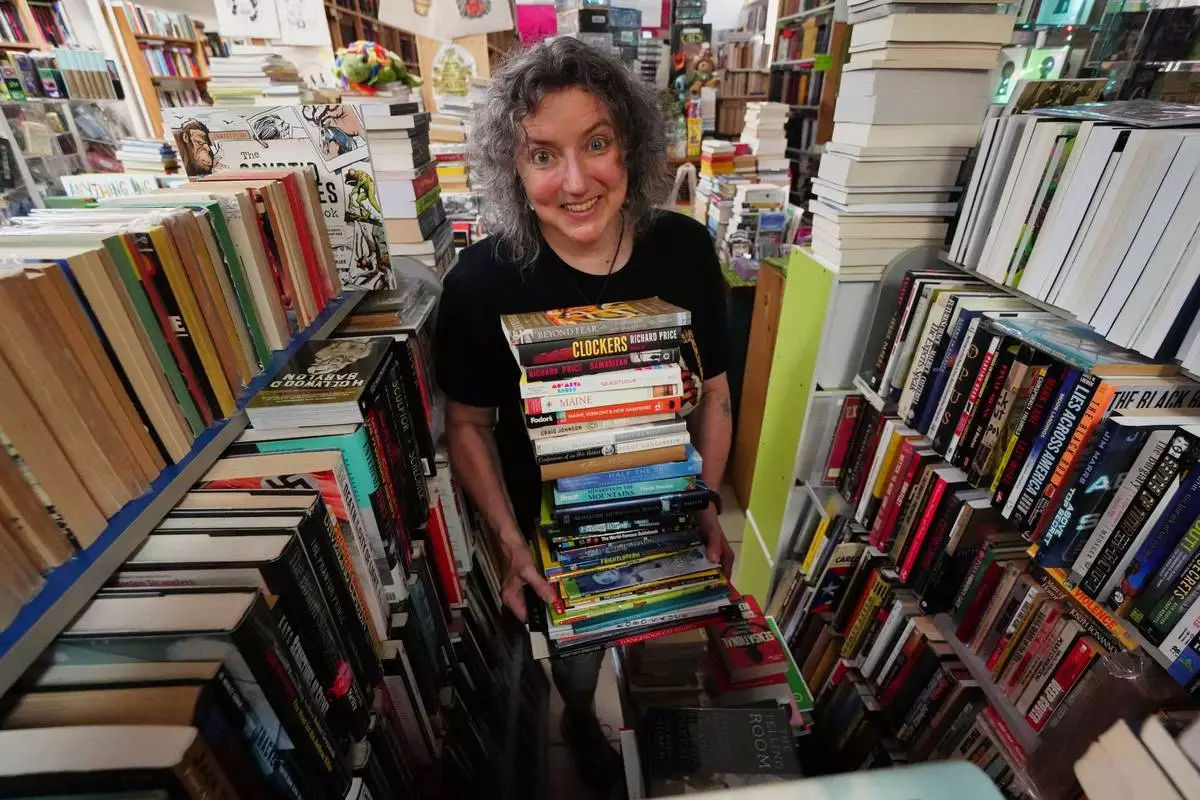
Michelle Souliere, owner of the Green Hand Bookstore, carries a stack of books to the shelves, in Portland, Maine, on Thursday, Aug. 7, 2025. (AP Photo/Robert F. Bukaty)
Michelle Souliere, owner of the Green Hand Bookstore, carries a stack of books to the shelves, in Portland, Maine, on Thursday, Aug. 7, 2025. (AP Photo/Robert F. Bukaty)

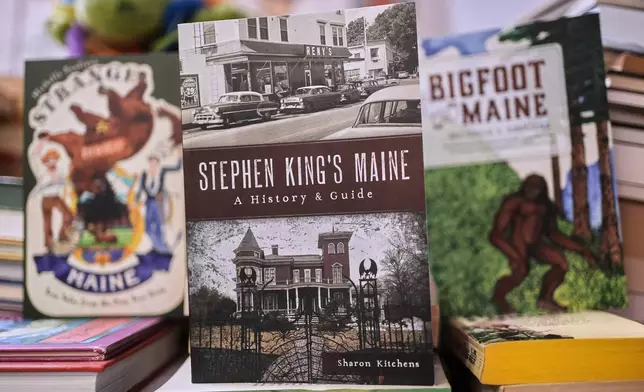
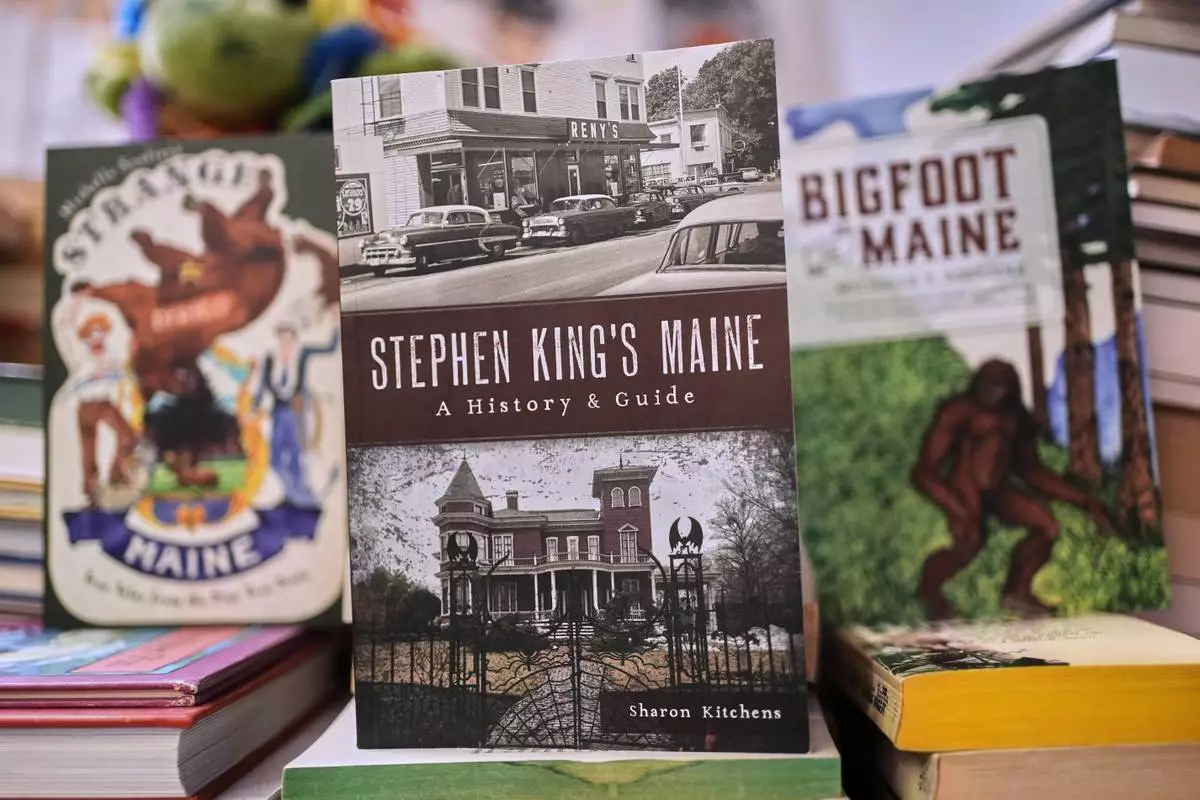
Stephen King's Maine, by Sharon Kitchens, center, and two books by Michelle Souliere are among The History Press books for sale at the Green Hand Bookstore in Portland, Maine, on Thursday, Aug. 7, 2025. (AP Photo/Robert F. Bukaty)
Stephen King's Maine, by Sharon Kitchens, center, and two books by Michelle Souliere are among The History Press books for sale at the Green Hand Bookstore in Portland, Maine, on Thursday, Aug. 7, 2025. (AP Photo/Robert F. Bukaty)
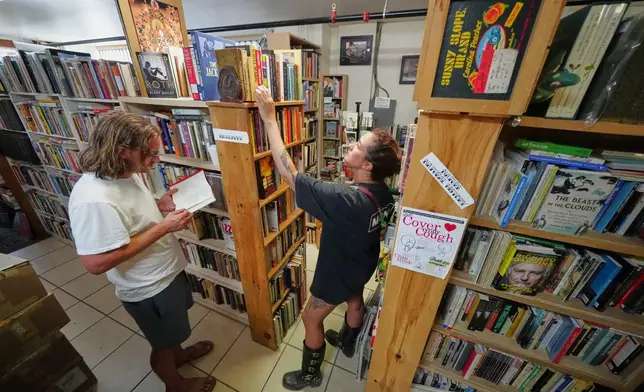
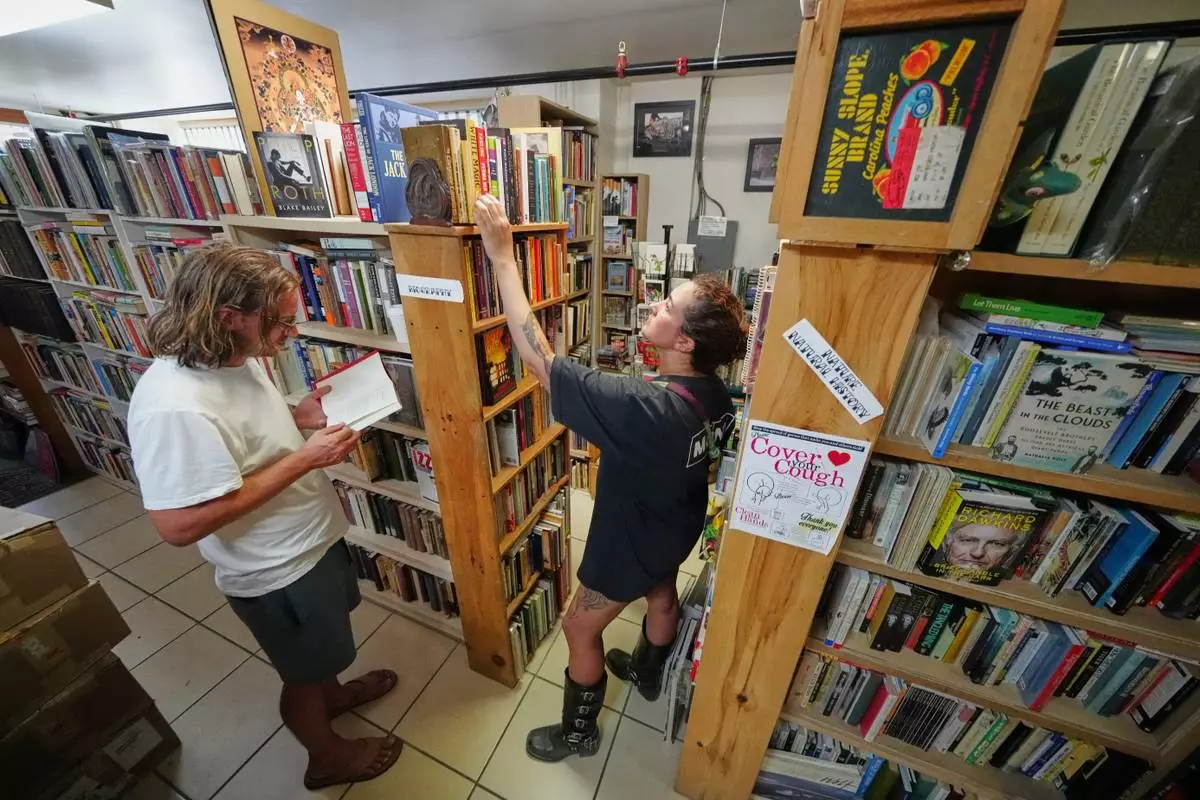
Andrew Higgins and Savannah Shealy peruse the biography section of the Green Hand Bookstore in Portland, Maine, on Thursday, Aug. 7, 2025. (AP Photo/Robert F. Bukaty)

Andrew Higgins and Savannah Shealy peruse the biography section of the Green Hand Bookstore in Portland, Maine, on Thursday, Aug. 7, 2025. (AP Photo/Robert F. Bukaty)

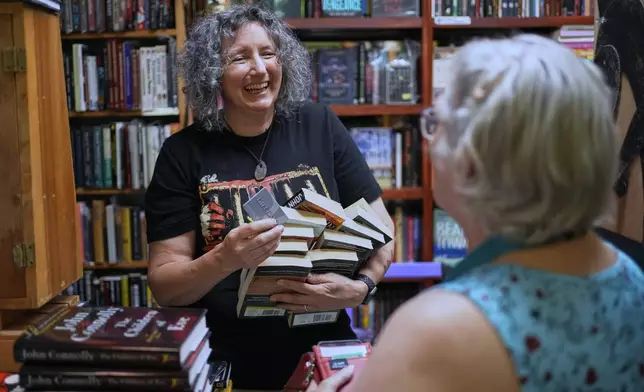
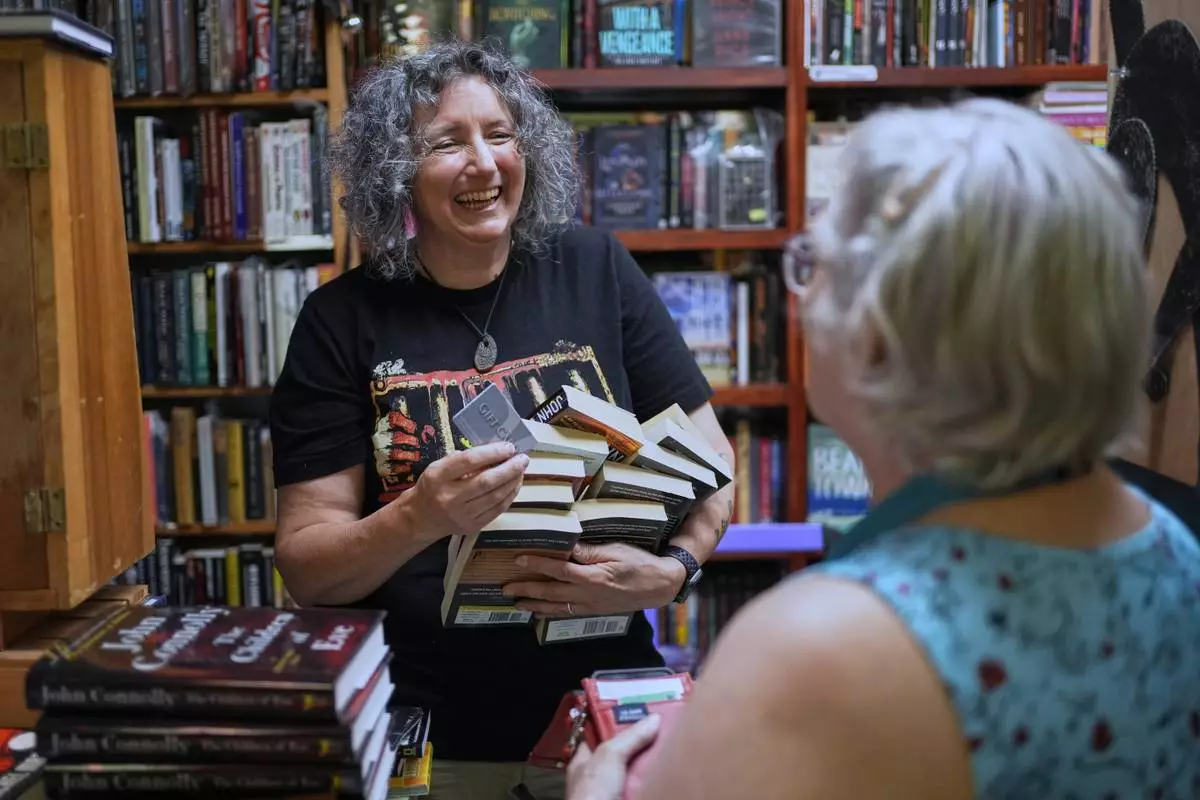
Owner Michelle Souliere, left, chats with a frequent customer at the Green Hand Bookstore in Portland, Maine, on Thursday, Aug. 7, 2025. (AP Photo/Robert F. Bukaty)

Owner Michelle Souliere, left, chats with a frequent customer at the Green Hand Bookstore in Portland, Maine, on Thursday, Aug. 7, 2025. (AP Photo/Robert F. Bukaty)

Published in 2024, the resulting book-length edition of “Stephen King's Maine” is among hundreds released each year by The History Press. Now part of Arcadia Publishing, the 20-year-old imprint is dedicated to regional, statewide and locally focused works, found for sale in bookstores, museums, hotels and other tourist destinations. The mission of The History Press is to explore and unearth “the story of America, one town or community at a time.”

The King book stands out if only for its focus on an international celebrity. Most History Press releases arise out of more obscure passions and expertise, whether Michael C. Gabriele's “The History of Diners in New Jersey,” Thomas Dresser's “African Americans of Martha's Vineyard” or Clem C. Pellett's “Murder on Montana's Hi-Line,” the author's probe into the fatal shooting of his grandfather.

Like Kitchens, History Press authors tend to be regional or local specialists — history lovers, academics, retirees and hobbyists. Kitchens' background includes writing movie press releases, blogging for the Portland Press Herald and contributing to the Huffington Post. Pellett is a onetime surgeon who was so compelled by his grandfather's murder that he switched careers and became a private investigator. In Boulder, Colorado, Nancy K. Williams is a self-described “Western history writer” whose books include “Buffalo Soldiers on the Colorado Frontier” and “Haunted Hotels of Southern Colorado.”

The History Press publishes highly specific works such as Jerry Harrington's tribute to a Pulitzer Prize-winning editor from the 1930s, “Crusading Iowa Journalist Verne Marshall.” It also issues various series, notably “Haunted” guides that publishing director Kate Jenkins calls a “highly localized version” of the ghost story genre. History Press has long recruited potential authors through a team of field representatives, but now writers such as Kitchens are as likely to be brought to the publisher's attention through a national network of writers who have worked with it before.

“Our ideal author isn’t someone with national reach,” Jenkins says, “but someone who’s a member of their community, whether that’s an ethnic community or a local community, and is passionate about preserving that community’s history. We’re the partners who help make that history accessible to a wide audience.”

The History Press is a prolific, low-cost operation. The books tend to be brief — under 200 pages — and illustrated with photos drawn from local archives or taken by the authors themselves. The print runs are small, and authors are usually paid through royalties from sales rather than advances up front. History Press books rarely are major hits, but they can still attract substantial attention for works tailored to specific areas, and they tend to keep selling over time. Editions selling 15,000 copies or more include “Long-Ago Stories of the Eastern Cherokee,” by Lloyd Arneach, Alphonso Brown's “A Gullah Guide to Charleston” and Gayle Soucek's “Marshall Field's,” a tribute to the Chicago department store.

The King guide, which has sold around 8,500 copies so far, received an unexpected lift — an endorsement by its subject, who was shown the book at Maine's Bridgton Books and posted an Instagram of himself giving it a thumbs-up.

“I was genuinely shocked in the best possible way,” Kitchens says, adding that she saw the book as a kind of thank-you note to King. “Every choice I made while writing the book, I made with him in mind.”

History Press authors say they like the chance to tell stories that they believe haven’t been heard, or were told incorrectly.

Rory O'Neill Schmitt is an Arizona-based researcher, lecturer and writer who feels her native New Orleans is often “portrayed in way that feels false or highlights a touristy element,” like a “caricature.” She has responded with such books as “The Haunted Guide to New Orleans” and “Kate Chopin in New Orleans.”

Brianne Turczynski is a freelance writer and self-described “perpetual seeker of the human condition” who lives outside of Detroit and has an acknowledged obsession with “Poletown,” a Polish ethnic community uprooted and dismantled in the 1980s after General Motors decided to build a new plant there and successfully asserted eminent domain. In 2021, The History Press released Turczynski's “Detroit’s Lost Poletown: The Little Neighborhood That Touched a Nation.”

“All of the journalist work that followed the story seemed to lack a sense of closure for the people who suffered,” she said. “So my book is a love letter to that community, an attempt for closure.”

Kitchens has followed her King book with the story of an unsolved homicide, “The Murder of Dorothy Milliken, Cold Case in Maine.” One of her early boosters, Michelle Souliere, is the owner of the Green Hand Bookstore in Portland and herself a History Press writer. A lifelong aficionado of Maine history, her publishing career, like Kitchens', began with an online posting. She had been maintaining a blog of local lore, “Strange Maine,” when The History Press contacted her and suggested she expand her writing into a book.

“Strange Maine: True Tales from the Pine Tree State” was published in 2010.

“My blog had been going for about 4 years, and had grown from brief speculative and expressive posts to longer original research articles,” she wrote in an email. “I often wonder how I did it at all -- I wrote the book just as I was opening up the Green Hand Bookshop. Madness!!! Or a lot of coffee. Or both!!!”

A customer leaves the Green Hand Bookstore in Portland, Maine, on Thursday, Aug. 7, 2025. (AP Photo/Robert F. Bukaty)
A customer leaves the Green Hand Bookstore in Portland, Maine, on Thursday, Aug. 7, 2025. (AP Photo/Robert F. Bukaty)

Michelle Souliere, owner of the Green Hand Bookstore, carries a stack of books to the shelves, in Portland, Maine, on Thursday, Aug. 7, 2025. (AP Photo/Robert F. Bukaty)
Michelle Souliere, owner of the Green Hand Bookstore, carries a stack of books to the shelves, in Portland, Maine, on Thursday, Aug. 7, 2025. (AP Photo/Robert F. Bukaty)

Stephen King's Maine, by Sharon Kitchens, center, and two books by Michelle Souliere are among The History Press books for sale at the Green Hand Bookstore in Portland, Maine, on Thursday, Aug. 7, 2025. (AP Photo/Robert F. Bukaty)
Stephen King's Maine, by Sharon Kitchens, center, and two books by Michelle Souliere are among The History Press books for sale at the Green Hand Bookstore in Portland, Maine, on Thursday, Aug. 7, 2025. (AP Photo/Robert F. Bukaty)
Andrew Higgins and Savannah Shealy peruse the biography section of the Green Hand Bookstore in Portland, Maine, on Thursday, Aug. 7, 2025. (AP Photo/Robert F. Bukaty)


Andrew Higgins and Savannah Shealy peruse the biography section of the Green Hand Bookstore in Portland, Maine, on Thursday, Aug. 7, 2025. (AP Photo/Robert F. Bukaty)
Owner Michelle Souliere, left, chats with a frequent customer at the Green Hand Bookstore in Portland, Maine, on Thursday, Aug. 7, 2025. (AP Photo/Robert F. Bukaty)
Owner Michelle Souliere, left, chats with a frequent customer at the Green Hand Bookstore in Portland, Maine, on Thursday, Aug. 7, 2025. (AP Photo/Robert F. Bukaty)
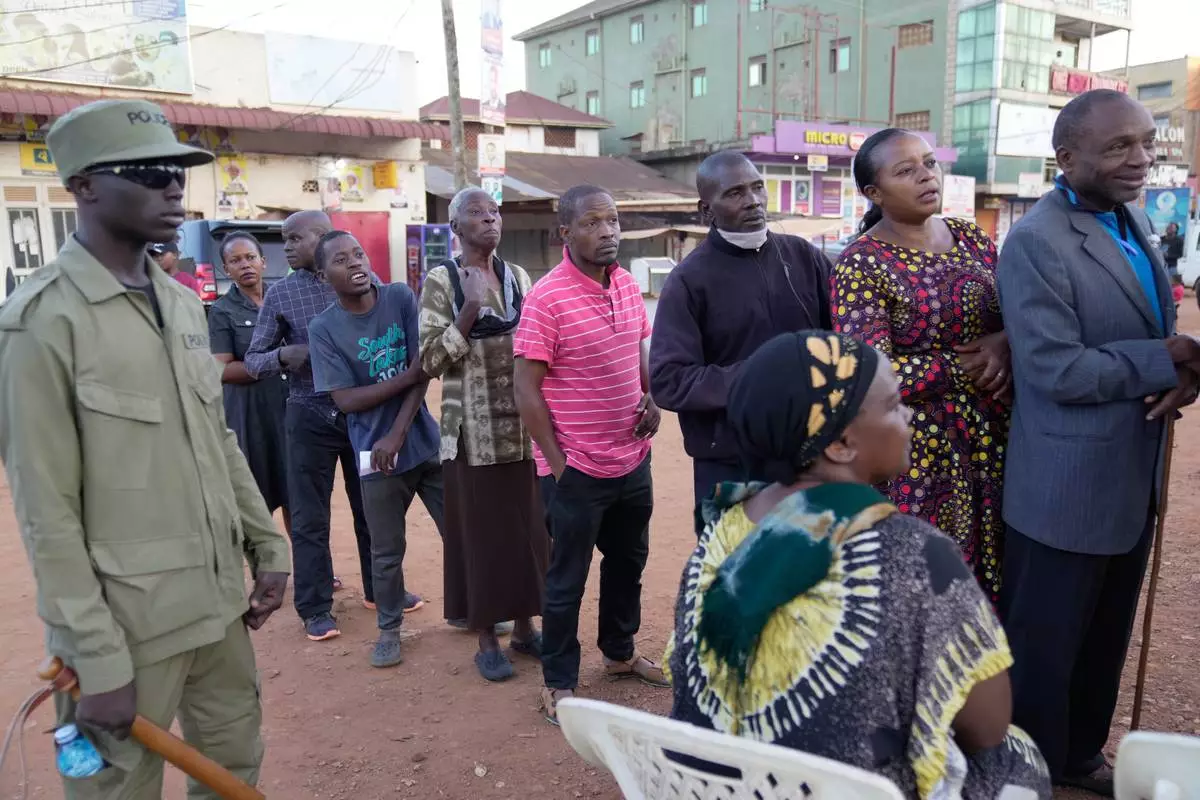
KAMPALA, Uganda (AP) — Voting began Thursday in Uganda’s presidential election despite a days-long internet shutdown that has been criticized as an anti-democratic tactic in a country where the president has held office since 1986.

Crowds gathered and long lines formed in some areas as polling station openings were delayed and voting materials were seen being delivered after the scheduled 7 a.m. opening time.

President Yoweri Museveni, 81, faces seven other candidates, including Robert Kyagulanyi, a musician-turned-politician best known as Bobi Wine, who is calling for political change.

The East African country of roughly 45 million people has 21.6 million registered voters. Polls are expected to close at 4 p.m. Thursday, according to the electoral commission. Results are constitutionally required to be announced in 48 hours.

Impatient crowds gathered outside polling stations expressing concerns over the delays Thursday morning. Umaru Mutyaba, a polling agent for a parliamentary candidate, said it was “frustrating” to be waiting outside a station in the capital Kampala.

“We can’t be standing here waiting to vote as if we have nothing else to do," he said.

Ssemujju Nganda, a prominent opposition figure and lawmaker seeking reelection in Kira municipality, told The Associated Press he had been waiting in line to vote for three hours.

In addition to delayed voting materials, biometric voter identification machines were not working properly, Nganda said, adding that delays likely will lead to apathy and low turnout in urban areas where the opposition has substantial support.

“It’s going to be chaos,” he said.

Uganda has not witnessed a peaceful transfer of presidential power since independence from British colonial rule six decades ago.

Museveni has served the third-longest term of any African leader and is seeking to extend his rule into a fifth decade. Some critics say removing him through elections remains difficult, but the aging president’s authority has become increasingly dependent on the military led by his son, Muhoozi Kainerugaba.

Museveni and Wine are reprising their rivalry from the previous election in 2021, when Wine appealed to mostly young people in urban areas. With voter turnout of 59%, Wine secured 35% of the ballots against Museveni’s 58%, the president’s smallest vote share since his first electoral campaign three decades ago.

The lead-up to Thursday's election produced concerns about transparency, the possibility of hereditary rule, military interference and opposition strategies to prevent vote tampering at polling stations.

Uganda's internet was shut down Tuesday by the government communications agency, which cited misinformation, electoral fraud and incitement of violence. The shutdown has affected the public and disrupted critical sectors such as banking.

There has been heavy security leading up to voting, including military units deployed on the streets this week.

Amnesty International said security forces are engaging in a “brutal campaign of repression,” citing a Nov. 28 opposition rally in eastern Uganda where the military blocked exits and opened fire on supporters, killing one person.

Museveni urged voters to come out in large numbers during his final rally Tuesday.

“You go and vote, anybody who tries to interfere with your freedom will be crushed. I am telling you this. We are ready to put an end to this indiscipline,” he said.

The national electoral commission chairperson, Simon Byabakama, urged tolerance among Ugandans as they vote.

“Let us keep the peace that we have,” Byabakama said late Wednesday. “Let us be civil. Let us be courteous. Let’s be tolerant. Even if you know that this person does not support (your) candidate, please give him or her room or opportunity to go and exercise his or her constitutional right."

Authorities also suspended the activities of several civic groups during the campaign season. That Group, a prominent media watchdog, closed its office Wednesday after the interior ministry alleged in a letter that the group was involved in activities “prejudicial to the security and laws of Uganda.”

Veteran opposition figure Kizza Besigye, a four-time presidential candidate, remains in prison after he was charged with treason in February 2025.

Uganda opposition presidential candidate Robert Kyagulanyi Ssentamu, known as Bobi Wine, right, greets election observers, including former Nigerian President Goodluck Jonathan, at his home in Magere village on the outskirts of Kampala, Uganda, Wednesday, Jan. 14, 2026. (AP Photo/Hajarah Nalwadda)

Uganda opposition presidential candidate Robert Kyagulanyi Ssentamu, known as Bobi Wine, right, greets election observers, including former Nigerian President Goodluck Jonathan, at his home in Magere village on the outskirts of Kampala, Uganda, Wednesday, Jan. 14, 2026. (AP Photo/Hajarah Nalwadda)

Billboards of Uganda President and National Resistance Movement (NRM) presidential candidate Yoweri Museveni are seen in Kampala, Uganda, Tuesday, Jan. 13, 2026. (AP Photo/Samson Otieno)

Billboards of Uganda President and National Resistance Movement (NRM) presidential candidate Yoweri Museveni are seen in Kampala, Uganda, Tuesday, Jan. 13, 2026. (AP Photo/Samson Otieno)

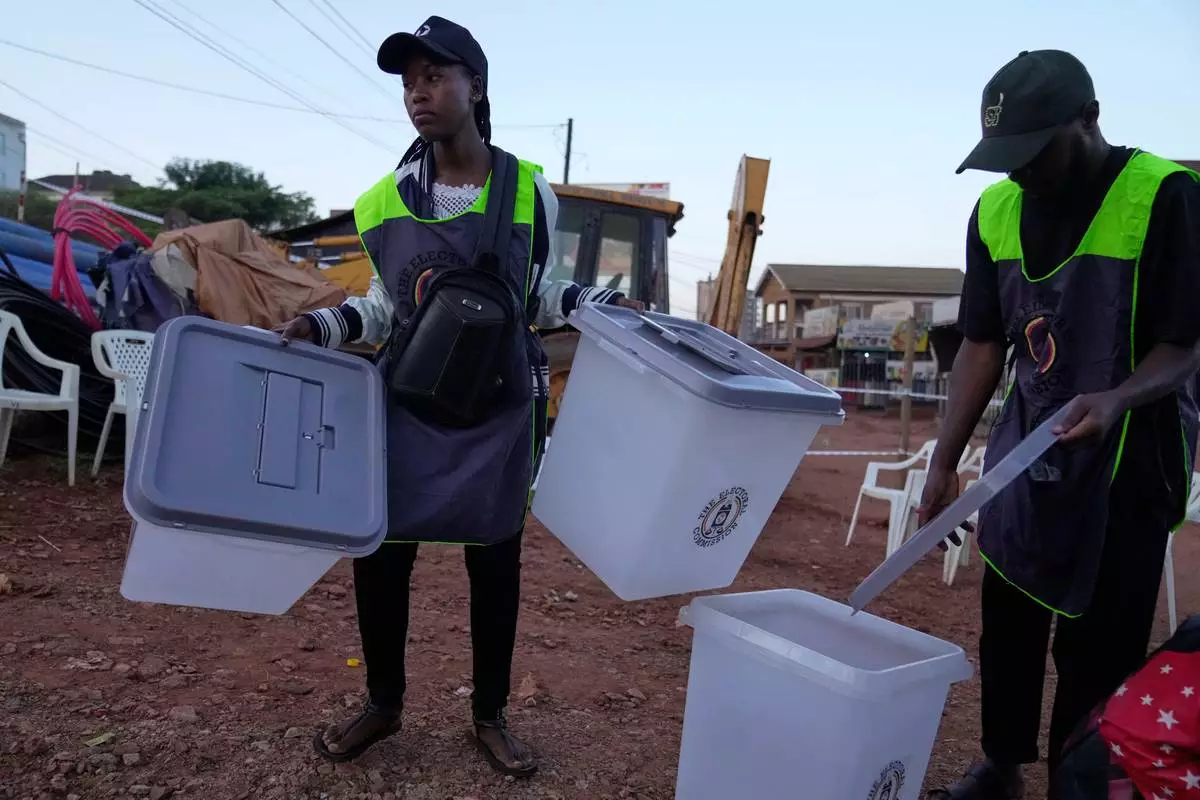
Electoral workers deliver ballot boxes to a polling station during presidential election in Kampala, Uganda, Thursday, Jan. 15, 2026. (AP Photo/Brian Inganga)

Electoral workers deliver ballot boxes to a polling station during presidential election in Kampala, Uganda, Thursday, Jan. 15, 2026. (AP Photo/Brian Inganga)

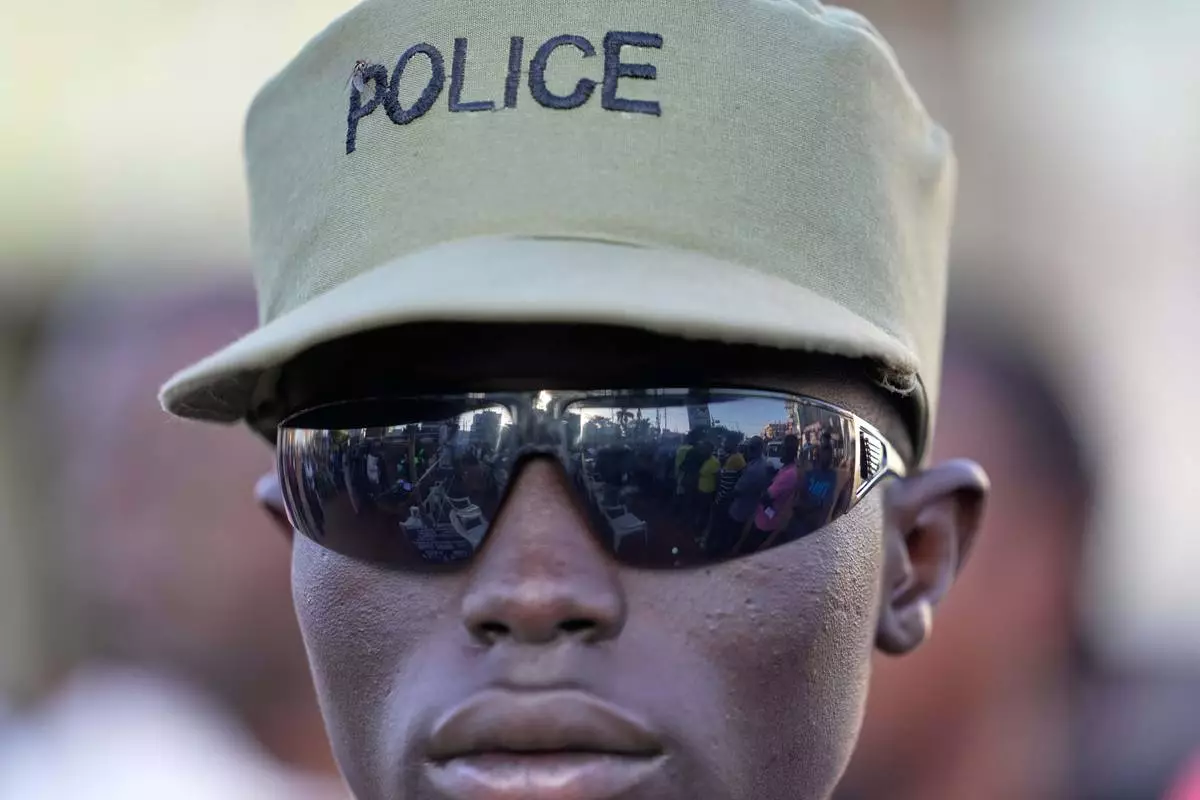
Voters are reflected in a police officer's sunglasses as they wait in line after voting failed to start on time due to system failures during presidential election in Kampala, Uganda, Thursday, Jan. 15, 2026. (AP Photo/Brian Inganga)

Voters are reflected in a police officer's sunglasses as they wait in line after voting failed to start on time due to system failures during presidential election in Kampala, Uganda, Thursday, Jan. 15, 2026. (AP Photo/Brian Inganga)

Voters wait to cast their ballots during the presidential election in Kampala, Uganda, Thursday, Jan. 15, 2026. (AP Photo/Brian Inganga)

Voters wait to cast their ballots during the presidential election in Kampala, Uganda, Thursday, Jan. 15, 2026. (AP Photo/Brian Inganga)

Recommended Articles