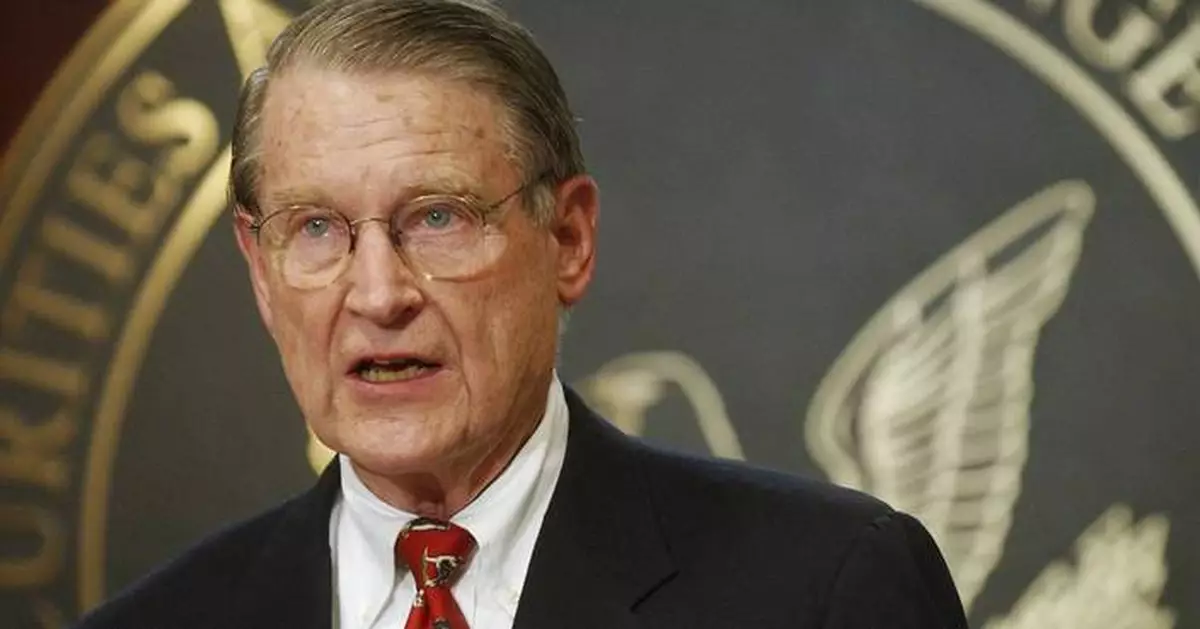
WASHINGTON (AP) — William H. Webster, the former FBI and CIA director whose troubleshooting skills and integrity helped restore public confidence in those federal agencies, has died, his family announced Friday. He was 101.
Webster led the FBI from 1978 to 1987 and the CIA from 1987 to 1991, the only person to guide the nation’s top law-enforcement agency and its primary intelligence-gathering organization.
Click to Gallery
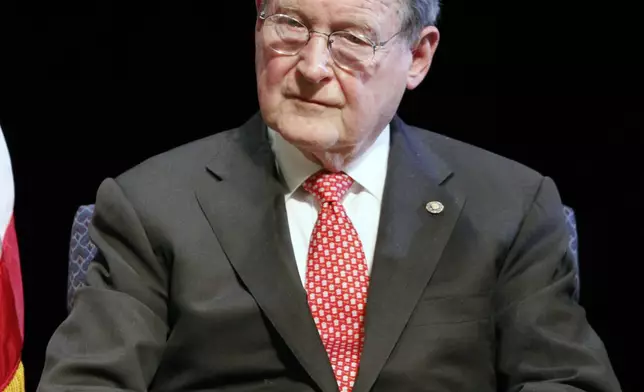
FILE - Former FBI Director William H. Webster looks on during the commemoration of the bloodiest events in the Bureau's history on the 25th anniversary of a Miami shootout in which two agents were killed, in North Miami Beach, Fla., April 11, 2011. (AP Photo/Alan Diaz, File)
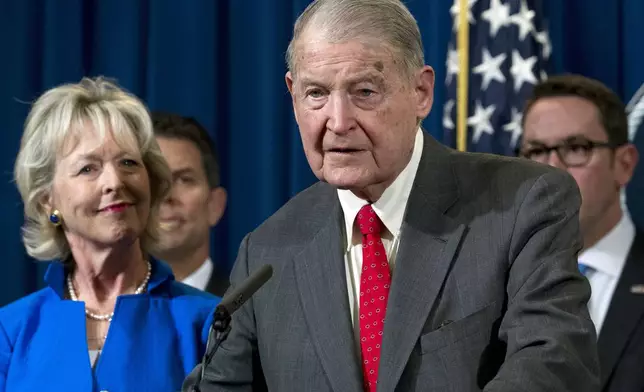
FILE - Former FBI director and CIA director William Webster, right, accompanied by his wife Lynda Webster, who were targeted by a man who peddled a lottery scam over phone calls and emails, speaks during a news conference to address elder financial exploitation and law enforcement actions, at the Department of Justice in Washington, March 7, 2019. (AP Photo/Jose Luis Magana, File)
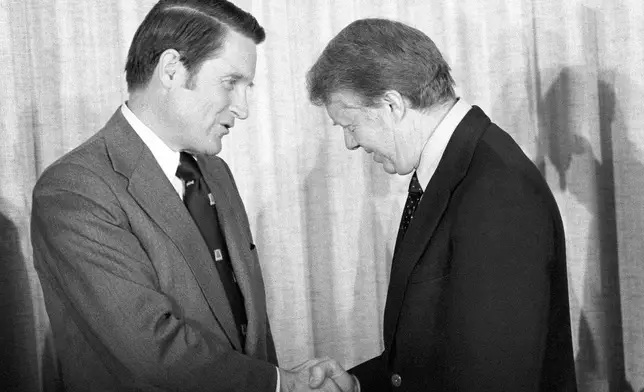
FILE - William H. Webster, left, is congratulated by President Jimmy Carter after being sworn in as new director of the FBI in Washington, Feb. 23, 1978. (AP Photo/Harvey Georges, File)
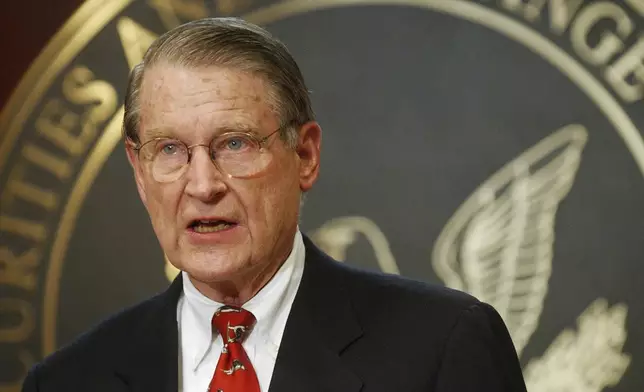
FILE - Former FBI and CIA head William H. Webster speaks to reporters in Washington, Oct. 25, 2002. (AP Photo/Lawrence Jackson, File)
By the time he came to Washington, at age 53, Webster had practiced law for nearly 20 years, had served a stint as a federal prosecutor and had spent almost nine years on the federal bench in his native St. Louis. Those who opposed him in court or disagreed with his rulings acknowledged that his honesty was beyond question.
“Every director of the CIA or the FBI should be prepared to resign in the event that he is asked to do something that he knows is wrong,” Webster said after he agreed to lead the spy agency.
Former President George W. Bush said in a statement Friday night that Webster's “passion for the rule of law and for the greatness of America made him a model public servant.”
President Jimmy Carter selected Webster, a Republican, for a 10-year term as FBI chief as the bureau sought to improve an image tarnished by revelations of domestic spying, internal corruption and other abuses of power. Demanding but fair of his agents, he was generally credited with developing its ability to handle new challenges such as terrorism.
President Ronald Reagan chose Webster to replace CIA chief William J. Casey, who had been criticized for being too political, ignoring Congress and playing a part in the arms-for-hostages scandal known as Iran-Contra.
Webster, again in the role of outsider with no political agenda, quickly sought to ease tensions with Congress. He reported regularly on the CIA’s activities to lawmakers charged with intelligence oversight and avoided the appearance of trying to shape policy. Retiring from federal service in 1991, he joined a Washington law firm but still served on a variety of policy-related boards and commissions.
In 2002, the Securities and Exchange Commission selected Webster, on a partisan vote, to lead a board created by Congress to oversee the accounting profession in the wake of scandals involving Enron and other corporations.
Before the board’s first meeting, however, Webster resigned amid questions about his role as head of the audit committee of U.S. Technologies, a company itself accused of fraud. The controversy over his role in Webster’s appointment contributed to the resignation of SEC Chair Harvey Pitt.
William Hedgcock Webster was born on March 6, 1924, in St. Louis. He was raised in the suburb of Webster Groves, Missouri, his father the owner of ranch and farm land and the operator of small businesses. He served as a Navy lieutenant during World War II and returned to active duty for two years during the Korean War. He graduated from Amherst College with a bachelor’s degree in 1947 and earned a law degree from Washington University Law School in St. Louis in 1949.
Webster practiced law with a St. Louis firm until 1960, when President Dwight D. Eisenhower appointed him U.S. attorney for the Eastern District of Missouri. He resigned the following year after President John F. Kennedy’s election and then spent most of the 1960s in private practice. Appointed by President Richard Nixon to the U.S. District Court for the Eastern District of Missouri in 1971, Webster established a reputation as a moderate jurist. Nixon elevated Webster to the 8th U.S. Circuit Court of Appeals in 1973.
“I think of myself as operating from a position of restraint but being ready to take any judicial actions necessary to achieve the ends of justice,” Webster said as he closed his judicial career to join the FBI. Critics, however, faulted him for a tendency to favor the prosecution in criminal cases.
Liberals and conservatives commended Webster for an even-handed record on civil rights, even though he was a member of St. Louis social organizations that excluded minorities. He contended that he would not belong to any club that actively practiced racism. As FBI director, he brought more Black people and women into the bureau. Replacing Clarence M. Kelley, Webster focused the FBI’s efforts on organized crime, white-collar offenders and drug enforcement.
Highlighting attention to political corruption was the Abscam sting, in which officials offered bribes to bureau employees posing as Middle Eastern businessmen. Eleven people, including six members of Congress, were convicted.
Webster also stepped up the FBI’s anti-terrorism and counterintelligence activities, which helped prepare him for the CIA post. Some who questioned his appointment as director of central intelligence contended that his lack of operational experience and foreign affairs experience was a detriment.
Webster was credited with building morale within the CIA and beginning its shift from a Cold War stance. The agency was accused, some claimed unfairly, of not anticipating how quickly the Soviet Union and its Eastern bloc would crumble and not doing more in advance of Saddam Hussein’s invasion of Kuwait in 1991. It was commended for the intelligence it provided during the Gulf War.
Over a nine-year period that included Webster’s term, CIA officer Aldrich Ames sold secrets to the Soviet Union and compromised dozens of operations before he was arrested and sentenced to life in prison without parole in 1994. Webster and other CIA chiefs were criticized for failing to detect Ames’ activities.
In retirement, Webster served on a presidential panel on homeland security after the Sept. 11, 2001, terrorist attacks and was a member of a commission investigating security lapses at the FBI.
Webster, a Christian Scientist who did not smoke, seldom drank and enjoyed playing tennis and reading history, married Drusilla Lane Webster in 1950; they raised two daughters and one son. Following her death from cancer in 1984, he married Lynda Jo Clugston in 1990.
Webster is survived by his second wife, three children from his first marriage and their spouses, seven grandchildren and spouses and 12 great-grandchildren. A memorial service will be held in Washington on Sept. 18.
__
Daniel, the primary writer of this obituary, retired from The Associated Press in 2023.
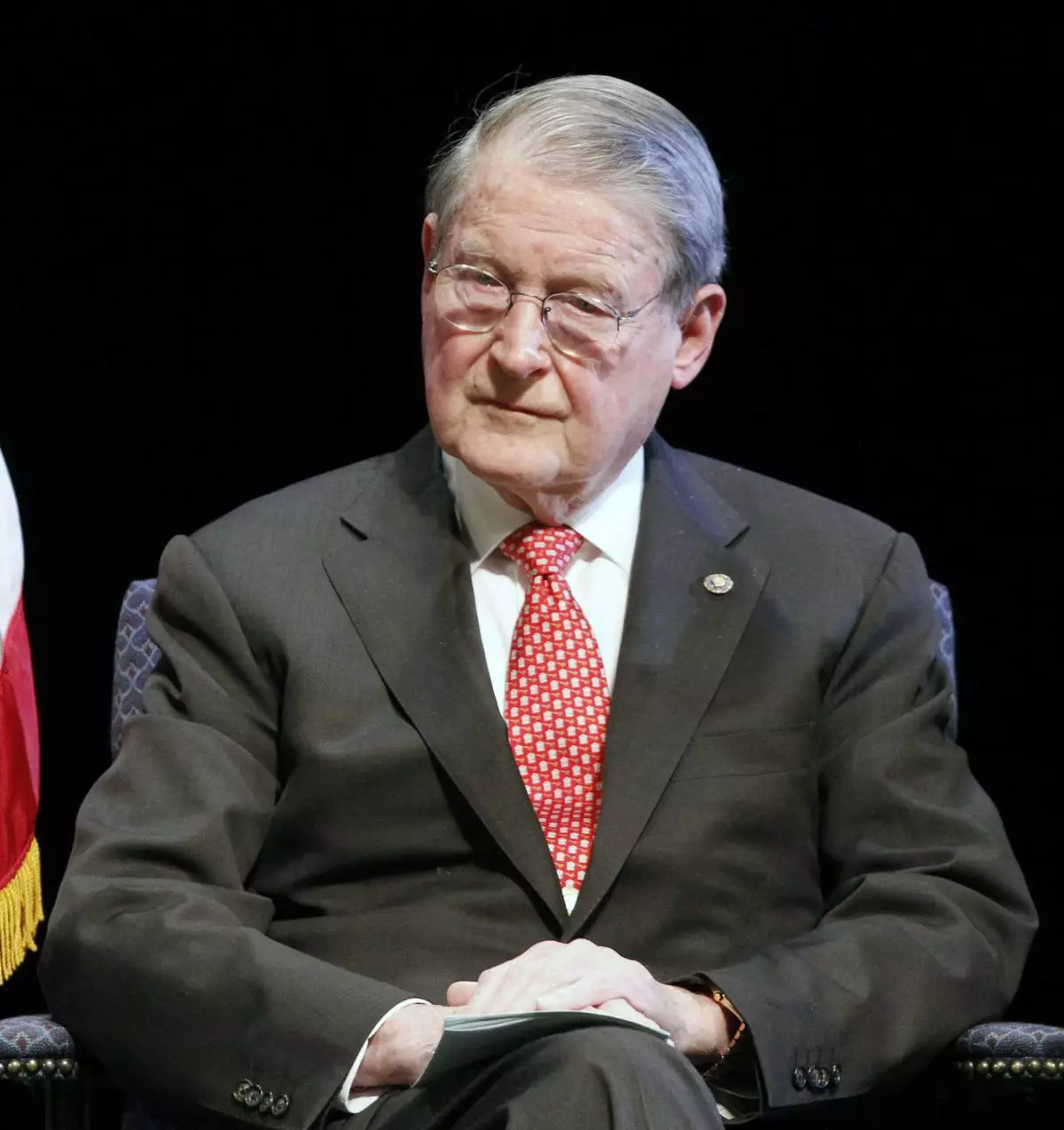
FILE - Former FBI Director William H. Webster looks on during the commemoration of the bloodiest events in the Bureau's history on the 25th anniversary of a Miami shootout in which two agents were killed, in North Miami Beach, Fla., April 11, 2011. (AP Photo/Alan Diaz, File)
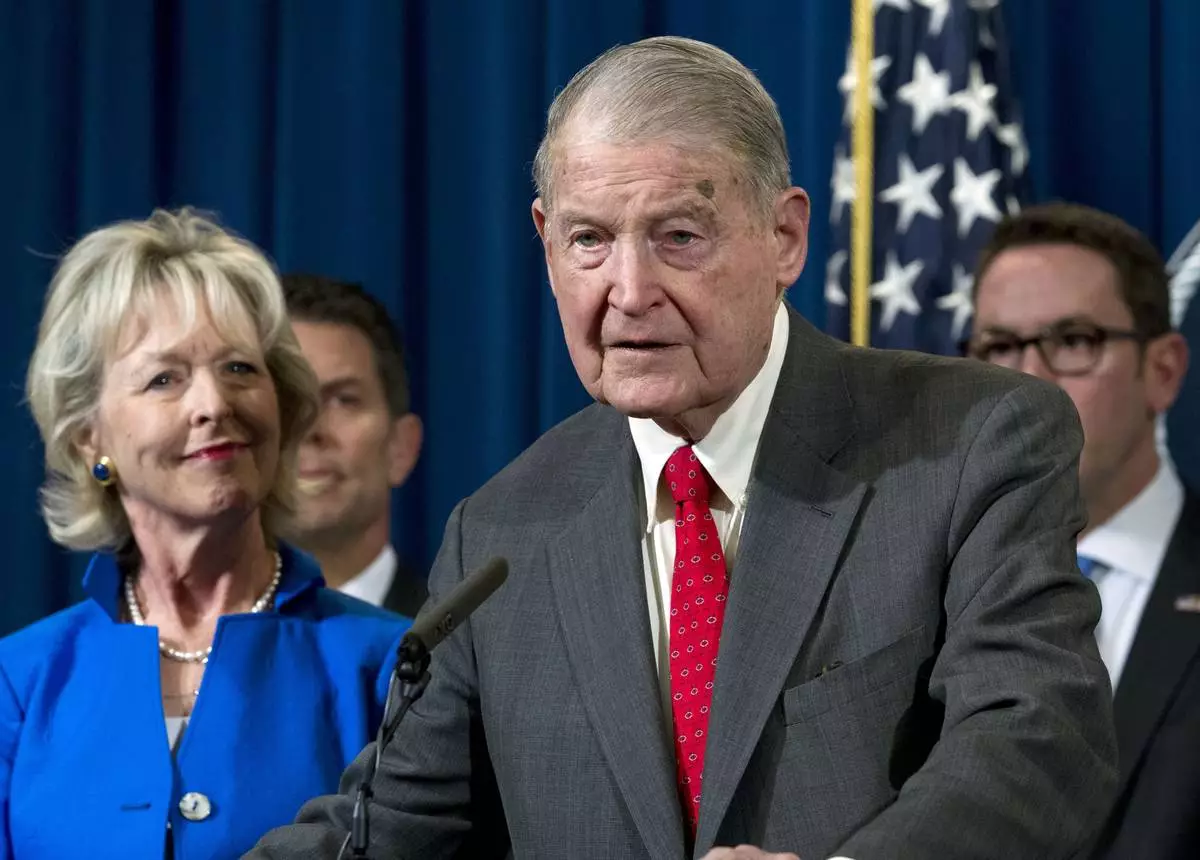
FILE - Former FBI director and CIA director William Webster, right, accompanied by his wife Lynda Webster, who were targeted by a man who peddled a lottery scam over phone calls and emails, speaks during a news conference to address elder financial exploitation and law enforcement actions, at the Department of Justice in Washington, March 7, 2019. (AP Photo/Jose Luis Magana, File)
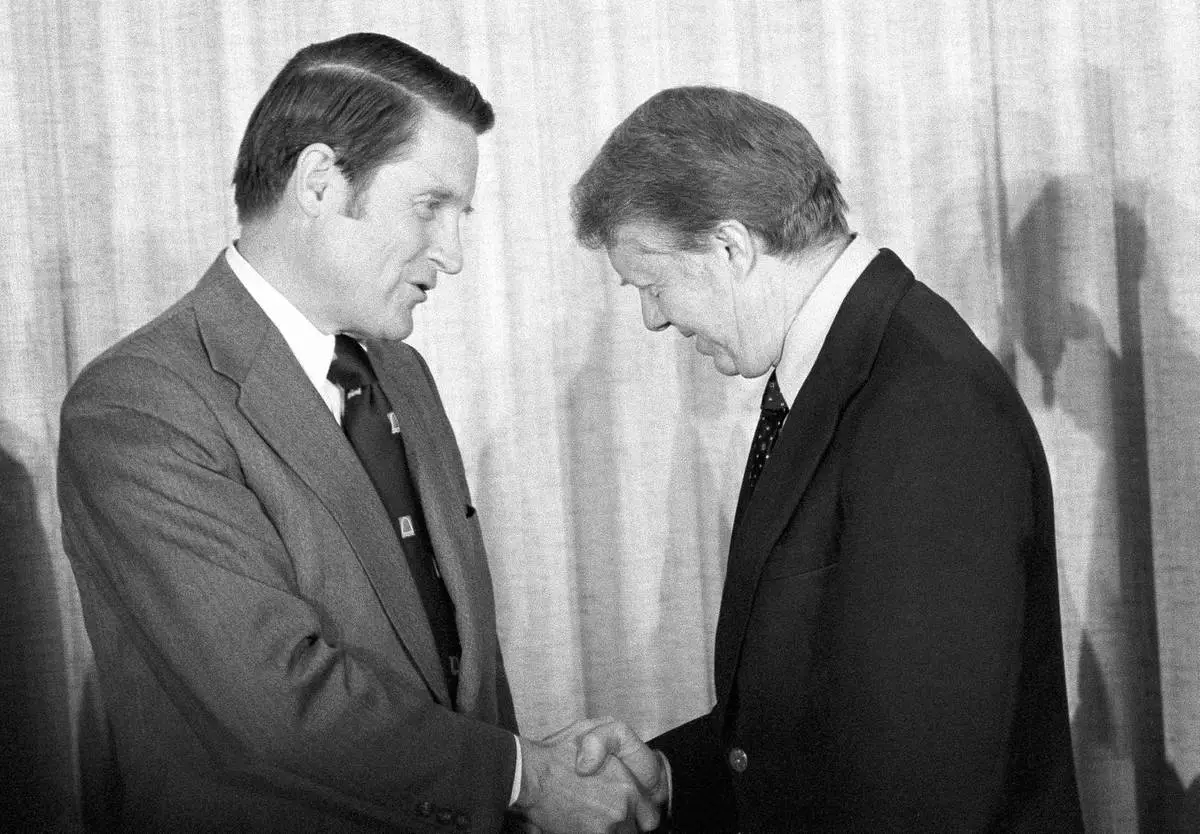
FILE - William H. Webster, left, is congratulated by President Jimmy Carter after being sworn in as new director of the FBI in Washington, Feb. 23, 1978. (AP Photo/Harvey Georges, File)
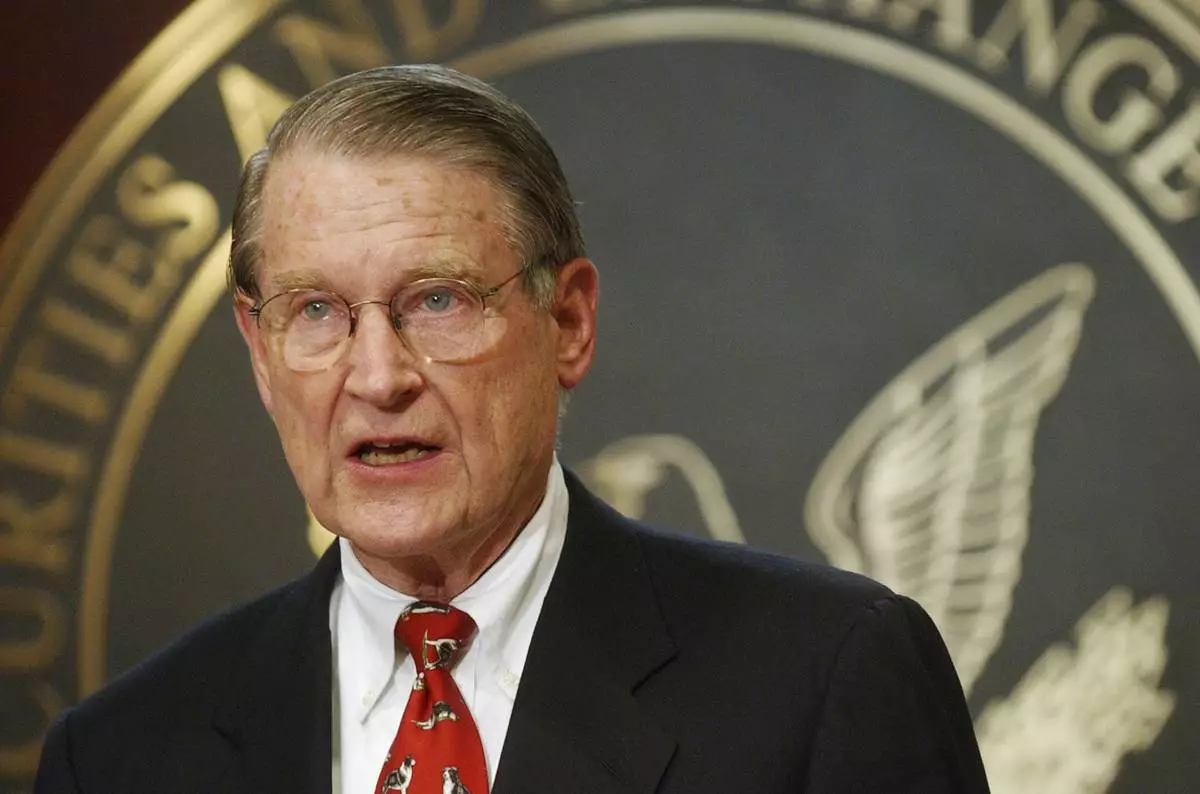
FILE - Former FBI and CIA head William H. Webster speaks to reporters in Washington, Oct. 25, 2002. (AP Photo/Lawrence Jackson, File)