Skip to Content Facebook Feature Image

Death of NYPD officer spotlights rise of Bangladeshi immigrants within ranks

News

Death of NYPD officer spotlights rise of Bangladeshi immigrants within ranks
News

News

Death of NYPD officer spotlights rise of Bangladeshi immigrants within ranks

2025-08-09 12:01 Last Updated At:12:11

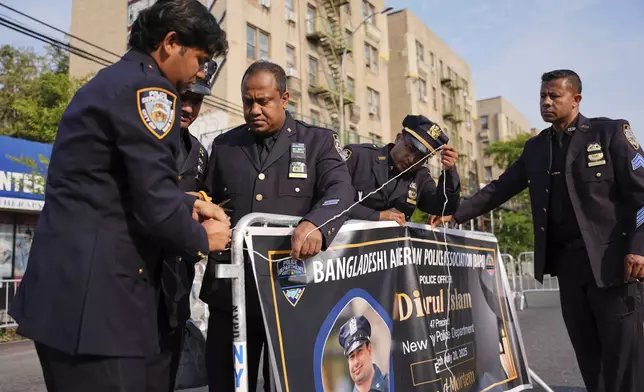
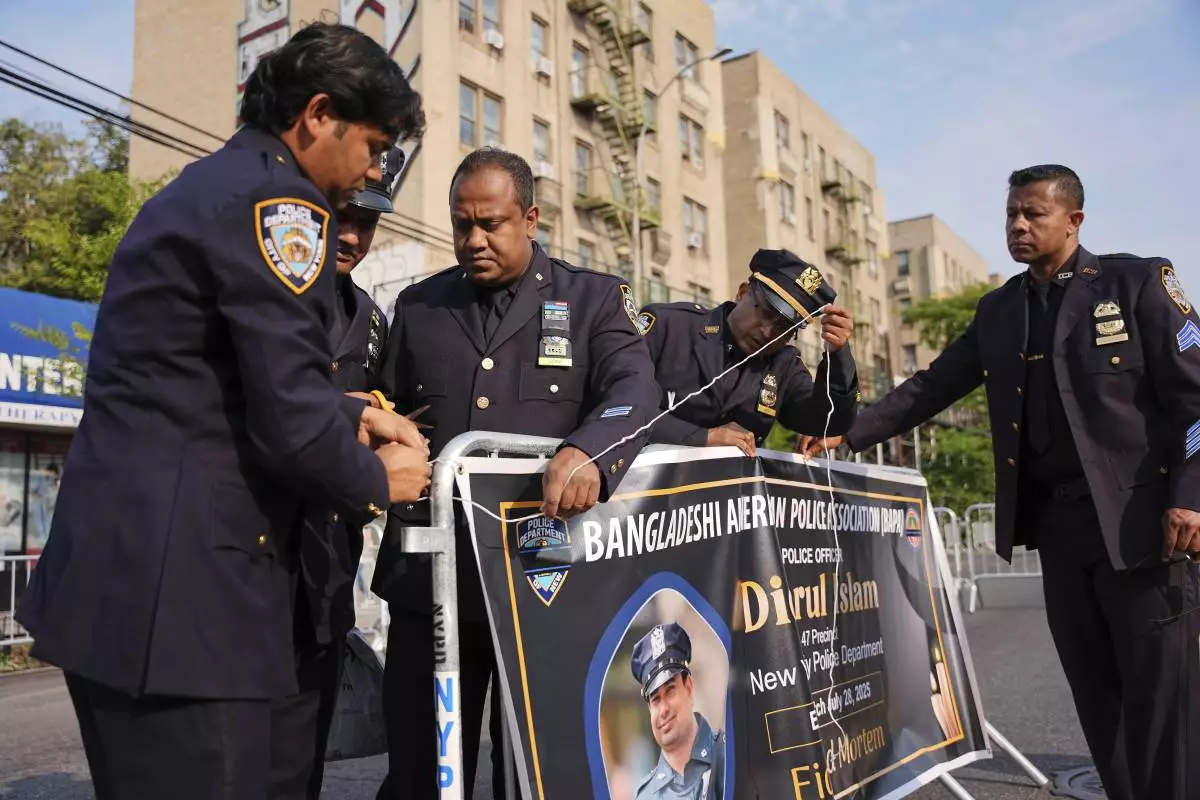
NEW YORK (AP) — Outside the Bronx mosque where a New York City police officer was eulogized last week, a group of officers in their formal navy blue uniforms solemnly hung a banner bearing the young officer’s photograph and the name of his fraternity, the Bangladeshi American Police Association.

Didarul Islam — one of four people killed in the July 28 shooting at the Manhattan office tower housing the NFL’s headquarters — was the NYPD's first Bangladeshi American officer killed in the line of duty.

More Images
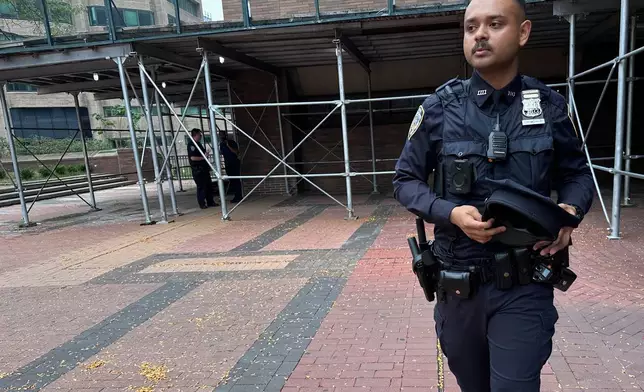
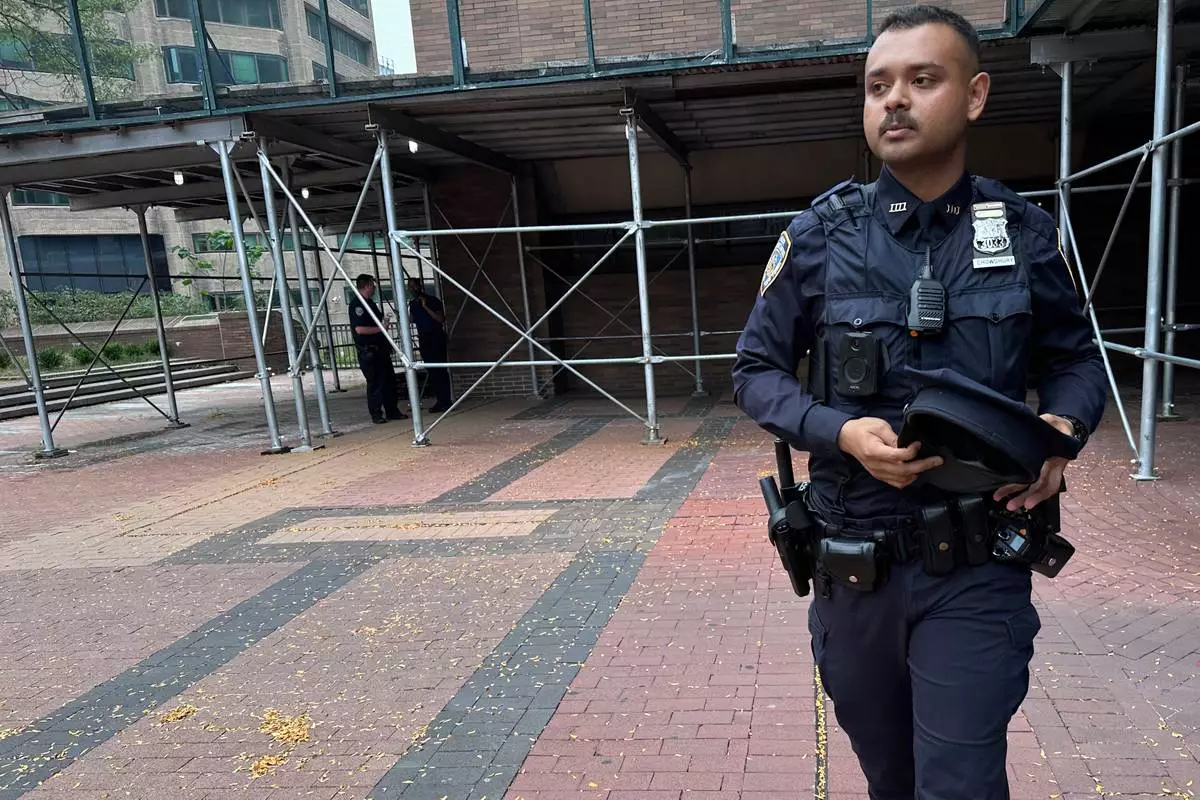
New York Police Department Officer Ishmam Chowdhury stands outside police headquarters in the Manhattan borough of New York on Wednesday, Aug. 6, 2025. (AP Photo/Philip Marcelo)
New York Police Department Officer Ishmam Chowdhury stands outside police headquarters in the Manhattan borough of New York on Wednesday, Aug. 6, 2025. (AP Photo/Philip Marcelo)

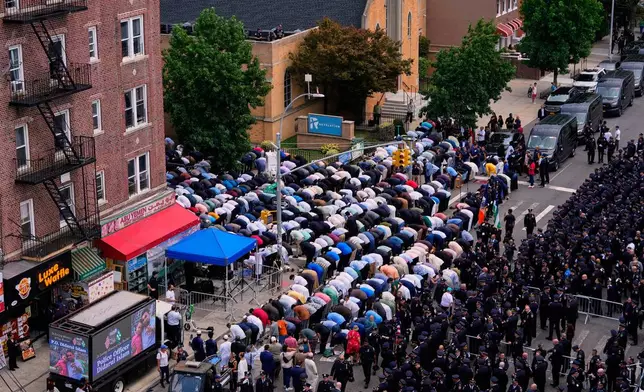
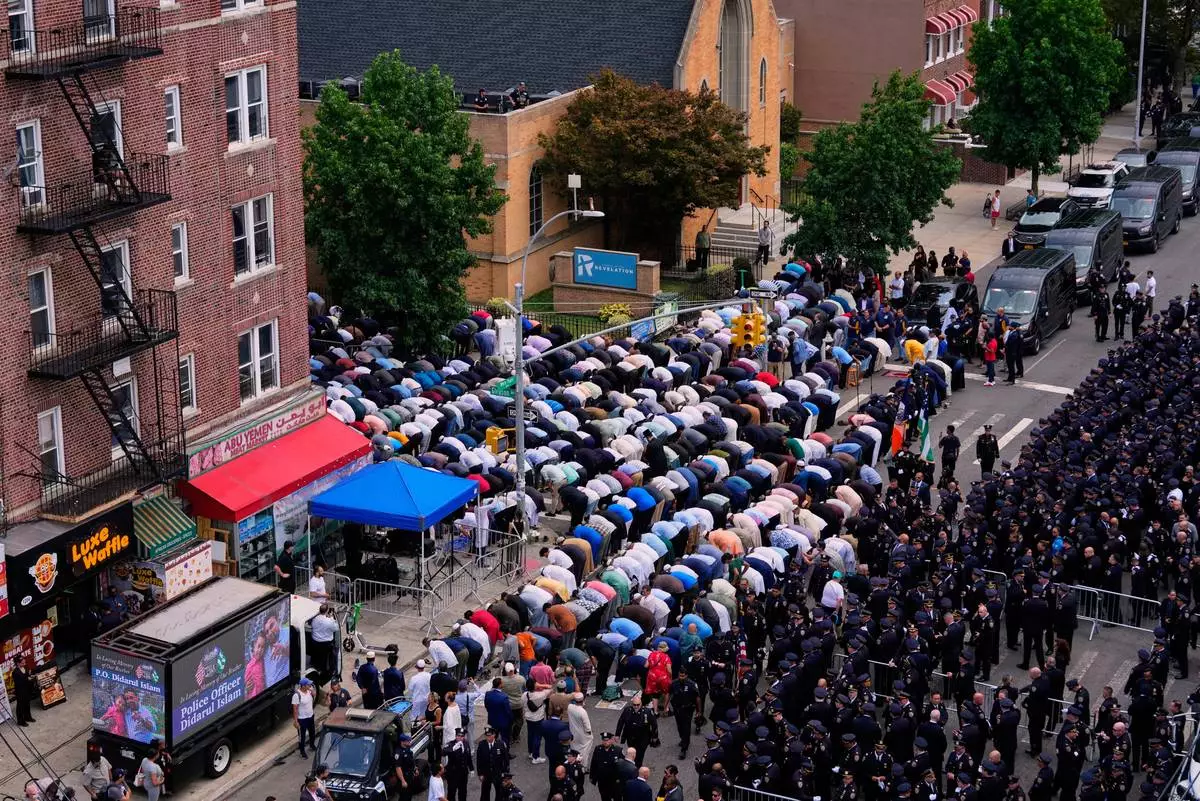
Muslims pray in the street outside the mosque during the funeral for NYPD officer Didarul Islam, Thursday, July 31, 2025, in New York. (AP Photo/Yuki Iwamura )
Muslims pray in the street outside the mosque during the funeral for NYPD officer Didarul Islam, Thursday, July 31, 2025, in New York. (AP Photo/Yuki Iwamura )

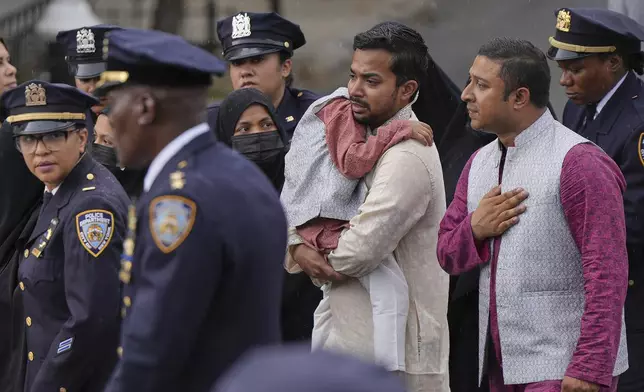
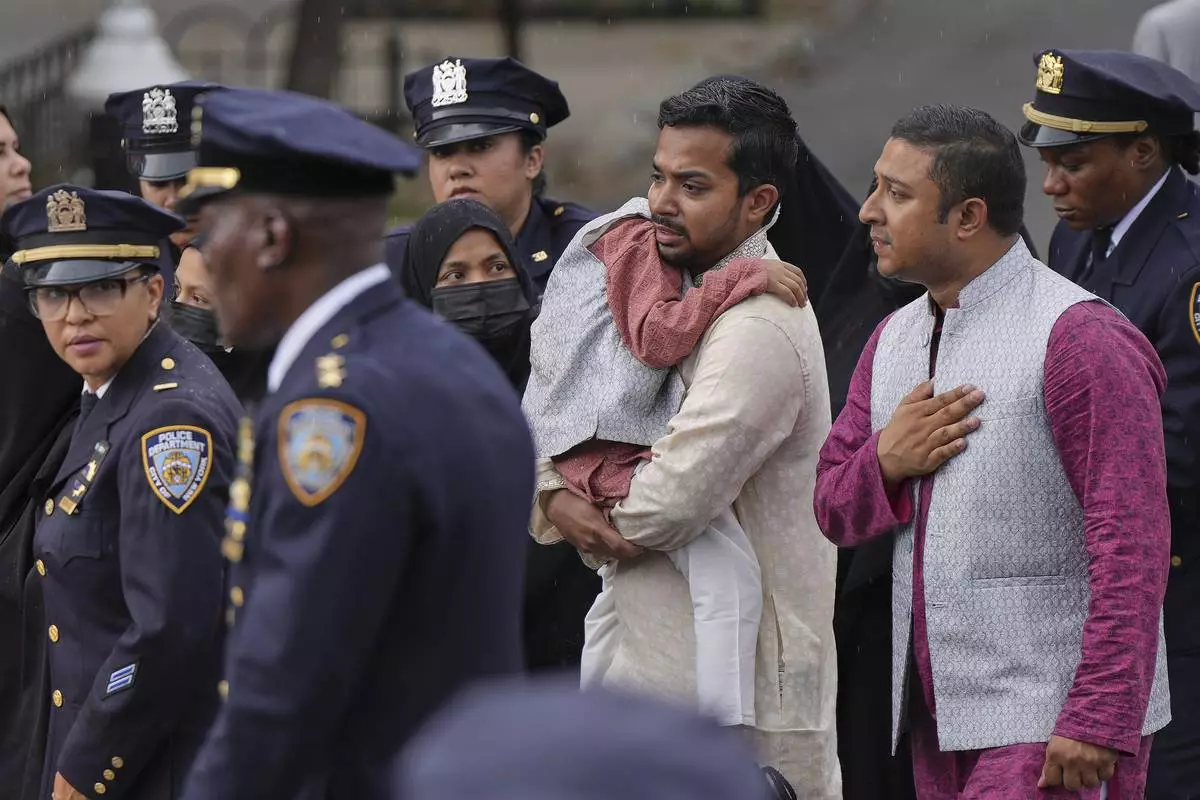
Family members of NYPD officer Didarul Islam walk in a procession after his funeral, Thursday, July 31, 2025, in New York. (AP Photo/Angelina Katsanis )
Family members of NYPD officer Didarul Islam walk in a procession after his funeral, Thursday, July 31, 2025, in New York. (AP Photo/Angelina Katsanis )

New York Police officers hang a banner for the funeral of officer Didarul Islam, Thursday, July 31, 2025, in New York. (AP Photo/Angelina Katsanis)

New York Police officers hang a banner for the funeral of officer Didarul Islam, Thursday, July 31, 2025, in New York. (AP Photo/Angelina Katsanis)

His funeral underscored the fertile recruiting ground the department has found in the city’s thriving Bangladeshi community. More than 1,000 of the NYPD’s roughly 33,000 uniformed members are Bangladeshi Americans, according to the association. Another 1,500 people of Bangladeshi heritage are among the department’s 19,000 civilian employees.

Those numbers are up from just a handful of officers a few decades ago, a phenomenon some Bangladeshi officers attribute partly to their own patriotic response to anti-Muslim sentiment after the 9/11 attacks, as well as active recruitment and word-of-mouth in the community.

Among the sea of NYPD officers who lined the street to honor Islam, 36, were some who opted for traditional South Asian attire, their police badges worn around their necks. Many joined the throngs of mourners who knelt in the street in prayer.

“He actually uplifted our community in a way that was not imaginable before,” said Shamsul Haque, one of the co-founders of the NYPD’s Bangladeshi officers’ group. “His legacy will endure not only as a hero who gave his life protecting others, but also as a symbol of hope, integrity and the American dream.”

When Haque joined the NYPD in 2004, he was one of just a few Bangladeshi immigrants. Many of those who joined around then wanted to dispel the notion that all Muslims were terrorist sympathizers, he said.

Haque, who immigrated to the U.S. in 1991, had recently graduated college with a business administration degree when the twin towers fell. But rather than follow his peers into a financial field, he enrolled in the police academy, a decision he acknowledged was initially met with skepticism from his parents.

In the aftermath of 9/11, the NYPD built up a domestic surveillance program that for years systematically spied on Muslim communities and monitored local businesses, mosques and student groups in a hunt for terror cells.

Haque, 52, who retired earlier this year after becoming the first South Asian and first Muslim to attain the rank of lieutenant commander in the NYPD, said the perception of Muslims among rank-and-file members has improved.

Early in his career, he recalled feeling singled out when a counterterrorism expert warned officers during a training session about the possibility of al-Qaida operatives infiltrating the force.

“Over the years, people started to realize that we work hard, we are ethical,” Haque said. “Although we are immigrants, we are patriotic.”

To grow their numbers, Haque and others went out into the community proselytizing a sensible path for recently arrived immigrants.

Aspiring Bangladeshi officers were encouraged to take civilian jobs in the department, such as traffic enforcement officers and school safety agents, that don’t require U.S. citizenship. After gaining citizenship, usually in about five years, they could then apply for the police academy to become a uniformed officer.

Some 60% of all officers of Bangladeshi heritage in the NYPD followed this pipeline, Haque estimated. Islam, the officer killed last week, began his career as a school safety officer after immigrating to the U.S. about 16 years ago.

The visible growth of Bangladeshis in the NYPD has helped many aspire to leadership roles in the department, just as generations of Irish, Italian and Latino immigrants did before them.

Among the uniformed officers with Bangladeshi roots are 10 detectives, 82 sergeants, 20 lieutenants and four inspectors, said Sgt. Ershadur Siddique, current president of the Bangladeshi American Police Association. The department's uniformed ranks are roughly 38% white, 33% Hispanic, 17% Black and nearly 12% Asian, according to NYPD data.

“I never dreamt that I would go this far, but I always had an ambition to go somewhere where I can be challenged,” said Siddique, now a member of Mayor Eric Adams' security detail. “I always say, ‘Listen, give me a chance, see if I can do better than anybody else,’ you know? Give me a chance.”

Ishmam Chowdhury, a 26-year-old officer who graduated from the academy in May, said Islam’s death just a few months into his own career has left a lasting impression.

Like Islam’s wife, who is expecting their third child, Chowdhury's wife is due to give birth to their first soon.

“It just hit us a little different because like that made us think, what if it happens to me today? It can,” he said. “So yeah, I guess that’s a wake-up call for us that even though this is a noble job, we are definitely at grave risk.”

Chowdhury said he dreamed of joining law enforcement even before he immigrated to the U.S. in 2019. As a teenager in Bangladesh, he and other family members were robbed multiple times. The feeling of helplessness and humiliation stuck with him, he said.

Chowdhury started as an unarmed volunteer member of the NYPD auxiliary before joining the civilian ranks as a 911 operator in 2021.

He also served about a year in the police force in Washington, D.C., after it opened applications to green card holders in 2023, but he and his wife felt isolated from friends and family. So after receiving his citizenship last year, the couple moved back to Queens and he enrolled in the police academy.

“That’s what makes this city, this country, great. It doesn’t matter where somebody comes from,” Chowdhury said. “If somebody really works hard and truly wants to do something, they can do it.”

Associated Press writer Deepti Hajela contributed to this report.

Follow Philip Marcelo at https://x.com/philmarcelo
New York Police Department Officer Ishmam Chowdhury stands outside police headquarters in the Manhattan borough of New York on Wednesday, Aug. 6, 2025. (AP Photo/Philip Marcelo)
New York Police Department Officer Ishmam Chowdhury stands outside police headquarters in the Manhattan borough of New York on Wednesday, Aug. 6, 2025. (AP Photo/Philip Marcelo)

Muslims pray in the street outside the mosque during the funeral for NYPD officer Didarul Islam, Thursday, July 31, 2025, in New York. (AP Photo/Yuki Iwamura )
Muslims pray in the street outside the mosque during the funeral for NYPD officer Didarul Islam, Thursday, July 31, 2025, in New York. (AP Photo/Yuki Iwamura )

Family members of NYPD officer Didarul Islam walk in a procession after his funeral, Thursday, July 31, 2025, in New York. (AP Photo/Angelina Katsanis )
Family members of NYPD officer Didarul Islam walk in a procession after his funeral, Thursday, July 31, 2025, in New York. (AP Photo/Angelina Katsanis )

New York Police officers hang a banner for the funeral of officer Didarul Islam, Thursday, July 31, 2025, in New York. (AP Photo/Angelina Katsanis)

New York Police officers hang a banner for the funeral of officer Didarul Islam, Thursday, July 31, 2025, in New York. (AP Photo/Angelina Katsanis)
SEOUL, South Korea (AP) — A South Korean court sentenced former President Yoon Suk Yeol to five years in prison Friday in the first verdict from eight criminal trials over the martial law debacle that forced him out of office and other allegations.

Yoon was impeached, arrested and dismissed as president after his short-lived imposition of martial law in December 2024 triggered huge public protests calling for his ouster.

The most significant criminal charge against him alleges that his martial law enforcement amounted to a rebellion, and the independent counsel has requested the death sentence in the case that is to be decided in a ruling next month.

Yoon has maintained he didn’t intend to place the country under military rule for an extended period, saying his decree was only meant to inform the people about the danger of the liberal-controlled parliament obstructing his agenda. But investigators have viewed Yoon’s decree as an attempt to bolster and prolong his rule, charging him with rebellion, abuse of power and other criminal offenses.

In Friday’s case, the Seoul Central District Court sentenced Yoon for defying attempts to detain him, fabricating the martial law proclamation, and sidestepping a legally mandated full Cabinet meeting and thus depriving some Cabinet members who were not convened of their due rights to deliberate on his decree.

Judge Baek Dae-hyun said in the televised ruling that imposing “a grave punishment” was necessary because Yoon hasn’t shown remorse and has only repeated “hard-to-comprehend excuses.” The judge also restoring legal systems damaged by Yoon’s action was necessary.

Yoon’s defense team said they will appeal the ruling, which they believe was “politicized” and reflected “the unliberal arguments by the independent counsel.” Yoon’s defense team argued the ruling “oversimplified the boundary between the exercise of the president’s constitutional powers and criminal liability.”

Prison sentences in the multiple, smaller trials Yoon faces would matter if he is spared the death penalty or life imprisonment at the rebellion trial.

Park SungBae, a lawyer who specializes in criminal law, said there is little chance the court would decide Yoon should face the death penalty in the rebellion case. He said the court will likely issue a life sentence or a sentence of 30 years or more in prison.

South Korea has maintained a de facto moratorium on executions since 1997 and courts rarely hand down death sentences. Park said the court would take into account that Yoon’s decree didn’t cause casualties and didn’t last long, although Yoon hasn’t shown genuine remorse for his action.

South Korea has a history of pardoning former presidents who were jailed over diverse crimes in the name of promoting national unity. Those pardoned include strongman Chun Doo-hwan, who received the death penalty at a district court over his 1979 coup, the bloody 1980 crackdowns of pro-democracy protests that killed about 200 people, and other crimes.

Some observers say Yoon will likely retain a defiant attitude in the ongoing trials to maintain his support base in the belief that he cannot avoid a lengthy sentence but could be pardoned in the future.

On the night of Dec. 3, 2024, Yoon abruptly declared martial law in a televised speech, saying he would eliminate “anti-state forces” and protect “the constitutional democratic order.” Yoon sent troops and police officers to encircle the National Assembly, but many apparently didn’t aggressively cordon off the area, allowing enough lawmakers to get into an assembly hall to vote down Yoon’s decree.

No major violence occurred, but Yoon's stunt caused the biggest political crisis in South Korea and rattled its diplomacy and financial markets. For many, his decree, the first of its kind in more than four decades in South Korea, brought back harrowing memories of past dictatorships in the 1970s and 1980s, when military-backed leaders used martial law and emergency measures to deploy soldiers and tanks on the streets to suppress demonstrations.

After Yoon's ouster, his liberal rival Lee Jae Myung became president via a snap election last June. After taking office, Lee appointed three independent counsels to look into allegations involving Yoon, his wife and associates.

Yoon's other trials deal with charges like ordering drone flights over North Korea to deliberately inflame animosities to look for a pretext to declare martial law. Other charges accuse Yoon of manipulating the investigation into a marine’s drowning in 2023 and receiving free opinion surveys from an election broker in return for a political favor.

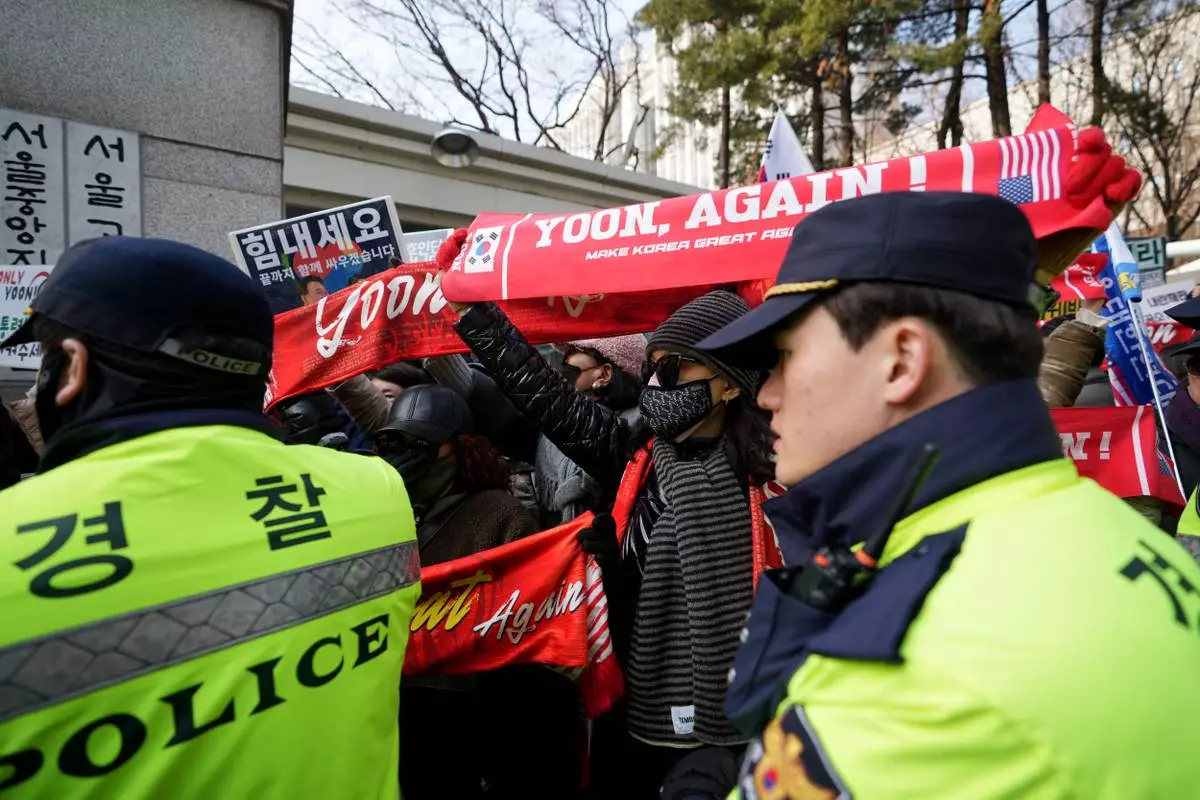
A supporter of former South Korean President Yoon Suk Yeol shouts slogans outside Seoul Central District Court, in Seoul, South Korea, Friday, Jan. 16, 2026. (AP Photo/Lee Jin-man)

A supporter of former South Korean President Yoon Suk Yeol shouts slogans outside Seoul Central District Court, in Seoul, South Korea, Friday, Jan. 16, 2026. (AP Photo/Lee Jin-man)

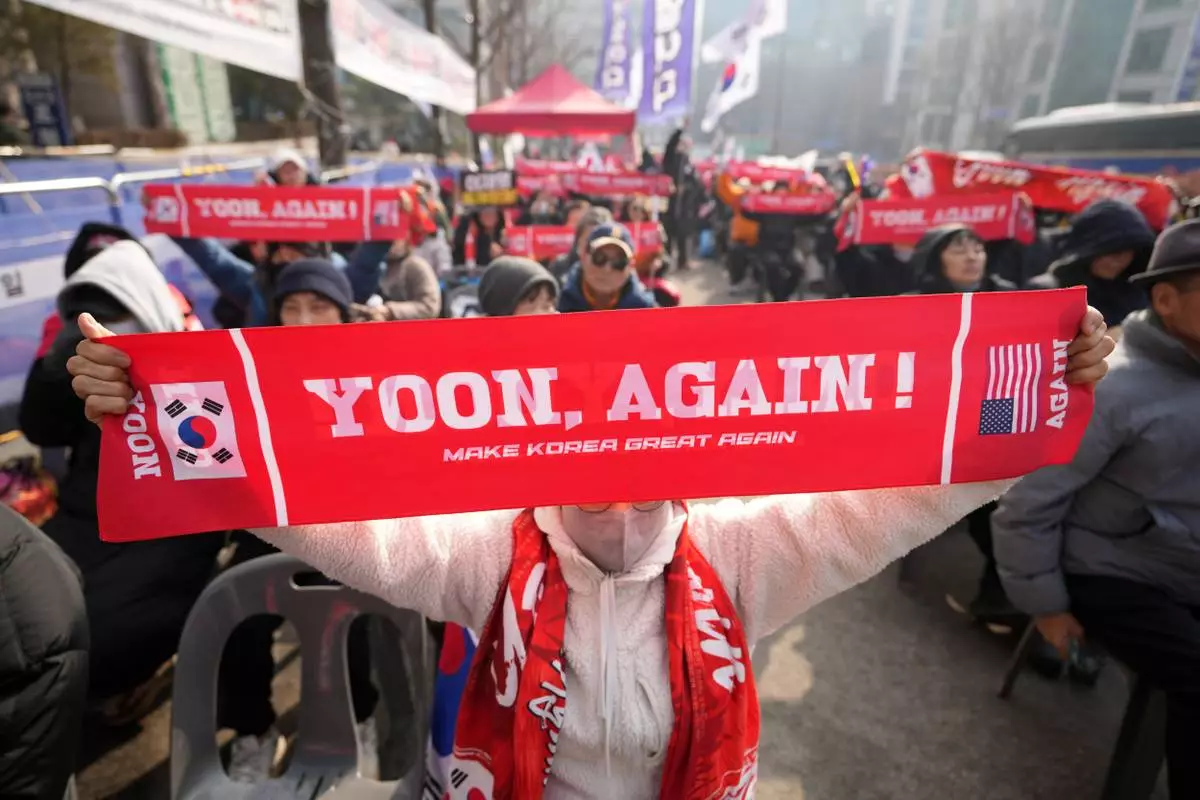
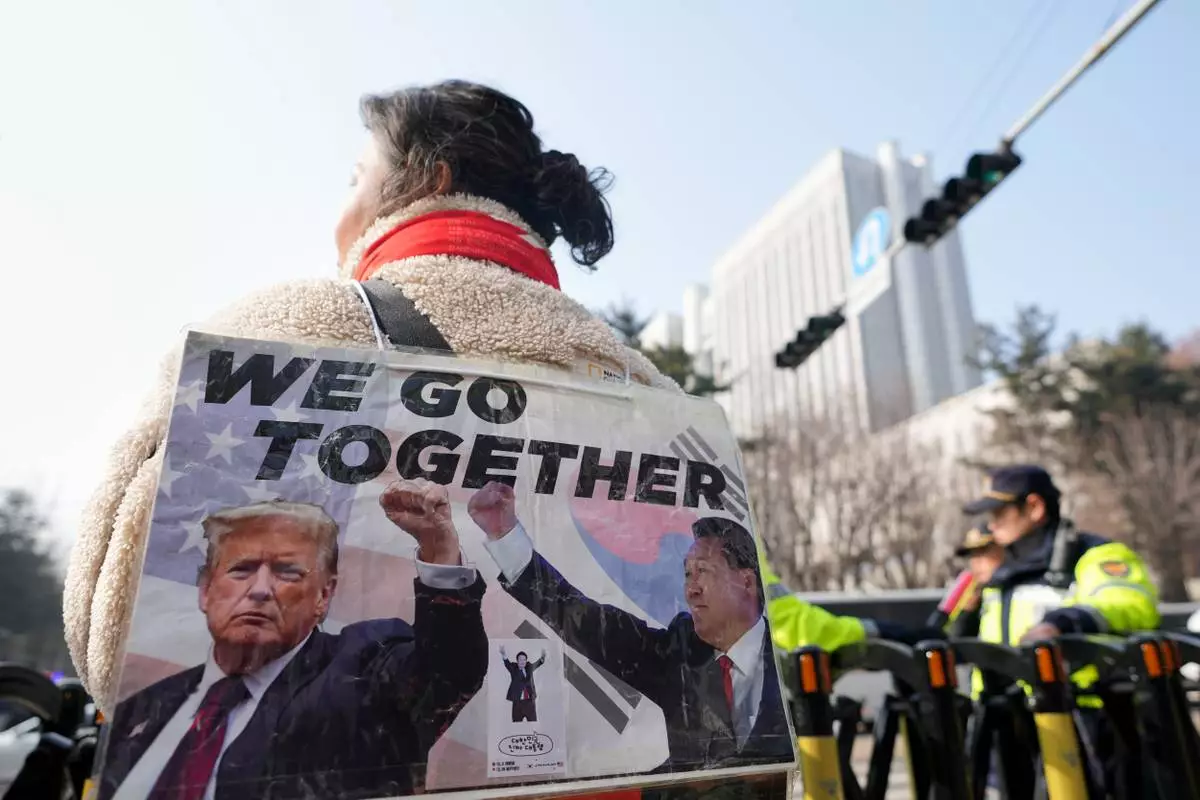
Supporters of former South Korean President Yoon Suk Yeol hold signs and flags outside Seoul Central District Court, in Seoul, South Korea, Friday, Jan. 16, 2026. (AP Photo/Lee Jin-man)

Supporters of former South Korean President Yoon Suk Yeol hold signs and flags outside Seoul Central District Court, in Seoul, South Korea, Friday, Jan. 16, 2026. (AP Photo/Lee Jin-man)

A supporter of former South Korean President Yoon Suk Yeol waits for a bus carrying former South Korean President Yoon Suk Yeol outside Seoul Central District Court, in Seoul, South Korea, Friday, Jan. 16, 2026. (AP Photo/Lee Jin-man)

A supporter of former South Korean President Yoon Suk Yeol waits for a bus carrying former South Korean President Yoon Suk Yeol outside Seoul Central District Court, in Seoul, South Korea, Friday, Jan. 16, 2026. (AP Photo/Lee Jin-man)

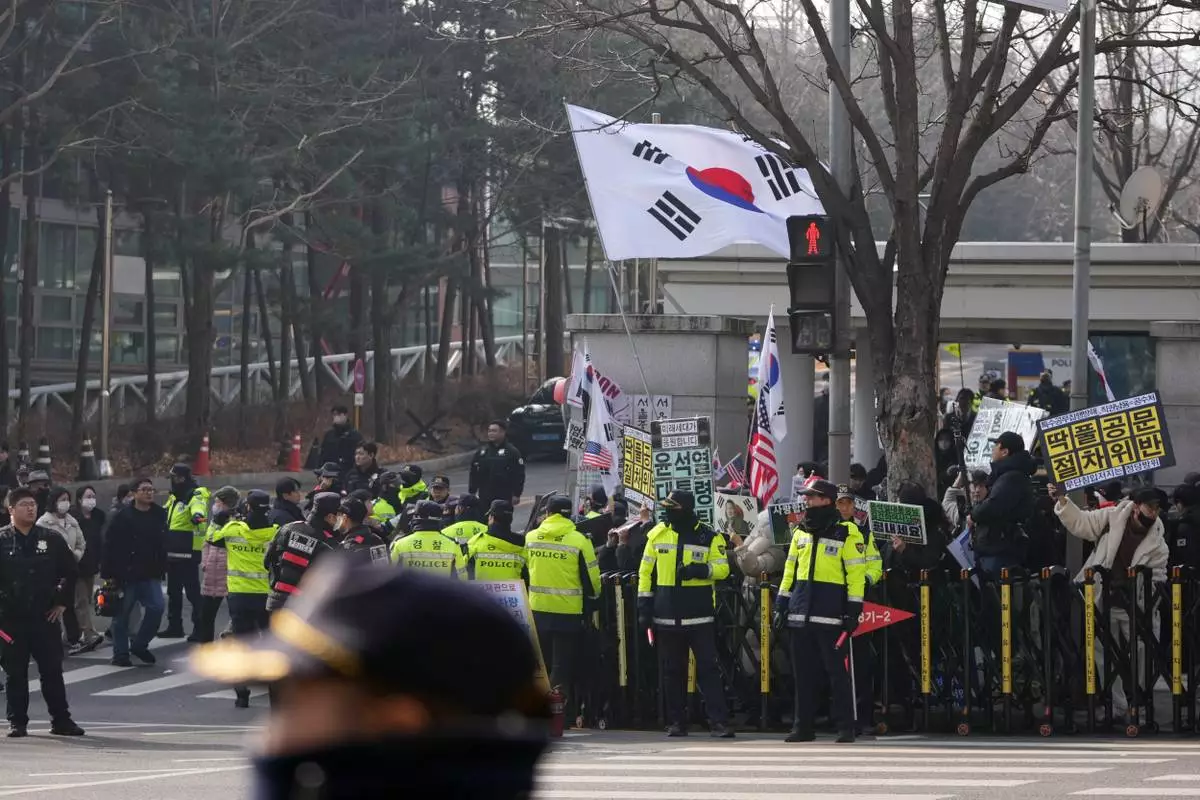
Supporters of former South Korean President Yoon Suk Yeol hold signs as police officers stand guard outside Seoul Central District Court, in Seoul, South Korea, Friday, Jan. 16, 2026. (AP Photo/Lee Jin-man)

Supporters of former South Korean President Yoon Suk Yeol hold signs as police officers stand guard outside Seoul Central District Court, in Seoul, South Korea, Friday, Jan. 16, 2026. (AP Photo/Lee Jin-man)

Supporters of former South Korean President Yoon Suk Yeol hold signs and flags outside Seoul Central District Court, in Seoul, South Korea, Friday, Jan. 16, 2026. (AP Photo/Lee Jin-man)

Supporters of former South Korean President Yoon Suk Yeol hold signs and flags outside Seoul Central District Court, in Seoul, South Korea, Friday, Jan. 16, 2026. (AP Photo/Lee Jin-man)

Supporters of former South Korean President Yoon Suk Yeol hold signs outside Seoul Central District Court, in Seoul, South Korea, Friday, Jan. 16, 2026. (AP Photo/Lee Jin-man)

Supporters of former South Korean President Yoon Suk Yeol hold signs outside Seoul Central District Court, in Seoul, South Korea, Friday, Jan. 16, 2026. (AP Photo/Lee Jin-man)

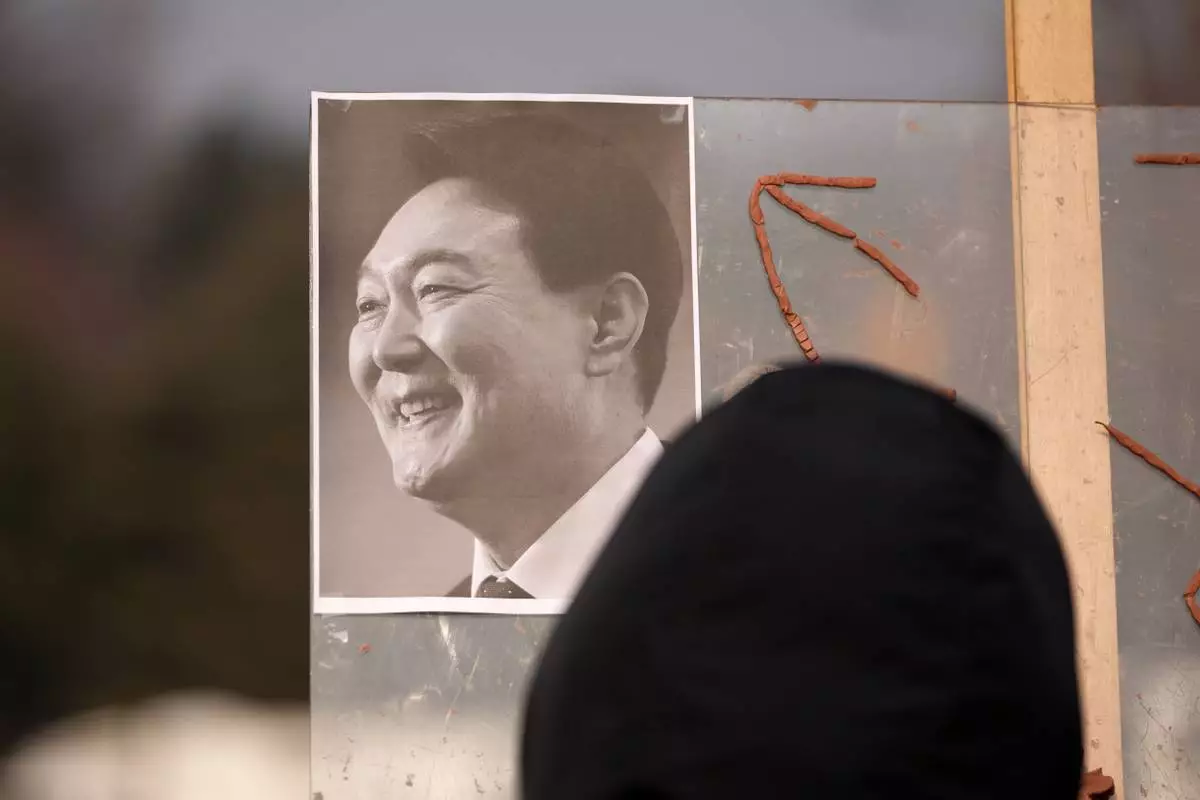
A picture of former South Korean President Yoon Suk Yeol is placed on a board as supporters gather outside Seoul Central District Court, in Seoul, South Korea, Friday, Jan. 16, 2026. (AP Photo/Lee Jin-man)

A picture of former South Korean President Yoon Suk Yeol is placed on a board as supporters gather outside Seoul Central District Court, in Seoul, South Korea, Friday, Jan. 16, 2026. (AP Photo/Lee Jin-man)

Recommended Articles