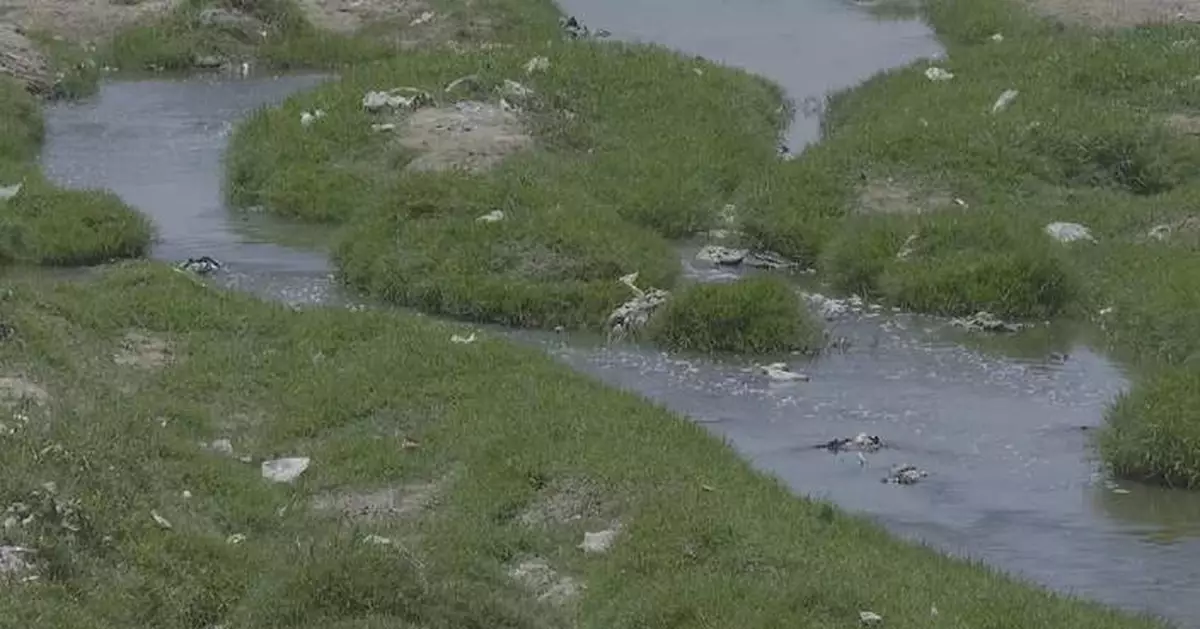
The Kabul River, which once flowed powerfully through Afghanistan's capital, has shrunk to a fraction of its former size following years of war and environmental stress.
Infrastructure damage from the 2001 U.S. invasion, combined with poor maintenance and extreme weather, has left entire sections of the waterway completely dry, exposing garbage-strewn riverbeds where deep water once stood.
In a recent interview with China Central Television, Najibullah, a Kabul resident, recalled the river's past glory.
"In the past, the water level on the Kabul River was much higher -- the water would even overflow the embankments and flood the streets. But now after these years, the water level has dropped so dramatically. All that abundant water we once had has dwindled to just this trickle, with nothing more left. It used to be clean, very clean. The water level was high enough to wash away all the garbage in the river. People used to swim in it all the time," he said.
The Kabul River, formed by tributaries including the Logar and Paghman rivers, runs through the heart of the city. While some water remains in the Paghman's mountainous stretches, much of Logar's connected waterway near Kabul has nearly dried up.
What little flow persists has become critically important to surrounding communities, with residents now standing on what used to be submerged river bottom to access the remaining water.
Kabul is facing a deepening water crisis, with its groundwater levels significantly depleted, putting millions of residents in the city at serious risk, according to a recent UN-Habitat report.
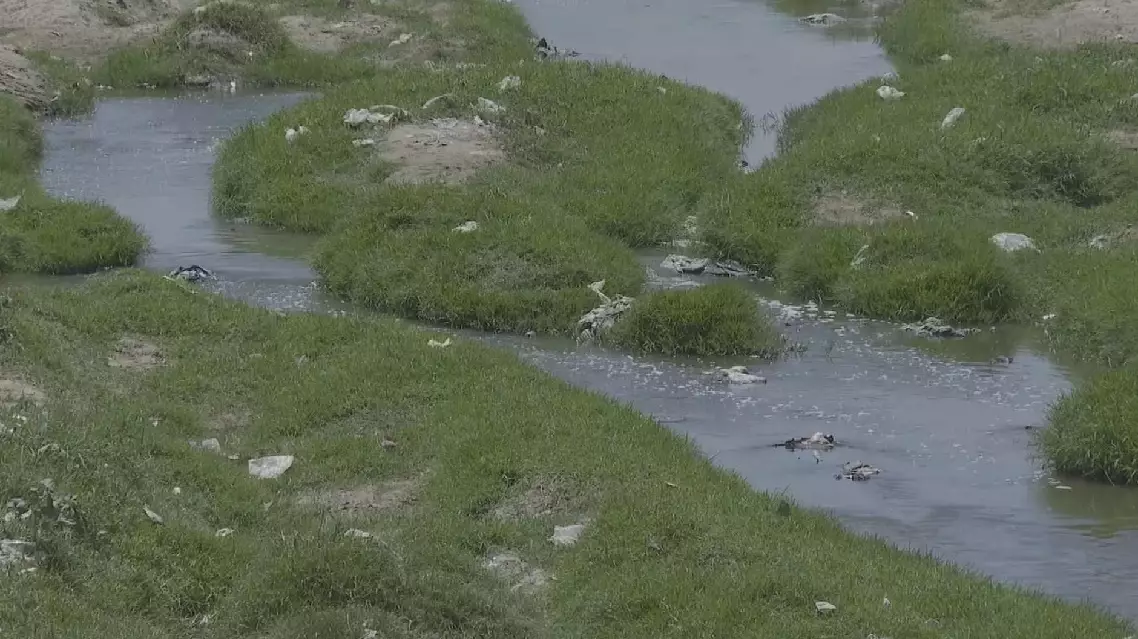
Kabul's once-thriving river reduced to trickle due to war damage, climate change