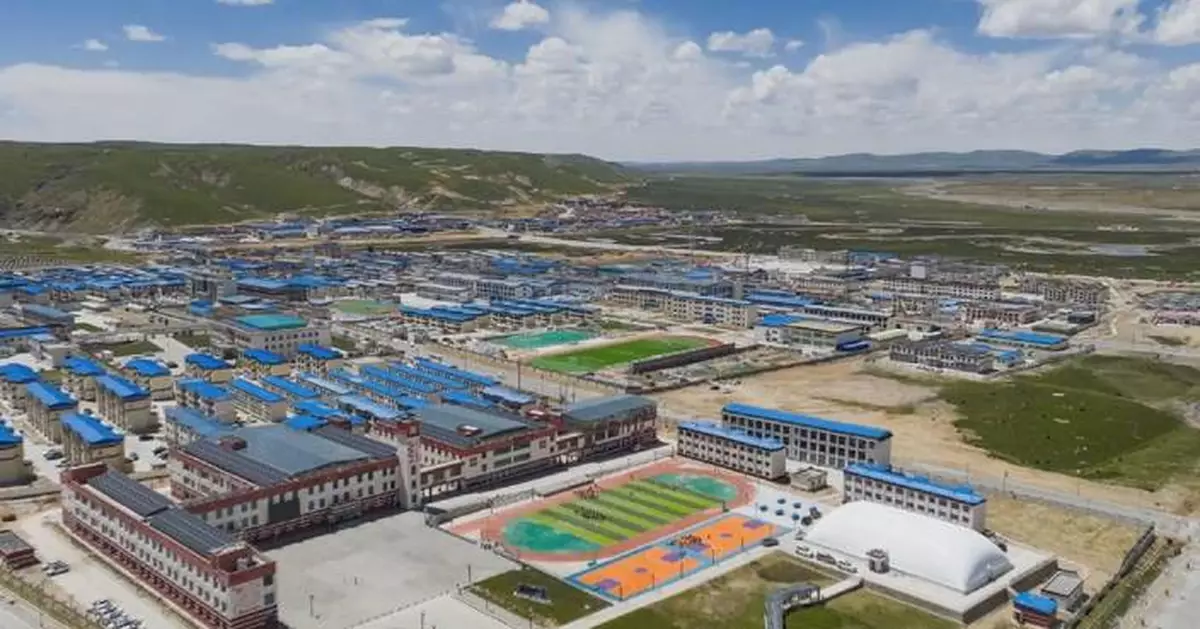
China's "pairing assistance" (or one-on-one support) campaign for the Xizang Autonomous Region has powered the modern educational infrastructure in the remote county of Nyainrong, benefiting generations of local students.
Located at an altitude of more than 4,700 meters in northern Xizang, the remote county had scarce resources for living and education back in the 1990s.
Nyainrong has witnessed tremendous changes in its public educational infrastructure construction since the national paired-up assistance campaign for Xizang started in 1994 and brought professionals, capital and material resources from central state organs and state-owned enterprises.
Bai Ming, an official sent by China National Energy Group to aid Xizang, has been working in Nyainrong since 2022. He said that with the support of the assistance campaign, libraries, science laboratories and exhibition centers are no longer something out of reach for the students in Nyainrong.
In the Nyainrong Project Hope Primary School, students can even rehearse dramas and play ping-pong in an inflatable sports dome during winter when the outside temperature can reach as low as minus 30 degrees Celsius.
"It is the first inflatable sports dome built at a school in Xizang. The winter here is very long, so we came up with the idea of building a dome for the kid to exercise during the winter," Bai said in an interview with China Central Television in anticipation of the 60th anniversary of the establishment of the Xizang Autonomous Region, which falls on September 9.
Bai was from the 10th batch of aid-Xizang officials coming to Nyainrong. He said local students are enjoying increasingly more diversified courses at schools, thanks to the efforts made by his predecessors throughout the years.
With the updated school facilities, the local Nyainrong Middle School has already opened courses on computer programming, 3D pens, virtual cars and 3D modeling.
Collaborating with Nyainrong County Science Center, also an aid program, the school offers opportunities for students to experience Virtual reality (VR) space tours.
Many students are keen to draw and construct the model of space vehicle. Some space enthusiasts among them even know the nickname of China's heavy-lift launch vehicle Long March 5 rocket -- "Pang-Wu" of "Fat 5".
"We have been adjusting our work priorities since we started the educational aid programs here back 23 years ago. Initially, we would focus on the construction of buildings, then we realized the need to improve the professional quality of the teaching staff. Afterwards, we built the inflatable sports dome [to meet the higher demands of students]. Our original aspiration has always been to help students here achieve better development and acquire real skills, whether they will study and live outside the region or return here to build their hometown in the future," Bai said.
China National Energy Group has dispatched 12 officials to Nyainrong since its pairing-up assistance program for the county started in 2002. The group has invested a total of 740 million yuan (103 million U.S. dollars) in grants and aided the construction of 315 projects for the county since then.
Since 1994, China's national paired-up assistance campaign for Xizang has sent nearly 12,000 aid officials in ten batches to different parts of Xizang. The new batch of 2,156 aid officials for Xizang were newly sent to the region in the end of July.
Project Hope is a Chinese program aimed at financing education for students from poverty-stricken families. The project was initiated by the China Youth Development Foundation and the Central Committee of the Communist Youth League of China in 1989, and has been supported by people from all walks of life since its establishment.
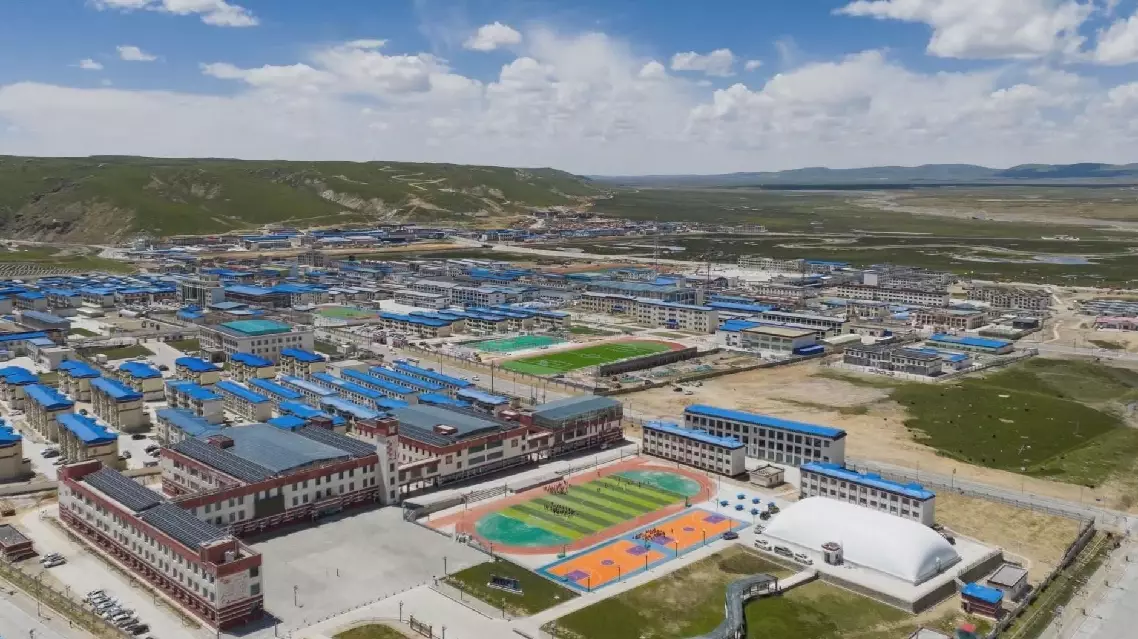
"Pairing assistance" powers modern educational infrastructure in remote county of southwest China's Xizang