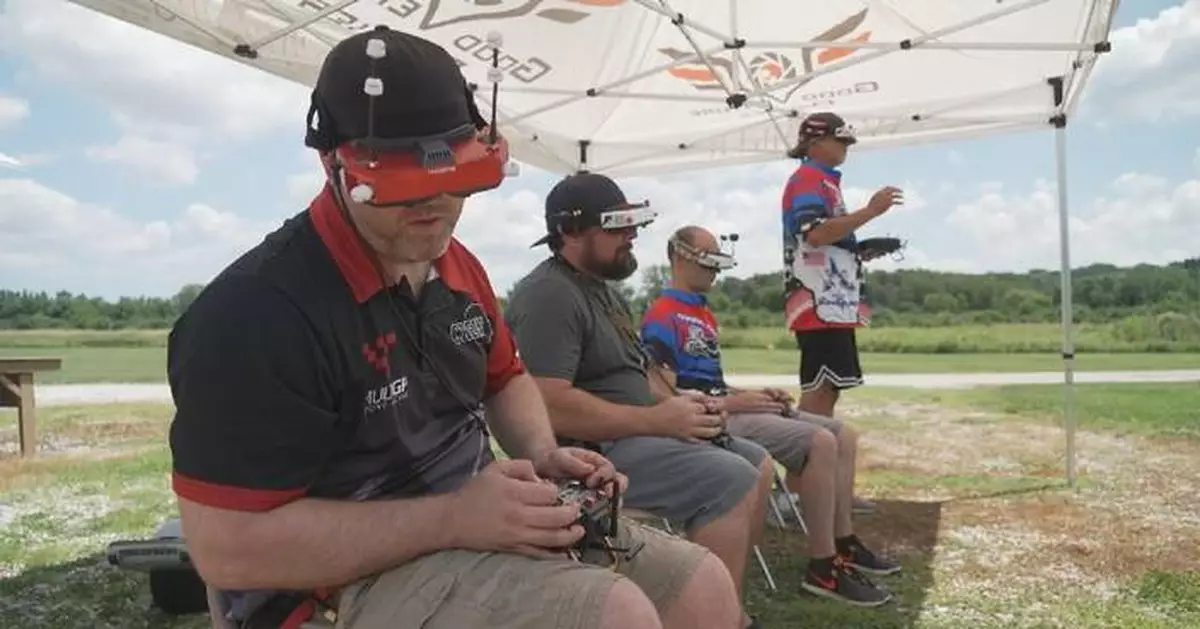
On an unassuming field in Waukesha, U.S. state of Wisconsin, a new generation of athletes has emerged - not sprinters or swimmers, but drone pilots pushing their machines beyond 160 kilometers per hour.
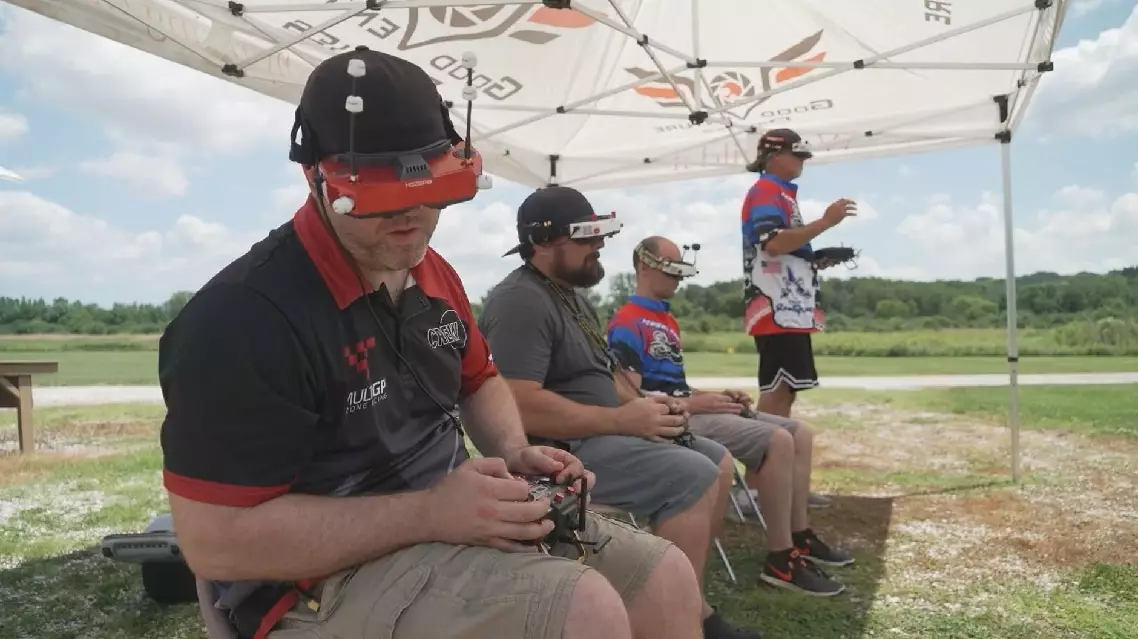
These competitors stand firmly on the ground while racing, their eyes glued to first-person-view goggles that stream real-time footage from cameras mounted on their aircraft.
The sport delivers all the adrenaline of traditional motorsports without physical risk.
"There're no injuries from drone racing, so you kind of get that high adrenaline piece without some of the danger of it," said Tom Cinnamon, a drone racer.
What drives these pilots is the sheer exhilaration of competition - the split-second precision, breathtaking speed, and unparalleled sensation of hurtling through space while physically stationary.
"This is one of the things that we've really needed is to get some television time. Again, there's still a lot of people that have no idea that this is even happening out in the world. So, anything we can do to have it be more known is definitely the right direction," said Dave Goddard, a drone racer.
While currently contested in rural fields, the sport is gaining international recognition. Its inclusion in the ongoing 2025 World Games in Chengdu City, southwest China's Sichuan Province marks a significant step toward mainstream acceptance.
"We're hoping it gets even bigger, like, obviously, we don't want to be a small, little niche community anymore. We want to be in the Olympics, if the Olympics would ever allow us in, just getting more and more people into drone racing," said Tom Cinnamon, another drone racer.
Drone racing steps onto global stage as 2025 World Games showcase