BAGHDAD (AP) — Iraq’s prime minister approved sweeping disciplinary and legal measures against senior commanders in a paramilitary force after clashes with police at a government facility that left three people dead last month, his office said Saturday.
Gunmen descended on the agricultural directorate in Baghdad's Karkh district on July 27 and clashed with federal police. The raid came after the former head of the directorate was ousted and a new one appointed.
A government-commissioned investigation found that the former director — who was implicated in corruption cases — had called in members of the Kataib Hezbollah militia to stage the attack, Sabah Al-Numan, a spokesperson for Prime Minister Mohammed Shia al-Sudani, said in a statement Saturday.
Al-Sudani, who also serves as commander in chief of the armed forces, ordered the formation of a committee to investigate the attack.
Kataib Hezbollah is part of the Popular Mobilization Forces, a coalition of mostly Shiite, Iran-backed militias that formed to fight the Islamic State extremist group as it rampaged across the country more than a decade ago.
The PMF was formally placed under the control of the Iraqi military in 2016, but in practice it still operates with significant autonomy. Some groups within the coalition have periodically launched drone attacks on bases housing U.S. troops in Syria.
The Kataib Hezbollah fighters who staged the attack in Karkh were affiliated with the 45th and 46th Brigades of the PMF, the government statement said.
Al-Sudani approved recommendations to remove the commanders of those two brigades, refer all those involved in the raid to the judiciary, and open an investigation into “negligence in leadership and control duties” in the PMF command, it said.
The report also cited structural failings within the PMF, noting the presence of formations that act outside the chain of command.
The relationship between the Iraqi state and the PMF has been a point of tension with the United States as Iraq attempts to balance its relations with Washington and Tehran.
The Iraqi parliament is discussing legislation that would solidify the relationship between the military and the PMF, drawing objections from Washington, which considers some of the armed groups in the coalition, including Kataib Hezbollah, to be terrorist organizations.
In an interview with The Associated Press last month, Al-Sudani defended the proposed legislation, saying it’s part of an effort to ensure that arms are controlled by the state. “Security agencies must operate under laws and be subject to them and be held accountable,” he said.
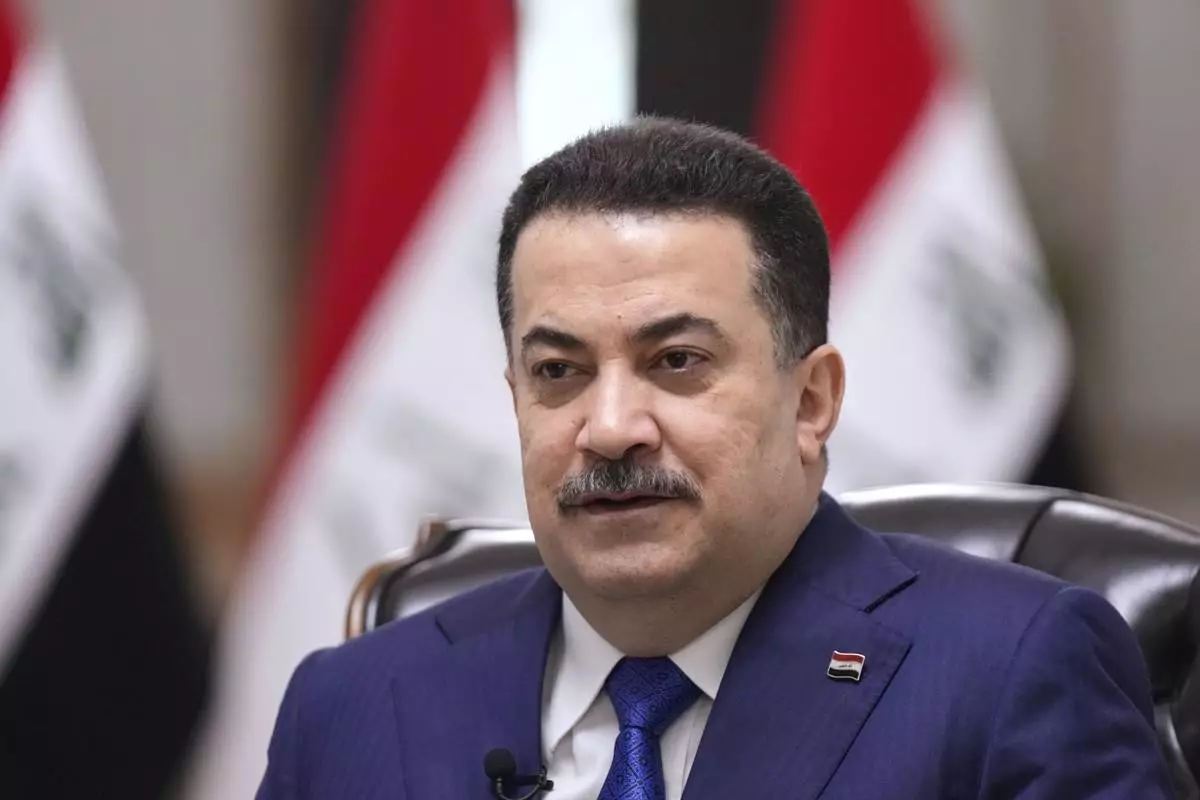
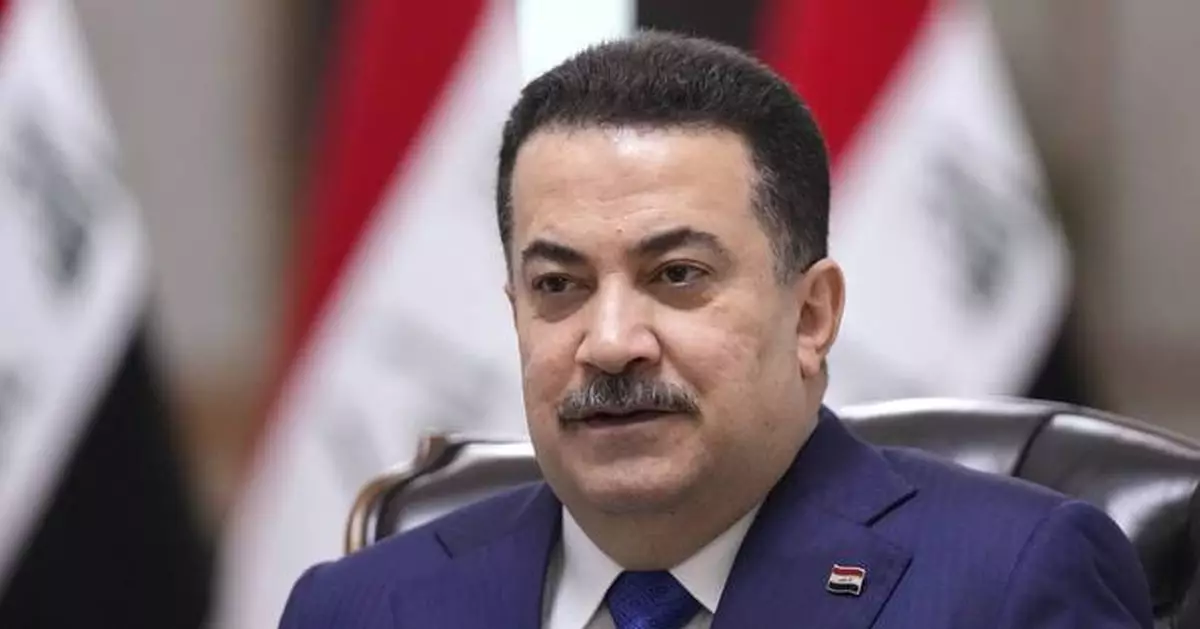
Iraq's Prime Minister Mohammed al-Sudani speaks during an interview with The Associated Press in Baghdad on Monday, July 28, 2025. (AP Photo/Hadi Mizban)
UNITED NATIONS (AP) — With wars raging,temperatures rising and artificial intelligence encroaching, leaders from across the planet converge at the United Nations on Tuesday to address each other and the world, airing their hopes, plans and grievances as the world body’s chief addresses them for the final time.
The annual high-level gathering at the U.N. General Assembly will be consumed with wars in Iran, Gaza, Ukraine,Sudan, Congo and Myanmar and a persisting question: Can the leaders do anything to end them?
And what can they do about the relentless rise of global warming threatening the future of the planet, the growing inequalities within and among nations, and shocks to the global economy as blocked shipping routes and supply chains increase the cost of living and slow growth?
The future of the United Nations will also definitely be on the agenda. At 81, its powers are still the victorious nations from World War II, not the 21st century’s major global players. The U.N.’s 193 member nations have agreed to a wide-ranging reform package that includes updating key institutions such as the powerful U.N. Security Council, where the U.S., Russia, China, Britain and France hold inordinate sway because of their veto power. Reform, however, is easier said than implemented.
Behind the scenes, there will be speculation about who will lead the United Nations next. Secretary-General Antonio Guterres’ second five-year term ends Dec. 31 and no clear successor has emerged.
There is still no question that the U.N. remains the key gathering place for its 193 member nations and their leaders. Some 130 heads of state and government are expected to speak at the General Assembly starting Tuesday along with dozens of ministers.
Among the headliners: U.S. President Donald Trump and French President Emanuel Macron. Both will speak Tuesday after Guterres’ opening “state of the world” address. Ukraine’s President Volodymyr Zelenskyy and Iran’s President Masoud Pezeshkian speak Wednesday.
Israeli Prime Minister Benjamin Netanyahu — whom New York Mayor Zoran Mamdani wanted arrested for his treatment of Palestinians in Gaza until he learned he has no such authority — will address the assembly on Thursday. For a second year, Palestinian President Mahmoud Abbas won’t be coming to the U.N. because the U.S. has refused to give him a visa. He will nonetheless address the assembly by video the same day.
The United States, under its agreement with the U.N. to host the organization, is required to allow diplomats from all member nations to attend meetings.
Equally telling is who else isn’t coming. China’s President Xi Jinping is meeting Trump in Washington on Wednesday, yet he is skipping — some diplomats say snubbing — the U.N. gathering and sending a vice president instead. Russian President Vladimir Putin isn’t coming either, and Indian President Narendra Modi has backed out.
France's U.N. ambassador, Jerome Bonnafont, said it is “extremely critical” for world leaders this week to support the U.N. as the place where the world’s nations meet — especially at a time of such polarization.
“We believe in multilateralism," he said, "and we believe that the high-level week is the occasion for countries in the world to reaffirm that they prefer cooperation and dialogue to confrontation.”
There is no doubt it’s been a tough year for the world body. It has been pushed to the sidelines when it comes to its key responsibility of ensuring international peace and security and trying to end major conflicts in the Mideast and Ukraine. The U.S. failure to pay billions of dollars in outstanding arrears has left the organization’s finances in rocky shape.
Former U.N. deputy secretary-general Mark Malloch-Brown, a United Nations Foundation board member, said, “While the world still trusts the U.N., the global public is eager for change."
The future of artificial intelligence has pushed to the forefront of global concerns, with its speeding advances and the dawning recognition that there are no industry controls, let alone any global guardrails for a technology that has many advantages but also many disadvantages and unknowns.
Days before the global gathering, leaders of three major AI companies warned about the technology getting out of human control and called for a pause, but Trump dismissed their concerns as “a hoax,” and urged continued advances to keep the U.S. ahead of China.
The U.N. Security Council added a high-level meeting on AI to its agenda on Wednesday afternoon, a sign of the growing apprehension and need to address the issue. It was already slated to hold a high-level meeting on Ukraine with Zelenskyy on Wednesday morning.
For the U.N. chief, this will be his last assembly meeting with global leaders. He previewed his speech last week, telling U.N. reporters that power is shifting in “an era of deep uncertainty."
“At a time when the world faces three existential threats," he said, “international cooperation is more necessary than ever.”
Edith M. Lederer has covered international affairs for The Associated Press for more than a half century.
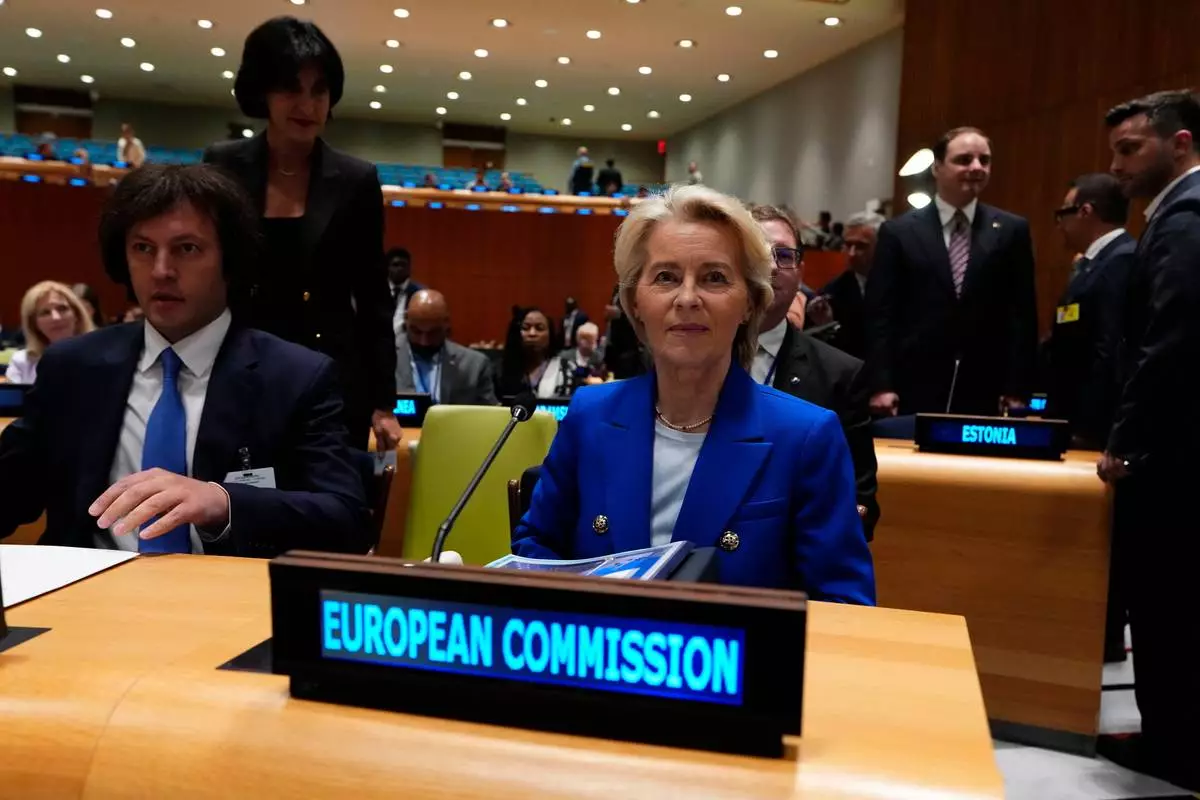
European Commission President Ursula von der Leyen attends the Partnership for Multilateralism Summit on the sidelines of the United Nations General Assembly (UNGA) at the UN headquarters, Monday, Sept. 21, 2026. (Justin Tang/The Canadian Press via AP)
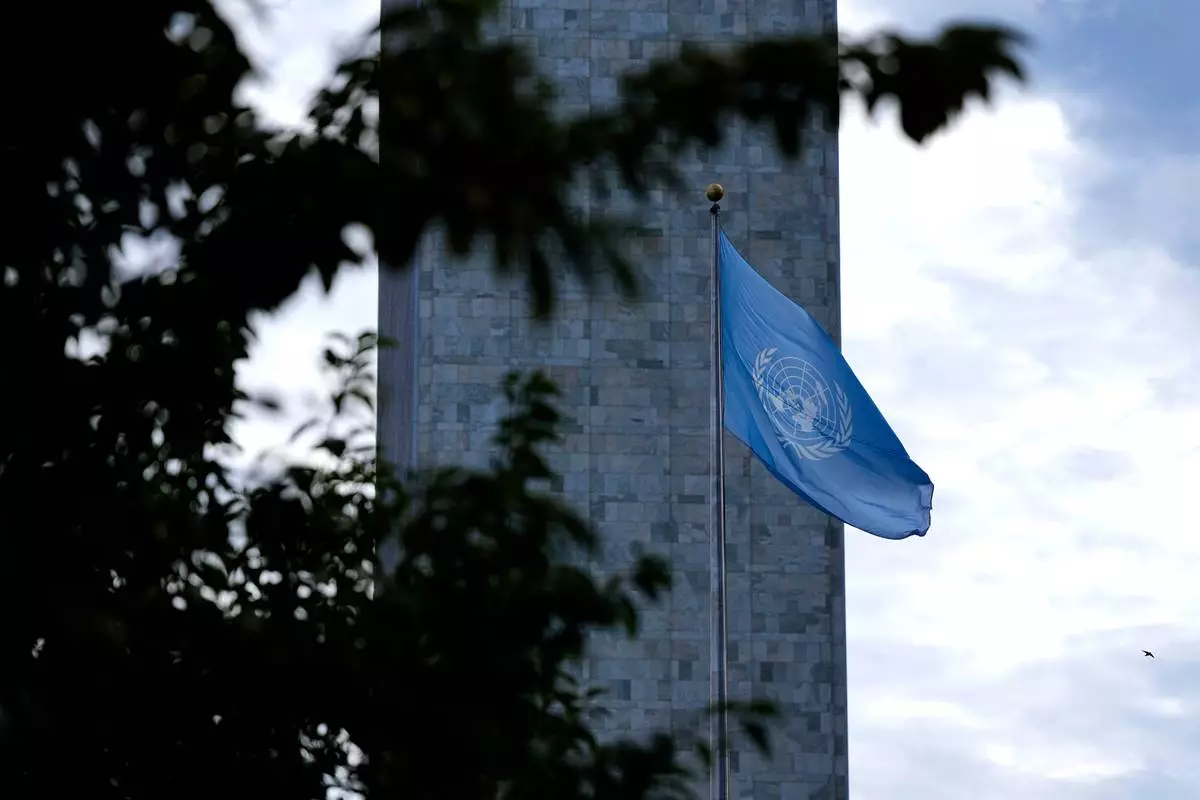
The flag of the United Nations flies during the United Nations General Assembly (UNGA) at the UN headquarters, Monday, Sept. 21, 2026. (Justin Tang/The Canadian Press via AP)
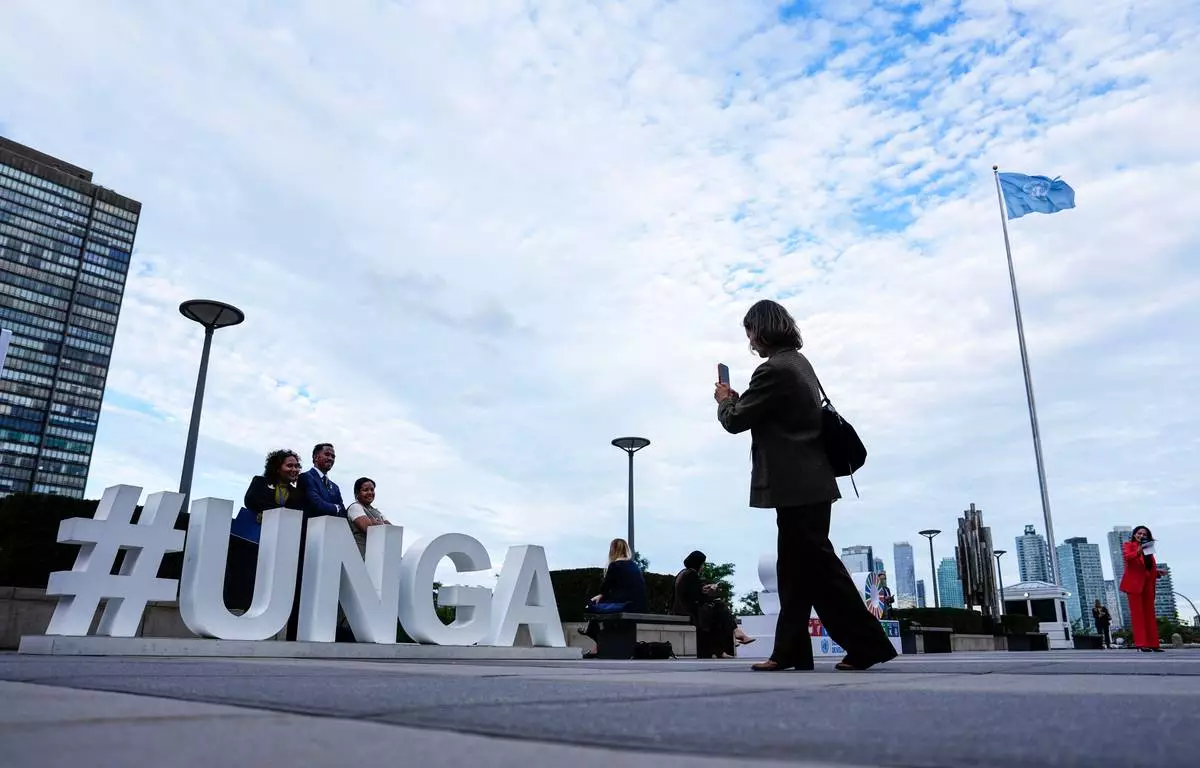
People pose as they arrive for the United Nations General Assembly (UNGA) at the UN headquarters, Monday, Sept. 21, 2026. (Justin Tang/The Canadian Press via AP)
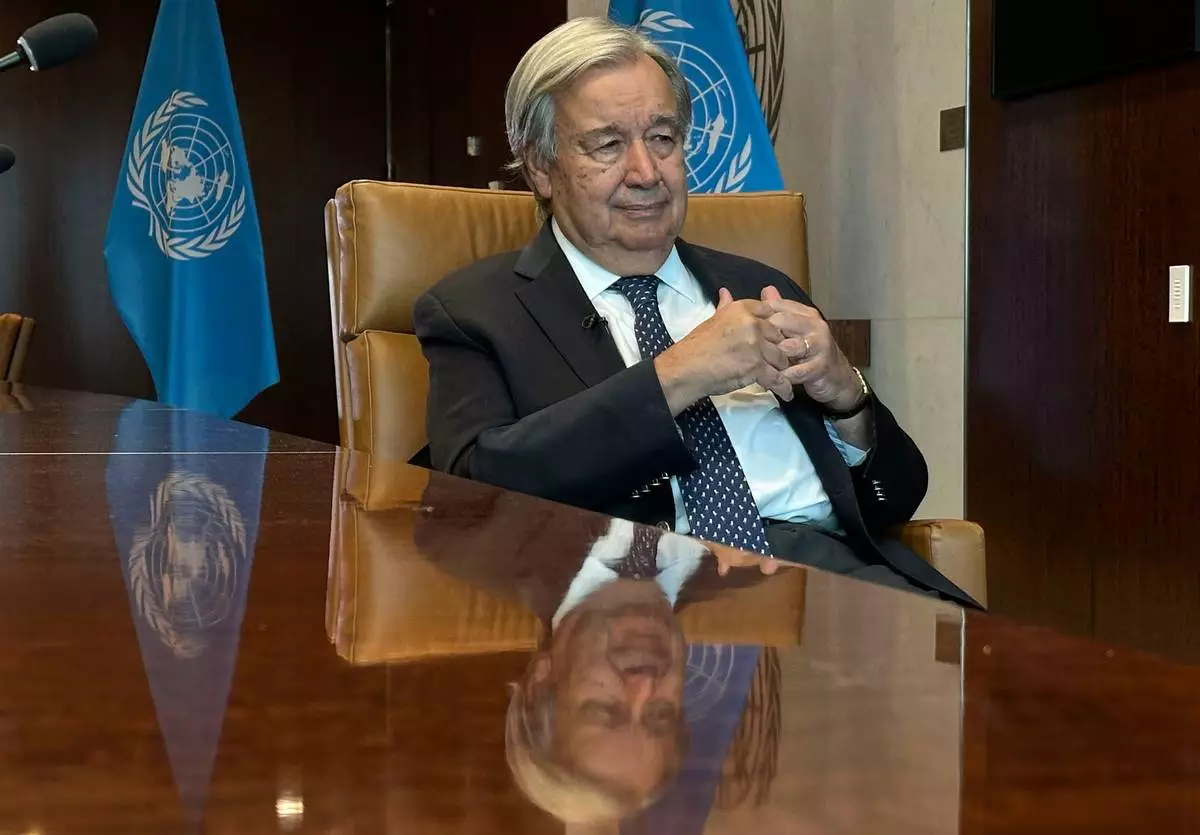
The United Nations Secretary-General Antonio Guterres speaks during an interview with The Associated Press at the United Nations headquarters, Thursday, Sept. 17, 2026. (AP Photo/David R Martin)