Skip to Content Facebook Feature Image

Exploring local life in rural China gains popularity among int'l tourists

China

Exploring local life in rural China gains popularity among int'l tourists
China

China

Exploring local life in rural China gains popularity among int'l tourists

2025-08-10 16:54 Last Updated At:19:17

An increasing number of international tourists are now shifting their focus from visiting landmark tourist sites to diving into local life in rural China.

In an ancient village in the Sanshui District of Foshan City, in south China's Guangdong Province, international tourists are captivated by the stunning beauty of lush, green lotus leaves as they wander along ponds, stopping frequently to take photos.

Brazilian tourist Marcelo tried a freshly dug lotus root offered by a local resident and then took a curious bite.

"Little bit sweet, it's good. The texture is interesting. This is a new experience because I never saw this in my life. I never saw the plant. I never see how is the farmer works with this," he said.

"I love the flowers, they look so beautiful. Not just the fancy pictures for Instagram or like any social media, it's really real stuff which shows you where food come from and I love the local lifestyle," said Belarusian visitor Tanya

Freshly picked lotus roots, seeds, leaves, and flowers are key ingredients for the local Lingnan dish during summer. After frying, steaming, and simmering, dishes made with these ingredients were brought to the table. The floral banquet won high praise from the guests.

"It's so delicious, I love all the colors, and it's really cool to see how this morning we saw the plant and now we're eating it and all the different parts of it," said Canadian tourist Aliya.

In addition to foods, Sanshui also boasts a century-old football tradition. Every village here sets up a football team, and all the teams will gather to compete every summer. Foreign tourists can not only watch the matches up close but also join in the sporting event.

"Amazing this is, it's one of my favourite sports, so really, really happy that I got the opportunity to do this," said Chad, a tourist from Canada.

"It's a famous place to play football, so a lot of people come here to enjoy," said Mauriti from Brazil.

"Come to a place and then connect with the culture of the local people and find out a little bit more about the history and what they did, and it is a very immersive experience," said Pardeep from India.

Showing a stronger interest in exploring China in depth, more foreign visitors are signing up for short-term, on-the-spot tours during their trips. This trend is driving growth in customized and niche inbound tourism products, with rural tours and tours featuring traditional cultural experiences being especially popular.

"For foreign tourists, we offer travel packages combining sports watching, cuisine, rural scenery sightseeing, and traditional culture experience. They've been very popular this summer. Since July, the number of foreign tourists signing up for these products has increased by 8 percent year on year," said Zhang Jialu, marketing director at Foshan Jiachi Tourism and Cultural Development Co., Ltd.

Exploring local life in rural China gains popularity among int'l tourists

Exploring local life in rural China gains popularity among int'l tourists

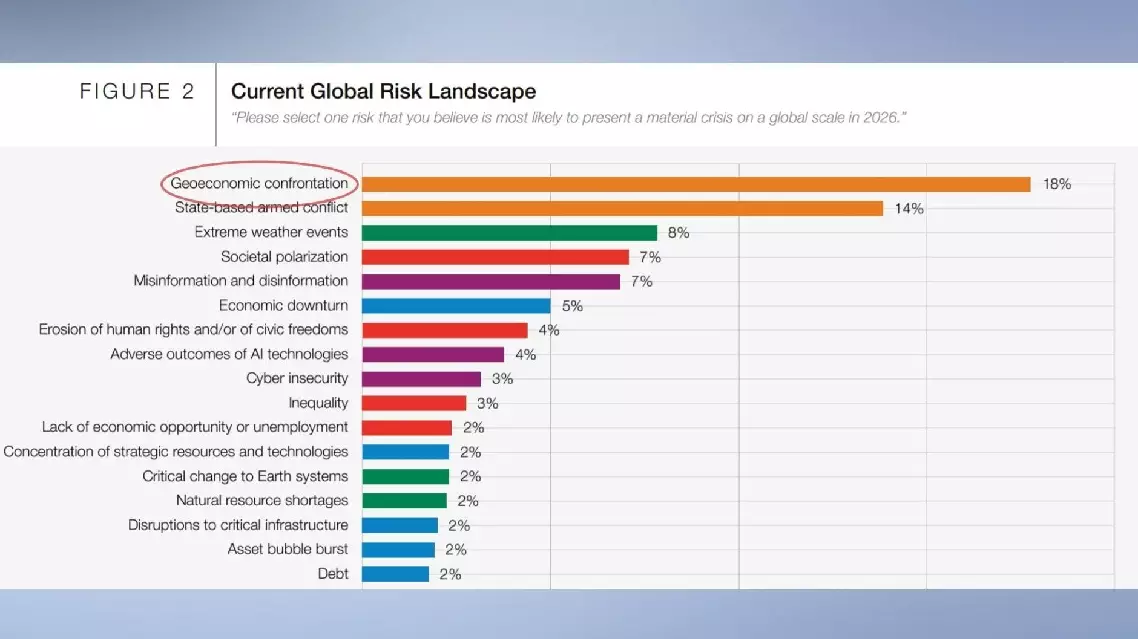
Geoeconomic confrontation is the leading short-term global threat in 2026, the World Economic Forum (WEF) warned in its Global Risks Report 2026 released on Wednesday ahead of its annual meeting in Davos, Switzerland.

The report ranks geoeconomic confrontation as the top risk for 2026, followed by interstate conflict, extreme weather, societal polarization, and misinformation and disinformation. It also identifies geoeconomic confrontation as the most severe risk over the next two years.

"I think if there is to be one key takeaway from the report, it's that we are entering an age of competition and this new competitive order is then shaping current global risks, but it is also shaping and to some extent hindering our ability to actually cope with them. That's really the key takeaway. If we take a look at, the number one risk both for 2026 and two years out, it's dual economic confrontation. But then if we look at the risks 10 years out. It's really the climate and environment related risks. All of these things require global cooperation and that's where we're seeing a big backsliding in this new age of competition," said Saadia Zahidi, managing director of the WEF.

Economic risks showed the largest increase in the two-year outlook, with concerns over economic downturns, inflation, rising debt and potential asset bubbles intensifying amid geoeconomic tensions, the report said.

Environmental risks remain the most severe overall, led by extreme weather, biodiversity loss and critical changes to Earth systems. The report noted that three-quarters of respondents expect a turbulent environmental outlook.

Risks related to adverse outcomes of artificial intelligence rose sharply, climbing from 30th in the two-year horizon to fifth in the 10-year outlook, reflecting concerns over impacts on labor markets, society and security.

The 21st edition of the report draws on views from more than 1,300 experts, policymakers and industry leaders.

The WEF's annual meeting will be held in Davos from Jan 19 to 23 and draw nearly 3,000 guests from more than 130 countries and regions to participate.

"So overall, we are starting to see this shift away from what have traditionally been the ways in which people have been able to cooperate. Now, that is not to say that any of this is a foregone conclusion. And I think that's a really important message around the risks report. None of this is set in stone. All of this is in the hands of leaders. Whether they choose to cooperate and invest in resilience or whether they do not. So that's really what we'll be focused on next week in Davos bringing leaders together under this overall theme of 'a spirit of dialogue' and trying to reestablish relationships, cooperation and trust. That's the fundamental," said Zahidi.

WEF warns of rising geoeconomic risks in 2026

WEF warns of rising geoeconomic risks in 2026

Recommended Articles