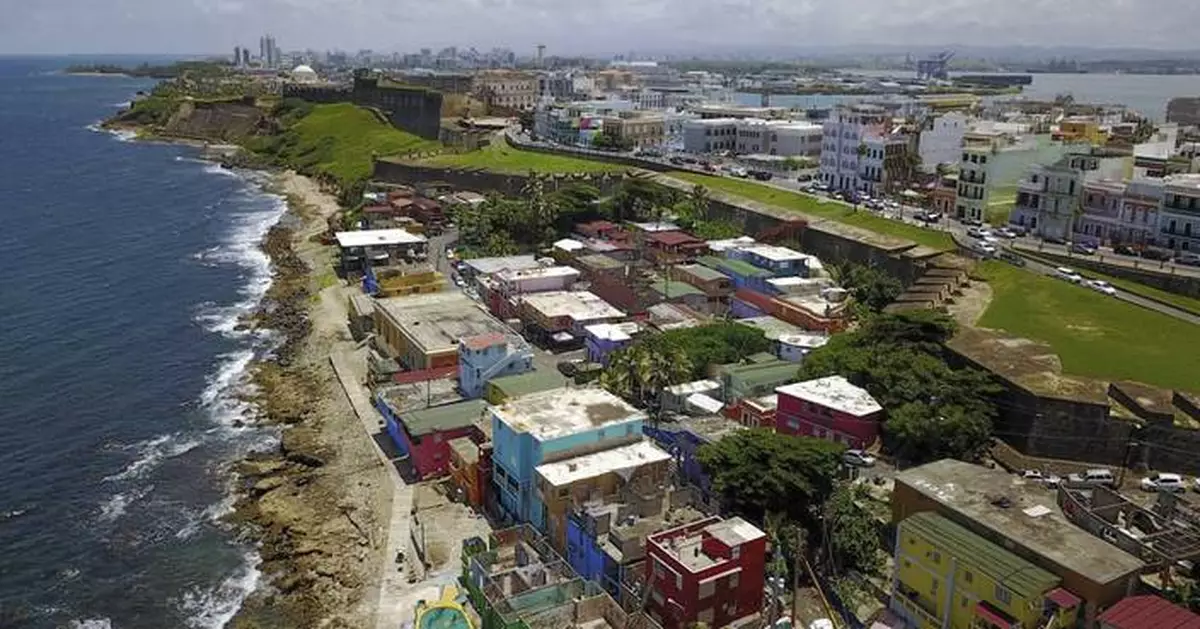
SAN JUAN, Puerto Rico (AP) — A tourist from the U.S. mainland who was visiting Puerto Rico for Bad Bunny's residency was fatally shot early Sunday at La Perla, a popular seaside shantytown, police said.
The victim was identified as Kevin Mares, a 25-year-old who lived in New York, according to a police statement.
The shooting happened in the predawn hours at a nightspot called “Refuge for Mistreated Men” in La Perla, a coastal community that has struggled to shed its dark reputation.
Homicide detective Sgt. Arnaldo Ruiz said in a phone interview that the shooting took place when several people near Mares began arguing and one pulled out a gun and shot at least three people, including Mares. A brother and a sister in their mid-40s who live in La Perla were injured and remain hospitalized.
Ruiz said Mares was an innocent bystander. He was with three other friends who told police they were in Puerto Rico for one of Bad Bunny's 30 concerts, which have attracted tens of thousands of visitors to the U.S. territory.
Mares was shot on the left side of his abdomen and was taken to Puerto Rico’s largest public hospital, where he died, authorities said.
Ruiz said police don’t yet know what the people were arguing about and don’t have a description of the shooter. “We have very little information,” he said.
Ruiz added that Mares’ three friends also were from New York. He didn’t have their hometowns.
San Juan Mayor Miguel Romero told reporters Sunday that he would share footage from security cameras in the area, adding that Mares' partner had opted not to visit la Perla with him.
Police said the incident occurred at 4:13 a.m., even though a municipal code approved in 2023 states that authorized businesses in San Juan can only serve or sell alcohol from 6 a.m. to 1 a.m. from Sunday to Thursday, and up to 2 a.m. on Friday and Saturday, and on Sunday if Monday is a holiday.
La Perla is located on the outskirts of a historic district popular with tourists known as Old San Juan. A couple hundred people live in the shantytown, which once served as Puerto Rico’s biggest distribution point for heroin and was known for its violence.
Police used to avoid the community, which used to have a sign proclaiming, “Not open to visitors. Do not enter.”
But violence eased when hundreds of federal agents raided the slum in 2011 and arrested dozens of people, including a well-known community leader who was later convicted.
The neighborhood became even safer and more welcoming after Puerto Rican singers Luis Fonsi and Daddy Yankee featured it in their hit, “Despacito.”
But isolated violence persists.
In February 2023, three tourists were stabbed after police said a person told them to stop filming inside the community.
Then in April 2024, a 24-year-old tourist from Delaware was killed and his body set on fire after police said he and a friend were attacked following a drug purchase. Police said the victims were trying to take pictures of La Perla after being warned not to do so.
The island of 3.2 million people has reported 277 killings so far this year, compared with 325 killings in the same period last year.
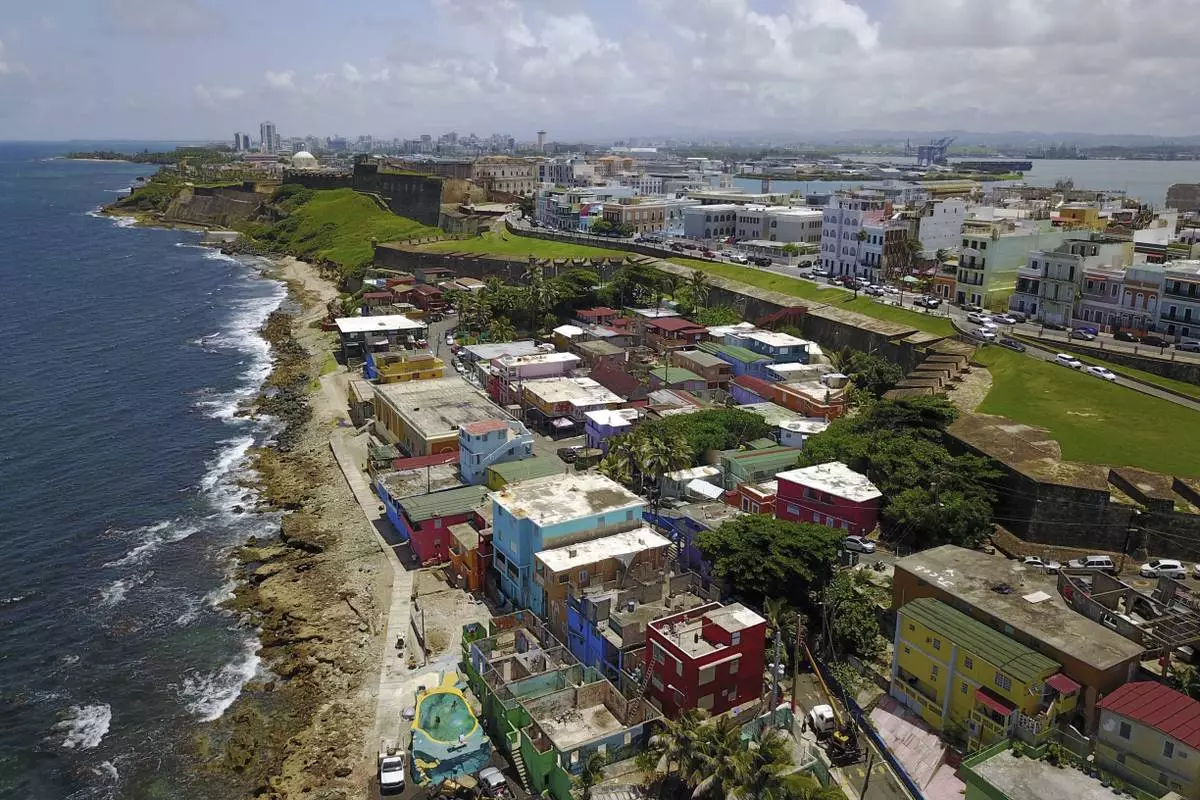
FILE - An aerial view of the seaside neighborhood of La Perla, in San Juan, Puerto Rico, is seen on Aug. 25, 2017. (AP Photo/Ricardo Arduengo, File)
The world’s first legally binding agreement to protect marine life in international waters took effect Saturday, marking a historic moment for ocean conservation after nearly two decades of negotiations.
The High Seas Treaty will govern nearly half the planet’s surface – the vast ocean areas beyond any country’s control. These waters face mounting threats from destructive fishing practices, shipping, plastic pollution, overfishing and potential deep sea mining, all compounded by climate change. The ocean absorbs carbon dioxide and produces oxygen, making its health critical for addressing the climate crisis.
The treaty entered into force 120 days after it reached the threshold of ratification by 60 countries in September. As of Friday, 83 countries had ratified it, including the recent addition of major maritime powers such as China and Japan.
The treaty creates the first framework for establishing Marine Protected Areas on the high seas, which make up about two-thirds of the world’s ocean. Currently, only around 1% of these international waters are protected.
From Saturday, ratifying countries must begin working together on ocean science and technology as well as help developing nations build capacity to participate in ocean governance. Companies planning activities that could harm marine life must conduct environmental impact assessments that meet the treaty’s standards. Those conducting research on ocean organisms that could be used commercially, such as for new medicines, must notify other countries and share their findings.
Perhaps most significantly, countries must now promote the treaty’s conservation goals when they participate in other international bodies that regulate ocean activities, such as regional fisheries organizations, the International Maritime Organization and the International Seabed Authority.
While key institutions like the treaty’s secretariat and scientific body are still being developed, countries can begin preparing proposals for Marine Protected Areas immediately. Potential sites include the Emperor Seamounts in the North Pacific, the Sargasso Sea in the Atlantic and the Salas y Gomez and Nazca Ridges off South America.
Conservationists warn governments must act quickly to achieve the global goal of protecting 30% of the world’s oceans by 2030 – a target scientists say is critical for ocean health. Because the high seas make up such a vast portion of the oceans, their protection is essential to reaching that goal.
“The marine protected areas under the treaty will only be as strong as the governments make them,” said Megan Randles, global political lead for Greenpeace’s Ocean Campaign. “We can’t trust big fishing industry players to simply stop fishing in these critical ecosystems. We need governments to use the treaty to force their hands.”
How those protected areas will actually be monitored and enforced is undecided. Countries are exploring various options, from satellite technology to coordinating patrols between multiple nations to using other UN agencies to help with oversight, said Rebecca Hubbard, director of the High Seas Alliance. Those details will be worked out as the first protected areas take shape.
Within a year, the treaty’s first Conference of Parties will meet to decide key operational details, from budgets to the makeup of various committees. Countries have been working through many of those questions at preparatory meetings, with a final session scheduled for late March. The earliest any Marine Protected Areas could actually win approval would be at the second COP, since the scientific body that will review proposals hasn’t yet been established.
The United States has signed but not ratified the treaty, meaning it can participate as an observer but won’t have voting rights. Under international law, signatory countries are expected to comply with treaty objectives even before ratification.
“The High Seas Treaty has such incredibly broad and strong political support from across all regions of the world,” said Hubbard. “Whilst it’s disappointing that the U.S. hasn’t yet ratified, it doesn’t undermine its momentum and the support that it has already.”
Advocates emphasize that broad support must now turn into rapid implementation.
“The treaty is a sign that in a divided world, protecting nature and protecting our global commons can still triumph over political rivalries,” Randles said. “The ocean connects us all.”
Follow Annika Hammerschlag on Instagram @ahammergram.
The Associated Press receives support from the Walton Family Foundation for coverage of water and environmental policy. The AP is solely responsible for all content. For all of AP’s environmental coverage, visit https://apnews.com/hub/climate-and-environment

Strands of kelp rise from a thinned kelp forest off the coast of La Jolla, Calif., Tuesday, Dec. 2, 2025. (AP Photo/Annika Hammerschlag)

FILE - Corals grow off Efate Island, Vanuatu, Saturday, July 26, 2025. (AP Photo/Annika Hammerschlag, File)

FILE - Coral is visible in the protected area of France's Porquerolles National Park ahead of the U.N. Ocean Conference on June 6, 2025. (AP Photo/Annika Hammerschlag, File)

FILE - Common two-banded seabream fish swim in the protected area of France's Porquerolles National Park ahead of the U.N. Ocean Conference on June 6, 2025. (AP Photo/Annika Hammerschlag, File)

FILE - A clownfish swims at Havannah Harbour, off the coast of Efate Island, Vanuatu, July 20, 2025. (AP Photo/Annika Hammerschlag, File)