Skip to Content Facebook Feature Image

On the front lines in eastern Ukraine, peace feels far away

News

On the front lines in eastern Ukraine, peace feels far away
News

News

On the front lines in eastern Ukraine, peace feels far away

2025-08-11 23:40 Last Updated At:23:50

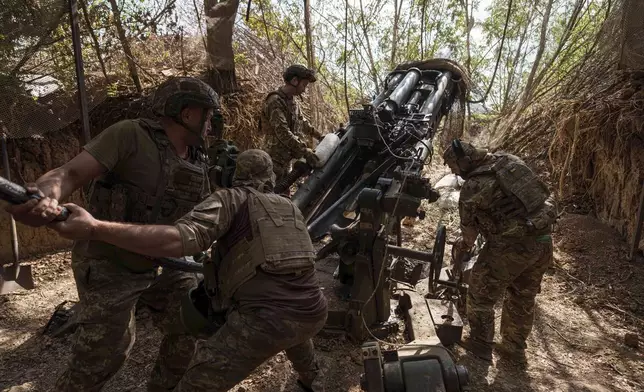
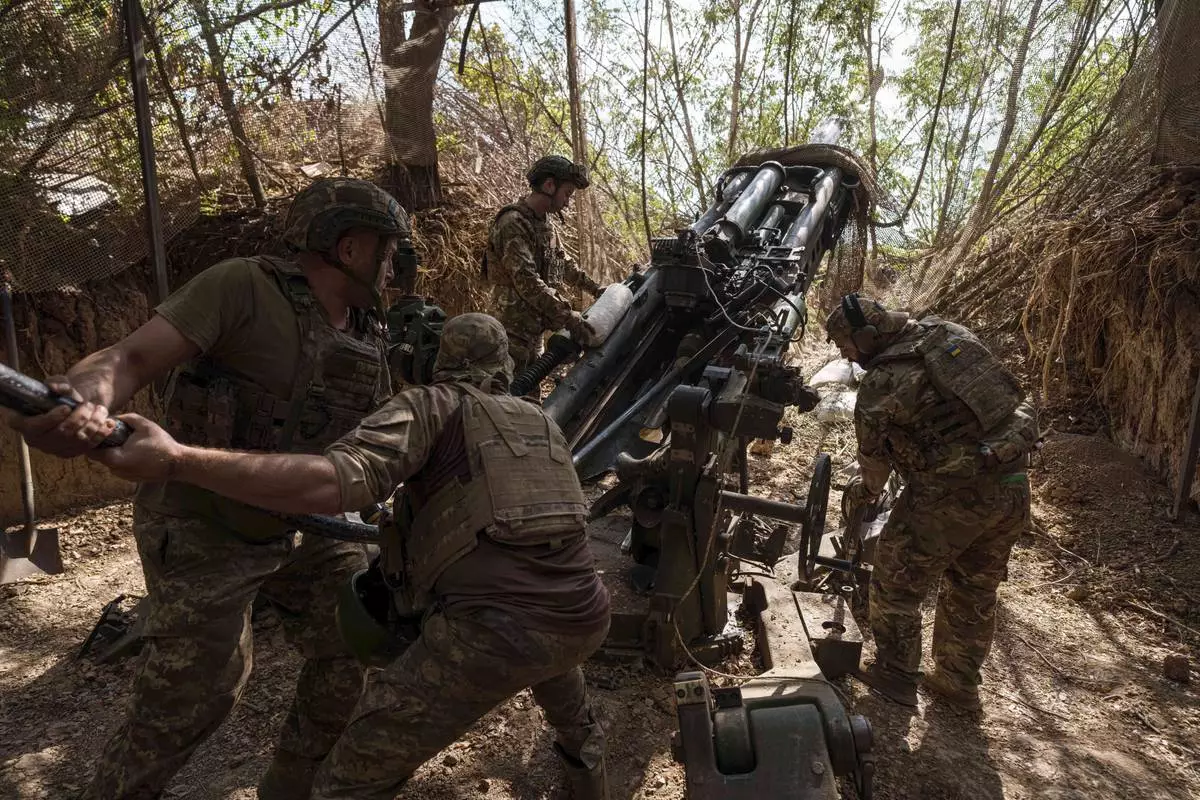
DONETSK REGION, Ukraine (AP) — In a plastic-lined dugout where nearby blasts send dirt raining from the ceiling, Ukrainian soldiers say peace talks feel distant and unlikely to end the war. Explosions from Russian weapons — from glide bombs to artillery shells — thunder overhead, keeping the soldiers underground except when they fire the M777 howitzer buried near their trench.

Nothing on the Eastern Front suggests the fighting could end soon.

More Images
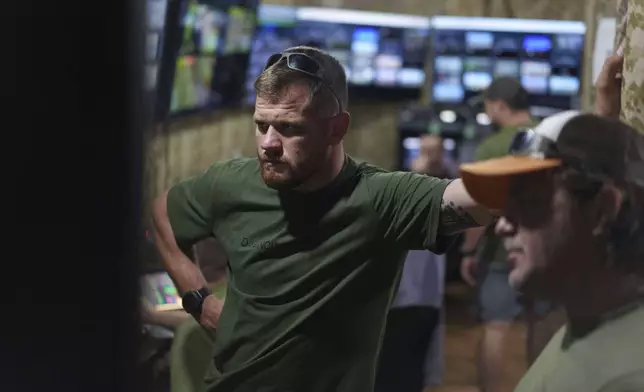
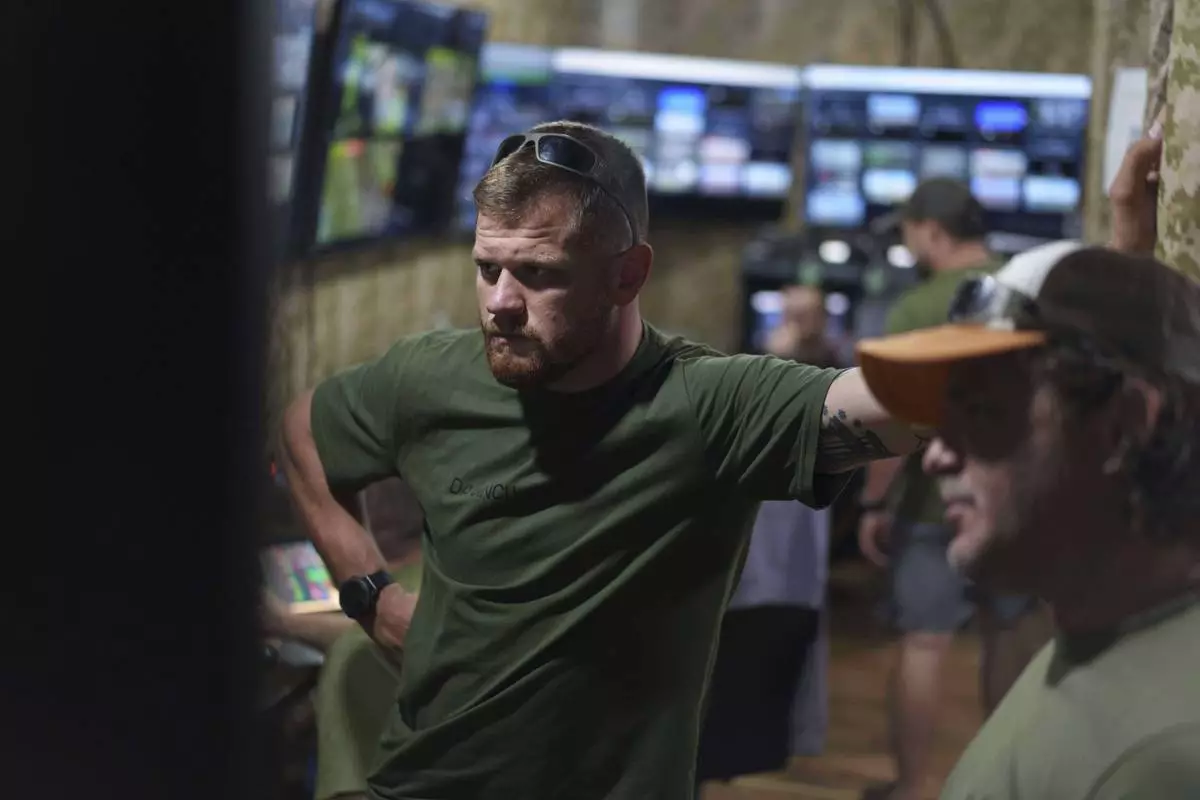
Serhii Filimonov, commander of the Da Vinci Wolves Battalion looks on a live stream from the frontline during fighting with Russian on Pokrovsk direction, Ukraine, Saturday, Aug. 9, 2025. (AP Photo/Evgeniy Maloletka)
Serhii Filimonov, commander of the Da Vinci Wolves Battalion looks on a live stream from the frontline during fighting with Russian on Pokrovsk direction, Ukraine, Saturday, Aug. 9, 2025. (AP Photo/Evgeniy Maloletka)

Ukrainian servicemen of the 148th artillery brigade load ammunition into a M777 howitzer before firing towards Russian positions at the frontline in Zaporizhzhia region, Ukraine, on Thursday, Aug. 7, 2025. (AP Photo/Evgeniy Maloletka)
Ukrainian servicemen of the 148th artillery brigade load ammunition into a M777 howitzer before firing towards Russian positions at the frontline in Zaporizhzhia region, Ukraine, on Thursday, Aug. 7, 2025. (AP Photo/Evgeniy Maloletka)
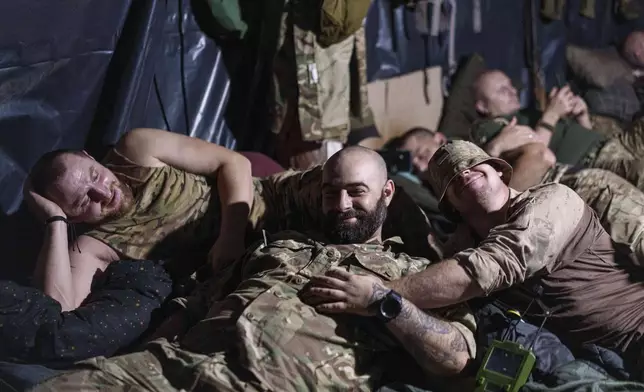
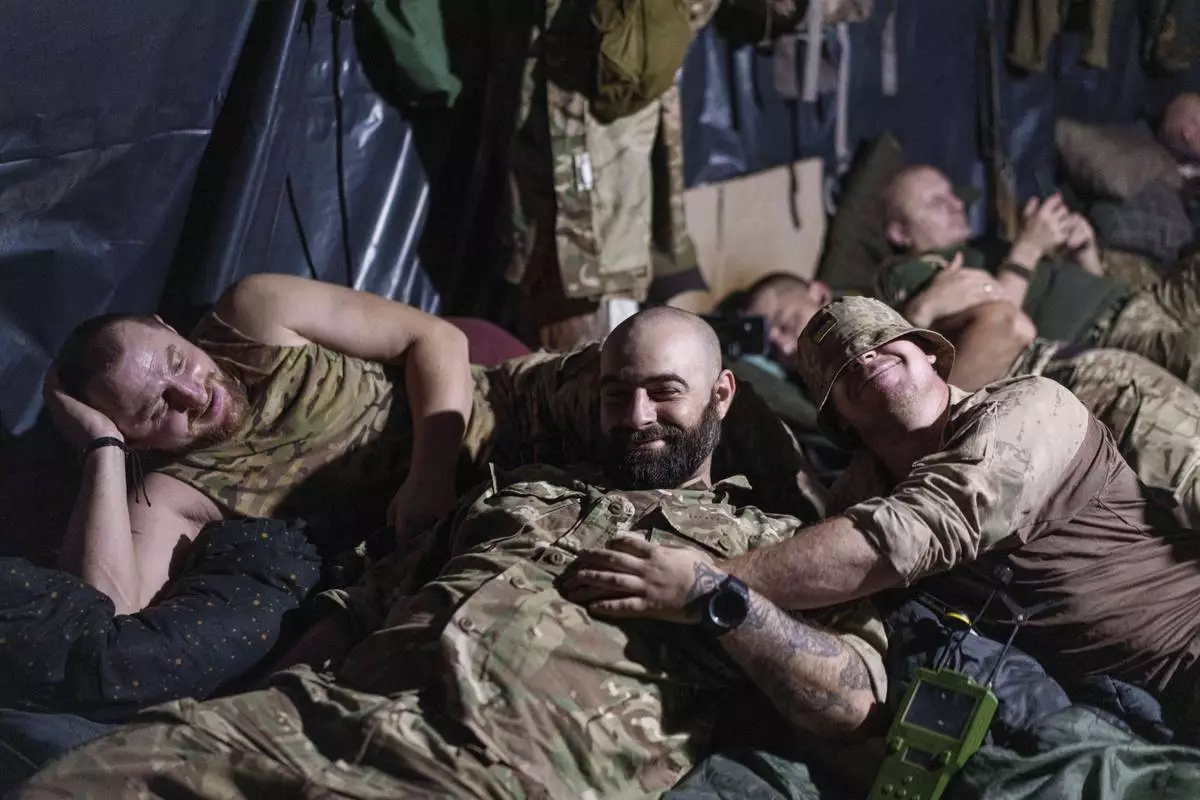
Ukrainian servicemen of the 148th artillery brigade rest in a dugout at the frontline in Zaporizhzhia region, Ukraine, on Thursday, Aug. 7, 2025. (AP Photo/Evgeniy Maloletka)

Ukrainian servicemen of the 148th artillery brigade rest in a dugout at the frontline in Zaporizhzhia region, Ukraine, on Thursday, Aug. 7, 2025. (AP Photo/Evgeniy Maloletka)

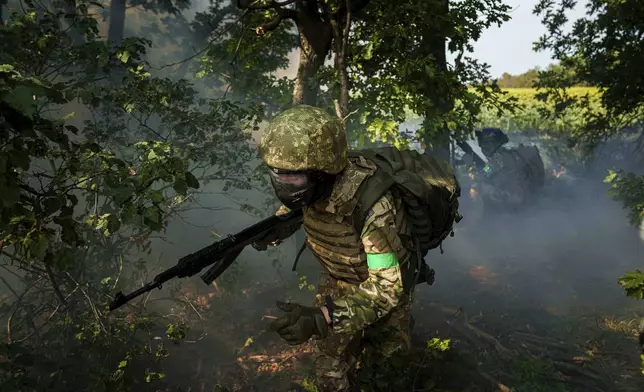
A Ukrainian National Guard serviceman of 3rd brigade «Spartan» runs through a tree line during a training not far from the frontline on Pokrovsk direction, Ukraine, on Friday, August 8, 2025. (AP Photo/Evgeniy Maloletka)
A Ukrainian National Guard serviceman of 3rd brigade «Spartan» runs through a tree line during a training not far from the frontline on Pokrovsk direction, Ukraine, on Friday, August 8, 2025. (AP Photo/Evgeniy Maloletka)

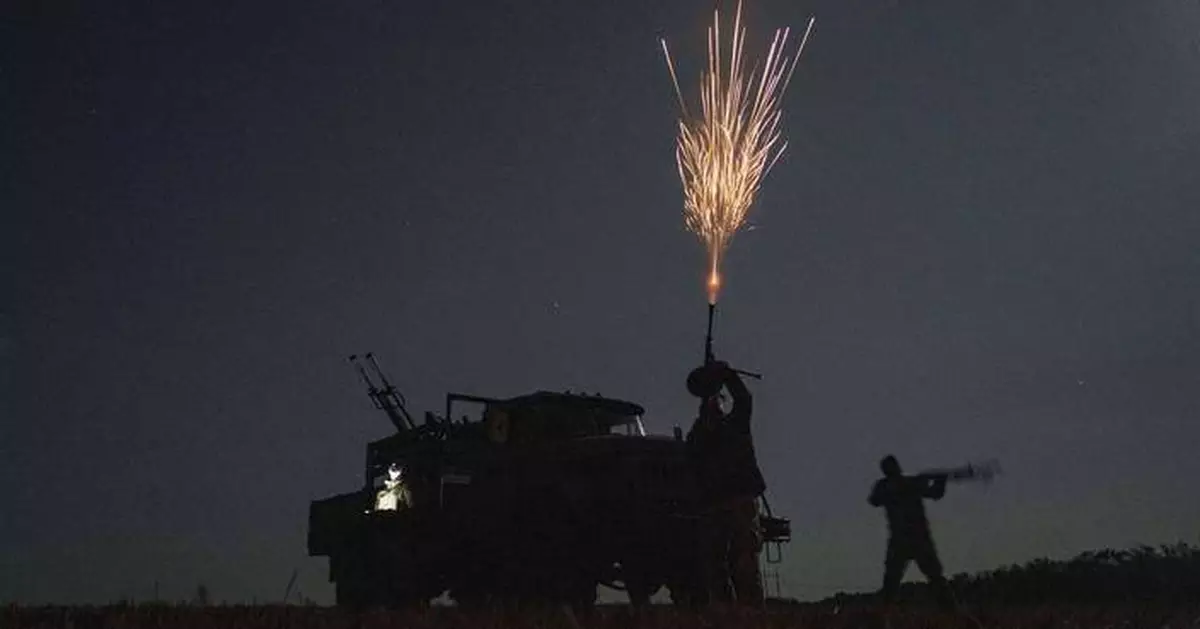
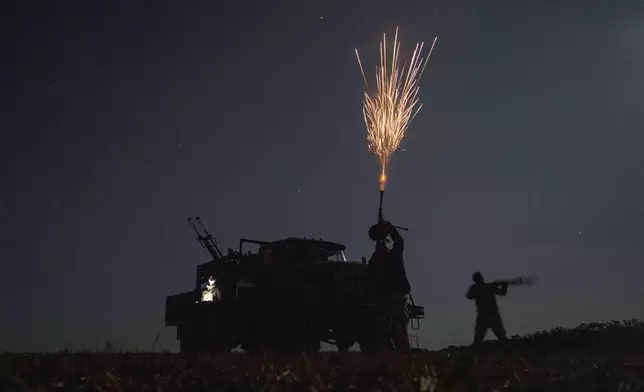
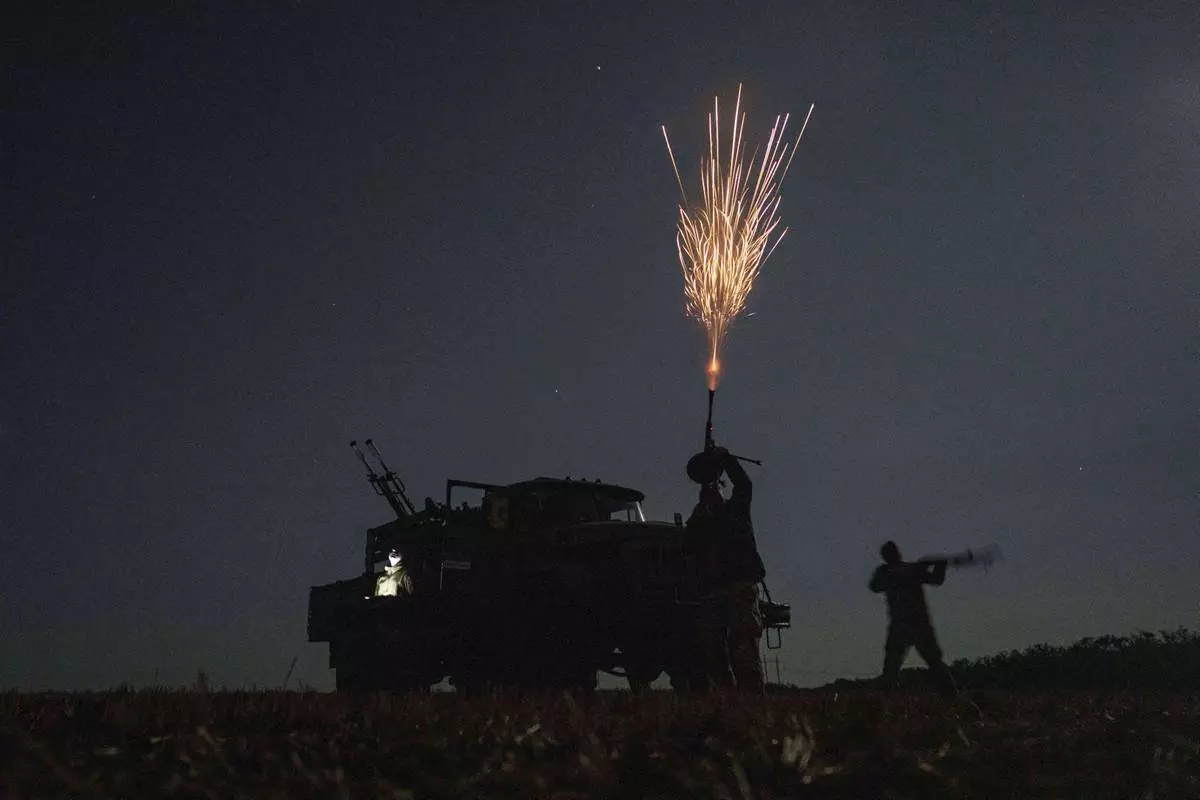
Ukrainian soldiers from air-defence unit of 59th brigade fire at Russian strike drones in Dnipropetrovsk region, Ukraine, Sunday, Aug. 10, 2025. (AP Photo/Evgeniy Maloletka)

Ukrainian soldiers from air-defence unit of 59th brigade fire at Russian strike drones in Dnipropetrovsk region, Ukraine, Sunday, Aug. 10, 2025. (AP Photo/Evgeniy Maloletka)

Soldiers' skepticism over diplomatic peace efforts is rooted in months of what they see as broken U.S. promises to end the war quickly.

Recent suggestions by U.S. President Donald Trump that there will be some " swapping of territories” — and media reports that it would involve Ukrainian troops leaving the Donetsk region where they have fought for years defending every inch of land — have stirred confusion and rejection among the soldiers.

More likely than an end to the war, they say, is a brief pause in hostilities before Russia resumes the assault with greater force.

“At minimum, the result would be to stop active fighting — that would be the first sign of some kind of settlement,” said soldier Dmytro Loviniukov of the 148th brigade. “Right now, that’s not happening. And while these talks are taking place, they (the Russians) are only strengthening their positions on the front line.”

On one artillery position, talk often turns to home. Many Ukrainian soldiers joined the army in the first days of the full-scale invasion in February 2022, leaving behind civilian jobs. Some thought they would serve only briefly. Others didn’t think about the future — because at that moment, it didn’t exist.

In the years since, many have been killed. Those who survived are in their fourth year of a grueling war, far removed from the civilian lives they once knew. With the war dragging on far longer than expected, there is no one to replace them as the Ukrainian army struggles with recruiting new people.

The army also cannot demobilize those who serve without risking the collapse of the front.

That is why soldiers watch for even the possibility of a pause in hostilities. When direct talks between Russia and Ukraine were held in Istanbul in May, the soldiers from the 148th brigade read the news with cautious hope, said a soldier with the call sign Bronson, who once worked as a tattoo artist.

Months later, hope has been replaced with dark humor. On the eve of a deadline that U.S. President Donald Trump reportedly gave Russian President Vladimir Putin — one that has since vanished from the agenda amid talk of Friday's meeting in Alaska — Russian fire roared every minute for hours. Soldiers joked that the shelling was because the deadline was “running out.”

“We are on our land. We have no way back,” said Loviniukov, the commander of the artillery group. “We stand here because there is no choice. No one else will come here to defend us.”

Dozens of kilometers from the Zaporizhzhia region, north to the Donetsk area, heavy fighting grinds on toward Pokrovsk — now the epicenter of fighting.

Once home to about 60,000 people, the city has been under sustained Russian assault for months. The Russians have formed a pocket around Pokrovsk, though Ukrainian troops still hold the city and street fighting has yet to begin. Reports of Russian saboteurs entering the city started to appear almost daily, but the military says those groups have been neutralized.

Ukrainian soldiers of the Spartan brigade push through drills with full intensity, honing their skills for the battlefield in the Pokrovsk area.

Everything at the training range, dozens of kilometers from the front, is designed to mirror real combat conditions — even the terrain. A thin strip of forest breaks up the vast fields of blooming sunflowers stretching into the distance until the next tree line appears.

One of the soldiers training there is a 35-year-old with the call sign Komrad, who joined the military recently. He says he has no illusions that the war will end soon.

“My motivation is that there is simply no way back,” he said. “If you are in the military, you have to fight. If we’re here, we need to cover our brothers in arms.”

For Serhii Filimonov, commander of the “Da Vinci Wolves” battalion of the 59th brigade, the war’s end is nowhere in sight, and current news doesn’t influence the struggle to find enough resources to equip the unit that is fighting around Pokrovsk.

“We are preparing for a long war. We have no illusions that Russia will stop," he said, speaking at his field command post. "There may be a ceasefire, but there will be no peace.”

Filimonov dismissed recent talk of exchanging territory or signing agreements as temporary fixes at best.

“Russia will not abandon its goal of capturing all of Ukraine,” he said. “They will attack again. The big question is what security guarantees we get — and how we hit pause."

A soldier with the call sign Mirche from the 68th brigade said that whenever there is a new round of talks, the hostilities intensify around Pokrovsk — Russia’s key priority during this summer’s campaign.

Whenever peace talks begin, "things on the front get terrifying,” he said.

Associated Press reporters Vasilisa Stepanenko, Evgeniy Maloletka and Dmytro Zhyhinas in the Donetsk region and Volodymyr Yurchuk in Kyiv, Ukraine, contributed to this report.
Serhii Filimonov, commander of the Da Vinci Wolves Battalion looks on a live stream from the frontline during fighting with Russian on Pokrovsk direction, Ukraine, Saturday, Aug. 9, 2025. (AP Photo/Evgeniy Maloletka)
Serhii Filimonov, commander of the Da Vinci Wolves Battalion looks on a live stream from the frontline during fighting with Russian on Pokrovsk direction, Ukraine, Saturday, Aug. 9, 2025. (AP Photo/Evgeniy Maloletka)

Ukrainian servicemen of the 148th artillery brigade load ammunition into a M777 howitzer before firing towards Russian positions at the frontline in Zaporizhzhia region, Ukraine, on Thursday, Aug. 7, 2025. (AP Photo/Evgeniy Maloletka)
Ukrainian servicemen of the 148th artillery brigade load ammunition into a M777 howitzer before firing towards Russian positions at the frontline in Zaporizhzhia region, Ukraine, on Thursday, Aug. 7, 2025. (AP Photo/Evgeniy Maloletka)

Ukrainian servicemen of the 148th artillery brigade rest in a dugout at the frontline in Zaporizhzhia region, Ukraine, on Thursday, Aug. 7, 2025. (AP Photo/Evgeniy Maloletka)

Ukrainian servicemen of the 148th artillery brigade rest in a dugout at the frontline in Zaporizhzhia region, Ukraine, on Thursday, Aug. 7, 2025. (AP Photo/Evgeniy Maloletka)

A Ukrainian National Guard serviceman of 3rd brigade «Spartan» runs through a tree line during a training not far from the frontline on Pokrovsk direction, Ukraine, on Friday, August 8, 2025. (AP Photo/Evgeniy Maloletka)
A Ukrainian National Guard serviceman of 3rd brigade «Spartan» runs through a tree line during a training not far from the frontline on Pokrovsk direction, Ukraine, on Friday, August 8, 2025. (AP Photo/Evgeniy Maloletka)

Ukrainian soldiers from air-defence unit of 59th brigade fire at Russian strike drones in Dnipropetrovsk region, Ukraine, Sunday, Aug. 10, 2025. (AP Photo/Evgeniy Maloletka)
Ukrainian soldiers from air-defence unit of 59th brigade fire at Russian strike drones in Dnipropetrovsk region, Ukraine, Sunday, Aug. 10, 2025. (AP Photo/Evgeniy Maloletka)
The U.N. Security Council scheduled an emergency meeting Thursday to discuss Iran's deadly protests at the request of the United States, even as President Donald Trump left unclear what actions he would take against the Islamic state.

Tehran appeared to make conciliatory statements in an effort to defuse the situation after Trump threatened to take action to stop further killing of protesters, including the execution of anyone detained in Tehran’s bloody crackdown on nationwide protests.

Iran’s crackdown on the demonstrations has killed at least 2,615, the U.S.-based Human Rights Activists News Agency reported. The death toll exceeds any other round of protest or unrest in Iran in decades and recalls the chaos surrounding the country’s 1979 Islamic Revolution.

Iran closed its airspace to commercial flights for hours without explanation early Thursday and some personnel at a key U.S. military base in Qatar were advised to evacuate. The U.S. Embassy in Kuwait also ordered its personnel to “temporary halt” travel to the multiple military bases in the small Gulf Arab country.

Iran previously closed its airspace during the 12-day war against Israel in June.

Here is the latest:

“We are against military intervention in Iran,” Turkish Foreign Minister Hakan Fidan told journalists in Istanbul on Thursday. “Iran must address its own internal problems… They must address their problems with the region and in global terms through diplomacy so that certain structural problems that cause economic problems can be addressed.”

Ankara and Tehran enjoy warm relations despite often holding divergent interests in the region.

Fidan said the unrest in Iran was rooted in economic conditions caused by sanctions, rather than ideological opposition to the government.

Iranians have been largely absent from an annual pilgrimage to Baghdad, Iraq, to commemorate the death of Imam Musa al-Kadhim, one of the twelve Shiite imams.

Many Iranian pilgrims typically make the journey every year for the annual religious rituals.

Streets across Baghdad were crowded with pilgrims Thursday. Most had arrived on foot from central and southern provinces of Iraq, heading toward the shrine of Imam al-Kadhim in the Kadhimiya district in northern Baghdad,

Adel Zaidan, who owns a hotel near the shrine, said the number of Iranian visitors this year compared to previous years was very small. Other residents agreed.

“This visit is different from previous ones. It lacks the large numbers of Iranian pilgrims, especially in terms of providing food and accommodation,” said Haider Al-Obaidi.

Europe’s largest airline group said Thursday it would halt night flights to and from Tel Aviv and Jordan's capital Amman for five days, citing security concerns as fears grow that unrest in Iran could spiral into wider regional violence.

Lufthansa — which operates Swiss, Austrian Airlines, Brussels Airlines and Eurowings — said flights would run only during daytime hours from Thursday through Monday “due to the current situation in the Middle East.” It said the change would ensure its staff — which includes unionized cabin crews and pilots -- would not be required to stay overnight in the region.

The airline group also said its planes would bypass Iranian and Iraqi airspace, key corridors for air travel between the Middle East and Asia.

Iran closed its airspace to commercial flights for several hours early Thursday without explanation.

A spokesperson for Israel’s Airport Authority, which oversees Tel Aviv’s Ben Gurion Airport, said the airport was operating as usual.

Iranian state media has denied claims that a young man arrested during Iran’s recent protests was condemned to death. The statement from Iran’s judicial authorities on Thursday contradicted what it said were “opposition media abroad” which claimed the young man had been quickly sentenced to death during a violent crackdown on anti-government protests in the country.

State television didn’t immediately give any details beyond his name, Erfan Soltani. Iranian judicial authorities said Soltani was being held in a detention facility outside of the capital. Alongside other protesters, he has been accused of “propaganda activities against the regime,” state media said.

New Zealand’s Foreign Minister Winston Peters said Thursday that his government was “appalled by the escalation of violence and repression” in Iran.

“We condemn the brutal crackdown being carried out by Iran’s security forces, including the killing of protesters,” Peters posted on X.

“Iranians have the right to peaceful protest, freedom of expression, and access to information – and that right is currently being brutally repressed,” he said.

Peters said his government had expressed serious concerns to the Iranian Embassy in Wellington.

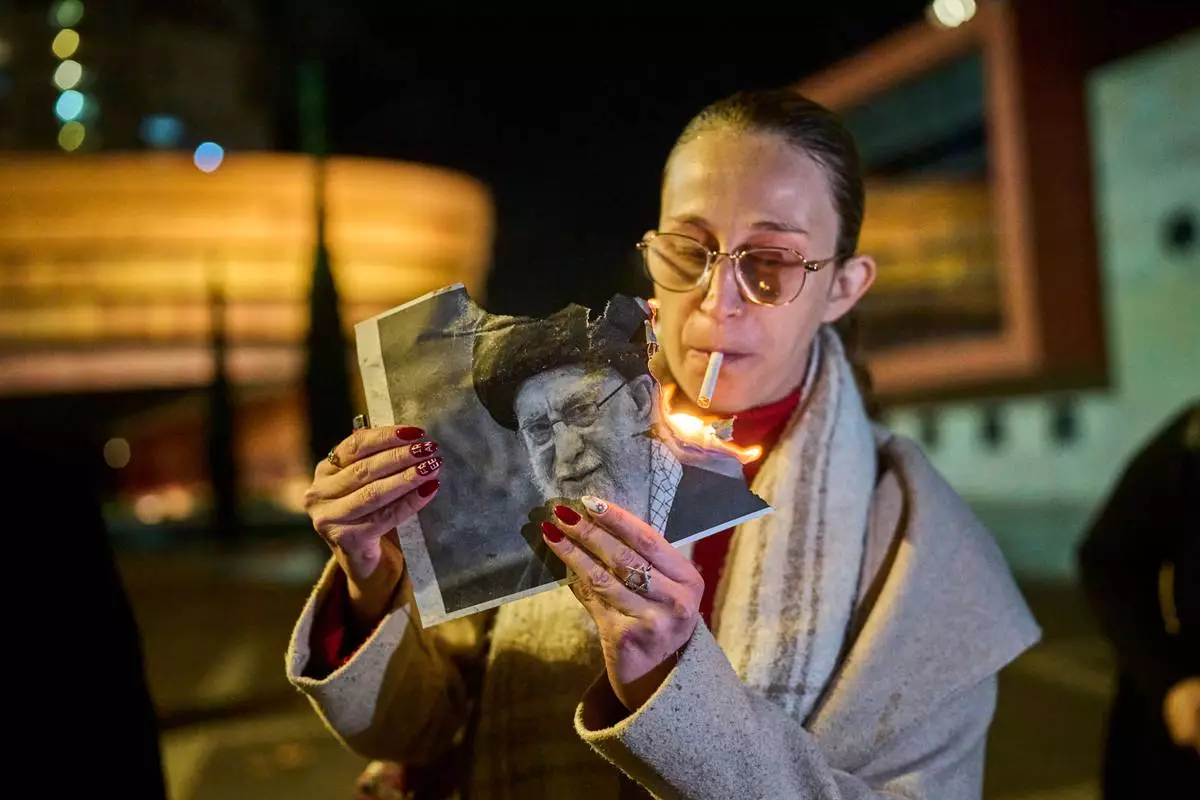
A demonstrator lights a cigarette with a burning poster depicting Supreme Leader Ayatollah Ali Khamenei during a rally in support of Iran's anti-government protests, in Holon, Israel, Wednesday, Jan. 14, 2026. (AP Photo/Ohad Zwigenberg)

A demonstrator lights a cigarette with a burning poster depicting Supreme Leader Ayatollah Ali Khamenei during a rally in support of Iran's anti-government protests, in Holon, Israel, Wednesday, Jan. 14, 2026. (AP Photo/Ohad Zwigenberg)

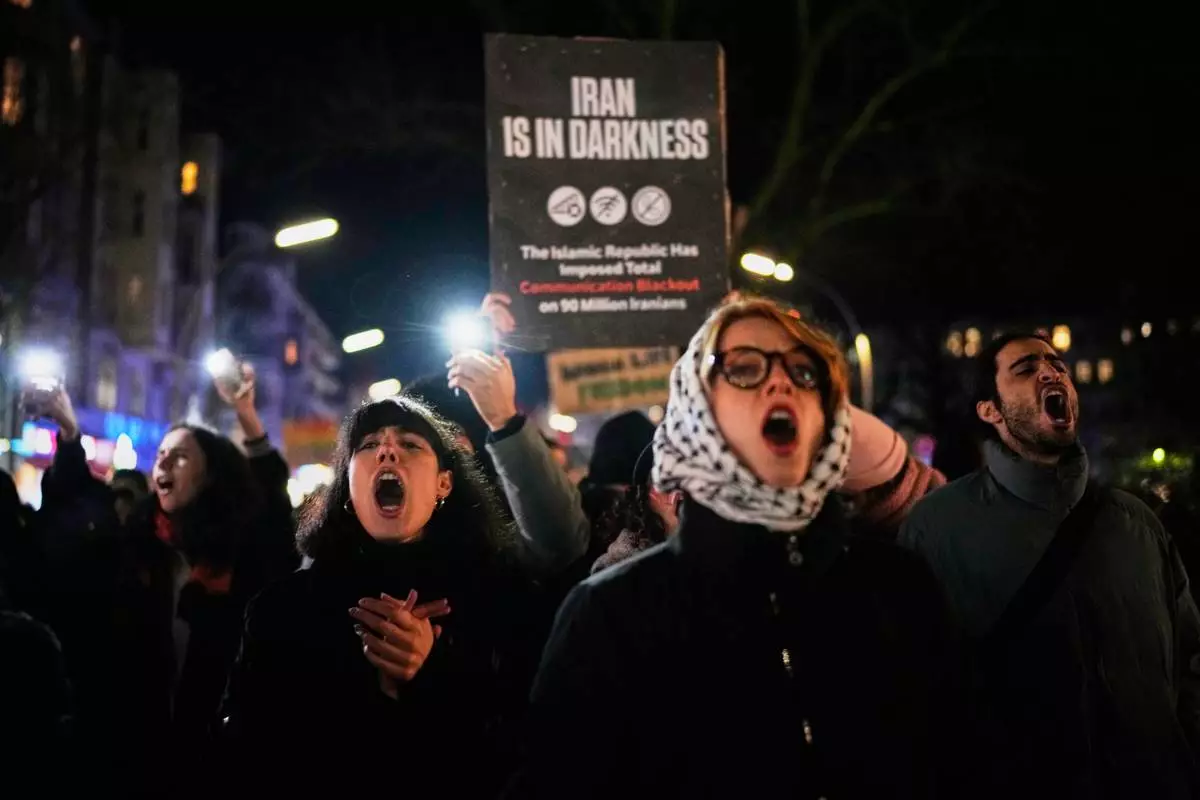
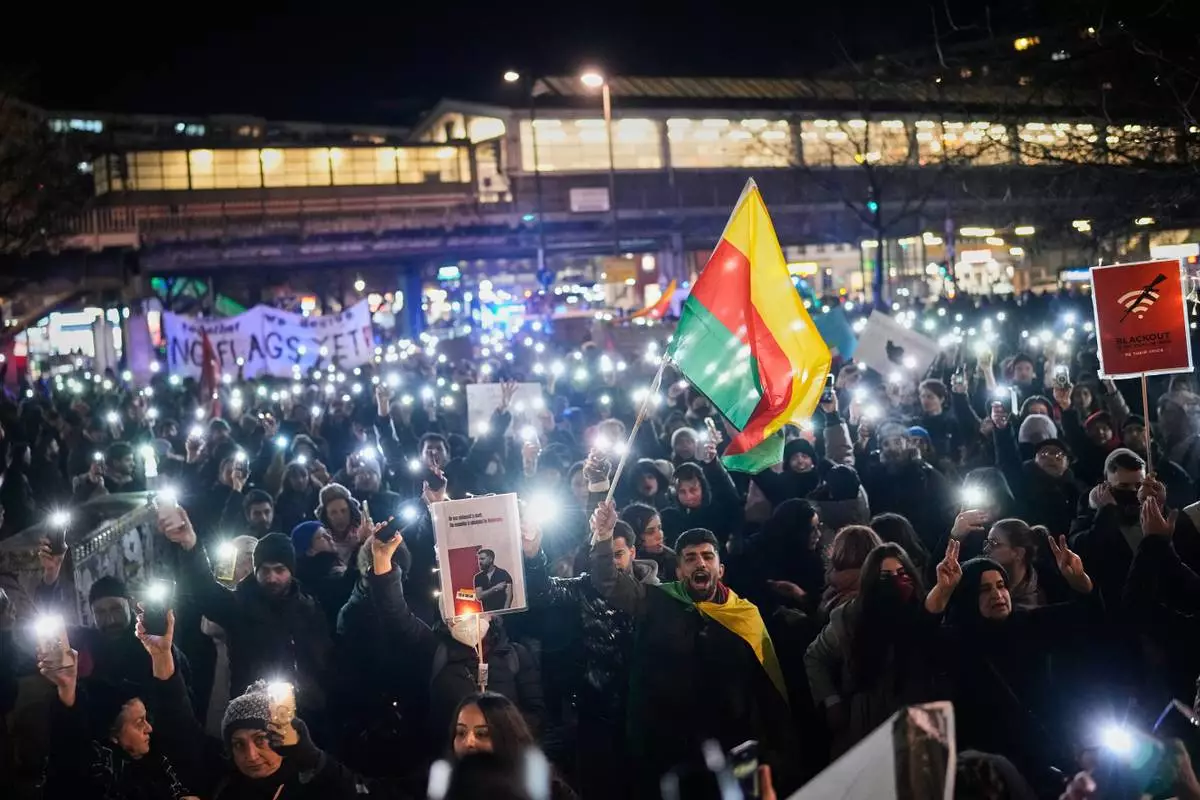
Protesters participate in a demonstration in support of the nationwide mass protests in Iran against the government, in Berlin, Germany, Wednesday, Jan. 14, 2026. (AP Photo/Ebrahim Noroozi)

Protesters participate in a demonstration in support of the nationwide mass protests in Iran against the government, in Berlin, Germany, Wednesday, Jan. 14, 2026. (AP Photo/Ebrahim Noroozi)

Protesters participate in a demonstration in support of the nationwide mass protests in Iran against the government, in Berlin, Germany, Wednesday, Jan. 14, 2026. (AP Photo/Ebrahim Noroozi)

Protesters participate in a demonstration in support of the nationwide mass protests in Iran against the government, in Berlin, Germany, Wednesday, Jan. 14, 2026. (AP Photo/Ebrahim Noroozi)

Recommended Articles