Key Points:
- The Junior Chamber International (JCI) North District organized the "2025 Senior Speed Stack Closing Ceremony," introducing sport stacking to help delay cognitive decline in the elderly.
- Celebrity Tiffany Lau (Tiffany) participated in speed stacking activities with seniors.
- Assistant Professor of Teaching Senior Dr Mok Kam-Ming from Lingnan University's School of Interdisciplinary Studies, conducted a tracking study as part of the project, finding that seniors who consistently participated in speed stacking training showed a downward trend in stress and anxiety levels.
HONG KONG, Aug. 11, 2025 /PRNewswire/ -- As Hong Kong faces an increasingly severe aging population problem, data from the Department of Health shows that 1 in 10 seniors aged 70 or above suffers from dementia, while 1 in 3 seniors aged 85 or above is affected. Therefore, delaying cognitive decline in the elderly has become a key societal concern.
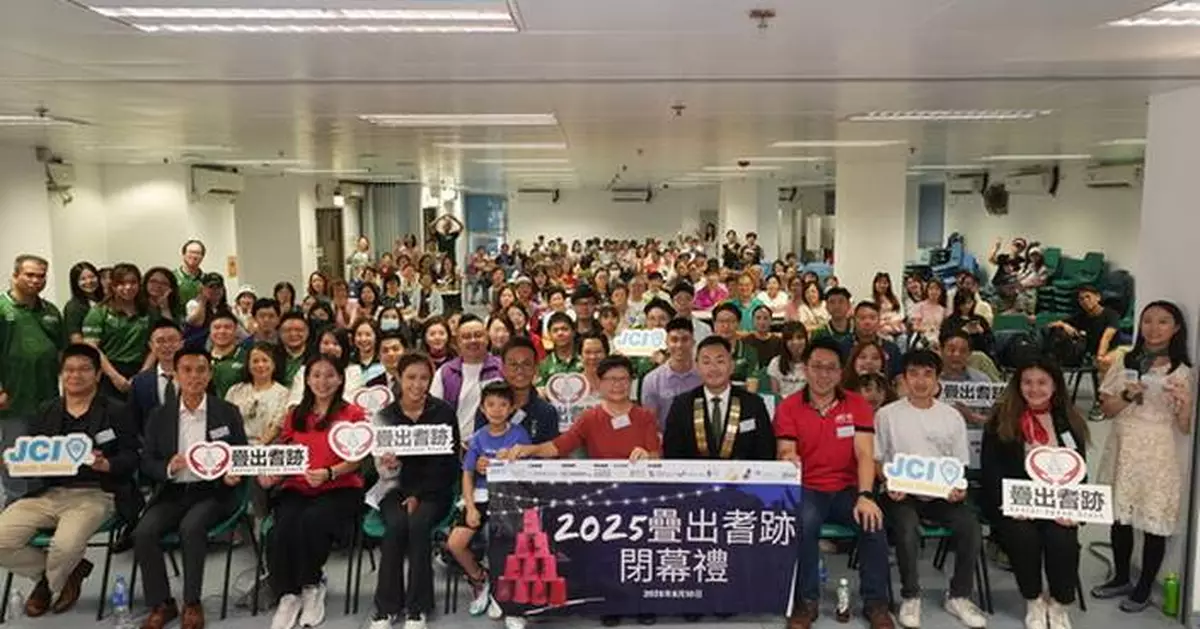
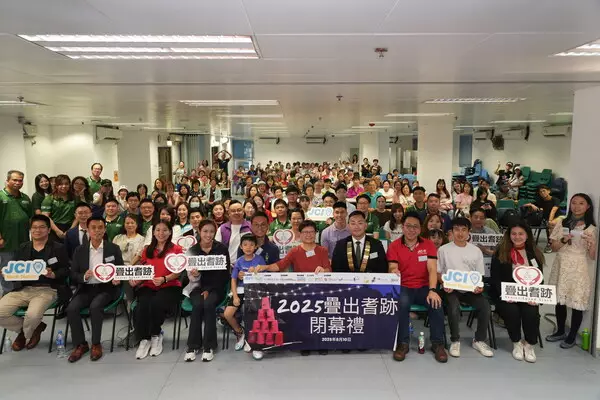
On August 10, JCI North District held the grand "2025 Senior Speed Stack Closing Ceremony" at Choi Yuen Community Hall in Sheung Shui. Over the past four months, the project has conducted over ten sport stacking training sessions, successfully helping over 200 seniors improve hand-eye coordination and demonstrating significant results in slowing cognitive decline. Distinguished guests at the event included Ms Jessie YU Sau-chu, BBS, MH, JP, Executive Committee Chairperson of the Hong Kong Senior Citizens Association; celebrity Tiffany Lau; North District Councillor Lau Chun Hoi; former North District Council Chairman So Sai Chi, SBS, MH; and JCI Hong Kong China President Rafael Wong. The event received support from various social organizations and enterprises, including the Hong Kong Senior Citizens Association, Hong Kong Starlight Lions Club, Lingnan University, Sport Stacking Association of Hong Kong China, Wofoo Social Enterprises, Coalition of Global Home Service Sustainable Development, Hong Kong Christian Service, and Hong Kong Caring Magic Circus, raising awareness about using sport stacking to delay cognitive decline.
Scientific Validation of Stacking
Originally a globally popular speed sport, speed stacking has recently been scientifically validated for its "low barrier, high benefit" characteristics, making it particularly suitable for seniors. JCI North District President Kwok Chak Fung noted: "The purpose of ' Senior Speed Stack ' is to introduce a sport that requires no complex equipment or large venues. Seniors only need a set of specialized cups to practice at home or in community centers. From the qualitative research conducted with Lingnan University, we found that participants not only improved their reaction times but also built social connections through group training, effectively enhancing mental health and achieving the goal of 'Senior Speed Stack.'"
According to a joint study by the University of Wisconsin-La Crosse and Colorado Mesa University, speed stacking can improve participants' hand-eye coordination by 30% and stimulate electrical activity in both brain hemispheres through alternating hand movements (Hart & Bixby, 2005), helping delay cognitive decline. Research also shows that sport stacking has a metabolic equivalent (MET) of 2.9, comparable to activities like bowling and walking (Murray et al., 2009), making it suitable for seniors to maintain basic physical fitness.
Additionally, Dr. Mok Kam-Ming, Assistant Professor of Teaching, School of Interdisciplinary Studies from Lingnan University conducted a follow-up study as part of the project, finding that seniors who consistently participated in cup-stacking training showed a downward trend in stress and anxiety levels. The sense of belonging fostered through group competitions indirectly strengthened social connections. Dr Mok said: "Many participants went from initial reluctance to actively serving as assistant coaches, demonstrating how speed stacking significantly boosts seniors' confidence." Participants also improved their memory, hand-brain coordination, and teamwork skills through training.
From "Zero Experience" to Cup-Stacking Experts
At the closing ceremony, over 120 senior participants, with an average age of 65, competed in speed-stacking races, showcasing impressive proficiency. Among them, participant Ms. Lam stood out by completing the 3-6-3 stacking pattern in just 7.24 seconds, becoming the champion of the event.
Tiffany Lau Competes with Seniors
Guest of honor Ms. Jessie YU Sau-chu, praised the "Senior Speed Stack" project for combining innovation with scientific evidence, stating: "Aging is no longer just about passive care. "Senior Speed Stack" proves that seniors can actively manage their health through emerging sports, truly realizing the vision of 'enjoying aging.'" Celebrity Tiffany Lau also joined the cup-stacking challenge, competing with seasoned senior stackers. She said with a smile: "Seeing seniors so actively participating in a new sport makes me really happy."
Building Bridges for Intergenerational Harmony
JCI Hong Kong China President Rafael Wong emphasized: "Facing an aging society, young leaders must take proactive steps to address social issues. Through the 'Senior Speed Stack' initiative, JCI has demonstrated this mission in action. Using speed stacking as a platform for intergenerational interaction, they have not only allowed seniors to experience the health benefits of a new sport but also fostered communication and collaboration across generations." Project Chairman Jaydon Lim added: "When young people and seniors learn cup-stacking together, it not only enhances intergenerational communication and harmony but also allows for mutual observation and learning, strengthening family bonds and jointly creating 'senior legacies.'"
About JCI North District
Established in 1985, JCI North District is one of the 21 chapters under JCI Hong Kong China. Through the four pillars of development "individual, business, community, and international". It provides opportunities for young people aged 18 to 40 to participate in projects that serve society while training and improving themselves.
Originally based in the North District, the chamber has expanded its membership to include young professionals from across Hong Kong. Over the years, it has organized various projects, including the "Children Silver Tongue Contest," "Lamplight of Peace," "International Children's Cultural Exchange Camp," "Greater Bay Area – Northern Metropolis Youth Industry Opportunities Forum," and "Mountain Clean."
About " Senior Speed Stack "
The " Senior Speed Stack " project introduces the emerging sport of cup-stacking (sport stacking) to the elderly community. It provides seniors with hand-eye coordination training to enhance brain-hand coordination, delay cognitive decline, and promote intergenerational harmony, allowing the elderly to enjoy the fun of sports. From April to August, the project successfully conducted 10 professional training sessions, serving over 200 seniors, and concluded with a timed cup-stacking competition involving 100 seniors at the closing ceremony.
** The press release content is from PR Newswire. Bastille Post is not involved in its creation. **
"Senior Speed Stack" Introduces Emerging Sport Stacking to Help Reduce Cognitive Decline in the Elderly
|
SEOUL, South Korea, May 26, 2026 /PRNewswire/ -- Sky Labs (CEO Jack ByungHwan Lee) announced on the 26th that its ring-type cuffless blood pressure monitor, 'CART BP pro,' has been officially integrated into the '2026 Korean Society of Hypertension Guidelines for the Management of Hypertension (6th Edition).'
This marks the first time in the world that a ring-type blood pressure monitor, which measures blood pressure simply by being worn on a finger without a cuff that compresses the arm, has been included in official hypertension treatment guidelines. With this, Korea has become the first country among global healthcare systems to incorporate cuffless blood pressure measurement technology into mainstream clinical practice.
Through this revised guideline, the Korean Society of Hypertension explicitly stated the "first inclusion of cuffless blood pressure measuring devices in clinical practice" and presented them as devices that may be considered for out-of-office blood pressure monitoring. In the guideline, the recommendation class for cuffless blood pressure monitors was designated as 'Class IIb.'
This inclusion in the treatment guidelines is also an innovative change drawing attention from the global hypertension academic community. Until now, major academic societies in the United States and Europe had maintained a cautious stance on the introduction of cuffless devices due to reasons such as the lack of standardized validation protocols and differences in accuracy among devices. Even amid such concerns, Sky Labs' ring-type blood pressure monitor not only showed favorable correlation with office blood pressure measured by the traditional auscultatory method, but also demonstrated a high level of accuracy comparable to standard 24-hour ambulatory blood pressure monitoring (ABPM) values. Based on such strong clinical evidence, the Korean Society of Hypertension decided to make the world's first official recommendation.
The Korean Society of Hypertension (KSH) formalized the clinical protocols for 'out-of-office blood pressure measurement' for patients with prehypertension and high-risk groups requiring intensive blood pressure control. First, it set the target blood pressure for patients with diabetes, chronic kidney disease, cerebral infarction (accompanied by stroke), and high-risk hypertension at a more stringent 'below 130/80 mmHg' than before and presented risk-based drug treatment guidelines. In addition, for the 'prehypertension' patient group, which is highly likely to progress to hypertension, it also specified the recommendation to actively consider ambulatory blood pressure monitoring (ABPM) or home blood pressure measurement in order to determine whether masked hypertension is present.
As the need for 24-hour monitoring is thus expanding even to patients with prehypertension, the wearable 'ring-type cuffless blood pressure monitor,' which can be worn without interfering with daily life, is emerging as a practical alternative in clinical settings. This is because it can precisely track the risks of 'nocturnal hypertension' and 'morning hypertension,' which are difficult to detect through one-time office measurements alone, as well as 'resistant hypertension,' which is difficult to treat.
According to a domestic study cited in the guideline, the frequency of nocturnal hypertension, defined as blood pressure of 120/70 mmHg or higher during sleep, reaches about 18–23% of the general population. In particular, 92.6% of patients with nocturnal hypertension were classified as having masked hypertension, appearing to have normal blood pressure in everyday circumstances, and were found to have a higher risk of cardiovascular disease, including increased arterial stiffness and left ventricular hypertrophy, compared with the normotensive group. In addition, morning hypertension, defined as morning blood pressure of 135/85 mmHg or higher, was also reported at 15.9% in a domestic study of patients with hypertension and was pointed out as a major risk factor for cardiovascular events.
To more precisely evaluate high‑risk conditions such as nocturnal and morning hypertension, the Society recommends 24‑hour ambulatory blood pressure monitoring and presents ring‑type cuffless blood pressure monitors as a clinical tool for out‑of‑office blood pressure monitoring. In particular, the Society noted the ring-type cuffless monitor as an innovative alternative to overcome the longstanding clinical limitations of conventional cuff-type ABPMs—such as the inconvenience of 24-hour wear, repetitive compression pain, and resulting sleep disturbances, which often disrupted effective nighttime readings.
According to research cited in the guidelines, the ring‑type cuffless blood pressure monitor met the accuracy requirements of the international standard (ISO 81060‑2:2018) in comparative clinical trials against standard 24‑hour ambulatory blood pressure monitoring (ABPM), maintaining a mean error within 5 mmHg and a standard deviation within 8 mmHg during both day and night, and thus demonstrated its clinical usefulness.
Sky Labs' 'CART BP pro' analyzes blood pressure data collected through photoplethysmography (PPG) using AI deep learning technology, enabling 24-hour measurement during daily life or sleep with minimal discomfort. As a result, it is regarded as an alternative that can precisely evaluate a patient's blood pressure variability and innovatively improve the accuracy of hypertension diagnosis and treatment.
Based on such clinical excellence, 'CART BP pro' succeeded in becoming the first ring-type blood pressure monitor to receive national health insurance reimbursement under South Korea's National Health Insurance (NHI) system in June 2024. Since its reimbursement entry, it has been prescribed more than 250,000 times in frontline medical settings up to now and is being actively used at 1,920 hospitals and clinics nationwide, including tertiary general hospitals.
Jack ByungHwan Lee, CEO of Sky Labs, emphasized, "The inclusion of 'CART BP pro' in the KSH guidelines demonstrates that Korea is leading the global clinical standard for cuffless blood pressure technology. Leveraging this unparalleled clinical evidence and our successful domestic adoption, we will now accelerate overseas regulatory approvals to establish a new global standard in hypertension management."
About Sky Labs https://skylabs.io/en/
Founded in September 2015, Sky Labs is a healthcare company that develops and operates "CART", a ring-type medical device and platform for monitoring chronic disease patients. Since the first CART was developed in 2020 for atrial fibrillation monitoring using cardiac signals from optical sensors, the company has expanded its capabilities. In 2023, Sky Labs received medical device approval for "CART BP pro," a ring-type monitor designed for 24-hour blood pressure measurement. In 2024, CART BP pro was recognized by the Health Insurance Review and Assessment Service (HIRA) under the existing medical procedure of '24-hour ambulatory blood pressure monitoring' (reimbursement code 'E6547'), and is currently being prescribed in hospitals and clinics across Korea. Furthermore, in September 2025, the company launched "CART BP," a consumer-grade ring-type blood pressure monitor, which is available through its official online store and various other online channels.
Media Inquiries
Inok Jung inok.jung@skylabs.io
Bomi Lee bomi.lee@skylabs.io
SEOUL, South Korea, May 26, 2026 /PRNewswire/ -- Sky Labs (CEO Jack ByungHwan Lee) announced on the 26th that its ring-type cuffless blood pressure monitor, 'CART BP pro,' has been officially integrated into the '2026 Korean Society of Hypertension Guidelines for the Management of Hypertension (6th Edition).'
This marks the first time in the world that a ring-type blood pressure monitor, which measures blood pressure simply by being worn on a finger without a cuff that compresses the arm, has been included in official hypertension treatment guidelines. With this, Korea has become the first country among global healthcare systems to incorporate cuffless blood pressure measurement technology into mainstream clinical practice.
Through this revised guideline, the Korean Society of Hypertension explicitly stated the "first inclusion of cuffless blood pressure measuring devices in clinical practice" and presented them as devices that may be considered for out-of-office blood pressure monitoring. In the guideline, the recommendation class for cuffless blood pressure monitors was designated as 'Class IIb.'
This inclusion in the treatment guidelines is also an innovative change drawing attention from the global hypertension academic community. Until now, major academic societies in the United States and Europe had maintained a cautious stance on the introduction of cuffless devices due to reasons such as the lack of standardized validation protocols and differences in accuracy among devices. Even amid such concerns, Sky Labs' ring-type blood pressure monitor not only showed favorable correlation with office blood pressure measured by the traditional auscultatory method, but also demonstrated a high level of accuracy comparable to standard 24-hour ambulatory blood pressure monitoring (ABPM) values. Based on such strong clinical evidence, the Korean Society of Hypertension decided to make the world's first official recommendation.
The Korean Society of Hypertension (KSH) formalized the clinical protocols for 'out-of-office blood pressure measurement' for patients with prehypertension and high-risk groups requiring intensive blood pressure control. First, it set the target blood pressure for patients with diabetes, chronic kidney disease, cerebral infarction (accompanied by stroke), and high-risk hypertension at a more stringent 'below 130/80 mmHg' than before and presented risk-based drug treatment guidelines. In addition, for the 'prehypertension' patient group, which is highly likely to progress to hypertension, it also specified the recommendation to actively consider ambulatory blood pressure monitoring (ABPM) or home blood pressure measurement in order to determine whether masked hypertension is present.
As the need for 24-hour monitoring is thus expanding even to patients with prehypertension, the wearable 'ring-type cuffless blood pressure monitor,' which can be worn without interfering with daily life, is emerging as a practical alternative in clinical settings. This is because it can precisely track the risks of 'nocturnal hypertension' and 'morning hypertension,' which are difficult to detect through one-time office measurements alone, as well as 'resistant hypertension,' which is difficult to treat.
According to a domestic study cited in the guideline, the frequency of nocturnal hypertension, defined as blood pressure of 120/70 mmHg or higher during sleep, reaches about 18–23% of the general population. In particular, 92.6% of patients with nocturnal hypertension were classified as having masked hypertension, appearing to have normal blood pressure in everyday circumstances, and were found to have a higher risk of cardiovascular disease, including increased arterial stiffness and left ventricular hypertrophy, compared with the normotensive group. In addition, morning hypertension, defined as morning blood pressure of 135/85 mmHg or higher, was also reported at 15.9% in a domestic study of patients with hypertension and was pointed out as a major risk factor for cardiovascular events.
To more precisely evaluate high‑risk conditions such as nocturnal and morning hypertension, the Society recommends 24‑hour ambulatory blood pressure monitoring and presents ring‑type cuffless blood pressure monitors as a clinical tool for out‑of‑office blood pressure monitoring. In particular, the Society noted the ring-type cuffless monitor as an innovative alternative to overcome the longstanding clinical limitations of conventional cuff-type ABPMs—such as the inconvenience of 24-hour wear, repetitive compression pain, and resulting sleep disturbances, which often disrupted effective nighttime readings.
According to research cited in the guidelines, the ring‑type cuffless blood pressure monitor met the accuracy requirements of the international standard (ISO 81060‑2:2018) in comparative clinical trials against standard 24‑hour ambulatory blood pressure monitoring (ABPM), maintaining a mean error within 5 mmHg and a standard deviation within 8 mmHg during both day and night, and thus demonstrated its clinical usefulness.
Sky Labs' 'CART BP pro' analyzes blood pressure data collected through photoplethysmography (PPG) using AI deep learning technology, enabling 24-hour measurement during daily life or sleep with minimal discomfort. As a result, it is regarded as an alternative that can precisely evaluate a patient's blood pressure variability and innovatively improve the accuracy of hypertension diagnosis and treatment.
Based on such clinical excellence, 'CART BP pro' succeeded in becoming the first ring-type blood pressure monitor to receive national health insurance reimbursement under South Korea's National Health Insurance (NHI) system in June 2024. Since its reimbursement entry, it has been prescribed more than 250,000 times in frontline medical settings up to now and is being actively used at 1,920 hospitals and clinics nationwide, including tertiary general hospitals.
Jack ByungHwan Lee, CEO of Sky Labs, emphasized, "The inclusion of 'CART BP pro' in the KSH guidelines demonstrates that Korea is leading the global clinical standard for cuffless blood pressure technology. Leveraging this unparalleled clinical evidence and our successful domestic adoption, we will now accelerate overseas regulatory approvals to establish a new global standard in hypertension management."
About Sky Labs https://skylabs.io/en/
Founded in September 2015, Sky Labs is a healthcare company that develops and operates "CART", a ring-type medical device and platform for monitoring chronic disease patients. Since the first CART was developed in 2020 for atrial fibrillation monitoring using cardiac signals from optical sensors, the company has expanded its capabilities. In 2023, Sky Labs received medical device approval for "CART BP pro," a ring-type monitor designed for 24-hour blood pressure measurement. In 2024, CART BP pro was recognized by the Health Insurance Review and Assessment Service (HIRA) under the existing medical procedure of '24-hour ambulatory blood pressure monitoring' (reimbursement code 'E6547'), and is currently being prescribed in hospitals and clinics across Korea. Furthermore, in September 2025, the company launched "CART BP," a consumer-grade ring-type blood pressure monitor, which is available through its official online store and various other online channels.
Media Inquiries
Inok Jung inok.jung@skylabs.io
Bomi Lee bomi.lee@skylabs.io
** This press release is distributed by PR Newswire through automated distribution system, for which the client assumes full responsibility. **
"The Era of Cuffless is Here"… Ring-Type Blood Pressure Monitor 'CART BP pro' Becomes World's First to Be Integrated into Official Hypertension Guidelines