Skip to Content Facebook Feature Image

Europe and Ukraine leaders seek talks with Trump to defend their interests ahead of US-Russia summit

News

Europe and Ukraine leaders seek talks with Trump to defend their interests ahead of US-Russia summit
News

News

Europe and Ukraine leaders seek talks with Trump to defend their interests ahead of US-Russia summit

2025-08-12 00:50 Last Updated At:01:00

BRUSSELS (AP) — Ukraine and its European backers on Monday sought talks with U.S. President Donald Trump in an effort to protect their security interests ahead of his summit with Russian President Vladimir Putin later this week.

Ukrainian President Volodymyr Zelenskyy has so far been excluded from the U.S.-Russia summit in Alaska on Friday, and the Europeans are unlikely to be invited. All are wary that Putin and Trump might agree, without Ukraine's participation, to land swaps of Ukraine’s territory or other terms that might favor Russia.

German Chancellor Friedrich Merz organized a series of meetings for Wednesday. He invited Trump, U.S. Vice President JD Vance, Zelenskyy, NATO's chief and several European leaders to attend. The chancellery said the talks would focus on “further options for action to put pressure on Russia” as well as “preparations for possible peace negotiations and related issues of territorial claims and security.”

The European Commission confirmed that President Ursula von der Leyen will take part “in the calls organized by Chancellor Merz.” The leaders of Britain, Finland, France, Italy and Poland are also set to join the “various discussion groups,” the chancellery said.

Ukraine and its backers in Europe insist that Trump and Putin cannot decide on land swaps behind their backs at the summit, but the Europeans concede that Moscow is unlikely to give up control of Ukrainian land it holds.

“There’ll be some land swapping going on. I know that through Russia and through conversations with everybody. To the good, for the good of Ukraine. Good stuff, not bad stuff. Also, some bad stuff for both,” Trump told reporters on Monday.

He did not confirm whether he would take part in the talks convened by Merz, but said: “I’m going to get everybody’s ideas” before meeting with Putin.

Concerns have mounted in Europe that Kyiv may be pressed to give up land or accept other curbs on its sovereignty. Ukraine and its European allies reject the notion that Putin should lay claim to any territory even before agreeing to a ceasefire. They want a ceasefire first.

In Europe, a “coalition of the willing” has been formed by countries ready to deploy troops to Ukraine to police any future peace agreement with Russia. French President Emmanuel Macron, U.K. Prime Minister Keir Starmer and Merz are organizing a coalition meeting, also on Wednesday, to coordinate.

Poland is also part of that coalition. Prime Minister Donald Tusk said “it must be obvious to Poland and our European partners — and I hope to all of NATO — that state borders cannot be changed by force.” Any land swaps or peace terms “must be agreed upon with Ukraine’s participation,” he said, according to Polish news agency PAP.

Still, it’s hard to ignore the reality on the ground.

Russia in 2022 illegally annexed the Donetsk and Luhansk regions in Ukraine’s east, and Kherson and Zaporizhzhia in the south, even though it doesn’t fully control them. It also occupies the Crimean Peninsula, which it seized in 2014.

On the 1,000-kilometer (620-mile) front line, Russia’s bigger army has made slow but costly progress with its summer offensive. The relentless pounding of urban areas has killed more than 12,000 Ukrainian civilians, according to U.N. estimates.

“In the end, the issue of the fact that the Russians are controlling at this moment, factually, a part of Ukraine has to be on the table" in any peace talks after the Alaska summit, NATO Secretary General Mark Rutte said on CBS on Sunday.

Rutte said Ukraine’s Western backers “can never accept that in a legal sense,” but he suggested that they might tacitly acknowledge Russian control.

He compared it to the way that the U.S. hosted the diplomatic missions of Estonia, Latvia and Lithuania from 1940 to 1991, “acknowledging that the Soviet Union was controlling those territories, but never accepting (it) in a legal sense.”

Giving up any territory, especially without a ceasefire agreement first, would be almost impossible for Zelenskyy to sell at home after thousands of troops have died defending their land.

Ultimately, Putin is seen by some analysts as being not so much interested in land itself, but rather in a more “Russia-friendly” Ukraine with a malleable government unlikely to try to join NATO, just as pro-Russian breakaway regions in Georgia have complicated that country's quest to become a member.

Zelenskyy insists that a halt to fighting on the front line should be the starting point for negotiations, and the Europeans back him. They say that any future land swaps should be for Ukraine to decide and not be a precondition for a ceasefire.

Claims on land could also be part of negotiations on the kind of security guarantees that Ukraine might receive to ensure another war does not break out.

The Europeans believe Kyiv’s best defense is strong armed forces to deter Russia from striking again. They insist there should be no restrictions on the size of Ukraine’s army and the equipment, arms and ammunition it can possess or sell.

Beyond that, they say Ukraine should not be constrained in its choice of joining the EU or being forced to become a neutral country.

The Trump administration has already taken Ukraine's membership of NATO off the table for the foreseeable future.

For the Europeans, maintaining unity is also key. After chairing a meeting of foreign ministers on Monday, EU foreign policy chief Kaja Kallas said they had agreed to “work on more sanctions against Russia, more military support for Ukraine and more support for Ukraine’s budgetary needs."

“Transatlantic unity, support to Ukraine and pressure on Russia is how we will end this war and prevent future Russian aggression in Europe,” Kallas posted on social media.

Grieshaber reported from Berlin. Associated Press writers Dasha Litvinova, Jamey Keaten in Geneva and Sylvie Corbet in Paris contributed.

German Chancellor Friedrich Merz, left, and the head of the Chancellery Thorsten Frei talk during a cabinet meeting at the chancellery in Berlin, Germany, Wednesday, Aug. 6, 2025, (AP Photo/Ebrahim Noroozi)

German Chancellor Friedrich Merz, left, and the head of the Chancellery Thorsten Frei talk during a cabinet meeting at the chancellery in Berlin, Germany, Wednesday, Aug. 6, 2025, (AP Photo/Ebrahim Noroozi)

FILE - Poland's Prime Minister Donald Tusk addresses the Polish parliament on Wednesday, June 11, 2025, in Warsaw, Poland. (AP Photo/Czarek Sokolowski, File)
FILE - Poland's Prime Minister Donald Tusk addresses the Polish parliament on Wednesday, June 11, 2025, in Warsaw, Poland. (AP Photo/Czarek Sokolowski, File)
The U.N. Security Council scheduled an emergency meeting Thursday to discuss Iran's deadly protests at the request of the United States, even as President Donald Trump left unclear what actions he would take against the Islamic state.

Tehran appeared to make conciliatory statements in an effort to defuse the situation after Trump threatened to take action to stop further killing of protesters, including the execution of anyone detained in Tehran’s bloody crackdown on nationwide protests.

Iran’s crackdown on the demonstrations has killed at least 2,615, the U.S.-based Human Rights Activists News Agency reported. The death toll exceeds any other round of protest or unrest in Iran in decades and recalls the chaos surrounding the country’s 1979 Islamic Revolution.

Iran closed its airspace to commercial flights for hours without explanation early Thursday and some personnel at a key U.S. military base in Qatar were advised to evacuate. The U.S. Embassy in Kuwait also ordered its personnel to “temporary halt” travel to the multiple military bases in the small Gulf Arab country.

Iran previously closed its airspace during the 12-day war against Israel in June.

Here is the latest:

“We are against military intervention in Iran,” Turkish Foreign Minister Hakan Fidan told journalists in Istanbul on Thursday. “Iran must address its own internal problems… They must address their problems with the region and in global terms through diplomacy so that certain structural problems that cause economic problems can be addressed.”

Ankara and Tehran enjoy warm relations despite often holding divergent interests in the region.

Fidan said the unrest in Iran was rooted in economic conditions caused by sanctions, rather than ideological opposition to the government.

Iranians have been largely absent from an annual pilgrimage to Baghdad, Iraq, to commemorate the death of Imam Musa al-Kadhim, one of the twelve Shiite imams.

Many Iranian pilgrims typically make the journey every year for the annual religious rituals.

Streets across Baghdad were crowded with pilgrims Thursday. Most had arrived on foot from central and southern provinces of Iraq, heading toward the shrine of Imam al-Kadhim in the Kadhimiya district in northern Baghdad,

Adel Zaidan, who owns a hotel near the shrine, said the number of Iranian visitors this year compared to previous years was very small. Other residents agreed.

“This visit is different from previous ones. It lacks the large numbers of Iranian pilgrims, especially in terms of providing food and accommodation,” said Haider Al-Obaidi.

Europe’s largest airline group said Thursday it would halt night flights to and from Tel Aviv and Jordan's capital Amman for five days, citing security concerns as fears grow that unrest in Iran could spiral into wider regional violence.

Lufthansa — which operates Swiss, Austrian Airlines, Brussels Airlines and Eurowings — said flights would run only during daytime hours from Thursday through Monday “due to the current situation in the Middle East.” It said the change would ensure its staff — which includes unionized cabin crews and pilots -- would not be required to stay overnight in the region.

The airline group also said its planes would bypass Iranian and Iraqi airspace, key corridors for air travel between the Middle East and Asia.

Iran closed its airspace to commercial flights for several hours early Thursday without explanation.

A spokesperson for Israel’s Airport Authority, which oversees Tel Aviv’s Ben Gurion Airport, said the airport was operating as usual.

Iranian state media has denied claims that a young man arrested during Iran’s recent protests was condemned to death. The statement from Iran’s judicial authorities on Thursday contradicted what it said were “opposition media abroad” which claimed the young man had been quickly sentenced to death during a violent crackdown on anti-government protests in the country.

State television didn’t immediately give any details beyond his name, Erfan Soltani. Iranian judicial authorities said Soltani was being held in a detention facility outside of the capital. Alongside other protesters, he has been accused of “propaganda activities against the regime,” state media said.

New Zealand’s Foreign Minister Winston Peters said Thursday that his government was “appalled by the escalation of violence and repression” in Iran.

“We condemn the brutal crackdown being carried out by Iran’s security forces, including the killing of protesters,” Peters posted on X.

“Iranians have the right to peaceful protest, freedom of expression, and access to information – and that right is currently being brutally repressed,” he said.

Peters said his government had expressed serious concerns to the Iranian Embassy in Wellington.

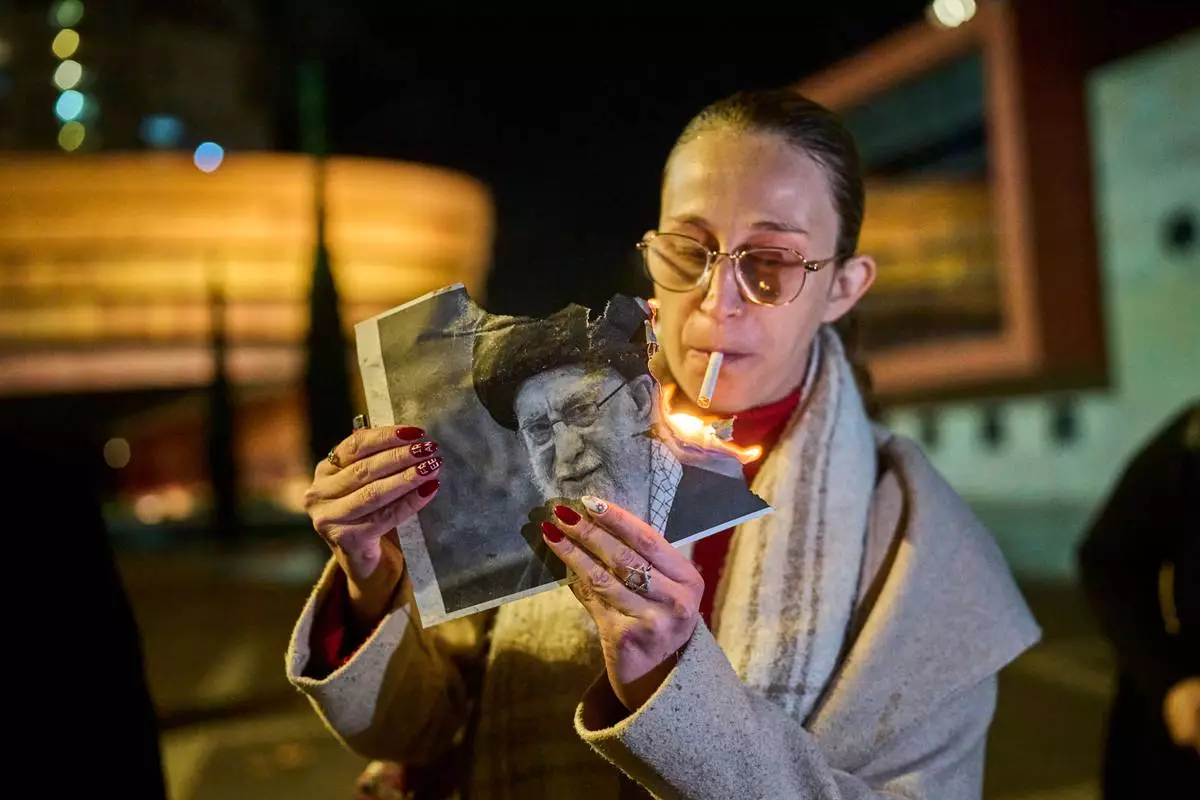
A demonstrator lights a cigarette with a burning poster depicting Supreme Leader Ayatollah Ali Khamenei during a rally in support of Iran's anti-government protests, in Holon, Israel, Wednesday, Jan. 14, 2026. (AP Photo/Ohad Zwigenberg)

A demonstrator lights a cigarette with a burning poster depicting Supreme Leader Ayatollah Ali Khamenei during a rally in support of Iran's anti-government protests, in Holon, Israel, Wednesday, Jan. 14, 2026. (AP Photo/Ohad Zwigenberg)

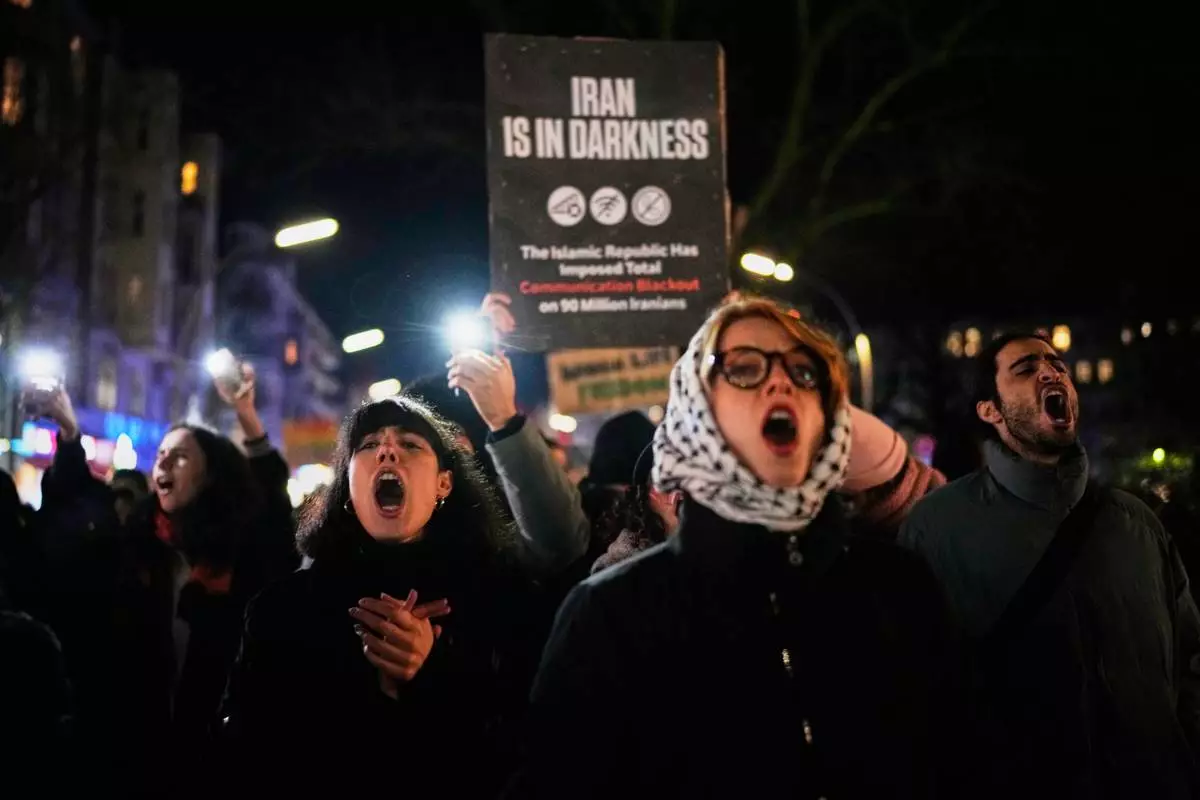
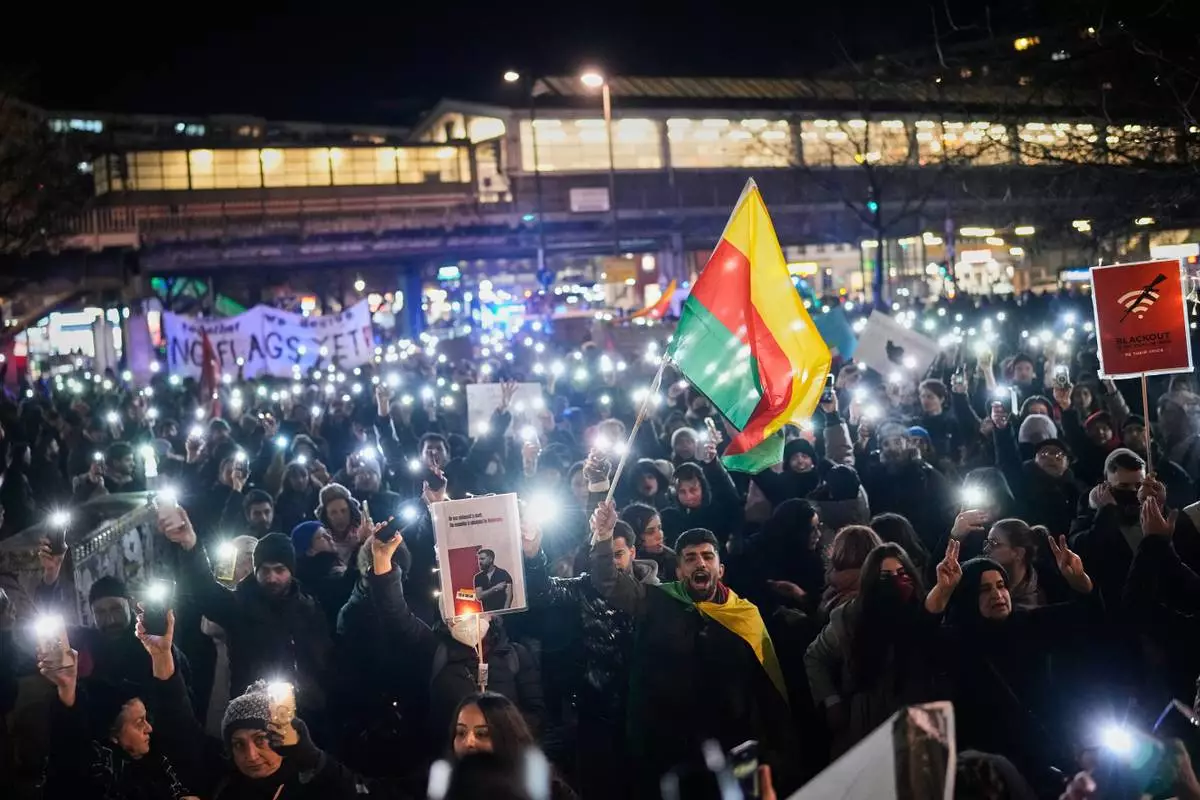
Protesters participate in a demonstration in support of the nationwide mass protests in Iran against the government, in Berlin, Germany, Wednesday, Jan. 14, 2026. (AP Photo/Ebrahim Noroozi)

Protesters participate in a demonstration in support of the nationwide mass protests in Iran against the government, in Berlin, Germany, Wednesday, Jan. 14, 2026. (AP Photo/Ebrahim Noroozi)

Protesters participate in a demonstration in support of the nationwide mass protests in Iran against the government, in Berlin, Germany, Wednesday, Jan. 14, 2026. (AP Photo/Ebrahim Noroozi)

Protesters participate in a demonstration in support of the nationwide mass protests in Iran against the government, in Berlin, Germany, Wednesday, Jan. 14, 2026. (AP Photo/Ebrahim Noroozi)

Recommended Articles