WASHINGTON (AP) — President Donald Trump has taken control of D.C.'s law enforcement and ordered National Guard troops to deploy onto the streets of the nation's capital, arguing the extraordinary moves are necessary to curb an urgent public safety crisis.
Even as district officials questioned the claims underlying his emergency declaration, the Republican president promised a “historic action to rescue our nation’s capital from crime, bloodshed, bedlam and squalor and worse.” His rhetoric echoed that used by conservatives going back decades who have denounced cities, especially those with majority non-white populations or led by progressives, as lawless or crime-ridden and in need of outside intervention.
Click to Gallery
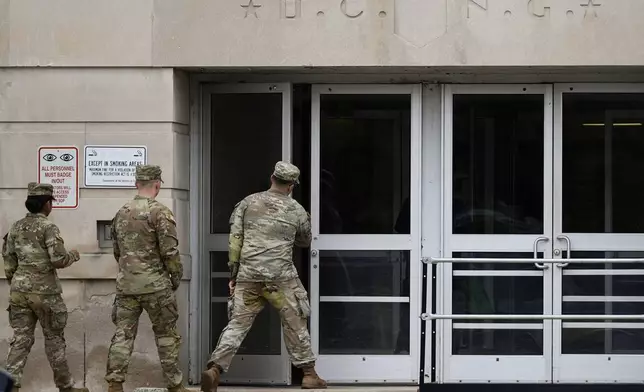
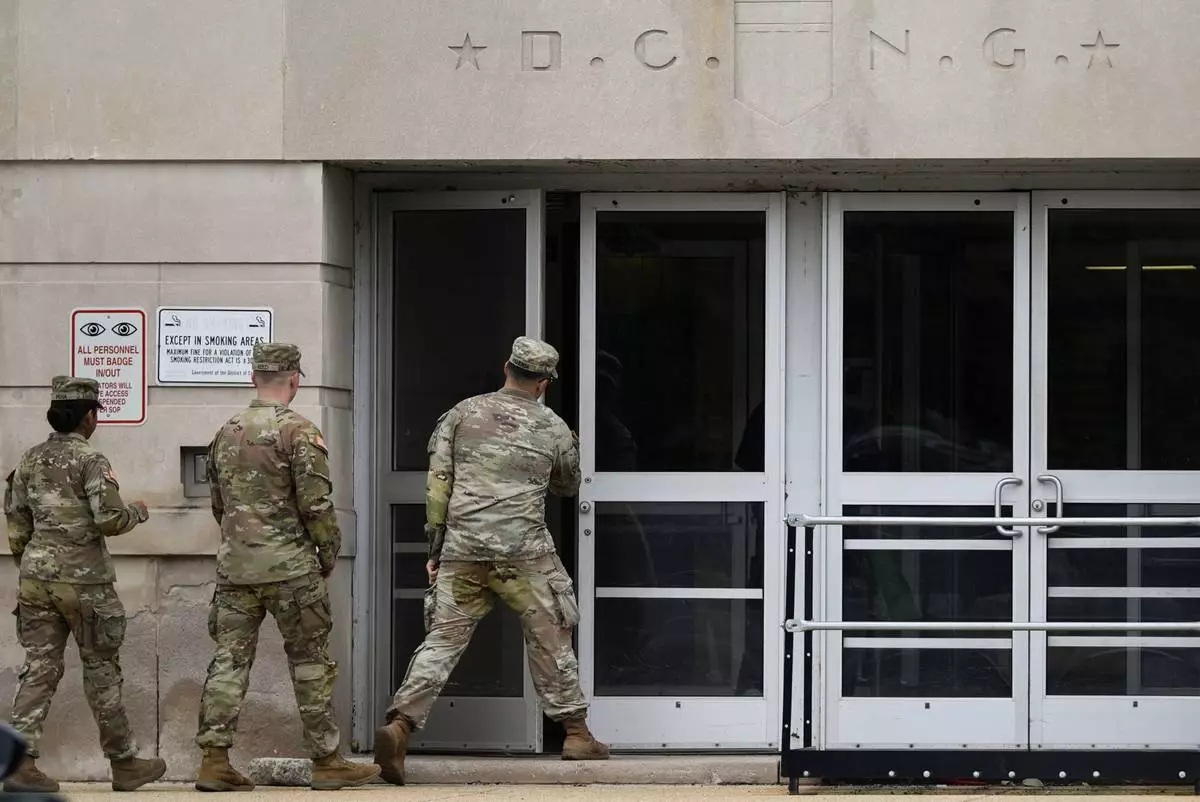
National Guard troops arrive at the District of Columbia National Guard Headquarters, Tuesday, Aug. 12, 2025, in Washington. (AP Photo/Julia Demaree Nikhinson)
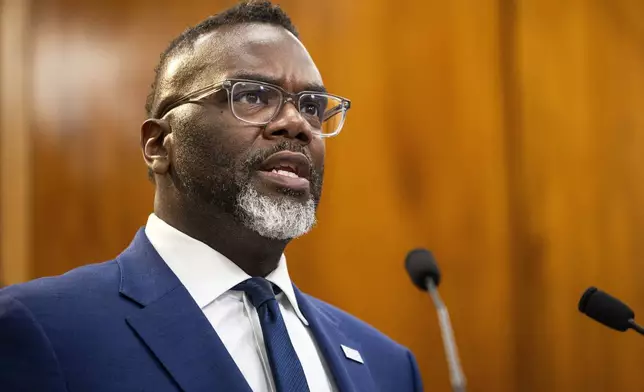
FILE - Mayor Brandon Johnson responds to an overnight shooting during a news conference at City Hall in the Loop, July 3, 2025. (Ashlee Rezin/Chicago Sun-Times via AP, File)
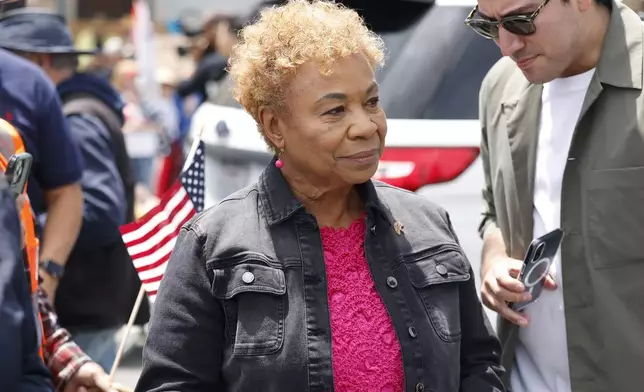
FILE - Oakland Mayor Barbara Lee speaks to the crowd at Wilma Chan Park before they march through downtown during a "No Kings" protest, June 14, 2025, in Oakland, Calif. (Jessica Christian/San Francisco Chronicle via AP, File)
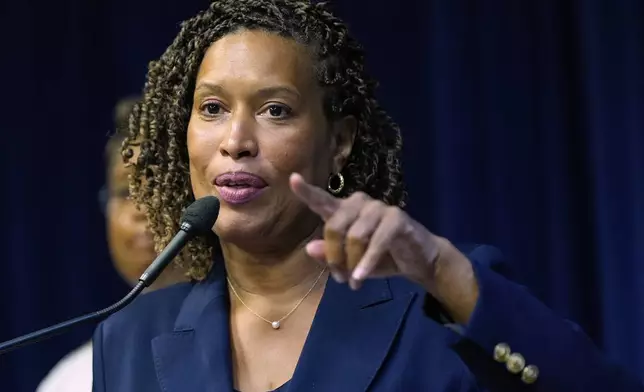
Washington Mayor Muriel Bowser speaks during a news conference on President Donald Trump's plan to place Washington police under federal control and deploy National guard troops to Washington, Monday, Aug. 11, 2025, in Washington. (AP Photo/Julia Demaree Nikhinson)
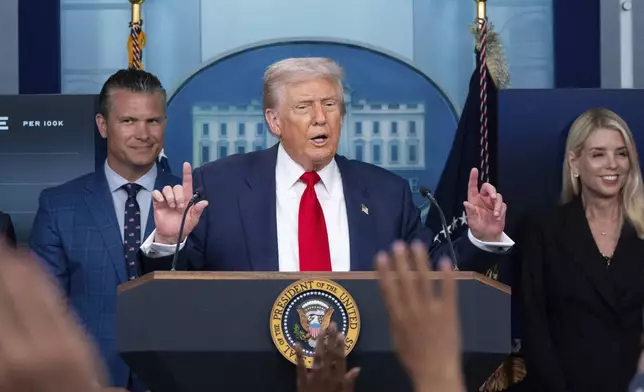
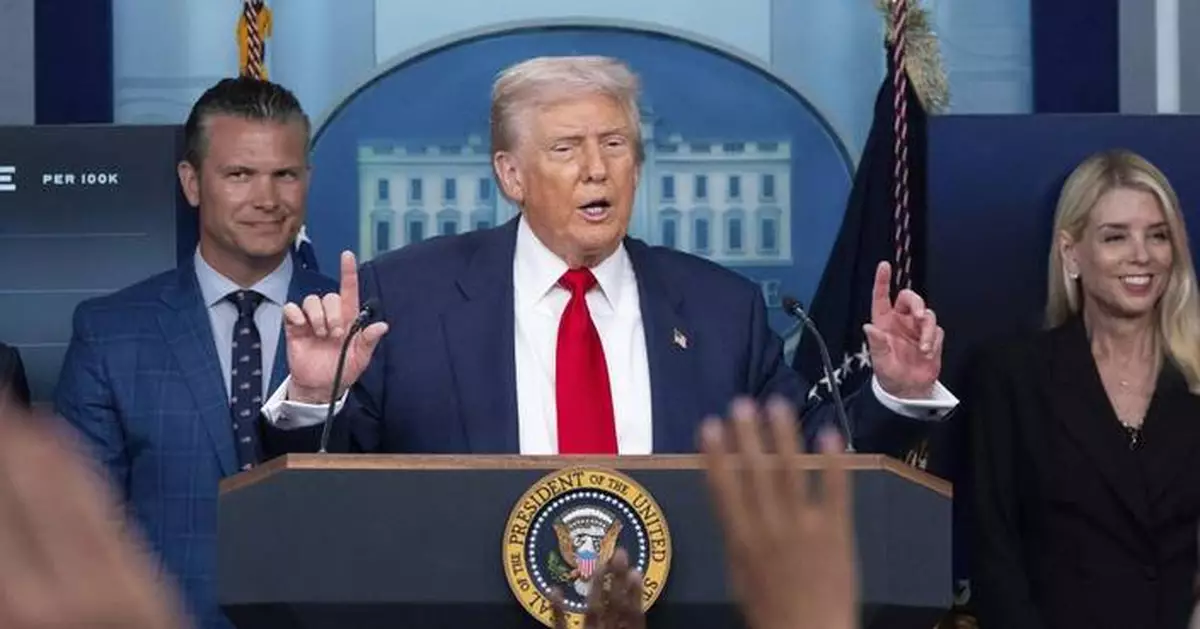
FILE - President Donald Trump speaks with reporters in the James Brady Press Briefing Room at the White House, Aug. 11, 2025, in Washington, as Secretary of Defense Pete Hegseth, left, and Attorney General Pam Bondi look on. (AP Photo/Alex Brandon, File)
“This is liberation day in D.C., and we’re going to take our capital back,” Trump promised Monday.
As D.C. the National Guard arrived at their headquarters Tuesday, for many residents, the prospect of federal troops surging into neighborhoods represented an alarming violation of local agency. To some, it echoes uncomfortable historical chapters when politicians used language to paint historically or predominantly Black cities and neighborhoods with racist narratives to shape public opinion and justify aggressive police action.
April Goggans, a longtime D.C. resident and grassroots organizer, said she was not surprised by Trump's actions. Communities had been preparing for a potential federal crackdown in D.C. since the summer of 2020, when Trump deployed troops during racial justice protests after the murder of George Floyd.
“We have to be vigilant,” said Goggans, who has coordinated local protests for nearly a decade. She worries about what a surge in law enforcement could mean for residents' freedoms.
“Regardless of where you fall on the political scale, understand that this could be you, your children, your grandmother, your co-worker who are brutalized or have certain rights violated,” she said.
Other residents reacted with mixed feelings to Trump's executive order. Crime and homelessness has been a top concern for residents in recent years, but opinions on how to solve the issue vary. And very few residents take Trump's catastrophic view of life in D.C.
"I think Trump's trying to help people, some people," said Melvin Brown, a D.C. resident. “But as far as (him) trying to get (the) homeless out of this city, that ain't going to work."
“It's like a band-aid to a gunshot wound,” said Melissa Velasquez, a commuter into D.C. “I feel like there's been an increase of racial profiling and stuff, and so it's concerning for individuals who are worried about how they might be perceived as they go about their day-to-day lives."
According to White House officials, troops will be deployed to protect federal assets and facilitate a safe environment for law enforcement to make arrests. The Trump administration believes the highly visible presence of law enforcement will deter violent crime. It is unclear how the administration defines providing a safe environment for law enforcement to conduct arrests, raising alarm bells for some advocates.
“The president foreshadowed that if these heavy-handed tactics take root here, they will be rolled out to other majority-Black and Brown cities, like Chicago, Oakland and Baltimore, across the country,” said Monica Hopkins, executive director of the American Civil Liberties Union’s D.C. chapter.
“We’ve seen before how federal control of the D.C. National Guard and police can lead to abuse, intimidation and civil rights violations — from military helicopters swooping over peaceful racial justice protesters in 2020 to the unchecked conduct of federal officers who remain shielded from full accountability,” Hopkins said.
Conservatives have for generations used denigrating language to describe the condition of major cities and called for greater law enforcement, often in response to changing demographics in those cities driven by nonwhite populations relocating in search of work or safety from racial discrimination and state violence. Republicans have called for greater police crackdowns in cities since at least the 1965 Watts Riots in Los Angeles.
President Richard Nixon won the White House in 1968 after campaigning on a "law and order" agenda to appeal to white voters in northern cities alongside overtures to white Southerners as part of his “Southern Strategy.” Ronald Reagan similarly won both his presidential elections after campaigning heavily on law and order politics. Politicians, including former New York Mayor Rudy Giuliani and former President Bill Clinton have cited the need to tamp down crime as a reason to seize power from liberal cities for decades.
D.C. Mayor Muriel Bowser called Trump’s takeover of local police “unsettling” but not without precedent. Bowser kept a mostly measured tone during a Monday news conference but decried Trump's reasoning as a “so-called emergency," saying residents “know that access to our democracy is tenuous.”
Trump threatened to “take over” and “beautify” D.C. on the campaign trail and claimed it was “a nightmare of murder and crime.” He also argued the city was “horribly run” and said his team intended “to take it away from the mayor.” Trump on Monday repeated old comments about some of the nation’s largest cities, including Baltimore, Chicago, Los Angeles, Oakland and his hometown of New York City. All are currently run by Black mayors.
“You look at Chicago, how bad it is. You look at Los Angeles, how bad it is. We have other cities in a very bad, New York is a problem. And then you have, of course, Baltimore and Oakland. We don’t even mention that anymore. They’re so far gone. We’re not going to let it happen,” he said.
Civil rights advocates see the rhetoric as part of a broader political strategy.
“It’s a playbook he’s used in the past,” said Maya Wiley, CEO of the Leadership Conference on Civil and Human Rights.
Trump's rhetoric "paints a picture that crime is out of control, even when it is not true, then blames the policies of Democratic lawmakers that are reform- and public safety-minded, and then claims that you have to step in and violate people’s rights or demand that reforms be reversed,” Wiley said.
She added that the playbook has special potency in D.C. because local law enforcement can be directly placed under federal control, a power Trump invoked in his announcement.
Trump’s actions in Washington and comments about other major cities sent shock waves across the country, as other leaders prepare to respond to potential federal action.
Democratic Maryland Gov. Wes Moore said in a statement that Trump’s plan “lacks seriousness and is deeply dangerous” and pointed to a 30-year-low crime rate in Baltimore as a reason the administration should consult local leaders rather than antagonize them. In Oakland, Mayor Barbara Lee called Trump's characterization of the city “fearmongering.”
The administration already faced a major flashpoint between local control and federal power earlier in the summer, when Trump deployed National Guard troops to quell protests and support immigration enforcement operations in LA despite opposition from California Gov. Gavin Newsom and LA Mayor Karen Bass.
Civil rights leaders have denounced Trump's action in D.C. as an unjustified distraction.
“This president campaigned on ‘law and order,’ but he is the president of chaos and corruption," said NAACP President Derrick Johnson. “There’s no emergency in D.C., so why would he deploy the National Guard? To distract us from his alleged inclusion in the Epstein files? To rid the city of unhoused people? D.C. has the right to govern itself. It doesn’t need this federal coup."
—
Associated Press writer River Zhang contributed reporting.
National Guard troops arrive at the District of Columbia National Guard Headquarters, Tuesday, Aug. 12, 2025, in Washington. (AP Photo/Julia Demaree Nikhinson)
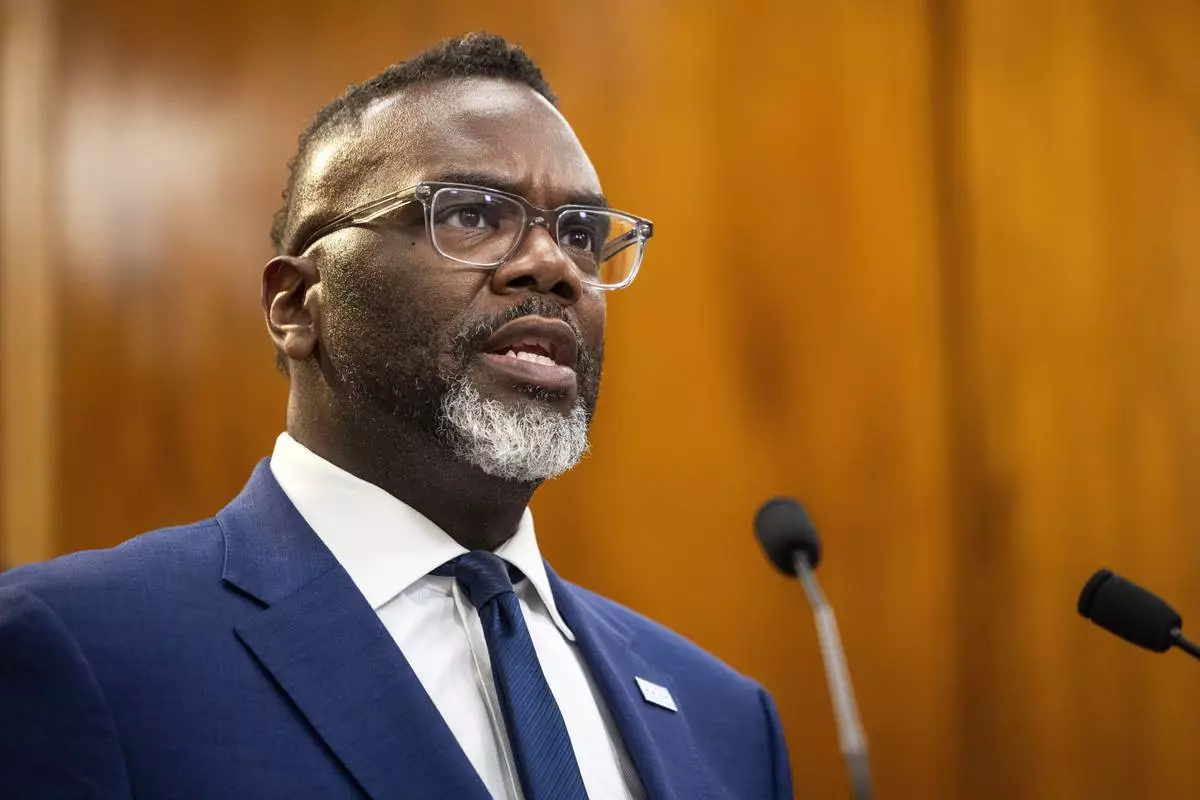
FILE - Mayor Brandon Johnson responds to an overnight shooting during a news conference at City Hall in the Loop, July 3, 2025. (Ashlee Rezin/Chicago Sun-Times via AP, File)
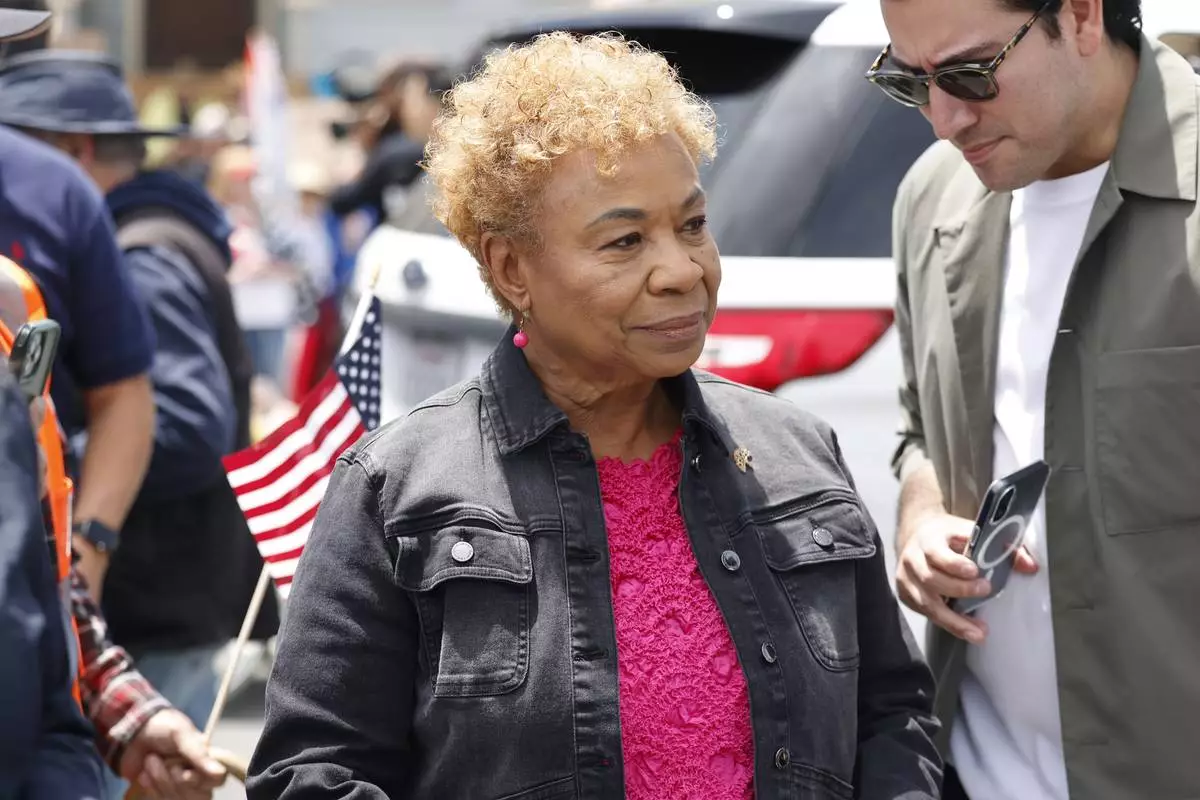
FILE - Oakland Mayor Barbara Lee speaks to the crowd at Wilma Chan Park before they march through downtown during a "No Kings" protest, June 14, 2025, in Oakland, Calif. (Jessica Christian/San Francisco Chronicle via AP, File)
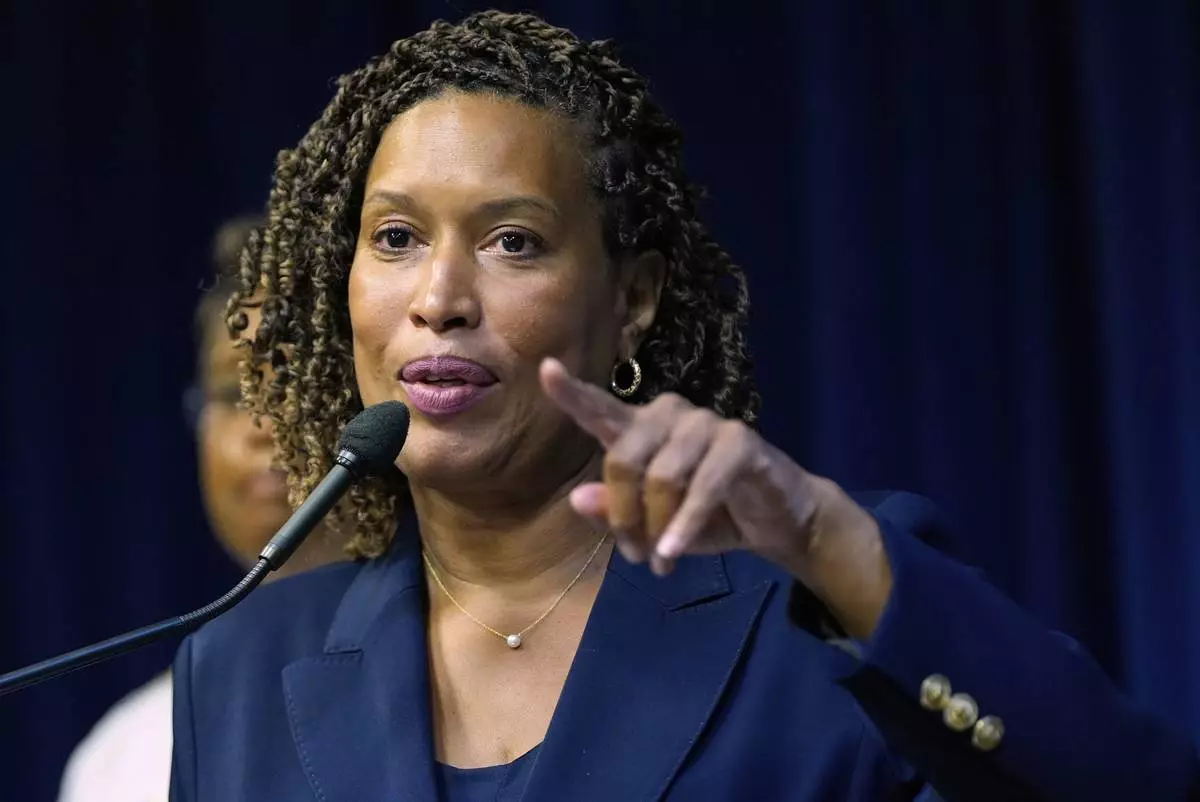
Washington Mayor Muriel Bowser speaks during a news conference on President Donald Trump's plan to place Washington police under federal control and deploy National guard troops to Washington, Monday, Aug. 11, 2025, in Washington. (AP Photo/Julia Demaree Nikhinson)
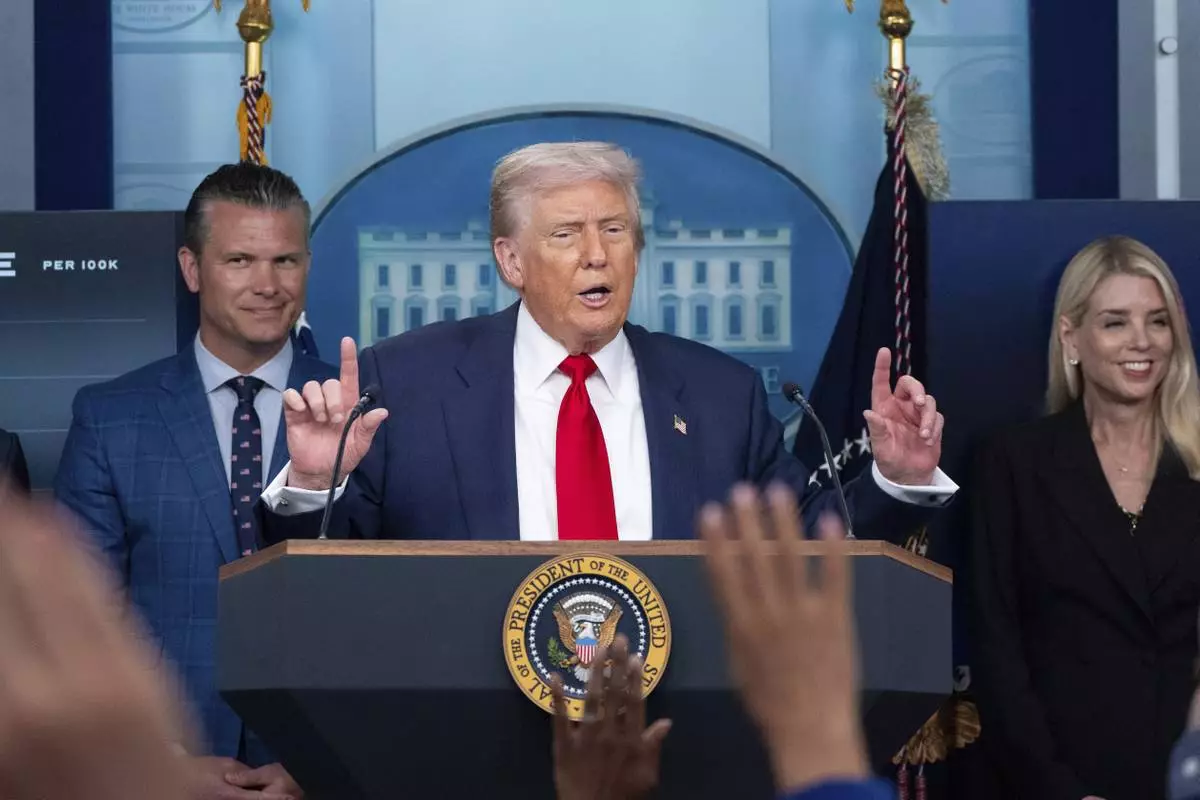
FILE - President Donald Trump speaks with reporters in the James Brady Press Briefing Room at the White House, Aug. 11, 2025, in Washington, as Secretary of Defense Pete Hegseth, left, and Attorney General Pam Bondi look on. (AP Photo/Alex Brandon, File)