GUATEMALA CITY (AP) — A Guatemalan judge on Tuesday convicted six former officials in connection with the deaths of 41 girls in a 2017 fire at a facility for at-risk youth that had a history of abuse. The six had all pleaded not guilty.
Judge Ingrid Cifuentes handed down cumulative sentences of between six years and 25 years for charges ranging from manslaughter to abuse of authority. She also ordered the investigation of former President Jimmy Morales for his role in ordering police to work at the facility housing minors who had not committed any crimes.
Click to Gallery
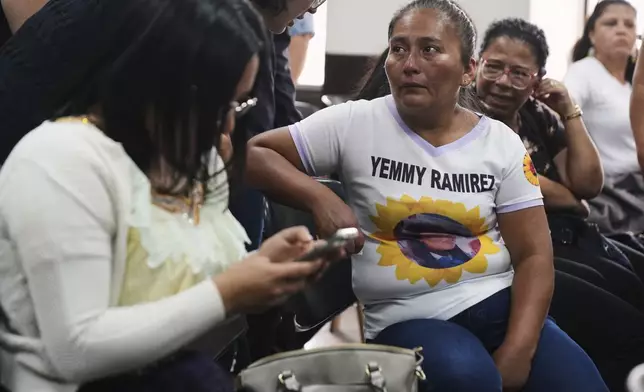
Elsa Siquin, right, wears a T-shirt with a portrait of her daughter, Yemmy Ramirez, one of 41 girls killed in a fire at a government-run facility for at-risk girls in 2017, during a hearing for those accused of responsibility in Guatemala City, Tuesday, Aug. 12, 2025. (AP Photo/Moises Castillo)
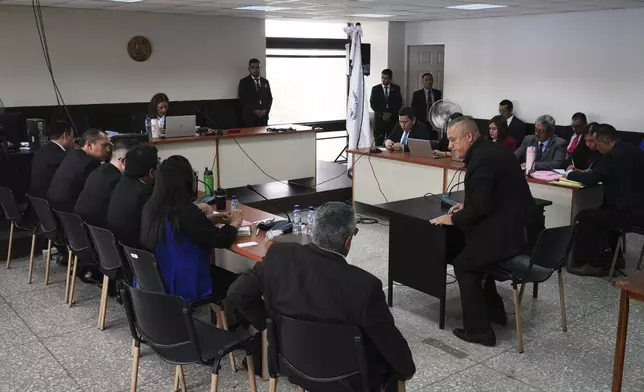
Judge Ingrid Cifuentes gives instructions in court prior to a hearing of seven people accused of responsibility in a fire at a government-run facility for at-risk girls that killed 41 girls in 2017, in Guatemala City, Tuesday, Aug. 12, 2025. (AP Photo/Moises Castillo)
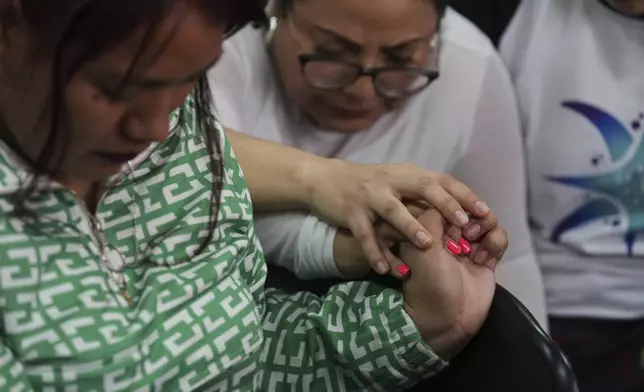
People pray prior to a hearing for seven people accused of responsibility for a fire at a government-run facility for at-risk girls that killed 41 girls in 2017, in Guatemala City, Tuesday, Aug. 12, 2025. (AP Photo/Moises Castillo)
Carlos Rodas, one of seven people accused of responsibility for a fire at a government-run facility for at-risk girls that killed 41 girls in 2017, stands up after speaking during trial at court in Guatemala City, Tuesday, Aug. 12, 2025. (AP Photo/Moises Castillo)
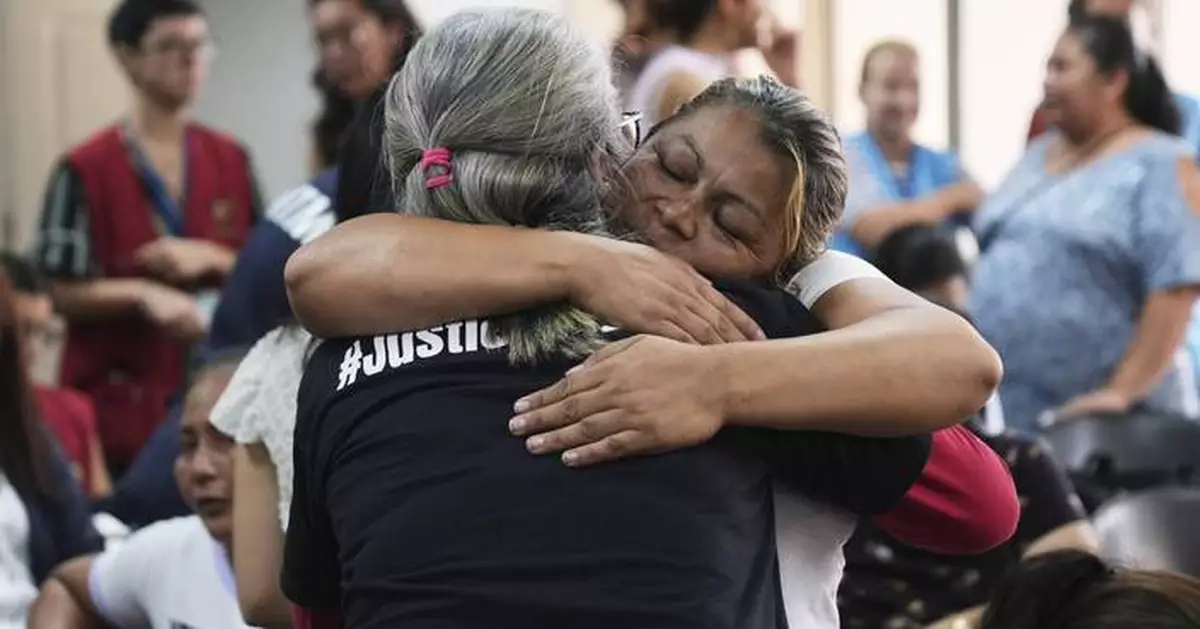
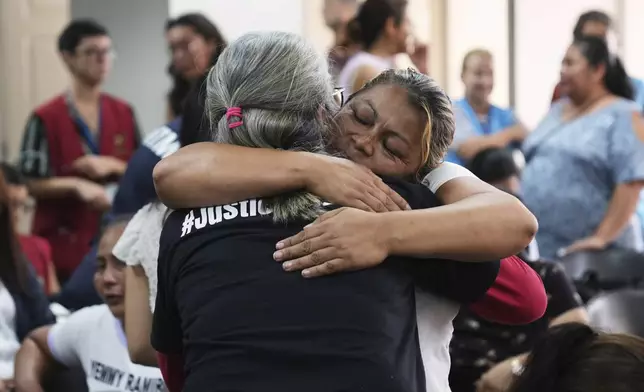
Relatives of the 41 girls killed in a fire at a government-run facility for at-risk girls in 2017, embrace in a courtroom during a hearing for seven people accused of responsibility, in Guatemala City, Tuesday, Aug. 12, 2025. (AP Photo/Moises Castillo)
Prosecutors had requested sentences of up to 131 years for some of the suspects, who were all former government workers, including several whose duties included protecting children.
Emily del Cid Linares, 25, a survivor of the fire who suffered burns, said she was satisfied with the verdict.
“I feel like a weight has been lifted from me,” she said. “What I most feel is that they (the victims) will be able to rest in peace. (Those responsible) are going to pay for what they did.”
Former Social Welfare Secretary Carlos Rodas was sentenced to 25 years in prison.
Earlier, Rodas told those gathered in the courtroom, including relatives of the victims, that he had not caused “any harm to their daughters and the survivors.”
Also among those convicted was ex-police officer Lucinda Marroquín, who held the key to the room where the girls were locked up and didn’t open it when the fire started. She was sentenced to 13 years.
The judge said that through phone records, investigators were able to establish that at the time of the fire, Marroquín was talking on her phone and when told about the blaze, a witness testified that she responded with profanity and said “let them burn.”
A former government prosecutor assigned to the protection of children was acquitted.
On March 8, 2017, a girl at the Virgen de la Asuncion Safe Home — located 14 miles (22 kilometers) east of Guatemala City — lit a foam mattress on fire in the room where a group of girls had been locked up for hours without access to a bathroom. Smoke and flames quickly filled the room, killing 41 girls and injuring 15.
About 700 children — no one had exact numbers — lived at the facility, which had a maximum capacity for 500. The majority had committed no crime. They were sent there by the courts for various reasons — they had run away or were abused, or were migrants.
The night before the fire, a group of girls had escaped. Hours later, the police returned them to the home. They were locked in a room that had no access to a bathroom and guarded by police. They were given foam mattresses to sleep on.
After hours of demanding to be let out, one girl lit the fire.
Cifuentes said that the fire was the culmination of a series of abuses, some of which had been reported to authorities, but not acted on. She said autopsies confirmed the presence of drugs in some of the girls, which supported their complaints that they were given sleeping pills. The pills were among the reasons they had tried to escape the facility.
Follow AP’s coverage of Latin America and the Caribbean at https://apnews.com/hub/latin-america
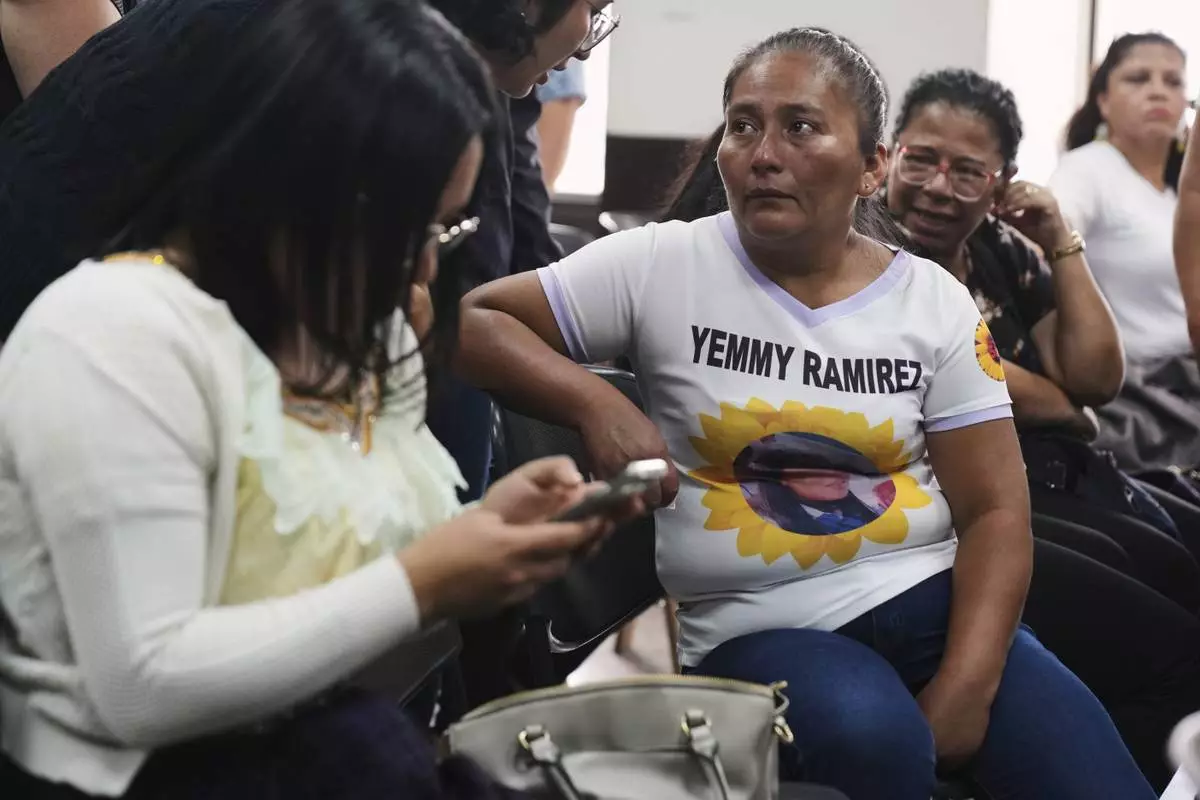
Elsa Siquin, right, wears a T-shirt with a portrait of her daughter, Yemmy Ramirez, one of 41 girls killed in a fire at a government-run facility for at-risk girls in 2017, during a hearing for those accused of responsibility in Guatemala City, Tuesday, Aug. 12, 2025. (AP Photo/Moises Castillo)
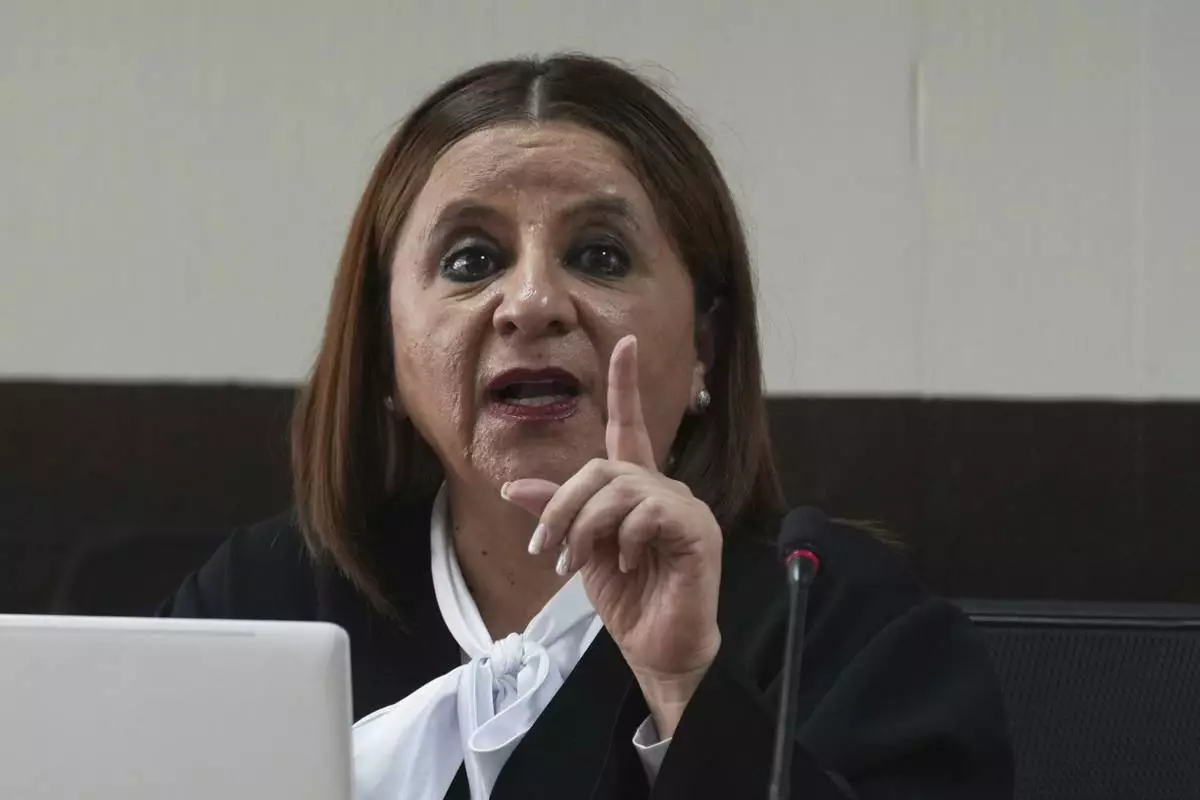
Judge Ingrid Cifuentes gives instructions in court prior to a hearing of seven people accused of responsibility in a fire at a government-run facility for at-risk girls that killed 41 girls in 2017, in Guatemala City, Tuesday, Aug. 12, 2025. (AP Photo/Moises Castillo)
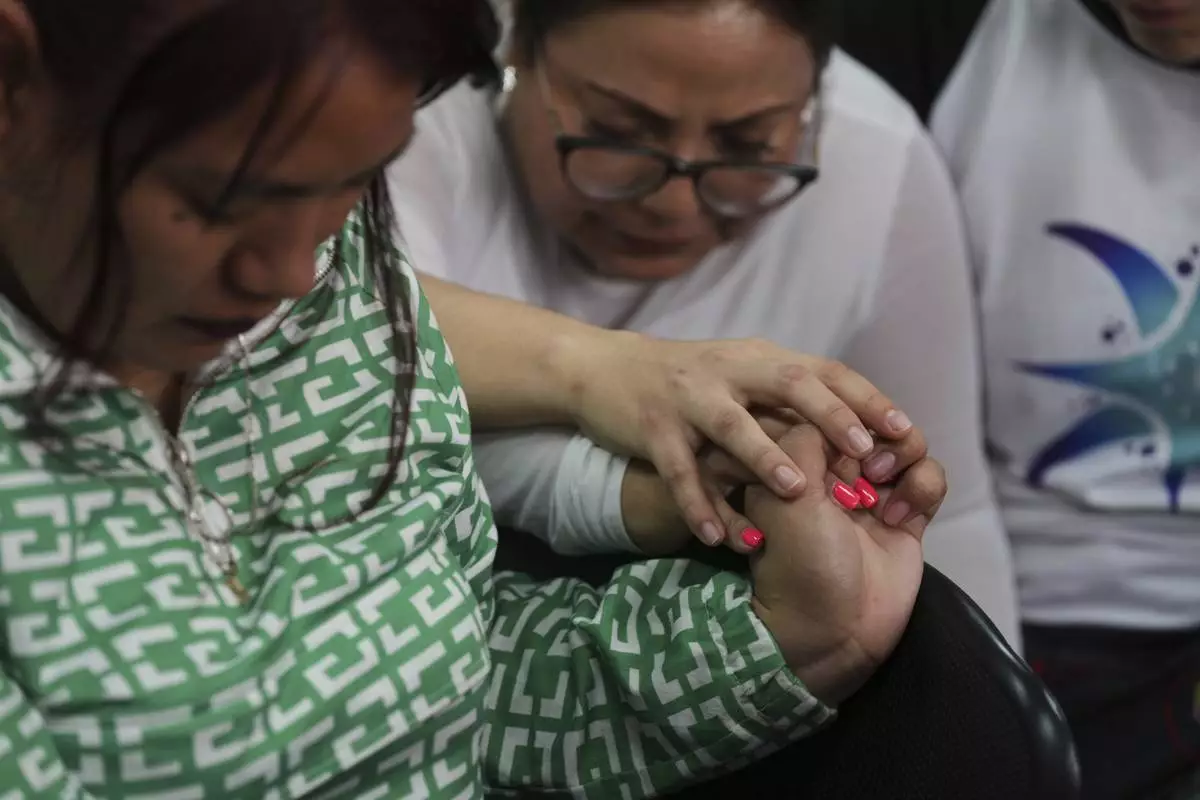
People pray prior to a hearing for seven people accused of responsibility for a fire at a government-run facility for at-risk girls that killed 41 girls in 2017, in Guatemala City, Tuesday, Aug. 12, 2025. (AP Photo/Moises Castillo)
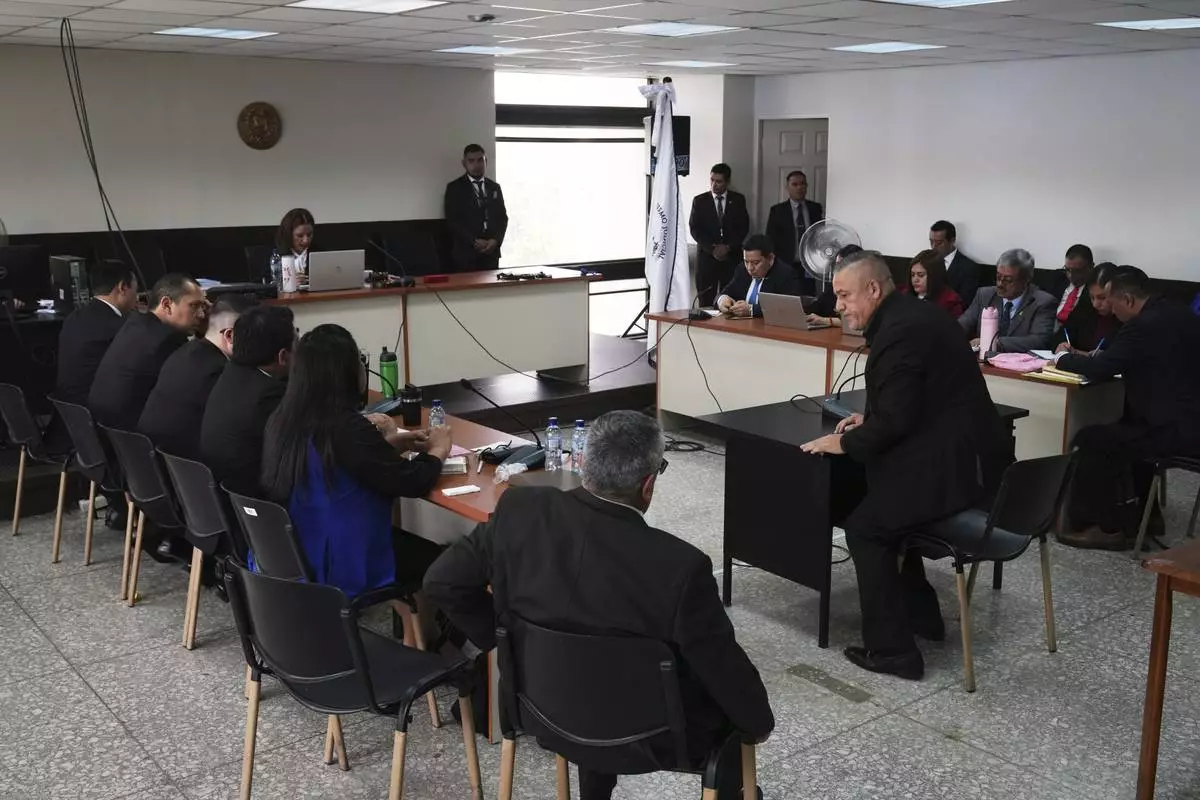
Carlos Rodas, one of seven people accused of responsibility for a fire at a government-run facility for at-risk girls that killed 41 girls in 2017, stands up after speaking during trial at court in Guatemala City, Tuesday, Aug. 12, 2025. (AP Photo/Moises Castillo)
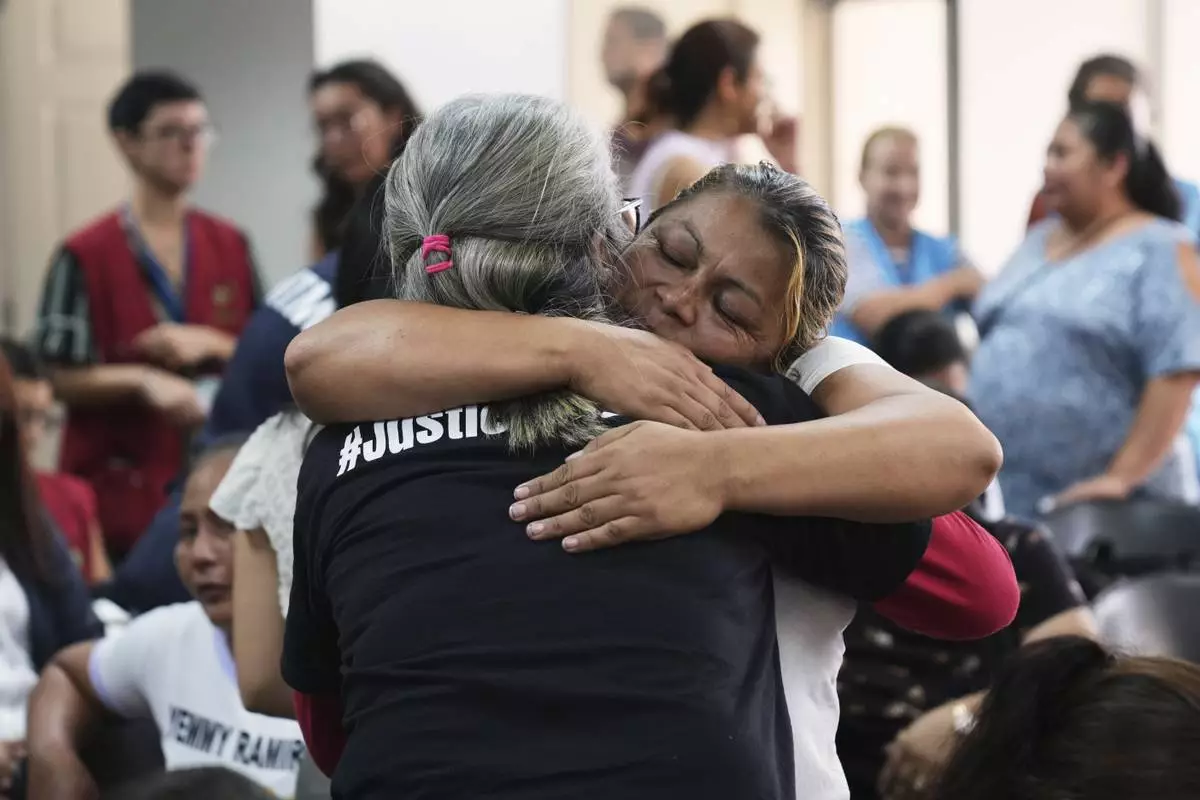
Relatives of the 41 girls killed in a fire at a government-run facility for at-risk girls in 2017, embrace in a courtroom during a hearing for seven people accused of responsibility, in Guatemala City, Tuesday, Aug. 12, 2025. (AP Photo/Moises Castillo)
WASHINGTON (AP) — Most American presidents aspire to the kind of greatness that prompts future generations to name important things in their honor.
Donald Trump isn't leaving it to future generations.
As the first year of his second term wraps up, his administration and allies have put the president’s name on the U.S. Institute of Peace, the Kennedy Center performing arts venue and a new class of battleships.
That’s on top of the “Trump Accounts” for tax-deferred investments, the TrumpRx government website soon to offer direct sales of prescription drugs, the “Trump Gold Card” visa that costs at least $1 million and the Trump Route for International Peace and Prosperity, a transit corridor included in a deal his administration brokered between Armenia and Azerbaijan.
On Friday, he plans to attend a ceremony in Florida where local officials will dedicate a 4-mile (6-kilometer) stretch of road from the airport to his Mar-a-Lago estate as President Donald J. Trump Boulevard.
It’s unprecedented for a sitting president to embrace tributes of that number and scale, especially those proffered by members of his administration. And while past sitting presidents have typically been honored by local officials naming schools and roads after them, it's exceedingly rare for airports, federal buildings, warships or other government assets to be named for someone still in power.
“At no previous time in history have we consistently named things after a president who was still in office,” said Jeffrey Engel, the David Gergen Director of the Center for Presidential History at Southern Methodist University in Dallas. “One might even extend that to say a president who is still alive. Those kind of memorializations are supposed to be just that — memorials to the passing hero.”
White House spokeswoman Liz Huston said the TrumpRx website linked to the president's deals to lower the price of some prescription drugs, along with “overdue upgrades of national landmarks, lasting peace deals, and wealth-creation accounts for children are historic initiatives that would not have been possible without President Trump’s bold leadership.”
"The Administration’s focus isn’t on smart branding, but delivering on President Trump’s goal of Making America Great Again," Huston said.
The White House pointed out that the nation's capital was named after President George Washington and the Hoover Dam was named after President Herbert Hoover while each was serving as president.
For Trump, it’s a continuation of the way he first etched his place onto the American consciousness, becoming famous as a real estate developer who affixed his name in big gold letters on luxury buildings and hotels, a casino and assorted products like neckties, wine and steaks.
As he ran for president in 2024, the candidate rolled out Trump-branded business ventures for watches, fragrances, Bibles and sneakers — including golden high tops priced at $799. After taking office again last year, Trump's businesses launched a Trump Mobile phone company, with plans to unveil a gold-colored smartphone and a cryptocurrency memecoin named $TRUMP.
That’s not to be confused with plans for a physical, government-issued Trump coin that U.S. Treasurer Brandon Beach said the U.S. Mint is planning.
Trump has also reportedly told the owners of Washington’s NFL team that he would like his name on the Commanders’ new stadium. The team’s ownership group, which has the naming rights, has not commented on the idea. But a White House spokeswoman in November called the proposed name “beautiful” and said Trump made the rebuilding of the stadium possible.
The addition of Trump’s name to the Kennedy Center in December so outraged independent Sen. Bernie Sanders of Vermont that he introduced legislation this week to ban the naming or renaming of any federal building or land after a sitting president — a ban that would retroactively apply to the Kennedy Center and Institute of Peace.
“I think he is a narcissist who likes to see his name up there. If he owns a hotel, that’s his business,” Sanders said in an interview. “But he doesn’t own federal buildings.”
Sanders likened Trump's penchant for putting his name on government buildings and more to the actions of authoritarian leaders throughout history.
“If the American people want to name buildings after a president who is deceased, that’s fine. That’s what we do,” Sanders said. “But to use federal buildings to enhance your own position very much sounds like the ‘Great Leader’ mentality of North Korea, and that is not something that I think the American people want.”
Although some of the naming has been suggested by others, the president has made clear he’s pleased with the tributes.
Three months after the announcement of the Trump Route for International Peace and Prosperity, a name the White House says was proposed by Armenian officials, the president gushed about it at a White House dinner.
“It’s such a beautiful thing, they named it after me. I really appreciate it. It’s actually a big deal,” he told a group of Central Asian leaders.
Engel, the presidential historian, said the practice can send a signal to people "that the easiest way to get access and favor from the president is to play to his ego and give him something or name something after him.”
Some of the proposals for honoring Trump include legislation in Congress from New York Republican Rep. Claudia Tenney that would designate June 14 as “Trump’s Birthday and Flag Day," placing the president with the likes of Martin Luther King Jr., George Washington and Jesus Christ, whose birthdays are recognized as national holidays.
Florida Republican Rep. Greg Steube has introduced legislation that calls for the Washington-area rapid transit system, known as the Metro, to be renamed the “Trump Train.” North Carolina Republican Rep. Addison McDowell has introduced legislation to rename Washington Dulles International Airport as Donald J. Trump International Airport.
McDowell said it makes sense to give Dulles a new name since Trump has already announced plans to revamp the airport, which currently is a tribute to former Secretary of State John Foster Dulles.
The congressman said he wanted to honor Trump because he feels the president has been a champion for combating the scourge of fentanyl, a personal issue for McDowell after his brother’s overdose death. But he also cited Trump’s efforts to strike peace deals all over the world and called him “one of the most consequential presidents ever.”
“I think that’s somebody that deserves to be honored, whether they’re still the president or whether they’re not," he said.
More efforts are underway in Florida, Trump’s adopted home.
Republican state lawmaker Meg Weinberger said she is working on an effort to rename Palm Beach International Airport as Donald J. Trump International Airport, a potential point of confusion with the Dulles effort.
The road that the president will see christened Friday is not the first Florida asphalt to herald Trump upon his return to the White House.
In the south Florida city of Hialeah, officials in December 2024 renamed a street there as President Donald J. Trump Avenue.
Trump, speaking at a Miami business conference the next month, called it a “great honor” and said he loved the mayor for it.
“Anybody that names a boulevard after me, I like,” he said.
He added a few moments later: “A lot of people come back from Hialeah, they say, ‘They just named a road after you.' I say, ‘That’s OK.’ It’s a beginning, right? It’s a start.”
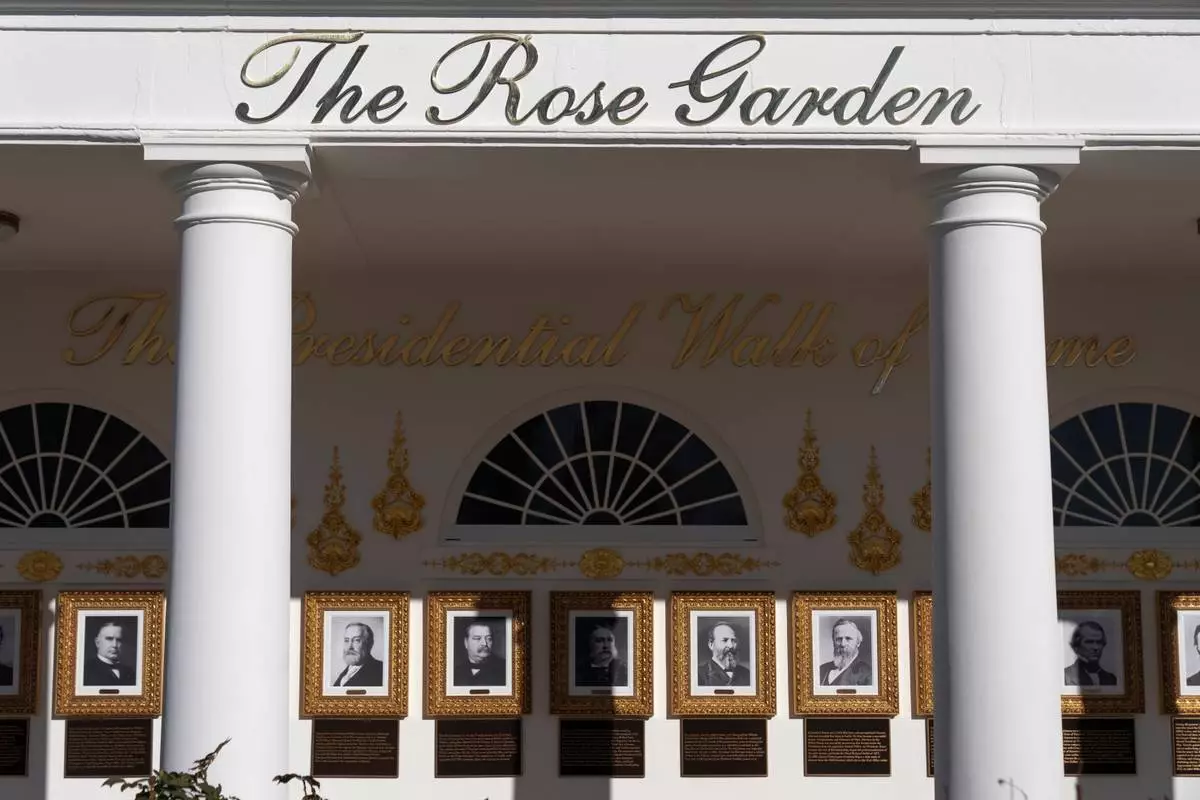
FILE - A sign for the Rose Garden is seen near the Presidential Walk of Fame on the Colonnade at the White House, Jan. 13, 2026, in Washington. (AP Photo/Mark Schiefelbein, File)
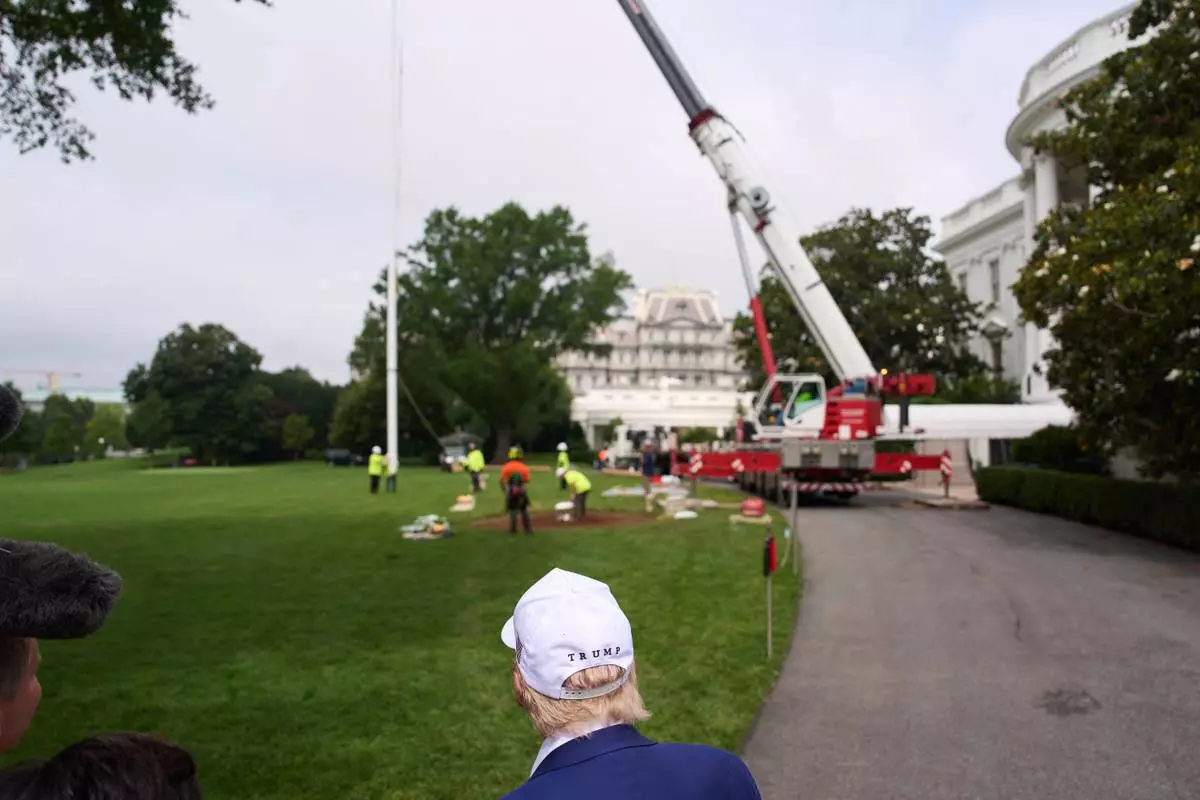
FILE - President Donald Trump speaks with reporters as a flag pole is installed on the South Lawn of the White House, June 18, 2025, in Washington. (AP Photo/Evan Vucci, File)
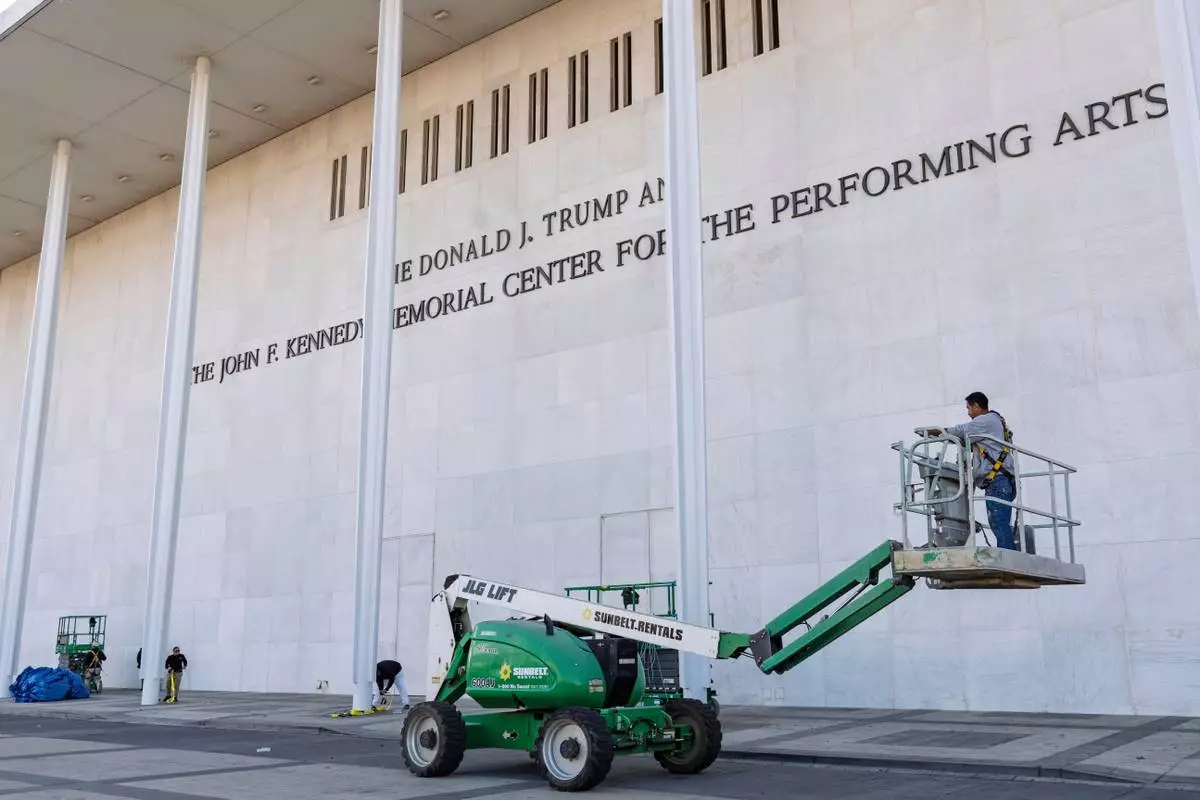
FILE - Workers add President Donald Trump's name to the John F. Kennedy Memorial Center for the Performing Arts, after a Trump-appointed board voted to rename the institution, in Washington, Dec. 19, 2025. (AP Photo/J. Scott Applewhite, File)
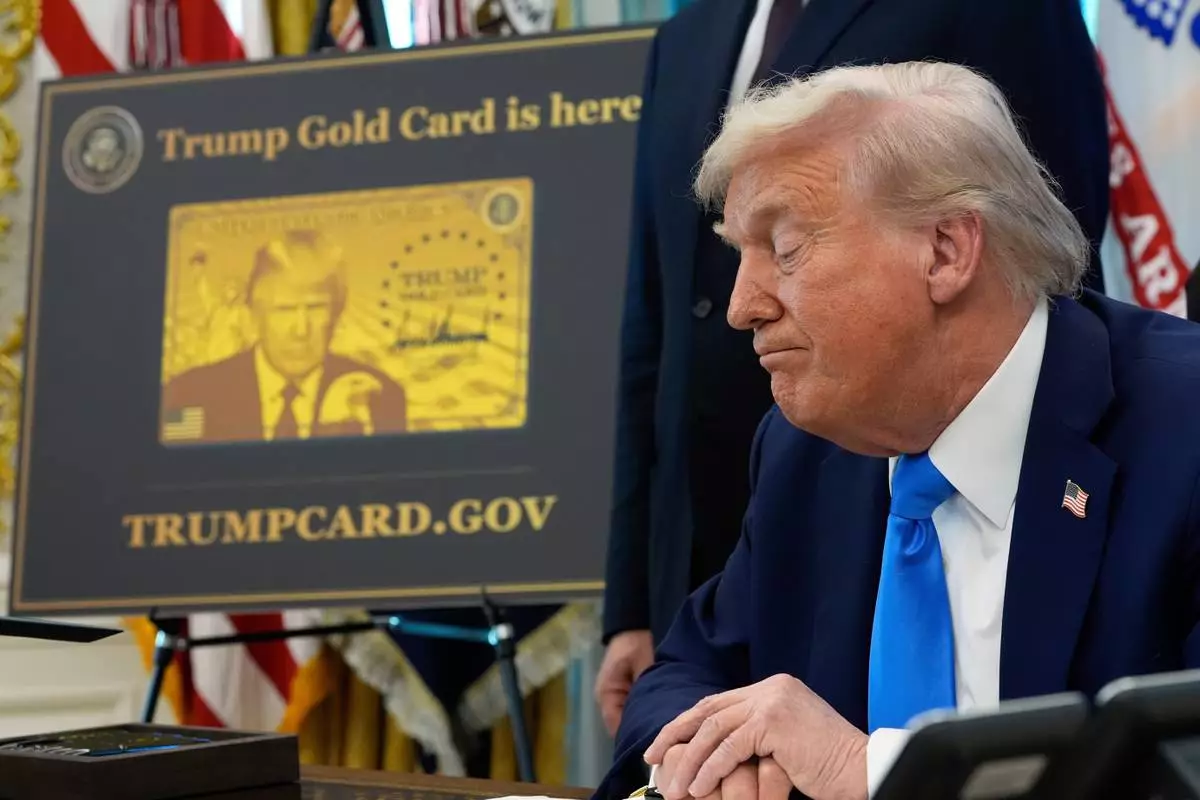
FILE - A poster showing the Trump Gold Card is seen as President Donald Trump signs executive orders in the Oval Office of the White House, Sept. 19, 2025, in Washington. (AP Photo/Alex Brandon, file)