GENEVA (AP) — Negotiators working on a treaty to address global plastic pollution discussed a new draft of the text Wednesday that wouldn't limit plastic production or address chemicals used in plastic products.
The biggest issue of the talks has been whether the treaty should impose caps on producing new plastic or focus instead on things like better design, recycling and reuse. About 100 countries want to limit production as well as tackle cleanup and recycling. Many have said it’s essential to address toxic chemicals.
Click to Gallery
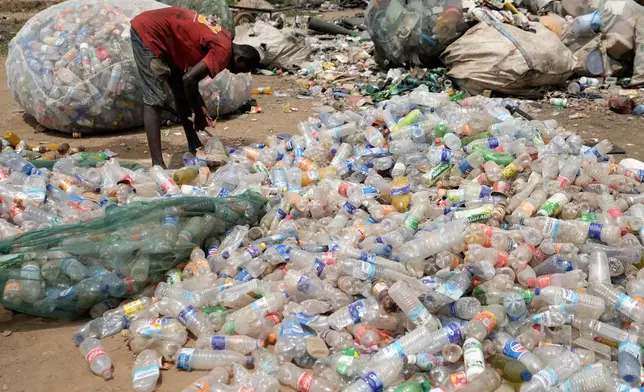
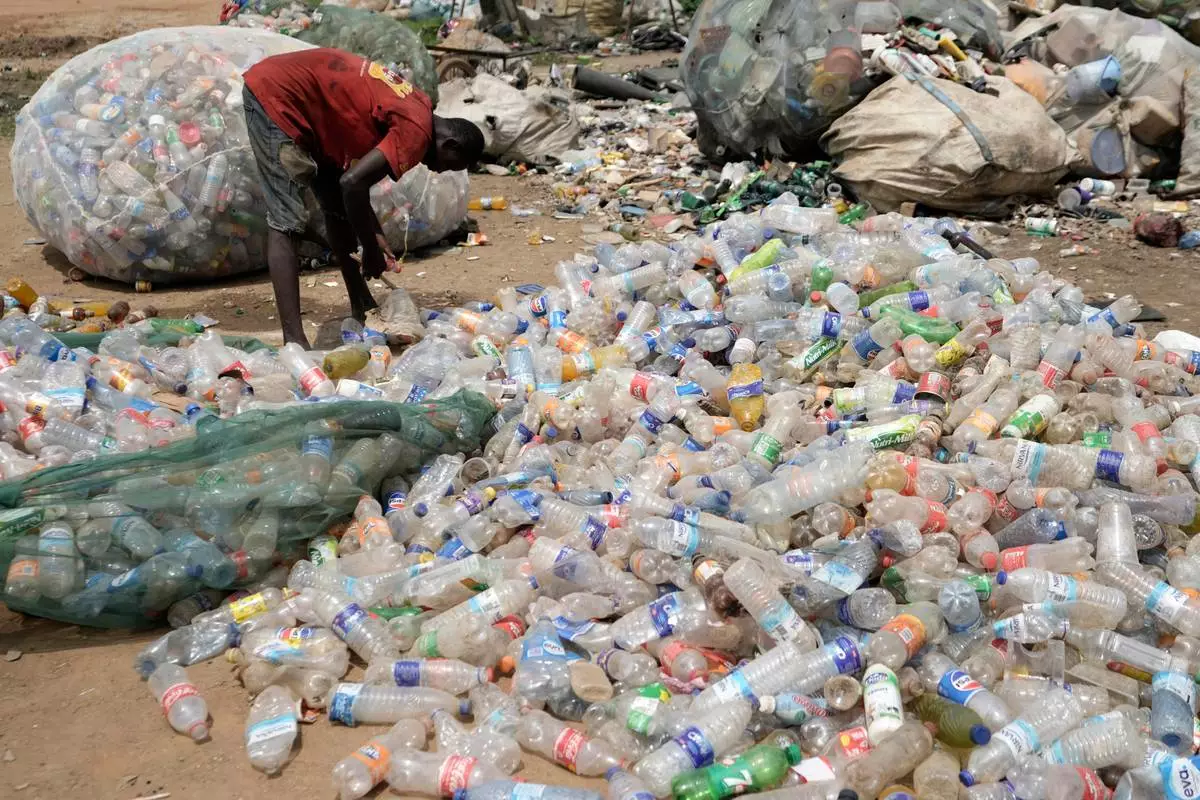
A scavenger sorts out plastic waste at a dumpsite on the outskirts of Lagos, Nigeria, Monday, Aug 11, 2025. (AP Photo/Sunday Alamba)
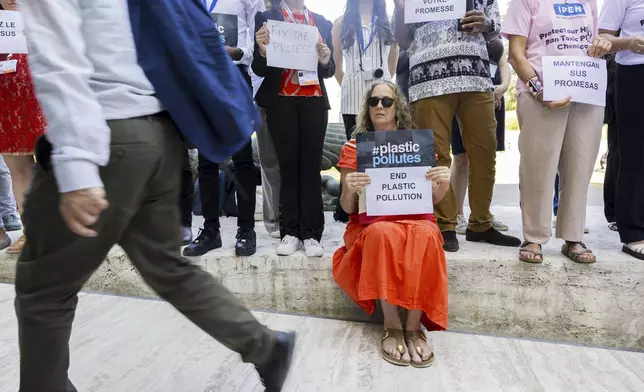
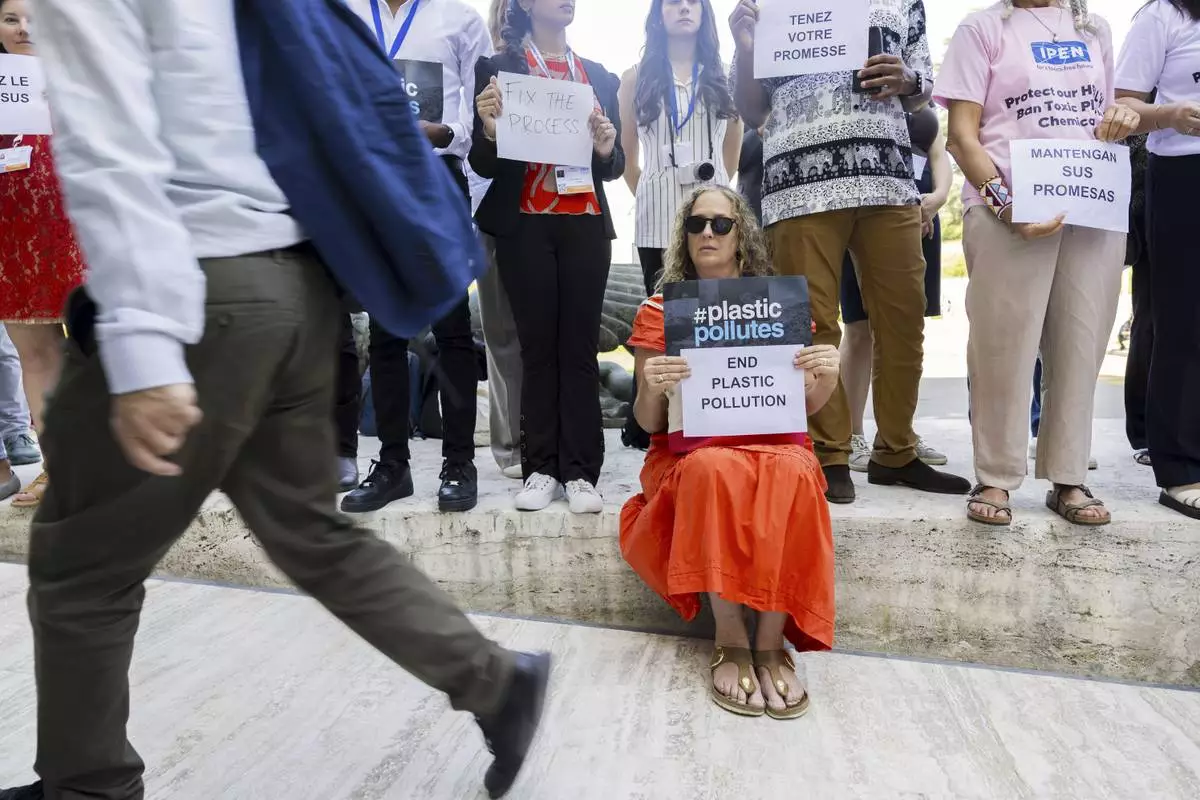
People protest with placards as delegates arrive prior to a session of the second part of the fifth session of the Intergovernmental Negotiating Committee on Plastic Pollution at the European headquarters of the United Nations in Geneva, Switzerland, Saturday, Aug. 9, 2025. (Salvatore Di Nolfi/Keystone via AP)

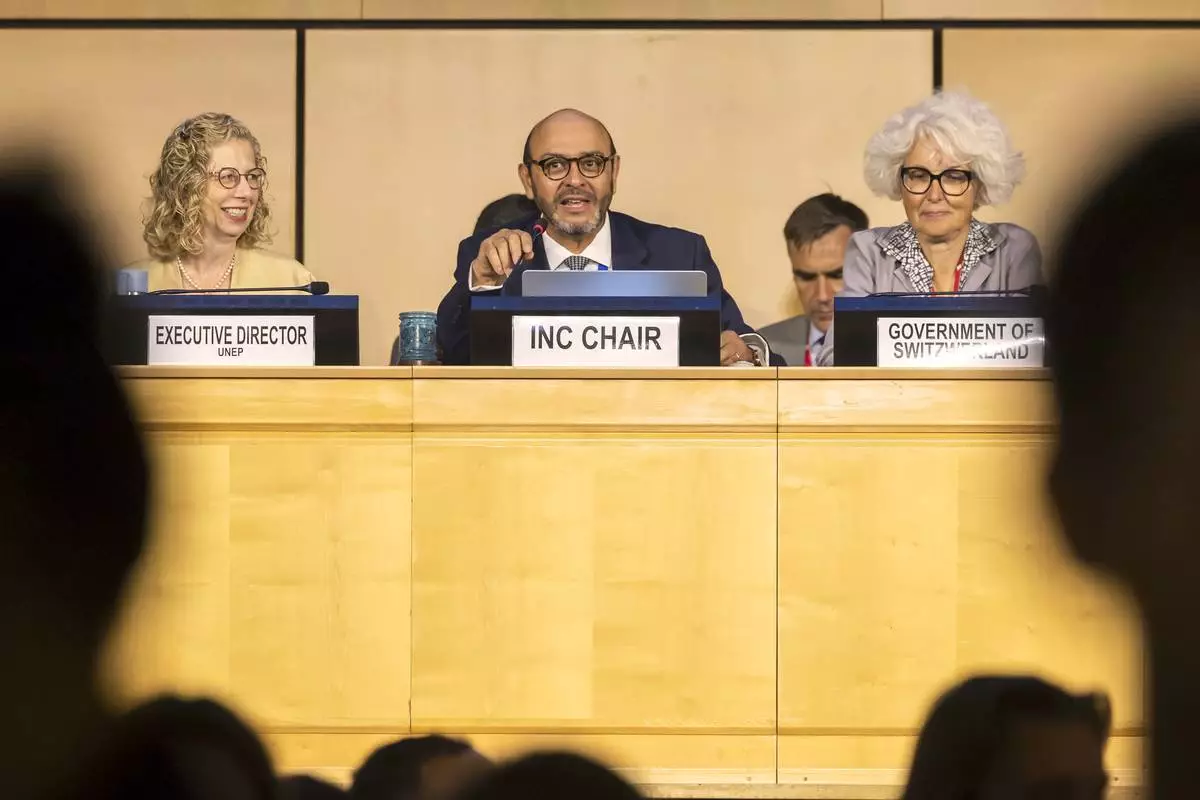
Chair of the International Negotiating Committee Luis Vayas Valdivieso, center, Executive Director of the United Nations Environment Programme Inger Andersen, left, and Director of the Federal Office for the Environment Katrin Schneeberger begin the second part of the fifth Session of the Intergovernmental Negotiating Committee on Plastic Pollution, at the European headquarters of the United Nations in Geneva, Switzerland, Tuesday, Aug. 5, 2025. (Salvatore Di Nolfi/Keystone via AP)
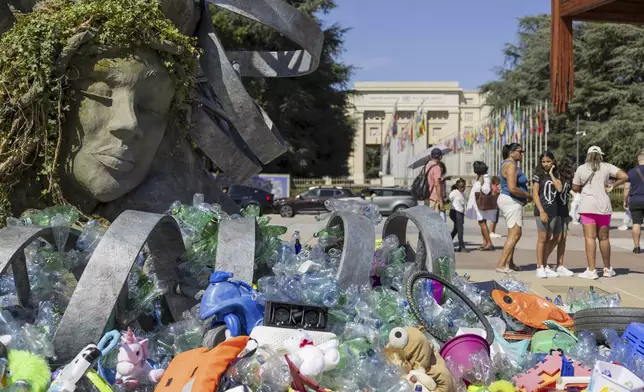
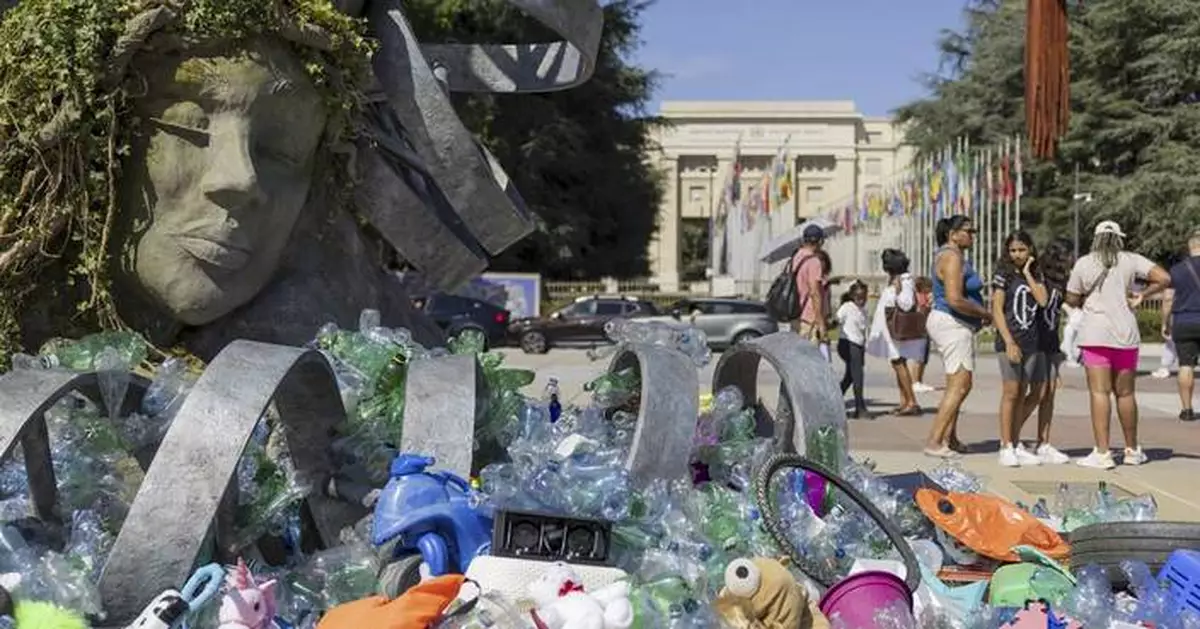
Plastic items are seen next to an artwork by Canadian artist and activist Benjamin Von Wong, titled 'The Thinker's Burden', a 6-meter-tall sculptural remix of Rodin's iconic Thinker, created especially for the Plastics Treaty negotiations, on Place des Nations in front of the European headquarters of the United Nations in Geneva, Switzerland, Monday, Aug. 4, 2025 before the second segment of the fifth session of the Intergovernmental Negotiating Committee on Plastic Pollution (INC-5.2). (Salvatore Di Nolfi/Keystone via AP)
Powerful oil and gas-producing nations and the plastics industry oppose production limits. They want a treaty focused on better waste management and reuse.
Countries with very divergent views expressed disappointment with the draft. It could change significantly and a new version is expected Thursday, the last scheduled day of the negotiations.
When they convened Wednesday night, Colombia's delegation said that the text was entirely unacceptable, because it was unbalanced, and lacked the ambition and global obligations needed to end plastic pollution. The delegation said that it wouldn't accept the wording as the basis for negotiations.
The head of Panama’s delegation to the talks, Juan Carlos Monterrey Gómez, stood up and cheered. Many delegations made statements to agree, including Mexico, Chile, Ghana, Canada, Norway, the United Kingdom, the European Union and the group of small island developing states.
“Let me be clear — this is not acceptable for future generations,” said Erin Silsbe, representing Canada.
Oil- and gas-producing nations raised other concerns, with Saudi Arabia, Kuwait, Qatar and others saying that the draft doesn't have the scope they want to set the parameters of the treaty or precise definitions.
The United States said that six articles cross red lines, but didn't say how.
India’s delegation, on the other hand, said that the draft is a “good enough starting point.”
The draft contains one mention of plastic production in the preamble, reaffirming the importance of promoting sustainable production and consumption of plastics. It doesn't contain an article on production from a previous draft. There is no mention of chemicals.
The new provisions seek to reduce the number of problematic plastic products that often enter the environment and are difficult to recycle and promote the redesign of plastic products, so that they can be recycled and reused. Parties to the treaty would improve their waste management.
Luis Vayas Valdivieso, the chair of the negotiating committee, wrote the draft based on the views expressed by nations over the course of the negotiations. He told them that he did it to move them closer to a legally-binding instrument, and they can shape and improve it, as well as add and delete wording.
With little time left, he said, it's time to build bridges, not dig in over red lines.
The Associated Press’ climate and environmental coverage receives financial support from multiple private foundations. AP is solely responsible for all content. Find AP’s standards for working with philanthropies, a list of supporters and funded coverage areas at AP.org.
A scavenger sorts out plastic waste at a dumpsite on the outskirts of Lagos, Nigeria, Monday, Aug 11, 2025. (AP Photo/Sunday Alamba)
People protest with placards as delegates arrive prior to a session of the second part of the fifth session of the Intergovernmental Negotiating Committee on Plastic Pollution at the European headquarters of the United Nations in Geneva, Switzerland, Saturday, Aug. 9, 2025. (Salvatore Di Nolfi/Keystone via AP)
Chair of the International Negotiating Committee Luis Vayas Valdivieso, center, Executive Director of the United Nations Environment Programme Inger Andersen, left, and Director of the Federal Office for the Environment Katrin Schneeberger begin the second part of the fifth Session of the Intergovernmental Negotiating Committee on Plastic Pollution, at the European headquarters of the United Nations in Geneva, Switzerland, Tuesday, Aug. 5, 2025. (Salvatore Di Nolfi/Keystone via AP)
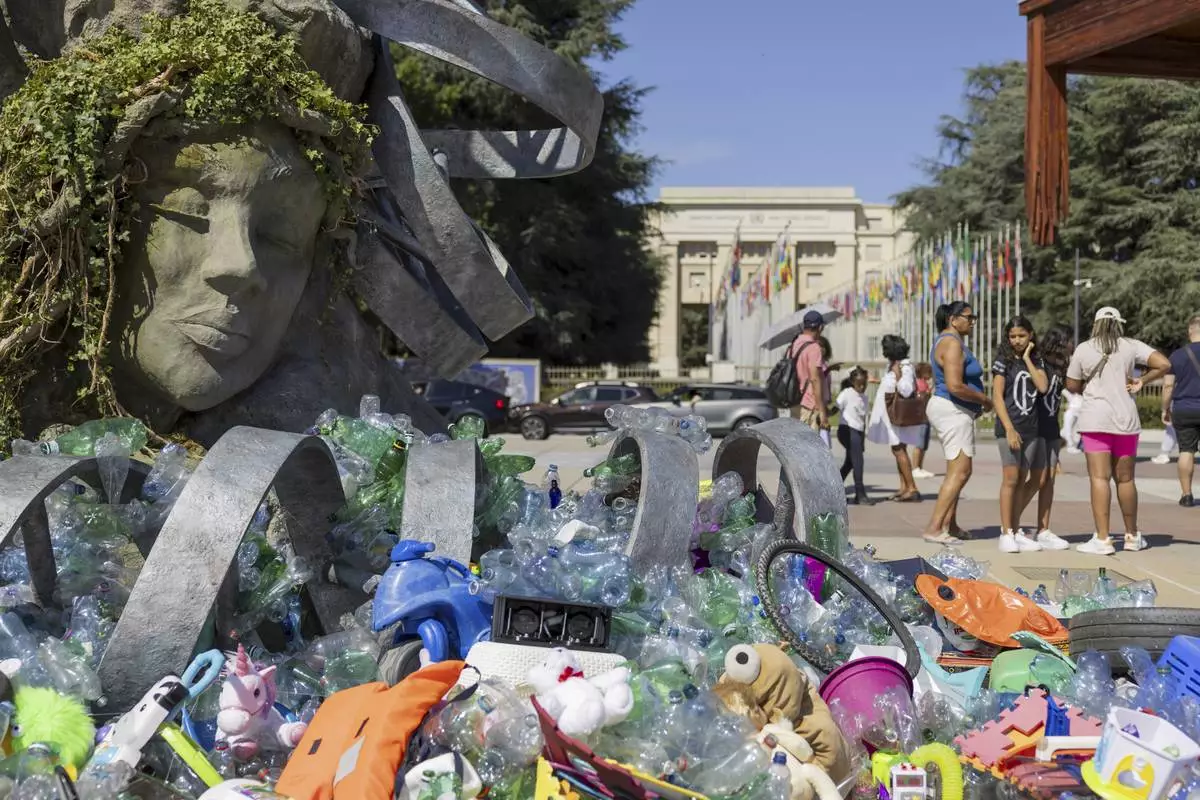
Plastic items are seen next to an artwork by Canadian artist and activist Benjamin Von Wong, titled 'The Thinker's Burden', a 6-meter-tall sculptural remix of Rodin's iconic Thinker, created especially for the Plastics Treaty negotiations, on Place des Nations in front of the European headquarters of the United Nations in Geneva, Switzerland, Monday, Aug. 4, 2025 before the second segment of the fifth session of the Intergovernmental Negotiating Committee on Plastic Pollution (INC-5.2). (Salvatore Di Nolfi/Keystone via AP)