Indian workers, farmers, and students are staging protests in Rohtak against U.S.President Donald Trump's tariff threats on Wednesday.
A platform for combined trade unions including Center of Indian Trade Unions(CITU) and All India Kisan Sabha (AIKS) has called upon all patriotic citizens to join what it called a nationwide day of resistance.
The organization is demanding that Delhi reject U.S.trade pressure and assert its sovereign right to trade with all nations.
"One of the important areas where their imports will be dumped here in India are mainly the dairy products and about 8 crore (eighty million) of our Indian farmers are actually dairy farmers and their milk and milk products will just become redundant in Indian market itself," said Inderjit Singh, a Farmer Union leader in Rohtak.
Protests have erupted across India.
The protests come amid Washington's plan to impose levies of 50 percent on India over its purchase of Russian oil, following five rounds of failed trade talks.
The protests also coincide with a report by The Indian Express suggesting that Prime Minister Narendra Modi and Trump will likely meet next month on the sidelines of the UN General Assembly in New York.
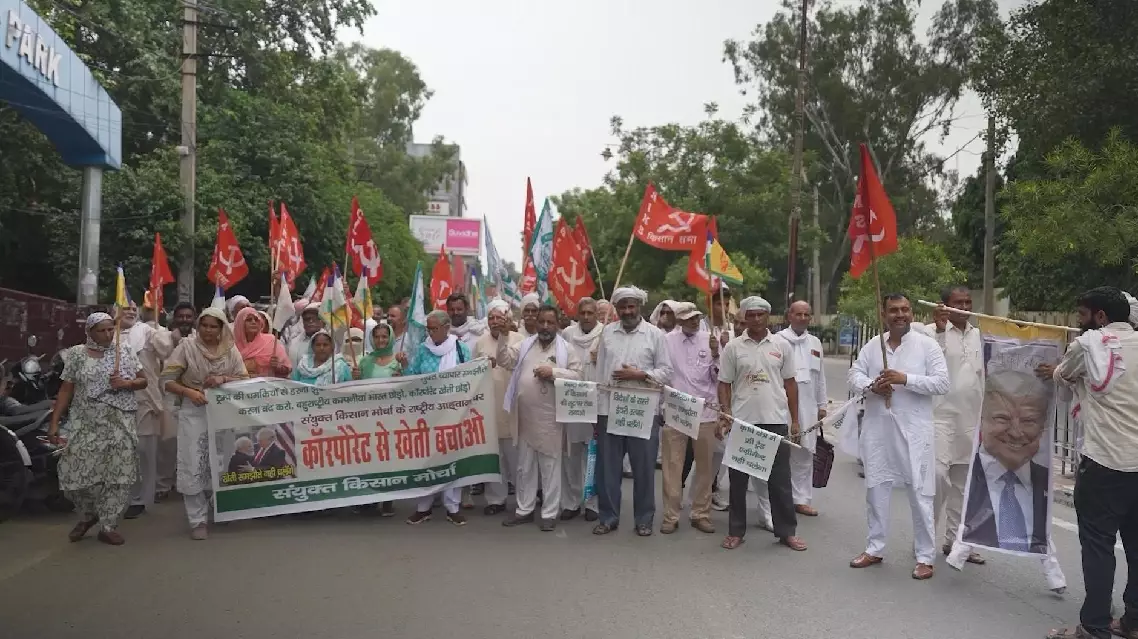
Protests erupt across India against US tariff threats
China opposes the use or threat of force in international relations, opposes imposing one's own will on others, and opposes a return of the world to the "law of the jungle," Foreign Minister Wang Yi said during a phone conversation with Iranian Foreign Minister Seyed Abbas Araghchi on Thursday.
During the call, Araghchi briefed Wang on the latest developments in Iran, saying the recent unrest was incited by external forces and that the situation has now returned to stability.
Saying that Iran has made preparations to respond to external interference while keeping the door wide open to dialog, Araghchi expressed hope that China would play a greater role in promoting regional peace and stability.
Wang, also a member of the Political Bureau of the Communist Party of China Central Committee, said that China consistently upholds the purposes and principles of the UN Charter and international law, opposes the use or threat of force in international relations, opposes imposing one's own will on others, and opposes a return of the world to the "law of the jungle."
He said that the Chinese side believes the Iranian government and people will stay united, overcome difficulties, maintain national stability, and safeguard their legitimate rights and interests.
Wang also called on all parties to cherish peace, exercise restraint, and resolve differences through dialog, adding that China is willing to play a constructive role in this regard.
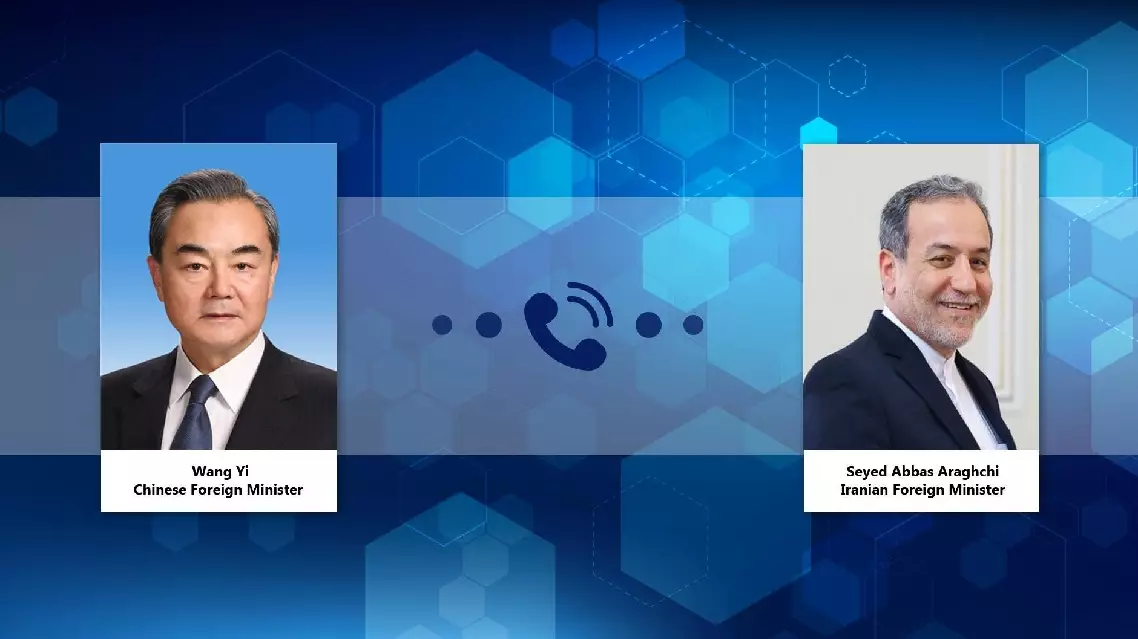
Chinese, Iranian FMs have phone conversation