ST. PETERSBURG, Fla. (AP) — The first black bear hunt in Florida in a decade will take place in December under a rule adopted Wednesday by state wildlife officials despite strong opposition to the eventual use of dogs and targeting the animals in baited locations.
The Florida Fish and Wildlife Conservation Commission voted unanimously in favor of the plan during a meeting that drew 168 people for a public hearing in the Panhandle town of Havana, with both supporters and opponents present. The panel had given preliminary approval in May, citing a need to manage growing bear populations.
“We make decisions based on science," said commission chair Rodney Barreto.
Opponents called the hunt cruel, unnecessary and an excuse for hunters to bag a trophy animal when the real issue is the encroaching human population in bear habitat as Florida continues to grow.
“Not all the hunters support this hunt. We’d like to see nature in balance," said Lauren Jorgensen, whose family owns a ranch in rural Suwannee County.
There are an estimated 4,000 black bears in Florida, one of the few states with sizable populations that do not have a bear hunting season. Several pro-hunt speakers noted that bears are much more commonly seen in many areas than in the past, causing interactions with humans that provoke fear and concern.
Ottice Amison, a member of the Franklin County Commission, said residents there report bears on porches, rooting through garbage cans, roaming neighborhoods and playgrounds.
“The reality is that the frequency and severity of bear interactions continues to rise," Amison told the wildlife commission. “Right now, too many of our residents see bears as threats and pests.”
There has been only one documented fatal black bear attack in Florida, the May mauling of 89-year-old Robert Markel and his daughter's dog in a rural part of Collier County, in southwest Florida.
The plan adopted Wednesday has more stringent rules than the previous Florida hunt in 2015, in which hunting permits were provided to anyone who could pay for them. That led to a chaotic event shut down days early after 300-plus bears were killed, including at least 38 females with cubs, meaning the young bears probably died too.
Hunt opponents predict this year will be more of the same.
“This decision reflects political pressure, not ecological necessity or public will,” said Susannah Randolph, director of the Sierra Club Florida chapter.
Under the new rule, there would be a random drawing of permits with a limit of 187. Hunters could kill only one bear each and only in certain parts of Florida where the bear population is large enough. There would be no killing of cubs and none of females with cubs, according to the FWC staff.
A permit would cost $100 for Florida residents and $300 for nonresidents.
For 2025, the plan is to hold the hunt from Dec. 6 to Dec. 28. In the future, the FWC foresees a bear hunt between Oct. 1 and Dec. 31, subject to more studies about the effect of hunting and the population of the animals. In future years, hunters could use up to six dogs each to pursue bears.
Private landowners with 5,000 acres (2,023 hectares) or more could hold what the FWC calls a “bear harvest program” on their property under the proposal. Bears could be hunted at bait feeding stations on private property. Also, bowhunting will be allowed under rules similar to those for deer.
In addition, Florida allows hunting of alligators from mid-August to November, along with year-round removal of invasive pythons from private land and designated public land managed by the FWC. The state also has an annual python challenge offering prizes and recognition for capturing pythons in the Florida Everglades.
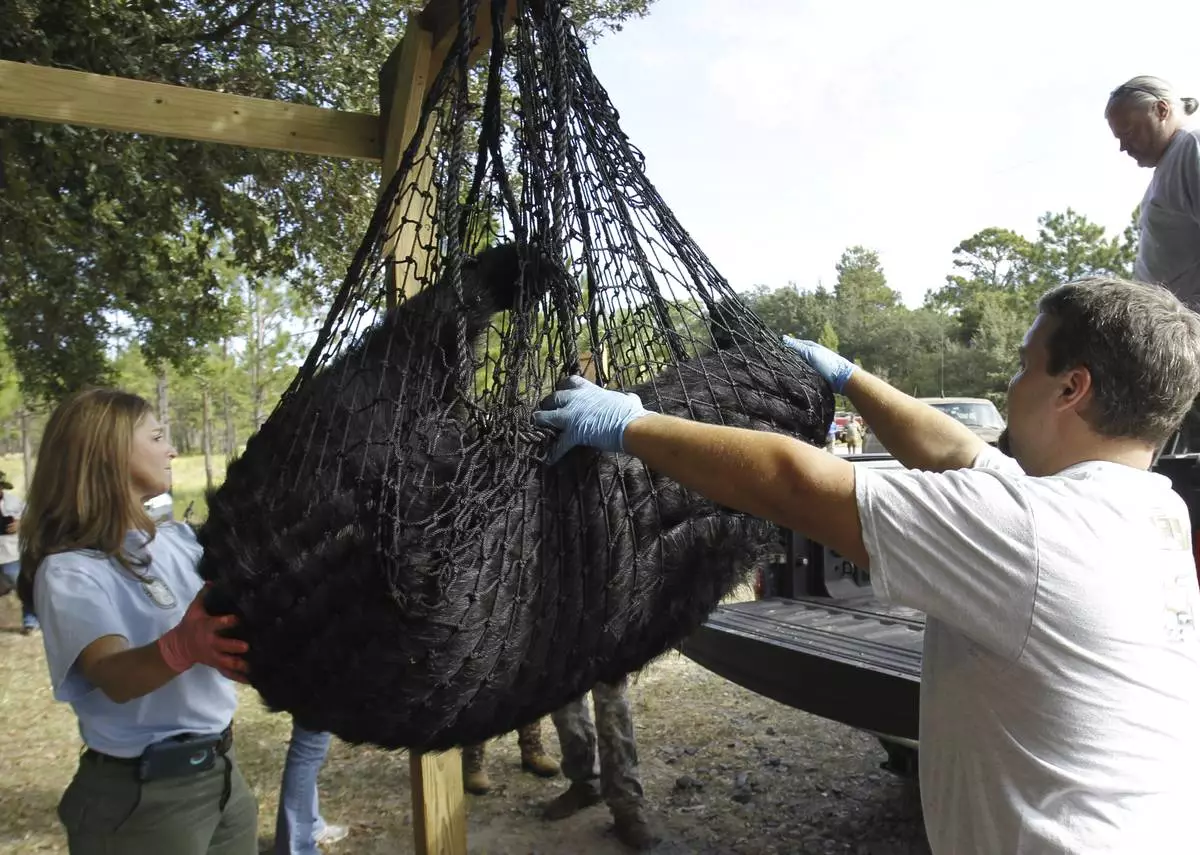
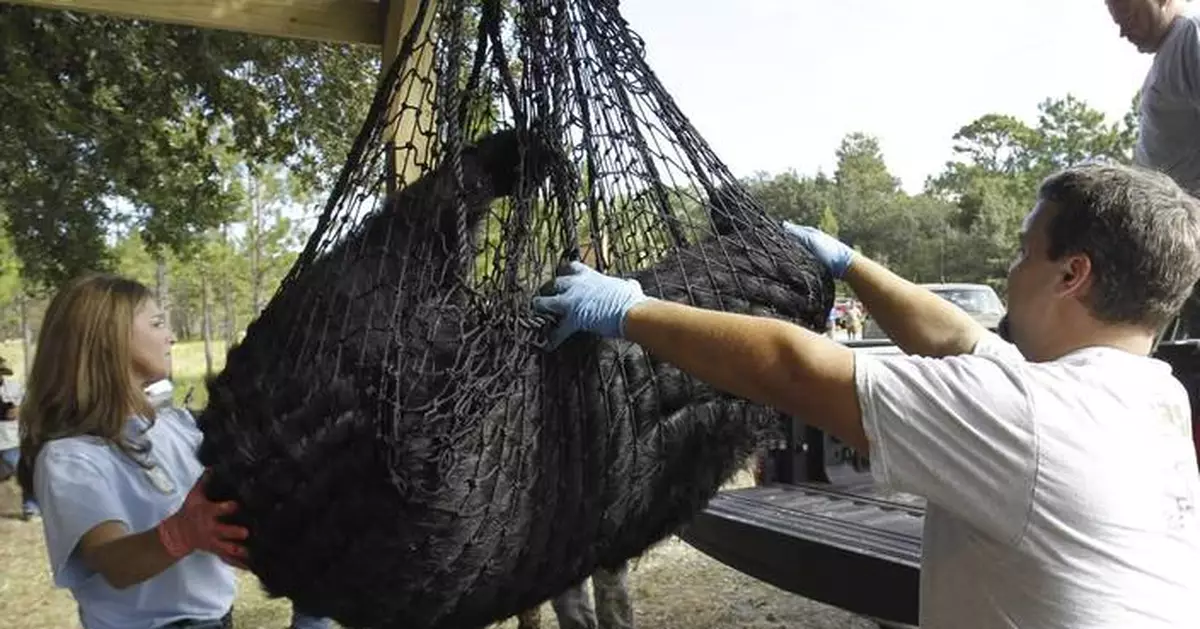
FILE - In this Oct. 24, 2015 photo, a black bear is weighed by FWC Biologists Alyssa Simmons and Mike Orlando at the Rock Springs Run Wildlife Management Area near Lake Mary, Fla. (Luis Santana/Tampa Bay Times via AP, file)
MINNEAPOLIS (AP) — President Donald Trump on Thursday threatened to invoke an 1807 law and deploy troops to quell persistent protests against the federal officers sent to Minneapolis to enforce his administration's massive immigration crackdown.
The threat comes a day after a man was shot and wounded by an immigration officer who had been attacked with a shovel and broom handle. That shooting further heightened the fear and anger that has radiated across the city since an Immigration and Customs Enforcement agent fatally shot Renee Good in the head.
Trump has repeatedly threatened to invoke the Insurrection Act, a rarely used federal law, to deploy the U.S. military or federalize the National Guard for domestic law enforcement, over the objections of state governors. In 2020, for example, he threatened to use the act to quell protests after George Floyd was killed by Minneapolis police, and in recent months he threatened to use it for immigration protests.
“If the corrupt politicians of Minnesota don’t obey the law and stop the professional agitators and insurrectionists from attacking the Patriots of I.C.E., who are only trying to do their job, I will institute the INSURRECTION ACT, which many Presidents have done before me, and quickly put an end to the travesty that is taking place in that once great State,” Trump said in social media post.
Presidents have invoked the law more than two dozen times, most recently in 1992 by President George H.W. Bush to end unrest in Los Angeles. In that instance, local authorities had asked for the assistance.
“I’m making a direct appeal to the President: Let’s turn the temperature down. Stop this campaign of retribution. This is not who we are,” Gov. Tim Walz, a Democrat, said on X.
Minnesota Attorney General Keith Ellison said he would challenge any such action in court. He's already suing to try to stop the surge by the Department of Homeland Security, which says officers have arrested more than 2,500 people since Nov. 29 as part of an immigration operation in the Twin Cities called Metro Surge.
The operation grew when ICE sent 2,000 officers and agents to the area early in January. ICE is a DHS agency.
In Minneapolis, smoke filled the streets Wednesday night near the site of the latest shooting as federal officers wearing gas masks and helmets fired tear gas into a small crowd. Protesters responded by throwing rocks and shooting fireworks.
Demonstrations have become common in Minneapolis since Good was fatally shot on Jan. 7. Agents who have yanked people from their cars and homes have been confronted by angry bystanders demanding they leave.
“This is an impossible situation that our city is presently being put in and at the same time we are trying to find a way forward to keep people safe,” Minneapolis Mayor Jacob Frey said.
The American Civil Liberties Union of Minnesota filed a class-action lawsuit on behalf of three people who said they were questioned or detained in recent days. The lawsuit says two are Somali and one is Hispanic; all three are U.S. citizens. The lawsuit seeks an end to what the ACLU describes as a practice of racial profiling and warrantless arrests. The government did not immediately comment.
Similar lawsuits have been filed in Los Angeles and Chicago and despite seeing initial success, have tended to fizzle in the face of appeal. In Chicago, for example, last year a judge ordered a senior U.S. Border Patrol official to brief her nightly following a lawsuit by news outlets and protesters who said agents used too much force during demonstrations. But three days later, an appeals court stopped the updates.
Homeland Security said in a statement that federal law enforcement officers on Wednesday stopped a driver from Venezuela who is in the U.S. illegally. The person drove off then crashed into a parked car before fleeing on foot, DHS said.
Officers caught up, then two other people arrived and the three started attacking the officer, according to DHS.
“Fearing for his life and safety as he was being ambushed by three individuals, the officer fired a defensive shot to defend his life,” DHS said. The confrontation took place about 4.5 miles (7.2 kilometers) from where Good was killed.
Police chief Brian O’Hara said the man who was shot did not have a life-threatening injury. O’Hara's account of what happened largely echoed that of Homeland Security, which later said the other two men were also in the U.S. illegally from Venezuela.
The FBI said several government vehicles were damaged and property inside was stolen when agents responded to the shooting. Photos show broken windows and insults made with paint. A reward of up to $100,000 is being offered for information. The FBI’s Minneapolis office did not immediately reply to messages seeking more details.
St. Paul Public Schools, with more than 30,000 students, said it would begin offering an online learning option for students who do not feel comfortable coming to school. Schools will be closed next week until Thursday to prepare for those accommodations.
Minneapolis Public Schools, which has a similar enrollment, is also offering temporary remote learning. The University of Minnesota will start a new term next week with different options depending on the class.
Madhani reported from Washington, D.C. and Golden reported from Seattle. Associated Press reporters Sophia Tareen in Chicago; Bill Barrow in Atlanta; Rebecca Santana in Washington; and Ed White in Detroit contributed.
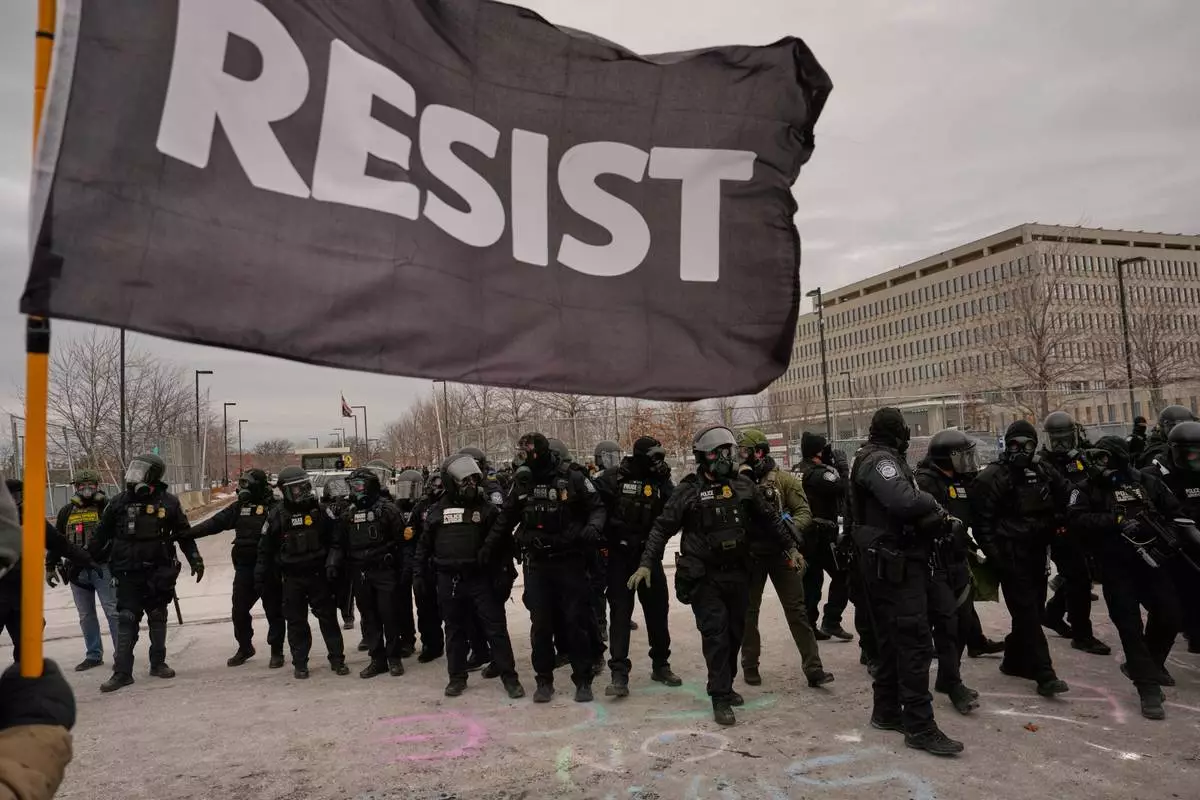
Federal immigration officers confront protesters outside Bishop Henry Whipple Federal Building, Thursday, Jan. 15, 2026, in Minneapolis. (AP Photo/John Locher)
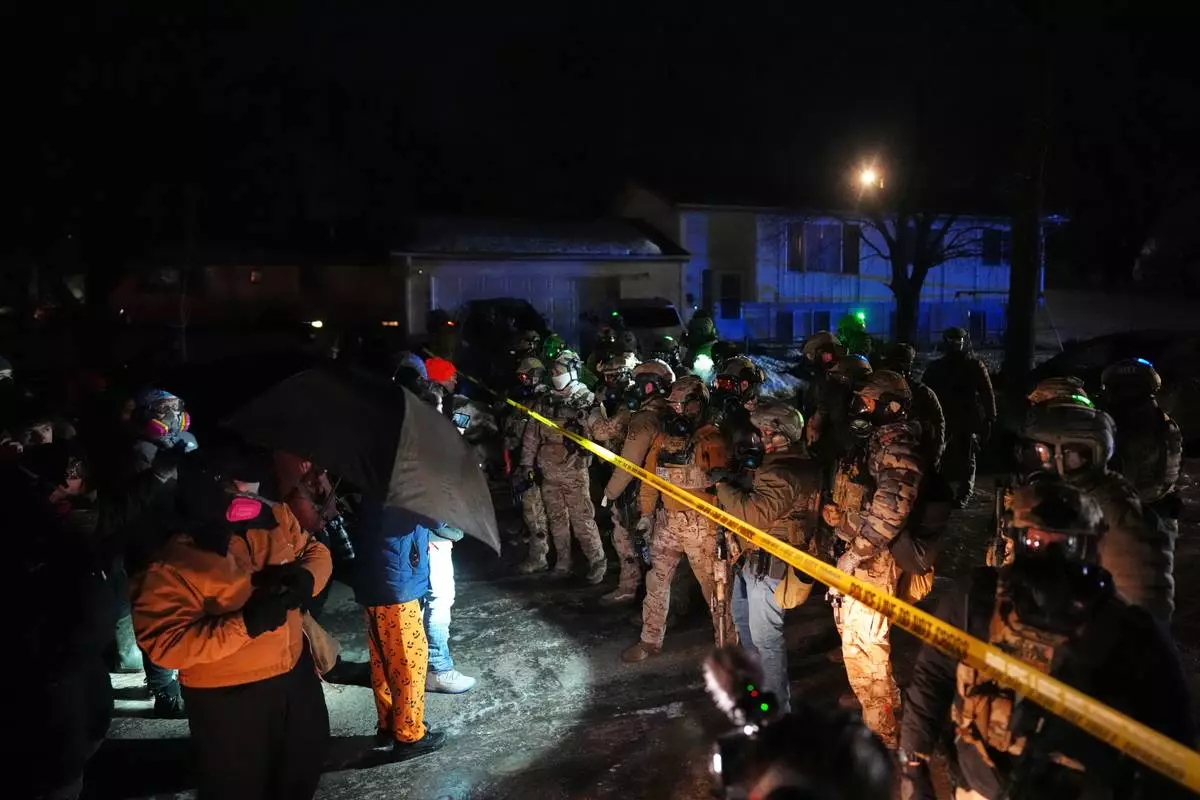
Law enforcement officers at the scene of a reported shooting Wednesday, Jan. 14, 2026, in Minneapolis. (AP Photo/Adam Gray)
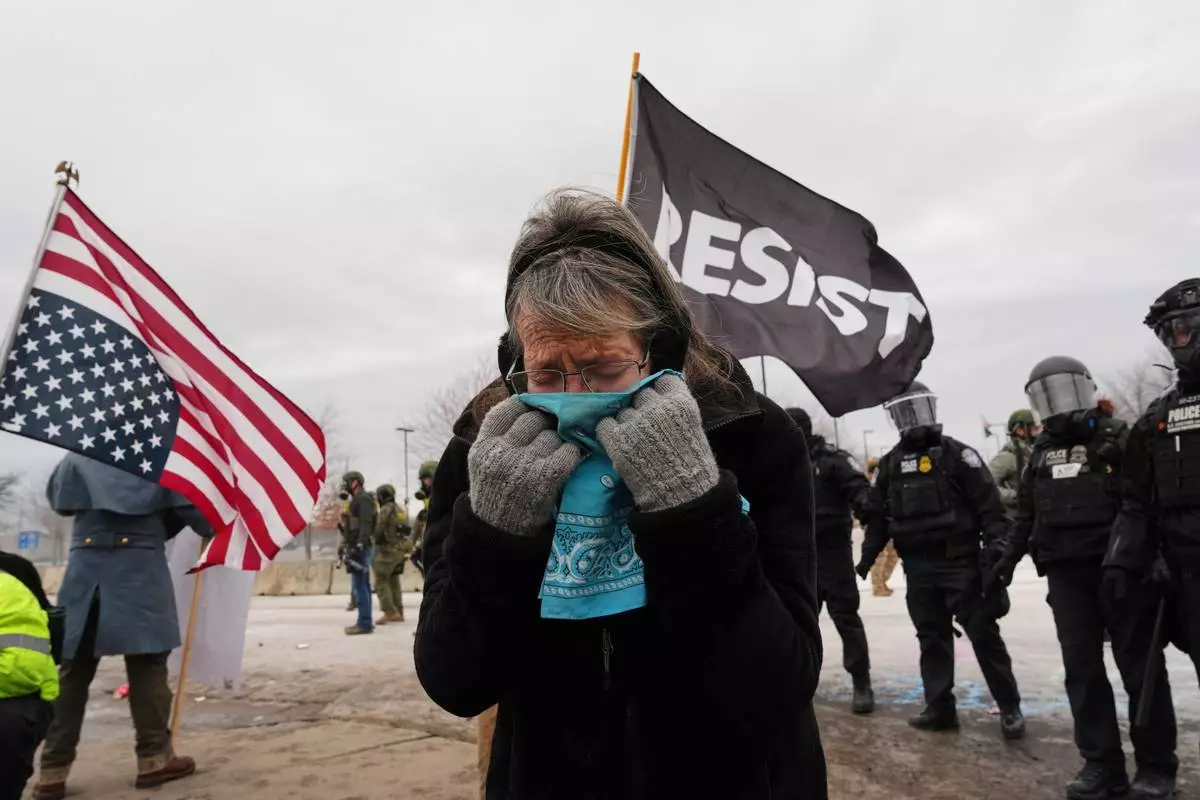
A woman covers her face from tear gas as federal immigration officers confront protesters outside Bishop Henry Whipple Federal Building, Thursday, Jan. 15, 2026, in Minneapolis. (AP Photo/Adam Gray)
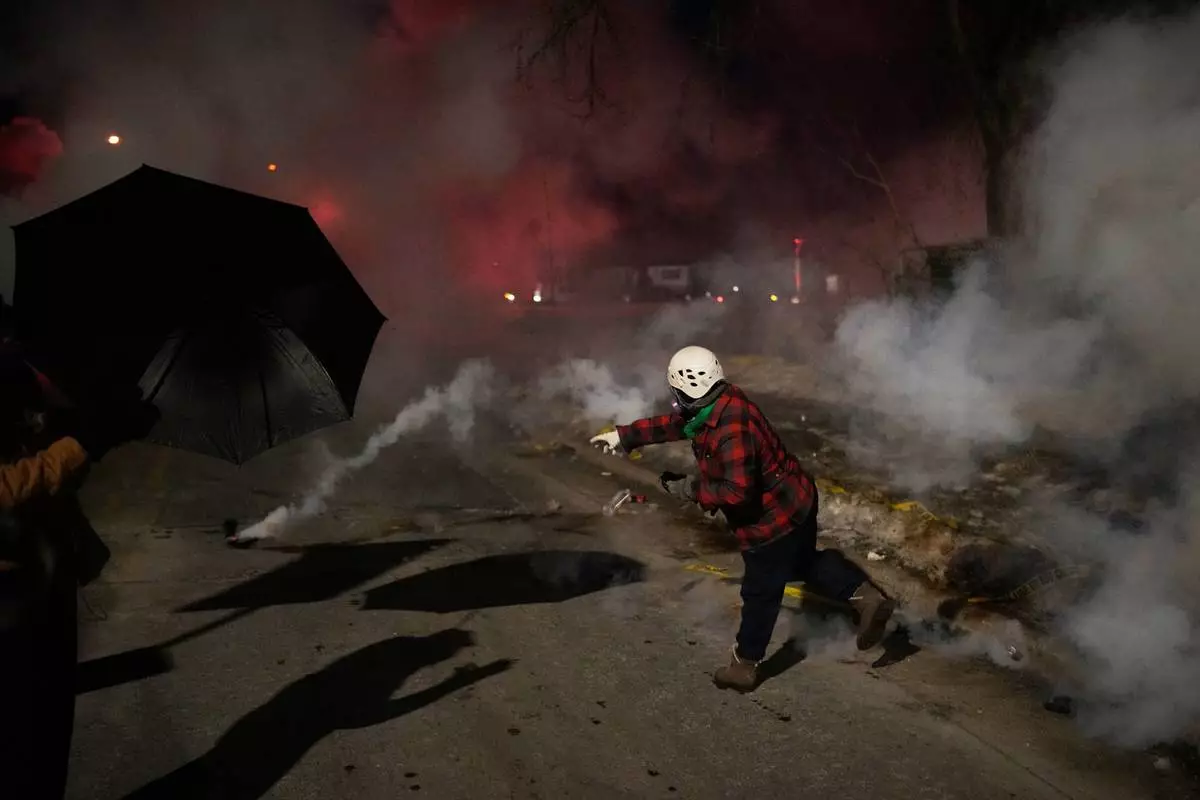
A protester throws back a tear gas canister during a protest after a shooting on Wednesday, Jan. 14, 2026, in Minneapolis. (AP Photo/John Locher)
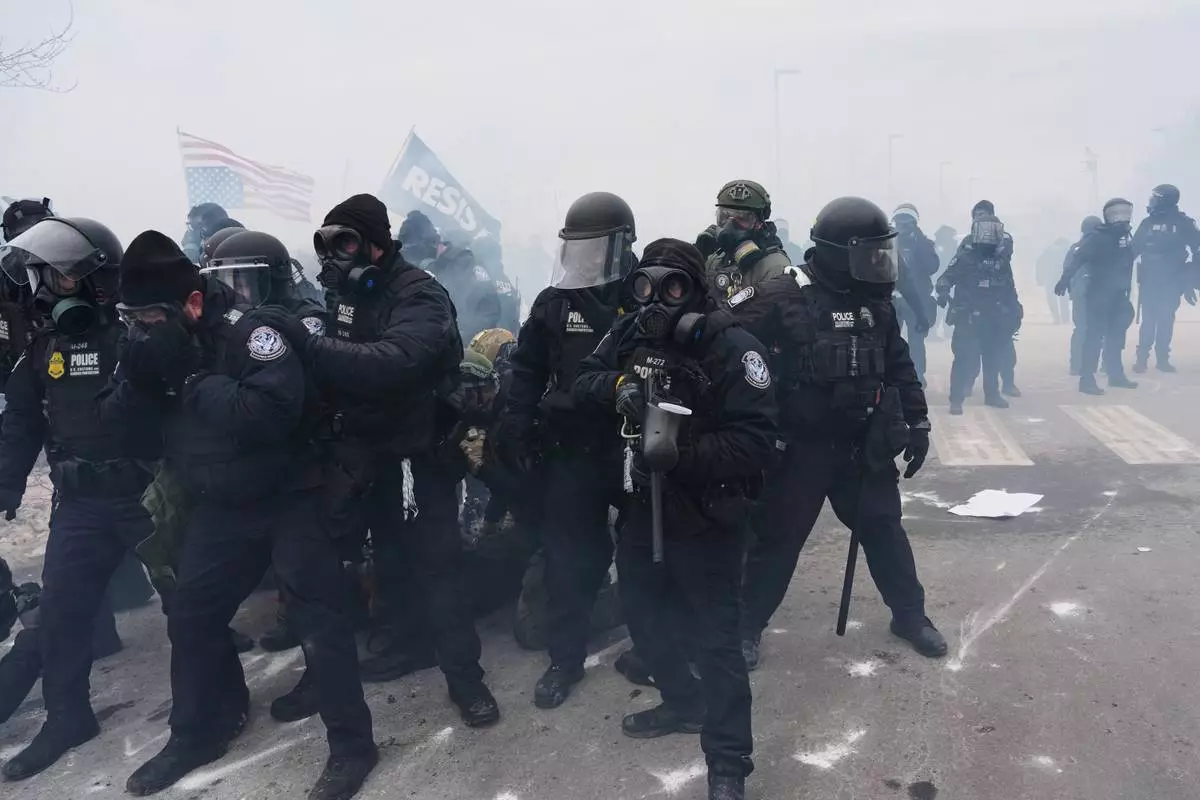
Federal immigration officers confront protesters outside Bishop Henry Whipple Federal Building, Thursday, Jan. 15, 2026, in Minneapolis. (AP Photo/Adam Gray)
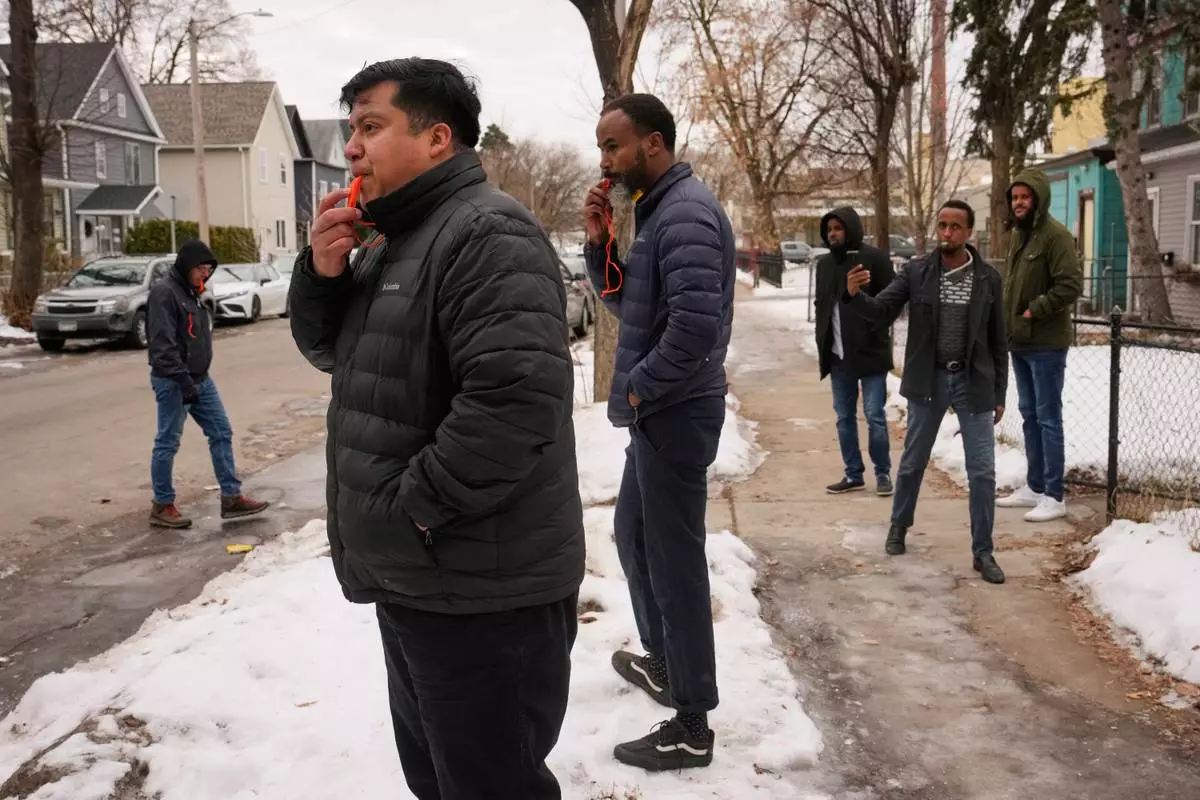
Minneapolis City Council Member Jason Chavez, second from left, blows a whistle with other activists to warn people of federal immigration officers Thursday, Jan. 15, 2026, in Minneapolis. (AP Photo/John Locher)
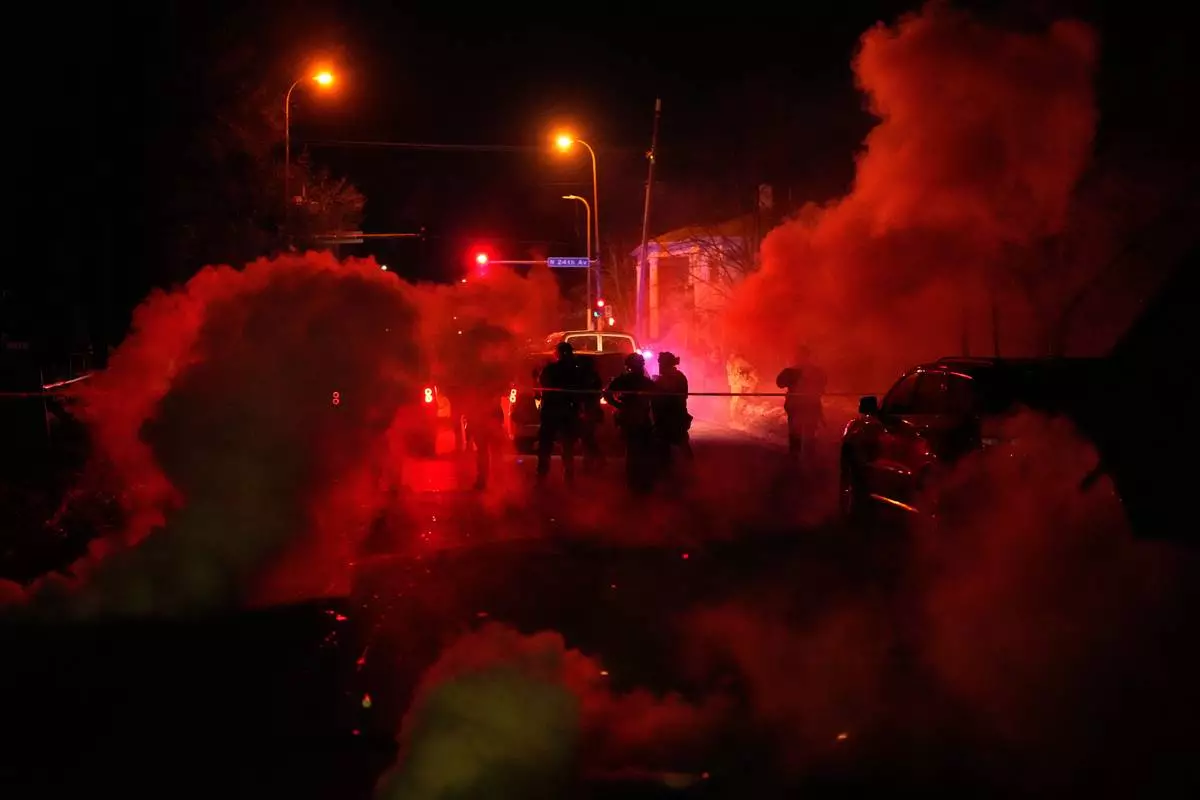
Tear gas surrounds federal law enforcement officers as they leave a scene after a shooting on Wednesday, Jan. 14, 2026, in Minneapolis. (AP Photo/John Locher)
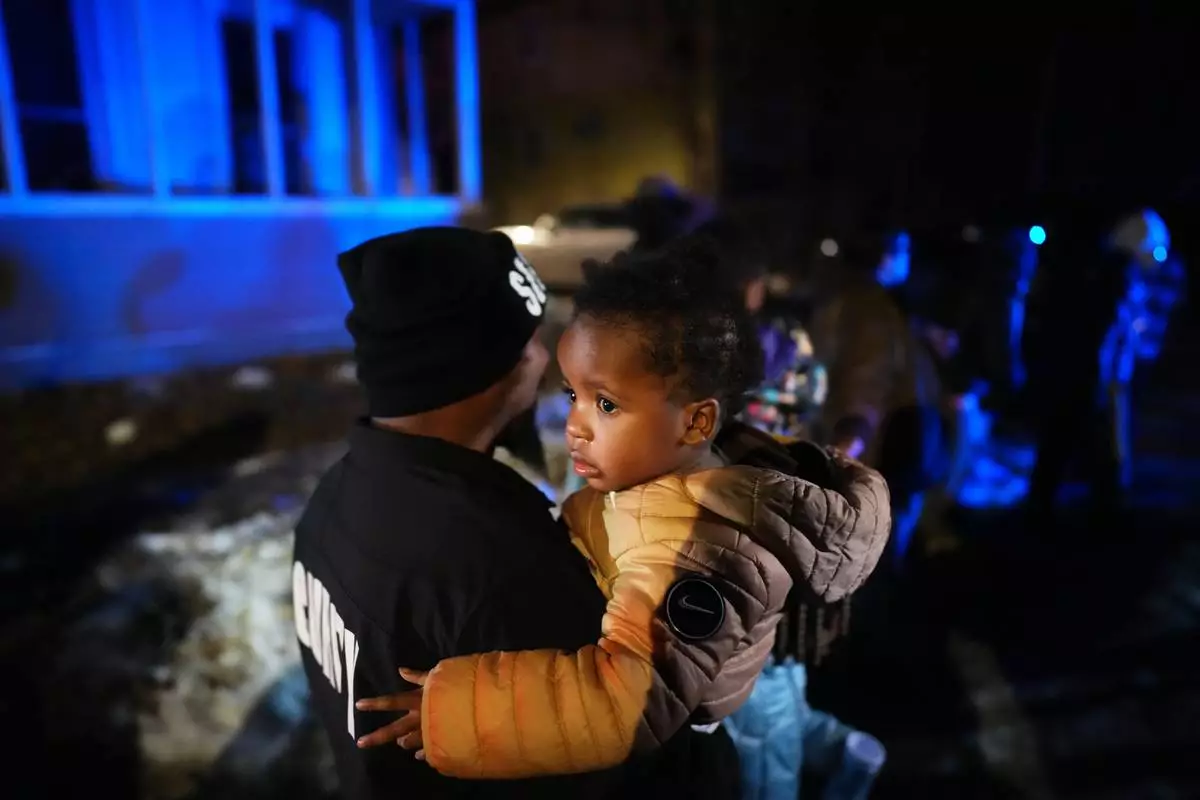
A child and family are escorted away after federal law enforcement deployed tear gas in a neighborhood during protests on Wednesday, Jan. 14, 2026, in Minneapolis. (AP Photo/Adam Gray)
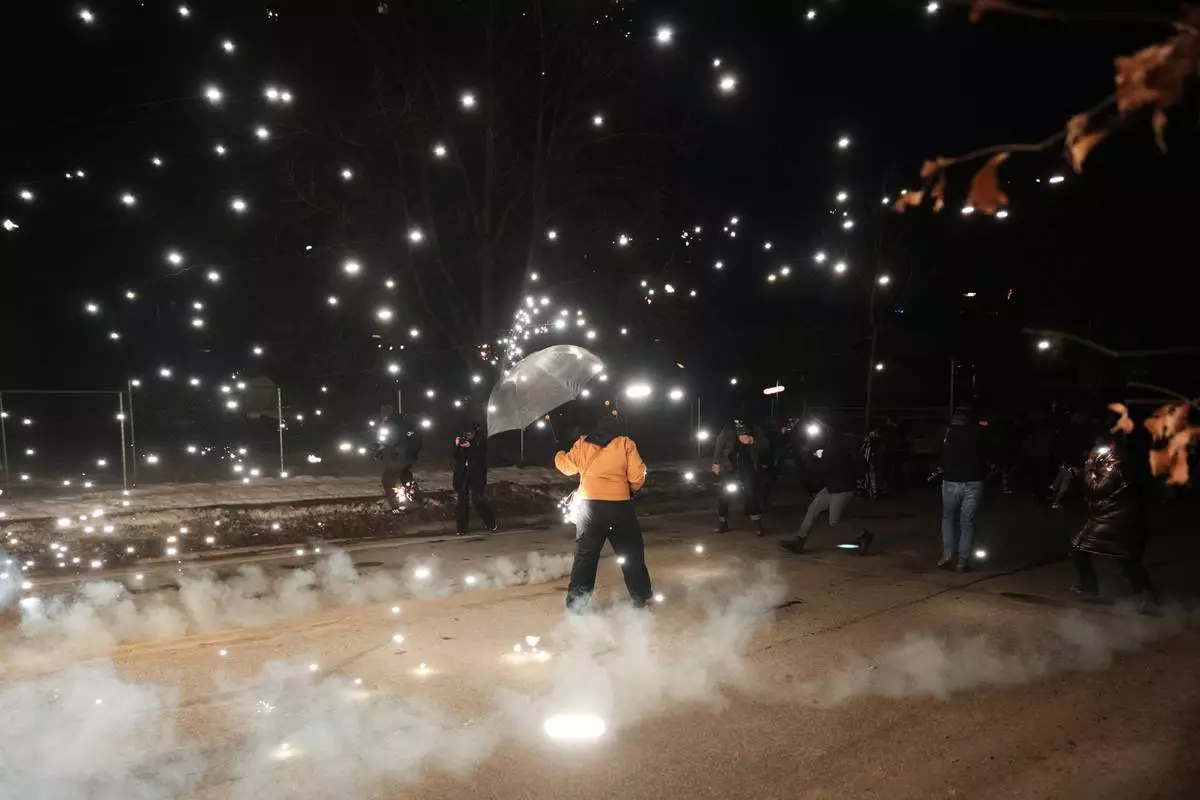
A protester holds an umbrella as sparks fly from a flash bang deployed by law enforcement on Wednesday, Jan. 14, 2026, in Minneapolis. (AP Photo/Adam Gray)
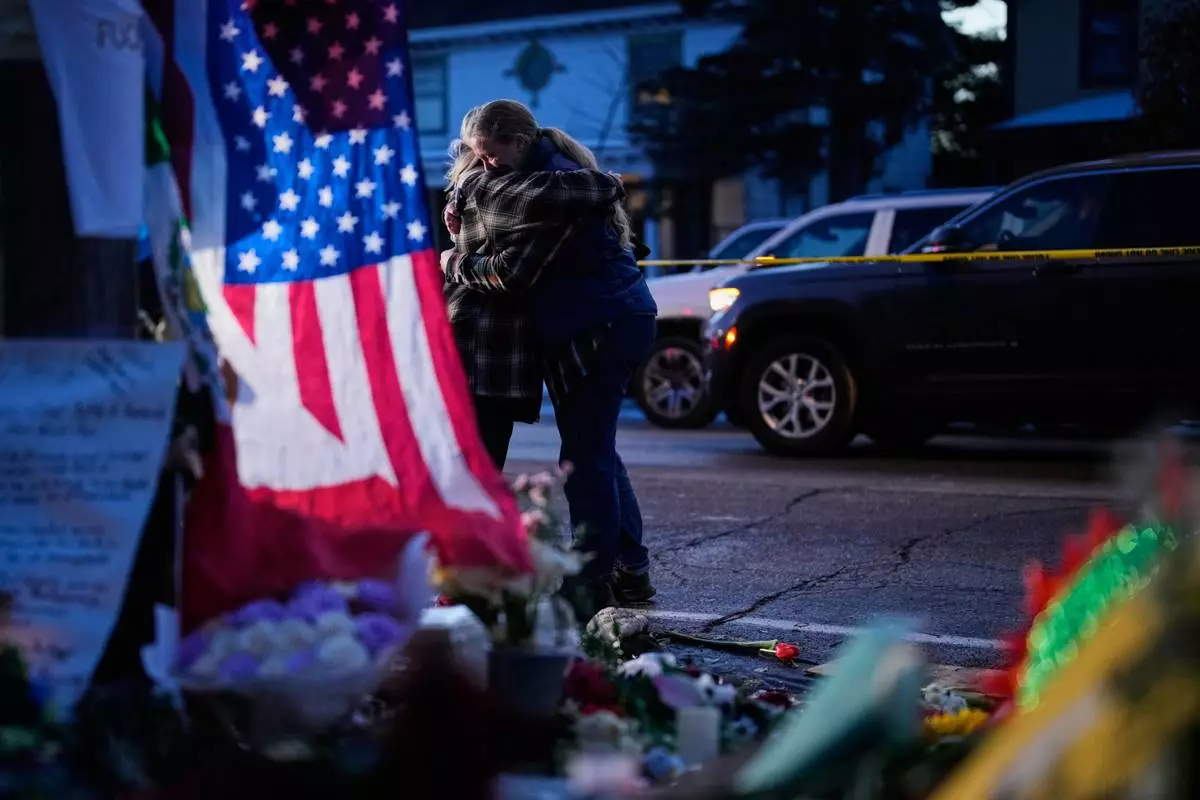
Monica Travis shares an embrace while visiting a makeshift memorial for Renee Good, who was fatally shot by an ICE officer last week, Monday, Jan. 12, 2026, in Minneapolis. (AP Photo/John Locher)
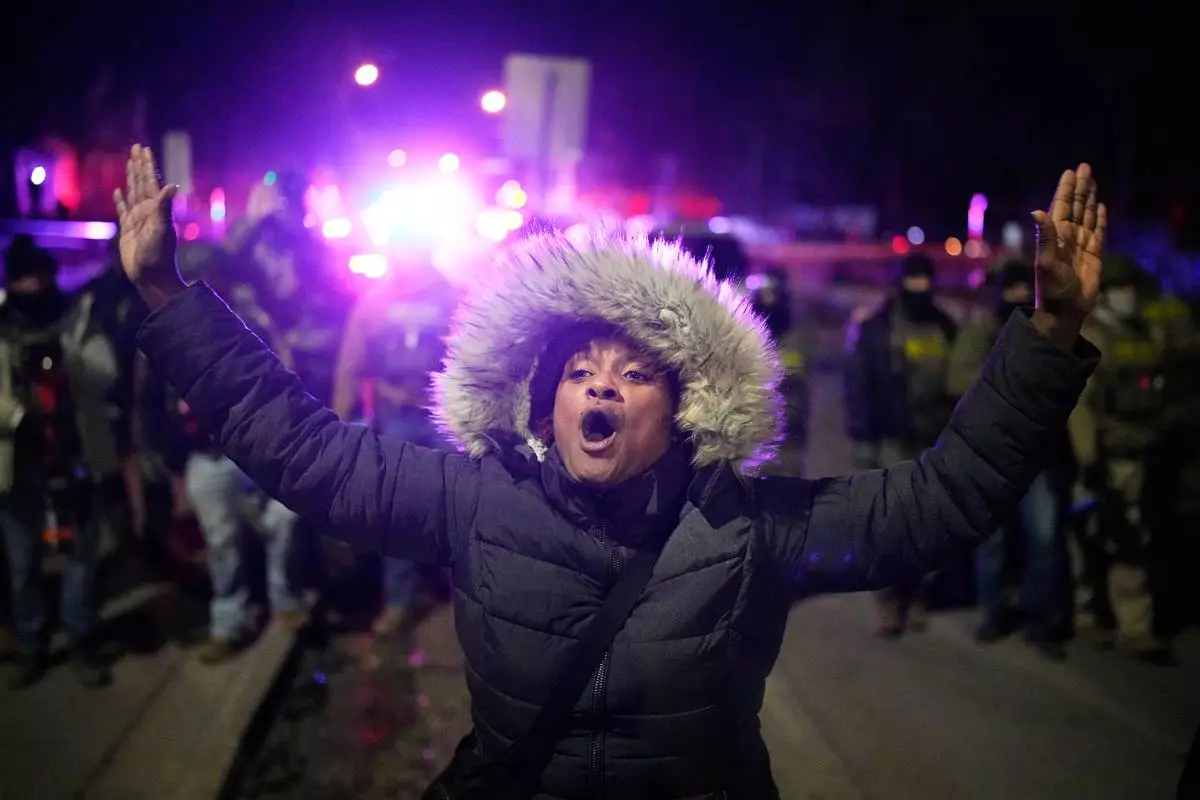
A protester yells in front of law enforcement after a shooting on Wednesday, Jan. 14, 2026, in Minneapolis. (AP Photo/John Locher)
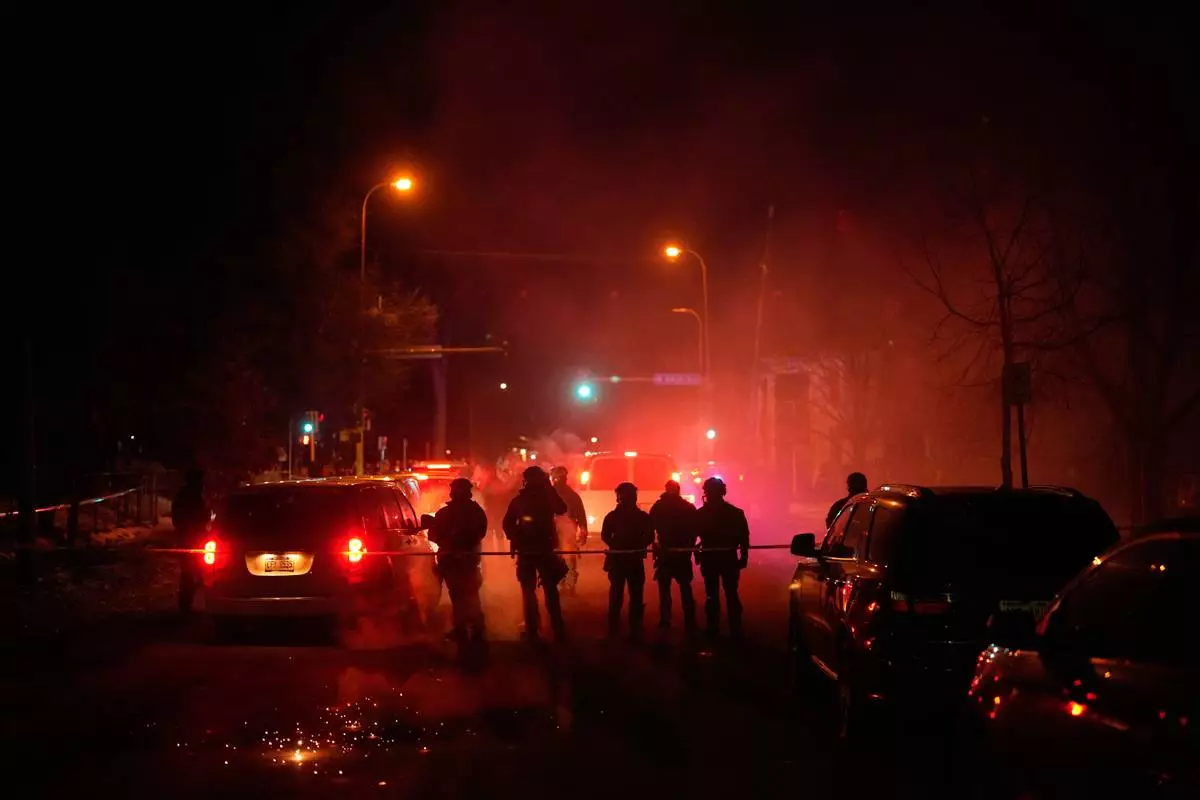
Tear gas surrounds federal law enforcement officers as they leave a scene after a shooting on Wednesday, Jan. 14, 2026, in Minneapolis. (AP Photo/John Locher)
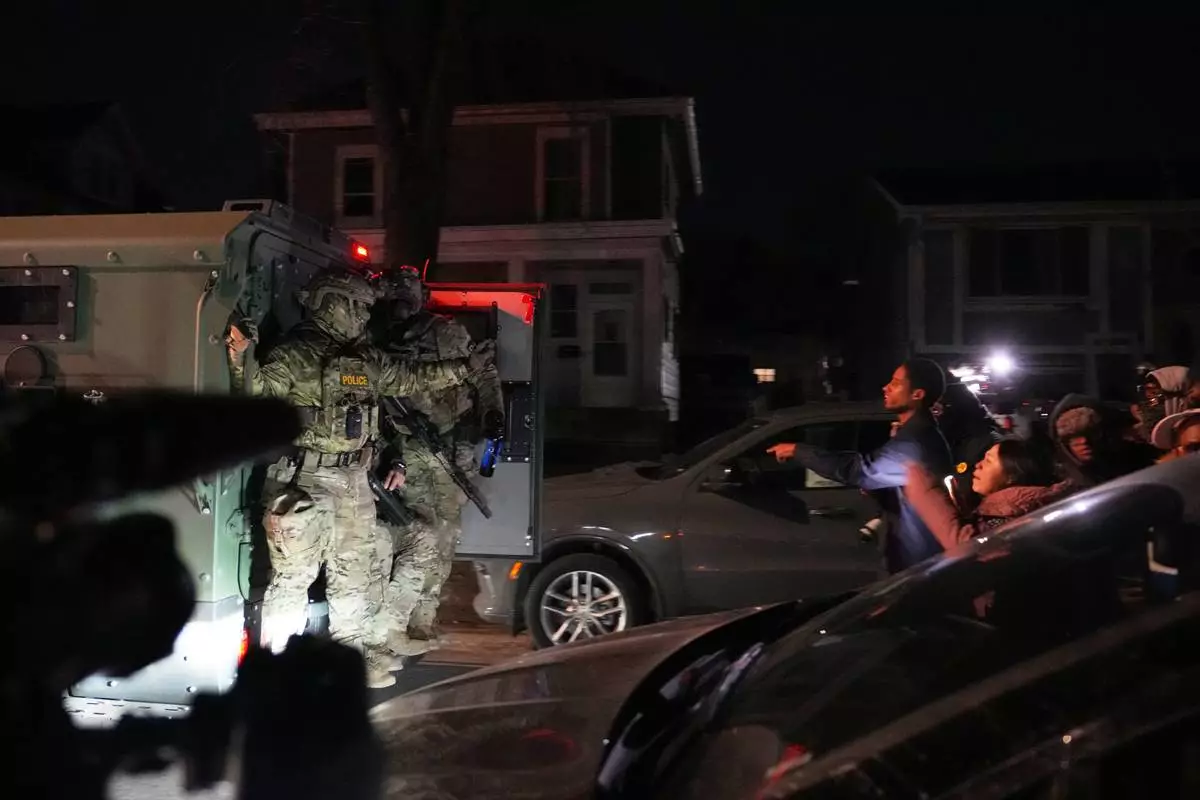
Protesters shout at law enforcement officers after a shooting on Wednesday, Jan. 14, 2026, in Minneapolis. (AP Photo/Abbie Parr)
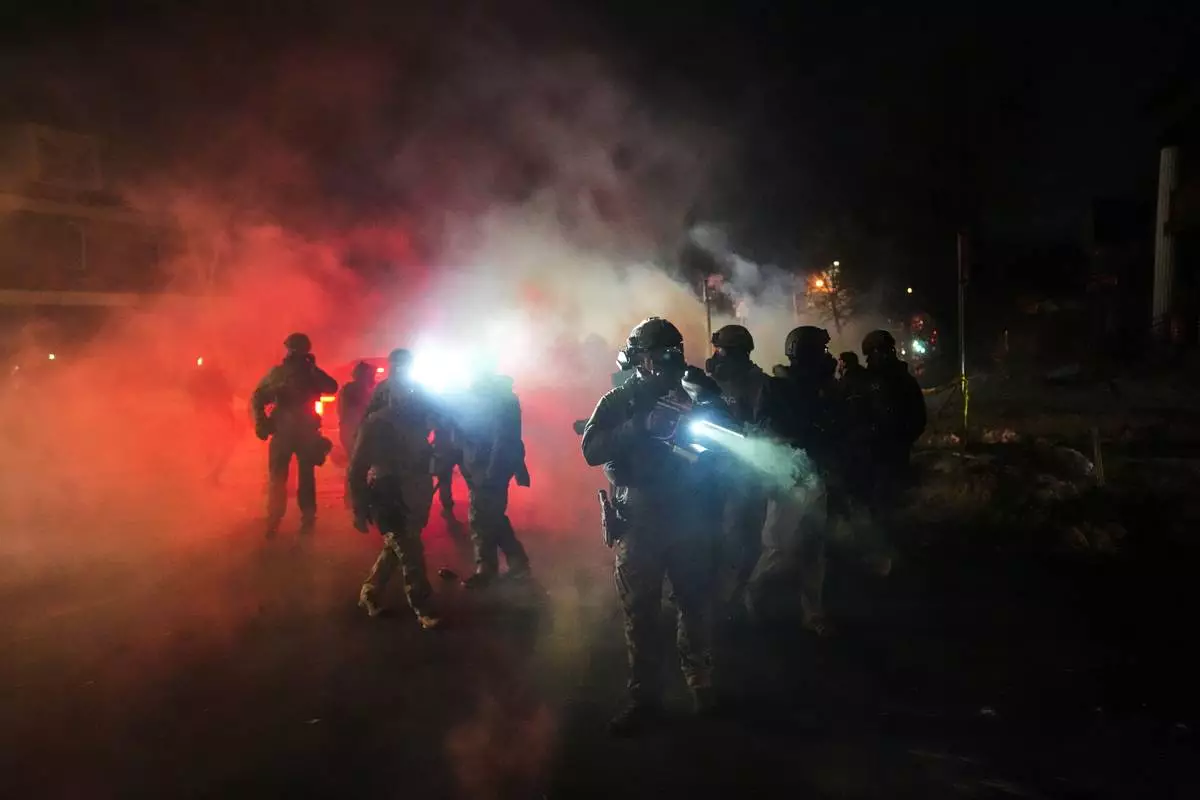
Law enforcement officers stand amid tear gas at the scene of a reported shooting Wednesday, Jan. 14, 2026, in Minneapolis. (AP Photo/Adam Gray)