NEW YORK (AP) — Harvey Weinstein faces sentencing and a possible retrial in his New York City sex crimes case, but it's still unclear when they’ll happen — and whether the former movie mogul will end up in front of another jury at all.
Manhattan Judge Curtis Farber said Wednesday he could sentence Weinstein on Sept. 30, but only if there’s no retrial on a rape charge that the last jury failed to decide. If there is a retrial, the judge wants it to happen this fall.
Click to Gallery
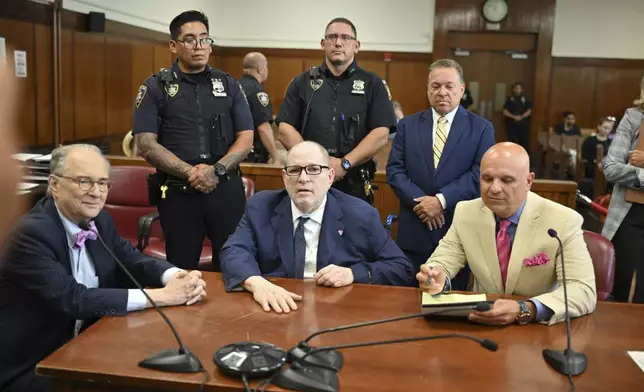
Harvey Weinstein appears in state court in Manhattan to be sentenced on his sexual assault conviction in Wednesday, Aug. 13 2025 in New York. (Curtis Means/Pool Photo via AP)
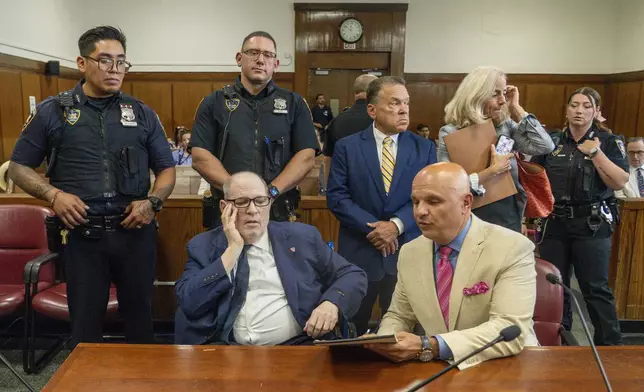
Harvey Weinstein appears in state court in Manhattan after a mistrial on a rape charge, Wednesday, Aug. 13, 2025 in New York. (Steven Hirsch /New York Post via AP, Pool)
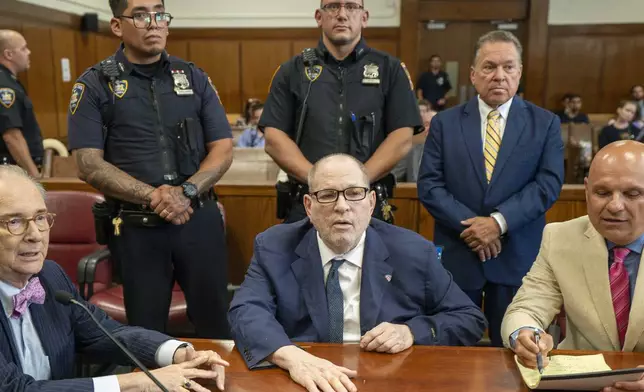
Harvey Weinstein appears in state court in Manhattan after a mistrial on a rape charge, Wednesday, Aug. 13, 2025 in New York. (Steven Hirsch /New York Post via AP, Pool)
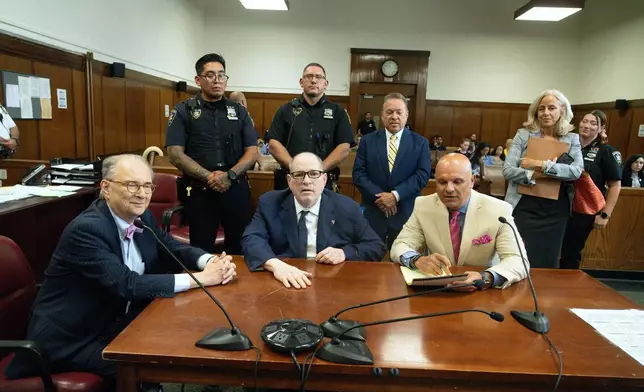
Harvey Weinstein appears in state court in Manhattan after a mistrial on a rape charge, Wednesday, Aug. 13, 2025 in New York. (Steven Hirsch /New York Post via AP, Pool)
Harvey Weinstein appears in state court in Manhattan after a mistrial on a rape charge, Wednesday, Aug. 13, 2025 in New York. (Steven Hirsch /New York Post via AP, Pool)
Prosecutors and Weinstein's lawyers vowed Wednesday that they were willing to square off at yet another trial — it would be his third in New York and fourth overall.
But Weinstein’s lawyers aren’t ruling out the possibility of reaching a deal to resolve the case, though they also emphasize he’s not willing to plead guilty to raping Mann, and they are pressing prosecutors simply to abandon that charge.
Weinstein, 73, was convicted in June of forcing oral sex on TV and movie production assistant and producer Miriam Haley in 2006. The charge carries a possible sentence of up to 25 years in prison.
At the same time, the jury acquitted him of forcing oral sex on another woman, one-time model Kaja Sokola, but couldn’t decide a charge that he raped hairstylist and actor Jessica Mann in 2013.
Manhattan prosecutors reiterated Wednesday that they and Mann are ready for another trial on the rape charge. In this case, any conviction is punishable by up to four years in prison — less than Weinstein has already served, and far less than the potential 25 years he faces for his conviction related to Haley.
Prosecutors requested a January trial date, but Farber proposed the fall.
“The case needs to be tried this year,” Farber said.
Weinstein lawyer Arthur Aidala agreed, urging the judge to set the earliest possible date.
If a fall trial happens, it would likely put Weinstein’s high-profile #MeToo case back in court as Manhattan District Attorney Alvin Bragg is in the final stage of his reelection bid.
Bragg, a first-term Democrat who made prosecuting sex crimes cases a priority, has expressed satisfaction with Weinstein's conviction on a criminal sex act charge related to Haley. Bragg has said Mann deserves a verdict on her part of the case.
“This work, first and foremost, is about the survivors, and that’s why we’re prepared to go forward," Bragg said in June.
Aidala told reporters outside court that, in his view, it’s up to prosecutors to resolve the rape charge — either by dropping it and clearing the way for sentencing, or by promptly taking it to trial again.
Weinstein sat in court in a wheelchair while wearing a blue suit and black-rimmed glasses. The “Pulp Fiction” and “Shakespeare in Love” producer is committed to fighting the rape charge at another trial, Aidala said, though the lawyer added: “I’ve been doing this long enough to say never say never.”
At Weinstein’s first trial in 2020, jurors convicted him of raping Mann and forcing oral sex on Haley.
Then an appeals court overturned those convictions and sent the case back for retrial because of legal issues involving other women’s testimony.
This spring, a new jury convicted him again of sexually assaulting Haley and acquitted him of doing the same to another woman who wasn’t part of the first trial. But amid fractious deliberations, the majority-female jury got stuck on the charge related to Mann.
Mann has testified that she also had a consensual, on-and-off relationship with the then-married Weinstein, but that she told him “I don’t want to do this” as he cornered her in the hotel room. She said he persevered with advances and demands until she “just gave up.”
Weinstein also stands convicted of sex crimes in California; he's appealing that verdict. He denies all of the allegations against him.
The Associated Press generally does not name people who allege they have been sexually assaulted unless they give permission to be identified. Haley and Mann have done so.
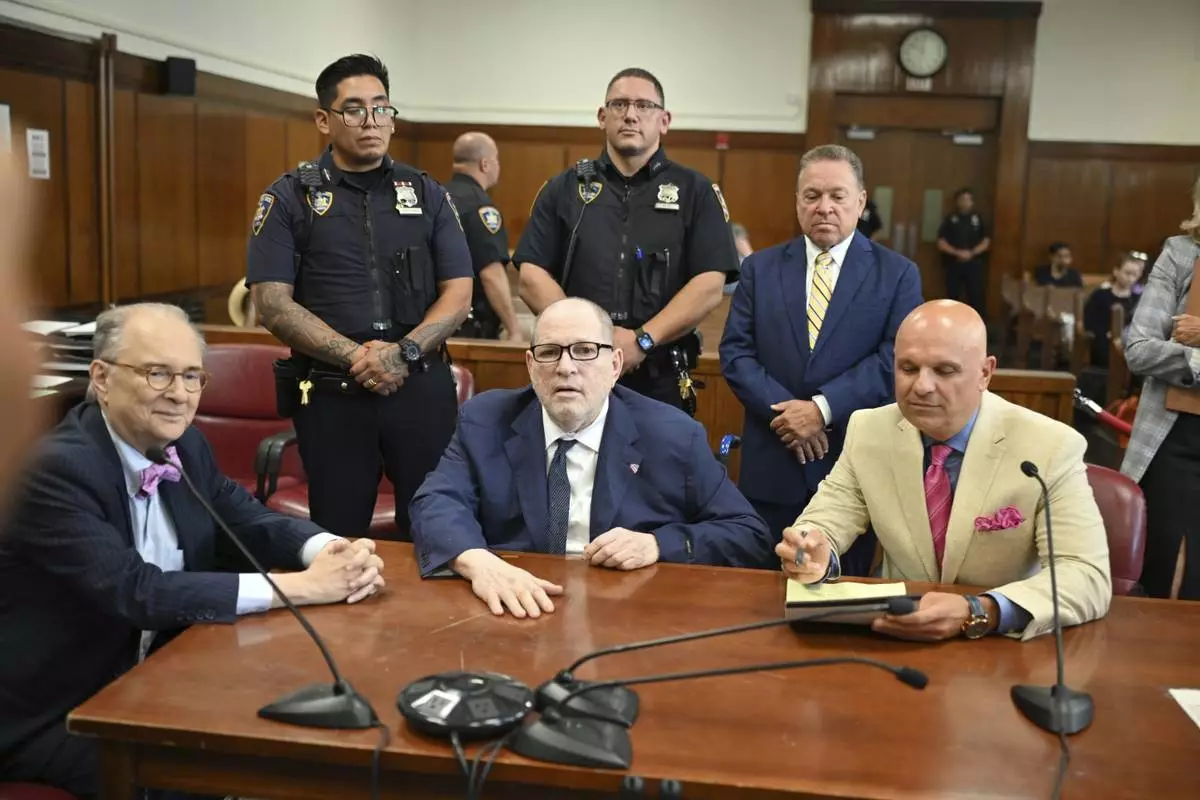
Harvey Weinstein appears in state court in Manhattan to be sentenced on his sexual assault conviction in Wednesday, Aug. 13 2025 in New York. (Curtis Means/Pool Photo via AP)
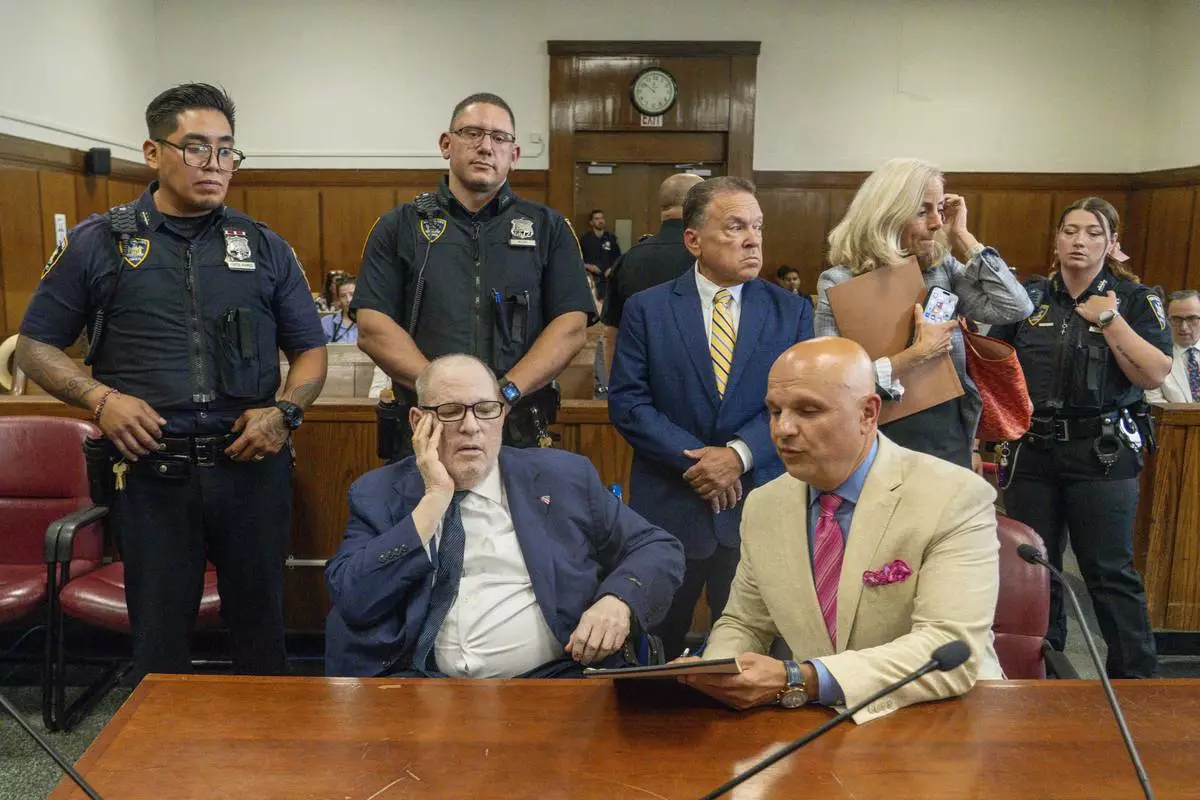
Harvey Weinstein appears in state court in Manhattan after a mistrial on a rape charge, Wednesday, Aug. 13, 2025 in New York. (Steven Hirsch /New York Post via AP, Pool)
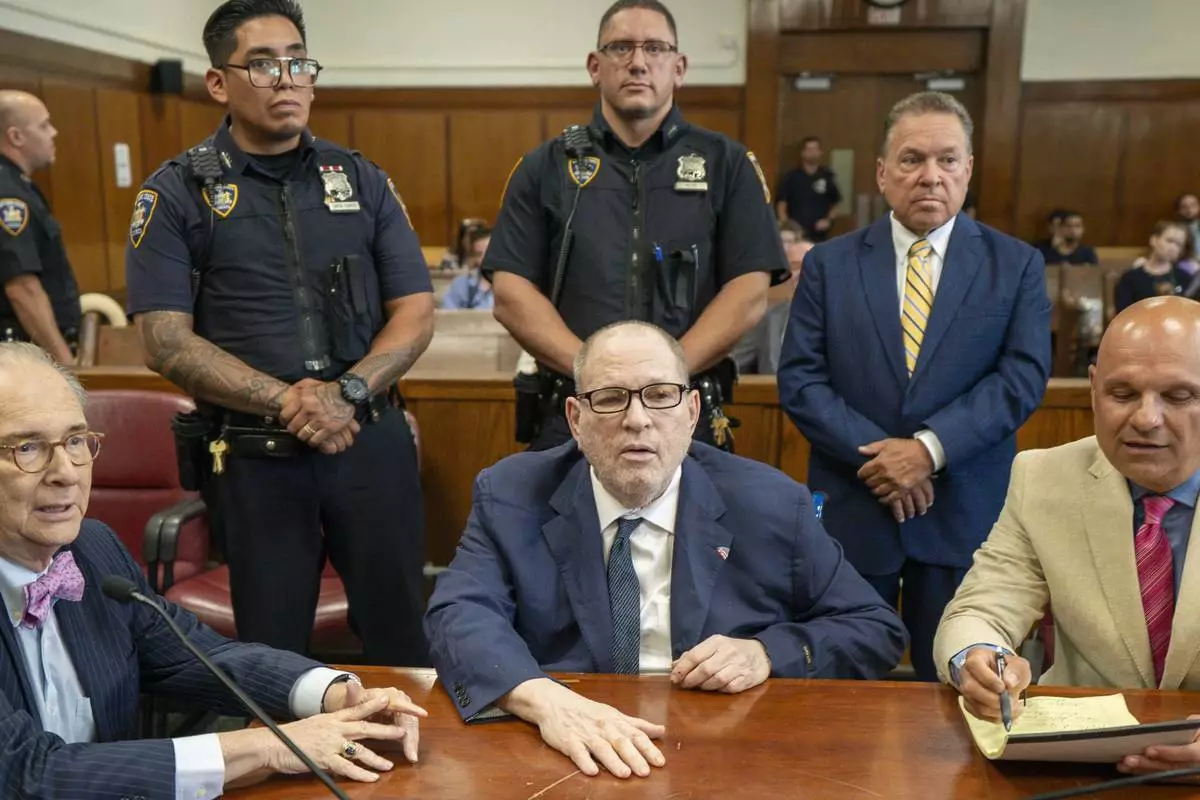
Harvey Weinstein appears in state court in Manhattan after a mistrial on a rape charge, Wednesday, Aug. 13, 2025 in New York. (Steven Hirsch /New York Post via AP, Pool)
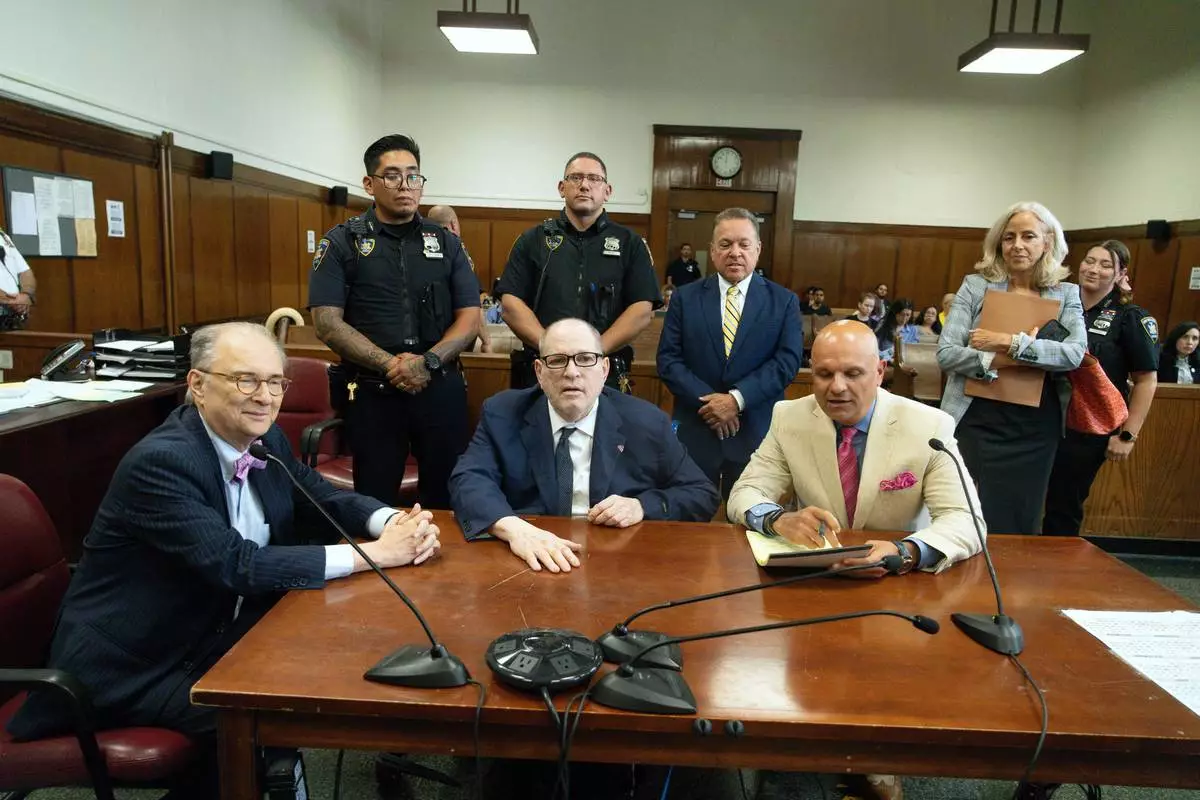
Harvey Weinstein appears in state court in Manhattan after a mistrial on a rape charge, Wednesday, Aug. 13, 2025 in New York. (Steven Hirsch /New York Post via AP, Pool)
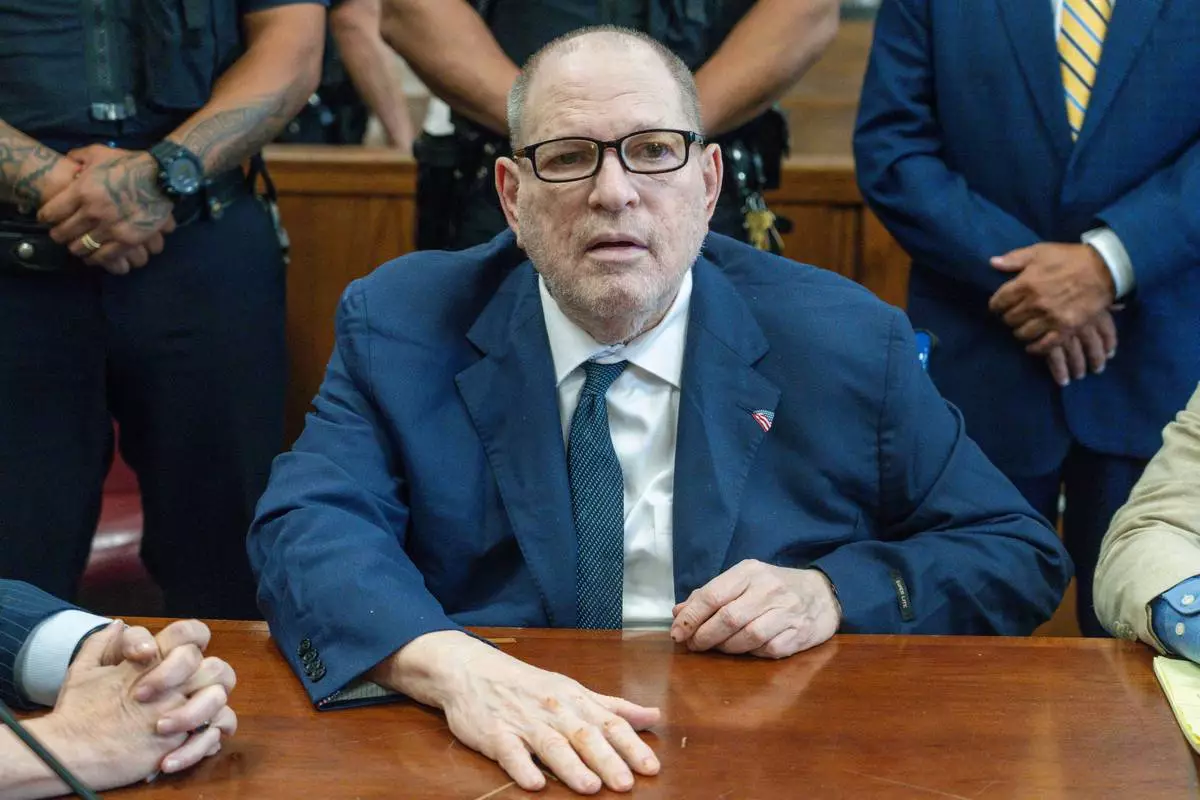
Harvey Weinstein appears in state court in Manhattan after a mistrial on a rape charge, Wednesday, Aug. 13, 2025 in New York. (Steven Hirsch /New York Post via AP, Pool)
It was at a relatively minor event in upstate New York in September 2022 that Ilia Malinin, the self-anointed “Quad God" who was fast becoming the biggest name in figure skating, finally landed the jump that so many people had thought impossible.
Others had tried quad axels in competition over the years. All of them had fallen. That extra 180 degrees of rotation — necessary for the only jump in skating that starts with a forward-facing entry — proved to be a half-revolution too much.
So when Malinin landed it inside the arena made famous by the U.S. hockey team's upset of the Soviets at the 1980 Winter Olympics in Lake Placid, it not only sent shockwaves through the tight-knit skating community but made headlines around the world.
“My mind was just blown,” said two-time Olympic skater Jason Brown.
Yet by conquering the gravity-defying jump, Malinin also raised an important question: What comes next?
The six main jumps in figure skating have been standard since the early 1900s. The only difference between then and now is the number of revolutions. Dick Button landed the first double axel in 1948, and the first triple jump four years later. Kurt Browning landed the first quad, a toe loop, in 1988, and it was 10 years before Timothy Goebel landed the first quad salchow.
By landing the quad axel, Malinin may have maxed out the boundaries of human performance. Most sports scientists agree that the speed and amplitude necessary for five-revolution jumps truly is impossible, leaving figure skating at a crossroads, where a dearth of innovation threatens to take the shine off a sport already fighting to maintain popularity.
“I think it's kind of natural that we were going to get to this point,” said Malinin, the overwhelming favorite to win gold for the U.S. at the Milan Cortina Olympics. "But I haven't reached my top, whether it's in the technical and how much I can jump and spin, but also in the creativity.”
Malinin, 20, points to his signature “raspberry twist,” a somersaulting spin unlike anything that anybody else does. He created it himself, and it tends to bring down the house whenever he throws it down near the end of his programs.
Yet the flashy maneuver also underscores one of the inherent problems with trying to be creative: It doesn't get rewarded.
The International Skating Union has rigid requirements for both short programs and free skates, and it rarely pays off to deviate too far from the script. Malinin might not get a lot of extra points for landing his raspberry twist, for example, since it is not one of the six standard figure skating jumps, but a failure to land it could cost him dearly.
“Absolutely, there are a lot of things I've wanted to try,” Malinin told The Associated Press, “because I think it would be really cool and appealing. But it's a bigger risk for the program itself, and the system and scoring means it doesn't make sense.”
In other words, what's the point in trying to innovate?
“There are so many rules in your programs that you don't have too much wiggle room,” said Alysa Liu, the reigning world champion. “A lot of these rules really restrict us. Like, all of our spins look the same now, but they could look so different."
“One of my training mates, Sonja Himler, does these incredible programs," added Amber Glenn, a three-time U.S. champion, and along with Liu one of the favorites to win Olympic gold for the American team in February.
“Like, she spins the other way, jumps the other way — really cool things that, you know, someone who's watched a little bit of skating will be like, ‘Oh, I’ve never seen that before,'” Glenn said. “Whereas if I go and do, you know, the norm, and do it well, versus what she does, my scores will be better, even though what she does is way more impressive, in my opinion.”
Justin Dillon, the manager of high performance at U.S. Figure Skating, acknowledged having had hard conversations with some skaters about their programs. They may have planned something unique or interesting, but the risk wouldn't be worth the reward.
“I encourage individuality, and bringing it to the ice,” Dillon said, “but if they do something so avant-garde that it doesn't check those boxes, then it really doesn't serve them. It doesn't always mean throw it out, but what can we do to make it a home run?”
To its credit, figure skating's governing body has loosened some restrictions in recent years. The backflip, which was long banned in competition because of its inherent danger, is allowed now, though it also doesn't carry a whole lot of scoring weight.
Is that hold-your-breath element of risk and uncertainty the next big step in skating?
“I mean, you're cringing. It legit scares me," Glenn said of the backflip. “If you can do it, great. I think it's so fun. I want to learn it once I'm done competing. But the thought of practicing it in like, a warmup or in training, it just scares me.”
Brown has never been able to consistently land quad jumps in competition. Instead, he relies on near-perfect execution of triple jumps, along with arguably the best artistry in figure skating, to consistently challenge for podium placements in major competitions.
Maybe, Brown mused, the next innovation in figure skating has nothing to do with extreme feats of athletic ability.
“I have so much respect for the ways in which people are pushing the sport technically,” he said, "but I think the more that people fixate on executing an element, the less risk people take artistically, because they’re already taking these risks technically. And it is very hard to do both. So maybe the next step for figure skating is to reward the story we're trying to tell."
AP Winter Olympics: https://apnews.com/hub/milan-cortina-2026-winter-olympics
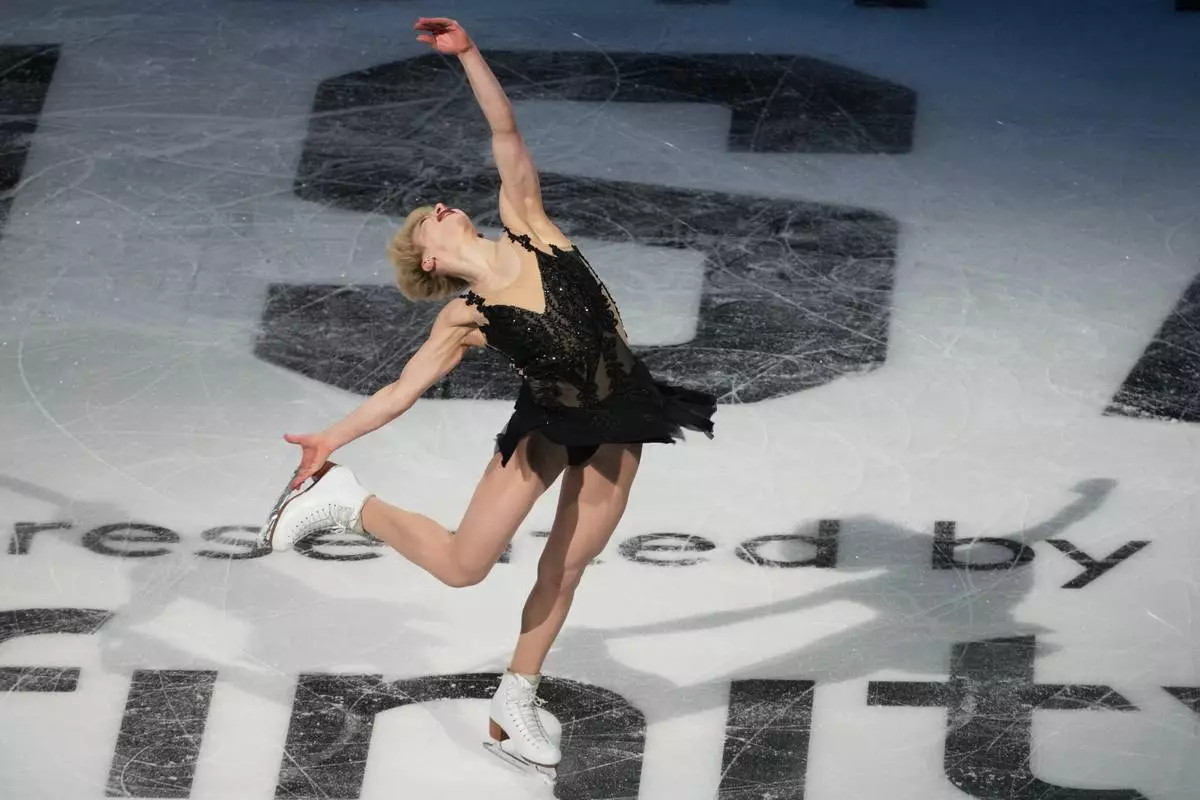
Amber Glenn skates during the "Making Team USA" performance at the U.S. Figure Skating Championships, Sunday, Jan. 11, 2026, in St. Louis. (AP Photo/Jeff Roberson)
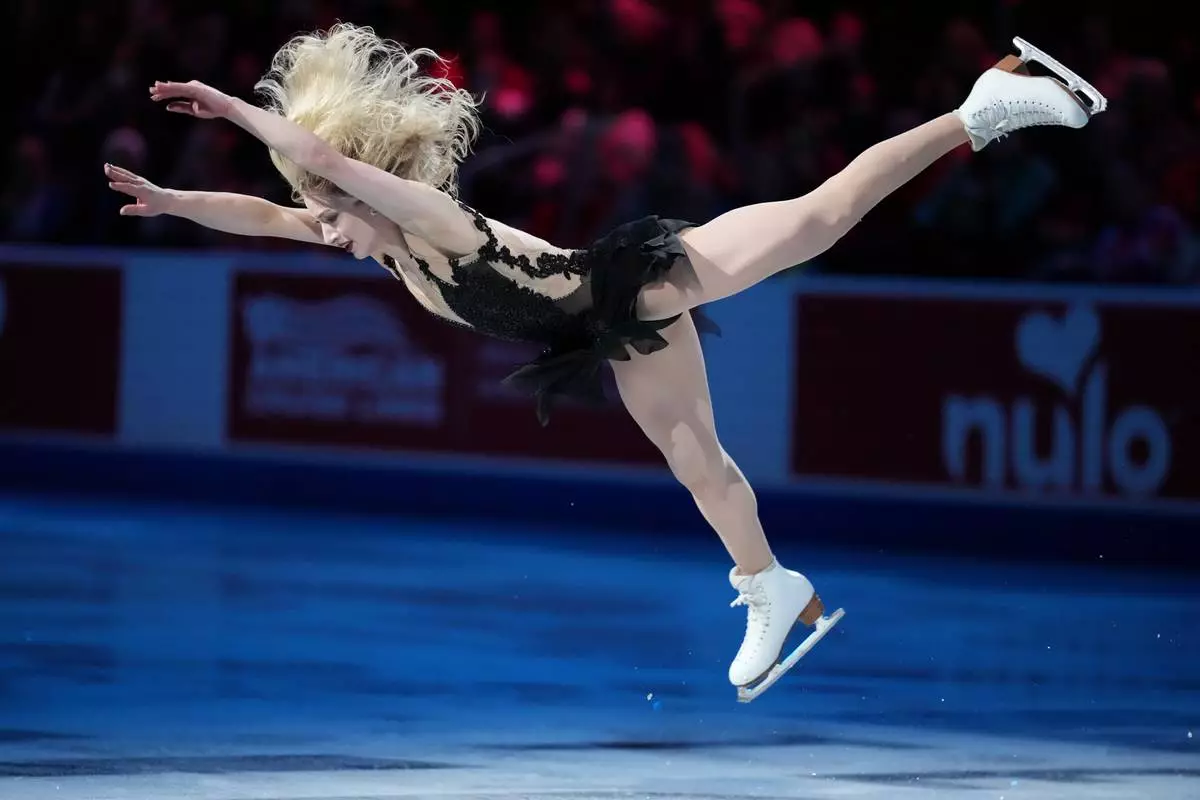
Amber Glenn skates during the "Making Team USA" performance at the U.S. Figure Skating Championships, Sunday, Jan. 11, 2026, in St. Louis. (AP Photo/Stephanie Scarbrough)
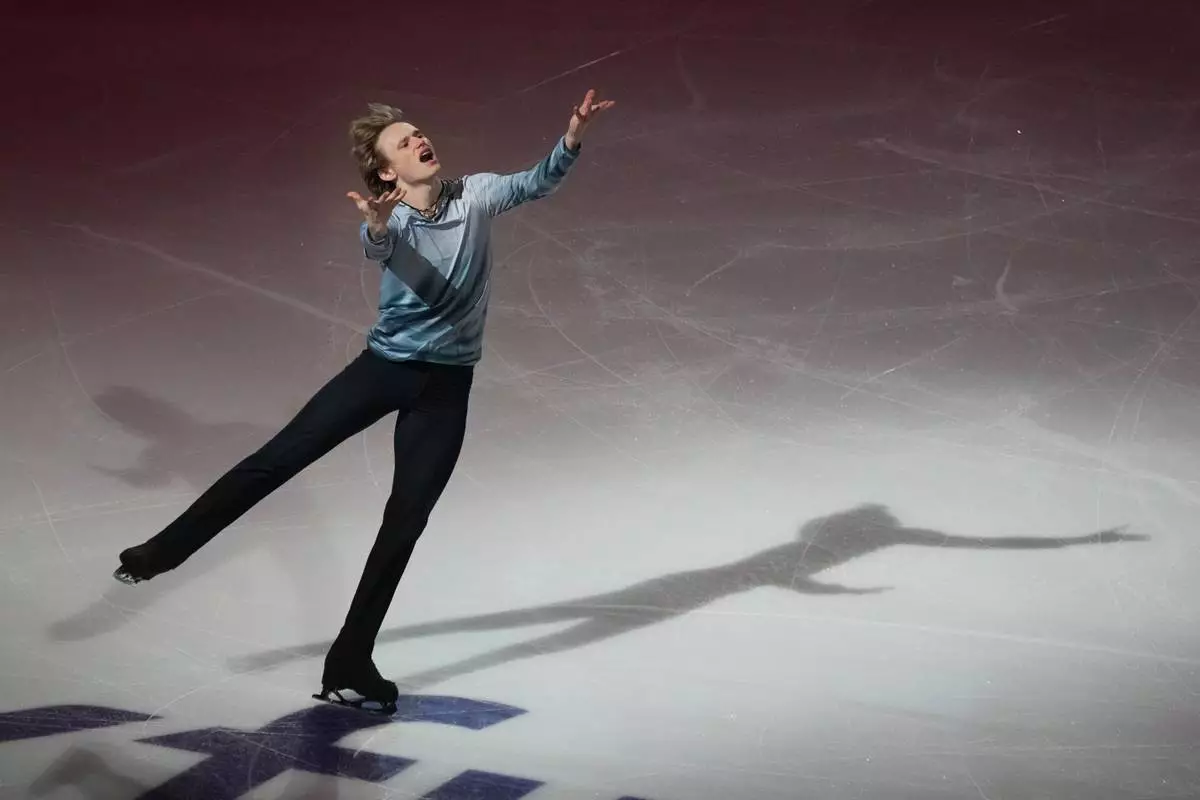
Ilia Malinin skates during the "Making Team USA" performance at the U.S. Figure Skating Championships, Sunday, Jan. 11, 2026, in St. Louis. (AP Photo/Jeff Roberson)
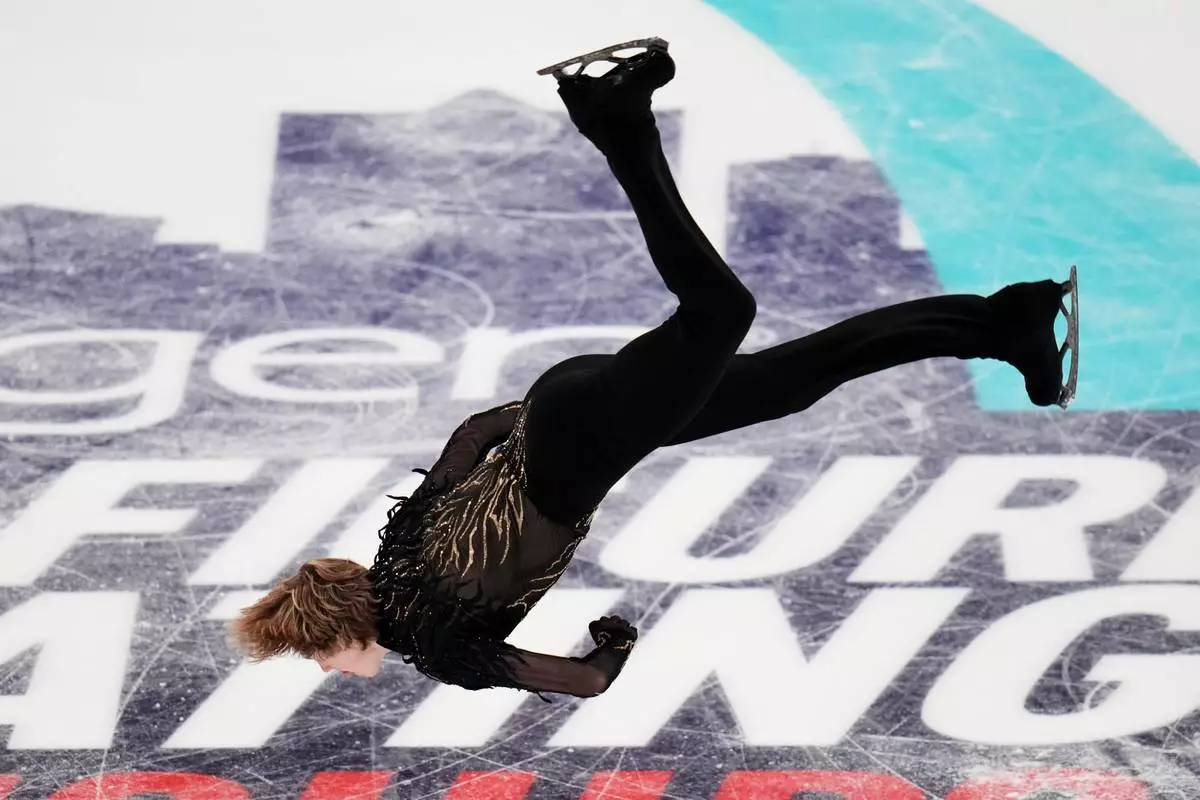
Ilia Malinin competes during the men's free skate competition at the U.S. Figure Skating Championships, Saturday, Jan. 10, 2026, in St. Louis. (AP Photo/Jeff Roberson)

Ilia Malinin competes during the men's short program at the U.S. Figure Skating Championships, Thursday, Jan. 8, 2026, in St. Louis. (AP Photo/Stephanie Scarbrough)