MEXICO CITY (AP) — Mexico sent 26 alleged cartel figures to face justice in the United States because the Trump administration requested them and Mexico did not want them to continue running their illicit businesses from Mexican prisons, officials said Wednesday.
The mass transfer was not, however, part of wider negotiations as Mexico seeks to avoid higher tariffs threatened by U.S. President Donald Trump, the officials said.
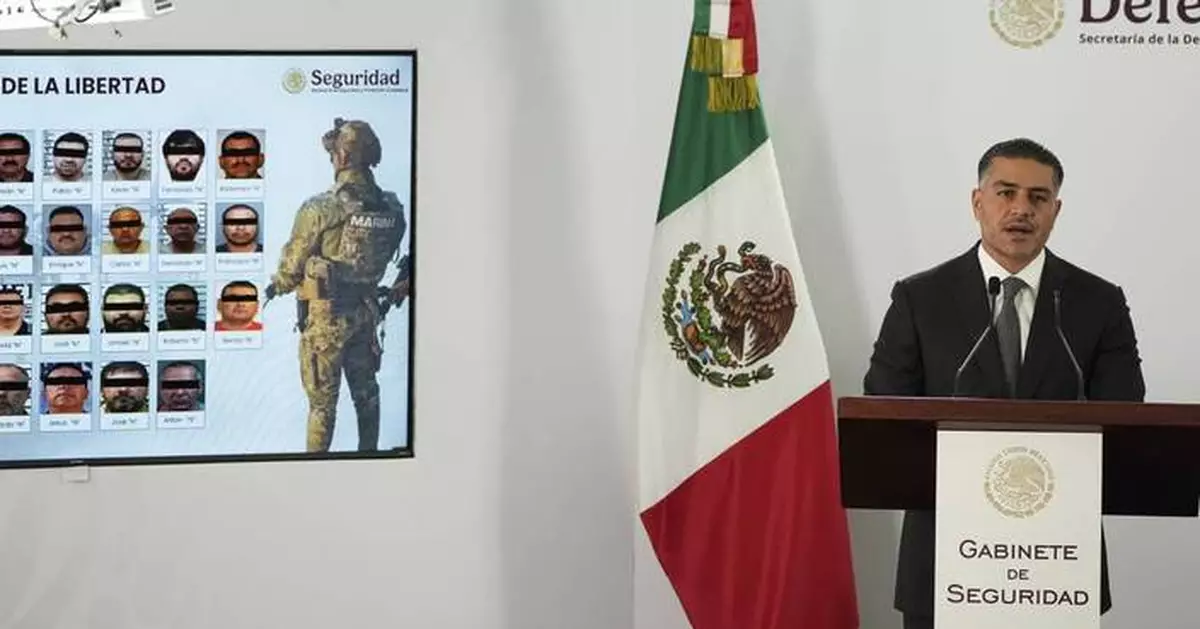
“These transfers are not only a strategic measure to ensure public safety, but also reflect a firm determination to prevent these criminals from continuing to operate from within prisons and to break up their networks of influence,” Mexican Security Minister Omar García Harfuch said in a news conference on Wednesday.
The 26 prisoners handed over to American authorities on Tuesday included figures aligned with the Jalisco New Generation Cartel and the Sinaloa Cartel among others. They were wanted by American authorities for their roles in drug trafficking and other crimes. It comes months after 29 other cartel leaders were sent to the U.S. in February.
In the exchange, the U.S. Justice Department promised it would not seek the death penalty against any of the 55 people included in the two transfers, which experts say may help avoid any violent outburst by the cartels in response. Authorities said the operation involved nearly a thousand law enforcement officers, 90 vehicles and a dozen military aircraft.
Mexico President Claudia Sheinbaum said earlier Wednesday that the transfers were “sovereign decisions,” but the move comes as the Mexican leader faces mounting pressure by the Trump administration to crack down on cartels and fentanyl production.
García Harfuch also confirmed Wednesday that a U.S. government drone — non-military — was flying over central Mexico, but at the request of Mexican authorities as part of an ongoing investigation.
So far, Sheinbaum has tried to show the Trump administration a greater willingness to pursue the cartels than her predecessor — a change that has been acknowledged by U.S. officials — and continued to slow migration to the U.S. border, in an effort to avoid the worst of Trump's tariff threats. Two weeks ago, the two leaders spoke and agreed to give their teams another 90 days to negotiate to avoid threatened 30% tariffs on imports from Mexico.
“Little by little, Mexico is following through with this demand by the Americans to deliver drug capos," said Mexican security analyst David Saucedo. "It’s buying (the Mexican government) time."
Saucedo said the Mexican government has been able to avoid a burst of violence by cartels – a reaction often seen when capos are captured – in part, because Ovidio Guzmán, a son of infamous capo Joaquín “El Chapo” Guzmán, showed it's possible to negotiate with U.S. prosecutors. Ovidio Guzmán pleaded guilty last month to drug trafficking and other charges and hopes for a lighter sentence in exchange for his cooperation.
But Saucedo warned that if such mass prisoner transfers continue, the Latin American country is bound to see another outburst of violence in the future.
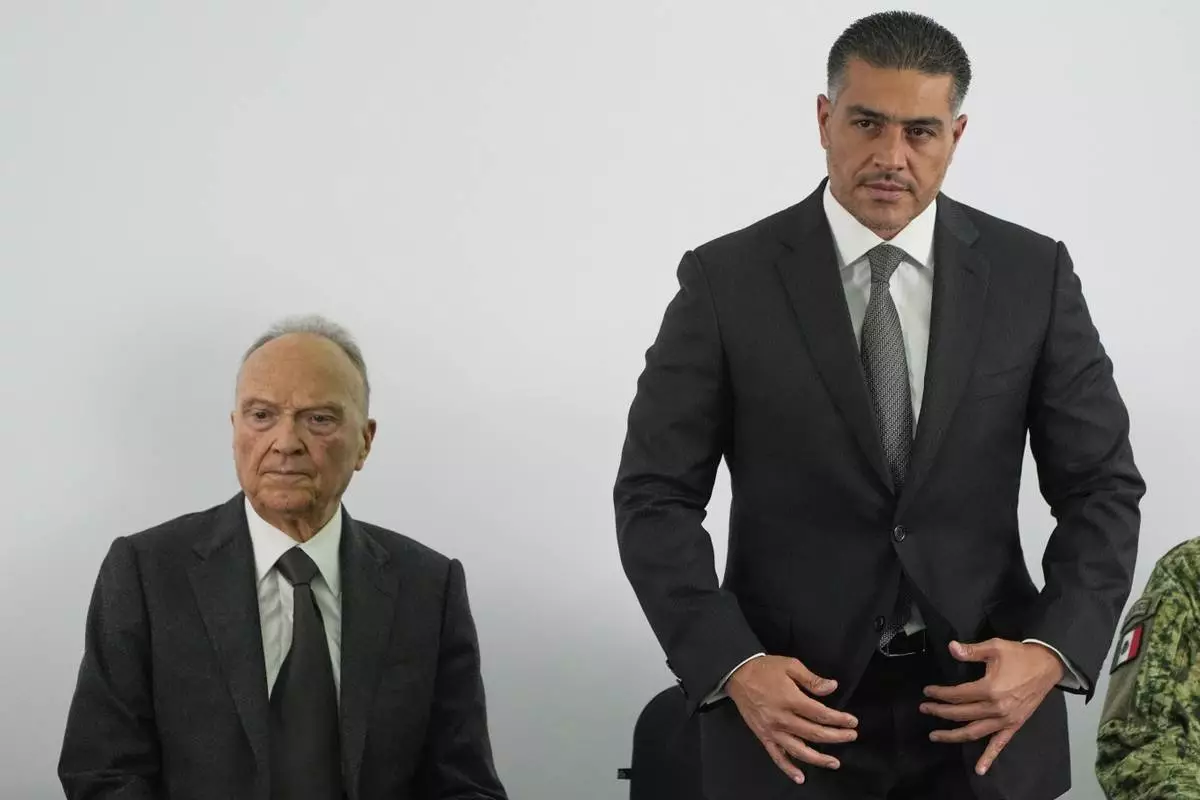
Mexican Security and Citizen Protection Minister Omar Garcia Harfuch, right, and Mexican General Prosecutor Alejandro Gertz Manero give a news conference about Mexico having sent 29 Mexican drug cartel figures to the U.S., in Mexico City, Wednesday, Aug. 13, 2025. (AP Photo/Fernando Llano)
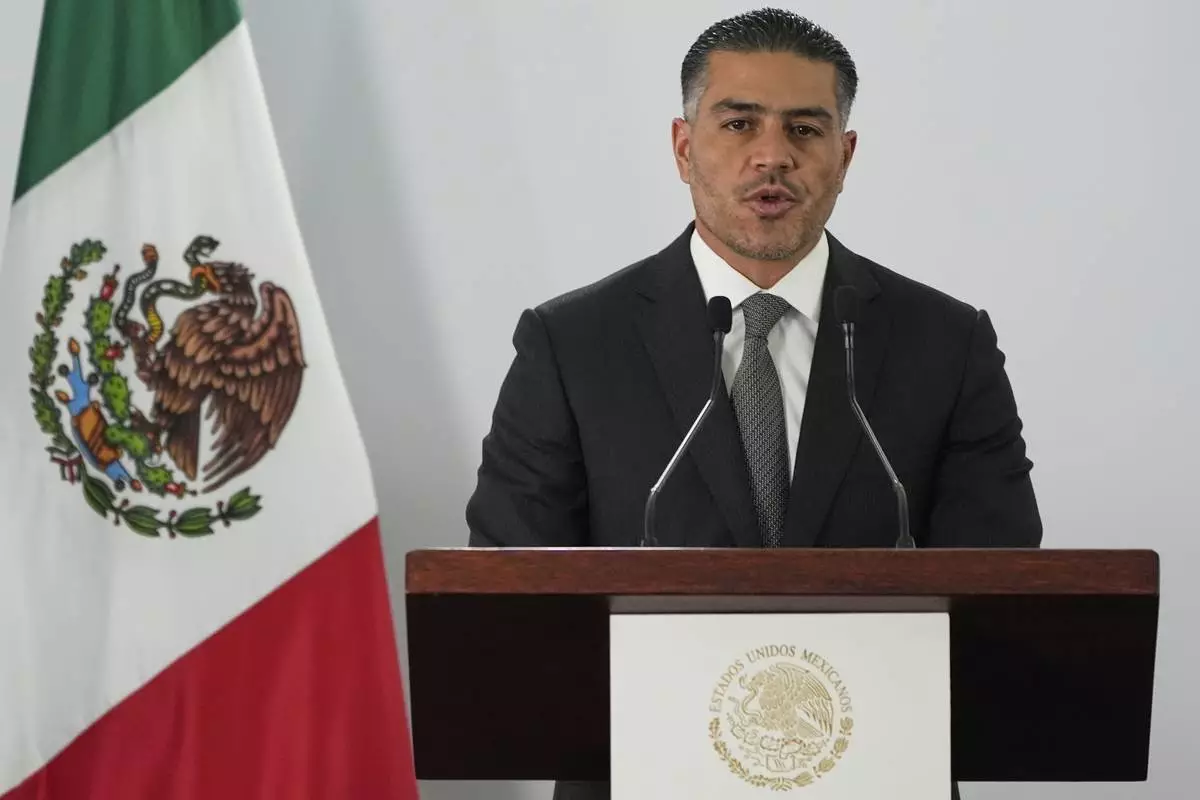
Mexican Security and Citizen Protection Minister Omar Garcia Harfuch gives a news conference about Mexico having sent 29 Mexican drug cartel figures to the U.S., in Mexico City, Wednesday, Aug. 13, 2025. (AP Photo/Fernando Llano)

Mexican Security and Citizen Protection Minister Omar Garcia Harfuch gives a news conference about Mexico having sent 29 Mexican drug cartel figures to the U.S., in Mexico City, Wednesday, Aug. 13, 2025. (AP Photo/Fernando Llano)
UTICA, N.Y. (AP) — A New York prison guard who failed to intervene as he watched an inmate being beaten to death should be convicted of manslaughter, a prosecutor told a jury Thursday in the final trial of correctional officers whose pummeling, recorded by body-cameras, provoked outrage.
“For seven minutes — seven gut-churning, nauseating, disgusting minutes — he stood in that room close enough to touch him and he did nothing,” special prosecutor William Fitzpatrick told jurors during closing arguments. The jury began deliberating Thursday afternoon.
Former corrections officer Michael Fisher, 55, is charged with second-degree manslaughter in the death of Robert Brooks, who was beaten by guards upon his arrival at Marcy Correctional Facility on the night of Dec. 9, 2024, his agony recorded silently on the guards' body cameras.
Fisher’s attorney, Scott Iseman, said his client entered the infirmary after the beating began and could not have known the extent of his injuries.
Fisher was among 10 guards indicted in February. Three more agreed to plead guilty to reduced charges in return for cooperating with prosecutors. Of the 10 officers indicted in February, six pleaded guilty to manslaughter or lesser charges. Four rejected plea deals. One was convicted of murder, and two were acquitted in the first trial last fall.
Fisher, standing alone, is the last of the guards to face a jury.
The trial closes a chapter in a high-profile case led to reforms in New York's prisons. But advocates say the prisons remain plagued by understaffing and other problems, especially since a wildcat strike by guards last year.
Officials took action amid outrage over the images of the guards beating the 43-year-old Black man in the prison's infirmary. Officers could be seen striking Brooks in the chest with a shoe, lifting him by the neck and dropping him.
Video shown to the jury during closing arguments Thursday indicates Fisher stood by the doorway and didn't intervene.
“Did Michael Fisher recklessly cause the death of Robert Brooks? Of course he did. Not by himself. He had plenty of other helpers,” said Fitzpatrick, the Onondaga County district attorney.
Iseman asked jurors looking at the footage to consider what Fisher could have known at the time “without the benefit of 2020 hindsight.”
“Michael Fisher did not have a rewind button. He did not have the ability to enhance. He did not have the ability to pause. He did not have the ability to get a different perspective of what was happening in the room,” Iseman said.
Even before Brooks' death, critics claimed the prison system was beset by problems that included brutality, overworked staff and inconsistent services. By the time criminal indictments were unsealed in February, the system was reeling from an illegal three-week wildcat strike by corrections officers who were upset over working conditions. Gov. Kathy Hochul deployed National Guard troops to maintain operations. More than 2,000 guards were fired.
Prison deaths during the strike included Messiah Nantwi on March 1 at Mid-State Correctional Facility, which is across the road from the Marcy prison. 10 other guards were indicted in Nantwi's death in April, including two charged with murder.
There are still about 3,000 National Guard members serving the state prison system, according to state officials.
“The absence of staff in critical positions is affecting literally every aspect of prison operations. And I think the experience for incarcerated people is neglect,” Jennifer Scaife, executive director of the Correctional Association of New York, an independent monitoring group, said on the eve of Fisher's trial.
Hochul last month announced a broad reform agreement with lawmakers that includes a requirement that cameras be installed in all facilities and that video recordings related to deaths behind bars be promptly released to state investigators.
The state also lowered the hiring age for correction officers from 21 to 18 years of age.
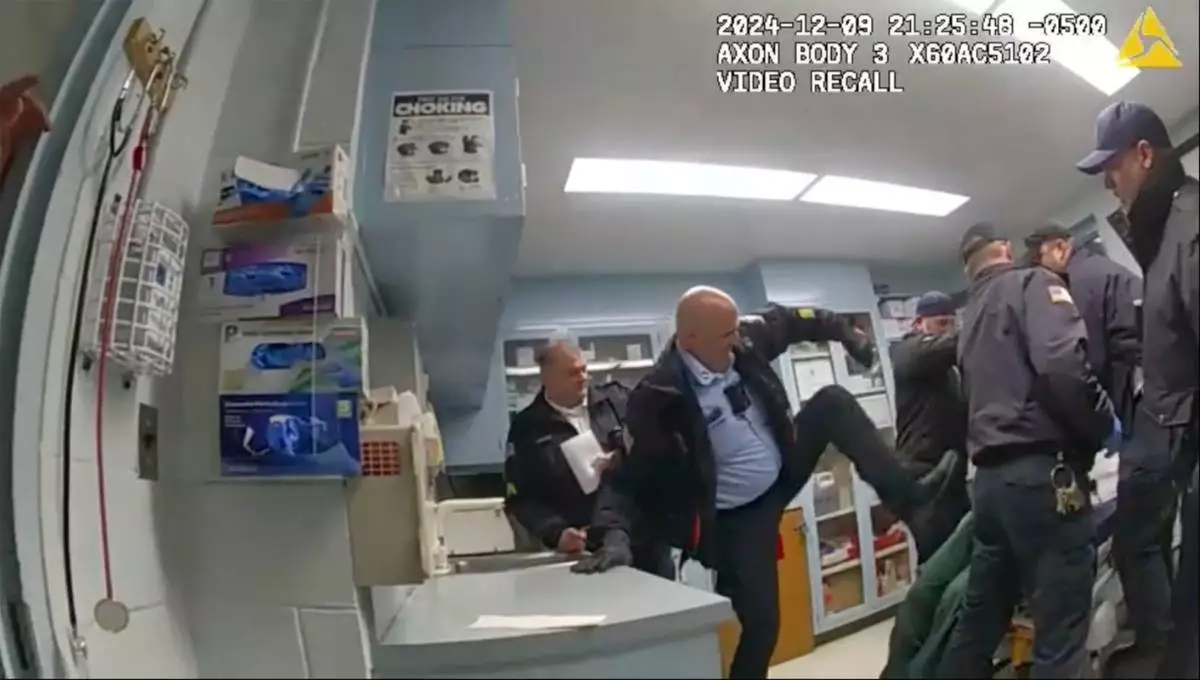
FILE - This image provided by the New York State Attorney General office shows body camera footage of correction officers beating a handcuffed man, Robert Brooks, at the Marcy Correctional Facility in Oneida County, N.Y., Dec. 9, 2024. (New York State Attorney General office via AP, File)