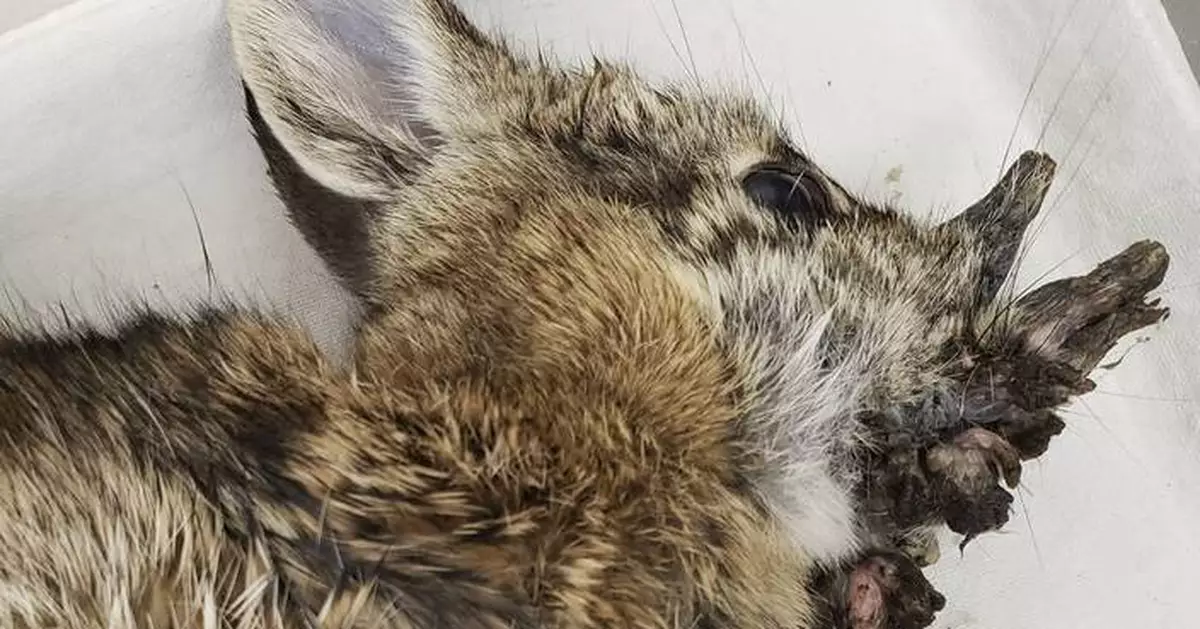
DENVER (AP) — A group of rabbits in Colorado with grotesque, hornlike growths may seem straight out of a low-budget horror film, but scientists say there's no reason to be spooked — the furry creatures merely have a relatively common virus.
The cottontails recently spotted in Fort Collins are infected with the mostly harmless Shope papillomavirus, which causes wart-like growths that protrude from their faces like metastasizing horns.
Viral photos have inspired a fluffle of unflattering nicknames, including “Frankenstein bunnies,” “demon rabbits” and “zombie rabbits.” But their affliction is nothing new, with the virus inspiring ancient folklore and fueling scientific research nearly 100 years ago.
The virus likely influenced the centuries-old jackalope myth in North America, which told of a rabbit with antlers or horns, among other animal variations. The disease in rabbits also contributed to scientists' knowledge about the connection between viruses and cancer, such as the human papillomavirus that causes cervical cancer.
The virus in rabbits was named after Dr. Richard E Shope, a professor at The Rockefeller University who discovered the disease in cottontails in the 1930s.
News about the rabbit sightings in Fort Collins, 65 miles (105 kilometers) north of Denver, started getting attention after residents started spotting them around town and posting pictures.
Kara Van Hoose, a spokesperson for Colorado Parks and Wildlife, told The Associated Press on Wednesday that the agency has been getting calls about the rabbits seen in Fort Collins.
But she said that it’s not uncommon to see infected rabbits, especially in the summer, when the fleas and ticks that spread the virus are most active. The virus can spread from rabbit to rabbit but not to other species, including humans and pets, she said.
The growths resemble warts but can look like horns if they grow longer, Van Hoose said. The growths don’t harm rabbits unless they grow on their eyes or mouths and interfere with eating. Rabbits’ immune systems are able to fight the virus and, once they do, the growths will disappear, she said.
Finley reported from Norfolk, Virginia.
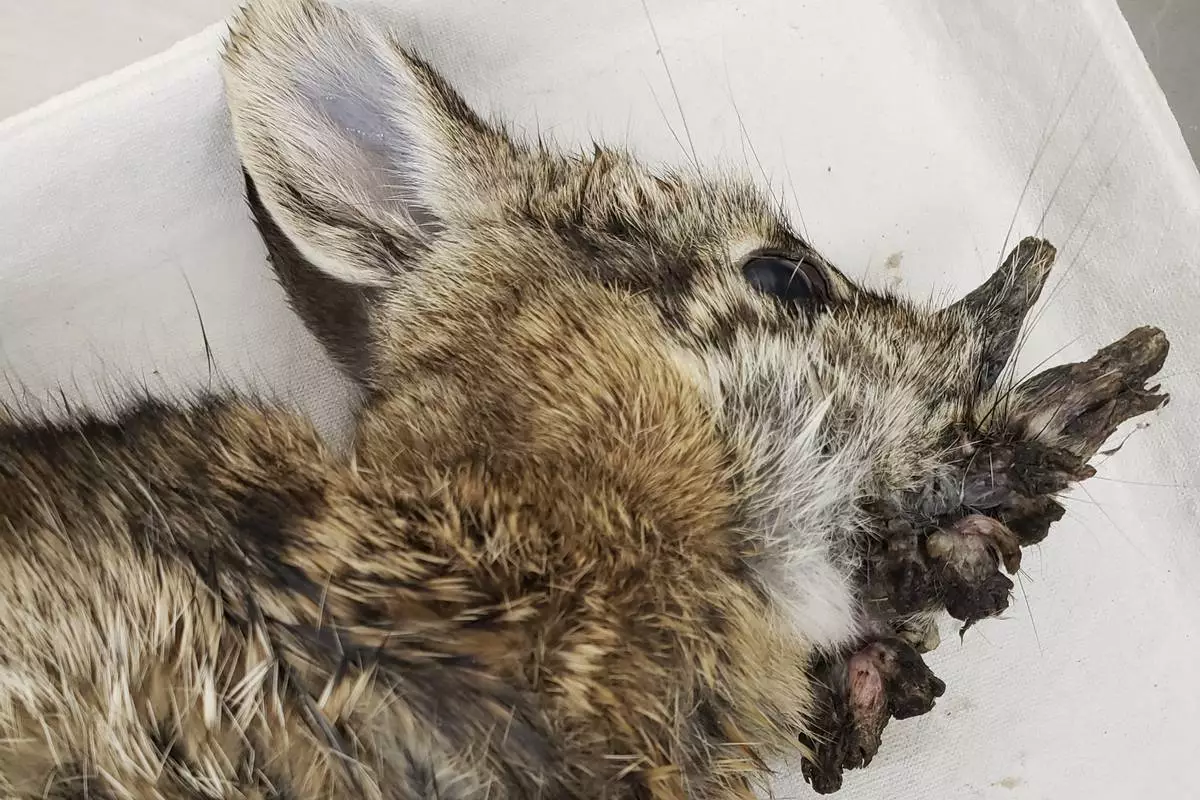
This photo provided by the Iowa Department of Natural Resources shows a deceased Eastern cottontail rabbit infected with Shope papillomavirus in October 2021. (Dr. Rachel Ruden/Iowa Department of Natural Resources via AP)
DEIR AL BALAH, Gaza Strip (AP) — A grandmother and her 5-year-old grandson burned to death in Gaza when their tent caught fire, as thousands of Palestinians battle harrowing winter conditions in flimsy makeshift housing and the humanitarian crisis persists.
The nylon tent in Yarmouk caught fire Thursday night from cooking, a neighbor said.
As 2026 begins, the shaky 12-week-old ceasefire between Israel and Hamas has largely ended large-scale Israeli bombardment of Gaza. But Palestinians are still being killed by Israeli fire, especially along the so-called Yellow Line that delineates areas under Israeli control, and the humanitarian crisis is compounded by frequent winter rains and colder temperatures.
On Friday, American actor and film producer Angelina Jolie visited the Rafah border crossing between Egypt and the Gaza Strip. The only crossing between the territory and a country other than Israel, it remains closed despite Palestinian requests to reopen it to people and aid.
Over past weeks, cold winter rains have repeatedly lashed the sprawling tent cities, causing flooding, turning Gaza’s dirt roads into mud and causing buildings damaged in Israeli bombardment to collapse. UNICEF says at least six children have now died of weather-related causes, including a 4-year-old who died in a building collapse.
At least three children have died of hypothermia, according to Gaza’s Health Ministry. High temperatures in December were in the 60s Fahrenheit (15-20 Celsius), but dipped into the mid-40s F (6-8 C) on some nights.
Aid groups say not enough shelter materials are getting into Gaza during the truce. Figures recently released by Israel’s military suggest it hasn’t met the ceasefire stipulation of allowing 600 trucks of aid into Gaza a day, though Israel disputes that finding. There is also concern that Israel's recent suspension of more than three dozen international aid groups from operating in Gaza will make it even harder to get supplies like tents in.
Palestinians have long called for mobile homes and caravans to be allowed in to protect them against living in impractical and worn out tents. In Yarmouk, people live in nylon tents near a garbage dump.
Ashraf al-Suwair said he woke up to the sound of screaming as his neighbors shouted “fire! fire!" He said nylon is like fuel, easy to ignite. “We need a good place that suits the people and the children of Gaza, instead of burning to death," he said.
Jolie met with members of the Red Crescent on the Egyptian side of the Rafah border crossing and then visited a hospital in the nearby city of Arish to speak with Palestinian patients on Friday, according to Egyptian officials.
Reopening the crossing, which would allow Palestinians to leave Gaza — especially the ill and wounded who could get specialized care unavailable in the territory — has been contentious. Israel has said that it will only allow Palestinians to exit Gaza, not enter, until militants in Gaza return all the hostages they took in the attack on Oct. 7, 2023, which triggered the war. The remains of one hostage are still in Gaza.
In addition, Israel says Palestinians wanting to leave Gaza will have to get Israeli and Egyptian security approval. Egypt, meanwhile, says it wants the crossing immediately opened in both directions, so Palestinians in Egypt can enter Gaza. That’s a position rooted in Egypt’s vehement opposition to Palestinian refugees permanently resettling in the country.
For more than two decades until 2022, Jolie was a special envoy to the U.N. refugee agency. She has continued to advocate for human rights issue and has visited conflict areas, including Ukraine.
On Friday the foreign ministers of Arab and Muslim countries, including Egypt, Qatar and Saudi Arabia, expressed concern about Gaza's humanitarian situation.
The situation has been “compounded by the continued lack of sufficient humanitarian access, acute shortages of essential life-saving supplies, and the slow pace of the entry of essential materials," said the joint statement.
Israel has said throughout the war that Hamas was siphoning off aid supplies, an accusation that the United Nations and aid groups have denied. Last month, the World Food Program said that there have been “notable improvements” in food security in Gaza since the ceasefire.
Since the ceasefire between Israel and Hamas began, 416 people have been killed and 1,142 wounded in Gaza, according to the Health Ministry. The overall Palestinian death toll from the war is at least 71,271. The ministry, which doesn't distinguish between militants and civilians in its count, is staffed by medical professionals and maintains detailed records viewed as generally reliable by the international community.
The Israel-Hamas war began with the Hamas-led Oct. 7 attack in southern Israel that killed about 1,200 people and saw 251 taken hostage.
Meanwhile, Israel continues operating in the occupied West Bank.
On Friday, the Palestinian Prisoners media office said that Israel carried out numerous raids across the territory, including the major cities of Ramallah and Hebron. Nearly 50 people were detained, following the arrest of at least 50 other Palestinians on Thursday, most of those in the Ramallah area.
Israel's military said there were arrests made of people “involved in terrorist activity." Last Friday, a Palestinian attacker rammed his car into a man and then stabbed a young woman in northern Israel on Friday afternoon, killing both, police said. Raids were conducted afterward in the attacker's West Bank hometown.
The Palestinian Prisoner’s Society says that Israel has arrested 7,000 Palestinians in the West Bank and Jerusalem this year, and 21,000 since the war began. The number arrested from Gaza isn't made public by Israel.
Find more of AP’s Israel-Hamas coverage at https://apnews.com/hub/israel-hamas-war

American actor and film producer Angelina Jolie, front left, greets Red Crecent workers during her visit to the Rafah border crossing between Egypt and the Gaza Strip in Rafah, Egypt, Friday, Jan. 2, 2026. (AP Photo/Mohamed Arafat)
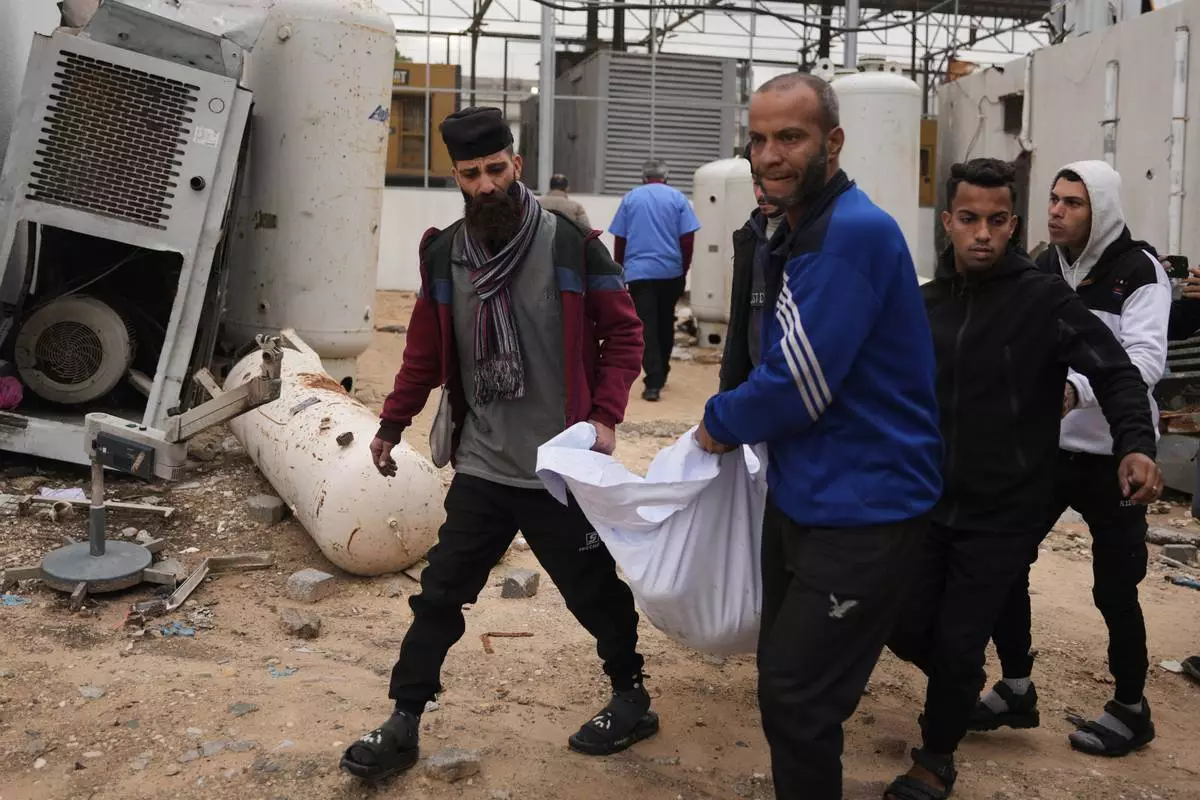
The bodies of Amal Abu Al-Khair and her grandchild, Saud, are transferred to Al-Shifa Hospital in Gaza City after they were killed when their tent caught fire overnight at the Yarmouk displacement camp, Friday, Jan. 2, 2026. (AP Photo/Jehad Alshrafi)
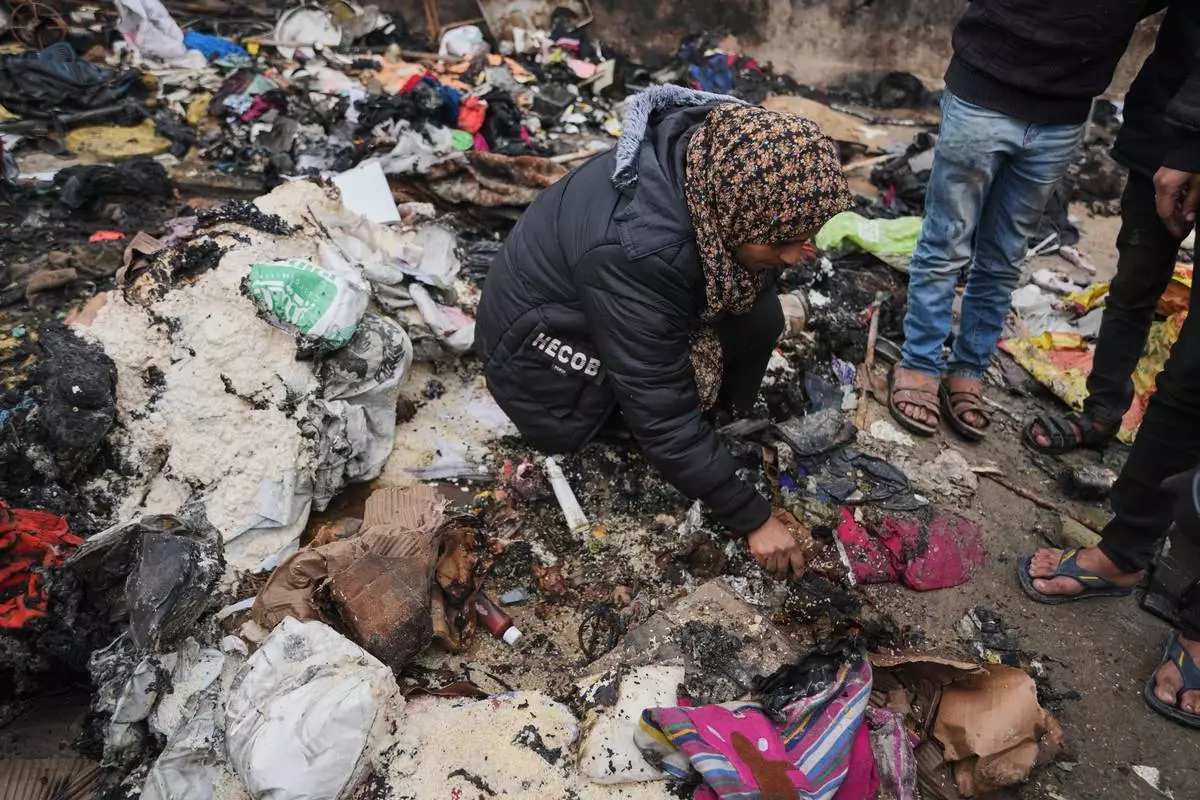
Fatima Abu al-Bayd inspects what remains of her mother's tent after her mother, Amal Abu Al-Khair, and grandchild, Saud, were killed when it caught fire overnight at the Yarmouk displacement camp in Gaza City, Friday, Jan. 2, 2026. (AP Photo/Jehad Alshrafi)
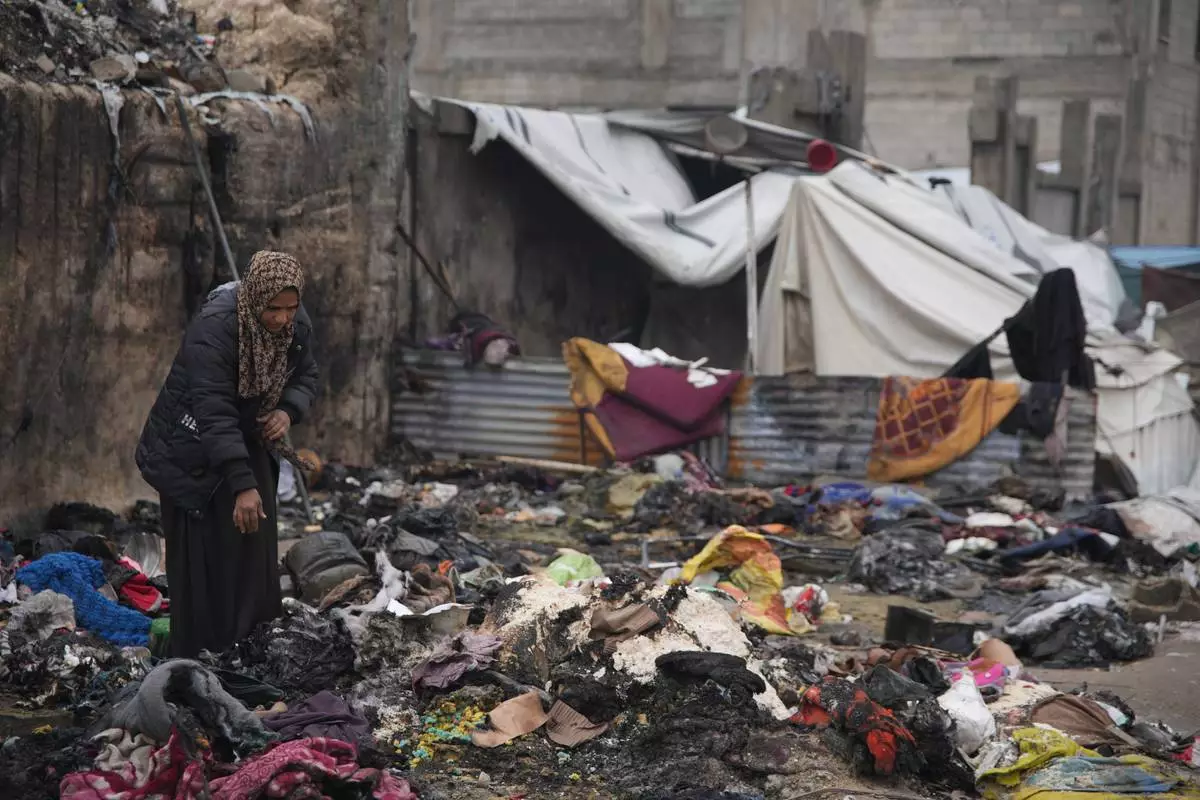
Fatima Abu al-Bayd inspects what remains of her mother's tent after her mother, Amal Abu Al-Khair, and grandchild, Saud, were killed when it caught fire overnight at the Yarmouk displacement camp in Gaza City, Friday, Jan. 2, 2026. (AP Photo/Jehad Alshrafi)
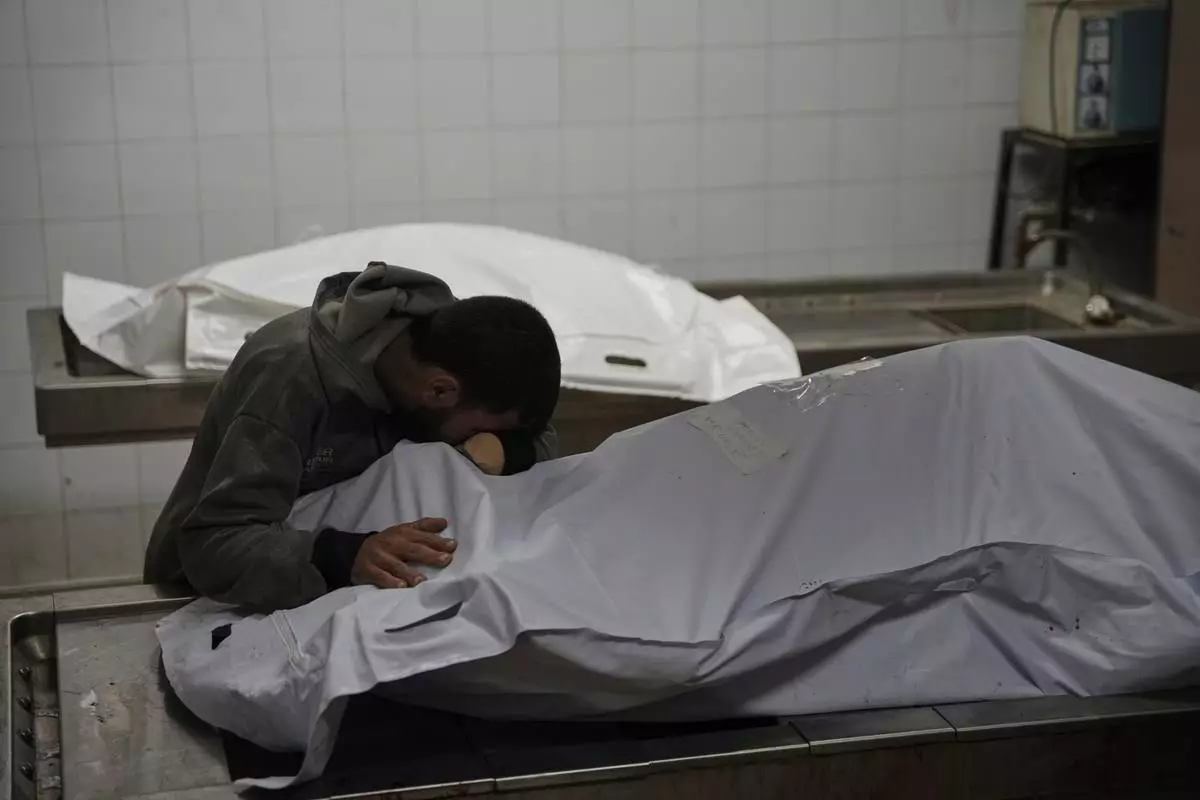
Magdi Abu Al-Khair bids farewell to his mother, Amal Abu Al-Khair, after she and her grandchild, Saud, were killed when their tent caught fire overnight at the Yarmouk displacement camp, at Al-Shifa Hospital in Gaza City, Friday, Jan. 2, 2026. (AP Photo/Jehad Alshrafi)