CHP appeals for heightened vigilance against melioidosis infection following adverse weather conditions
The Centre for Health Protection (CHP) of the Department of Health (DH) today (August 14) appealed to members of the public for heightened vigilance against melioidosis infection following adverse weather conditions and urged them to maintain personal and environmental hygiene. The CHP also specifically reminded high-risk groups, including the elderly and people with underlying diseases, to avoid contact with soil or muddy water after typhoons or storms with a view to lowering infection risk.
Melioidosis is a disease caused by the bacterium Burkholderia pseudomallei. Burkholderia pseudomallei is widespread in soil and muddy water, particularly common in moist clay soil. Humans can become infected through contact with contaminated soil and surface water (especially through skin abrasions/wounds); inhalation of contaminated dust/water droplets; and ingestion of contaminated water. Those with underlying diseases or immunosuppression have higher risks of contracting the disease.
According to overseas literature and local data, Burkholderia pseudomallei in the soil and muddy water may be exposed to the ground after typhoons or storms, and the bacteria would spread more easily with strong wind and storms. As such, infection cases are more common after typhoons or storms.
In view of the recent disturbance caused by typhoon andconsecutive days of torrential rain, the CHP again reminded members of the public, in particular high-risk groups such as those with underlying diseases, to avoid contact with soil or muddy water as far as practicable, to prevent melioidosis infection.
Melioidosis is an endemic disease in Hong Kong and human infection cases have been recorded in Hong Kong each year. As of yesterday (August 13), eight melioidosis infection cases have been recorded in Hong Kong this year. In 2024, 23 melioidosis cases were recorded. In light of the cluster of melioidosis cases recorded in Sham Shui Po in 2022, the CHP and the Water Supplies Department have implemented a series of precautionary and monitoring measures, including the installation of high efficiency particulate air filters at the ventilators of all fresh water service reservoirs in Hong Kong, enhancing residual chlorine levels in drinking water, continual monitoring of residual chlorine level of fresh water in service reservoirs and consumers' taps, as well as health education and surveillance of infection cases. No abnormalities were detected from all surveillance results so far, including those conducted after typhoons and heavy rain, while the drinking water quality monitoring results have consistently been in compliance with the Hong Kong Drinking Water Standards.
Person-to-person transmission andanimal-to-human transmission are rare but may occur through contact with the blood or body fluids of an infected person. Melioidosis may present with localised infection (such as cutaneous abscess), pneumonia, meningoencephalitis, sepsis, or chronic suppurative infection. Depending on the site of infection, common symptoms of melioidosis include fever, headache, localised pain or swelling, ulceration, chest pain, cough, haemoptysis, and swelling of regional lymph nodes. The CHP appealed again to members of the public to seek medical advice if they develop symptoms, in particular people with diabetes or other immunocompromised conditions, in order to receive appropriate medical diagnosis and treatment.
The CHP reminded members of the public to take the following preventive measures against infection:
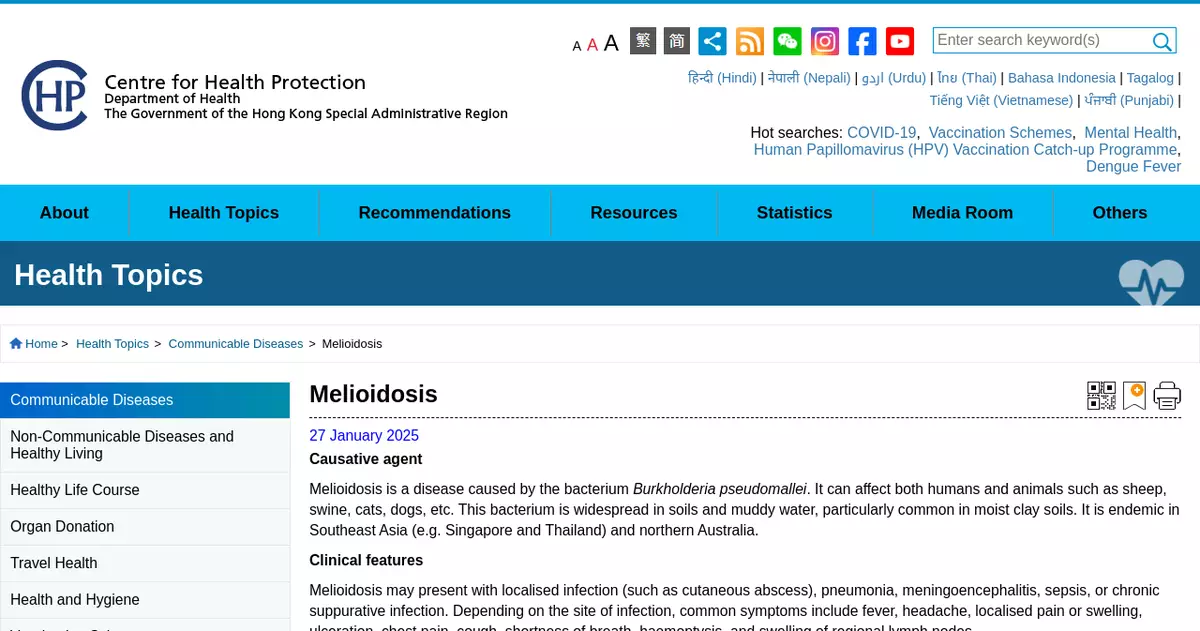
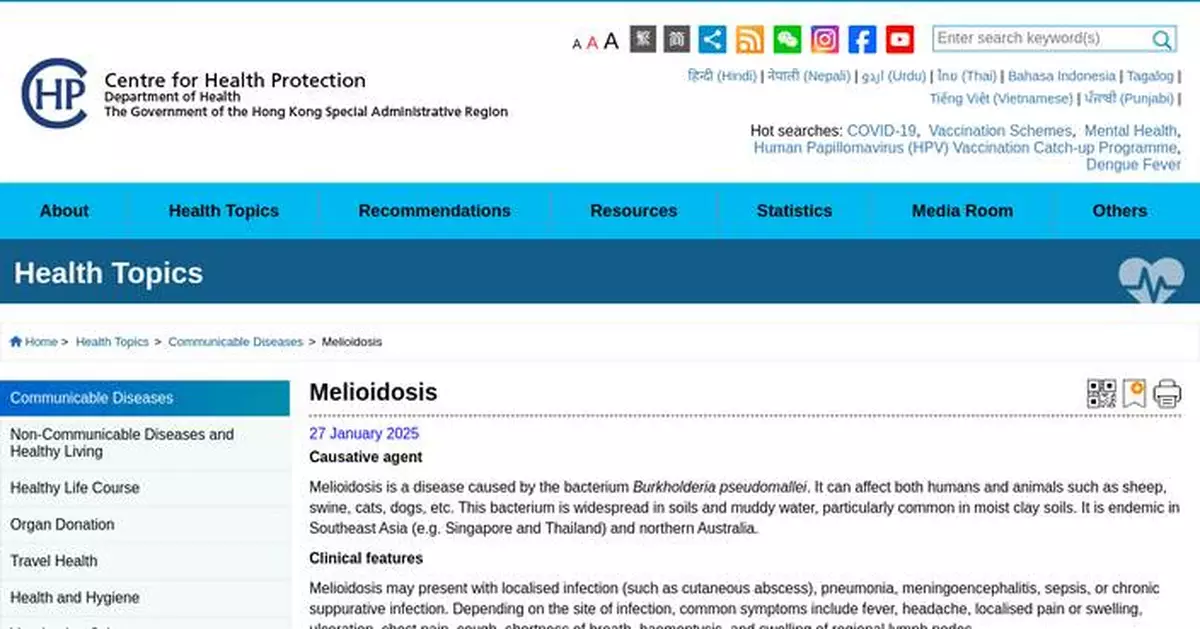
For more information on melioidosis, please visit the website of the CHPwww.chp.gov.hk/en/healthtopics/content/24/101110.html.
Source: AI-found images