TOCHNI, Cyprus (AP) — On opposite sides of ethnically divided Cyprus, even the resting places of the dead haven't been spared the fallout of war.
Shattered granite crosses are strewn about the weed-choked Greek Cypriot cemeteries in the island's northern third that's in Turkish Cypriot hands. In the Greek Cypriot south, Muslim headstones in Turkish Cypriot cemeteries are concealed by overgrowth. Until 2003, no one could cross a United Nations-controlled buffer zone to place flowers at loved ones’ graves.
Click to Gallery
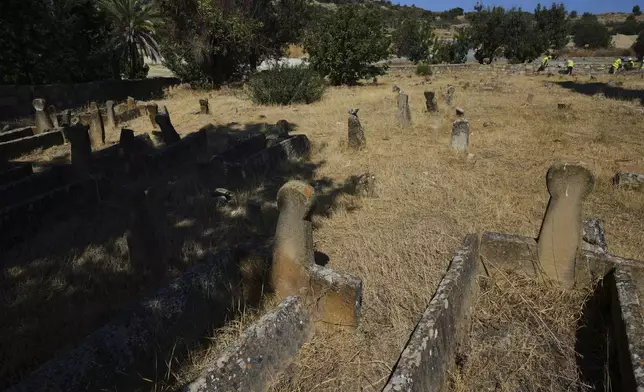
CORRECTS DATE - Shade from pine trees covers some of the graves of Turkish Cypriots at the Muslim cemetery in the village of Tochni, Cyprus on July 3, 2025. (AP Photo/Petros Karadjias)
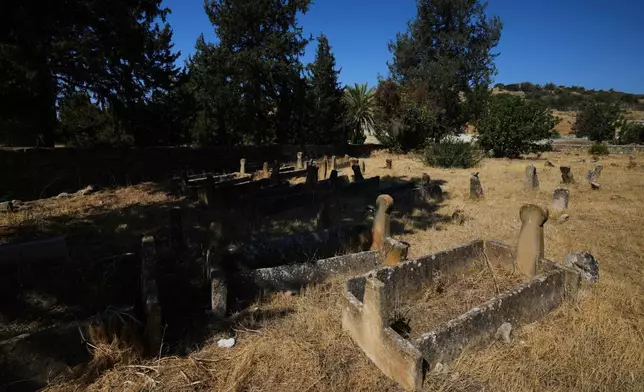
Shade from pine trees covers some of the graves of Turkish Cypriots at the Muslim cemetery in the village of Tochni, Cyprus on July 3, 2025. (AP Photo/Petros Karadjias)
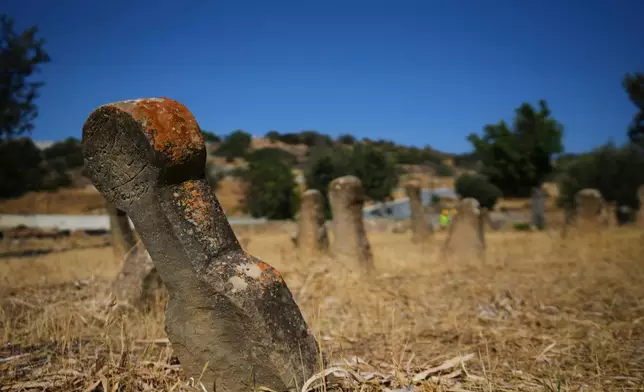
A headstone at the grave of a Turkish Cypriot man lies slightly tilted at the Muslim cemetery in the village of Tochni, Cyprus on July 3, 2025. (AP Photo/Petros Karadjias)
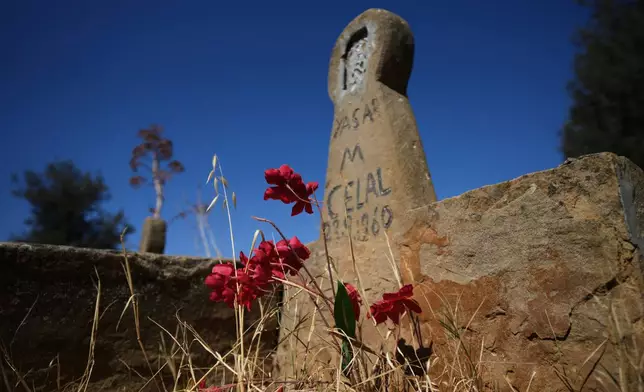
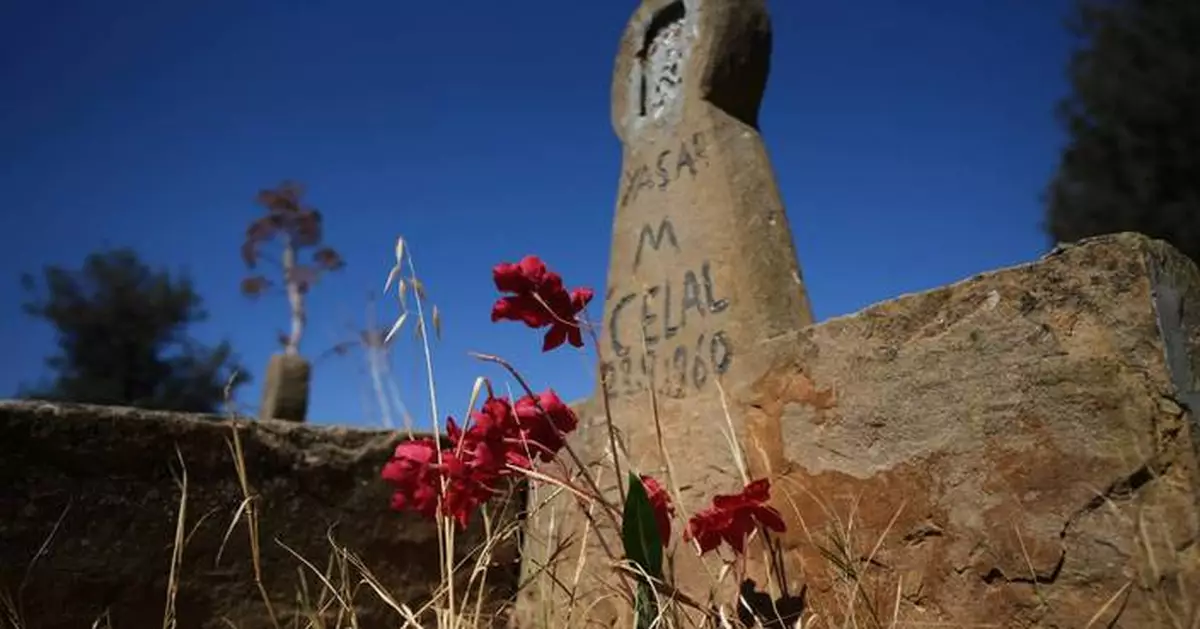
A small patch of crimson flowers lies at the foot of the headstone of a Turkish Cypriot man who died 65 years ago at the Muslim cemetery in the village of Tochni, Cyprus on July 3, 2025. (AP Photo/Petros Karadjias)
In the five decades since a Turkish invasion, vandalism and the ravages of time have transformed hundreds of Cyprus' cemeteries into evidence of the geographic and political rift. But even as chances for bilateral talks to end the divide appear bleak, Greek and Turkish Cypriots have teamed up to mend mistrust and push for peace, one grave at a time.
Restoration is underway at 15 civilian cemeteries on each side of the so-called Green Line cutting across the Mediterranean island. Expansion of the roughly 700,000-euro project ($815,000) to more cemeteries is being considered.
“The maintenance and restoration of cemeteries constitutes one of the most symbolic and morally pressing acts for a place that strives for reconciliation," said Sotos Ktoris, a Greek Cypriot member of the committee from both communities overseeing the work.
Turkey's 1974 invasion, triggered when Athens-backed supporters of uniting Cyprus with Greece mounted a coup, prompted some 160,000 Greek Cypriots to flee their villages to safety in the south, where the internationally recognized government is seated. Some 45,000 Turkish Cypriots moved north, where authorities declared independence a decade later. To this day, only Turkey recognizes Cyprus' northern authorities.
Among the displaced were the custodians of places of worship and cemeteries, both Orthodox Christian and Muslim. Churches in the north were vandalized and looted. Mosques in the south fell into neglect and decay.
As part of U.N.-mediated efforts to achieve a peace deal, both sides have found ways to address past wrongs, including the restoration of churches, mosques and other monuments by the committee.
Earlier this year, Greek Cypriot President Nikos Christodoulides and Turkish Cypriot leader Ersin Tatar expanded the committee’s work to cemetery restoration, with European Union funding and U.N. support and assistance. Work began in May.
Greek Cypriot workers last month were rebuilding the 100-year-old stone wall at one Muslim cemetery in Tochni, a village nestled in hilly countryside near the southern coast. Turkish Cypriot residents had outnumbered Greek Cypriots here by nearly three to one until they were transferred north a few months after the Turkish invasion ended.
Many Turkish Cypriots from the north are now visiting the village to reconnect with their past, find family homes and honor their ancestors, according to Tochni’s Greek Cypriot community leader, Charoulla Efstratiou.
“Just as we demand that they respect us, our dead, our religion and so forth, I believe that we owe the same respect to them,” Efstratiou said.
At the Tochni cemetery, a small patch of crimson flowers emerged from the parched soil atop the grave of a man who died 65 years ago, planted recently by his descendants.
In the village of Palaikythro that Turkish Cypriots have renamed Balikesir, broken crosses at the Greek Cypriot cemetery have been set upright again until they’re fully mended.
Virtually nothing was left intact. Turkish Cypriot contractor Recep Güler said it wasn’t easy to restore the external walls and gate.
Mürüde Erzen, the village’s Turkish Cypriot community leader, said the cemetery is part of shared cultural heritage.
“When I saw this place, I was very upset, wondering why it had become like this,” Erzen told the United Nations Development Program in footage shared with the AP. Turkish Cypriot authorities had denied the AP access.
When Erzen became community leader, she resolved to do something about it.
Sotiroulla Mina Iniati, the Greek Cypriot community leader of Palaikythro, said the cost of full restoration of crosses will be borne by families or the community council. Greek Cypriots continue to elect their own community leader to affirm their claim to their lost lands and preserve their memory.
“For us, this is a sacred place,” Iniati said. “We feel that in this way, the souls of our dead who have for 51 years remain neglected, will be able to rest."
The last major push for a peace deal in Cyprus collapsed in 2017.
Today, the Turkish Cypriots and Turkey shun the U.N.-endorsed framework for reunifying Cyprus as a federation. They insist on a two-state deal that Greek Cypriots reject because they view partition as dooming the island to Turkey’s influence, with its military hardware and troops stationed there in perpetuity.
U.N. Secretary-General António Guterres has met Christodoulides and Tatar twice this year and is expected to meet them again in the coming months in a bid to keep peace talks alive.
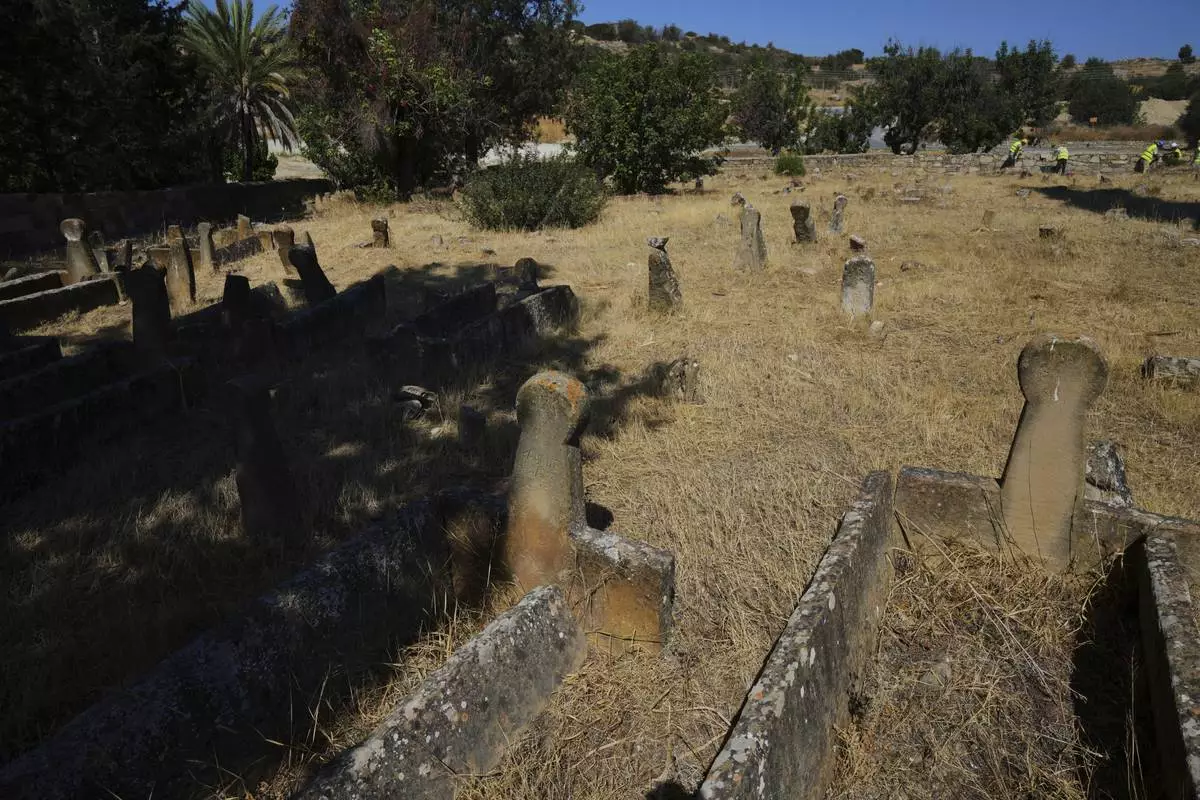
CORRECTS DATE - Shade from pine trees covers some of the graves of Turkish Cypriots at the Muslim cemetery in the village of Tochni, Cyprus on July 3, 2025. (AP Photo/Petros Karadjias)
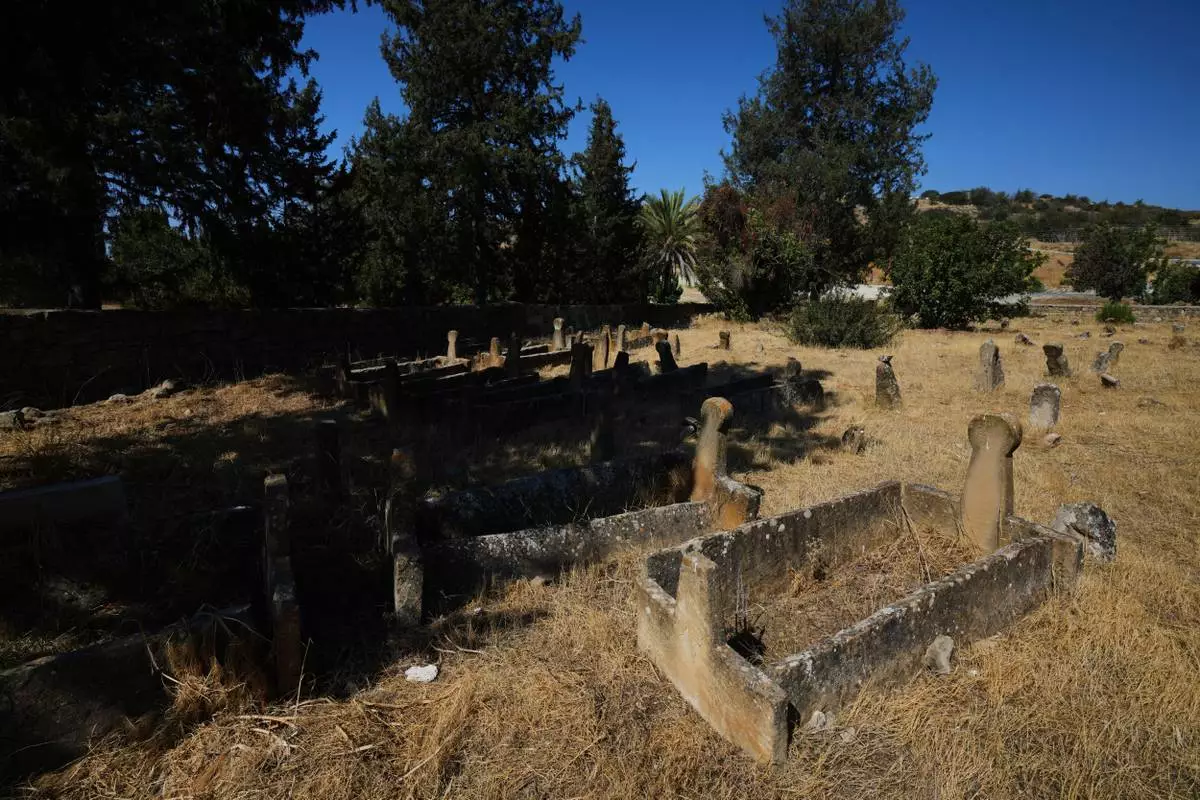
Shade from pine trees covers some of the graves of Turkish Cypriots at the Muslim cemetery in the village of Tochni, Cyprus on July 3, 2025. (AP Photo/Petros Karadjias)
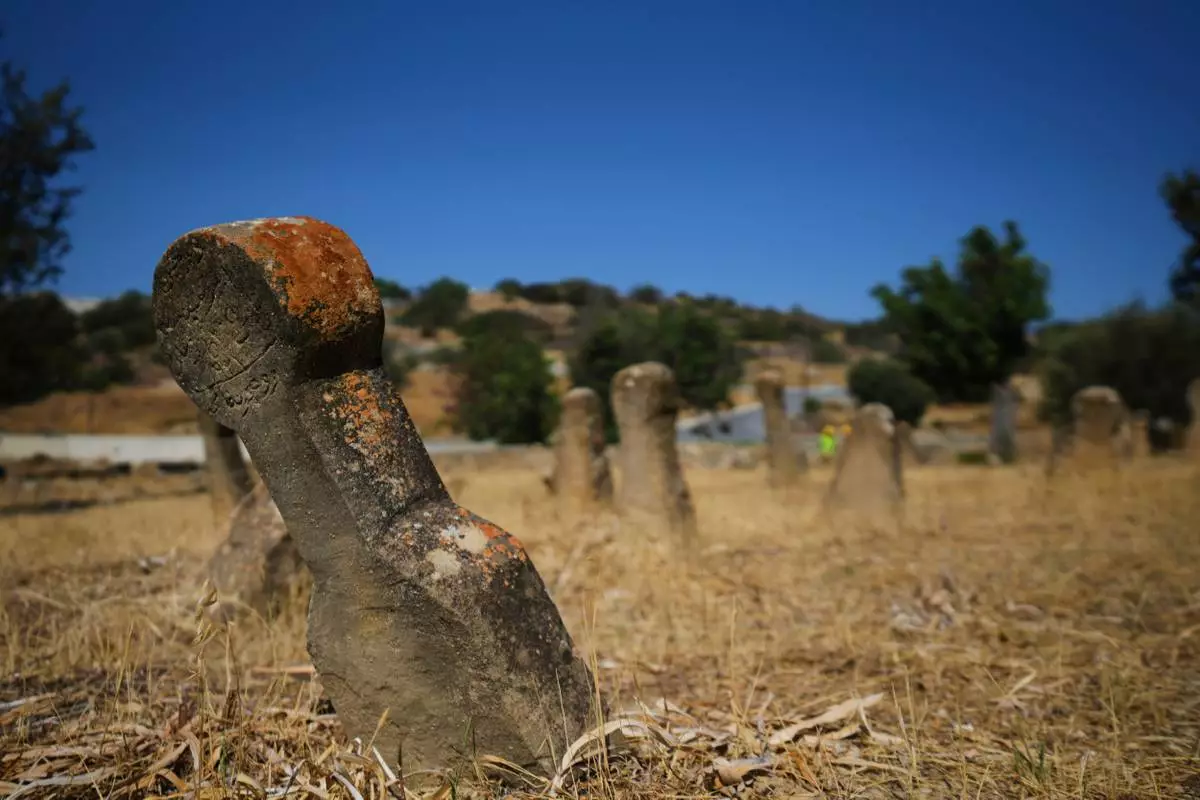
A headstone at the grave of a Turkish Cypriot man lies slightly tilted at the Muslim cemetery in the village of Tochni, Cyprus on July 3, 2025. (AP Photo/Petros Karadjias)
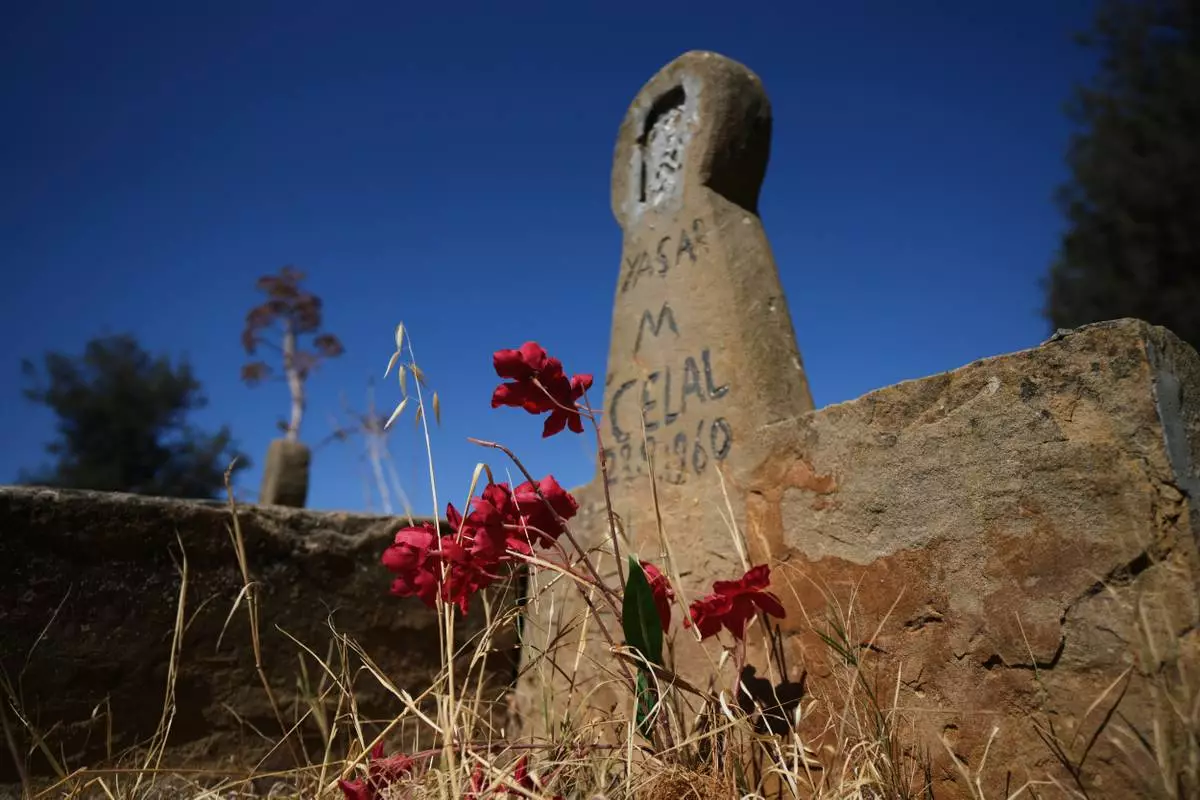
A small patch of crimson flowers lies at the foot of the headstone of a Turkish Cypriot man who died 65 years ago at the Muslim cemetery in the village of Tochni, Cyprus on July 3, 2025. (AP Photo/Petros Karadjias)