China's opening up policies have greatly boosted the global development path of TCL, a leading Chinese consumer electronics brand, said the founder of the company.
Li Dongsheng, founder and chairman of TCL, said the enterprise will continue to adhere to the real economy, actively explore the global market, and provide more Chinese-made products to the world.
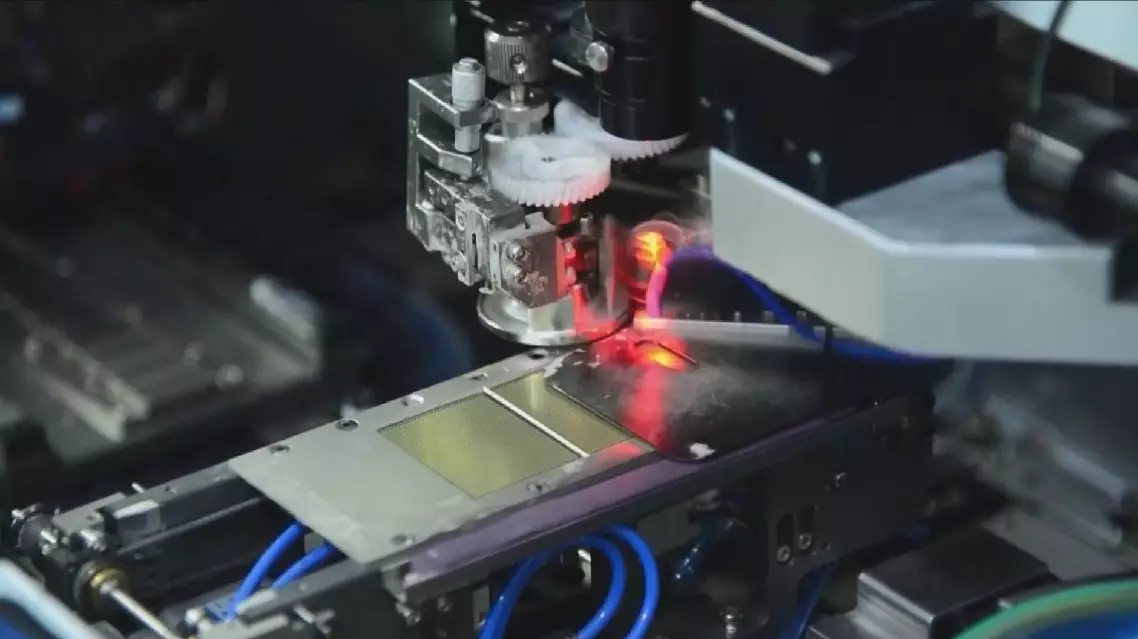
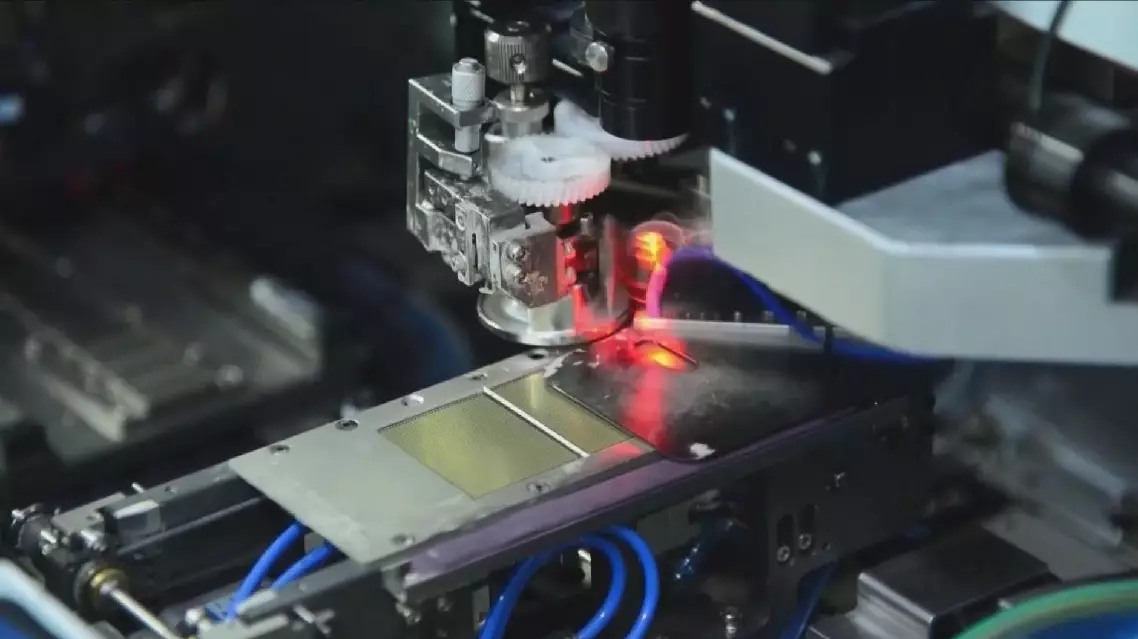
"We are at the 11th generation [production] line of TCL CSOT, which is the world's largest LC-TFT display panel production line," said Li.
In early 1999, TCL acquired the color TV factory that Hong Kong's Luks Group had invested in Vietnam in 1990, officially taking its first step towards globalization. But it encountered major challenges when entering the Vietnamese market.
In Vietnam, at that time, TV users had to set up very high antennas to receive programs. However, Vietnam often experiences lightning, and TV antennas were frequently damaged by it. To solve this, TCL has designed a lightning-proof antenna receiver.
"When there is thunder and lightning, it has a protection mechanism. It is precisely this small technological improvement that has enabled our products to gain a better reputation in Vietnam," Li said.
"This is our first-generation TCL color TV, which was produced in 1992. At that time, a large number of televisions were imported. This one is 34 inches. Our 98-inch products account for 60 percent of the U.S. market," he said.
Consumer Electronics Show (CES) is the world's largest annual consumer electronics technology exhibition. Thirty-four years ago, when Li first visited the exhibition, there were very few Chinese enterprises.
With the improvement of China's manufacturing level, the enhancement of product competitiveness and the acceleration of the pace of globalization, the number of Chinese enterprises participating exceeded 1,100 at the 2024 CES, accounting for a quarter of all exhibitors.
"I remember the first time we participated in CES, our booth was only nine square meters. It was in a very small hall. For this year's CES, our booth is 1,700 square meters and it's located in the main exhibition hall," said the founder.
TCL's globalization was upgraded through two major international mergers and acquisitions. In 2004, TCL acquired the color TV business of Thomson and the mobile phone business of Alcatel in France.
However, due to insufficient reserves of funds, technology and talents, as well as unfamiliarity with European laws and market conditions, TCL fell into losses in 2005.
"This battle was very difficult. In 2005 and 2006, we faced significant losses due to multinational mergers and acquisitions, and the company was also facing a financial crisis. The timing of our acquisitions coincided with the transition of television technology from CRT to flat-panel displays. We underestimated this transition, but we gritted our teeth and persevered. Although the cost was high, without those multinational mergers and acquisitions, TCL would not have established the global operation system and network it has today," said Li.
"Our per capita productivity has doubled. We have already put into production a 115-inch display screen. Next, we will develop a 130-inch one," he said.
China's semiconductor display industry has already gained international competitiveness in the upstream such as, display screens, display devices, materials and equipment. At present, the output of LCD displays in China has reached 70 percent of the global total.
Li said that it was China's opening up to the world that led to TCL's global development path. He will also continue to adhere to the real economy and expand his business from the semiconductor display industry to the new energy photovoltaic industry.
"We can see that the global photovoltaic industry is growing by 10 percent to 20 percent annually. The photovoltaic industry is an important area for China's economic competitiveness and manufacturing competitiveness," said the chairman.
China holds over 90 percent of the global market share in the photovoltaic silicon wafer sector and has core competitiveness worldwide.
Now, China has the manufacturing industry with the most complete industrial categories and the most complete industrial system in the world. The added value of its manufacturing industry accounts for about 30 percent of the world's total, and it has truly become the world's manufacturing center.
Li said that TCL's globalization 14 years ago was still at the initial phase, but now it has formed an industrial ecosystem.
"At that time, it was the initial stage of our globalization. We were more concerned about how to sell more products in overseas markets. Now, our globalization strategy not only involves having manufacturing plants in major global market regions, but these plants have also formed an industrial ecosystem," he said.
"If you don't expand into the global market, you won't be able to form a more competitive economic scale. If you don't participate in global competition, it will be very difficult for you to enhance your competitiveness. Therefore, not going global means being eliminated. Globalization is a compulsory question, not an optional one," said Li.
Globalization ‘compulsory, not optional,’ says CEO of leading Chinese electronics brand
China's opening up boosts manufacturing industry globalization