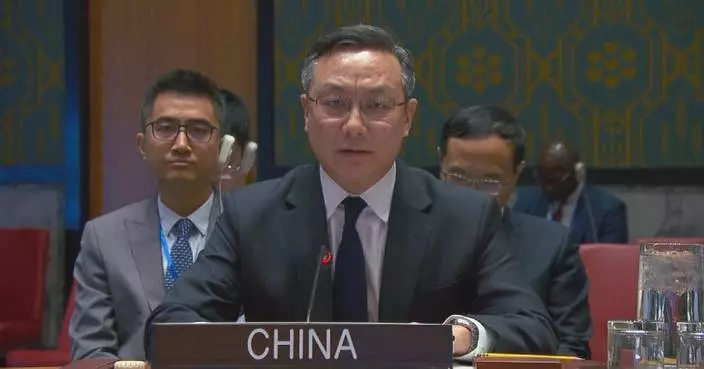
Wang Yi, member of the Political Bureau of the Communist Party of China Central Committee and Minister of Foreign Affairs, on Thursday met with Cambodian Deputy Prime Minister and Foreign Minister Prak Sokhonn, who is in Anning, southwest China's Yunnan Province, to attend the 10th Lancang-Mekong Cooperation (LMC) Foreign Ministers' Meeting.
In April this year, Chinese President Xi Jinping paid a state visit to Cambodia, during which the leaders of the two countries jointly led the upgrading of China-Cambodia relations and drew up a blueprint for building an all-weather China-Cambodia community with a shared future in the new era, Wang said.
He noted that China supports Cambodia in maintaining political stability, promoting economic development and improving people's livelihood, and is ready to strengthen cooperation with Cambodia to bring more benefits to the Cambodian people and contribute to regional development and prosperity.
Facing an international landscape fraught with changes and turbulence, the world needs peace and tranquility, he said, adding that it is of great significance for the Lancang-Mekong countries to hold foreign ministers' meeting in Anning - meaning peace and tranquility in Chinese - to discuss development plans, call for peace, and build consensus on peace.
China appreciates Cambodia's campaign to crack down on online gambling and telecom fraud, and hopes that Cambodia will continue to take strong measures and work with regional countries to combat cross-border criminal activities, Wang said.
For his part, Prak Sokhonn said that Cambodia attaches great importance to its relations with China, appreciates China's selfless support and help, and looks forward to further enhancing the level of cooperation and achieving more fruitful results.
He said that Cambodia is fully committed to peace efforts and hopes that through this foreign ministers' meeting, the Lancang-Mekong cooperation will be accelerated and regional prosperity and stability will be promoted.
Noting that both Cambodia and Thailand are good neighbors and friends of China, Wang urged the two sides to enhance engagement and restore mutual trust.
China believes the parties concerned can properly resolve their differences through dialog and consultation, Wang said, adding that China supports ASEAN in playing an active role in this regard to uphold ASEAN's solidarity.
Prak Sokhonn informed Wang of the recent situation of Cambodia-Thailand relations and expressed gratitude to China for its active efforts in promoting peace talks and easing tensions.
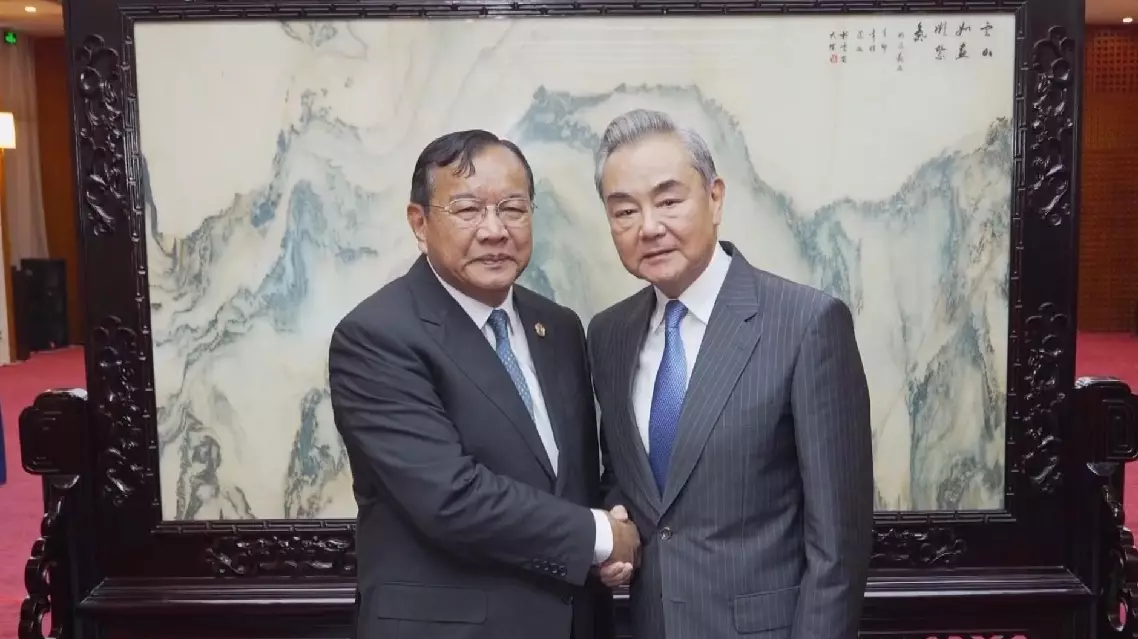
China's top diplomat meets Cambodian deputy prime minister