A Chinese teenager is already carving her path in the highly-competitive squash world after she showcased her talent in a remarkable debut at the 2025 Chengdu World Games and says she is now setting her sights on being selected for the 2028 Los Angeles Olympics.
Squash is one of the sports featured at the ongoing World Games in southwest China's Chengdu. It will make its long-awaited Olympic debut at the 2028 Los Angeles Games.
This year, 13-year-old Yin Ziyuan took the stage in Chengdu as the youngest member of China’s delegation, proving her immense potential.
Facing Japanese No. 1 seed Watanabe Satomi, Yin stepped onto the court for her Chengdu World Games debut last Friday. Despite a 3-11, 4-11, 3-11 loss, her confidence and determination remain unshaken, as she continues her pursuit of Olympic glory.
"I know this match is very hard for me, it's a senior match, and I'm only 13 years old, so I [just] expect every game I can do my best and just play everything [I've practiced in] training, so I can do well in these few matches," she said.
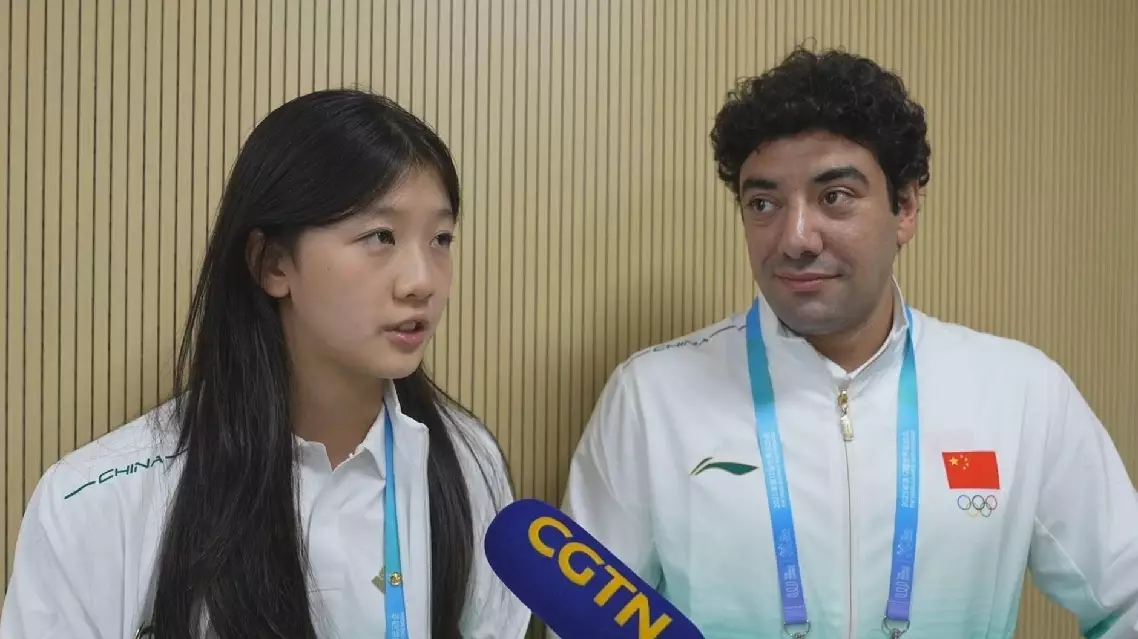
Yin is also looking to the future and hopes to work closely with coach Islam Hany, who is equally focused on developing the next generation of squash players to elevate China's presence on the global stage.
"He teaches me a lot, and then in international training, like every coach he helped me a lot. Now, squash is very famous in China, [especially] in Beijing and Shanghai. And then I have a dream like I can go on to play in the 2028 Olympics," she said.
Yin won the Under-13 girls' title at the Asian Junior Squash Championships in South Korea last month, marking a significant step in her trajectory and a breakthrough for Chinese squash.
Yin's parents run a squash club in Shanghai, and she began to play the sport when she was only eight and has been practicing nearly every day since then.
"After school I would go to the squash court for training. On Monday to Friday, I spend three hours on training, and during the weekend, I would like to spend more time on it. I hope I can go to the national team for training with coach Islam," she said.
As the coach of the Chinese national squash team, Hany is glad that China has been investing a lot of effort in seeking young promising talents such as Yin. He is also convinced that Chinese players have a bright future for international competitions, including the Olympics.
"Before I come, I was not only aiming [on only developing] the big team. China here is focusing on all the junior events, or the senior's event as well. So we are not focusing only on the seniors. We are looking for young talents like Summer (Yin) and other players. There are so many other talented players who are playing in different parts of China. So we have to focus our attention not only on the seniors, the juniors as well. We need to build like the whole team from [when players are] a very young age till they are men and women. So yes, I was expecting to see these young talents and we are looking for more," he said.
"We are doing good. I'm sure that by 2028, we'll be having more talented players, and we will have a chance, a good chance of participating in the Olympics. And if not, then we will do more, and we'll keep on working, so that we'll have the China squash [team] at the top of the Asian and the international scene very soon," he added.
Rising Chinese squash star sets sights on future Olympic glory