Skip to Content Facebook Feature Image

Got the sniffles? Here's what to know about summer colds and the COVID-19 variant called stratus

TECH

Got the sniffles? Here's what to know about summer colds and the COVID-19 variant called stratus
TECH

TECH

Got the sniffles? Here's what to know about summer colds and the COVID-19 variant called stratus

2025-08-15 00:39 Last Updated At:01:00

Summer heat, outdoor fun ... and cold and flu symptoms?

The three may not go together in many people's minds: partly owing to common myths about germs and partly because many viruses really do have lower activity levels in the summer.

But it is possible to get the sniffles — or worse — in the summer. Federal data released Friday, for example, shows COVID-19 is trending up in most states, with emergency department visits up among people of all ages.

Here's what to know about summer viruses.

The number of people seeking medical care for three key illnesses — COVID-19, flu and respiratory syncytial virus, or RSV — is currently very low, according to data from the Centers for Disease Control and Prevention.

Flu is trending down and RSV has been steady. But COVID-19 is trending up in most U.S. states. Wastewater data from around the country estimates “moderate” COVID-19 activity.

CDC wastewater also shows the XFG variant — nicknamed stratus — is most common in the U.S. Stratus can cause a “razor blade” sore throat and is considered a “variant under monitoring” by the World Health Organization. The WHO said the variant is only marginally better at evading people's immune systems and vaccines still work against it.

The expectation is that COVID-19 will eventually settle into a winter seasonal pattern like other coronaviruses, but the past few years have brought a late summer surge, said Dr. Dean Blumberg, chief of pediatric infectious diseases at University of California Davis Children’s Hospital.

Other viruses circulating this time of year include the one that causes “hand, foot and mouth” disease — which has symptoms similar to a cold, plus sores and rashes — and norovirus, sometimes called the stomach flu.

Many viruses circulate seasonally, picking up as the weather cools in the fall and winter. So it's true that fewer people get stuffy noses and coughs in the summer — but cold weather itself does not cause colds.

It's not just about seasonality. The other factor is our behavior, experts say. Nice weather means people are opening windows and gathering outside where it's harder for germs to spread.

But respiratory viruses are still around. When the weather gets too hot and everyone heads inside for the air conditioning, doctors say they start seeing more sickness. In places where it gets really hot for a long time, summer can be cold season in its own right.

“I grew up on the East Coast and everybody gets sick in the winter,” said Dr. Frank LoVecchio, an emergency room doctor and Arizona State University researcher. “A lot of people get sick in the summer here. Why is that? Because you spend more time indoors.”

For people who are otherwise healthy, timing is a key consideration to getting any vaccine. You want to get it a few weeks before that big trip or wedding, if that's the reason for getting boosted, doctors say. But, for most people, it may be worth waiting until the fall in anticipation of winter cases of COVID-19 really tick up.

“You want to be fully protected at the time that it's most important for you,” said Dr. Costi Sifri, of the University of Virginia Health System.

People at higher risk of complications should always talk with their doctor about what is best for them, Sifri added. Older adults and those with weak immune systems may need more boosters than others, he said.

Last month, the CDC noted emergency room visits among children younger than 4 were rising. That makes sense, Blumberg said, because many young kids are getting it for the first time or are unvaccinated.

Health Secretary Robert F. Kennedy Jr. said in May that the shots would no longer be recommended for healthy kids, a decision that health experts have said lacks scientific basis. The American Academy of Pediatrics still endorses COVID-19 shots for children older than 6 months.

The same things that help prevent colds, flu and COVID any other time of the year work in the summer, doctors say.

Spend time outside when you can, wash your hands, wear a mask. And if you're sick, stay home.

The Associated Press Health and Science Department receives support from the Howard Hughes Medical Institute’s Department of Science Education and the Robert Wood Johnson Foundation. The AP is solely responsible for all content.
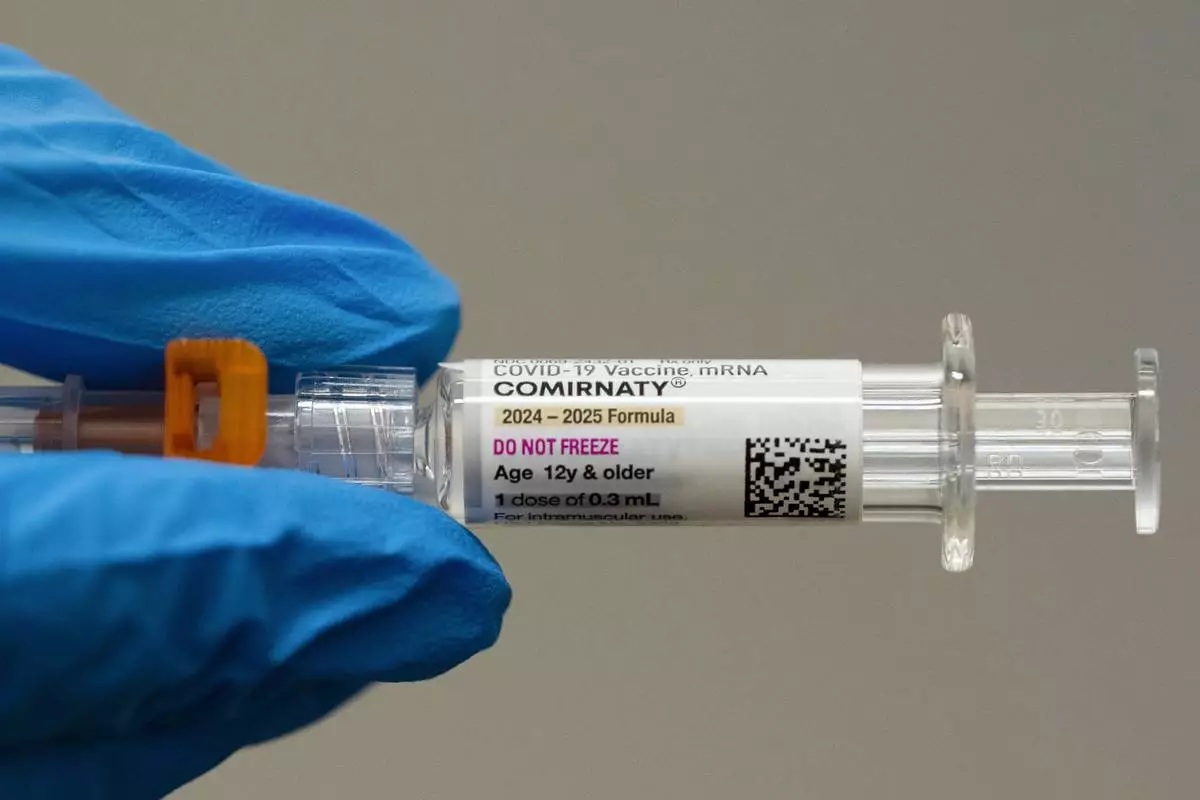
FILE - A pharmacist holds a Pfizer and BioNTech COVID-19 vaccine shot on Thursday, April 24, 2025, in Portland, Ore. (AP Photo/Jenny Kane, File)
FILE - A pharmacist holds a Pfizer and BioNTech COVID-19 vaccine shot on Thursday, April 24, 2025, in Portland, Ore. (AP Photo/Jenny Kane, File)
WASHINGTON (AP) — U.S. forces in the Caribbean Sea have seized another sanctioned oil tanker that the Trump administration says has ties to Venezuela, part of a broader U.S. effort to take control of the South American country’s oil.

Homeland Security Secretary Kristi Noem wrote on social media that the U.S. Coast Guard had boarded the Motor Tanker Veronica early Thursday. She said the ship had previously passed through Venezuelan waters and was operating in defiance of President Donald Trump’s "established quarantine of sanctioned vessels in the Caribbean.”

U.S. Southern Command said Marines and sailors launched from the aircraft carrier USS Gerald R. Ford to take part in the operation alongside a Coast Guard tactical team, which Noem said conducted the boarding as in previous raids. The military said the ship was seized “without incident.”

Noem posted a brief video that appeared to show part of the ship’s capture. The black-and-white footage showed helicopters hovering over the deck of a merchant vessel while armed troops dropped down on the deck by rope.

The Veronica is the sixth sanctioned tanker seized by U.S. forces as part of the effort by Trump’s administration to control the production, refining and global distribution of Venezuela’s oil products and the fourth since the U.S. ouster of Venezuela President Nicolás Maduro in a surprise nighttime raid almost two weeks ago.

The Veronica last transmitted its location on Jan. 3 as being at anchor off the coast of Aruba, just north of Venezuela’s main oil terminal. According to the data it transmitted at the time, it was partially filled with crude.

The ship is currently listed as flying the flag of Guyana and is considered part of the shadow fleet that moves cargoes of oil in violation of U.S. sanctions.

According to its registration data, the ship also has been known as the Gallileo, owned and managed by a company in Russia. In addition, a tanker with the same registration number previously sailed under the name Pegas and was sanctioned by the U.S. Treasury Department for moving cargoes of illicit Russian oil.

As with prior posts about such raids, Noem and the military framed the seizure as part of an effort to enforce the law. Noem argued that the multiple captures show that “there is no outrunning or escaping American justice.”

However, other officials in Trump's Republican administration have made clear that they see the actions as a way to generate cash as they seek to rebuild Venezuela’s battered oil industry and restore its economy.

Trump met with executives from oil companies last week to discuss his goal of investing $100 billion in Venezuela to repair and upgrade its oil production and distribution. His administration has said it expects to sell at least 30 million to 50 million barrels of sanctioned Venezuelan oil.

This story has been corrected to show the Veronica is the fourth, not the third, tanker seized by U.S. forces since Maduro's capture and the ship also has been known as the Gallileo, not the Galileo.

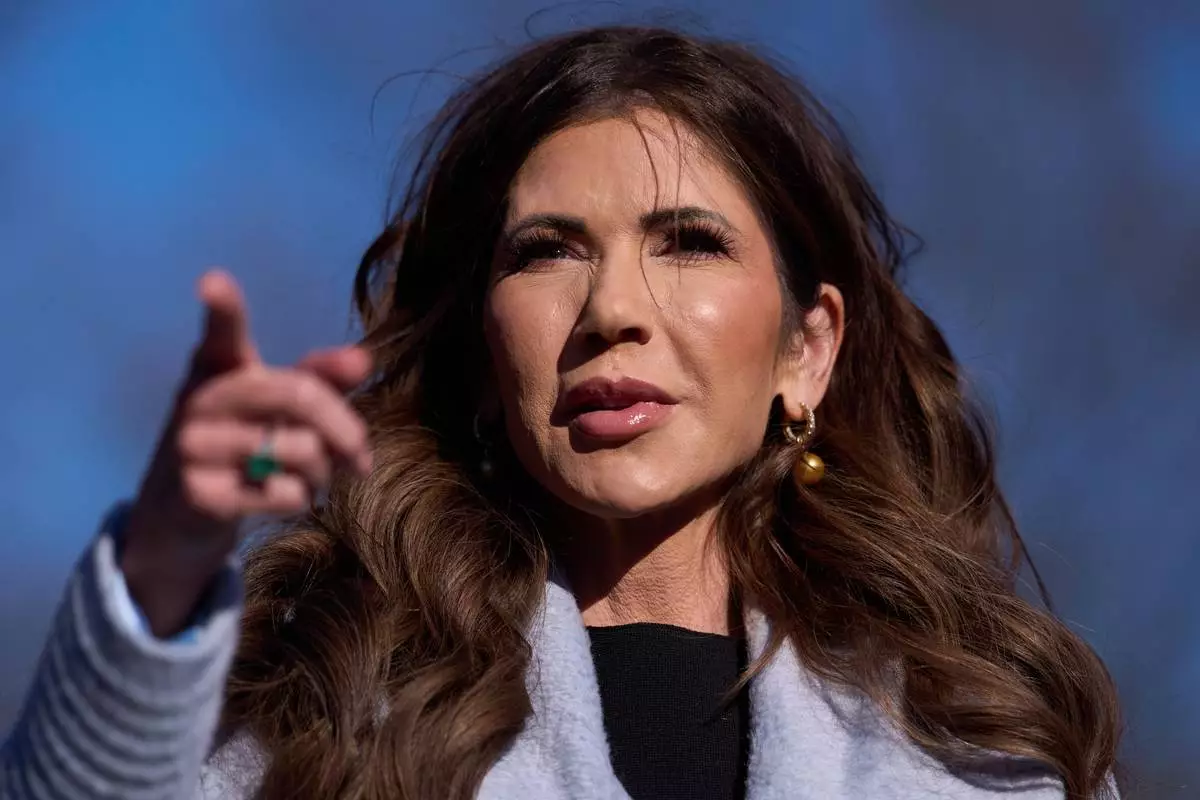
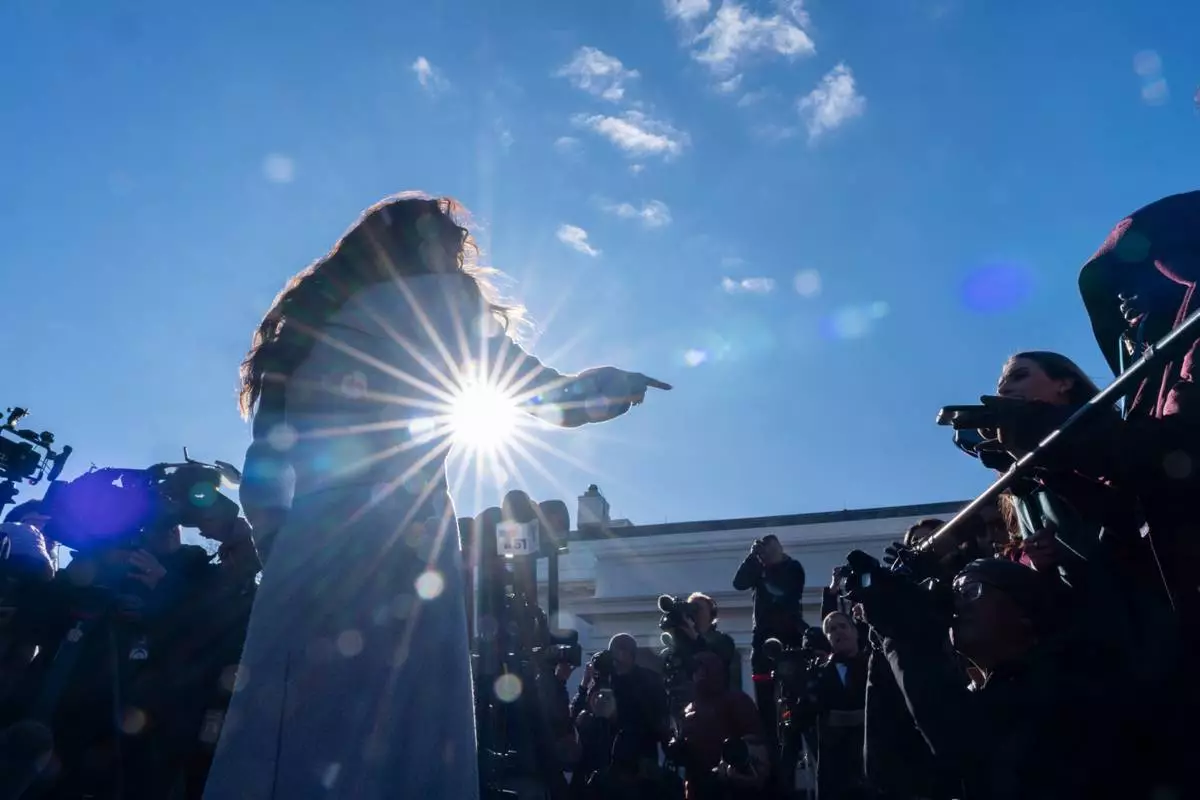
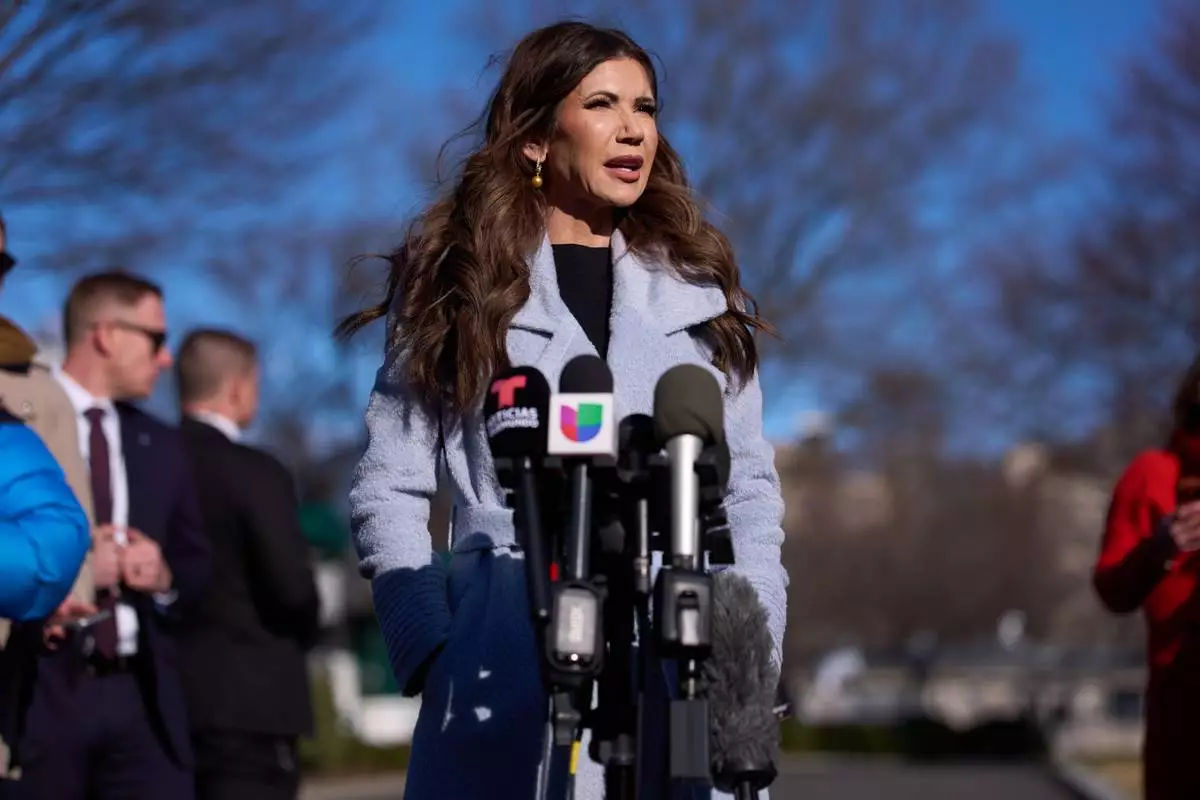
Homeland Security Secretary Kristi Noem speaks with reporters at the White House, Thursday, Jan. 15, 2026, in Washington. (AP Photo/Alex Brandon)

Homeland Security Secretary Kristi Noem speaks with reporters at the White House, Thursday, Jan. 15, 2026, in Washington. (AP Photo/Alex Brandon)

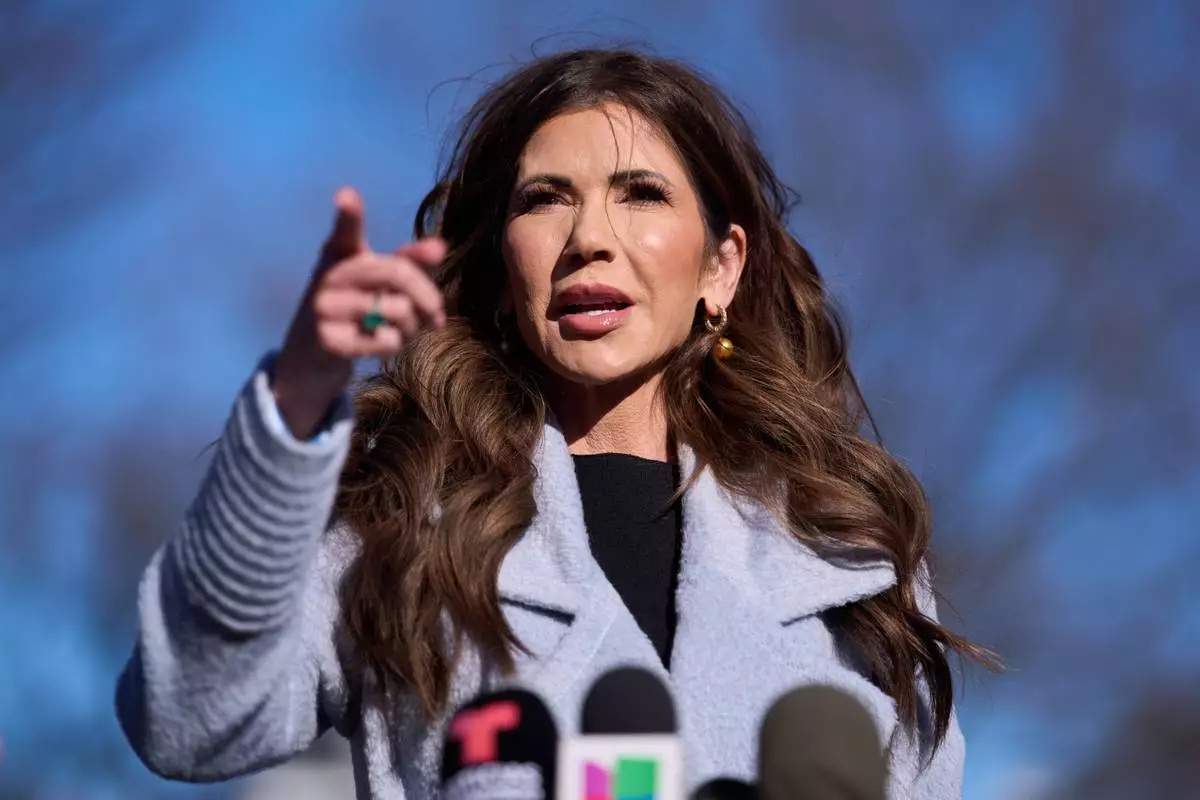
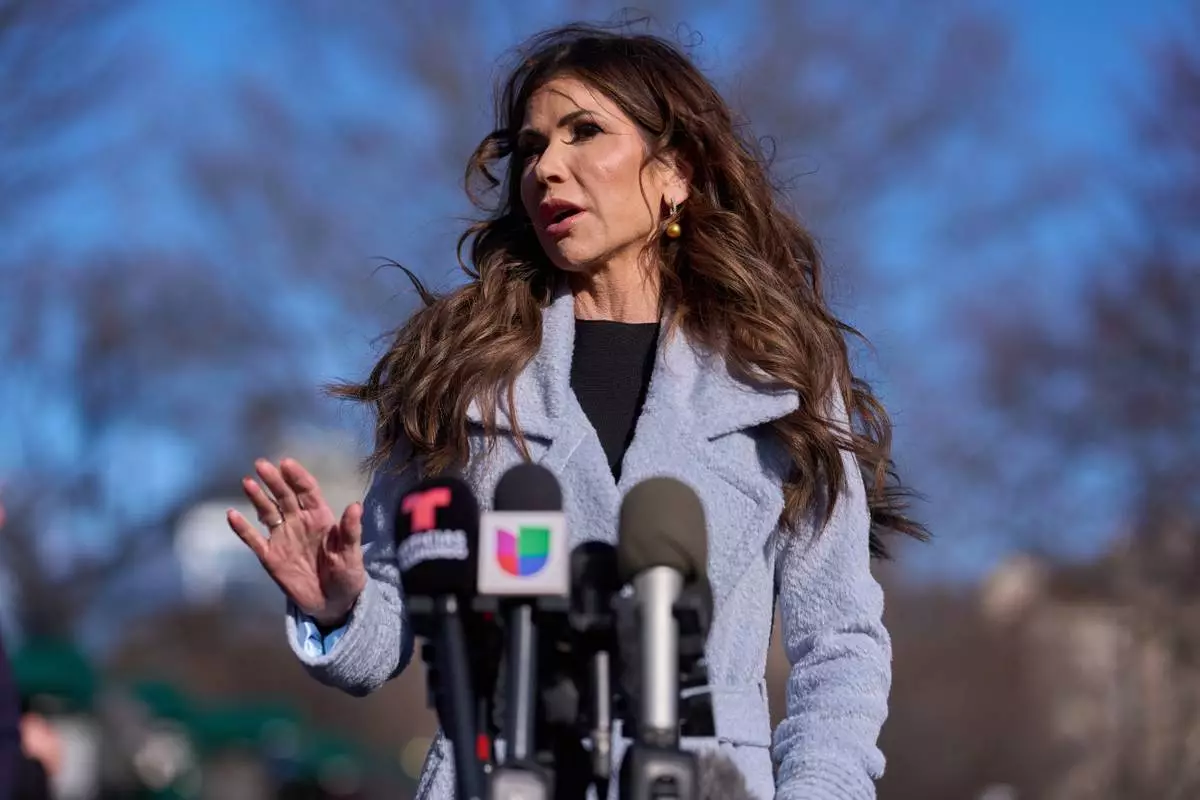
Homeland Security Secretary Kristi Noem speaks with reporters at the White House, Thursday, Jan. 15, 2026, in Washington. (AP Photo/Evan Vucci)

Homeland Security Secretary Kristi Noem speaks with reporters at the White House, Thursday, Jan. 15, 2026, in Washington. (AP Photo/Evan Vucci)

Homeland Security Secretary Kristi Noem speaks with reporters at the White House, Thursday, Jan. 15, 2026, in Washington. (AP Photo/Evan Vucci)

Homeland Security Secretary Kristi Noem speaks with reporters at the White House, Thursday, Jan. 15, 2026, in Washington. (AP Photo/Evan Vucci)

Homeland Security Secretary Kristi Noem speaks with reporters at the White House, Thursday, Jan. 15, 2026, in Washington. (AP Photo/Evan Vucci)

Homeland Security Secretary Kristi Noem speaks with reporters at the White House, Thursday, Jan. 15, 2026, in Washington. (AP Photo/Evan Vucci)

Homeland Security Secretary Kristi Noem speaks with reporters at the White House, Thursday, Jan. 15, 2026, in Washington. (AP Photo/Evan Vucci)

Homeland Security Secretary Kristi Noem speaks with reporters at the White House, Thursday, Jan. 15, 2026, in Washington. (AP Photo/Evan Vucci)

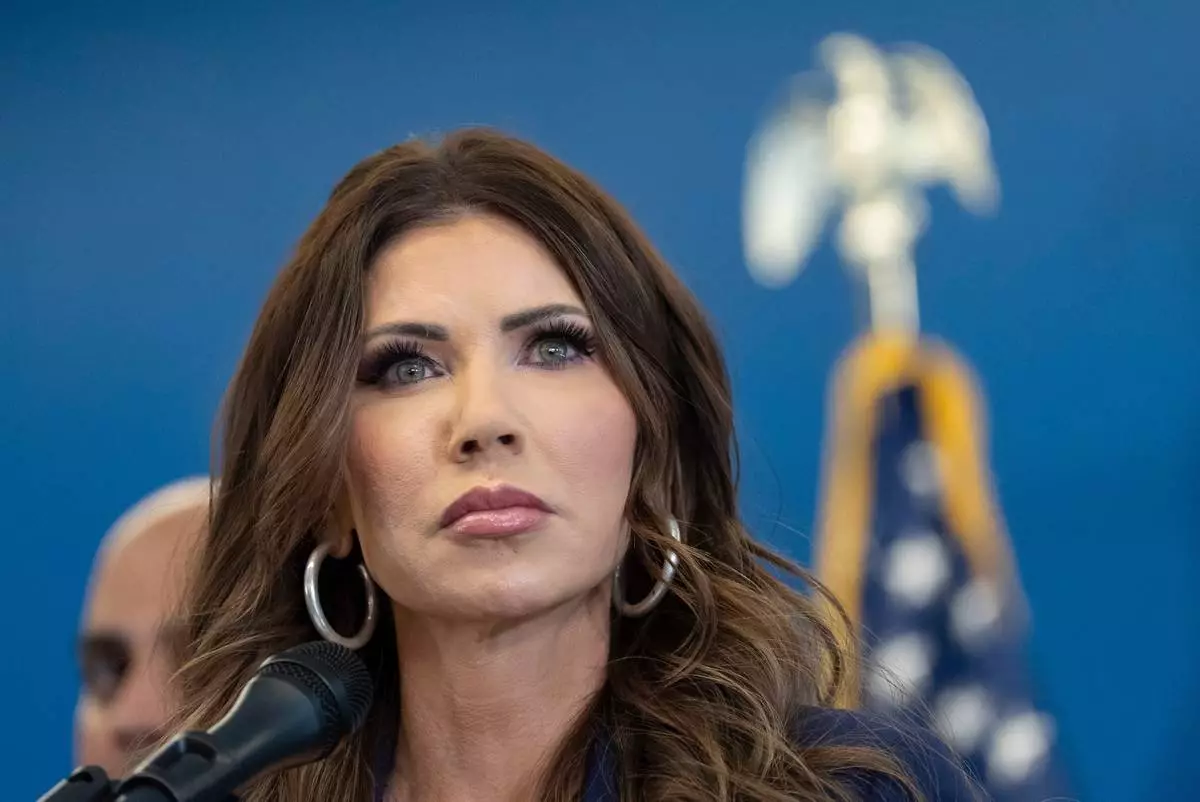
U.S. Homeland Security Secretary Kristi Noem speaks during a press conference, Thursday, Jan. 8, 2026, in New York. (AP Photo/Yuki Iwamura)

U.S. Homeland Security Secretary Kristi Noem speaks during a press conference, Thursday, Jan. 8, 2026, in New York. (AP Photo/Yuki Iwamura)

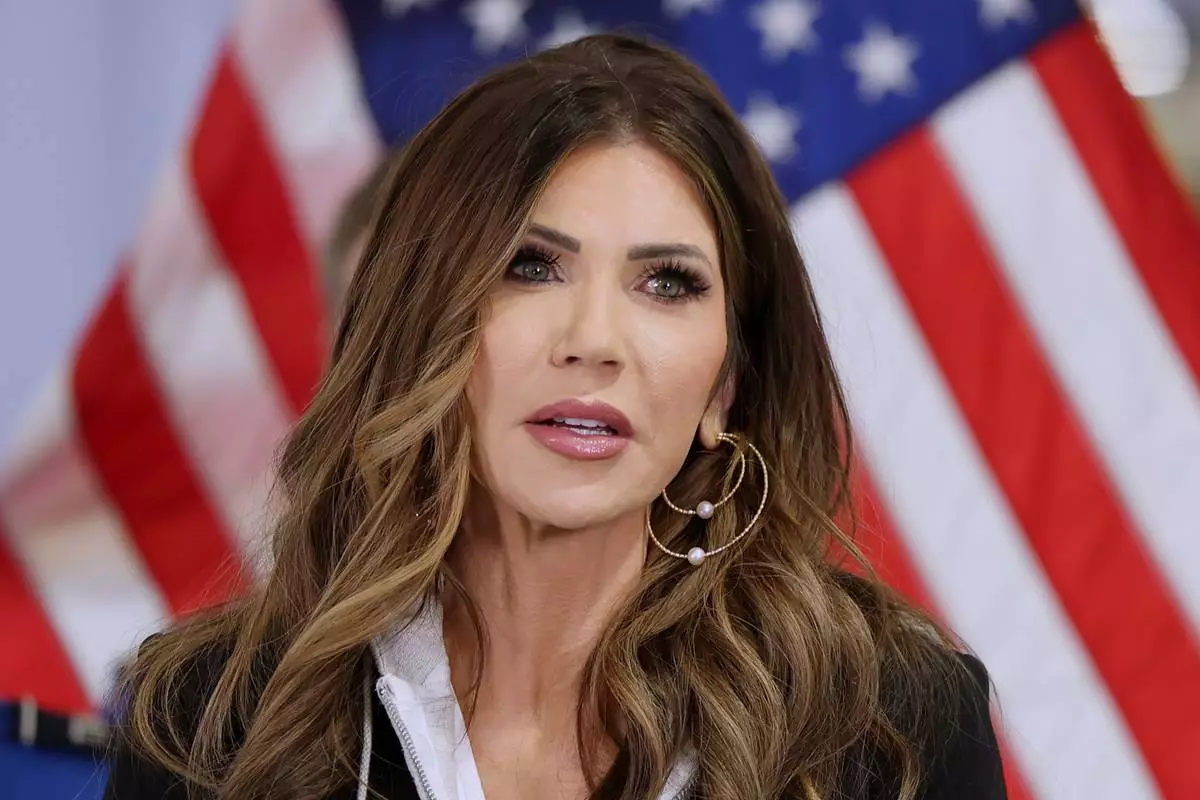
U.S. Homeland Security Secretary Kristi Noem speaks at a news conference at Harry Reid International Airport, Nov. 22, 2025, in Las Vegas. (AP Photo/Ronda Churchill, File)

U.S. Homeland Security Secretary Kristi Noem speaks at a news conference at Harry Reid International Airport, Nov. 22, 2025, in Las Vegas. (AP Photo/Ronda Churchill, File)

Recommended Articles