CHEYENNE, Wyo. (AP) — Gerry Spence, the fringe jacket-wearing trial lawyer from Wyoming known for a string of major court wins starting with a multimillion-dollar judgment against a plutonium processor in the landmark Karen Silkwood case, has died.
Spence, 96, died late Wednesday surrounded by family at his home in Montecito, California, according to a family statement.
“We are proud of his legacy and his contributions to the world, but most importantly, we are proud to be part of the family he built with love. We feel this loss deeply and we will carry him with us always,” read the statement from granddaughter Tara Spence McClatchey.
Spence dedicated his life to fighting for the rights and freedom of ordinary people, colleague Joseph H. Low IV said in a statement.
“No lawyer has done as much to free the people of this country from the slavery of its new corporate masters,” said Low, vice president and chief instructor at the Gerry Spence Method school for trial lawyers.
A polished raconteur with a gravelly voice whose trademark suede fringe jacket advertised his Wyoming roots, Spence was once among the nation's most recognizable trial attorneys.
He achieved fame in 1979 with a $10.5 million verdict against Oklahoma City-based Kerr-McGee on behalf of the estate of Silkwood, a nuclear worker tainted with plutonium who died in a car wreck a week later. Silkwood's father accused the company of negligently handling the plutonium that contaminated his daughter.
An appeals court reversed the verdict and the two sides later agreed to an out-of-court settlement of $1.3 million.
The events became the basis for the 1983 movie “Silkwood” starring Meryl Streep.
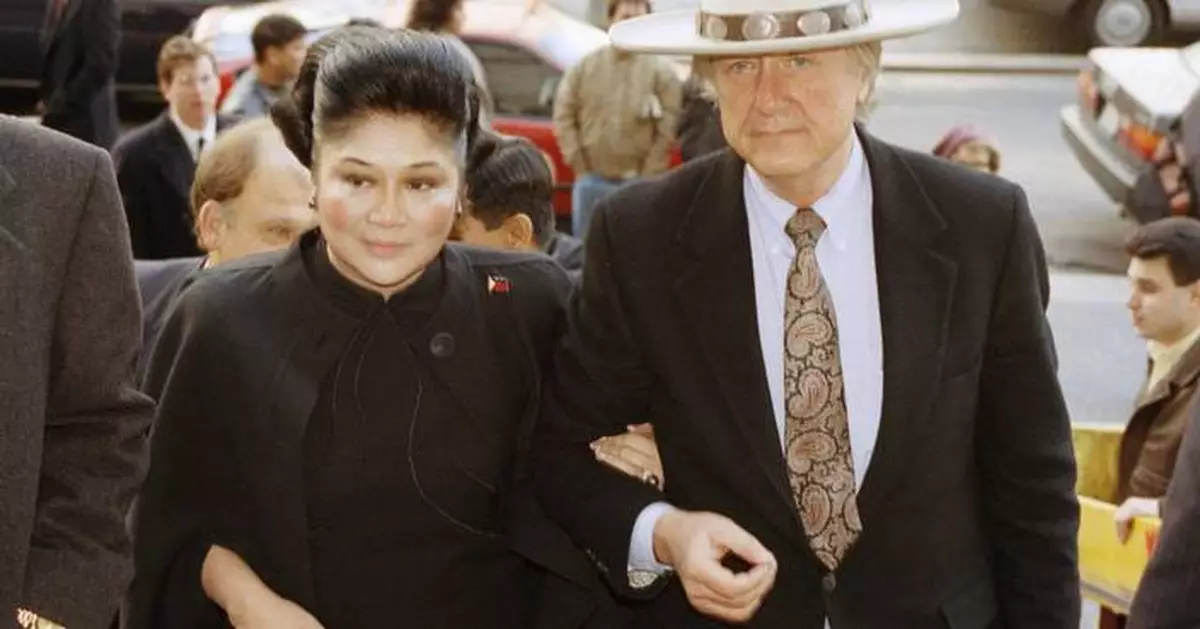
Spence successfully defended former Philippines first lady Imelda Marcos against federal racketeering and fraud charges in 1990.
And he won acquittal for Randy Weaver, charged with murder and other counts for a 1992 shootout with federal agents at Ruby Ridge, Idaho, that killed an FBI agent as well as Weaver’s wife and 14-year-old son.
Spence led the Spence Law Firm in Jackson, Wyoming, and founded the Trial Lawyers College, now called the Gerry Spence Method. The retreat at Thunderhead Ranch in Dubois, Wyoming, helps attorneys hone their courtroom skills.
He wrote more than a dozen books, including the bestselling “How to Argue and Win Every Time.” He made frequent television appearances on legal matters.
Spence and his wife, Imaging, divided their time between Wyoming and California before selling their place in Jackson Hole about four years ago. An artist and poet, Spence continued painting and writing into his final days, according to the family statement.
Gerald Leonard Spence was born Jan. 8, 1929, to Gerald M. and Esther Spence in Laramie. The family scraped by during the Depression by renting out to boarders. Spence’s mother sewed his clothes, often using the hides of elk hunted by his father.
Years later, Imaging Spence sewed his fringe jackets. Spence drew a connection between the two women in his 1996 autobiography, “The Making of a Country Lawyer.”
“Today when people ask why I wear a fringed leather jacket designed and sewn by my own love, Imaging, it is hard for me to explain that the small boy, now a man of serious years, still needs to wear into battle the protective garment of love,” he wrote.
Pivotal in Spence’s young life were the deaths of his little sister and mother. Peggy Spence died of meningitis when he was 4 and his mother took her own life in 1949.
Spence’s father, a chemist, worked a variety of jobs in several states but the family returned to Wyoming. Spence graduated from Laramie High School and after a stint as a sailor, enrolled in the University of Wyoming.
Spence graduated cum laude from the University of Wyoming law school in 1952 but needed two tries to pass the state bar exam.
He began his law career in private practice in Riverton, Wyoming, and was elected Fremont County prosecutor in 1954. In 1962, he ran for the U.S. House of Representatives, losing in the Republican primary.
Spence returned to private practice but said in his memoir he grew discontented with representing insurance companies and “those invisible creatures called corporations.”
Spence received numerous awards and honors, including an honorary doctor of laws degree from the University of Wyoming and a lifetime achievement award from the Consumer Attorneys of California. He was inducted into the American Trial Lawyers Hall of Fame in 2009.
Spence and his first wife, Anna, had four children.
He is survived by his wife of 57 years, LaNelle “Imaging” Spence; brother, Tom Spence; children Kip Spence, Kerry Spence, Kent Spence, Katy Spence, Brents Hawks and Christopher Hawks; 13 grandchildren; and one great-grandchild. He was preceded in death by sisters Peggy and Barbara.
Funeral arrangements were pending.
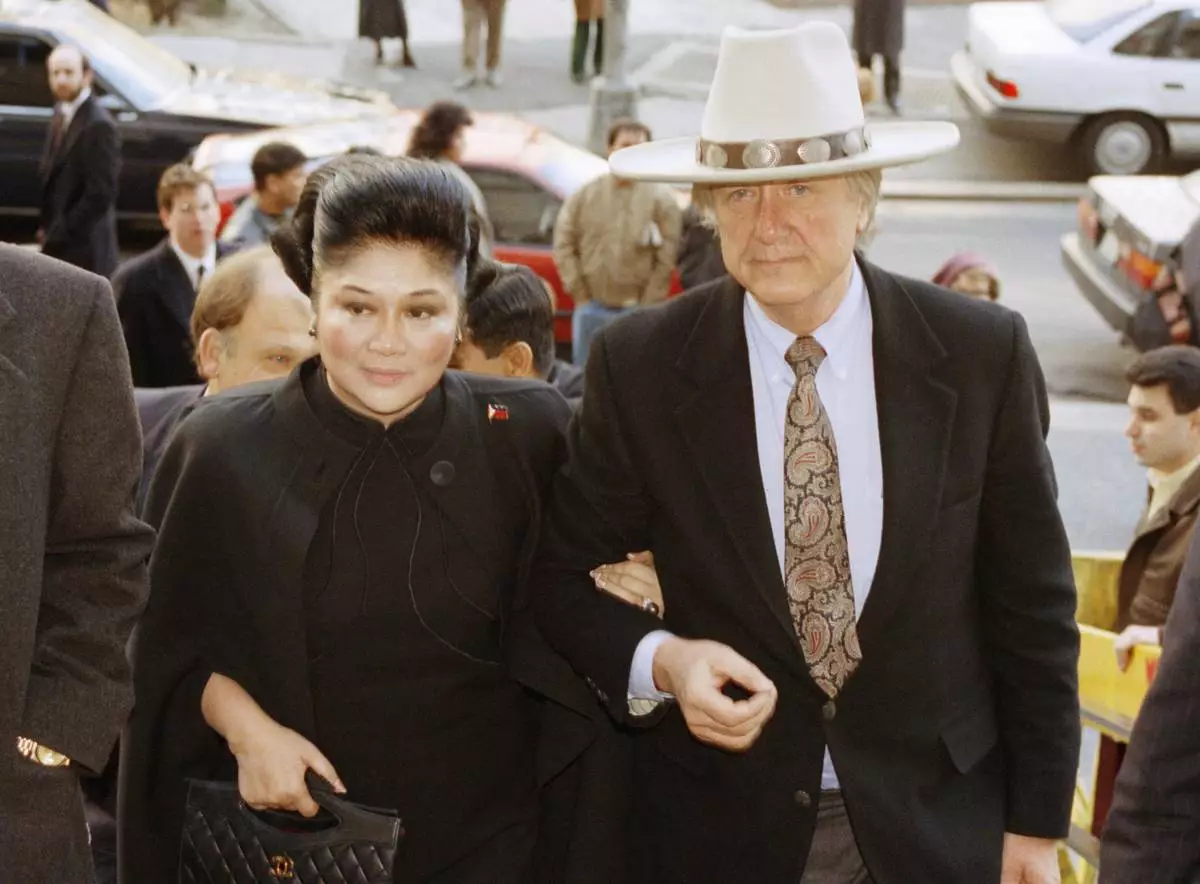
FILE - Former Philippine First Lady Imelda Marcos and her attorney Gerry Spence arrive at U.S. District Court in New York, March 22, 1990. (AP Photo/David Cantor, File)

NEW YORK (AP) — With no clear end in sight, the war with Iran is sending oil prices back to $100 per barrel, and stocks are sinking worldwide on Thursday.
The S&P 500 fell 1.2% and is returning to big swings following a couple days of relative calm. The Dow Jones Industrial Average was down 607 points, or 1.3%, as of 11 a.m. Eastern time, and the Nasdaq composite was 1.7% lower.
The center of action was again the oil market, where the price of a barrel of Brent crude, the international standard, got as high as $101.59 overnight before pulling back to $100.44, a 9.2% rise. Worries are worsening that the war could block the production of oil in the Persian Gulf for a long time and cause a debilitating surge of inflation for the global economy.
Iran's new supreme leader released his first statement Thursday since succeeding his late father, saying his country would keep up attacks on Gulf Arab neighbors and use the effective closure of the Strait of Hormuz as leverage against the United States and Israel. A fifth of the world’s oil typically sails through the strait, and oil producers in the region are cutting production because their crude has nowhere to go.
Countries around the world are trying to make up for that, and the International Energy Agency said Wednesday that its members would release a record amount of oil, 400 million barrels, from their stockpiles built for such emergencies.
But such moves are short-term fixes, and they do not clear the long-term risks. Analysts have said that if the Strait of Hormuz remains closed, oil prices could jump to $150.
To be sure, the U.S. stock market has a history of bouncing back relatively quickly from military conflicts in the Middle East and elsewhere, as long as oil prices don't stay too high for too long. Even with all the up- and- down swings of the last couple weeks, many rocking markets hour to hour, the S&P 500 is still just roughly 4% below its all-time high set in January.
What’s made this jump for oil prices frightening is not only the degree — prices jumped near $120 earlier this week to their highest level since 2022 — but that they’re also occurring during an uncertain time for the economy.
Last month’s report on hiring by U.S. employers was surprisingly weak, which raised worries about a possible worst-case scenario for the economy called “stagflation.” That’s one where economic growth stagnates while inflation remains high. And it's a miserable mix that the Federal Reserve has no good tools to fix.
A more encouraging signal arrived Thursday. A report said that the number of U.S. workers applying for unemployment benefits inched lower last week. That’s a sign that layoffs are potentially remaining low around the country.
Dollar General, meanwhile, reported better profit and revenue for the latest quarter than analysts expected. But the retailer with relatively low prices, whose customers often have the least cushion to absorb higher gasoline prices, gave forecasts for revenue this upcoming year that indicated a slowdown in growth. Its stock fell 5.8%.
Some of the worst losses on Wall Street again hit companies with big fuel bills. United Airlines sank 3.9%, and cruise-ship operator Carnival fell 5.7%.
Worries about the private-credit industry continued to hurt the market. Investors have been rushing to pull their money out of some funds and companies that have lent to businesses whose profits are potentially under threat. Many of the worries are focused on business that could be made obsolete by new AI-powered rivals and may not pay back their loans.
Morgan Stanley fell 4% after its North Haven Private Income fund said it allowed investors to redeem only 5% of its total shares instead of the nearly 11% they had requested. That 5% cap is the advertised limit.
In stock markets abroad, indexes fell across Europe and Asia.
Japan’s Nikkei 225 dropped 1%, and France’s CAC 40 sank 0.9% for two of the world’s bigger moves.
In the bond market, Treasury yields continued to climb because of upward pressure from rising oil prices. The yield on the 10-year Treasury rose to 4.24% from 4.21% late Wednesday and from just 3.97% before the war started.
Higher yields help make all kinds of borrowing more expensive, such as mortgages for potential U.S. homebuyers and bond offerings for companies looking to expand. They also push down on prices for all kinds of investments, from stocks to crypto.
Because of the spike for oil prices, traders have pushed back forecasts for when the Fed could resume its cuts to interest rates. President Donald Trump has been angrily calling for such cuts, which would give the economy and job market a boost but also potentially worsen inflation.
A barrel of benchmark U.S. crude rose 10.1% to $96.12.
AP Business Writers Matt Ott and Elaine Kurtenbach contributed.
An earlier version of the story incorrectly reported the percentage drop for United Airlines’ stock.
Gregg Maloney works on the floor at the New York Stock Exchange in New York, Tuesday, March 10, 2026. (AP Photo/Seth Wenig)
Gas prices are displayed at a station Wednesday, March 11, 2026, in Evanston Ill. (AP Photo/Erin Hooley)
Pedestrians mill about outside the New York Stock Exchange in New York, Friday, March 6, 2026. (AP Photo/Seth Wenig)
The New York Stock Exchange is seen in New York, Friday, March 6, 2026. (AP Photo/Seth Wenig)
Traders work on the floor at the New York Stock Exchange in New York, Tuesday, March 10, 2026. (AP Photo/Seth Wenig)