
TEL AVIV, Israel (AP) — Twenty years ago, Israel withdrew from the Gaza Strip, dismantling 21 Jewish settlements and pulling out its forces. The Friday anniversary of the start of the landmark disengagement comes as Israel is mired in a nearly two-year war with Hamas that has devastated the Palestinian territory and means it is likely to keep troops there long into the future.
Israel’s disengagement, which also included removing four settlements in the Israeli-occupied West Bank, was then-Prime Minister Ariel Sharon’s controversial attempt to jump-start negotiations with the Palestinians. But it bitterly divided Israeli society and led to the empowerment of Hamas, with implications that continue to reverberate today.
Click to Gallery

FILE - Palestinian police officers in new uniforms ride in the back of a jeep as they wait to enter the former Jewish settlement of Dugit, northern Gaza Strip, Sept. 11, 2005. (AP Photo/Kevin Frayer)
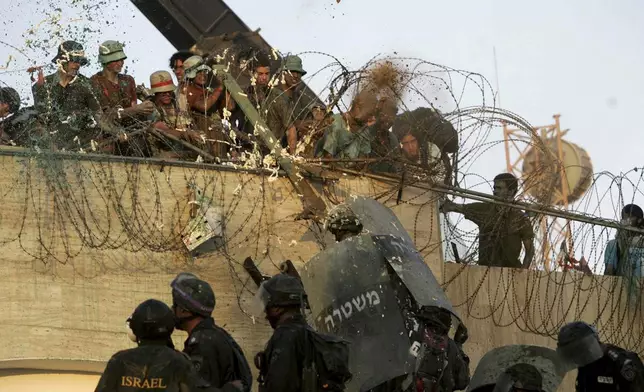
FILE - Israeli police officers storm the rooftop of a synagogue, battling dozens of protesters who threw acid, sand and buckets of green liquid and tried to hit officers with sticks, in the Jewish settlement of Kfar Darom, in the southern Gaza Strip, Aug. 18, 2005. (AP Photo/Lefteris Pitarakis)
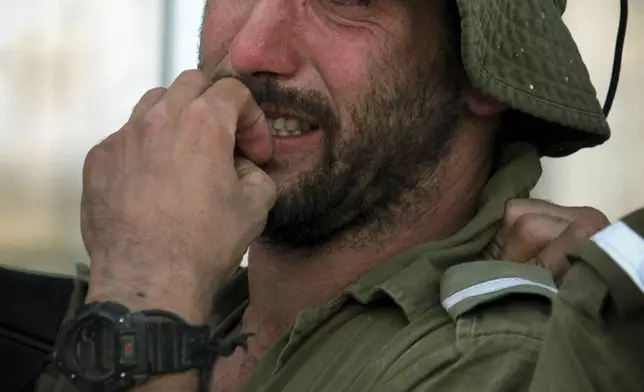
FILE - An Israeli army soldier, part of the disengagement forces, weeps as fellow soldiers and resident dismantle the synagogue of the Jewish settlement of Nissanit, in the northern Gaza Strip, Aug. 15, 2005. (AP Photo/Tsafrir Abayov)
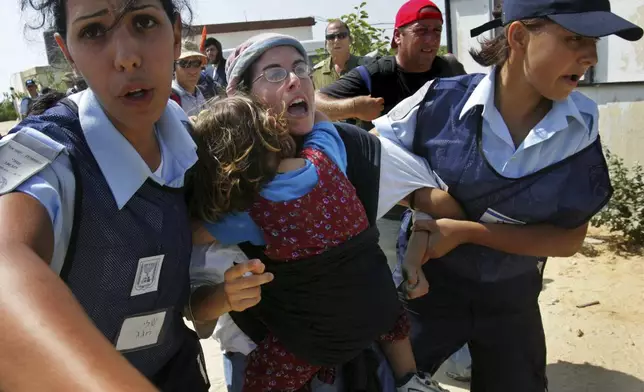
FILE - Israeli security forces carry a resisting settler, with her daughter clinging on, to a waiting bus as settlers are evacuated, Aug. 17, 2005 from the Kerem Atzmona settlement in the Gaza Strip. (AP Photo/David Silverman, Pool, File)

FILE - A Jewish settler prepares to throw a light bulb filled with orange paint at Israeli police, as they arrive in the Jewish settlement of Gadid, Aug. 19, 2005. (AP Photo/David Guttenfelder, File)
The emotional images of Jews being ripped from their homes by Israeli soldiers galvanized Israel’s far-right and settler movements. The anger helped them organize and increase their political influence, accounting in part for the rise of hard-line politicians like National Security Minister Itamar Ben-Gvir and Finance Minister Bezalel Smotrich.
On Thursday, Smotrich boasted of a settlement expansion plan east of Jerusalem that will “bury” the idea of a future Palestinian state.
For Palestinians, even if they welcomed the disengagement, it didn’t end Israel’s control over their lives.
Soon after, Hamas won elections in 2006, then drove out the Palestinian Authority in a violent takeover. Israel and Egypt imposed a closure on the territory, controlling entry and exit of goods and people. Though its intensity varied over the years, the closure helped impoverish the population and entrenched a painful separation from Palestinians in the West Bank.
Israel captured the West Bank, east Jerusalem and the Gaza Strip in the 1967 Mideast war. The Palestinians claim all three territories for a future independent state.
Israel couldn’t justify the military or economic cost of maintaining the heavily fortified settlements in Gaza, explained Kobi Michael, a senior researcher at the Misgav Institute and the Institute for National Security Studies think tanks. There were around 8,000 Israeli settlers and 1.5 million Palestinians in Gaza in 2005.
“There was no chance for these settlements to exist or flourish or become meaningful enough to be a strategic anchor,” he said. By contrast, there are more than 500,000 Israeli settlers in the West Bank, most living in developed settlement blocs that have generally received more support from Israeli society, Michael said. Most of the world considers the settlements illegal under international law.
Because Israel withdrew unilaterally, without any coordination with the Palestinian Authority, it enhanced Hamas' stature among Palestinians in Gaza.
“This contributed to Hamas’ win in the elections in 2006, because they leveraged it and introduced it as a very significant achievement,” Michael said. “They saw it as an achievement of the resistance and a justification for the continuation of the armed resistance.”
Footage of the violence between Israeli settlers and Israeli soldiers also created an “open wound” in Israeli society, Michael said.
“I don’t think any government will be able to do something like that in the future,” he said. That limits any flexibility over settlements in the West Bank if negotiations over a two-state solution with the Palestinians ever resume.
“Disengagement will never happen again, this is a price we’re paying as a society, and a price we’re paying politically,” he said.
Anita Tucker, now 79, was part of the first nine Jewish families that moved to the Gaza Strip in 1976. She and her husband and their three kids lived in an Israeli army outpost near what is today Deir al-Balah, while the settlement of Netzer Hazoni was constructed.
Originally from Brooklyn, she started a farm growing vegetables in the harsh, tall sand dunes. At first relations were good with their Palestinian neighbors, she said, and they worked hard to build their home and a “beautiful community.” She had two more children, and three chose to stay and raise their families in Netzer Hazoni.
She can still recall the moment, 20 years ago, when 1,000 Israeli soldiers arrived at the gate to the settlement to remove the approximately 400 residents. Some of her neighbors lit their houses on fire in protest.
“Obviously it was a mistake to leave. The lives of the Arabs became much worse, and the lives of the Jews became much, much worse, with rockets and Oct. 7,” she said, referring to the decades of rockets fired from Gaza into Israel and the date in 2023 of the Hamas attack that launched the ongoing war.
Despite the passage of time, her family still is “yearning and longing for their home,” she said. Several of her 10 grandchildren, including some who spent their early childhood in the Gaza settlements, have served in the current war and were near her old house.
“It’s hard to believe, because of all the terrible things that happened that we predicted, but we’re willing to build there again,” said Tucker.
After Israel’s withdrawal 20 years ago, many Palestinians described Gaza as an “open-air prison.” They had control on the inside – under a Hamas government that some supported but some saw as heavy-handed and brutal. But ultimately, Israel had a grip around the territory.
Many Palestinians believe Sharon carried out the withdrawal so Israel could focus on cementing its control in the West Bank through settlement building.
Now some believe more direct Israeli occupation is returning to Gaza. After 22 months of war, Israeli troops control more than 75% of Gaza, and Prime Minister Benjamin Netanyahu speaks of maintaining security control long term after the war.
“Over the past 20 years we were relieved of occupation, shelling and seeing the Jews. Now we hear that they want to occupy here again after two years of war," said Sabah Abu Audeh, a 67-year-old grandmother who was displaced to Gaza's Shati refugee camp.
Aouni Timras, 55, from the Nuseirat refugee camp said he felt optimistic when Israel pulled out, thinking things would get better.
“We were hopeful but now the occupation returned for the second time,” Timras said. "What can people do? This is what we live through. We hope that there will be a truce so that people can stand up again.”
Amjad Shawa, the director of the Palestinian NGO Network, said he doesn’t believe Netanyahu will repeat Sharon’s full withdrawal. Instead, he expects the military to continue controlling large swaths of Gaza through “buffer zones.”
The aim, he said, is to keep Gaza “unlivable in order to change the demographics,” referring to Netanyahu’s plans to encourage Palestinians to leave the territory.
Israel is “is reoccupying the Gaza Strip” to prevent a Palestinian state, said Mostafa Ibrahim, an author based in Gaza City whose home was destroyed in the current war.
Israeli former Maj. Gen. Dan Harel, who was head of the country's Southern Command during the disengagement, remembers the toll of protecting a few thousand settlers.
There were an average of 10 attacks per day against Israeli settlers and soldiers, including rockets, roadside bombs big enough to destroy a tank, tunnels to attack Israeli soldiers and military positions, and frequent gunfire.
“Bringing a school bus of kids from one place to another required a military escort,” said Harel. “There wasn’t a future. People paint it as how wonderful it was there, but it wasn’t wonderful.”
Harel says the decision to evacuate Israeli settlements from the Gaza Strip was the right one, but that Israel missed crucial opportunities.
Most egregious, he said, was a unilateral withdrawal without obtaining any concessions from the Palestinians in Gaza or the Palestinian Authority.
He also sharply criticized Israel’s policy of containment toward Hamas after disengagement. There were short but destructive conflicts over the years between the two sides, but otherwise the policy gave Hamas “an opportunity to do whatever they wanted.”
“We had such a blind spot with Hamas, we didn’t see them morph from a terror organization into an organized military, with battalions and commanders and infrastructure,” he said.
The Oct. 7 attack, Israel’s largest military intelligence failure to date, was not a result of the disengagement, said Harel. “The main issue is what we did in the 18 years in between.”
Associated Press writers Fatma Khaled contributed from Cairo and Wafaa Shurafa from Deir al Balah, Gaza Strip.
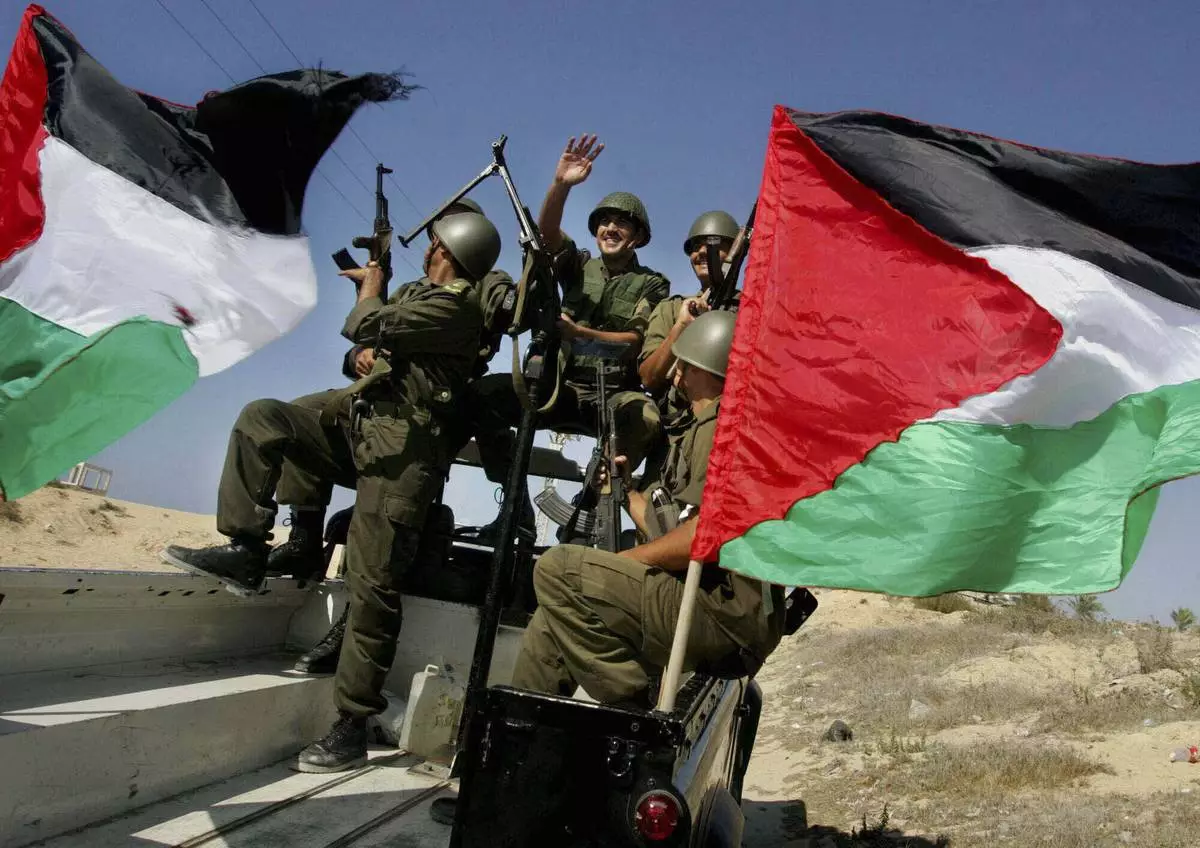
FILE - Palestinian police officers in new uniforms ride in the back of a jeep as they wait to enter the former Jewish settlement of Dugit, northern Gaza Strip, Sept. 11, 2005. (AP Photo/Kevin Frayer)
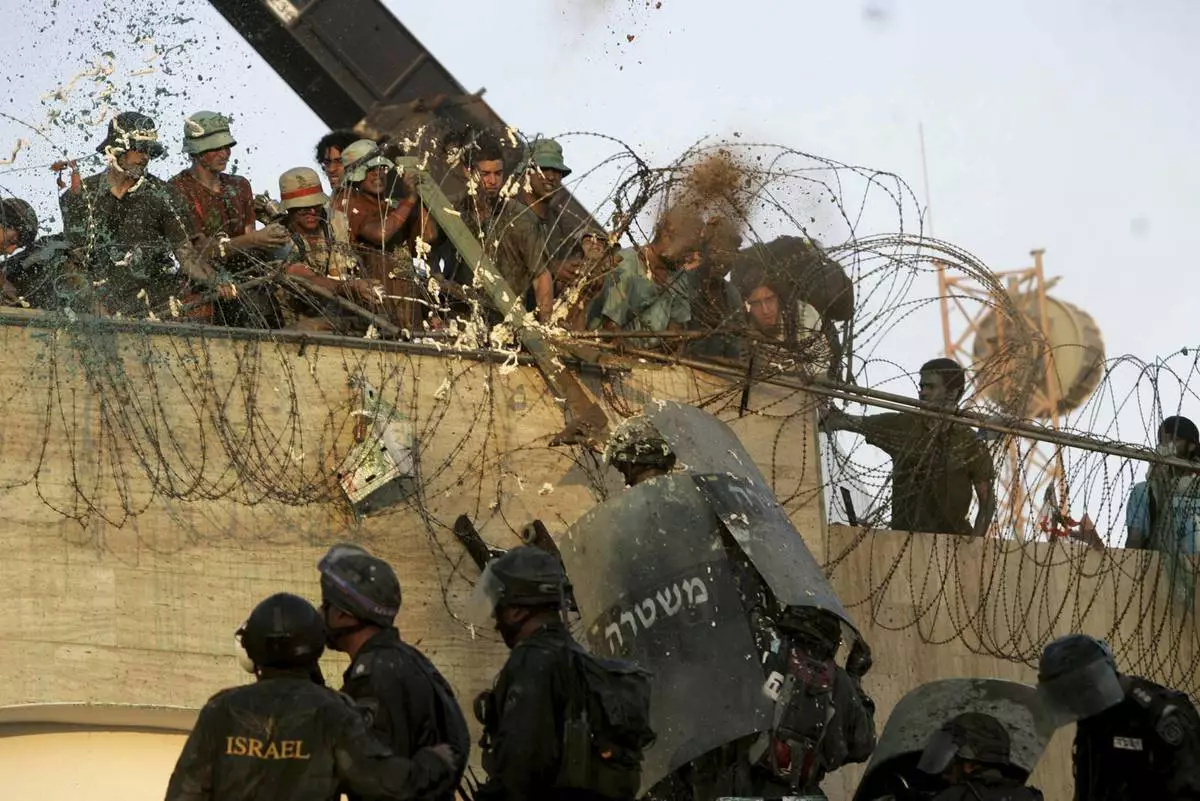
FILE - Israeli police officers storm the rooftop of a synagogue, battling dozens of protesters who threw acid, sand and buckets of green liquid and tried to hit officers with sticks, in the Jewish settlement of Kfar Darom, in the southern Gaza Strip, Aug. 18, 2005. (AP Photo/Lefteris Pitarakis)

FILE - An Israeli army soldier, part of the disengagement forces, weeps as fellow soldiers and resident dismantle the synagogue of the Jewish settlement of Nissanit, in the northern Gaza Strip, Aug. 15, 2005. (AP Photo/Tsafrir Abayov)
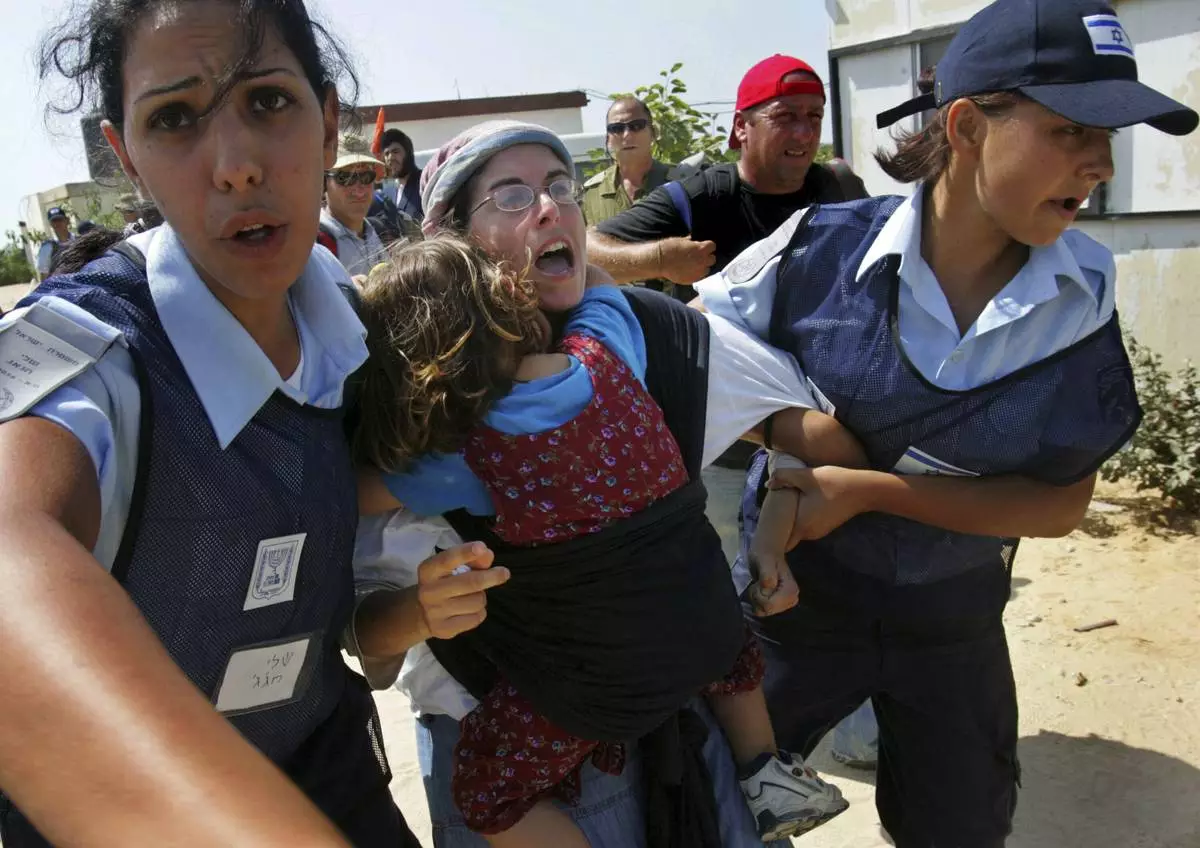
FILE - Israeli security forces carry a resisting settler, with her daughter clinging on, to a waiting bus as settlers are evacuated, Aug. 17, 2005 from the Kerem Atzmona settlement in the Gaza Strip. (AP Photo/David Silverman, Pool, File)
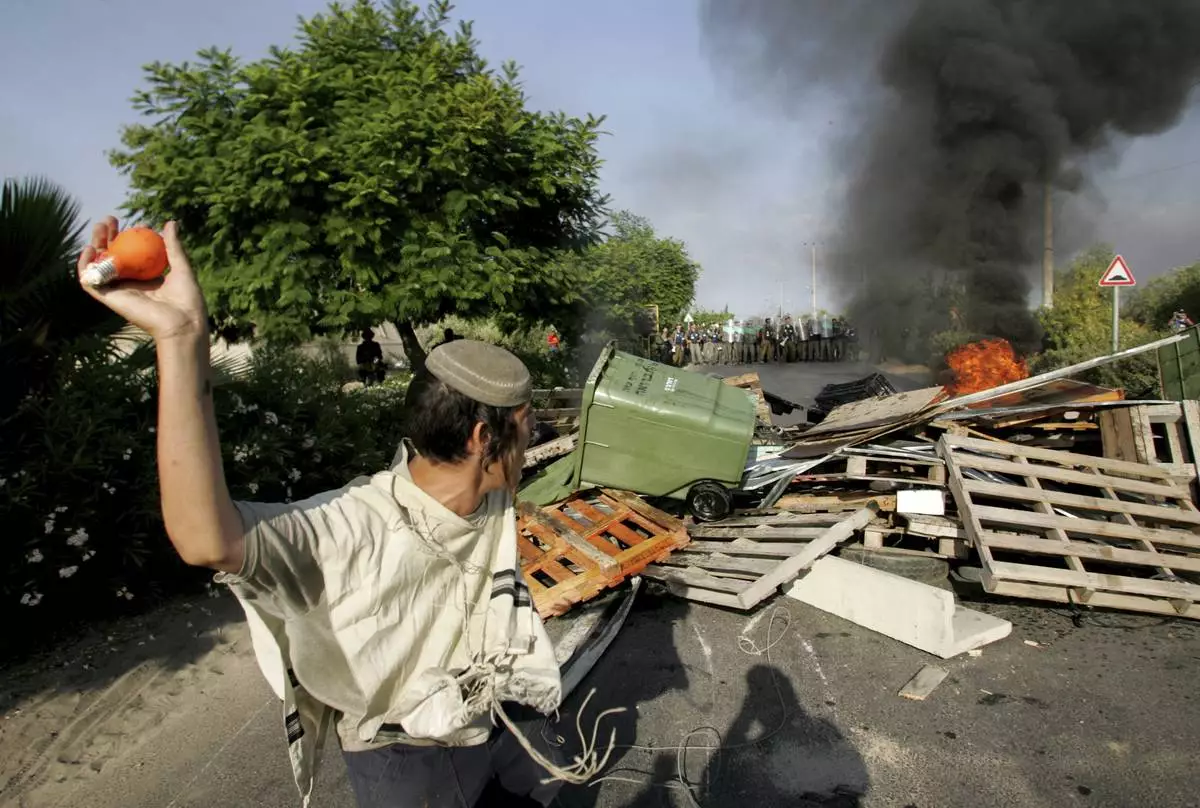
FILE - A Jewish settler prepares to throw a light bulb filled with orange paint at Israeli police, as they arrive in the Jewish settlement of Gadid, Aug. 19, 2005. (AP Photo/David Guttenfelder, File)