Skip to Content Facebook Feature Image

Dengue Fever Cases Rise in Hong Kong Amid Increased Travel and Mosquito Risk

HK

Dengue Fever Cases Rise in Hong Kong Amid Increased Travel and Mosquito Risk
HK

HK

Dengue Fever Cases Rise in Hong Kong Amid Increased Travel and Mosquito Risk

2025-08-15 16:30 Last Updated At:16:48

Update on dengue fever

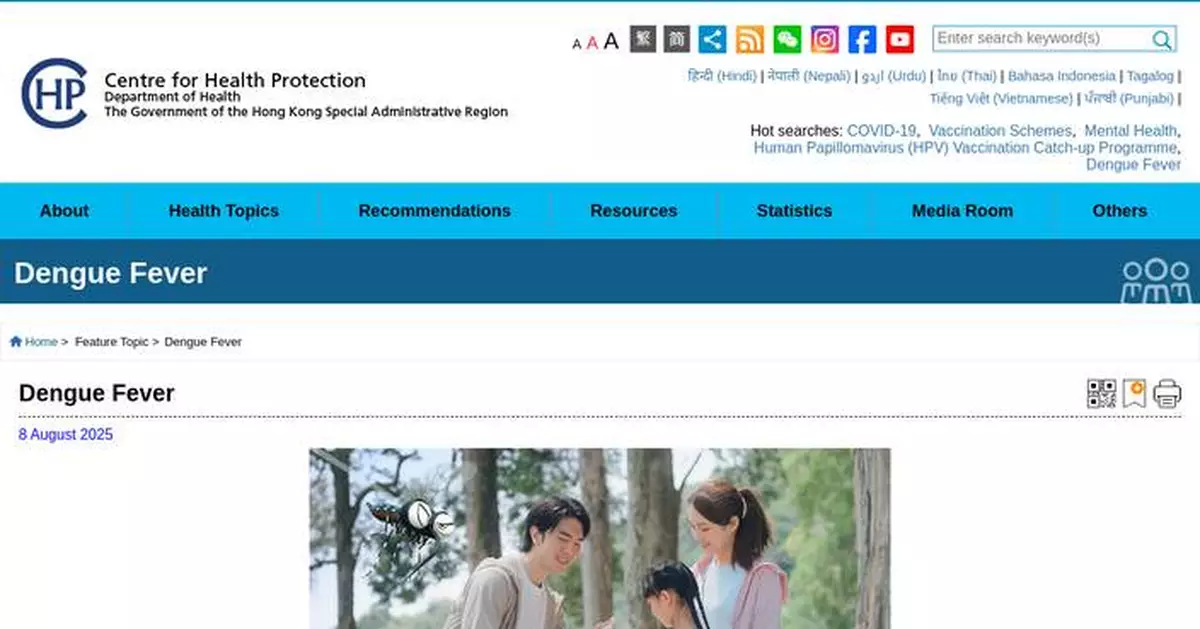
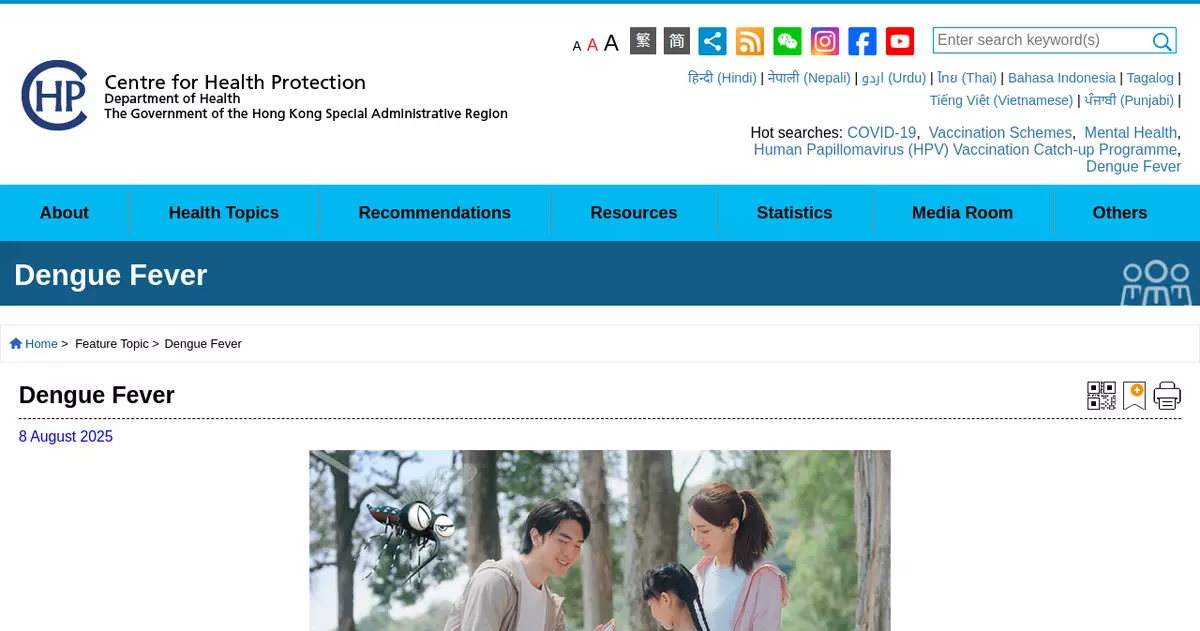
The Centre for Health Protection (CHP) of the Department of Health today (August 15) reported the latest number of dengue fever (DF) cases. The Controller of the CHP, Dr Edwin Tsui,reminded the public that due to the increase in temperature and rainfall in summer, mosquito infestation might be aggravated in Hong Kong. In addition, members of the public will travel to DF-endemic regions more frequently during the summer holiday. Therefore, the risk of DF in Hong Kong is increasing.

From August 8 to yesterday (August 14), the CHP recorded two imported DF cases. The patients had travelled to Cambodia and India during the incubation periods respectively.

As of yesterday, 41 imported DF cases have been recorded so far this year. A total of 161 cases of DF were recorded in 2024, including 156 imported and five local cases.

According to the World Health Organization (WHO), the global incidence of DF has markedly increased over the past two decades, posing a substantial public health challenge. In 2023, over 6.5 million cases and more than 7 300 dengue-related deaths were reported in over 80 countries/territories. In 2024, the WHO recorded over 14 million cases, which was a record number.

DF is prevalent in many neighbouring tourist destinations. Indonesia, Malaysia, Thailand and Vietnam have each recorded over 20 000 cases so far this year. Singapore has also recorded over 3 000 cases.Meanwhile, according to the Guangdong Provincial Center for Disease Control and Prevention, Guangdong Province has recorded a total of 586 locally infected cases so far this year. A total of 121 cases were recorded in the week between August 4 and 10, with the highest number of cases recorded in Guangzhou, Foshan, Chaozhou and Shenzhen.

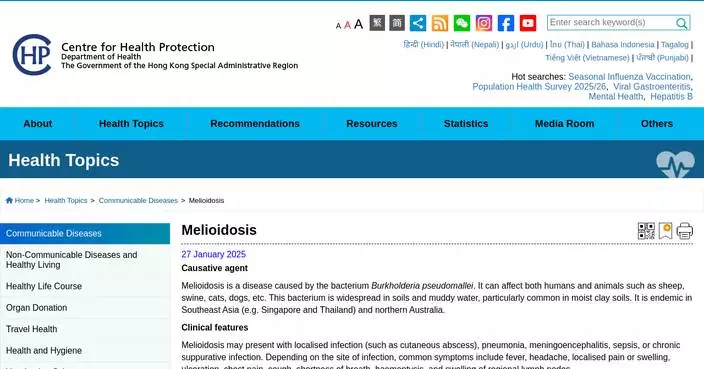
Detailed information on the latest DF situation in Hong Kong, as well as neighbouring and overseas countries and areas, has been uploaded to the CHPwebsite.

"There have been frequent imported cases of DF in Hong Kong, as well as occasional sporadic local cases every year. The presence of Aedes albopictus in Hong Kong makes our population vulnerable. Mosquitoes breed quickly during the hot and rainy summer months. There are risks of DF outbreaks if mosquito control is inadequate. Hence, mosquito control is of paramount importance. Members of the public are advised to maintain strict environmental hygiene, mosquito control and personal protective measures both locally and when travelling outside of Hong Kong. The public is reminded that eliminating mosquito breeding sites and avoiding mosquito bites are key to preventing DF. Those returning from areas affected by DF should apply insect repellent for 14 days upon arrival in Hong Kong. If feeling unwell, they should seek medical advice promptly and provide their travel details to a doctor," Dr Tsui added.

Members of the public are also reminded to take heed of the following advice on mosquito control:
  • Thoroughly check all gully traps, roof gutters, surface channels and drains to prevent blockage;
  • Scrub and clean drains and surface channels with an alkaline detergent compound at least once a week to remove any deposited mosquito eggs;
  • Properly dispose of refuse, such as soft drink cans, empty bottles and boxes, in covered litter containers;
  • Completely change the water of flowers and plants at least once a week. The use of saucers should be avoided if possible;
  • Level irregular ground surfaces before the rainy season;
  • Avoid staying in shrubby areas; and
  • Take personal protective measures such as wearing light-coloured long-sleeved clothes and trousers, and apply insect repellent containing DEET to clothing or uncovered areas of the body when doing outdoor activities.
  • ​DEET-containing insect repellents are effective and the public should take heed of the tips below:

  • Read the label instructions carefully first;
  • Apply right before entering an area with risk of mosquito bites;
  • Apply on exposed skin and clothing;
  • Use DEET of up to 30 per cent for pregnant women and up to 10 per cent for children (For children who travel to countries or areas where mosquito-borne diseases are endemic or epidemic and where exposure is likely, those aged 2 months or above can use DEET-containing insect repellents with a DEET concentration of up to 30 per cent);
  • Apply sunscreen first, then insect repellent;
  • Reapply only when needed and follow the instructions; and
  • In addition to DEET, there are other insect repellents available on the market containing different active ingredients, such as IR3535, picaridin etc. When using any insect repellent, the public should follow the usage instructions and precautions on the product label.
  • The public should call 1823 in case of mosquito problems and may visit the following pages for more information: the DF page of theCHPand theTravel Health Service, the latestTravel Health News,tips for using insect repellents, and the CHPFacebook PageandYouTube Channel.

    Source: AI-found images
    Source: AI-found images

    Scam alert related to banks

    The following is issued on behalf of the Hong Kong Monetary Authority:

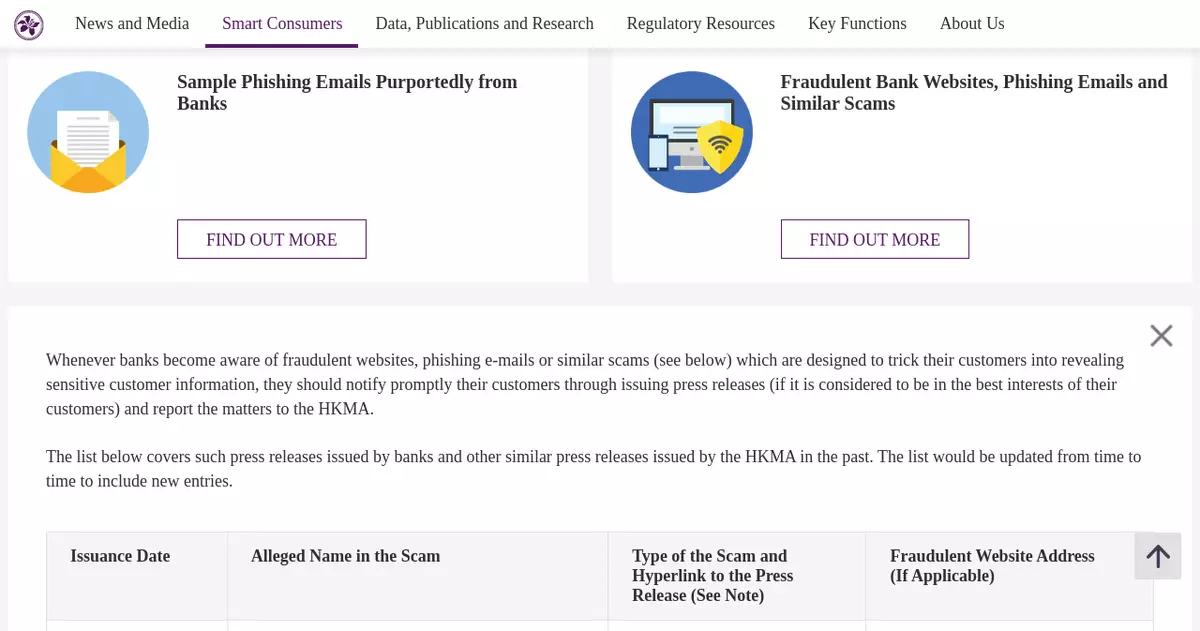
    The Hong Kong Monetary Authority (HKMA) wishes to alert members of the public to the press releases issued by the banks listed below relating to fraudulent websites, internet banking login screens, phishing emails or other scams, which have been reported to the HKMA. Hyperlinks to the press releases are available on theHKMA website.

    Bank

    Type of scam

    The Bank of East Asia, Limited

    Fraudulent websites, internet banking login screens and phishing email

    Shanghai Commercial Bank Limited

    Fraudulent website and internet banking login screen

    OCBC Bank (Hong Kong) Limited

    Fraudulent website and internet banking login screen

    Chong Hing Bank Limited

    Fraudulent website and internet banking login screen

    Chiyu Banking Corporation Limited

    Fraudulent websites and internet banking login screens

    The HKMA wishes to remind the public that banks will not send SMS or emails with embedded hyperlinks which direct them to the banks' websites to carry out transactions. They will not ask customers for sensitive information, such as login passwords or one-time password, by phone, email or SMS (including via embedded hyperlinks).

    Anyone who has provided his or her personal information, or who has conducted any financial transactions, through or in response to the scams concerned, should contact the relevant bank with the information provided in the corresponding press release, and report the matter to the Crime Wing Information Centre of the Hong Kong Police Force at 2860 5012.

    Source: AI-found images

    Source: AI-found images

    Recommended Articles