WASHINGTON (AP) — As President Donald Trump attempts to reshape college admissions, he's promising a new era of fairness, with an emphasis on merit and test scores and a blind eye toward diversity.
Yet the Republican president's critics — and some allies — are questioning his silence on admissions policies that give applicants a boost because of their wealth or family ties. While he has pressed colleges to eliminate any possible consideration of a student's race, he has made no mention of legacy admissions, an edge given to the children of alumni, or similar preferences for the relatives of donors.
Trump often rails against systems he describes as “rigged,” but he has overlooked a glaring instance in higher education, said Richard Kahlenberg, a researcher at the Progressive Policy Institute think tank who has written about admissions.
“It’s hard to think of a more flagrant way in which the system is rigged than legacy preferences,” Kahlenberg said. “Rarely is a system of hereditary privilege so openly practiced without any sense of shame.”
In recent weeks, Trump has taken several actions to scrub any vestiges of race from admissions decisions, suggesting that some schools are ignoring a 2023 Supreme Court decision striking down affirmative action. His administration negotiated settlements with Brown and Columbia universities that included provisions to share admissions data. Last week, Trump issued a call for colleges nationwide to submit data to prove they do not consider race in admissions.
Some are urging Trump to go further.
Sen. Todd Young, R-Ind., applauded the settlement with Brown requiring the university to turn a blind eye toward race — even in application essays. But “restoring meritocracy warrants more,” said Young, who cosponsored legislation in 2023 aiming to end legacy admissions.
“Federally accredited institutions should eliminate ALL preferences grounded in arbitrary circumstances of ancestry that students have no control over, such as legacy status,” Young said on social media.
Sometimes called “affirmative action for the rich,” the practice of legacy admissions remains widespread among elite colleges even as it faces mounting bipartisan opposition. Virginia’s Republican governor signed a bill last year barring legacy admissions at public institutions, following similar measures in Colorado, California and elsewhere. Some Republicans in Congress have worked with Democrats on proposals to end it nationwide.
Roughly 500 universities consider legacy status when evaluating applicants, including more than half of the nation's 100 most selective U.S. schools, according to 2023 disclosures to the federal government. A few have abandoned the policy, but it remains in place at all eight Ivy League schools.
Stanford University said in July it will continue considering legacy status, even after a California law barred it at institutions that receive state financial aid. Stanford opted to withdraw from the state’s student financial aid program rather than end the practice. The university said it will replace the funding with internal money — even as it begins layoffs to close a $140 million budget deficit.
Stanford officials declined to comment. Last year, as part of a state transparency law, the school reported that about 14% of its new students were relatives of alumni or donors.
The executive action signed by Trump last week requires universities to turn over more information about students who apply to and are accepted to their campuses. Taxpayers “deserve confidence in the fairness and integrity” of decisions, his memorandum said, adding that more information is needed to ensure colleges are heeding the Supreme Court’s decision.
A week earlier, the Justice Department issued a memo clarifying what it considers illegal discrimination in admissions. It takes issue not only with overt racial considerations but also “proxies” for race, including “geographic targeting” or personal essays asking about obstacles applicants have overcome.
Similar language requiring “merit-based” admissions policies was included in the government’s resolutions with Brown and Columbia universities. None of the actions made any mention of legacy admissions.
Trump’s silence caught the attention of the nonprofit Lawyers for Civil Rights, which has an open complaint with the Education Department alleging that Harvard University’s use of donor and alumni preferences amounts to illegal racial discrimination. The group’s 2023 complaint says the practice overwhelmingly benefits white students.
If the Trump administration wants to make admissions a meritocracy, it should start by ending legacy preferences, said Oren Sellstrom, litigation director for the group.
“These deeply unmeritocratic preferences simply reward students based on who their parents are. It’s hard to imagine anything more unfair or contrary to basic merit principles,” he said.
Colleges defend the practice by saying it builds community and encourages families to become donors. Some backers say it increasingly helps nonwhite students as campuses become more diverse.
Then-President Joe Biden, a Democrat, urged colleges to rethink legacy preferences in the wake of the Supreme Court decision, saying it expanded “privilege instead of opportunity.” Some feared it would drive up white enrollment as affirmative action ended.
Georgetown University reviewed the policy but kept it in place this year after concluding the pool of legacy applicants had a similar makeup to the wider admissions pool.
An AP-NORC poll in 2023 found that most Americans have a dim view of legacy and donor preferences, with few saying either should play a strong role in decisions.
Universities are required to tell the federal government whether they consider legacy status, but they don’t have to divulge how far it tips the scale or how many legacy students they admit. Among the 20 most selective universities that say they employ the practice, none would tell The Associated Press what percentage of their incoming class has a family connection to alumni or donors.
Trump's blitz to root out racial preferences has hinged on the argument that it undermines merit. New scrutiny is needed to ensure colleges are following the Supreme Court's order and “recruiting and training capable future doctors, engineers, scientists” and other workers, he said in his executive action.
That argument sends the message that minority students are “intellectually suspect until proven otherwise,” said Justin Driver, a Yale law professor with a forthcoming book on affirmative action. He worries Trump’s latest actions will intimidate colleges into limiting minority enrollment to avoid raising the suspicion of the government.
“I believe that the United States confronts a lot of problems today,” Driver said. “Too many Black students on first-rate college campuses is not among them.”
The Associated Press’ education coverage receives financial support from multiple private foundations. The AP is solely responsible for all content. Find the AP’s standards for working with philanthropies, a list of supporters and funded coverage areas at AP.org.
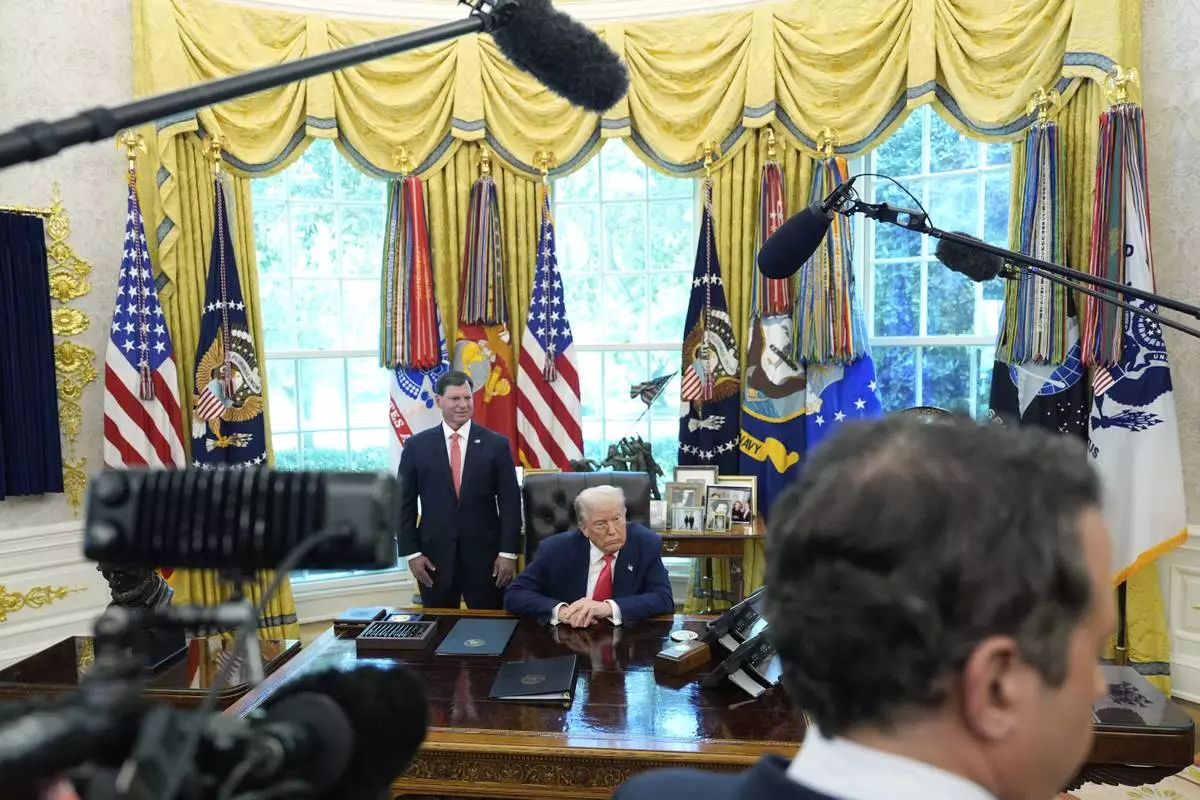
President Donald Trump, center, and Social Security Commissioner Frank Bisignano, left, attend an event in the Oval Office to mark the 90th anniversary of the Social Security Act, Thursday, Aug. 14, 2025, in Washington. (AP Photo/Alex Brandon)
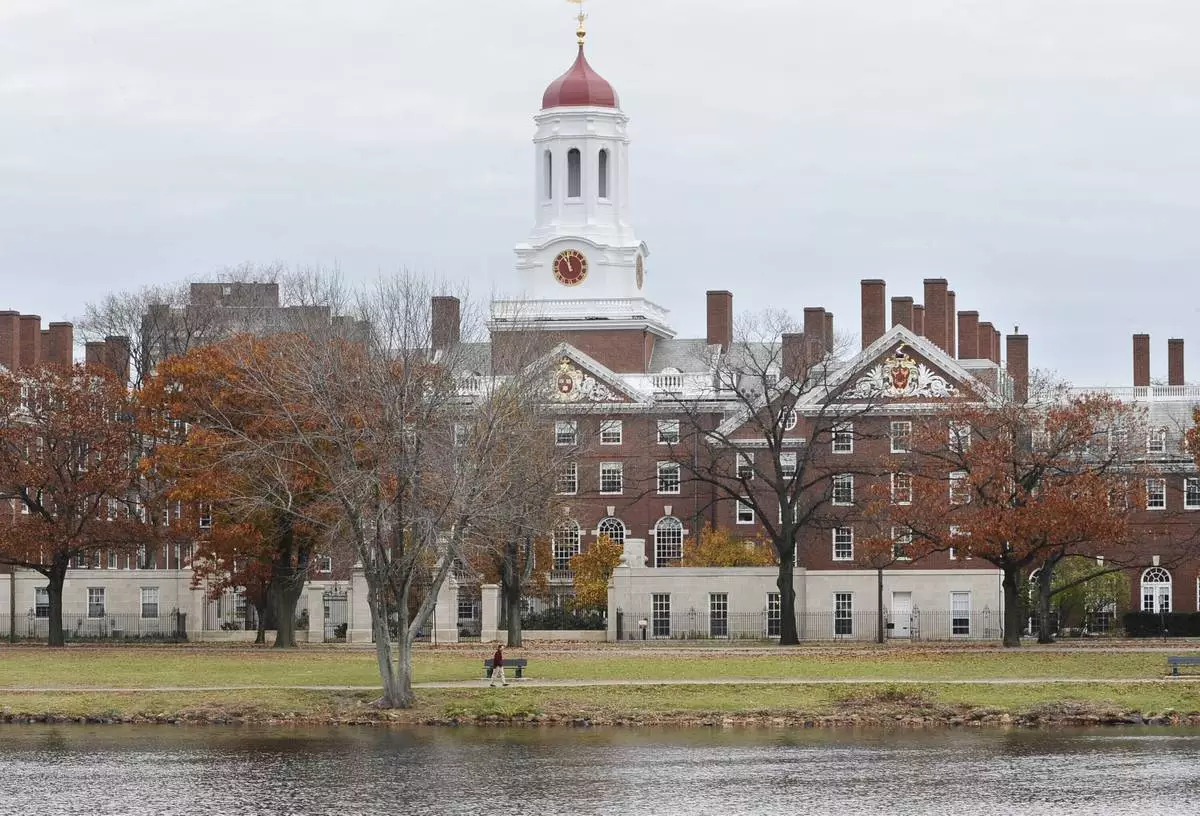
FILE - This Nov. 13, 2008 file photo shows the campus of Harvard University in Cambridge, Mass. (AP Photo/Lisa Poole, File)