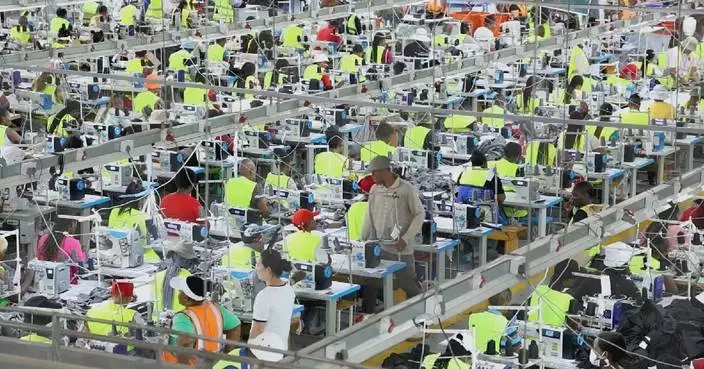
U.S. tariff policies are placing excess pressure on the Polish manufacturing sector, hastening the need for the EU to diversify its trade partners, according to Polish economist Jakub Rybacki.
In Poland, concerns about the tariffs extend beyond the country's direct exports to the U.S., which had been growing year by year. Rybacki warned that the country's trade relations with other EU countries could also be impacted.
"We are still one of the key partners in the supply chain of Germany. If the German manufacturing is slowing down like in the present, the Polish manufacturing can suffer as well. Definitely, the first of our branches are close, relatively, to the the automotive sector, the car parts manufacturers, also the tire manufacturers. These branches expanded relatively slow in the coming months. And right now the tariffs, I think will increase the problems," he said.
The economist also challenged the U.S. administration's assumption that protectionist measures benefit American interests.
"If we look at the Bloomberg estimate or the other market consensuses, it looks like U.S. economy will suffer 1.5 percent lower GDP as a result of the trade wars with the EU, Asia and other major trading partners. And on average, probably that the U.S. household will be less rich, the economic cost will be much greater than the benefit," he said.
In light of the challenges that the tariffs present for Europe, Rybacki called for strengthened multilateral cooperation, emphasizing that unilateral actions that violate WTO trade rules and threaten the global trading system require coordinated responses from affected nations.
"Definitely, diversification is the most welcomed strategy. Europe need to build more connections to the African economies, to the Asian economies. If the U.S. is becoming less reliable, we will find some other economies to take their place," he said.

EU trade diversification becomes welcome strategy in face of US tariffs: Polish economist