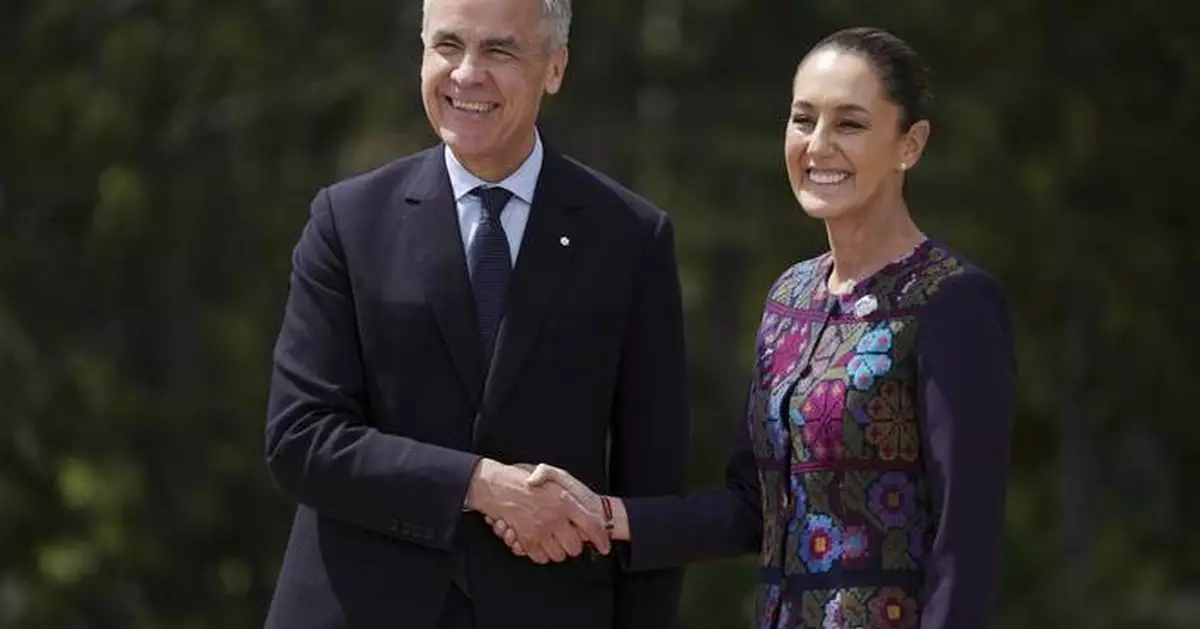
TORONTO (AP) — Canadian Prime Minister Mark Carney will visit Mexico in September to meet with Mexican President Claudia Sheinbaum, a senior official familiar with the matter said Friday.
The meeting comes as America's neighbors deal with U.S. tariffs and prepare for a review of the free trade deal between the three countries next year.
The official confirmed the visit on condition of anonymity as they were not authorized to speak publicly on the matter.
Carney sent his foreign minister as well as his finance minister to meet with Sheinbaum earlier this month in a bid to diversity trade. They also met a large group of Canadian and Mexican business leaders, including key players supporting North America’s integrated economy, trade infrastructure and supply chains.
Sheinbaum visited Canada during the G7 summit in Alberta in June.
Goods that comply with the 2020 United States-Mexico-Canada Agreement that U.S. President Donald Trump negotiated during his first term are excluded from the U.S. tariffs.
But Trump has some sector-specific tariffs, known as 232 tariffs, that are having an impact. There is a 50% tariff on steel and aluminum imports and a 25% tariff on auto imports.
Mexico is Canada’s third largest trading partner after the U.S. and China. Canada was Mexico’s fifth-largest trading partner in 2024.
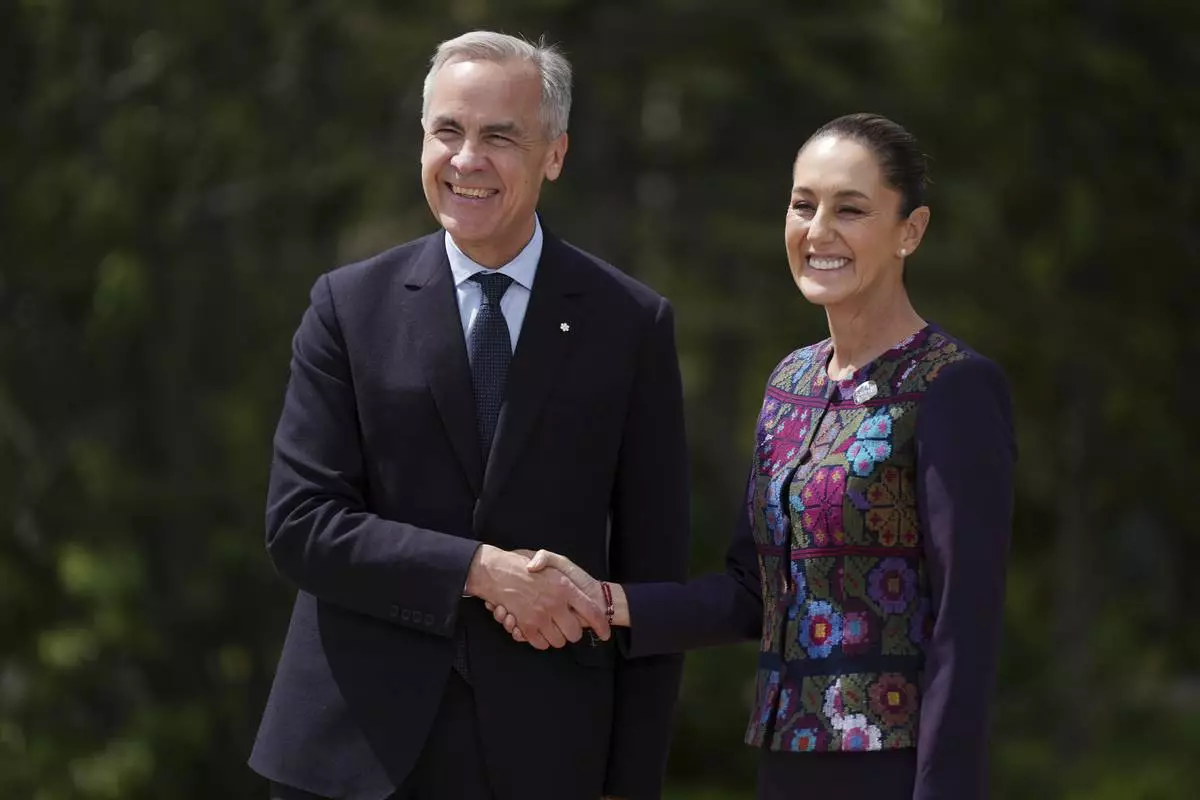
FILE - Canada's Prime Minister Mark Carney welcomes Mexican President Claudia Sheinbaum to the G7 Summit in Kananaskis, Alberta, June 17, 2025. (Darryl Dyck/The Canadian Press via AP, File)
HAVANA (AP) — Tens of thousands of Cubans demonstrated Friday outside the U.S. Embassy in Havana to decry the killing of 32 Cuban officers in Venezuela and demand that the U.S. government release former Venezuelan President Nicolás Maduro.
They crowded into the open-air “José Martí Anti-Imperialist” plaza across from the embassy in a rally organized by the Cuban government as tensions between Cuba and the U.S. spike following the U.S. attack Jan. 3 on Venezuela.
The 32 Cuban officers were part of Maduro’s security detail killed during the raid on his residence in Caracas to seize the former leader and bring him to the U.S. to face drug trafficking charges.
“Humanity is experiencing something very complex, and (the U.S.) is governed by a president who considers himself an emperor,” said René González, 64, one of the protesters.
“We must show him that ideas are worth more than weapons," he said. "This march is a message of our unity. Independence is sacred, and we will defend it tooth and nail if necessary.”
Cuba’s national anthem rang out at Friday’s demonstration as large Cuban flags waved in the chilly wind and big waves broke nearby along Havana’s famed sea wall. Cuban President Miguel Díaz-Canel shook hands with members of the crowd clad in jackets and scarves before speaking to them.
“The current U.S. administration has opened the door to an era of barbarism, plunder and neo-fascism,” he said.
The demonstration was a show of popular strength after U.S. President Donald Trump recently demanded that Cuba make a deal with him before it is “too late.” He did not explain what kind of deal.
Trump also has said that Cuba will no longer live off Venezuela’s oil and money. Experts say the move could have catastrophic consequences since Cuba is already struggling with severe blackouts.
“No one here surrenders," Díaz-Canel said. “The current emperor of the White House and his infamous secretary of state haven’t stopped threatening me.”
Washington has maintained a policy of sanctions against Cuba since the 1960s to pressure the island's government to improve its human rights record, end its one-party communist system and allow democracy. The sanctions have been further tightened during Trump’s presidency, suffocating the island’s economy.
“Cuba does not have to make any political concessions, and that will never be on the table for negotiations aimed at reaching an understanding between Cuba and the United States,” Díaz-Canel said. “It is important that they understand this. We will always be open to dialogue and improving relations between our two countries, but only on equal terms and based on mutual respect.”
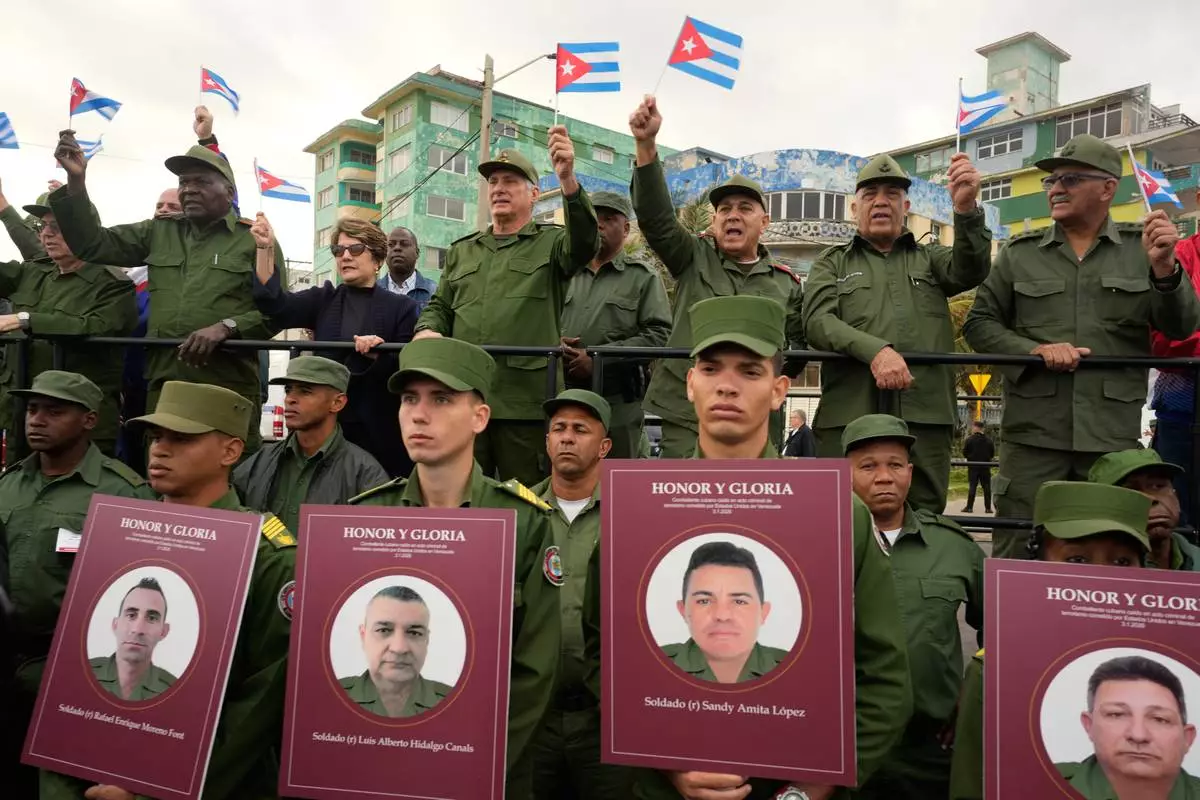
After the president's speech, the demonstration transitioned into a parade that Cubans call a “combatant march,” a custom that originated during the time of the late leader Fidel Castro. The crowd was led by a line of people holding pictures of the 32 officers killed.
“Down with imperialism!” the crowd yelled. “Cuba will prevail!"
The demonstration was organized a day after tens of thousands of Cubans gathered at the headquarters of the Ministry of the Armed Forces to pay their respects to the 32 officers slain.
Their remains arrived home on Thursday morning, and they are scheduled to be laid to rest on Friday afternoon in various cemeteries following memorial ceremonies in all of Cuba’s provincial capitals.
Associated Press reporter Dánica Coto in San Juan, Puerto Rico contributed to this report.
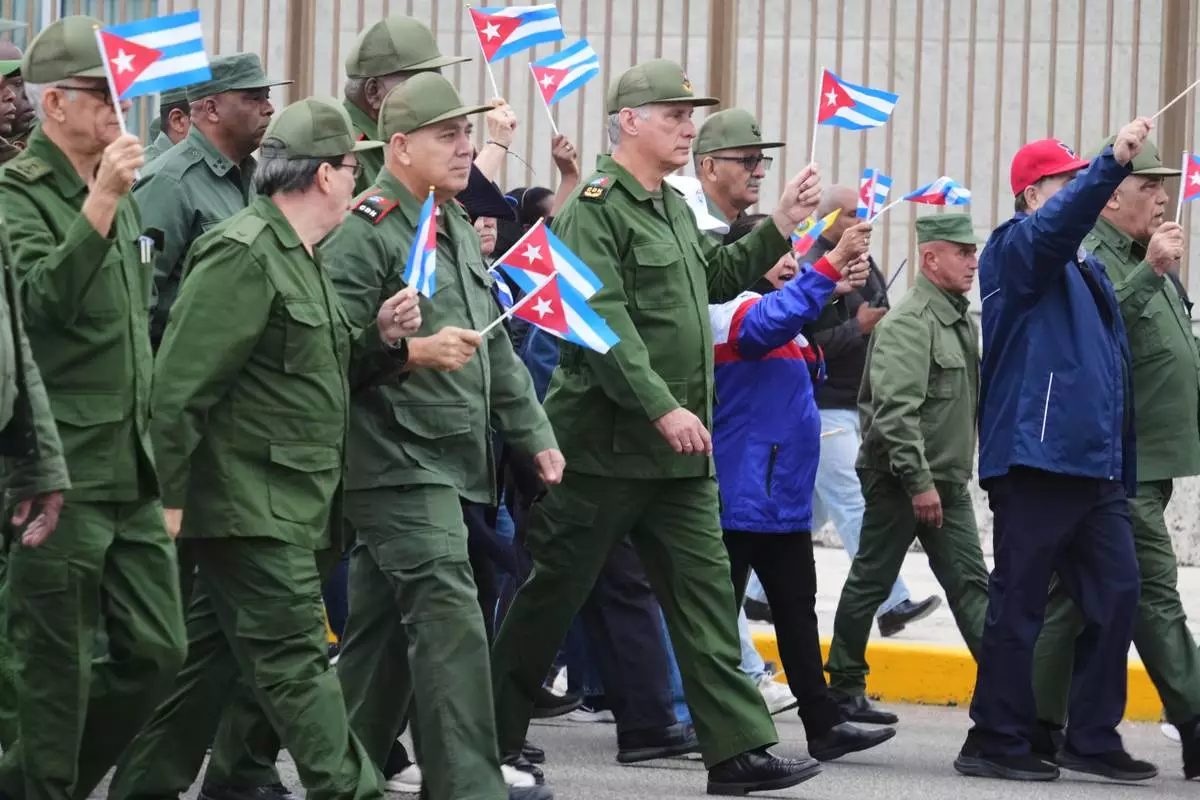
Cuban President Miguel Diaz-Canel marches during a rally to protest the killing of Cuban officers during the U.S. operation in Venezuela that captured Venezuelan President Nicolas Maduro in Havana, Cuba, Friday, Jan. 16, 2026. (AP Photo/Ramon Espinosa)
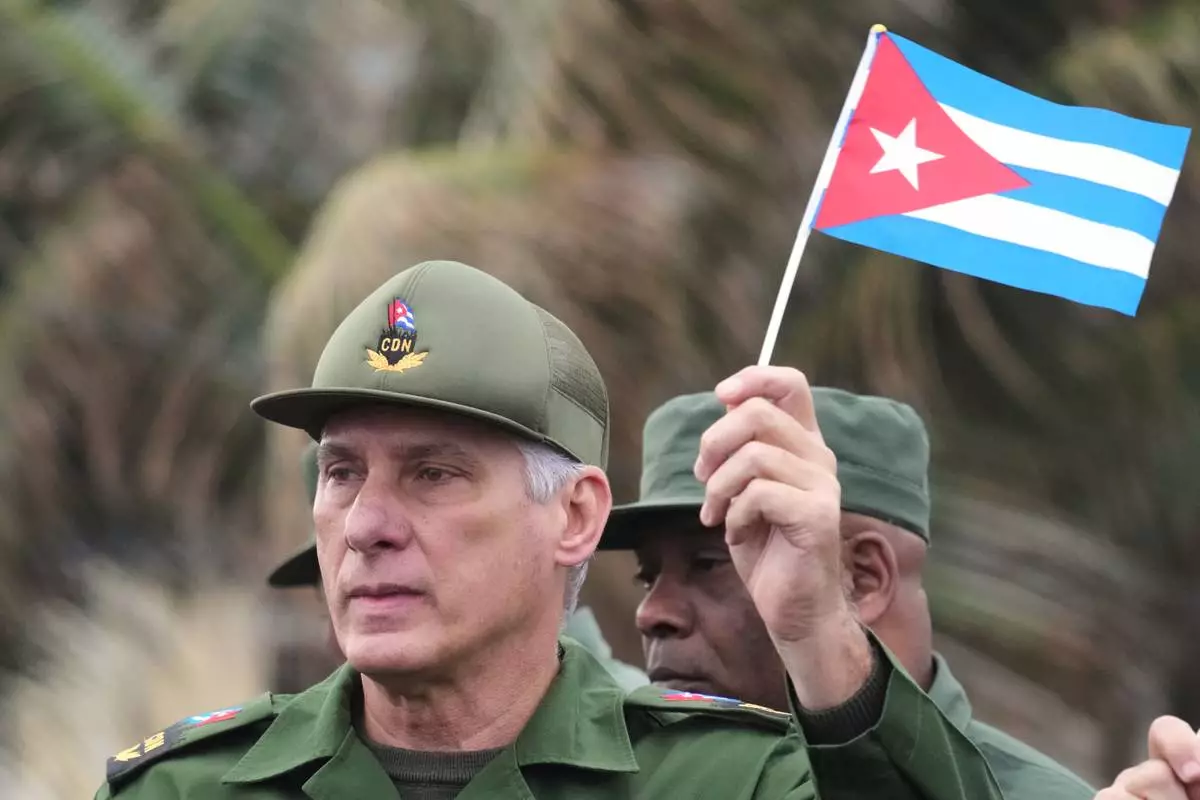
Cuban President Miguel Diaz-Canel marches during a rally to protest the killing of Cuban officers during the U.S. operation in Venezuela that captured Venezuelan President Nicolas Maduro outside the U.S. Embassy in Havana, Cuba, Friday, Jan. 16, 2026. (AP Photo/Ramon Espinosa)
Cuban President Miguel Diaz-Canel, fourth from right, holds up a Cuban flag during a rally to protest the killing of Cuban officers during the U.S. operation that captured Venezuelan President Nicolas Maduro, outside the U.S. Embassy in Havana, Cuba, Friday, Jan. 16, 2026. (AP Photo/Ramon Espinosa)
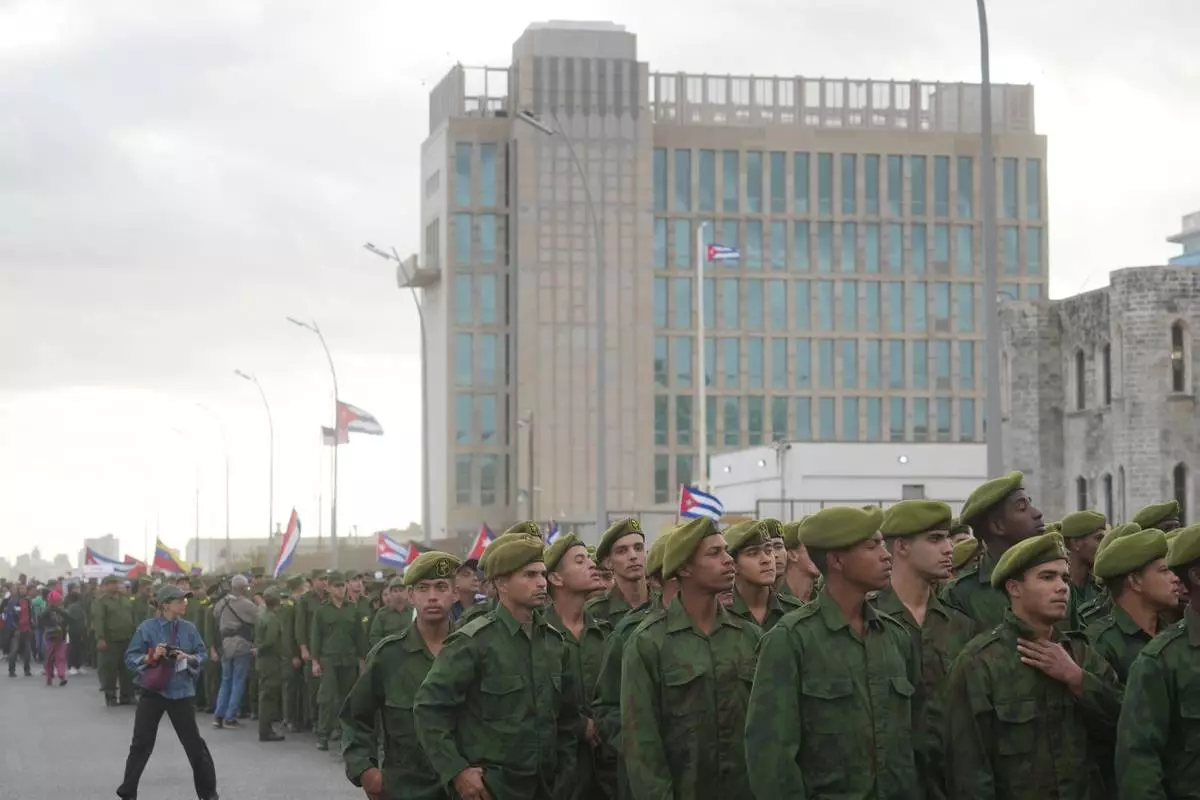
Soldiers march outside the U.S. Embassy during a rally to protest the killing of Cuban officers during the U.S. operation in Venezuela that captured Venezuelan President Nicolas Maduro in Havana, Cuba, Friday, Jan. 16, 2026. (AP Photo/Ramon Espinosa)
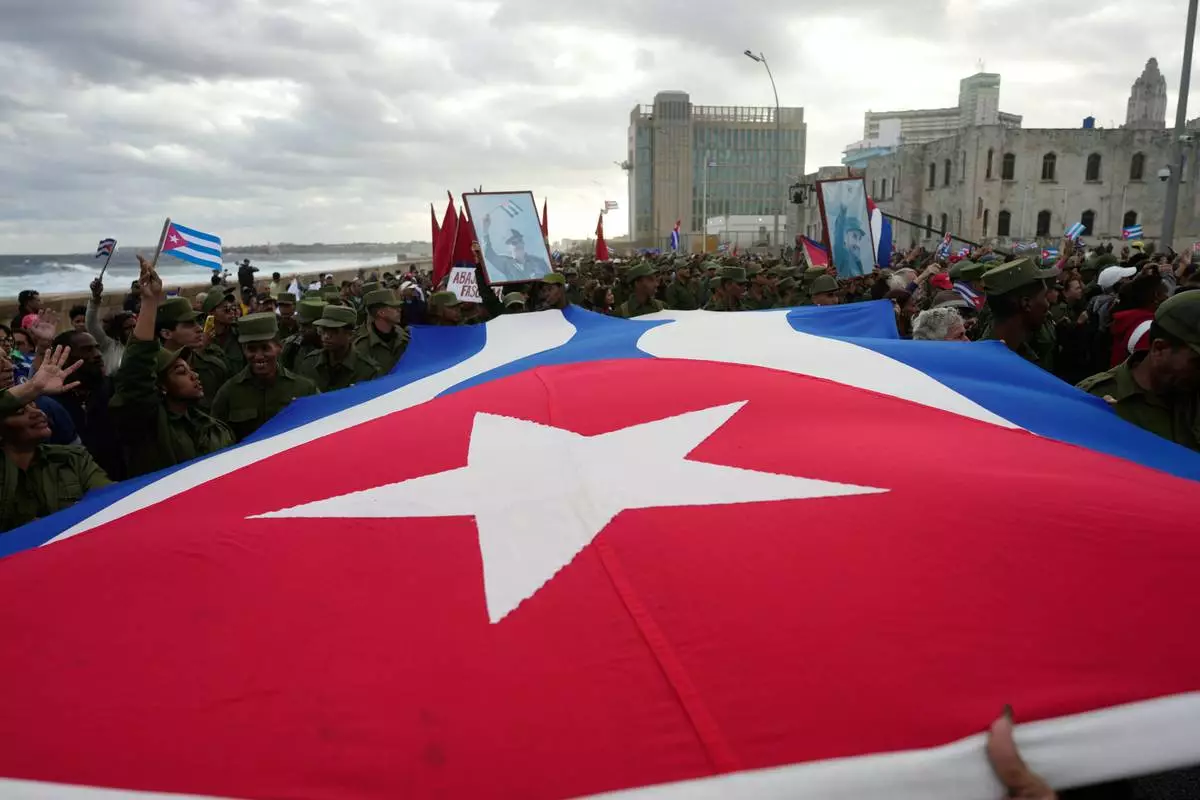
People carry a Cuban flag during a government-organized rally protesting the killing of Cuban officers in Venezuela while U.S. forces captured Venezuelan President Nicolas Maduro and his wife, in Havana, Cuba, Friday, Jan. 16, 2026. (AP Photo/Ramon Espinosa)
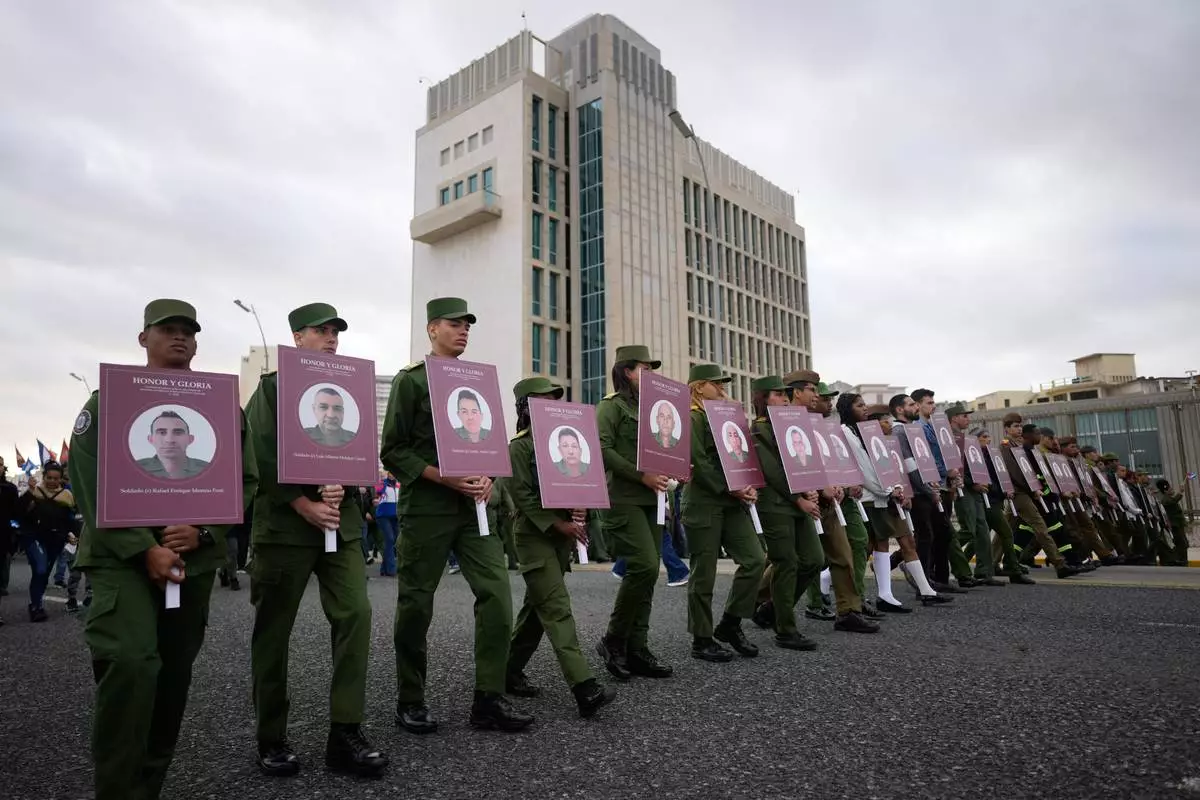
Soldiers carry photos of Cuban officers killed during the U.S. operation in Venezuela that captured Venezuelan President Nicolas Maduro, during a rally outside the U.S. Embassy in Havana, Cuba, Friday, Jan. 16, 2026. (AP Photo/Ramon Espinosa)
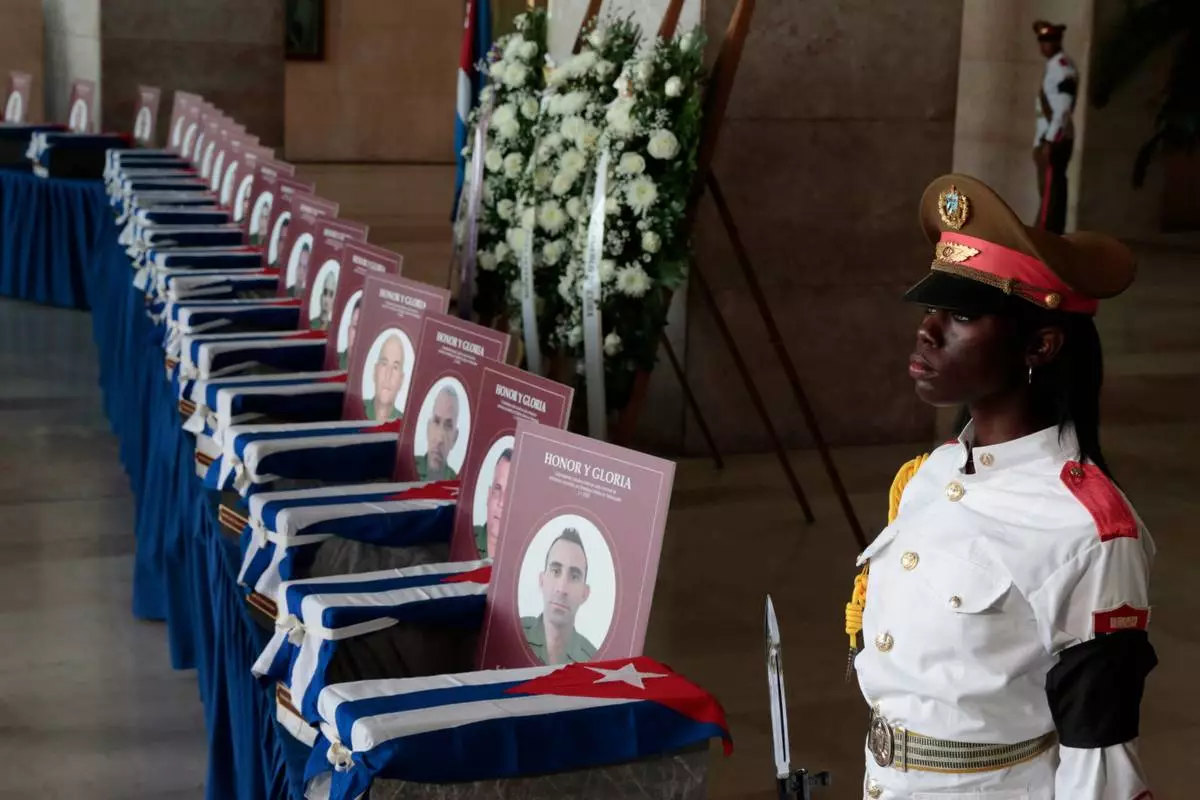
Urns containing the remains of Cuban officers, who were killed during the U.S. operation in Venezuela that captured Venezuelan President Nicolas Maduro, are displayed at the Ministry of the Revolutionary Armed Forces in Havana, Cuba, Thursday, Jan. 15, 2026. (AP Photo/Jorge Luis Banos)