The annual "Touching China" award ceremony honoring 10 individuals and groups as the country's inspiring role models of 2024 was broadcast Saturday evening by the China Media Group (CMG).
Initiated in 2003, the "Touching China" program honors those who have touched the nation with their tenacity, bravery and wisdom over the previous year.
The 10 award winners for 2024 are:
Luan Enjie, the first chief commander of China's lunar exploration program; Fan Zhenxi, secretary of the Zhoutaizi Village Party Committee in Luanping County, north China's Hebei Province, whose 39-year devotion has made Zhoutaizi the richest village in Luanping; Olympic champion Zheng Qinwen; role model of filial piety and family devotion Qu Yabo; role model in helping others Lv Mingyu; a group of teachers who have been serving in less-developed western regions since graduation from Baoding University in Hebei; fishing boat captain Shen Huazhong who rescued 16 foreign crew members from a sunken coal carrier in March 2024; grassroots official Li Dong, who sacrificed his life during flood relief operations; Pang Zhongwang, who has overcome extremely harsh family and physical conditions to become a PhD candidate at Tsinghua University; and Li Dengyue, a 100-year-old veteran who fought in the Chinese People's War of Resistance against Japanese Aggression.
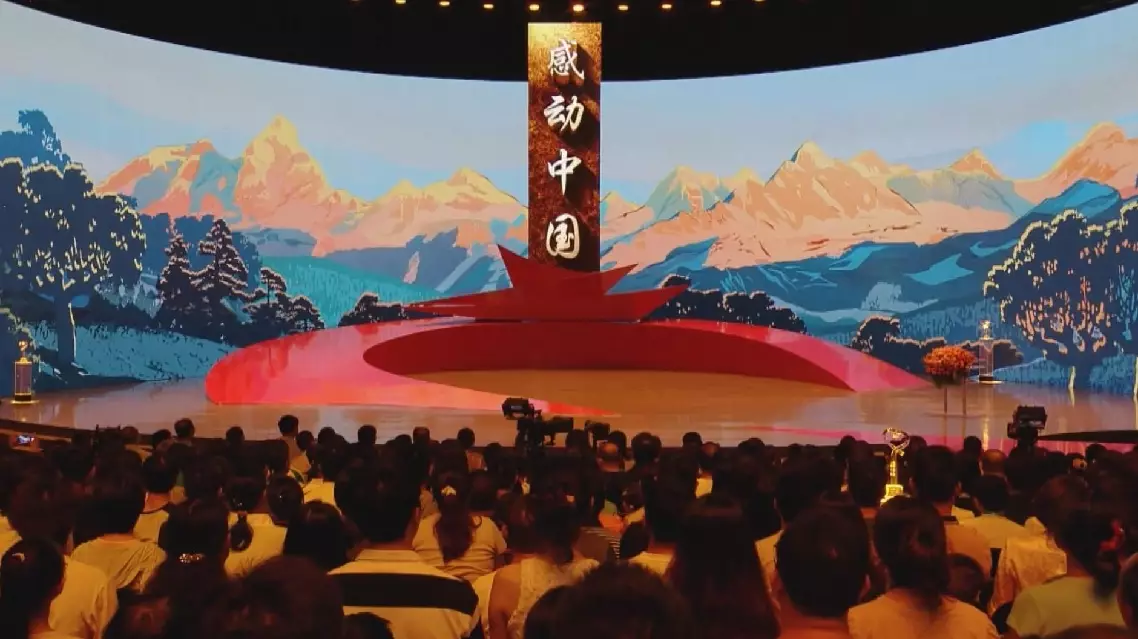
"Touching China" 2024 award ceremony honors inspirational role models in China
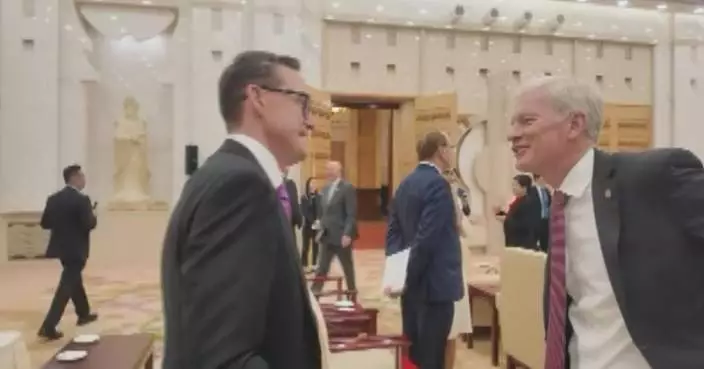
China and the United States should look to maintain regular communication and upgrade the frequency of their dialogues in order to manage competition and respect their differences while making cooperation a top priority, said a Chinese scholar.
In a meeting closely watched by the world, Chinese President Xi Jinping and U.S. President Donald Trump on Thursday agreed on a new vision of building a constructive bilateral relationship of strategic stability.
It came amid Trump's three-day state visit to China at the invitation of Xi, which marked the first such U.S. presidential visit in nine years.
Yang Yue, deputy director of the Institute of Asian Studies of China Foreign Affairs University, shared her assessment of the new vision outlined by the two sides in an interview with the China Global Television Network (CGTN).
"This new positioning, I think, is a breakthrough for this summit. It normalizes managed competition, while prioritizing cooperation," Yang said.
Calling for greater bilateral cooperation in public health, climate, counter narcotics, and other fields, the professor stressed the need for China and the U.S. to establish clear guardrails for competition and carry out more frequent dialogue to reduce crisis risks.
"Not all competition is bad. But both sides need explicit red lines and no-go zones. For example, [they can] compete in technology, but never weaponize supply chains for essential medicines. Differences are permanent, that's fine. And the key is predictable crisis communication. Like, update hotlines to mandatory weekly or monthly strategic dialogues," she said.
Regarding peace, Yang called on the two countries to honor their commitments -- particularly on the one-China principle -- with concrete actions on a daily basis.
"Peace cannot be fragile. For example, on the Taiwan question, I think the maximum common denominator is stability. And durable peace requires daily discipline, and not just summit statements," Yang said.
Trump, who departed Beijing on Friday, brought along a high-level delegation of more than a dozen American business leaders from key sectors including technology, finance, aviation, and agriculture.
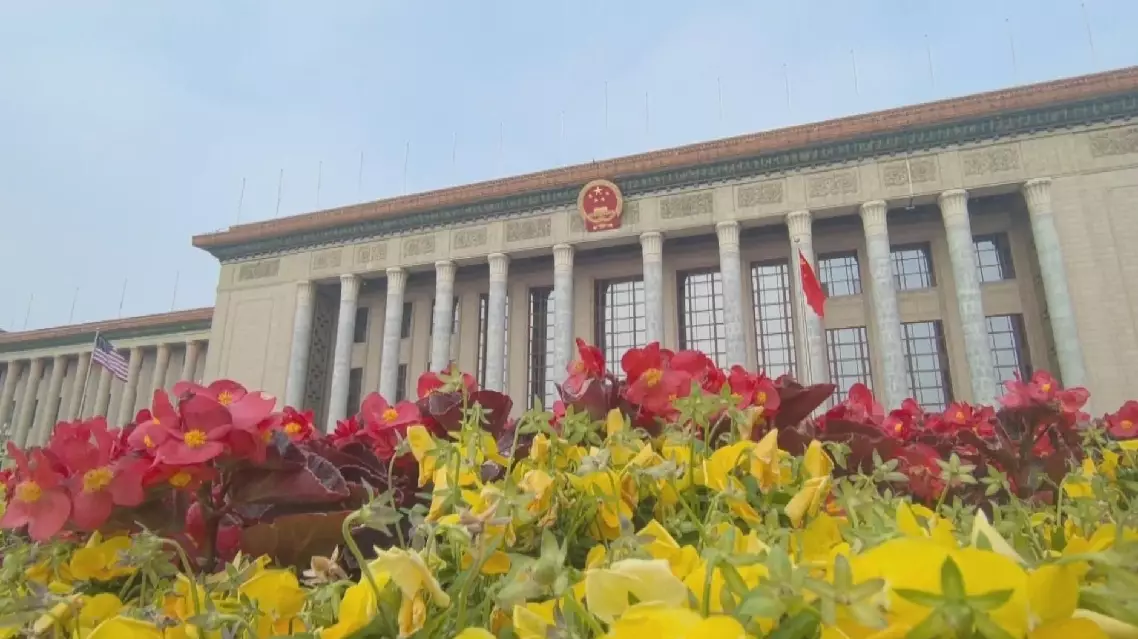
Cooperation should outweigh competition in China-US ties: scholar