Skip to Content Facebook Feature Image

Mistrust and fear: The complex story behind strained Syria-Lebanon relations

News

Mistrust and fear: The complex story behind strained Syria-Lebanon relations
News

News

Mistrust and fear: The complex story behind strained Syria-Lebanon relations

2025-08-17 13:26 Last Updated At:13:30

BEIRUT (AP) — A lot has happened in just a year on both sides of the Lebanon-Syria border. A lightning offensive by Islamist insurgents in Syria toppled longtime autocrat Bashar Assad and brought a new government in place in Damascus.

In Lebanon, a bruising war with Israel dealt a serious blow to Hezbollah — the Iran-backed and Assad-allied Shiite Lebanese militant group that had until recently been a powerful force in the Middle East — and a U.S.-negotiated deal has brought a fragile ceasefire.

More Images
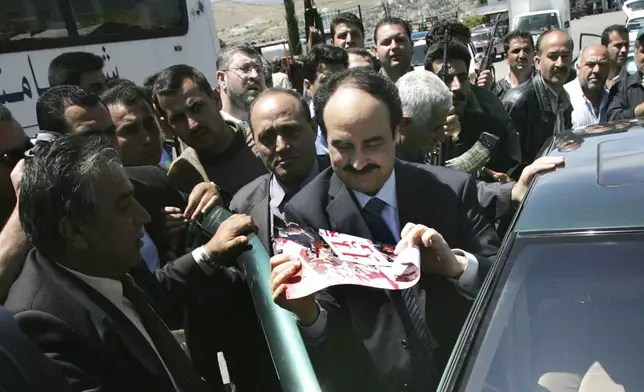
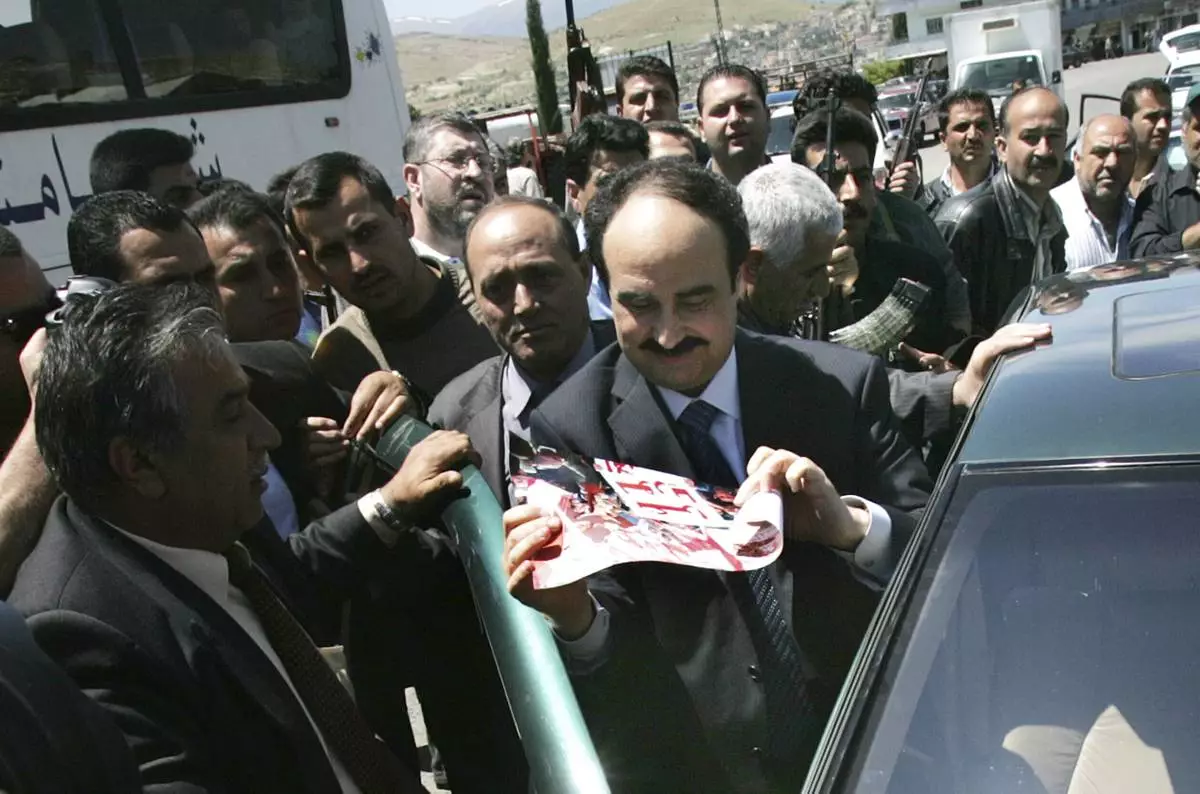
FILE - Then former head of the Syrian political security branch Maj. Gen. Rostom Ghazali, center, who also was a former Syrian intelligence chief in Lebanon, escorted by his supporters as he looks to an Arabic placard that reads:"Thanks Syria," after he get out from his car on his way cross the Lebanese border point of Masnaa in the Bekaa Valley, east of Beirut, Lebanon, April 26, 2005. (AP Photo/Hussein Malla, File)
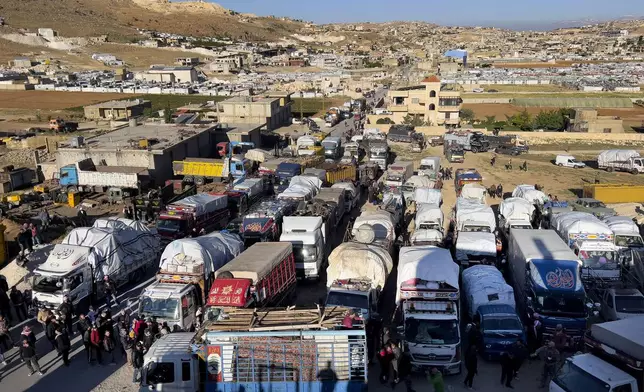
FILE - Then former head of the Syrian political security branch Maj. Gen. Rostom Ghazali, center, who also was a former Syrian intelligence chief in Lebanon, escorted by his supporters as he looks to an Arabic placard that reads:"Thanks Syria," after he get out from his car on his way cross the Lebanese border point of Masnaa in the Bekaa Valley, east of Beirut, Lebanon, April 26, 2005. (AP Photo/Hussein Malla, File)

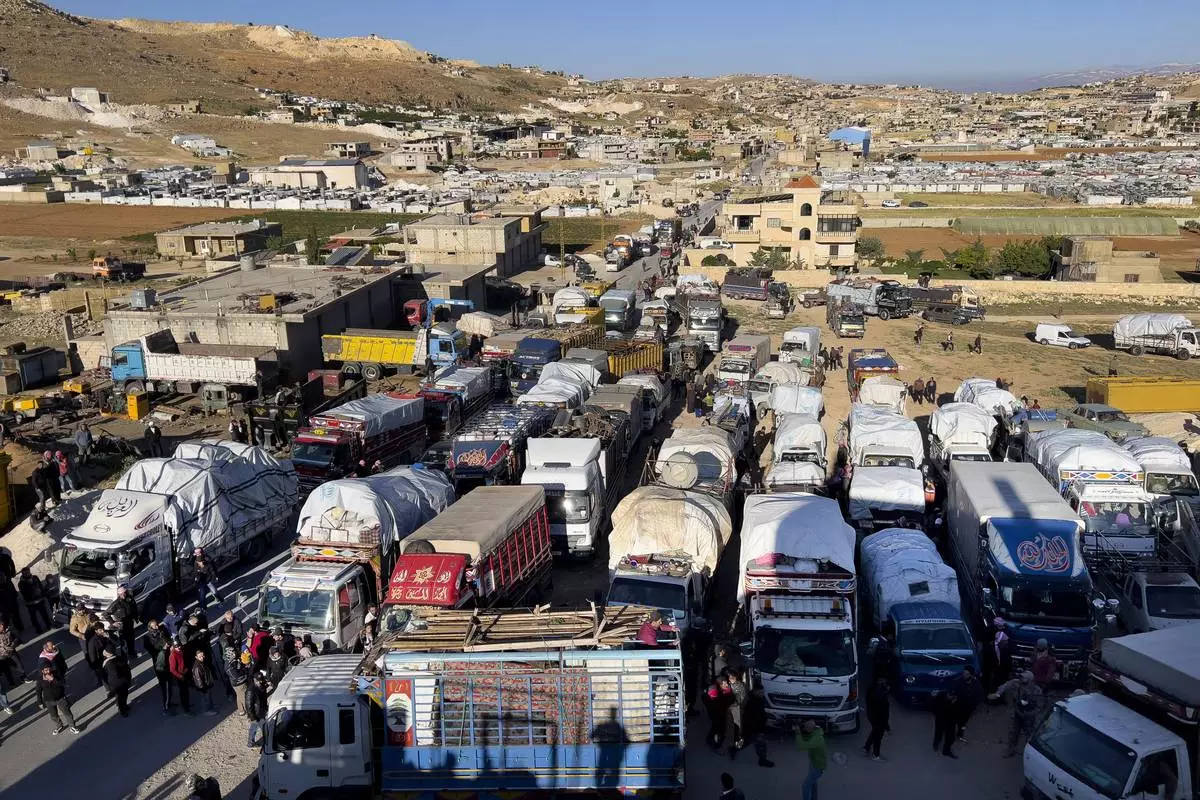
FILE - Syrian refugees gather near trucks with their belongings, as they prepare to go back home to Syria as a part of a voluntary return, in the eastern Lebanese border town of Arsal, Tuesday, May 14, 2024. (AP Photo/Hussein Malla, File)
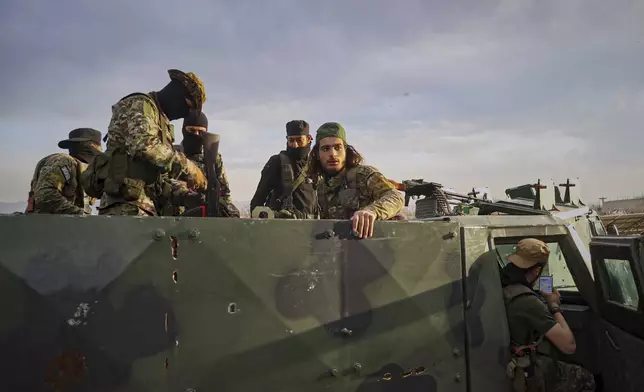
FILE - Syrian refugees gather near trucks with their belongings, as they prepare to go back home to Syria as a part of a voluntary return, in the eastern Lebanese border town of Arsal, Tuesday, May 14, 2024. (AP Photo/Hussein Malla, File)

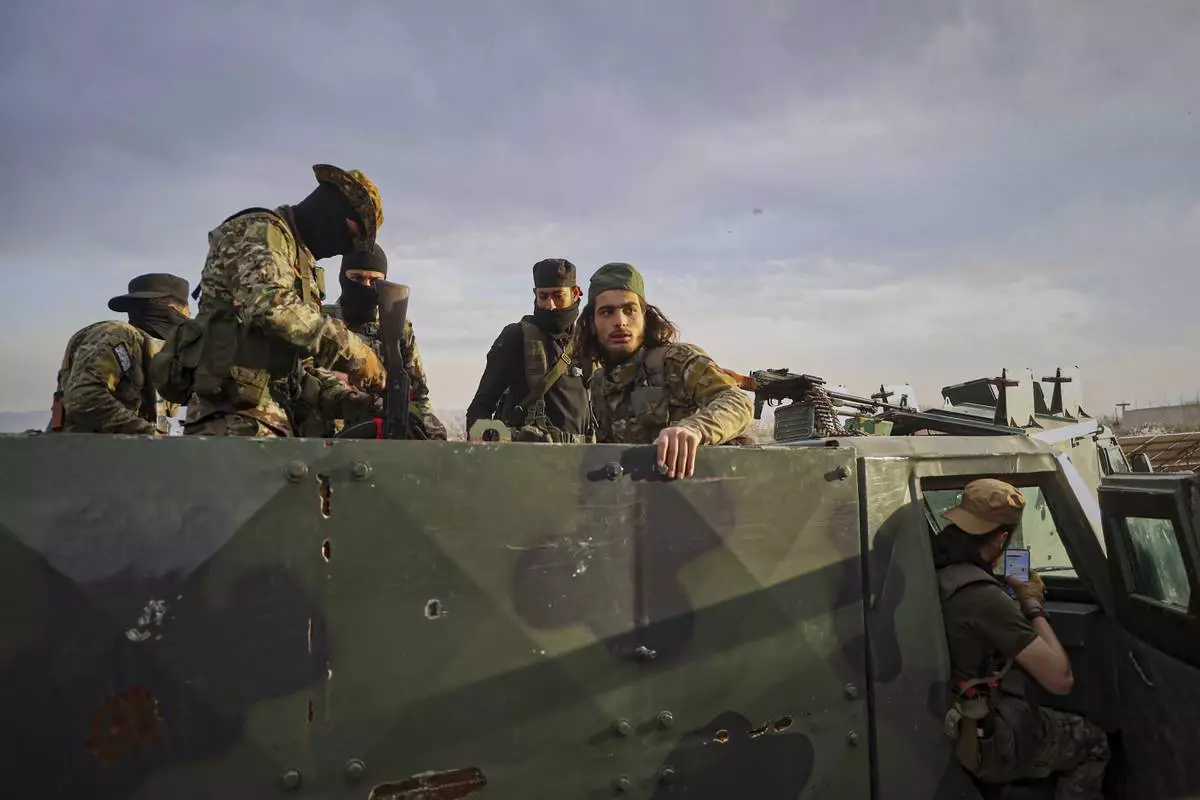
FILE - Syrian troops gather in the village of Hawsh al-Sayyid Ali, located 2 km (1.24 miles) from the Lebanon border, Syria, Monday, March 17, 2025. (AP Photo/Omar Albam, File)
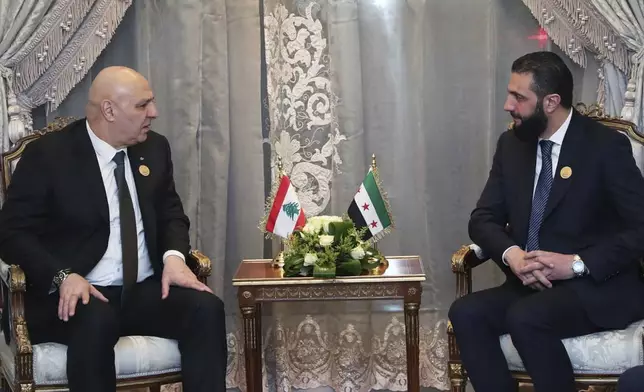
FILE - Syrian troops gather in the village of Hawsh al-Sayyid Ali, located 2 km (1.24 miles) from the Lebanon border, Syria, Monday, March 17, 2025. (AP Photo/Omar Albam, File)

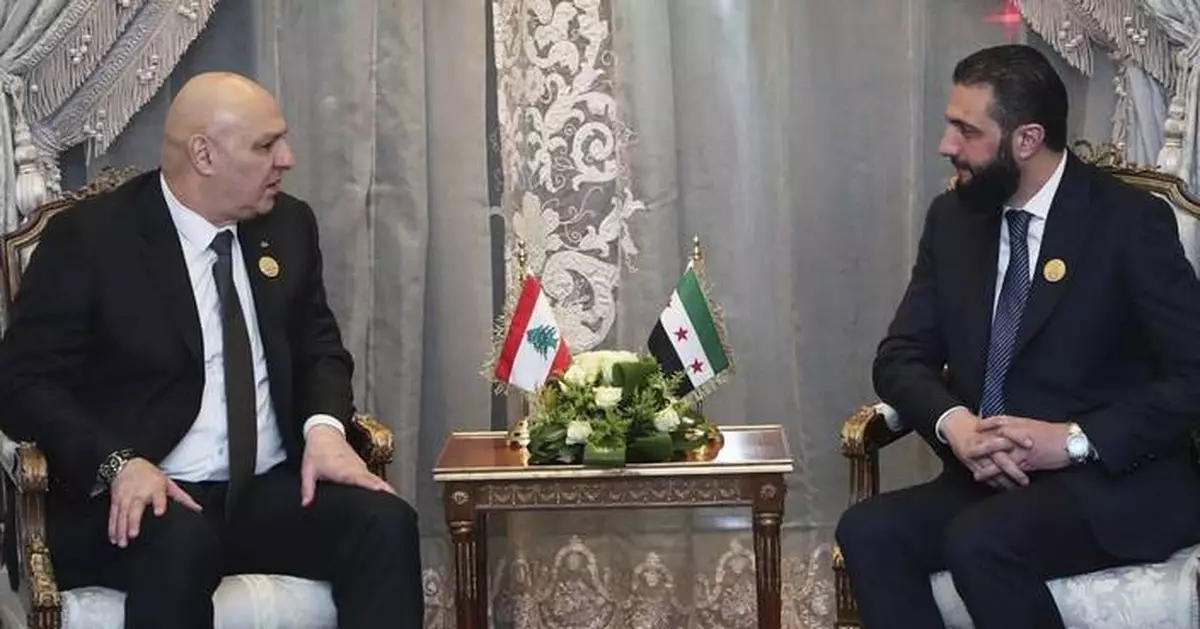
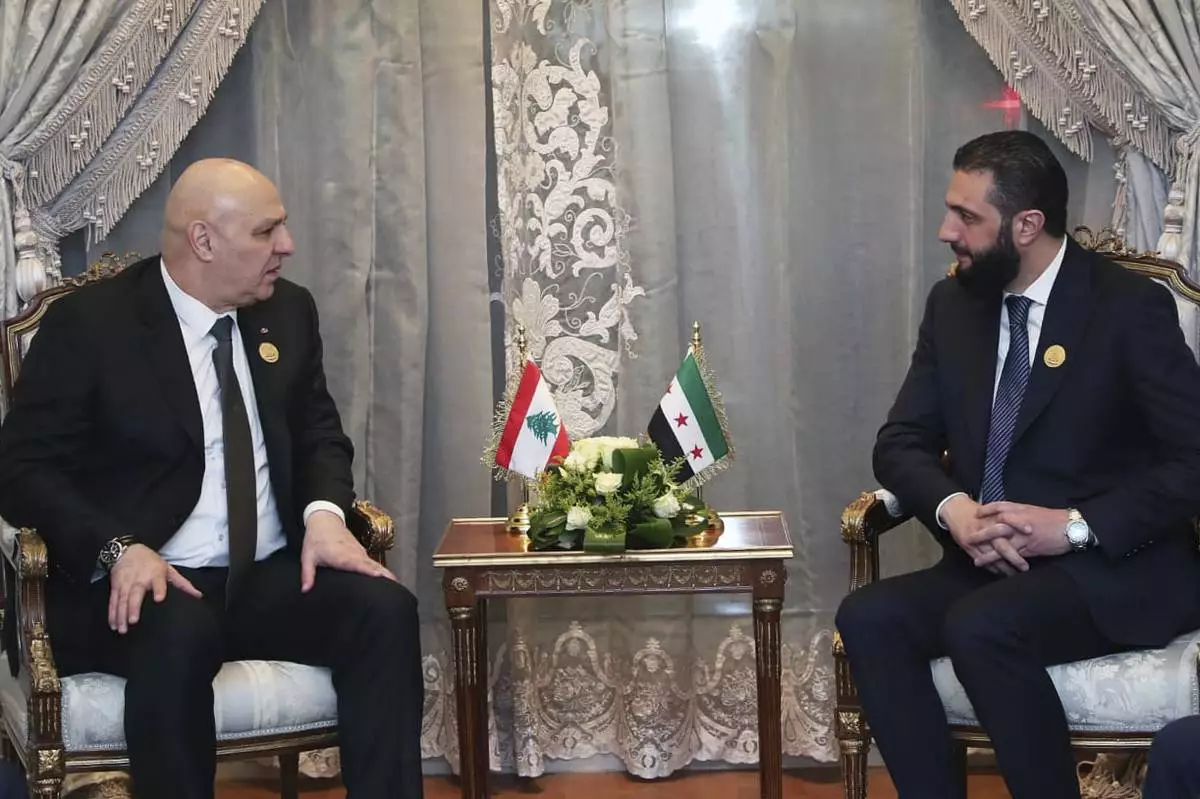
FILE - In this photo released by the Lebanese Presidency press office, Lebanese president Joseph Aoun, left, meets with Syria's interim President Ahmad al-Sharaa during the emergency Arab summit at Egypt's New Administrative Capital, just outside Cairo, Tuesday, March 4, 2025. (Lebanese Presidency press office via AP, File)

FILE - In this photo released by the Lebanese Presidency press office, Lebanese president Joseph Aoun, left, meets with Syria's interim President Ahmad al-Sharaa during the emergency Arab summit at Egypt's New Administrative Capital, just outside Cairo, Tuesday, March 4, 2025. (Lebanese Presidency press office via AP, File)

Still, even after the fall of the 54-year Assad family rule, relations between Beirut and Damascus remain tense — as they have been for decades past, with Syria long failing to treat its smaller neighbor as a sovereign nation.

Recent skirmishes along the border have killed and wounded several people, both fighters and civilians, including a four-year-old Lebanese girl. Beirut and Damascus have somewhat coordinated on border security, but attempts to reset political relations have been slow. Despite visits to Syria by two heads of Lebanon's government, no Syrian official has visited Lebanon.

Here is what's behind the complicated relations.

Many Syrians have resented Hezbollah for wading into Syria's civil war in defense of Assad's government. Assad's fall sent them home, but many Lebanese now fear cross-border attacks by Syria's Islamic militants.

There are new restrictions on Lebanese entering Syria, and Lebanon has maintained tough restrictions on Syrians entering Lebanon.

The Lebanese also fear that Damascus could try to bring Lebanon under a new Syrian tutelage.

Syrians have long seen Lebanon as a staging ground for anti-Syria activities, including hosting opposition figures before Hafez Assad — Bashar Assad's father — ascended to power in a bloodless 1970 coup.

In 1976, Assad senior sent his troops to Lebanon, allegedly to bring peace as Lebanon was hurtling into a civil war that lasted until 1990. Once that ended, Syrian forces — much like a colonial power — remained in Lebanon for another 15 years.

A signature of the Assad family rule, Syria's dreaded security agents disappeared and tortured dissidents to keep the country under their control. They did the same in Lebanon.

“Syrians feel that Lebanon is the main gateway for conspiracies against them,” says Lebanese political analyst Ali Hamadeh.

It took until 2008 for the two countries to agree to open diplomatic missions, marking Syria's first official recognition of Lebanon as an independent state since it gained independence from France in 1943.

The move came after the 2005 truck-bombing assassination of former Lebanese Prime Minister Rafik Hariri that many blamed on Damascus. Two months later, Syria pulled its troops out of Lebanon under international pressure, ending 29 years of near-complete domination of its neighbor.

When Syria’s own civil war erupted in 2011, hundreds of thousands of Syrians fled across the border, making crisis-hit Lebanon the host of the highest per capita population of refugees in the world. Once in Lebanon, the refugees complained about discrimination, including curfews for Syrian citizens in some areas.

Hezbollah, meanwhile, rushed thousands of its fighters into Syria in 2013 to shore up Assad, worried that its supply lines from Iran could dry up.

And as much as the Lebanese are divided over their country’s internal politics, Syria's war divided them further into those supporting Assad's government and those opposing it.

A key obstacle to warming relations has been the fate of about 2,000 Syrians in Lebanese prisons, including some 800 held over attacks and shootings, many without trial. Damascus is asking Beirut to hand them over to continue their prison terms in Syria, but Lebanese judicial officials say Beirut won't release any attackers and that each must be studied and resolved separately.

In July, family members of the detainees rallied along a border crossing, demanding their relatives be freed. The protest came amid reports that Syrian troops could deploy foreign fighters in Lebanon, which Damascus officials denied.

Another obstacle is Lebanon’s demand that Syrian refugees go back home now that Assad is gone. About 716,000 Syrian refugees are registered with the U.N. refugee agency, while hundreds of thousands more are unregistered in Lebanon, which has a population of about 5 million.

Syria is also demanding the return of billions of dollars worth of deposits of Syrians trapped in Lebanese banks since Lebanon's historic financial meltdown in 2019.

The worst post-Assad border skirmishes came in mid-March, when Syrian authorities said Hezbollah members crossed the border and kidnapped and killed three Syrian soldiers. The Lebanese government and army said the clash was between smugglers and that Hezbollah wasn't involved.

Days later, Lebanese and Syrian defense ministers flew to Saudi Arabia and signed an agreement on border demarcation and boosting their coordination.

In July, rumors spread in Lebanon, claiming the northern city of Tripoli would be given to Syria in return for Syria giving up the Golan Heights to Israel. And though officials dismissed the rumors, they illustrate the level of distrust between the neighbors.

Beirut was also angered by Syria's appointment this year of a Lebanese army officer — Abdullah Shehadeh, who defected in 2014 from Lebanon to join Syrian insurgents — as the head of security in Syria’s central province of Homs that borders northeastern Lebanon.

In Syria, few were aware of Shehadeh’s real name — he was simply known by his nom de guerre, Abu Youssef the Lebanese. Syrian security officials confirmed the appointment.

Analysts say an important step would be for the two neighbors to work jointly to boost security against cross-border smuggling. A U.S.-backed plan that was recently adopted by the Lebanese government calls for moving toward full demarcation of the border.

Radwan Ziadeh, a senior fellow at the Arab Center in Washington, says the best way forward would be for Syria and Lebanon to address each problem between them individually — not as a package deal.

That way, tensions would be reduced gradually, he said and downplayed recent comments by prominent Syrian anti-Assad figures who claimed Lebanon is part of Syria and should return to it.

“These are individual voices that do not represent the Syrian state,” Zaideh said.

Associated Press writer Ghaith Alsayed in Damascus, Syria, contributed to this report.
FILE - Then former head of the Syrian political security branch Maj. Gen. Rostom Ghazali, center, who also was a former Syrian intelligence chief in Lebanon, escorted by his supporters as he looks to an Arabic placard that reads:"Thanks Syria," after he get out from his car on his way cross the Lebanese border point of Masnaa in the Bekaa Valley, east of Beirut, Lebanon, April 26, 2005. (AP Photo/Hussein Malla, File)
FILE - Then former head of the Syrian political security branch Maj. Gen. Rostom Ghazali, center, who also was a former Syrian intelligence chief in Lebanon, escorted by his supporters as he looks to an Arabic placard that reads:"Thanks Syria," after he get out from his car on his way cross the Lebanese border point of Masnaa in the Bekaa Valley, east of Beirut, Lebanon, April 26, 2005. (AP Photo/Hussein Malla, File)

FILE - Syrian refugees gather near trucks with their belongings, as they prepare to go back home to Syria as a part of a voluntary return, in the eastern Lebanese border town of Arsal, Tuesday, May 14, 2024. (AP Photo/Hussein Malla, File)
FILE - Syrian refugees gather near trucks with their belongings, as they prepare to go back home to Syria as a part of a voluntary return, in the eastern Lebanese border town of Arsal, Tuesday, May 14, 2024. (AP Photo/Hussein Malla, File)

FILE - Syrian troops gather in the village of Hawsh al-Sayyid Ali, located 2 km (1.24 miles) from the Lebanon border, Syria, Monday, March 17, 2025. (AP Photo/Omar Albam, File)
FILE - Syrian troops gather in the village of Hawsh al-Sayyid Ali, located 2 km (1.24 miles) from the Lebanon border, Syria, Monday, March 17, 2025. (AP Photo/Omar Albam, File)

FILE - In this photo released by the Lebanese Presidency press office, Lebanese president Joseph Aoun, left, meets with Syria's interim President Ahmad al-Sharaa during the emergency Arab summit at Egypt's New Administrative Capital, just outside Cairo, Tuesday, March 4, 2025. (Lebanese Presidency press office via AP, File)
FILE - In this photo released by the Lebanese Presidency press office, Lebanese president Joseph Aoun, left, meets with Syria's interim President Ahmad al-Sharaa during the emergency Arab summit at Egypt's New Administrative Capital, just outside Cairo, Tuesday, March 4, 2025. (Lebanese Presidency press office via AP, File)
KAMPALA, Uganda (AP) — Voting began Thursday in Uganda’s presidential election despite a days-long internet shutdown that has been criticized as an anti-democratic tactic in a country where the president has held office since 1986.

Crowds gathered and long lines formed in some areas as polling station openings were delayed and voting materials were seen being delivered after the scheduled 7 a.m. opening time.

President Yoweri Museveni, 81, faces seven other candidates, including Robert Kyagulanyi, a musician-turned-politician best known as Bobi Wine, who is calling for political change.

The East African country of roughly 45 million people has 21.6 million registered voters. Polls are expected to close at 4 p.m. Thursday, according to the electoral commission. Results are constitutionally required to be announced in 48 hours.

Impatient crowds gathered outside polling stations expressing concerns over the delays Thursday morning. Umaru Mutyaba, a polling agent for a parliamentary candidate, said it was “frustrating” to be waiting outside a station in the capital Kampala.

“We can’t be standing here waiting to vote as if we have nothing else to do," he said.

Ssemujju Nganda, a prominent opposition figure and lawmaker seeking reelection in Kira municipality, told The Associated Press he had been waiting in line to vote for three hours.

In addition to delayed voting materials, biometric voter identification machines were not working properly, Nganda said, adding that delays likely will lead to apathy and low turnout in urban areas where the opposition has substantial support.

“It’s going to be chaos,” he said.

Uganda has not witnessed a peaceful transfer of presidential power since independence from British colonial rule six decades ago.

Museveni has served the third-longest term of any African leader and is seeking to extend his rule into a fifth decade. Some critics say removing him through elections remains difficult, but the aging president’s authority has become increasingly dependent on the military led by his son, Muhoozi Kainerugaba.

Museveni and Wine are reprising their rivalry from the previous election in 2021, when Wine appealed to mostly young people in urban areas. With voter turnout of 59%, Wine secured 35% of the ballots against Museveni’s 58%, the president’s smallest vote share since his first electoral campaign three decades ago.

The lead-up to Thursday's election produced concerns about transparency, the possibility of hereditary rule, military interference and opposition strategies to prevent vote tampering at polling stations.

Uganda's internet was shut down Tuesday by the government communications agency, which cited misinformation, electoral fraud and incitement of violence. The shutdown has affected the public and disrupted critical sectors such as banking.

There has been heavy security leading up to voting, including military units deployed on the streets this week.

Amnesty International said security forces are engaging in a “brutal campaign of repression,” citing a Nov. 28 opposition rally in eastern Uganda where the military blocked exits and opened fire on supporters, killing one person.

Museveni urged voters to come out in large numbers during his final rally Tuesday.

“You go and vote, anybody who tries to interfere with your freedom will be crushed. I am telling you this. We are ready to put an end to this indiscipline,” he said.

The national electoral commission chairperson, Simon Byabakama, urged tolerance among Ugandans as they vote.

“Let us keep the peace that we have,” Byabakama said late Wednesday. “Let us be civil. Let us be courteous. Let’s be tolerant. Even if you know that this person does not support (your) candidate, please give him or her room or opportunity to go and exercise his or her constitutional right."

Authorities also suspended the activities of several civic groups during the campaign season. That Group, a prominent media watchdog, closed its office Wednesday after the interior ministry alleged in a letter that the group was involved in activities “prejudicial to the security and laws of Uganda.”

Veteran opposition figure Kizza Besigye, a four-time presidential candidate, remains in prison after he was charged with treason in February 2025.

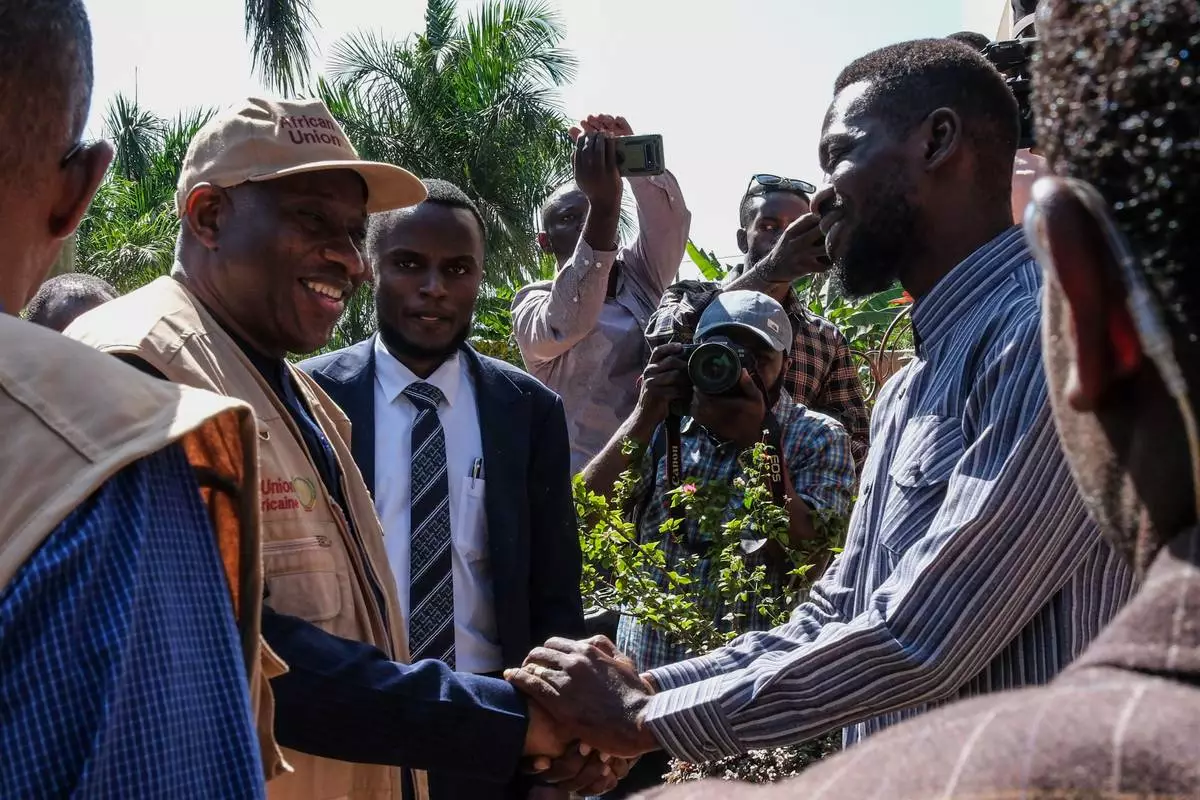
Uganda opposition presidential candidate Robert Kyagulanyi Ssentamu, known as Bobi Wine, right, greets election observers, including former Nigerian President Goodluck Jonathan, at his home in Magere village on the outskirts of Kampala, Uganda, Wednesday, Jan. 14, 2026. (AP Photo/Hajarah Nalwadda)

Uganda opposition presidential candidate Robert Kyagulanyi Ssentamu, known as Bobi Wine, right, greets election observers, including former Nigerian President Goodluck Jonathan, at his home in Magere village on the outskirts of Kampala, Uganda, Wednesday, Jan. 14, 2026. (AP Photo/Hajarah Nalwadda)

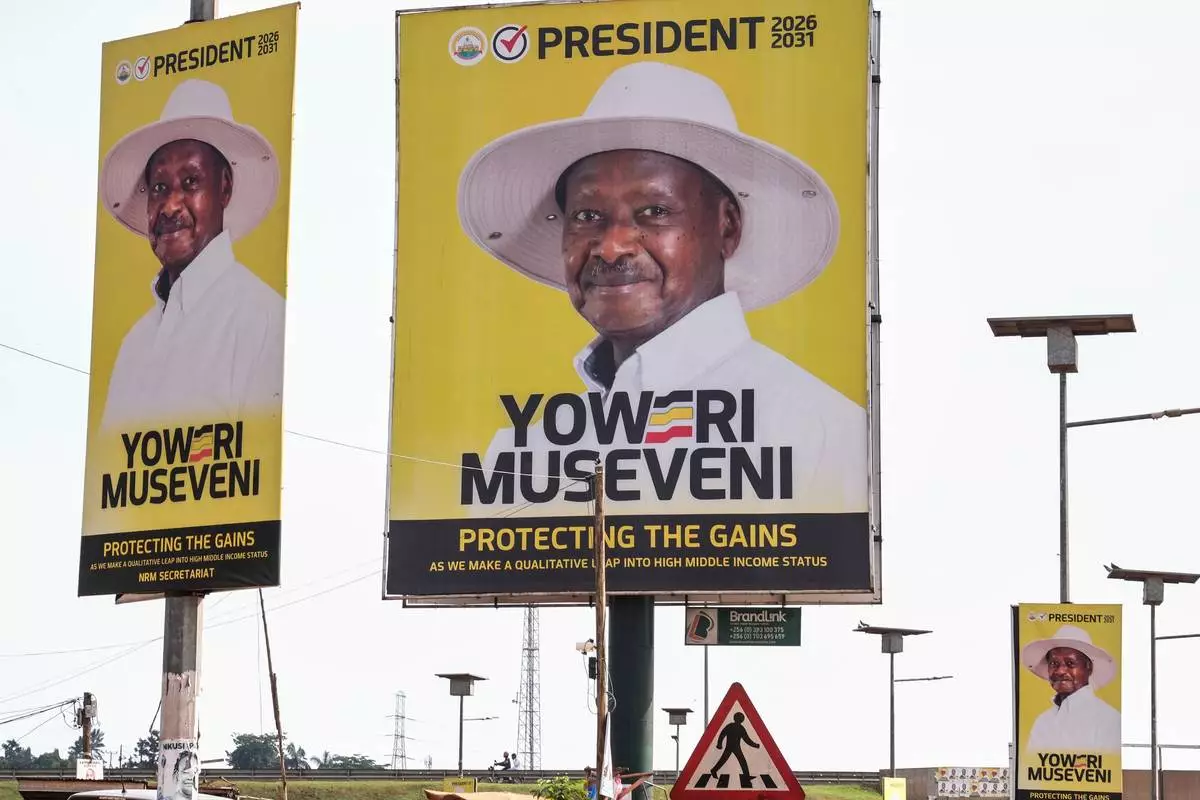
Billboards of Uganda President and National Resistance Movement (NRM) presidential candidate Yoweri Museveni are seen in Kampala, Uganda, Tuesday, Jan. 13, 2026. (AP Photo/Samson Otieno)

Billboards of Uganda President and National Resistance Movement (NRM) presidential candidate Yoweri Museveni are seen in Kampala, Uganda, Tuesday, Jan. 13, 2026. (AP Photo/Samson Otieno)

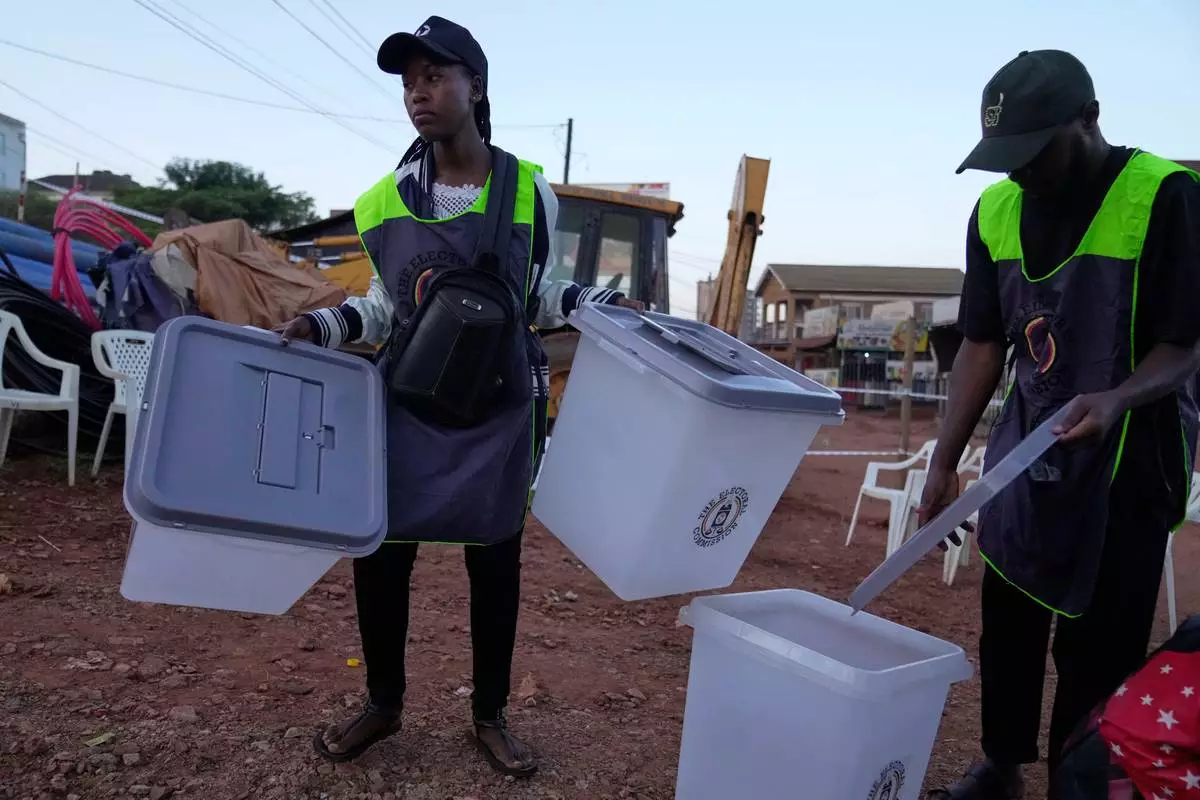
Electoral workers deliver ballot boxes to a polling station during presidential election in Kampala, Uganda, Thursday, Jan. 15, 2026. (AP Photo/Brian Inganga)

Electoral workers deliver ballot boxes to a polling station during presidential election in Kampala, Uganda, Thursday, Jan. 15, 2026. (AP Photo/Brian Inganga)

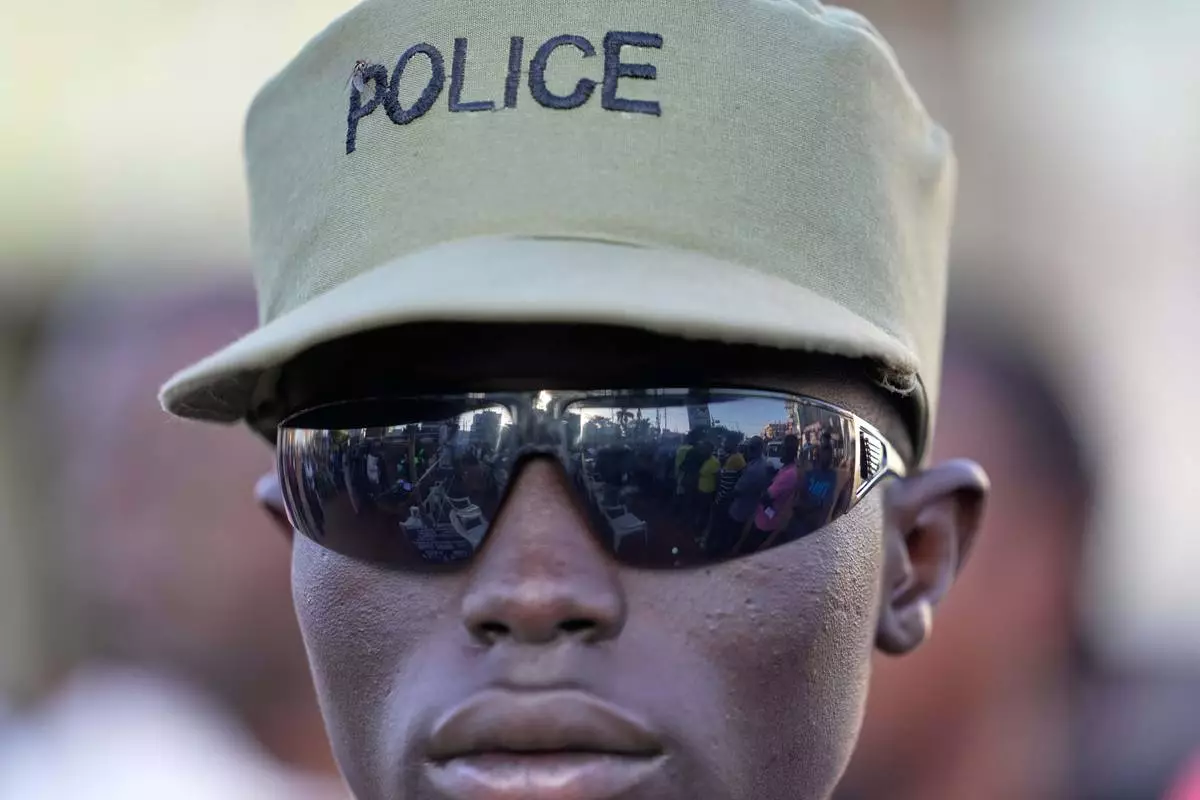
Voters are reflected in a police officer's sunglasses as they wait in line after voting failed to start on time due to system failures during presidential election in Kampala, Uganda, Thursday, Jan. 15, 2026. (AP Photo/Brian Inganga)

Voters are reflected in a police officer's sunglasses as they wait in line after voting failed to start on time due to system failures during presidential election in Kampala, Uganda, Thursday, Jan. 15, 2026. (AP Photo/Brian Inganga)

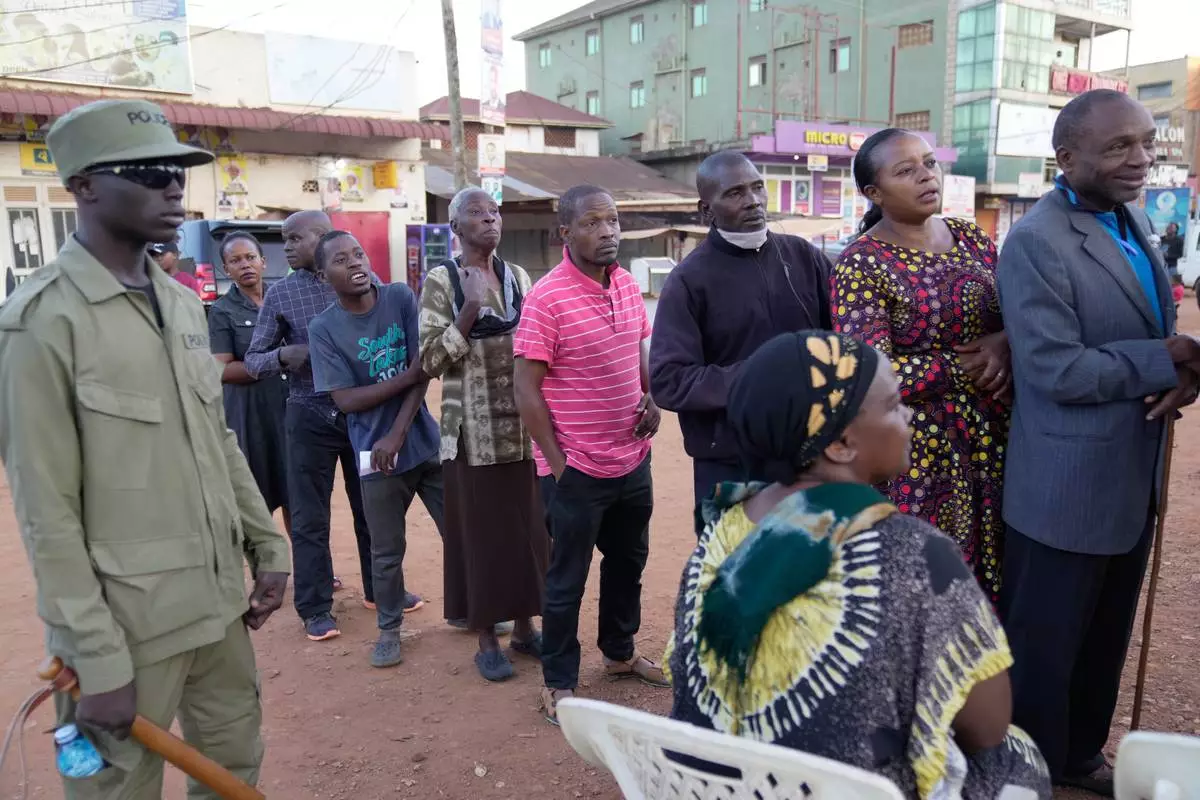
Voters wait to cast their ballots during the presidential election in Kampala, Uganda, Thursday, Jan. 15, 2026. (AP Photo/Brian Inganga)

Voters wait to cast their ballots during the presidential election in Kampala, Uganda, Thursday, Jan. 15, 2026. (AP Photo/Brian Inganga)

Recommended Articles