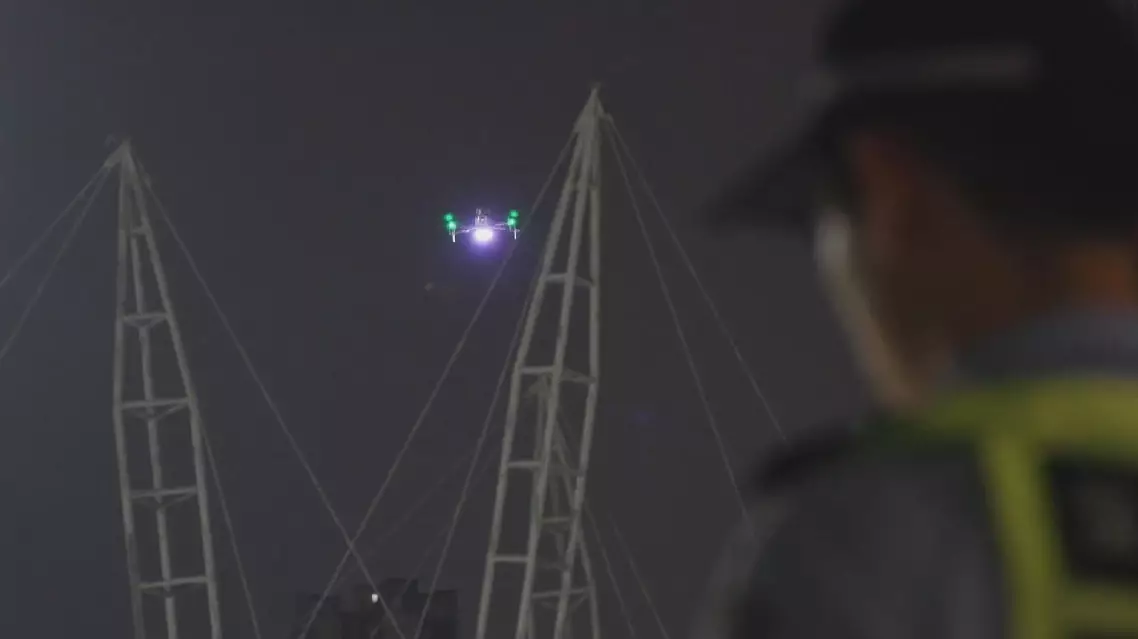
On the snow-capped Qinghai-Tibet Plateau, drones have made significant technological breakthroughs for multi-scenario applications, overcoming extreme climatic challenges such as low oxygen levels and complex air currents.
With their flexibility and efficiency, drones have proven invaluable in fields like emergency rescue and ecological monitoring. The burgeoning low-altitude economy is becoming a crucial driver of new growth.
In the mountainous city of Shannan, located in southwest China's Xizang Autonomous Region, where altitudes average over 3,600 meters, drones are ushering in a new era of efficiency and versatility. Tasks that once relied on manual labor, such as agricultural inspections and engineering surveys, are now streamlined through drone technology, significantly enhancing productivity.
Ba Yongchun, head of the river and lake management department under Shannan City Water Resources Bureau, highlighted the transformative impact of drones on their operations, dramatically improving efficiency in tasks like river inspections that previously took weeks to complete on foot.
"Before we employed drones, the river chiefs and lake chiefs had to patrol the rivers and lakes on foot. For example, a chief may be responsible for a river section spanning about 30 kilometers long. It would take a river chief about a week to complete the entire patrol work on foot. Now with the drones, the efficiency has significantly improved. We can now achieve full coverage in one go, capturing clear images that can be used for scientific decision-making and management in the future," said Ba.
The harsh conditions of the Qinghai-Tibet Plateau have become the ultimate testing ground for drones. The low oxygen levels and complex airflows make traditional drones highly susceptible to losing control in this environment. These extreme conditions present significant challenges to the aircraft's performance, reliability, and adaptability.
At a drone test flight facility in Naidong District, specially designed drones for high-altitude regions are undergoing rigorous testing to ensure they can meet these demanding conditions.
"We have conduct various simulations and tests on the plains, but it cannot comprehensively assess the drones. Only by flying them here can we truly understand these conditions and establish a set of standards for the future development of high-altitude operations," said Zhang Bo, chairman of the Xizang Chuangbo Tonghang Technology Co.,Ltd.
Tackling the unique challenges of the high plateau environment, Zhang's team has developed a range of drone models suited for various applications, achieving breakthroughs in flight control algorithms, power systems and communication resilience, ensuring seamless operations in missions like emergency responses and environmental monitoring.
A 6.8-magnitude earthquake occurred in Xizang's Dingri County In January this year. Drones played a pivotal role in delivering supplies, conducting search and rescue operations, and assessing the disaster area.
"This drone is mainly capable of conducting long-duration and wide-area high-altitude exploration and perception. For instance, we can perform a range area scan and modeling of the disaster-stricken area to understand the extent of the disaster. Meanwhile, it can search and rescue trapped or injured people as it is equipped with infrared devices. When the road is blocked and villagers or trapped people need supplies or medical rescue, we can use this heavy-duty drone to deliver oil, batteries and various facilities for heating to the villagers," said Chen Lumin, general manager of the company. With robust policy support from the local government, technological advancements in drones are driving economic growth and improving livelihoods in the high plateau region. Collaborations with universities nationwide are nurturing local talent in drone technology, empowering the region's scientific capabilities.
"We have carried out talent cultivation with the local government as there is still a shortage of talents in Xizang. Learning the principles of the drones as well as the application and implementation of the technologies has broadened their horizons," said Zhang Xuejun, a professor of Beihang University.
As the country's support for low-altitude economies strengthens, emerging enterprises mainly focusing on drones are thriving in Xizang, poised to become a key driver of the region's development.
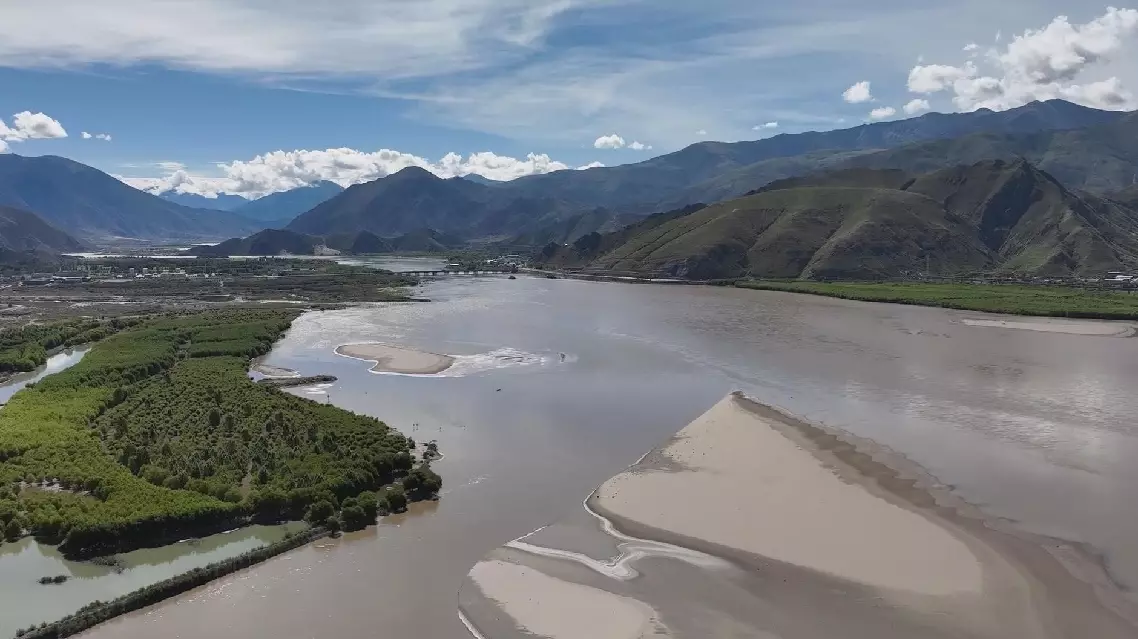
Drones show prowess in challenging extreme climatic conditions in China's Xizang