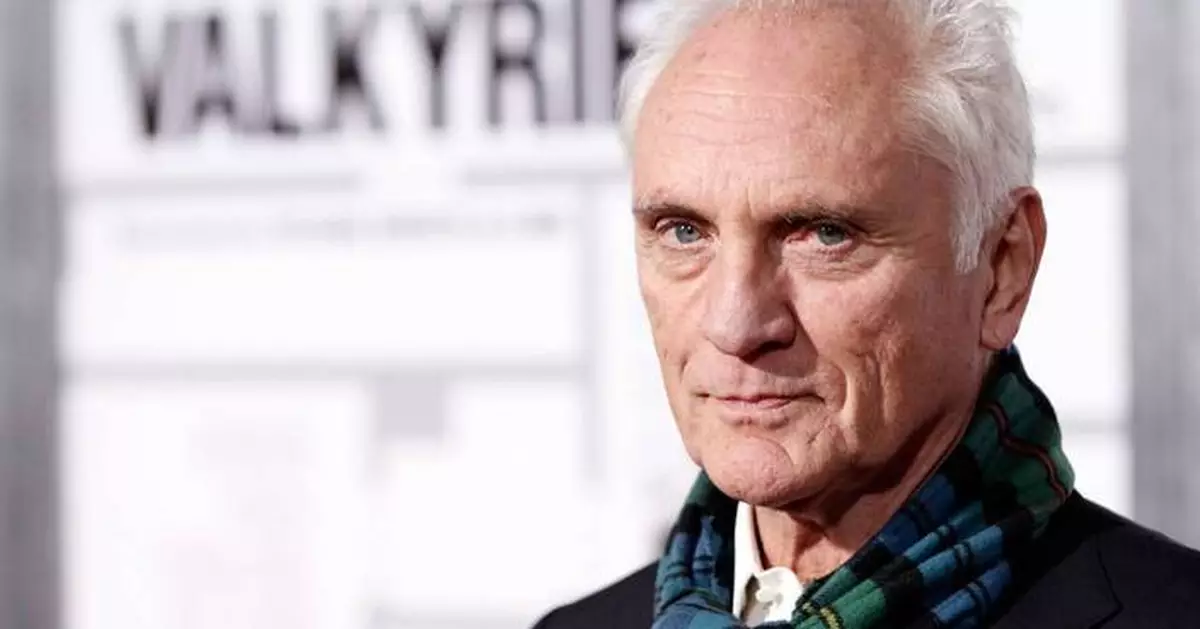
LONDON (AP) — Terence Stamp, the British actor who often played the role of a complex villain, including that of General Zod in the early Superman films, has died. He was 87.
His death on Sunday was disclosed in a death notice published online, prompting a wave of tributes from and an array of fans and those close to him within the industry, including the British Academy of Film and Television Arts, or BAFTA.
The London-born Stamp started his film career with 1962’s seafaring “Billy Budd,” for which he earned Oscar and BAFTA award nominations.
His six decades in the business were peppered with highlights, including his touching portrayal of the transsexual Bernadette in 1994's “The Adventure of Priscilla, Queen of the Desert," the second of his two BAFTA nominations.
But it will be his portrayal of the bearded Zod in 1978's “Superman” and its sequel “Superman II” two years later that most people associate with Stamp. As the Kryptonian arch enemy to Christopher Reeve's Man of Steel, Stamp introduced a darker, charming and vulnerable — more human — element to the franchise, one that's been replicated in countless superhero movies ever since.
Edgar Wright, who directed Stamp in his final feature film, 2021’s “Last Night in Soho,” remembered the actor in an Instagram post as “kind, funny, and endlessly fascinating.”
“The closer the camera moved, the more hypnotic his presence became. In close-up, his unblinking gaze locked in so powerfully that the effect was extraordinary. Terence was a true movie star: the camera loved him, and he loved it right back,” Wright said.
Bill Duke, who starred with Stamp in director Steven Soderbergh’s 1999 crime drama “The Limey,” said he was “deeply saddened” to hear of his death.
“He brought a rare intensity to the screen, but off-screen he carried himself with warmth, grace, and generosity,” he said on Facebook.
Stamp started his acting career on stage in the late 1950s, where he acted in repertory theatre and met Michael Caine, who was five years older than himself. The pair lived together in a flat in central London while looking for their big break.
He got his break with “Billy Budd” and Stamp embarked on a career that would see him in the early 1960s be part of the “angry young men” movement that was introducing an element of social realism into British moviemaking.
That was perhaps most notable in the 1965 adaptation of John Fowles’ creepy debut novel “The Collector,” where he played the awkward and lonely Freddie Clegg, who kidnapped Samantha Eggar’s Miranda Grey in a warped attempt to win her love. It was a performance that would earn the young Stamp, fresh off his Oscar nomination, the best actor award at that year’s Cannes Film Festival.
While part of that 1960s British movement, Stamp learned from some of the most seasoned actors from the classical era, including Laurence Olivier.
“I worked with Olivier briefly on my second movie (1962’s “Term of Trial"),” Stamp recalled in an interview with the AP in 2013. “And he said to me, ‘You should always study your voice.’” Stamp then segued into a spot-on Olivier impersonation, continuing, “‘Because, as you get older, your looks go, but your voice will become empowered.’”
His career took a bit of a hiatus from the late 1960s after he missed out on the role of James Bond to replace Sean Connery, that included a years-long stint in India and which saw him embrace a more holistic approach to his self.
It was the unexpected role of General Zod that brought him back to the limelight. He played John Tunstall in 1988's “Young Guns,” the Galactic Republic leader in 1999's “Star Wars” prequel “The Phantom Menace,” appeared in the comedies “Yes Man” and “Get Smart” in 2008 and delivered voice performances in the video games “Halo 3” and “The Elder Scrolls IV: Oblivion.”
Born in London’s East End on July 22, 1938, Stamp lived a colorful life, particularly during the 1960s when he had a string of romances, including with actress Julie Christie and model Jean Shrimpton. He married 29-year-old Elizabeth O’Rourke in 2002 at the age of 64 but the couple divorced six years later. Stamp did not have any children.
Stamp retained his looks as the years ticked by, his natural handsomeness hardened by a more grizzled look.
He generally sought to keep his standards high — to a point.
“I don’t do crappy movies, unless I haven’t got the rent,” he said.
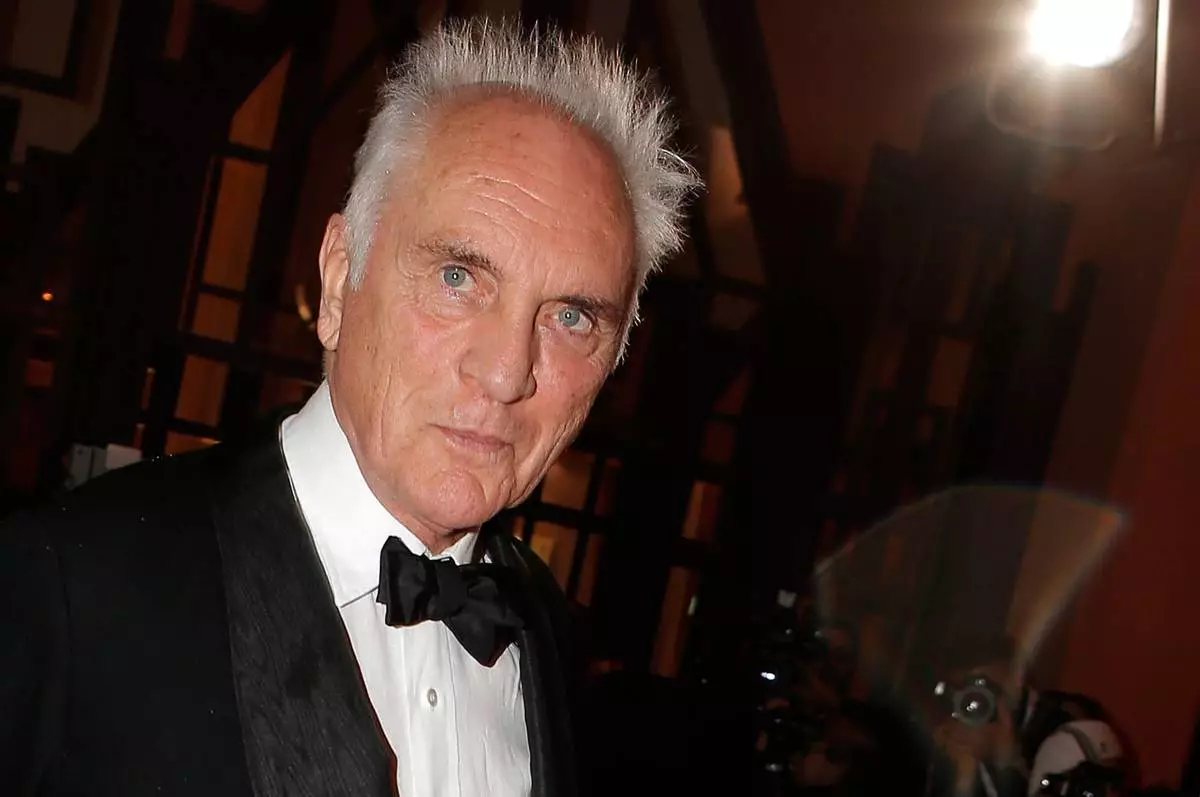
FILE - British actor Terence Stamp arrives at the Marrakech International Film Festival in Marrakech, Nov. 30, 2012 at the Marrakech Congress Palace. (AP Photo/Lionel Cironneau, file)
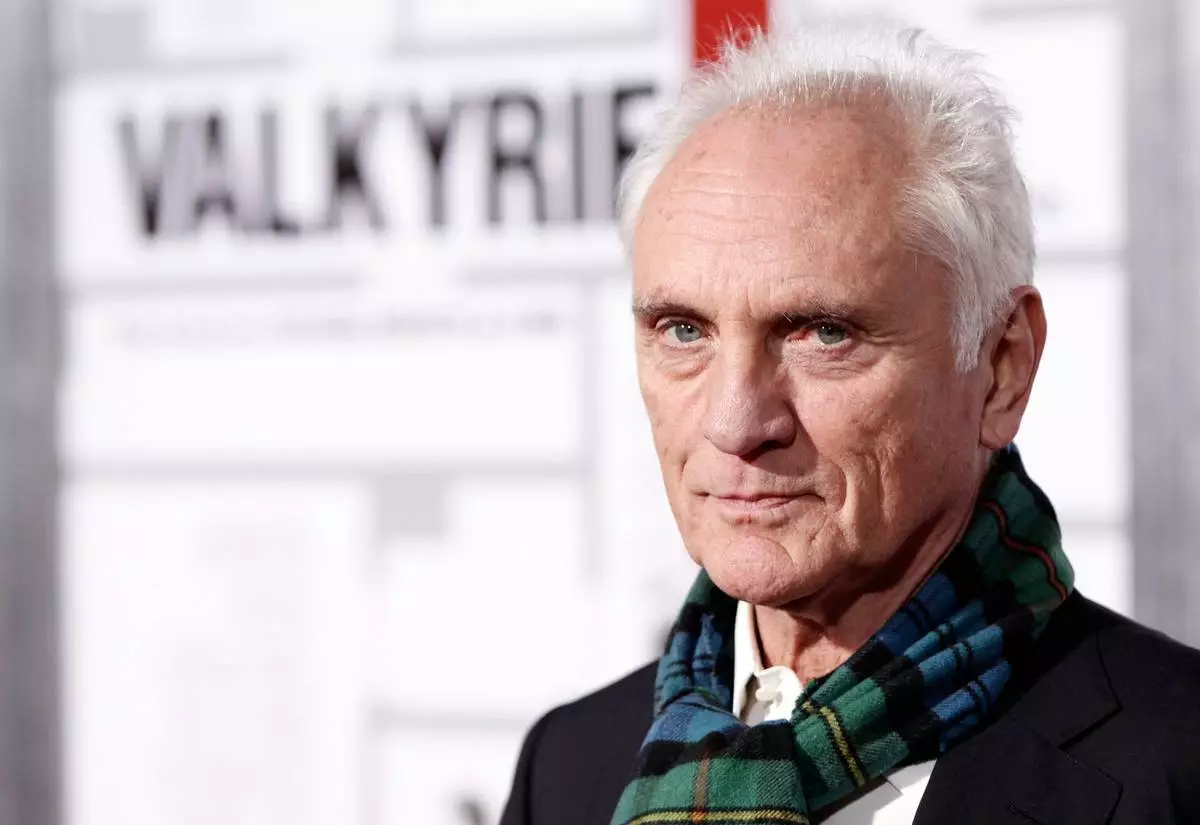
FILE - Cast member Terence Stamp arrives at the premiere of "Valkyrie" in Los Angeles on Dec. 18, 2008. (AP Photo/Matt Sayles, file)
GUATEMALA CITY (AP) — The death toll from suspected gangsters’ attacks on Guatemalan police rose to nine Monday, as Guatemalans saw heavier security in the streets and curtailed rights after Congress approved President Bernardo Arévalo's emergency declaration.
The violence started Saturday when inmates seized control of three prisons in apparently coordinated riots, taking 43 guards hostage. The gangs were demanding privileges for their members and leaders, according to authorities. Shortly after police liberated one prison Sunday morning, suspected gang members attacked police across the capital.
On Monday, National Civil Police Director David Custodio Boteo said that a ninth police officer had died early Monday from his injuries, adding that “there are several wounded who are in critical condition ... Some also suffered amputations.”
Police honored the fallen officers in a ceremony Monday, where flag-draped coffins sat in the Interior Ministry.
“Today it pains me to give each one of the families this flag, symbol of the nation that will not forget the sacrifice and commitment of their police fallen in the fulfillment of their duty,” Arévalo said Monday.
Outside the Interior Ministry, José Antonio Revolorio, 72, father of officer José Efraín Revolorio Barrera, 25, said, “I hope that the criminals who did this to my son will one day pay for it, that the law will go after them. And that this doesn’t end here, because my son was an honest man, competent at his work.”
Meanwhile, the government gazette published Monday Arévalo’s declaration of a 30-day state of emergency, saying there were “coordinated actions by self-named maras or gangs against state security forces, including armed attacks against civilian authorities.”
Among the rights that the declaration limits are freedom of action and demonstrations. It also allows police to arrest people without a judicial order if they are suspected gang members. Security forces could also prohibit the movement of vehicles in certain places or subject them to searches.
The unicameral Congress approved the state of emergency with minor changes Monday night on a vote of 149 in favor to 1 against, with 10 absent or on approved leave of absence. However, it had gone into effect Sunday.
Traffic in the capital Monday appeared lighter than usual.
“This situation is a shame. It affects people psychologically: they don't want to go out,” said Óscar López, a 68-year-old radio technician who had a doctor's appointment. “I agree with the president imposing the state of emergency because it doesn't stop the violence, but it relaxes people.”
Ileana Melgar, 64, said she was afraid of missing her appointment to renew her identification Monday. “But I was afraid to go out, I called my friend to go with me. You don't know if they will also stop (public) transportation and we can't get back home.”
The U.S. Embassy in Guatemala had instructed U.S. government personnel to shelter in place Sunday. That was lifted later in the day, but they were “advised to maintain a high level of caution when traveling.”
On Monday, the embassy condemned the attacks on police. “These terrorists, as well as those who cooperate with them or are linked to them, have no place in our hemisphere. The security of the Guatemalan people and the stability of our hemisphere must prevail. We reaffirm our support for Guatemala’s security forces to curb the violence.”
In October, the Congress reformed laws to declare members of the Barrio 18 and Mara Salvatrucha gangs terrorists. The changes lengthened prison sentences for gang members who commit crimes.
The United States government also declared those gangs foreign terrorist organizations last year.
As a safety precaution, school was suspended nationwide Monday.
__
AP journalist Emmanuel Andrés contributed to this report.
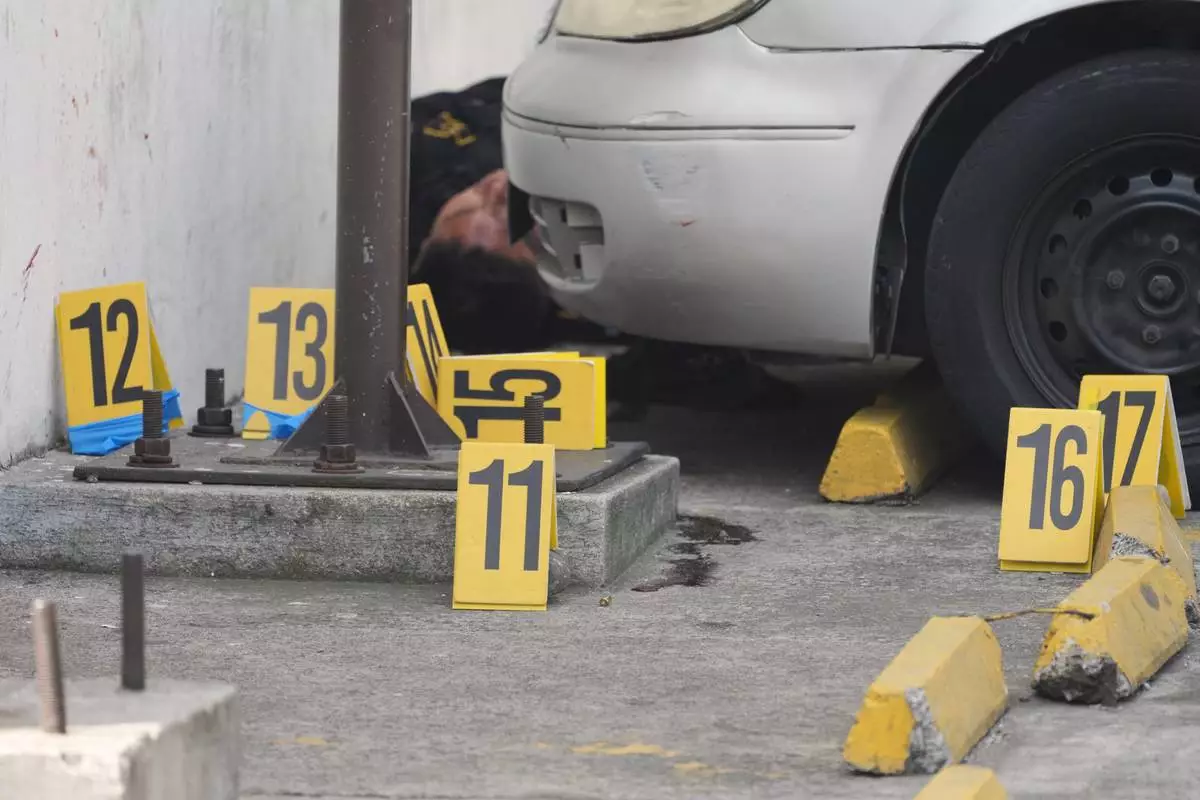
Evidence markers stand at the scene where police officers were killed in attacks reported after security forces retook control of a prison that houses gang leaders, in Villanueva, on the outskirts of Guatemala City, Sunday, Jan. 18, 2026. (AP Photo/Moises Castillo)
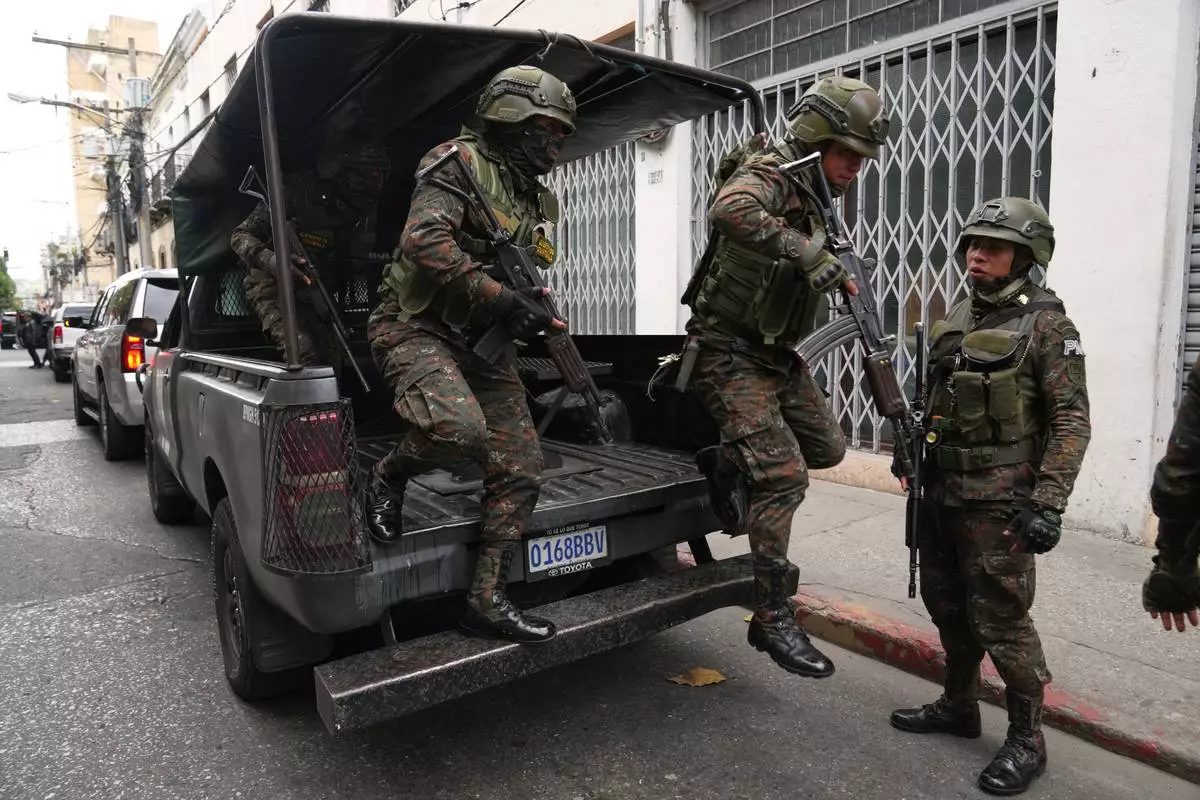
Deployed soldiers exit a vehicle around Congress in Guatemala City, Monday, Jan. 19, 2026, after President Bernardo Arévalo declared a state of emergency. (AP Photo/Moises Castillo)
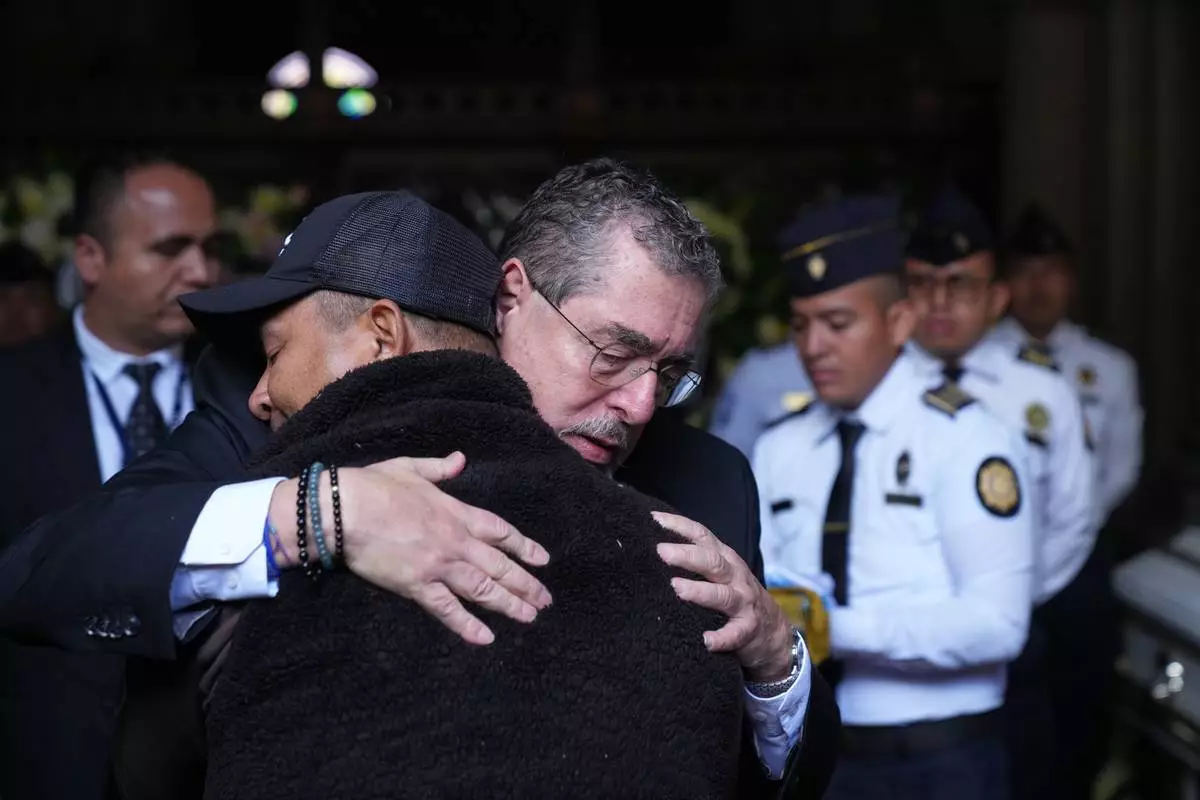
Guatemalan President Bernardo Arevalo comforts the relative of one of the police officers killed while retaking control of three prisons, during the wake for the officers at the Interior Ministry in Guatemala City, Monday, Jan. 19, 2026. (AP Photo/Moises Castillo)
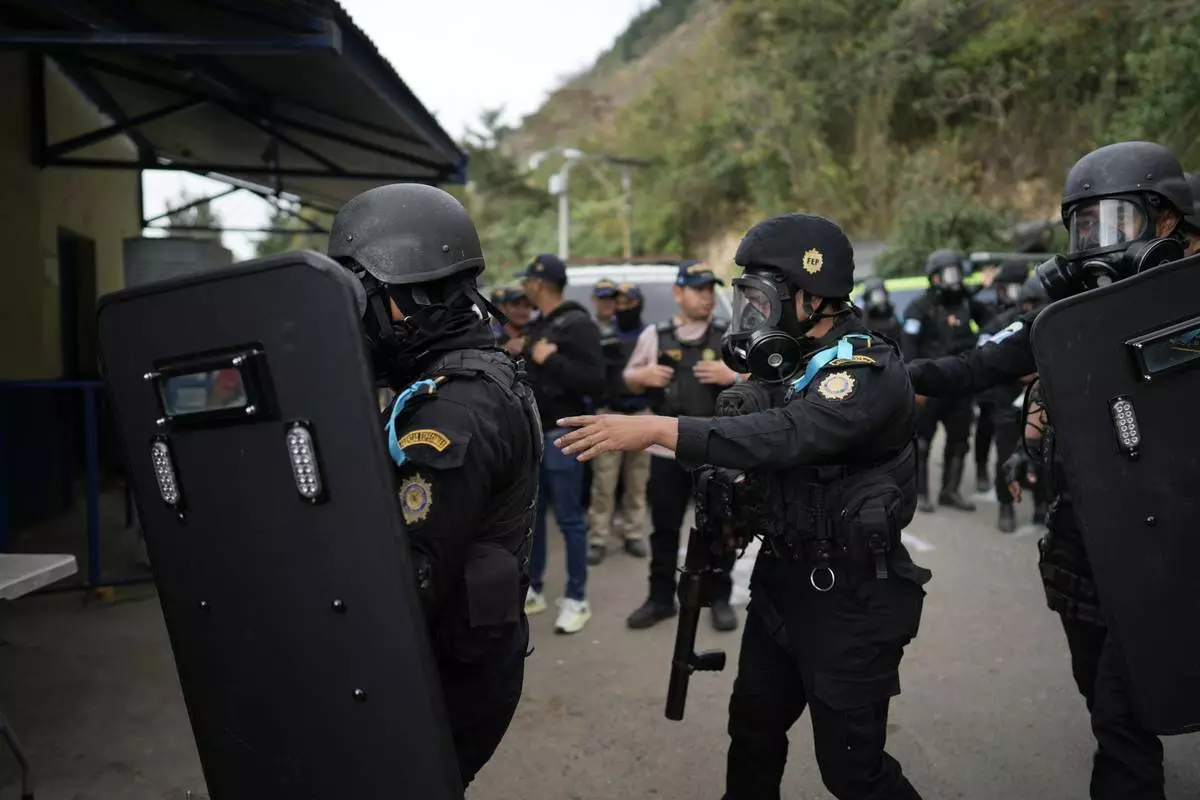
Security forces enter the Preventivo Zona 18 prison to free guards taken hostage and retake control of the facility in Guatemala City, Sunday, Jan. 18, 2026. (AP Photo/Emmanuel Andres)
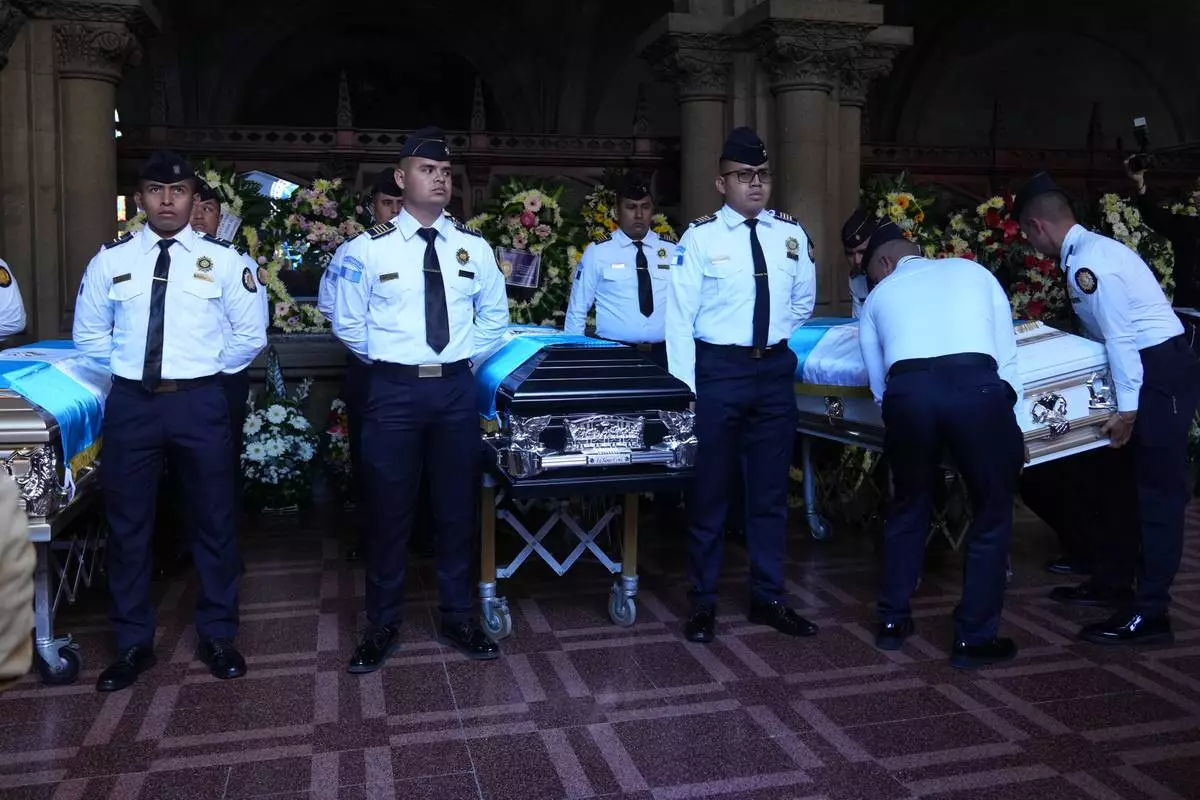
The wake for police officers killed while retaking control of three prisons is held at the Interior Ministry in Guatemala City, Monday, Jan. 19, 2026. (AP Photo/Moises Castillo)
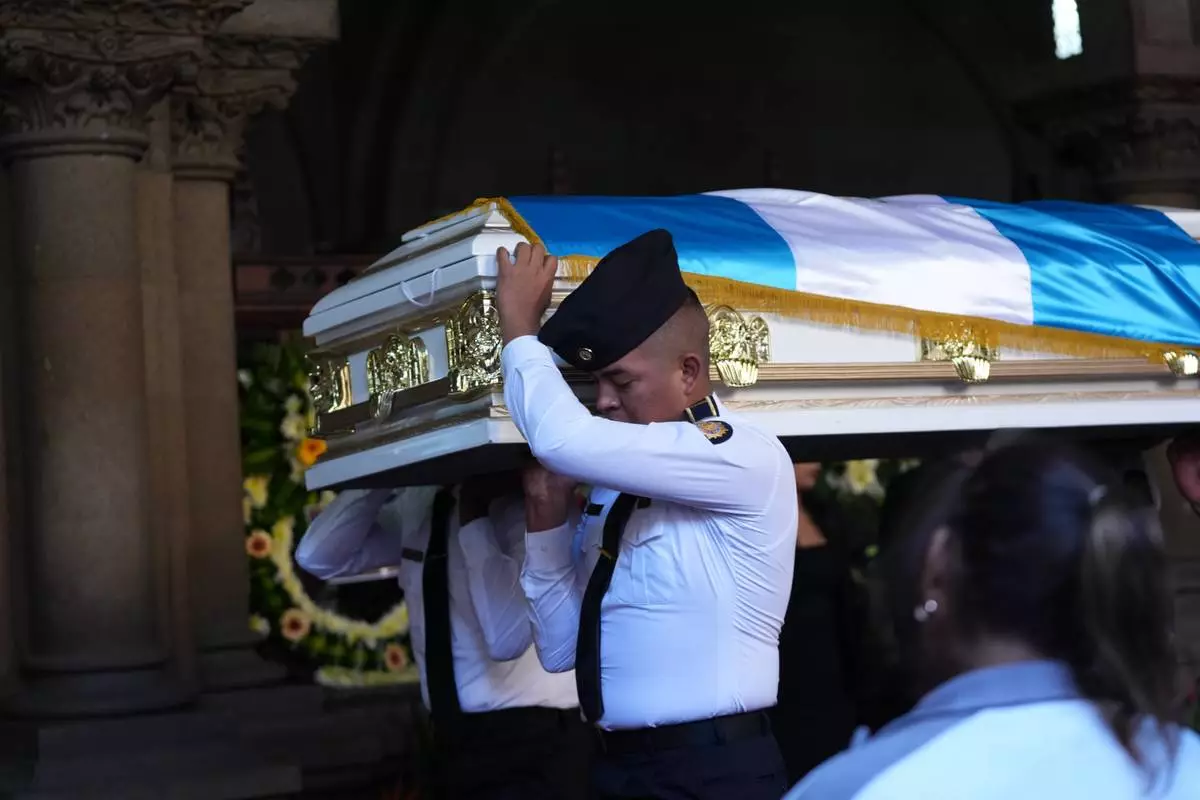
The wake for police officers killed while retaking control of three prisons is held at the Interior Ministry in Guatemala City, Monday, Jan. 19, 2026. (AP Photo/Moises Castillo)
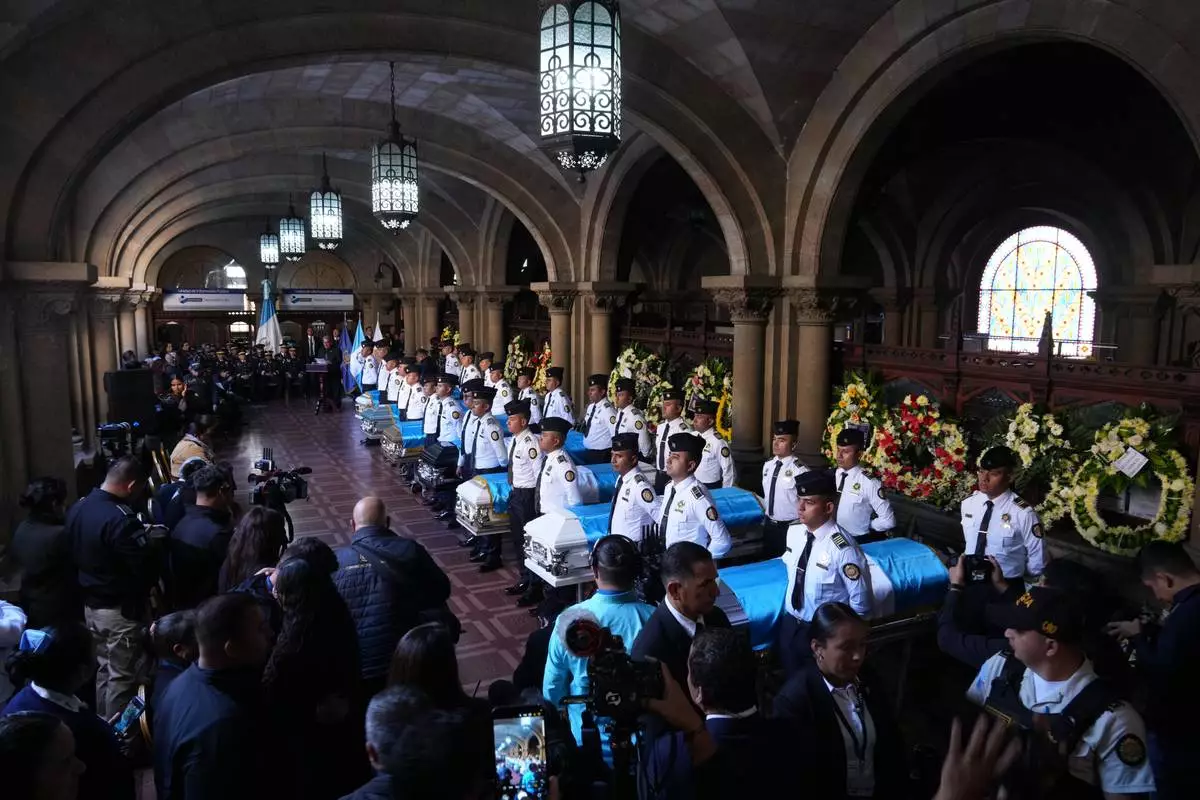
The wake for police officers killed while retaking control of three prisons is held at the Interior Ministry in Guatemala City, Monday, Jan. 19, 2026. (AP Photo/Moises Castillo)
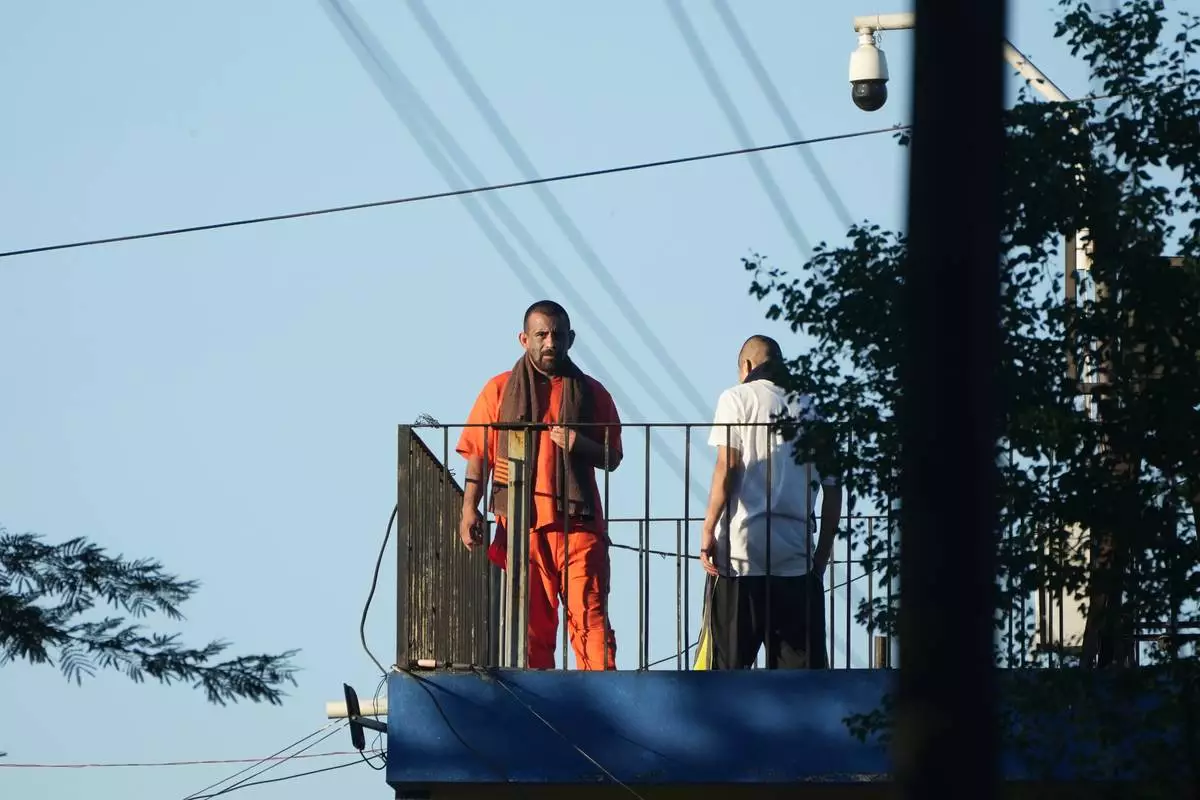
Inmates stand atop a guard tower at the Renovation maximum-security prison before security forces entered the facility to free guards taken hostage in Escuintla, Guatemala, Sunday, Jan. 18, 2026. (AP Photo/Moises Castillo)
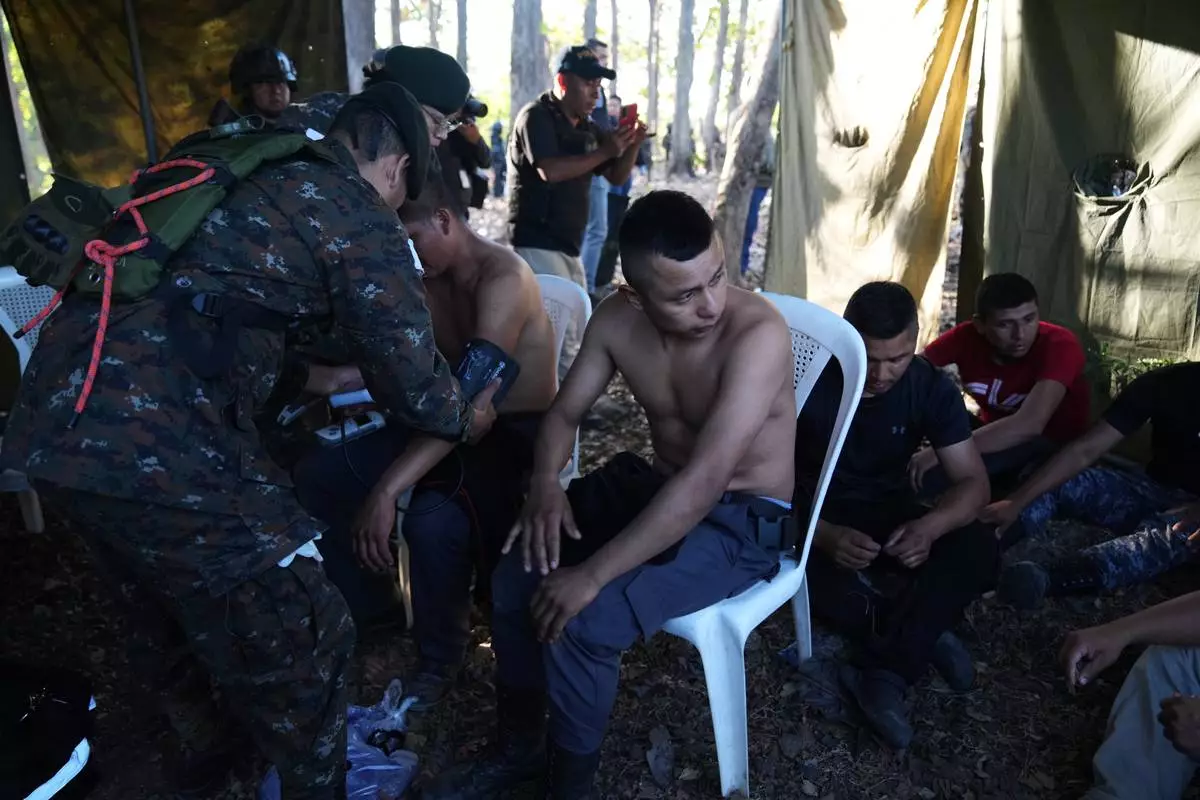
A medic checks on freed prison guards outside the Renovation maximum-security prison after security forces entered the facility to retake control in Escuintla, Guatemala, Sunday, Jan. 18, 2026. (AP Photo/Moises Castillo)
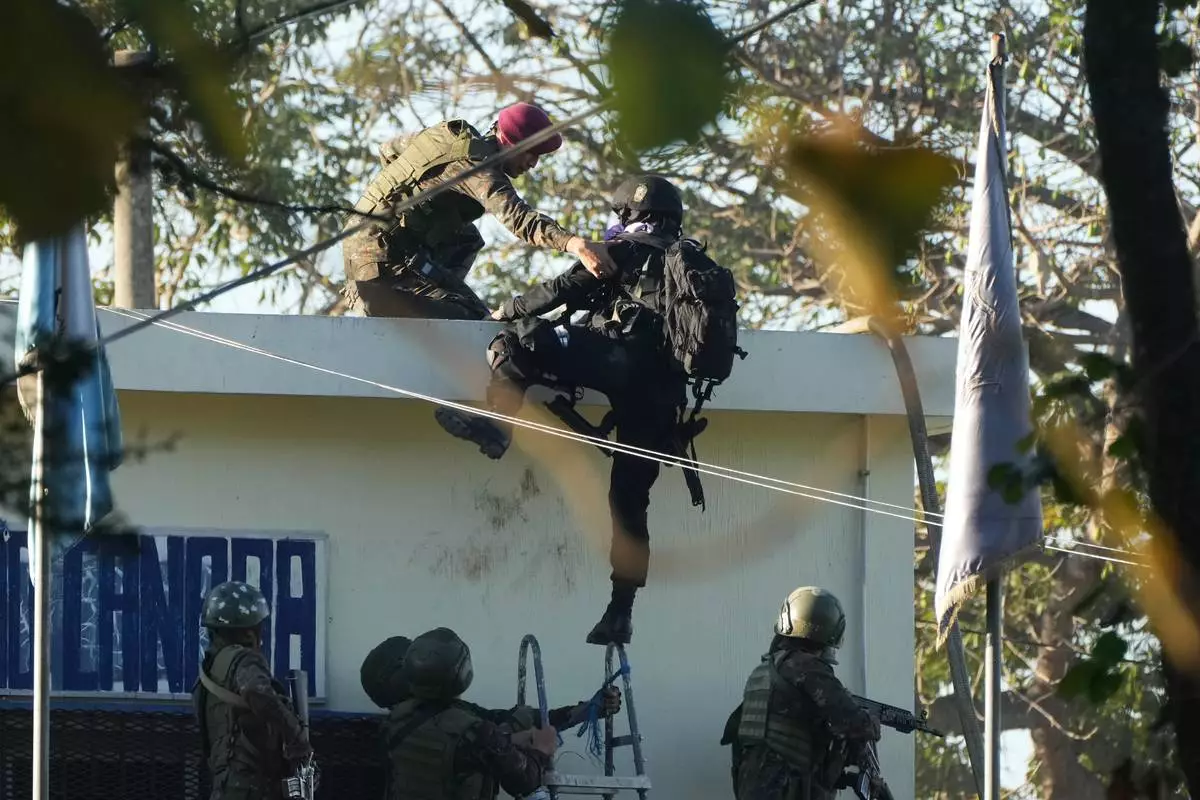
Security forces enter the Renovation maximum-security prison to free guards taken hostage and retake control of the facility, which houses gang leaders, in Escuintla, Guatemala, Sunday, Jan. 18, 2026. (AP Photo/Moises Castillo)
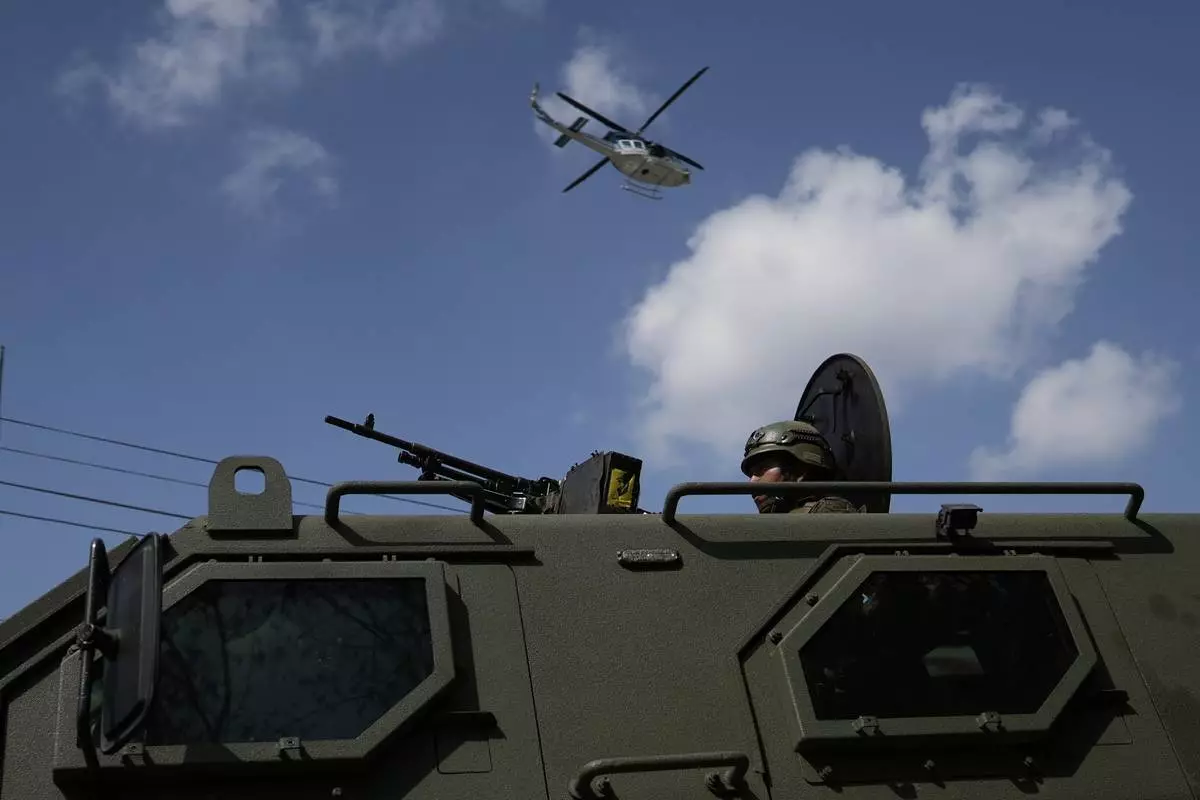
A soldier takes position in an armored vehicle outside the Preventivo Zona 18 prison during an operation to free guards taken hostage and retake control of the facility in Guatemala City, Sunday, Jan. 18, 2026. (AP Photo/Emmanuel Andres)
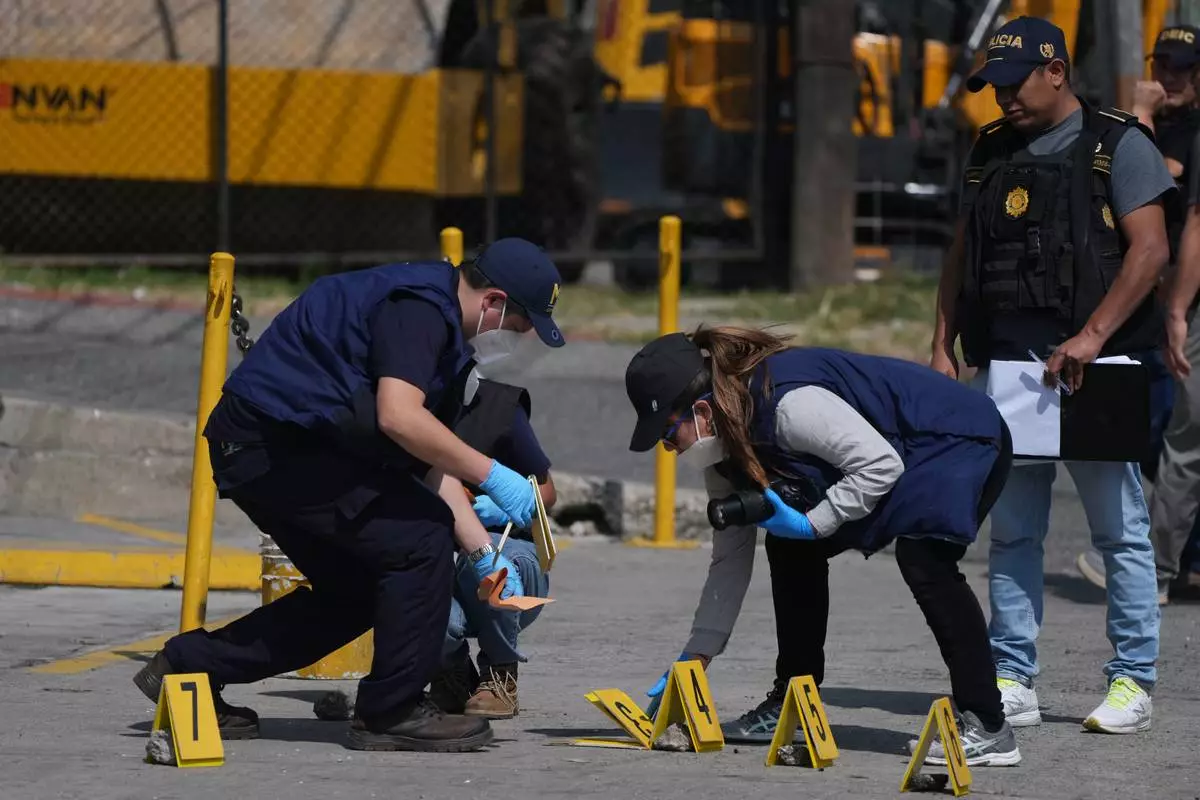
Forensic investigators place evidence markers at the scene where police officers were killed in attacks reported after security forces retook control of a prison that houses gang leaders, in Villanueva, outskirts of Guatemala City, Sunday, Jan. 18, 2026. (AP Photo/Moises Castillo)