Skip to Content Facebook Feature Image

Cloudbursts are causing chaos in parts of India and Pakistan. Here's what they are

News

Cloudbursts are causing chaos in parts of India and Pakistan. Here's what they are
News

News

Cloudbursts are causing chaos in parts of India and Pakistan. Here's what they are

2025-08-18 03:33 Last Updated At:03:41

ISLAMABAD (AP) — Cloudbursts are causing chaos in mountainous parts of India and Pakistan, with tremendous amounts of rain falling in a short period of time over a concentrated area. The intense, sudden deluges have proved fatal in both countries.

As many as 300 people died in one northwestern Pakistani district, Buner, after a cloudburst. The strength and volume of rain triggered flash flooding, landslides and mudflows. Boulders from steep slopes came crashing down with the water to flatten homes and reduce villages to rubble.

More Images
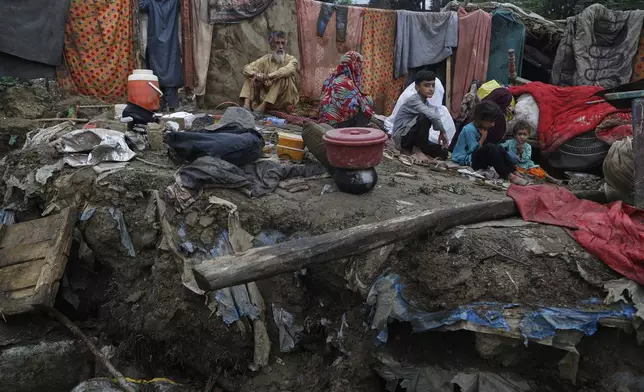
Villager Mateen Khan, second left, and his family members sit over the rubble of their damaged home following Friday's flash flooding at a neighbourhood of Pir Baba, an area of Buner district, in Pakistan's northwest, Sunday, Aug. 17, 2025. (AP Photo/Muhammad Sajjad)
Villager Mateen Khan, second left, and his family members sit over the rubble of their damaged home following Friday's flash flooding at a neighbourhood of Pir Baba, an area of Buner district, in Pakistan's northwest, Sunday, Aug. 17, 2025. (AP Photo/Muhammad Sajjad)

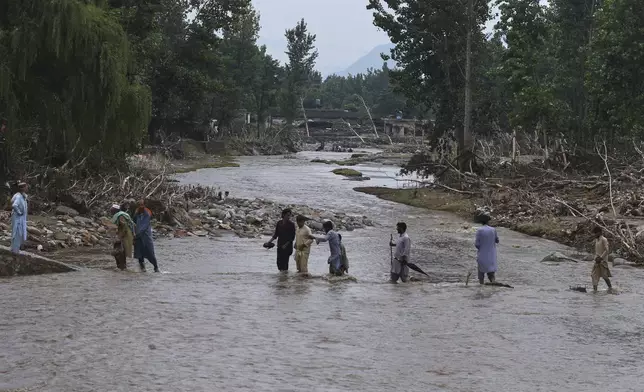
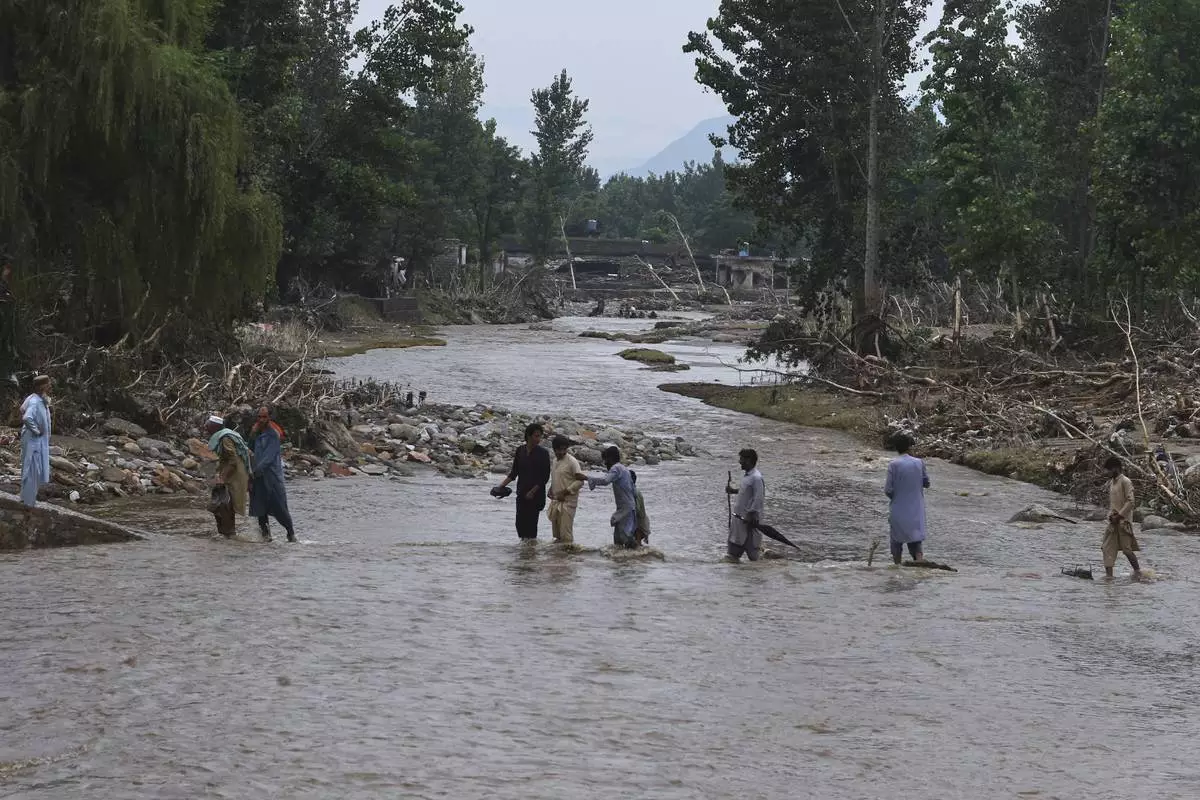
Local residents cross a stream following Friday's flash flooding hit area in Pishoreen village in Buner district, in Pakistan's northwest, Sunday, Aug. 17, 2025. (AP Photo/Muhammad Sajjad)
Local residents cross a stream following Friday's flash flooding hit area in Pishoreen village in Buner district, in Pakistan's northwest, Sunday, Aug. 17, 2025. (AP Photo/Muhammad Sajjad)

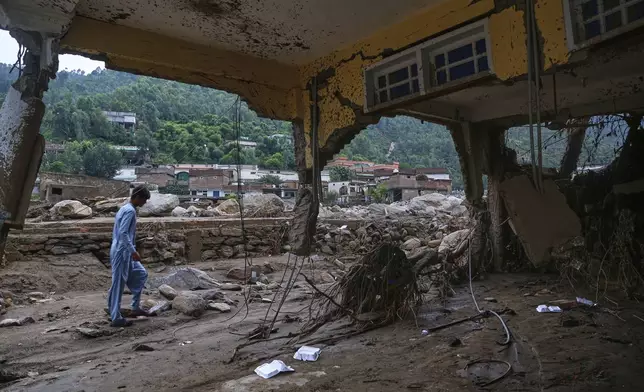
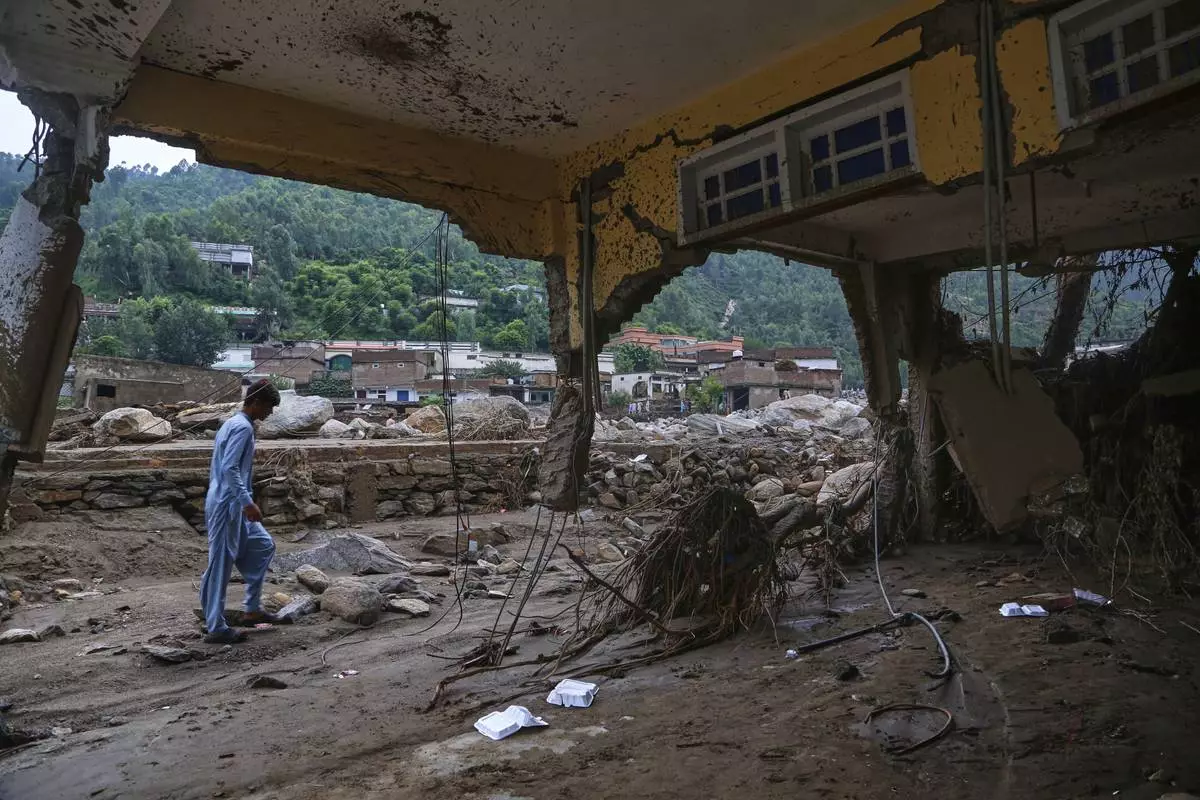
A local resident looks a damaged home following Friday's flash flooding at a neighborhood of Pir Baba, an area of Buner district, in Pakistan's northwest, Sunday, Aug. 17, 2025. (AP Photo/Muhammad Sajjad)
A local resident looks a damaged home following Friday's flash flooding at a neighborhood of Pir Baba, an area of Buner district, in Pakistan's northwest, Sunday, Aug. 17, 2025. (AP Photo/Muhammad Sajjad)

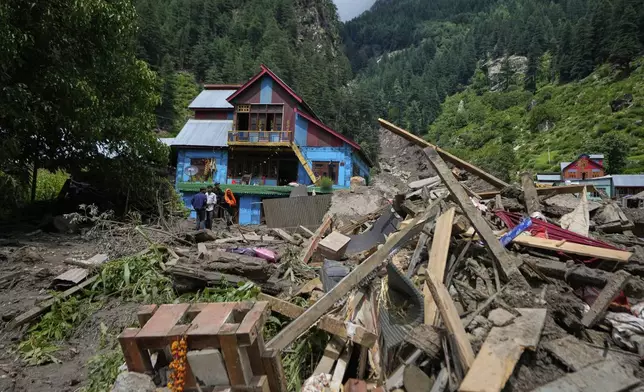
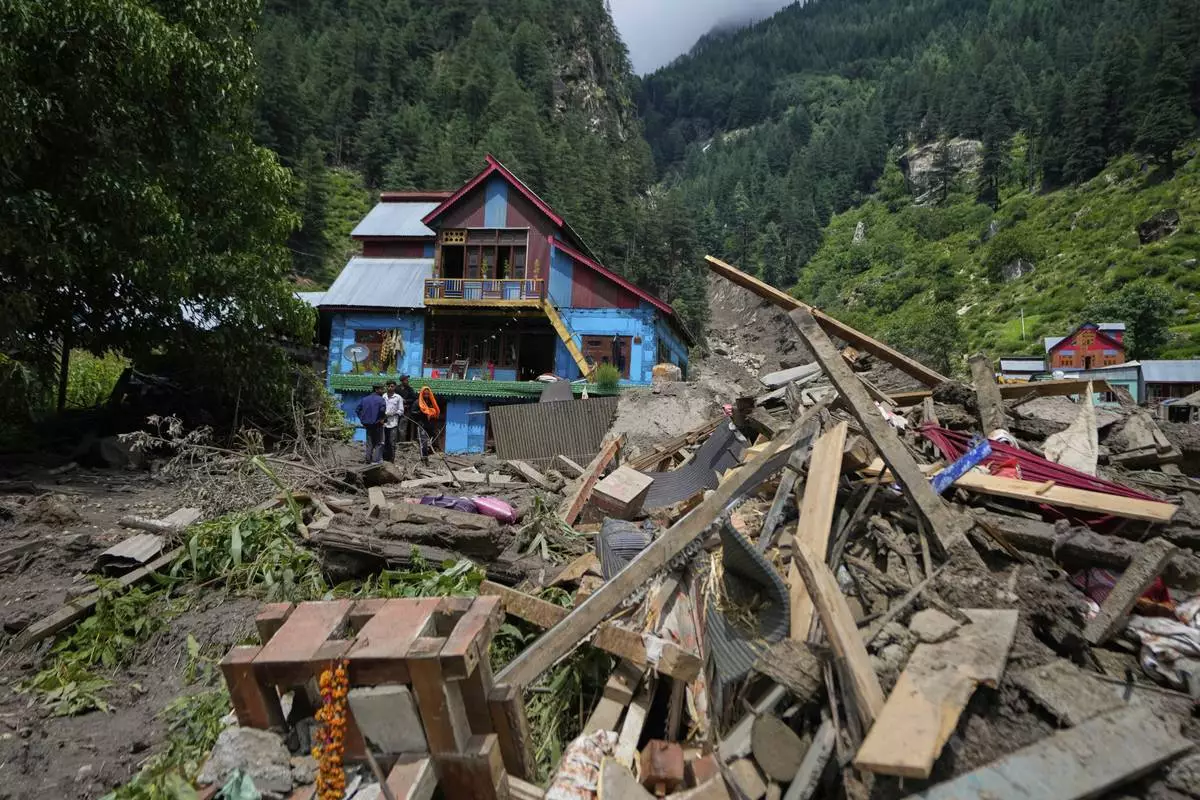
Buildings damaged by Thursday's flash floods are seen in Chositi village, Kishtwar district, Indian-controlled Kashmir, Friday, Aug. 15, 2025. (AP Photo/Channi Anand)
Buildings damaged by Thursday's flash floods are seen in Chositi village, Kishtwar district, Indian-controlled Kashmir, Friday, Aug. 15, 2025. (AP Photo/Channi Anand)

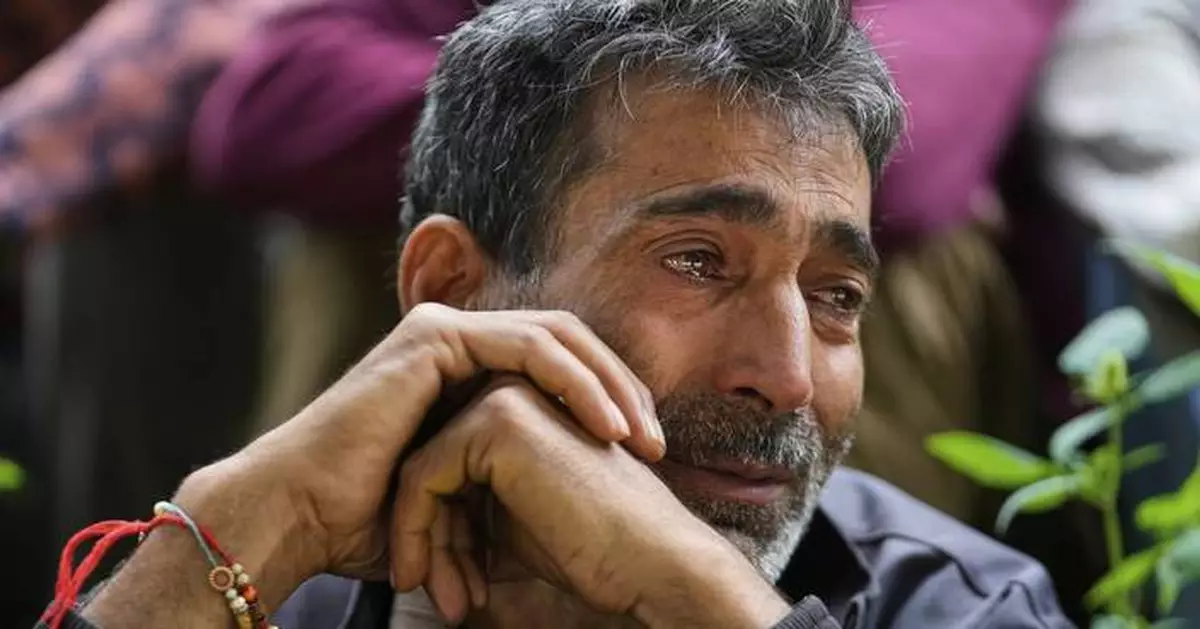
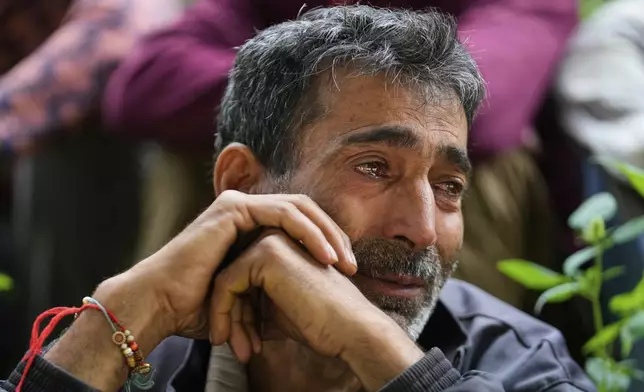
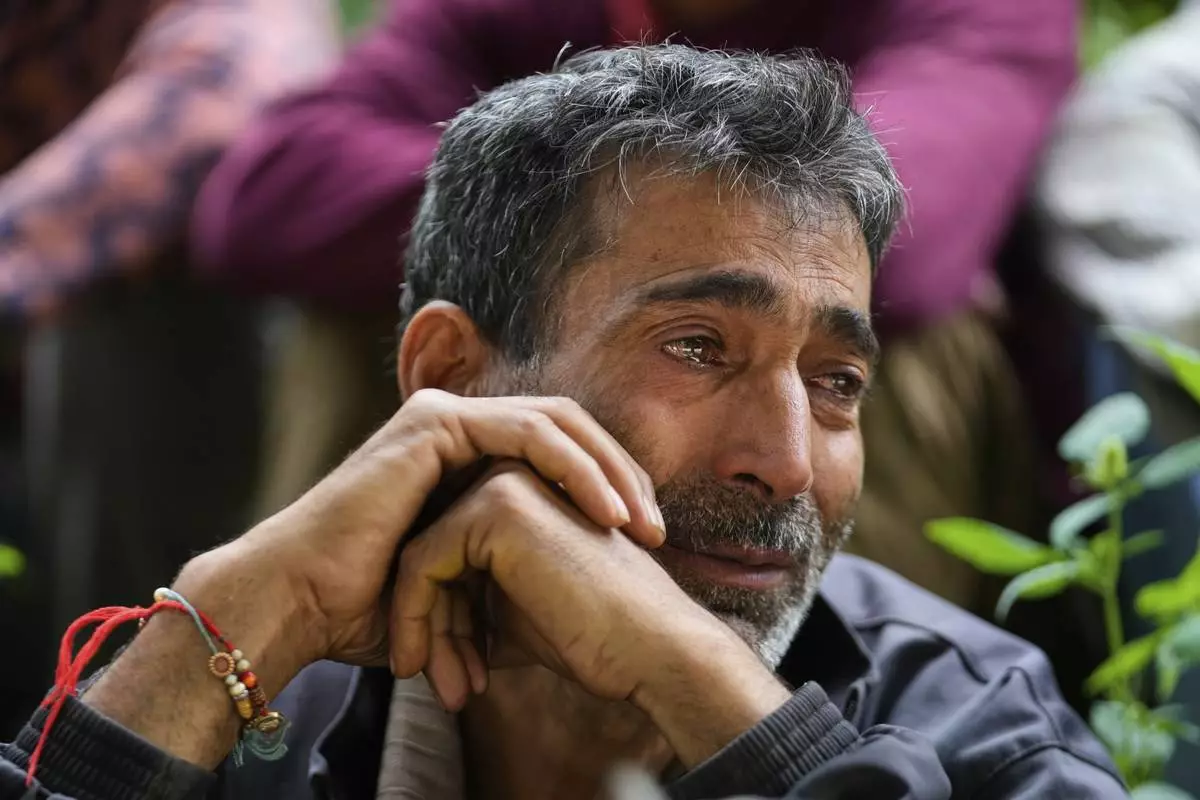
Hari Chand mourns the death of his wife during flash floods in Chositi village, in Kishtwar district, Indian-controlled Kashmir, Friday, Aug. 15, 2025. (AP Photo/Channi Anand)

Hari Chand mourns the death of his wife during flash floods in Chositi village, in Kishtwar district, Indian-controlled Kashmir, Friday, Aug. 15, 2025. (AP Photo/Channi Anand)

The northern Indian state of Uttarakhand had a cloudburst earlier this month. Local TV showed floodwaters surging down a mountain and crashing into Dharali, a Himalayan village. In 2013, more than 6,000 people died and 4,500 villages were affected when a similar cloudburst struck the state.

Here’s what to know about cloudbursts:

A cloudburst occurs when a large volume of rain falls in a very short period, usually more than 100 millimeters (about 4 inches) within an hour over a localized area, around 30 square kilometers (11.6 square miles).

Cloudbursts are sudden and violent, with devastating consequences and widespread destruction, and can be the equivalent of several hours of normal rainfall or longer. The event is the bursting of a cloud and the discharge of its contents at the same time, like a rain bomb.

Several factors contribute to a cloudburst, including warm, moist air rising upward, high humidity, low pressure, instability and convective cloud formation.

Moist air is forced to rise after encountering a hill or mountain. This rising air cools and condenses. Clouds that are large, dense and capable of heavy rainfall form.

Hills or mountains act like barriers and often trap these clouds, so they cannot disperse or move easily. Strong upward currents keep moisture suspended inside the clouds, delaying rainfall.

When the clouds cannot hold the accumulated moisture anymore, they burst and release it all at once.

Cloudbursts thrive in moisture, monsoons and mountains. Regions of India and Pakistan have all three, making them vulnerable to these extreme weather events.

The Himalayas, Karakoram and Hindu Kush mountain ranges are home to the world’s highest and most famous peaks, spanning multiple countries including India and Pakistan.

The frequency of cloudbursts in these two South Asian nations has been steadily rising due to a warming atmosphere, because a warmer air mass can hold more moisture, creating conditions for sudden and intense downpours.

The South Asian region has traditionally had two monsoon seasons. One typically lasts from June to September, with rains moving southwest to northeast. The other, from roughly October to December, moves in the opposite direction.

But with more planet-warming gases in the air, the rain now only loosely follows this pattern.

This is because the warmer air can hold more moisture from the Arabian Sea and Indian Ocean, and that rain then tends to get dumped all at once. It means the monsoon is punctuated with intense flooding and dry spells, rather than sustained rain throughout.

The combination of moisture, mountains and monsoons force these moisture-laden winds upward, triggering sudden condensation and cloudbursts.

It’s difficult to predict cloudbursts because of their size, duration, suddenness and complex atmospheric mechanisms.

Asfandyar Khan Khattak, a Pakistani official from the northwest province of Khyber Pakhtunkhwa, said there was “no forecasting system anywhere in the world” that could predict the exact time and location of a cloudburst.

The Pakistani government said that while an early warning system was in place in Buner district, where hundreds of people died after a cloudburst, the downpour was so sudden and intense that it struck before residents could be alerted.

Community organization SOST, which is also the name of a border village in Pakistan’s northern Gilgit-Baltistan region, says precautions are possible.

It advises people to avoid building homes right next to rivers and valleys, to postpone any travel to hilly areas if heavy rain is forecast, to keep an emergency kit ready, and to avoid traveling on mountainous roads during heavy rain or at night.

It recommends afforestation to reduce surface runoff and enhance water absorption, and regular clearing and widening of riverbanks and drainage channels.

Experts say cloudbursts have increased in recent years, partly due to climate change, while damage from associated storms has also increased due to unplanned development in mountain areas.

Climate change has directly amplified the triggers of cloudbursts in Pakistan, especially. Every 1°C rise allows the air to hold about 7% more moisture, increasing the potential for heavy rainfall in short bursts.

The warming of the Indian Ocean and Arabian Sea pushes more moisture into the atmosphere. Melting glaciers and snow alter local weather patterns, making rainfall events more erratic and extreme. Environmental degradation, in the form of deforestation and wetland loss, reduces the land’s ability to absorb water, magnifying flash floods.

Climate change has been a central driver in the destruction seen in Pakistan’s northern areas.

“Rising global temperatures have supercharged the hydrologic cycle, leading to more intense and erratic rainfall,” said Khalid Khan, a former special secretary for climate change in Pakistan and chairman of climate initiative PlanetPulse.

“In our northern regions, warming accelerates glacier melt, adds excessive moisture to the atmosphere, and destabilizes mountain slopes. In short, climate change is making rare events more frequent, and frequent events more destructive."

Associated Press writers Munir Ahmed and Riaz Khan contributed to this report from Islamabad and Peshawar, Pakistan, respectively.
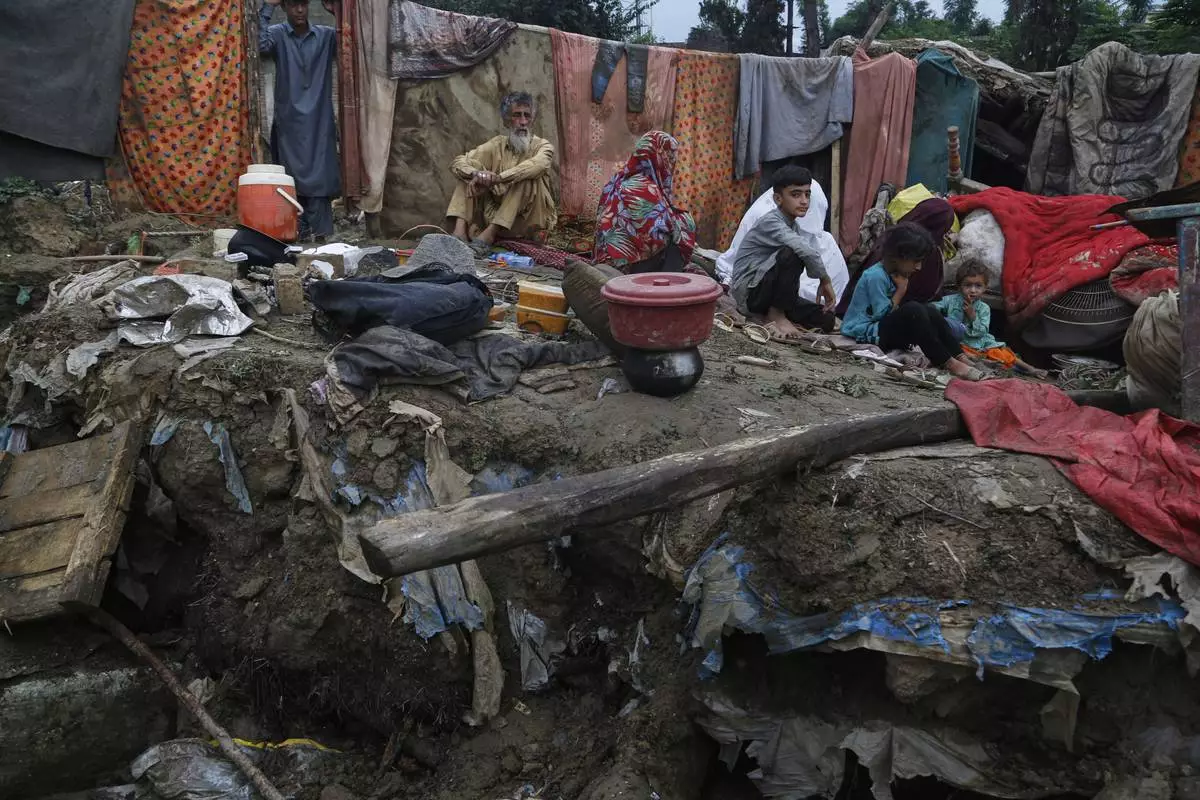
Villager Mateen Khan, second left, and his family members sit over the rubble of their damaged home following Friday's flash flooding at a neighbourhood of Pir Baba, an area of Buner district, in Pakistan's northwest, Sunday, Aug. 17, 2025. (AP Photo/Muhammad Sajjad)
Villager Mateen Khan, second left, and his family members sit over the rubble of their damaged home following Friday's flash flooding at a neighbourhood of Pir Baba, an area of Buner district, in Pakistan's northwest, Sunday, Aug. 17, 2025. (AP Photo/Muhammad Sajjad)

Local residents cross a stream following Friday's flash flooding hit area in Pishoreen village in Buner district, in Pakistan's northwest, Sunday, Aug. 17, 2025. (AP Photo/Muhammad Sajjad)
Local residents cross a stream following Friday's flash flooding hit area in Pishoreen village in Buner district, in Pakistan's northwest, Sunday, Aug. 17, 2025. (AP Photo/Muhammad Sajjad)

A local resident looks a damaged home following Friday's flash flooding at a neighborhood of Pir Baba, an area of Buner district, in Pakistan's northwest, Sunday, Aug. 17, 2025. (AP Photo/Muhammad Sajjad)
A local resident looks a damaged home following Friday's flash flooding at a neighborhood of Pir Baba, an area of Buner district, in Pakistan's northwest, Sunday, Aug. 17, 2025. (AP Photo/Muhammad Sajjad)

Buildings damaged by Thursday's flash floods are seen in Chositi village, Kishtwar district, Indian-controlled Kashmir, Friday, Aug. 15, 2025. (AP Photo/Channi Anand)
Buildings damaged by Thursday's flash floods are seen in Chositi village, Kishtwar district, Indian-controlled Kashmir, Friday, Aug. 15, 2025. (AP Photo/Channi Anand)

Hari Chand mourns the death of his wife during flash floods in Chositi village, in Kishtwar district, Indian-controlled Kashmir, Friday, Aug. 15, 2025. (AP Photo/Channi Anand)


Hari Chand mourns the death of his wife during flash floods in Chositi village, in Kishtwar district, Indian-controlled Kashmir, Friday, Aug. 15, 2025. (AP Photo/Channi Anand)

CARACAS, Venezuela (AP) — Venezuelan opposition leader María Corina Machado comes to the White House on Thursday to discuss her country's future with President Donald Trump even after he publicly dismissed her credibility to take over after an audacious U.S. military raid captured then-President Nicolás Maduro.

Trump has raised doubts about his stated commitment to backing democratic rule in Venezuela. His administration has signaled its willingness to work with acting President Delcy Rodríguez, who was Maduro’s vice president and, along with others in the deposed leader’s inner circle, remains in charge of day-to-day governmental operations.

In endorsing Rodríguez so far, Trump has sidelined Machado, who has long been a face of resistance in Venezuela and sought to cultivate relationships with Trump and key administration voices like Secretary of State Marco Rubio among the American right wing in a gamble to ally herself with the U.S. government.

The White House says Machado sought the face-to-face meeting with Trump without setting expectations for what would occur. Her party is widely believed to have won 2024 elections rejected by Maduro. Machado previously offered to share with Trump the Nobel Peace Prize she won last year, an honor he has coveted.

Machado plans to have a meeting at the Senate following her lunch with Trump, who has called her “a nice woman” while indicating they might not touch on major issues in their talks Thursday.

Her Washington swing began after U.S. forces in the Caribbean Sea seized another sanctioned oil tanker that the Trump administration says had ties to Venezuela. It is part of a broader U.S. effort to take control of the South American country’s oil after U.S. forces seized Maduro and his wife at a heavily guarded compound in the Venezuelan capital of Caracas and brought them to New York to stand trial on drug trafficking charges.

The White House says Venezuela has been fully cooperating with the Trump administration since Maduro’s ouster.

Rodríguez, the acting president, herself has adopted a less strident position toward Trump and his “America First” policies toward the Western Hemisphere, saying she plans to continue releasing prisoners detained under Maduro — a move thought to have been made at the behest of the Trump administration. Venezuela released several Americans this week.

Trump, a Republican, said Wednesday that he had a “great conversation” with Rodríguez, their first since Maduro was ousted.

“We had a call, a long call. We discussed a lot of things,” Trump said during an Oval Office bill signing. “And I think we’re getting along very well with Venezuela.”

Even before indicating the willingness to work with Venezuela's interim government, Trump was quick to snub Machado. Just hours after Maduro's capture, Trump said of Machado that “it would be very tough for her to be the leader. She doesn’t have the support within or the respect within the country.”

Machado has steered a careful course to avoid offending Trump, notably after winning last year’s Nobel Peace Prize, which Trump wanted to win himself. She has since thanked Trump. Her offer to share the peace prize with him was rejected by the Nobel Institute.

Machado’s whereabouts have been largely unknown since she went into hiding early last year after being briefly detained in Caracas. She briefly reappeared in Oslo, Norway, in December after her daughter received the Nobel Peace Prize on her behalf.

The industrial engineer and daughter of a steel magnate began challenging the ruling party in 2004, when the nongovernmental organization she co-founded, Súmate, promoted a referendum to recall then-President Hugo Chávez. The initiative failed, and Machado and other Súmate executives were charged with conspiracy.

A year later, she drew the anger of Chávez and his allies again for traveling to Washington to meet President George W. Bush. A photo showing her shaking hands with Bush in the Oval Office lives in the collective memory. Chávez considered Bush an adversary.

Almost two decades later, she marshaled millions of Venezuelans to reject Chávez’s successor, Maduro, for another term in the 2024 election. But ruling party-loyal electoral authorities declared him the winner despite ample credible evidence to the contrary. Ensuing anti-government protests ended in a brutal crackdown by state security forces.

Garcia Cano reported from Caracas, Venezuela, and Janetsky from Mexico City. AP Diplomatic Writer Matthew Lee in Washington contributed to this report.

FILE - U.S. President George Bush, right, meets with Maria Corina Machado, executive director of Sumate, a non-governmental organization that defends Venezuelan citizens' political rights, in the Oval Office of the White House, Washington, May 31, 2005. (AP Photo/Charles Dharapak, File)

FILE - U.S. President George Bush, right, meets with Maria Corina Machado, executive director of Sumate, a non-governmental organization that defends Venezuelan citizens' political rights, in the Oval Office of the White House, Washington, May 31, 2005. (AP Photo/Charles Dharapak, File)

FILE - Opposition leader Maria Corina Machado gestures to supporters during a protest against President Nicolas Maduro the day before his inauguration for a third term, in Caracas, Venezuela, Thursday, Jan. 9, 2025. (AP Photo/Ariana Cubillos, file)

FILE - Opposition leader Maria Corina Machado gestures to supporters during a protest against President Nicolas Maduro the day before his inauguration for a third term, in Caracas, Venezuela, Thursday, Jan. 9, 2025. (AP Photo/Ariana Cubillos, file)

Recommended Articles