Federal incentives for home energy improvements are running out at the end of the year, so it's decision time for anyone who has been thinking about a heat pump. The right decision can depend on where you live, how much you have to spend and how deeply you want to cut emissions.
But the payoff can be significant.
Bill Gerosa was spending about $6,700 annually to heat and cool his house about 30 miles (48 kilometers) north of New York City. He was eager to bring down his costs, and shelled out $13,000 for a ground-source heat pump that was made more affordable by significant state and utility incentives.
“I had to prove to myself and to my wife that I wasn’t doing something monumentally stupid,” he said.
Gerosa's monthly energy use plunged by two-thirds. He installed solar panels at the same time to offset the rest, and his heating and cooling bills fell to virtually nothing. Last month — about seven years after installing the system — he's recovered what it cost to install the system.
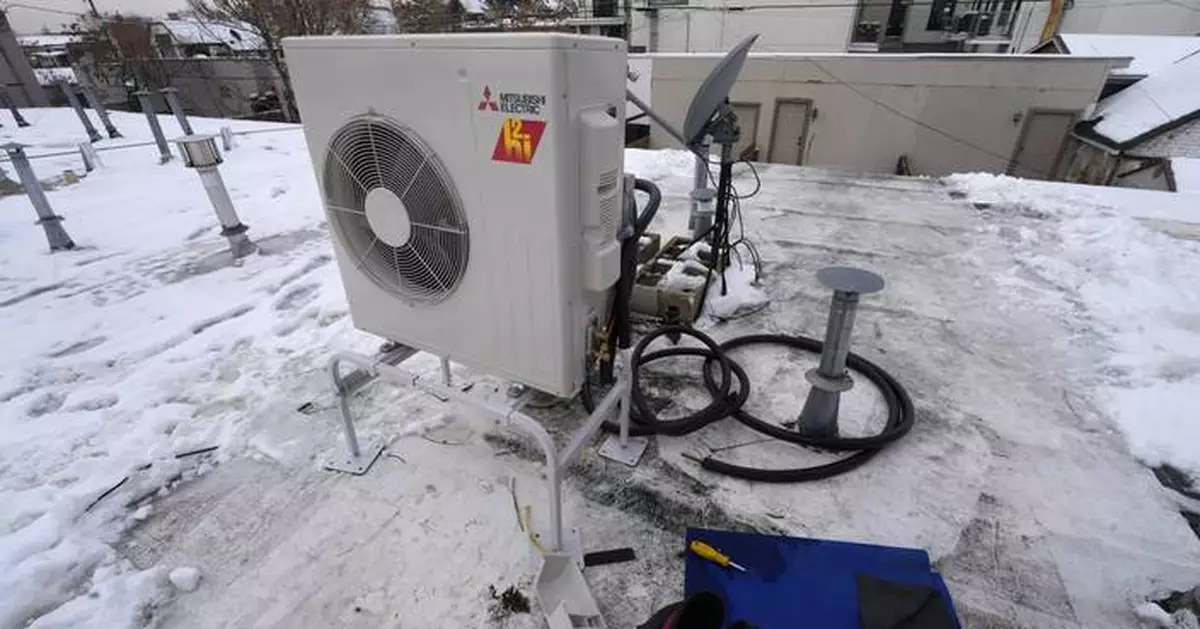
The simplest way to understand a heat pump is that it uses electricity to gather heat from one place and move it to another. Heat exchangers, compressors and refrigerants are part of the system. That's how it can work not just for heating but for cooling — in summer, a heat pump can pull warm air from a house and push it outside.
That's also the secret to how heat pumps can be more efficient than conventional heating technologies, which have to generate heat before they can distribute it. It takes a lot less energy to simply transfer heat, according to the International Energy Agency.
A decade ago, heat pumps could struggle when it got really hot or really cold outside. But advances in technology mean today's heat pumps can keep homes cool even in triple-digit temperatures and warm even when it's well below zero.
There are two main types of heat pumps: air source and ground source. Air-source heat pumps work with the air around the heat pump. Ground-source heat pumps — also known as geothermal — use pipes that circulate liquid underground to either gather or discharge heat.
Air-source pumps cost less to install and require less space since there's no need to run underground pipes. But operating costs are higher than ground-source pumps. They're most effective in more moderate climates.
Ground-source pumps cost more up front and installing hundreds of feet of underground piping can be disruptive to lawns and gardens. But they're more efficient and cost-effective in the long run because underground temperatures are far more constant than air temperatures.
“They’re seeing the ground temperature of about 50 degrees, not the outside air temp. So that’s where they really dominate on efficiency, payback, energy bills, peak demand on the grid, all of those things,” said Ted Tiffany, senior technical lead for the Building Decarbonization Coalition, a nonprofit that advocates for green energy use in buildings instead of fossil fuels.
Panama Bartholomy, the coalition's executive director, noted that a heat pump costs more than a gas furnace or central air conditioner, but can do the work of both.
Drilling for the underground piping that a ground-source pump requires can add around $10,000 to the project. The U.S. Department of Energy estimates that the added installation costs are recouped within 5 to 10 years thanks to the higher efficiency.
Heat pumps are also cleaner than systems powered by natural gas options, even if the electricity used to power heat pumps is primarily generated from coal. That is because heat pumps are three to five times more efficient. The National Renewable Energy Laboratory found that almost everywhere in the United States, switching to a heat pump reduces emissions.
“We should do it now, pretty much everywhere," said Mike Henchen, buildings program principal for the clean energy nonprofit RMI.
Henchen said RMI's analysis found the biggest improvement happens in states with milder weather and with more clean-energy options like wind and solar to provide the electricity. “If you live in Southern California, that’s probably amazing. It’s probably five times better than a gas furnace on efficiency. If you live in North Dakota, maybe it’s only two times better because it’s cold in winter and that diminishes the performance.”
Tiffany said it's typically easiest to find someone to replace what you already have.
“If you've got an oil furnace, a guy's going to try to come sell you an oil furnace because it's the easiest thing that goes back in," he said.
But the newer technology is catching on. Heat pumps have outsold furnaces since 2021. They outsold by their biggest margin last year.
Bartholomy said as heat pumps have gotten more common, most HVAC professionals can install one because the technology isn't that different. It's the ground source heat pump installers that are more difficult to find.
“It's far less availability of contractors. And so, supply and demand, usually you don't have a lot of options to get bids and be able to negotiate price down,” he said.
There are maps that show geothermal installers nearby. And it can take time for professionals to learn how to install new technologies, Bartholomy said. “That is disrupting what has been a status quo for 75 years. And it's just different. It's just not what they have installed time and time again in their region.”
The Associated Press’ climate and environmental coverage receives financial support from multiple private foundations. AP is solely responsible for all content. Find AP’s standards for working with philanthropies, a list of supporters and funded coverage areas at AP.org.
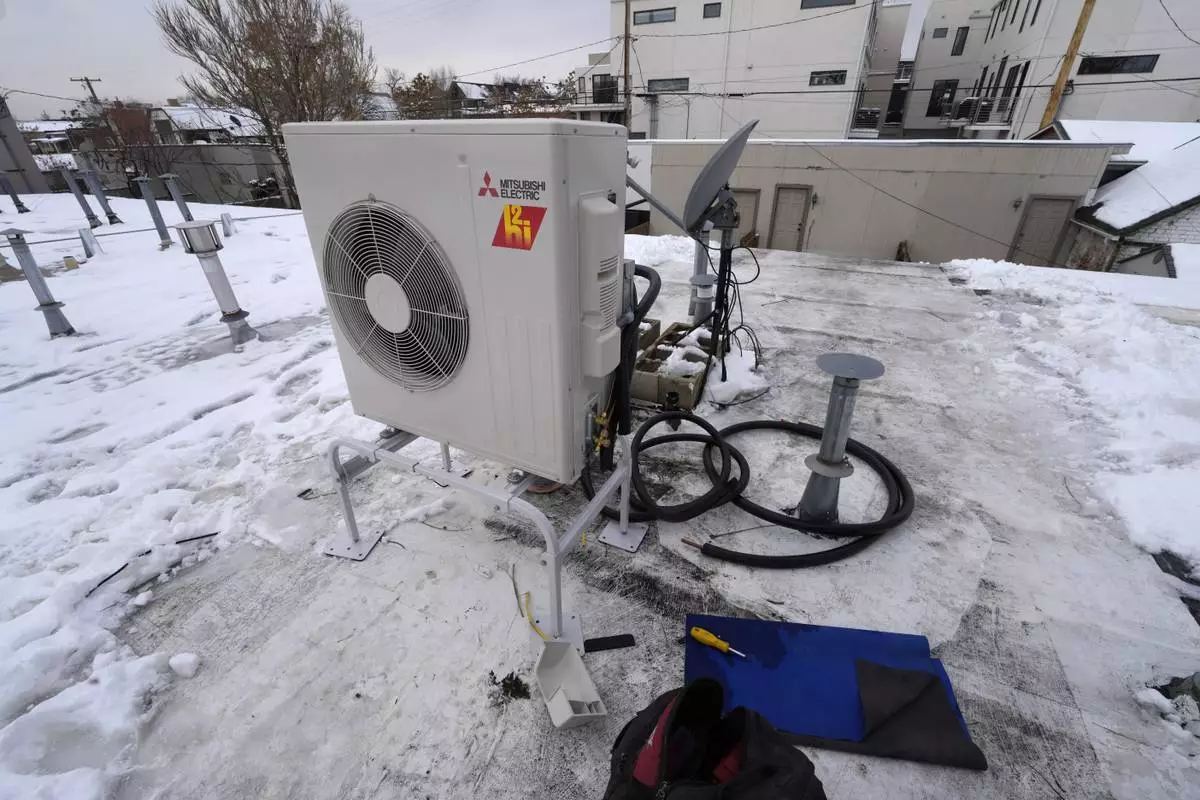
FILE - A condenser sits on the roof during the installation of a heat pump on Jan. 20, 2023, in Denver. (AP Photo/David Zalubowski, File)
NUUK, Greenland (AP) — Troops from several European countries continued to arrive in Greenland on Thursday in a show of support for Denmark as talks between representatives of Denmark, Greenland and the U.S. highlighted “fundamental disagreement” over the future of the Arctic island.
Denmark announced it would increase its military presence in Greenland on Wednesday as foreign ministers from Denmark and Greenland were preparing to meet with White House representatives in Washington. Several European partners — including France, Germany, the U.K., Norway, Sweden and the Netherlands — started sending symbolic numbers of troops already on Wednesday or promised to do so in the following days.
The troop movements were intended to portray unity among Europeans and send a signal to President Donald Trump that an American takeover of Greenland is not necessary as NATO together can safeguard the security of the Arctic region amid rising Russian and Chinese interest.
“The first French military elements are already en route” and “others will follow,” French President Emmanuel Macron announced Wednesday, as French authorities said about 15 soldiers from the mountain infantry unit were already in Nuuk for a military exercise.
Germany will deploy a reconnaissance team of 13 personnel to Greenland on Thursday, the Defense Ministry said.
On Thursday, Danish Defense Minister Troels Lund Poulsen said the intention was “to establish a more permanent military presence with a larger Danish contribution,” according to Danish broadcaster DR. He said soldiers from several NATO countries will be in Greenland on a rotation system.
Danish Foreign Minister Lars Løkke Rasmussen, flanked by his Greenlandic counterpart Vivian Motzfeldt, said Wednesday that a “fundamental disagreement” over Greenland remains with Trump after they held highly anticipated talks at the White House with Vice President JD Vance and Secretary of State Marco Rubio.
Rasmussen added that it remains “clear that the president has this wish of conquering over Greenland” but that dialogue with the U.S. would continue at a high level over the following weeks.
Inhabitants of Greenland and Denmark reacted with anxiety but also some relief that negotiations with the U.S. would go on and European support was becoming visible.
Greenland's Prime Minister Jens-Frederik Nielsen welcomed the continuation of “dialogue and diplomacy.”
“Greenland is not for sale,” he said Thursday. “Greenland does not want to be owned by the United States. Greenland does not want to be governed from the United States. Greenland does not want to be part of the United States.”
In Greenland’s capital, Nuuk, local residents told The Associated Press they were glad the first meeting between Greenlandic, Danish and American officials had taken place but suggested it left more questions than answers.
Several people said they viewed Denmark’s decision to send more troops, and promises of support from other NATO allies, as protection against possible U.S. military action. But European military officials have not suggested the goal is to deter a U.S. move against the island.
Maya Martinsen, 21, said it was “comforting to know that the Nordic countries are sending reinforcements” because Greenland is a part of Denmark and NATO.
The dispute, she said, is not about “national security” but rather about “the oils and minerals that we have that are untouched.”
On Wednesday, Poulsen announced a stepped-up military presence in the Arctic “in close cooperation with our allies,” calling it a necessity in a security environment in which “no one can predict what will happen tomorrow.”
“This means that from today and in the coming time there will be an increased military presence in and around Greenland of aircraft, ships and soldiers, including from other NATO allies,” Poulsen said.
Asked whether the European troop movements were coordinated with NATO or what role the U.S.-led military alliance might play in the exercises, NATO referred all questions to the Danish authorities. However, NATO is currently studying ways to bolster security in the Arctic.
The Russian embassy in Brussels on Thursday lambasted what it called the West's “bellicose plans” in response to “phantom threats that they generate themselves”. It said the planned military actions were part of an “anti-Russian and anti-Chinese agenda” by NATO.
“Russia has consistently maintained that the Arctic should remain a territory of peace, dialogue and equal cooperation," the embassy said.
Rasmussen announced the creation of a working group with the Americans to discuss ways to work through differences.
“The group, in our view, should focus on how to address the American security concerns, while at the same time respecting the red lines of the Kingdom of Denmark,” he said.
Commenting on the outcome of the Washington meeting on Thursday, Poulsen said the working group was “better than no working group” and “a step in the right direction.” He added nevertheless that the dialogue with the U.S. did not mean “the danger has passed.”
Speaking on Thursday, Danish Prime Minister Mette Frederiksen said the American ambition to take over Greenland remains intact despite the Washington meeting, but she welcomed the creation of the working group.
The most important thing for Greenlanders is that they were directly represented at the meeting in the White House and that “the diplomatic dialogue has begun now,” Juno Berthelsen, a lawmaker for the pro-independence Naleraq opposition party, told AP.
A relationship with the U.S. is beneficial for Greenlanders and Americans and is “vital to the security and stability of the Arctic and the Western Alliance,” Berthelsen said. He suggested the U.S. could be involved in the creation of a coastguard for Greenland, providing funding and creating jobs for local people who can help to patrol the Arctic.
Line McGee, 38, from Copenhagen, told AP that she was glad to see some diplomatic progress. “I don’t think the threat has gone away,” she said. “But I feel slightly better than I did yesterday.”
Trump, in his Oval Office meeting with reporters, said: “We’ll see how it all works out. I think something will work out.”
Niemann reported from Copenhagen, Denmark, and Ciobanu from Warsaw, Poland.
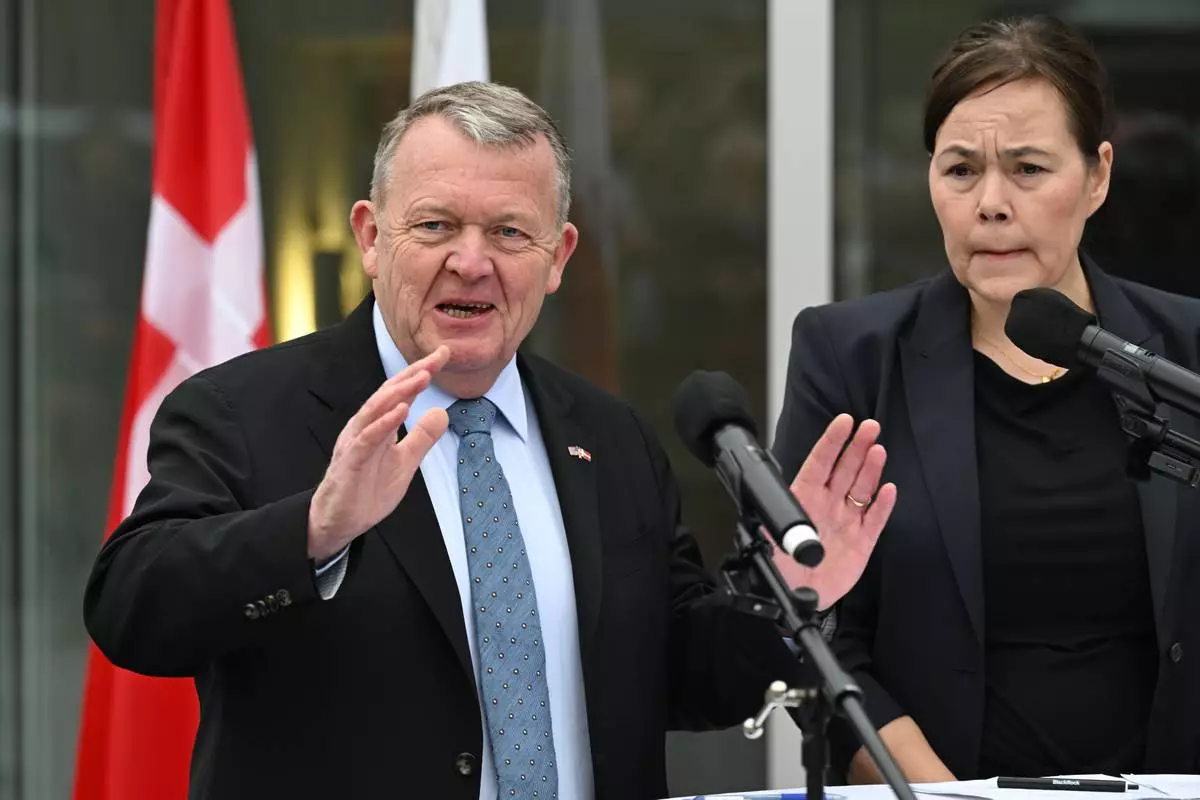
Denmark's Foreign Minister Lars Løkke Rasmussen and Greenland's Foreign Minister Vivian Motzfeldt speak at a news conference at the Embassy of Denmark, Wednesday, Jan. 14, 2026, in Washington. (AP Photo/John McDonnell)
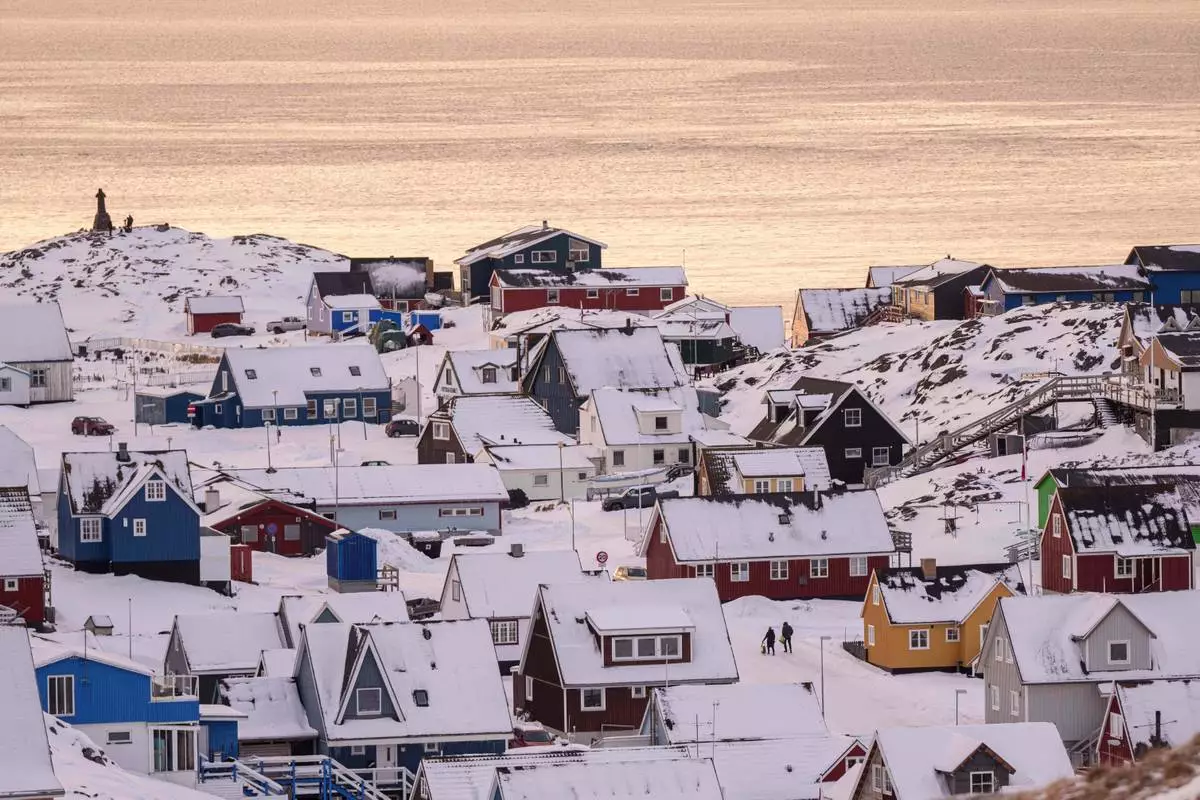
People walk on a street in Nuuk, Greenland, Wednesday, Jan. 14, 2026. (AP Photo/Evgeniy Maloletka)
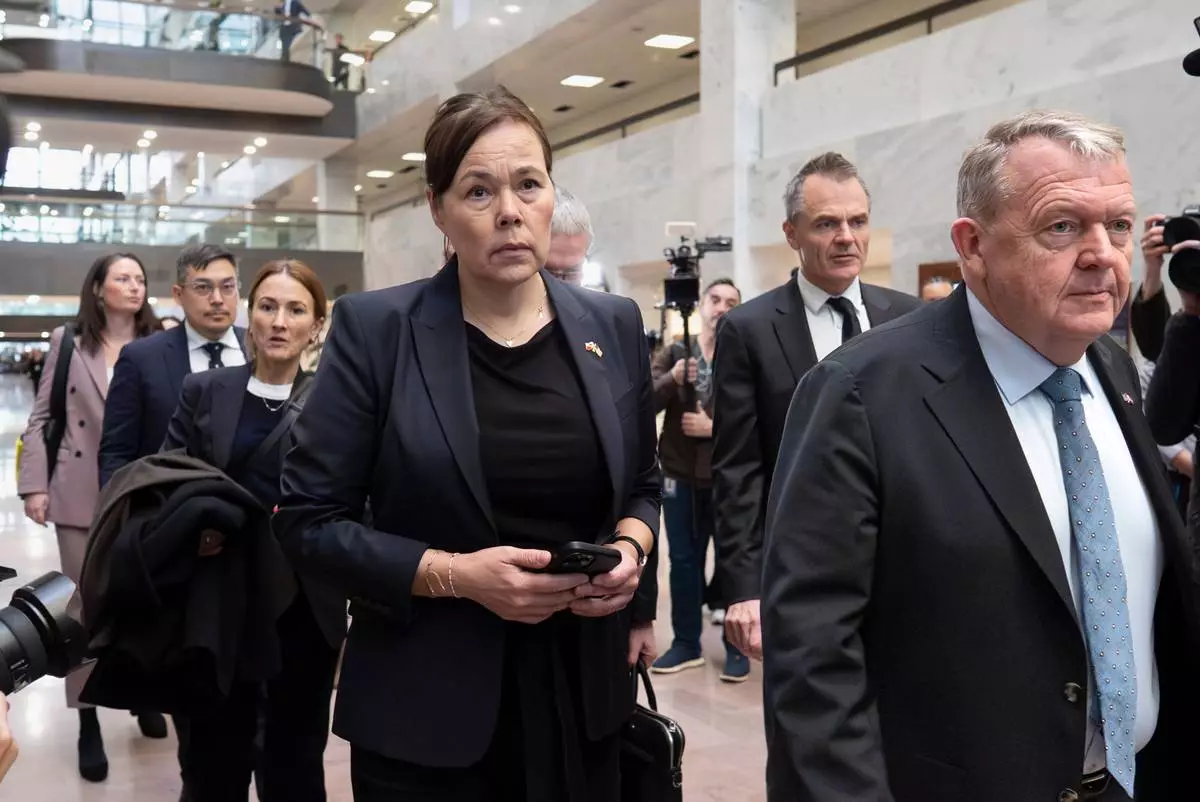
From center to right, Greenland Foreign Minister Vivian Motzfeldt, Denmark's Ambassador Jesper Møller Sørensen, rear, and Danish Foreign Minister Lars Løkke Rasmussen, right, arrive on Capitol Hill to meet with senators from the Arctic Caucus, in Washington, Wednesday, Jan. 14, 2026. (AP Photo/J. Scott Applewhite)

An Airbus A400M transport aircraft of the German Air Force taxis over the grounds at Wunstorf Air Base in the Hanover region, Germany, Thursday, Jan. 15, 2026 as troops from NATO countries, including France and Germany, are arriving in Greenland to boost security. (Moritz Frankenberg/dpa via AP)
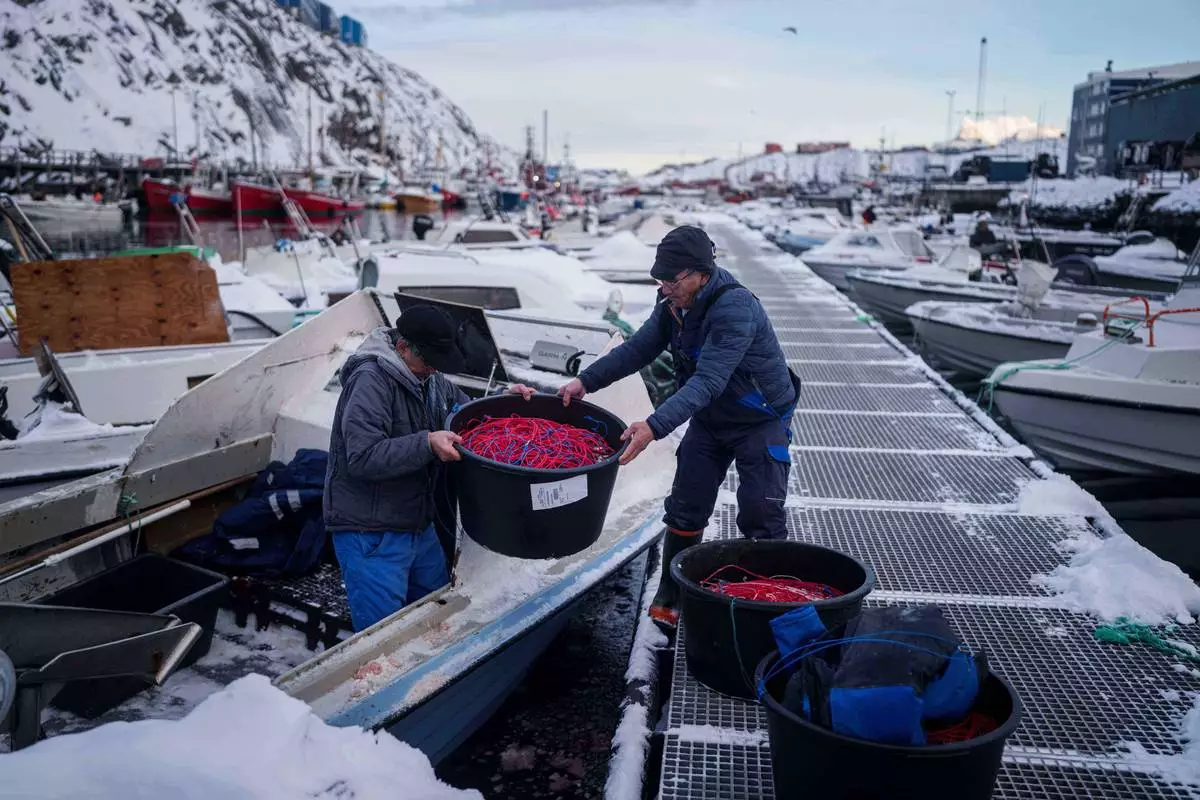
Fishermen load fishing lines into a boat in the harbor of Nuuk, Greenland, Wednesday, Jan. 14, 2026. (AP Photo/Evgeniy Maloletka)

Greenland Foreign Minister Vivian Motzfeldt, left, and Danish Foreign Minister Lars Løkke Rasmussen, arrive on Capitol Hill to meet with members of the Senate Arctic Caucus, in Washington, Wednesday, Jan. 14, 2026. (AP Photo/J. Scott Applewhite)