BOSTON--(BUSINESS WIRE)--Aug 18, 2025--
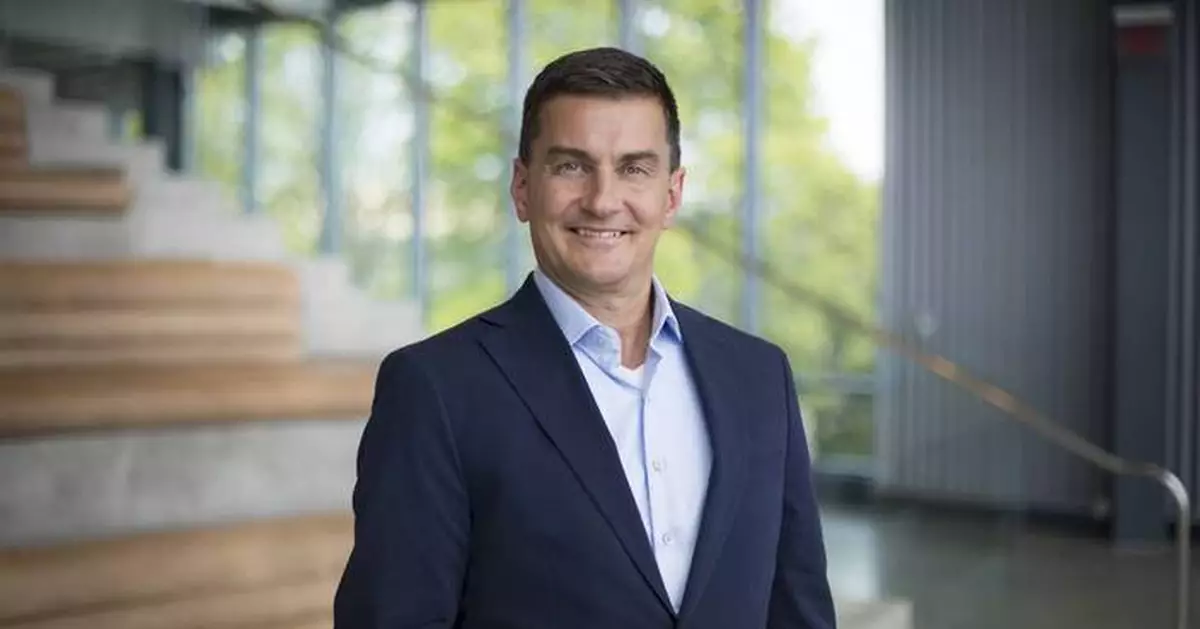
Suffolk, one of the most innovative and successful builders in the country, announced it has hired PJ Johnson as Executive Vice President, Division Manager, Northeast. In this role, PJ will oversee operational performance across Suffolk’s Northeast region, working to strengthen project execution, drive performance across operational teams, and ensure alignment with company-wide priorities. His leadership will be key as Suffolk continues to expand its presence and take on increasingly complex work across sectors, while deepening its use of AI, data and advanced technologies to drive smarter, more efficient project delivery.
This press release features multimedia. View the full release here: https://www.businesswire.com/news/home/20250818482438/en/
PJ joins Suffolk after 30 years at Turner Construction, where he most recently served in a senior leadership role overseeing operations of the Boston Business Unit. His portfolio includes some of the region’s most complex and high-profile developments, including the redevelopment of the historic Commonwealth Pier, MIT’s flagship Lisa T. Su Building for nanotechnology research (MIT.nano), Harvard University’s LISE building (Laboratory of Integrated Science and Engineering), and preconstruction for the Pardee School of Global Studies, Boston University’s first fully mass timber high-rise.
"We are thrilled to welcome PJ to our leadership team," said Patrick Lucey, General Manager of the Northeast Division at Suffolk. "PJ brings a wealth of knowledge and experience from decades of successfully leading complex projects and teams. His leadership, operational expertise, and commitment to excellence make him an outstanding addition to our organization as we continue to grow and evolve."
"I am excited to join Suffolk," said PJ. "The company’s forward-thinking approach and use of technology to enhance project delivery and collaboration truly sets it apart. I am looking forward to working with our teams and partners to drive operational excellence and support Suffolk’s continued growth across the region."
PJ’s appointment reinforces Suffolk’s ongoing investment in leadership and operational excellence as it delivers complex, high-profile projects that shape skylines and communities across the Northeast. Suffolk is at the forefront of using technology and data to transform how buildings are planned, designed, and constructed. By leveraging AI, predictive analytics and digital collaboration tools, Suffolk empowers clients to make smarter decisions and ensures greater certainty and efficiency across the entire project lifecycle.
Suffolk recently completed 10 World Trade, a 585,000 square feet office and lab building that has become a new architectural anchor in Boston’s Seaport District. The company is currently delivering several other transformative projects across the region, including South Station Tower, a mixed-use high-rise above Boston’s South Station; 585 Kendall, a cutting-edge life sciences research space, offices and public arts space and in Cambridge; the New England Patriots’ new practice facility; operational improvements at Logan International Airport’s Terminal E; and critical public sector work, including Diman Regional Vocational Technical High School and the new Quincy MBTA Station.
About Suffolk
Suffolk is a national enterprise that builds, innovates and invests. Suffolk is an end-to-end business that provides value throughout the entire project lifecycle by leveraging its core construction management services with vertical service lines that include real estate capital investment, design, self-perform construction services, technology start-up investment (Suffolk Technologies) and innovation research/development.
Suffolk – America’s Contractor – is a national company with more than $8 billion in annual revenue, 3,000 employees, and offices in Boston (headquarters); New York City; Miami, West Palm Beach, Tampa and Estero in Florida; Dallas; Los Angeles, San Francisco and San Diego in California; Las Vegas; Portland, Maine; New Haven, Connecticut; and Herndon, Virginia. Suffolk manages some of the most complex, sophisticated projects in the country, serving clients in every major industry sector, including healthcare, life sciences, education, gaming, transportation/aviation, federal government and public work, mission critical, advanced technology and commercial. Suffolk is privately held and is led by Founder, Chairman and CEO John Fish. Suffolk is ranked #8 on ENR’s list of “Largest Domestic Builders” and #8 on its list of “Top CM-at-Risk Contractors.” For more information, visit www.suffolk.com and follow Suffolk on Facebook, Twitter, LinkedIn and YouTube.
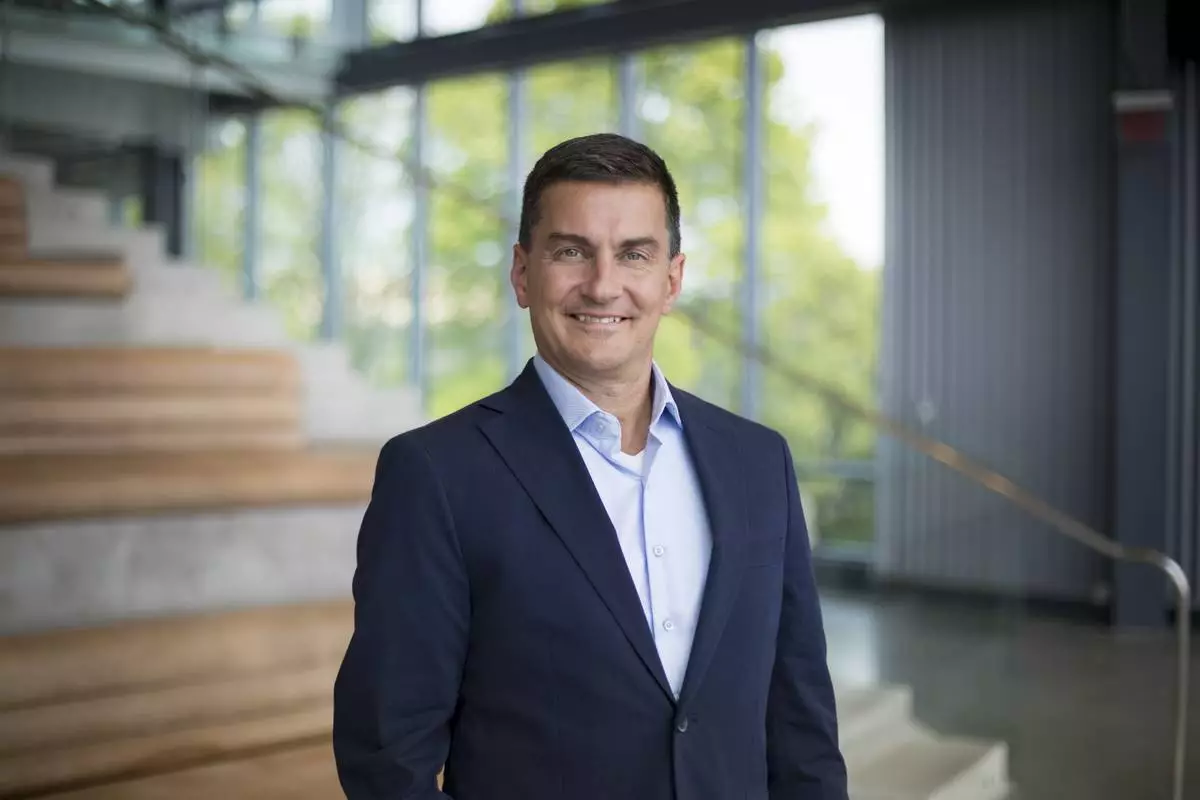
PJ joins Suffolk as Executive Vice President, Division Manager, Northeast, bringing decades of experience and a proven track record of leading complex, high-profile projects.
NEW DELHI (AP) — After nearly two decades of negotiations, India and the European Union announced Tuesday they have reached a free trade agreement to deepen economic and strategic ties. The accord — dubbed the “mother of all deals” — could impact as many as 2 billion people.
The deal is also one of the biggest bilateral engagements on commerce and comes as Washington targets both India and the EU with steep import tariffs.
“This agreement will bring major opportunities for the people of India and Europe,” India's Prime Minister Narendra Modi said in a virtual address to an energy conference. “It represents 25% of the global GDP and one-third of global trade.”
India and the EU also agreed on a framework agreement for deeper defense and security cooperation, and a separate pact aimed at easing mobility for skilled workers and students, signaling their partnership extends beyond commerce.
Speaking at a joint news conference in New Delhi with European Commission President Ursula von der Leyen and European Council President António Costa, the Indian leader said the partnership with the EU “will strengthen stability in the international system” at a time of ”turmoil in the global order.”
Washington is targeting both India and the EU with steep tariffs, disrupting established trade flows and pushing major economies to seek alternate partnerships.
The negotiations for the India-EU deal got a new impetus after U.S. President Donald Trump’s strong-arm tactics over tariffs and Greenland.
“Europe and India are making history today. We have concluded the mother of all deals,” von der Leyen said in a post on X.
In a speech later, she said the accord was a tale of “two giants” — the world’s second and fourth largest economies — “who chose partnership, in a true win-win fashion.” She also said it sends "a strong message that cooperation is the best answer to global challenges.”
The deal, further integrating supply chains and strengthening joint manufacturing power, will also cut up to 4 billion euros ($4.7 billion) in annual tariffs for exporters and create jobs for millions of workers in India and in Europe.
A formal signing of the deal could come later this year after a legal scrubbing of the text while it is expected to go into effect sometime early next year, after ratification by the EU Parliament.
India is expected to reduce or eliminate tariffs for 96.6% of EU exports, while Brussels will reciprocate with similar reduction covering nearly 99% of India’s shipments by trade value in a phased manner, according to statements from both sides.
India's sectors poised to gain from the deal include textiles, apparel, engineering goods, leather, handicraft, footwear and marine products while the EU’s gains will be in wine, automobiles, chemicals and pharmaceuticals, among others.
A quota system for automobiles, wines and whisky has been agreed on, bringing down steep duties.
The European Commission said tariffs charged by India on cars will gradually go down from 110% to as low as 10%, while they will be fully abolished for car parts after 5-10 years. Tariffs ranging up to 44% on machinery, 22% on chemicals and 11% on pharmaceuticals will also be mostly eliminated, it added.
On European wine, the tariffs in India would come down from 150% to 20% for the premium range.
New Delhi has excluded from the deal dairy products such as milk and cheese along with cereals citing “domestic sensitivities” about those products. The EU for its part won’t allow concessional tariffs on imports of Indian sugar, meat, poultry and beef products, officials at Indian Trade Ministry said.
India is looking to diversify its export destinations as part of a strategy to offset the impact of higher U.S. tariffs, including an extra 25% levy on Indian goods for its unabated purchases of discounted Russian oil, bringing the combined tariffs imposed by the United States on its Asian ally to 50%.
For the EU, the deal offers the bloc expanded access to one of the world’s fastest-growing major economies, and helps European exporters and investors reduce their reliance on more volatile markets.
Bilateral trade between India and EU stood at $136.5 billion in 2024-25. The two sides hope to increase that to about $200 billion by 2030, Indian officials said.
“Ultimately, the agreement is about creating a stable commercial corridor between two major markets at a time the global trading system is fragmenting,” said Indian trade analyst Ajay Srivastava.
The EU is still reeling from the aggressive approach of its once-stalwart ally across the Atlantic. There’s a widespread sense of betrayal across the 27-nation bloc from Trump’s onslaught of higher tariffs, embrace of far-right parties, and belligerence over Greenland.
Brussels has accelerated its outreach to markets around the world. Over the past year, von der Leyen has signed deals with Japan, Indonesia, Mexico, and South America under the catchphrase “strategic autonomy,” which in practice is akin to decoupling from a U.S. seen by most European leaders as erratic.
McNeil reported from Brussels.
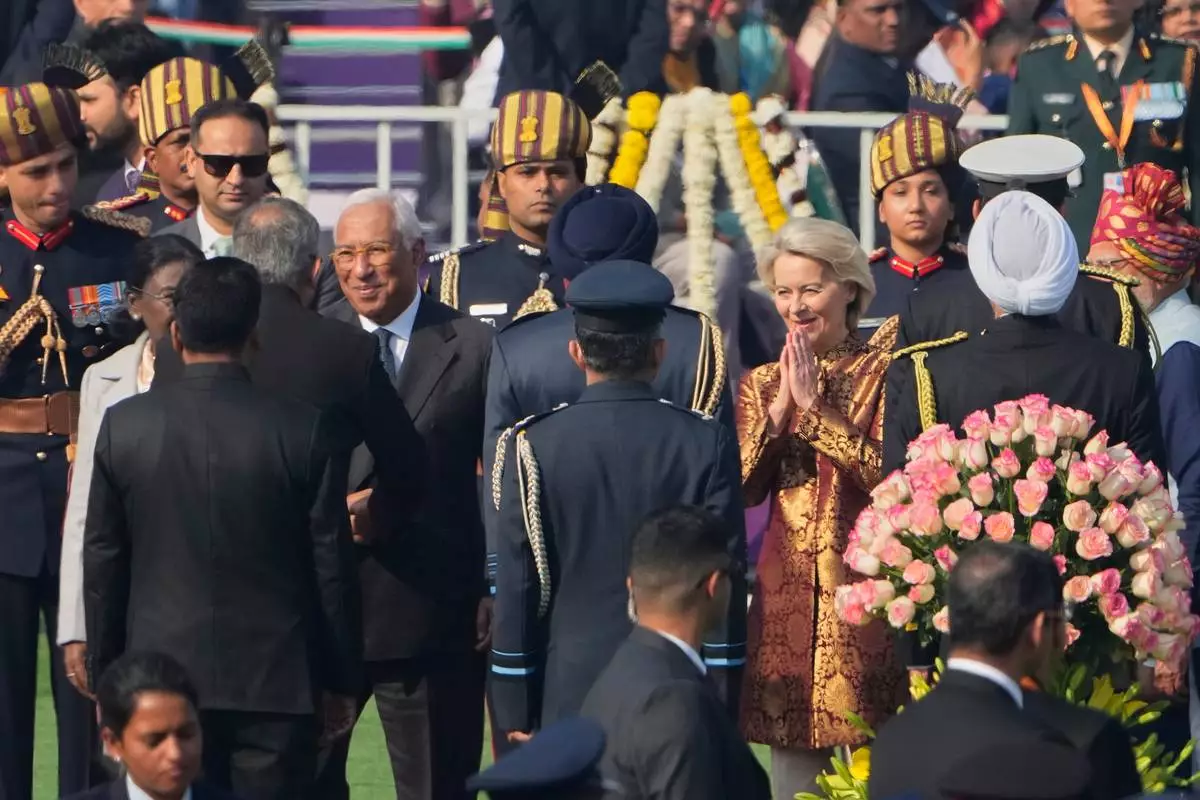
European Council President Antonio Costa, center left, and European Commission President Ursula von der Leyen greet officials upon their arrival at the Republic Day parade in New Delhi, India, Monday, Jan. 26, 2026. (AP Photo/Manish Swarup)
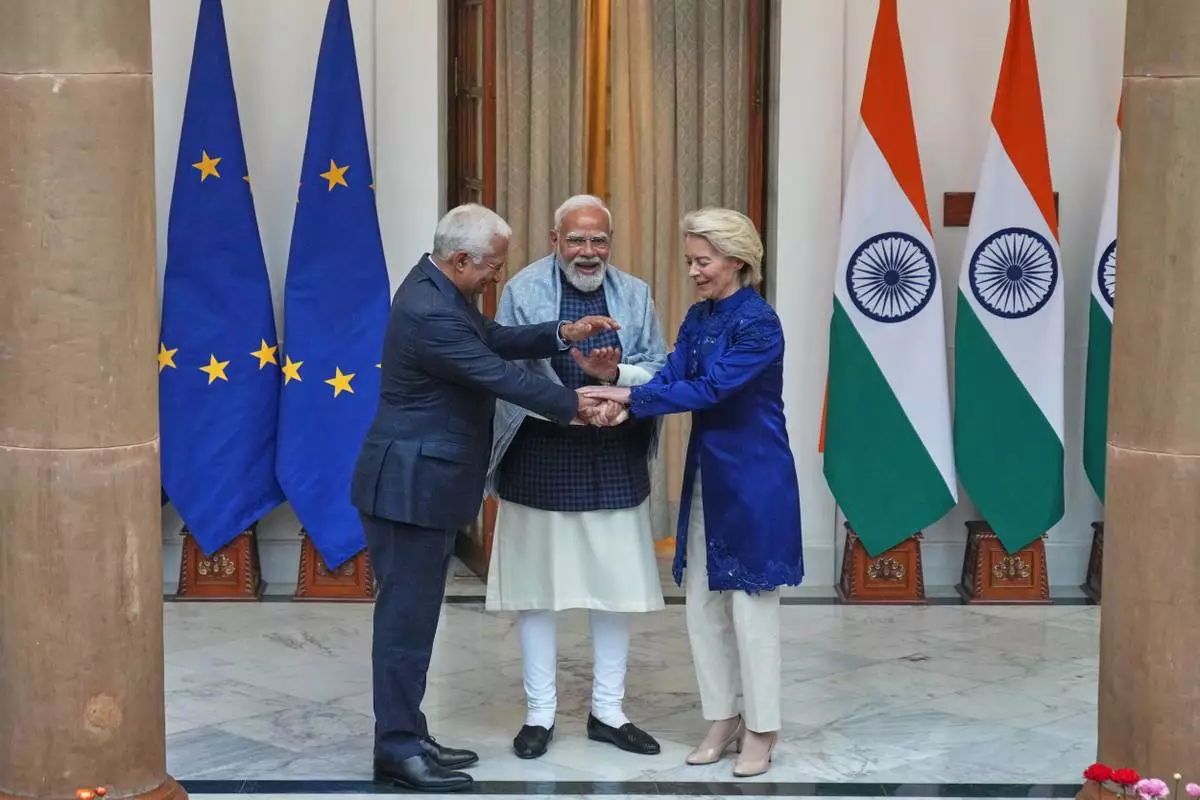
Indian Prime Minister Narendra Modi, center, welcomes European Council President Antonio Costa, left and European Commission President Ursula von der Leyen before their meeting in New Delhi, India, Tuesday, Jan. 27, 2026. (AP Photo/Manish Swarup)
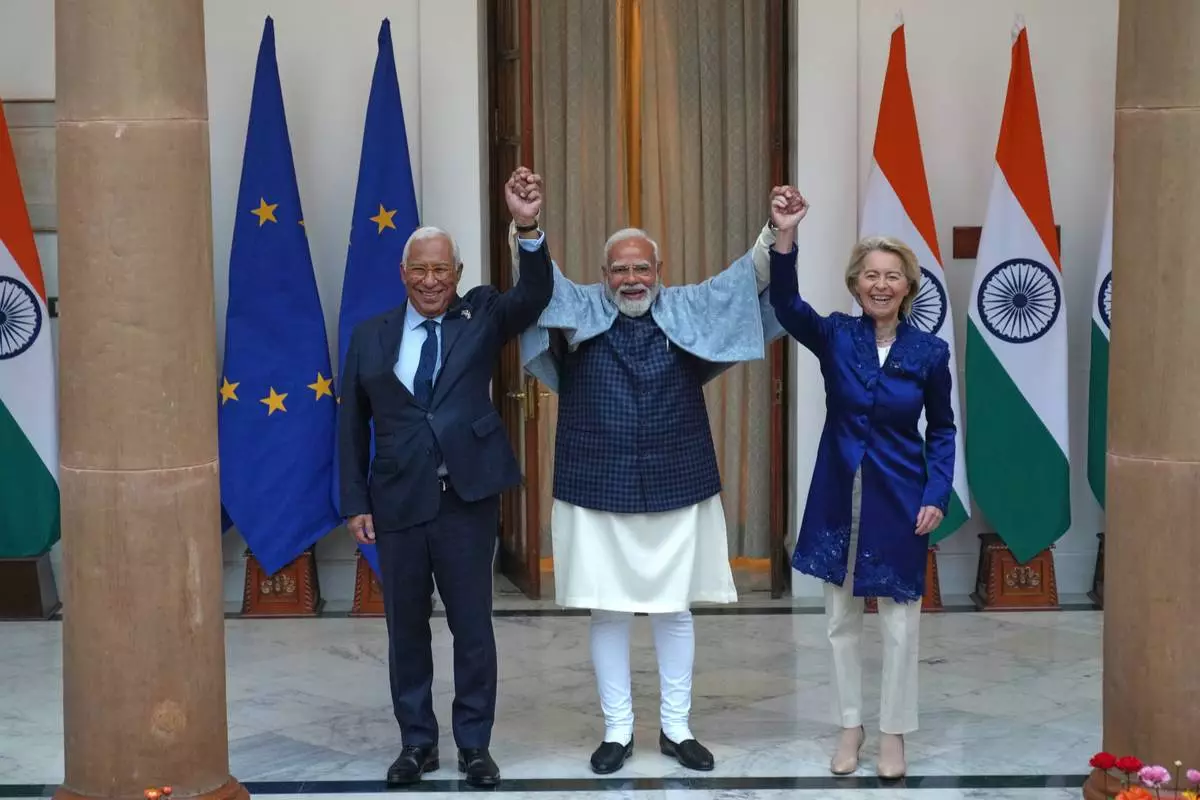
Indian Prime Minister Narendra Modi, center, welcomes European Council President Antonio Costa, left and European Commission President Ursula von der Leyen before their meeting in New Delhi, India, Tuesday, Jan. 27,2026. (AP Photo/Manish Swarup)
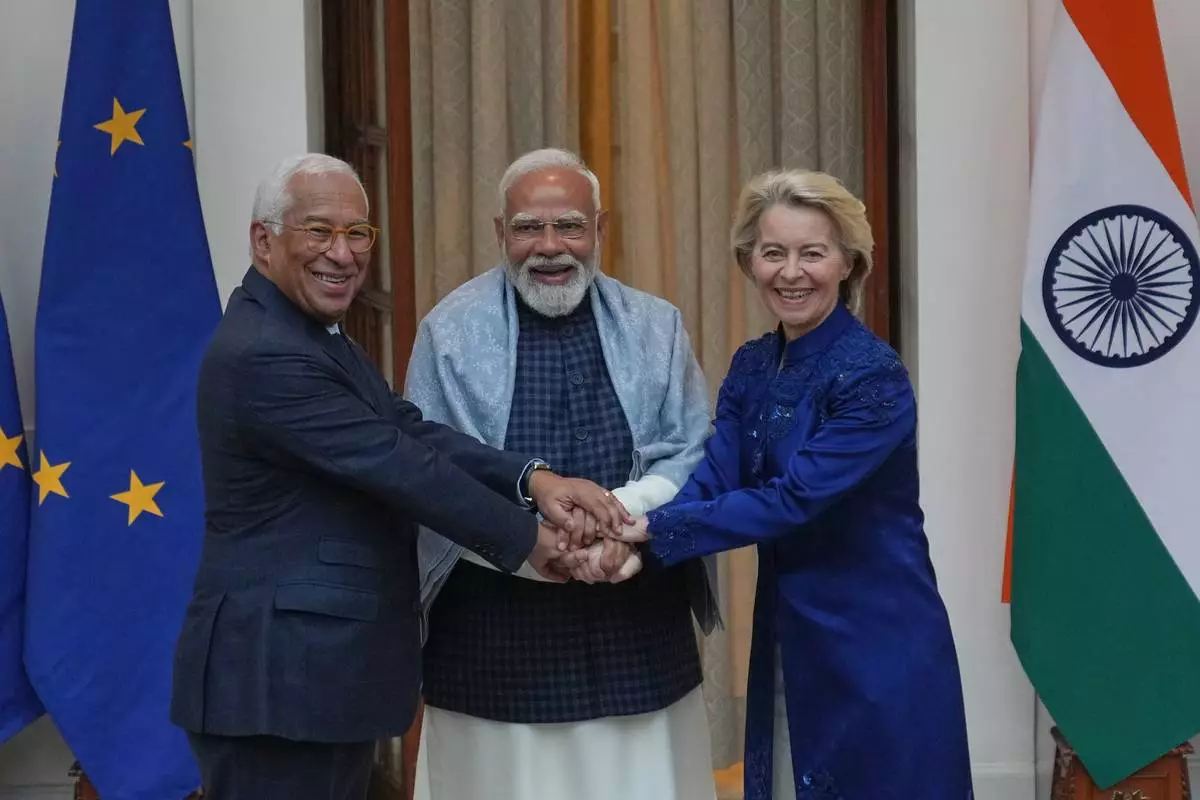
Indian Prime Minister Narendra Modi, center, welcomes European Council President Antonio Costa, left and European Commission President Ursula von der Leyen before their meeting in New Delhi, India, Tuesday, Jan. 27,2026. (AP Photo/Manish Swarup)