As California and Texas scramble to redraw U.S. House maps before the 2026 midterm elections, the race is underlining redistricting’s big role in determining political power.
Texas took action after President Donald Trump directed Republican-controlled states to change where the district lines are drawn based on where the population is likely to vote Republican — a practice known as partisan gerrymandering. California Democrats on Thursday approved their redrawn congressional map in response.
Click to Gallery

Texas state Rep. Marc LaHood looks over a map as lawmakers prepare to debate a redrawn U.S. congressional map in Texas during a special, Wednesday, Aug. 20, 2025, in Austin, Texas. (AP Photo/Eric Gay)

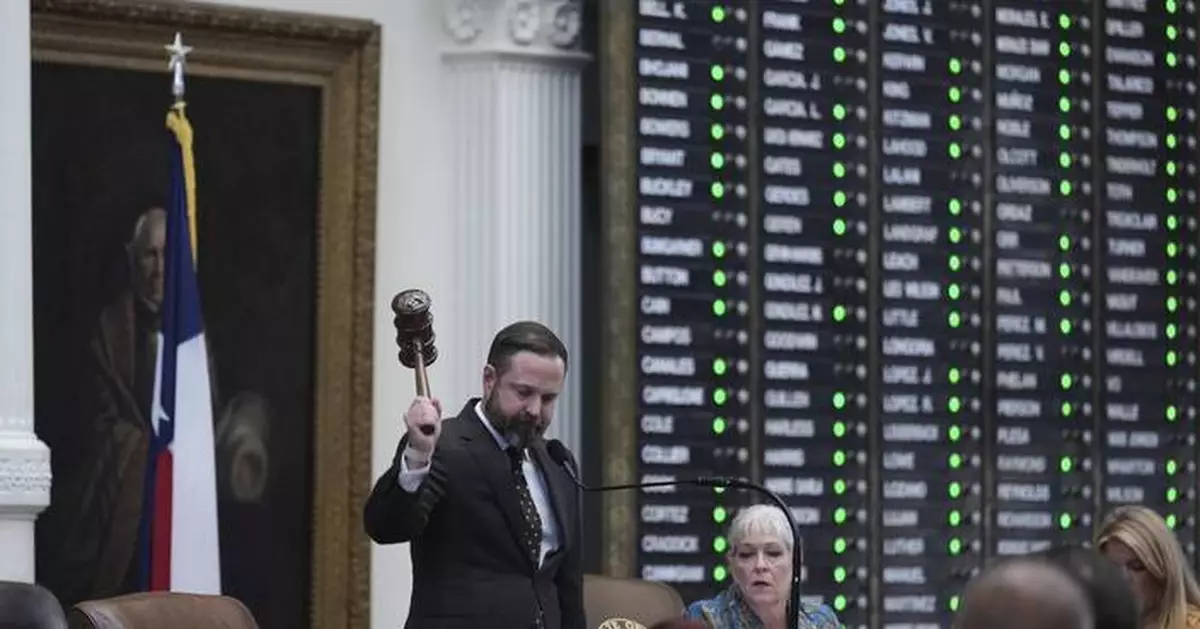
Texas Speaker of the House Dustin Burrows, R-Lubbock, oversees a debate over a redrawn U.S. congressional map in Texas during a special session, Wednesday, Aug. 20, 2025, in Austin, Texas. (AP Photo/Eric Gay)
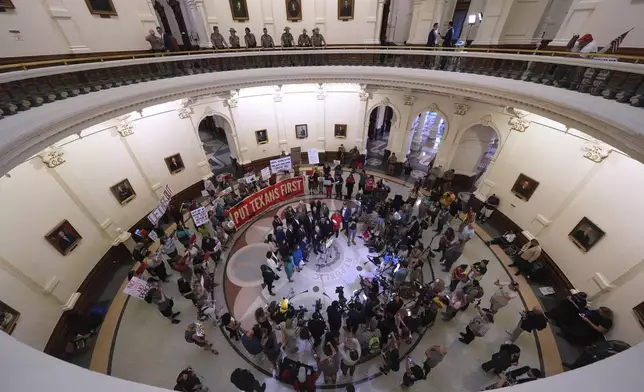
Democratic lawmakers talk to the media and supporters after House Republicans approved a redrawn U.S. congressional map in Texas during a special session, Wednesday, Aug. 20, 2025, in Austin, Texas. (AP Photo/Eric Gay)
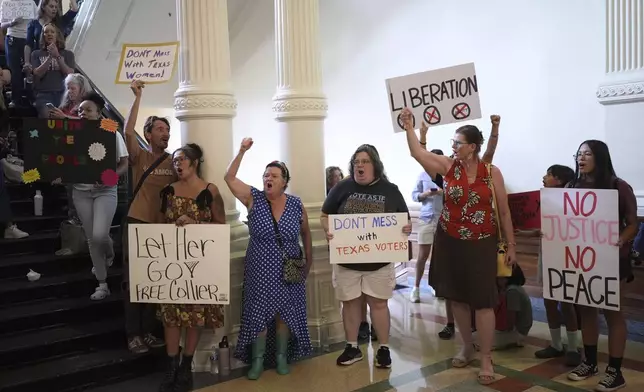
Protesters gather outside of the House Chamber where Democratic Texas state Rep. Nicole Collier refuses to leave due to a required law enforcement escort, Tuesday, Aug. 19, 2025, in Austin, Texas. (AP Photo/Eric Gay)
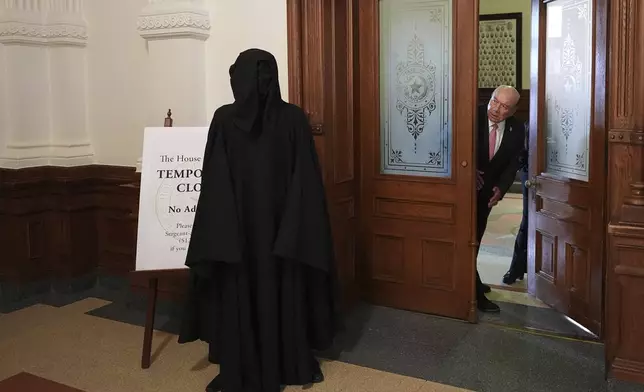
Texas state Sen. Juan "Chuy" Hinojosa, right, looks at a protester dressed as death standing outside of the House Chamber where Democratic Texas state Rep. Nicole Collier refuses to leave due to a required law enforcement escort, Tuesday, Aug. 19, 2025, in Austin, Texas. (AP Photo/Eric Gay)
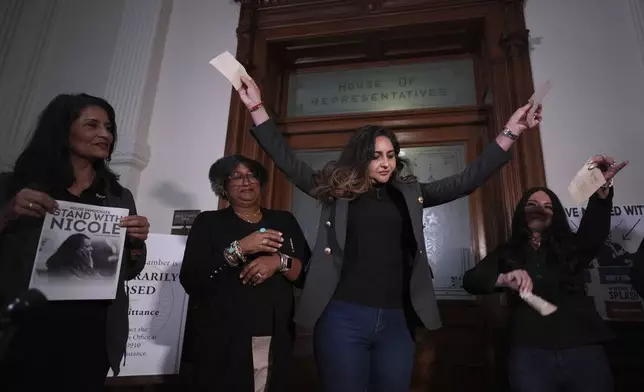
Democratic Texas state Rep. Mihaela Plesa, center, and Rep. Cassandra Garcia Hernandez, right, tear up their 'permission slips' outside of the House Chamber as they plan to join fellow Rep. Nicole Collier who refuses to leave due to a required law enforcement escort, Tuesday, Aug. 19, 2025, in Austin, Texas. (AP Photo/Eric Gay)

Texas Democratic lawmakers return to Texas after leaving two weeks ago to block a vote on a redrawn redistricting map, Monday, Aug. 18, 2025, in Austin, Texas. (AP Photo/Eric Gay)

California Gov. Gavin Newsom speaks during a news conference Thursday, Aug. 14, 2025, in Los Angeles. (AP Photo/Marcio Jose Sanchez)
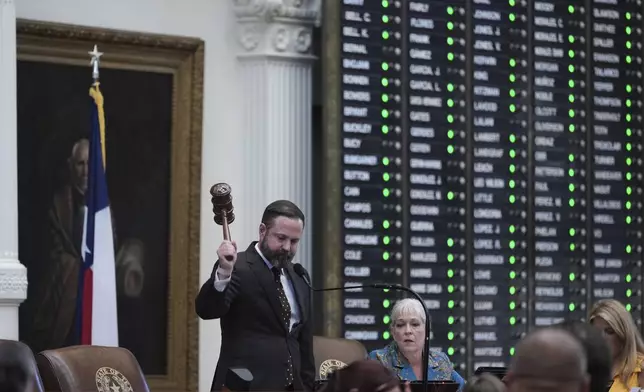
Texas Speaker of the House Dustin Burrows strikes the gavel as the House calls a Special Session with a quorum, Monday, Aug. 18, 2025, in Austin, Texas. (AP Photo/Eric Gay)
Midterm elections often go against the president’s party. Trump is trying to avoid a repeat of the 2018 midterms, when the GOP yielded control during his first presidency to a Democratic majority that stymied his agenda and twice impeached him.
Early Saturday, the GOP-controlled state Senate approved the new maps over Democratic opposition, meaning they now go before Republican Gov. Greg Abbott for his signature. The governor has vowed to sign off on the newly drawn congressional districts soon. The maps were drawn so Republicans could potentially pick up five seats in Congress.
The maps OK'd by the California Legislature were drawn so Democrats could add five seats. California voters will decide in a November special election whether to approve the maps.
Here’s what to know.
Each decade, the Census Bureau collects population data that is used to divvy up the 435 U.S. House seats proportionally among the 50 states. States that grew relative to others might gain a House seat at the expense of states in which populations stagnated or declined.
California and Texas, with the highest populations, have the highest number of representatives of all states.
Most states use their own rules and procedures to create the districts represented by each House member. The states with the lowest population numbers receive only one representative, which means the entire state is a single congressional district.
Americans can find their representative and see a map of their district on the U.S. House website.
The word “gerrymander” was coined in America over 200 years ago as an unflattering means of describing political manipulation in legislative mapmaking.
In states where lawmakers make the maps: If a political party controls a state's legislature and governor’s office — or has such a large legislative majority that it can override vetoes — it can effectively draw districts to its advantage.
One common method of gerrymandering is for a majority political party to draw maps that pack voters who support the opposing party into a few districts, thus allowing the majority party to win a greater number of surrounding districts.
Another method is for the majority party to dilute the power of an opposing party’s voters by spreading them among multiple districts.
By the first midterm elections after the most recent population count, each state is ready with its district maps, but those districts don’t always hold. Courts can find that the political lines are unconstitutional.
While some states have their own limitations, there is no national impediment to a state trying to redraw districts in the middle of the decade. The U.S. Supreme Court in 2019 ruled that the Constitution does not prohibit partisan gerrymandering to increase a party's clout, only gerrymandering that’s explicitly done by race.
“The laws about redistricting just say you have to redistrict after every census,” Doug Spencer, Rothgerber Jr. Chair in Constitutional Law at the University of Colorado, has said. “And then some state legislatures got a little clever and said, ’Well it doesn’t say we can’t do it more.’”
Trump urged Texas to redraw maps to help the GOP, and his team has signaled that efforts could expand to other states, with a similar push underway in Missouri and Indiana. Ohio Republicans were already revising their map before Texas took action.
The new California maps would need to be approved by voters in a special election in November because that state normally operates with a nonpartisan commission drawing the map to avoid the very sort of political battle that is playing out.
Democrats in Maryland and New York are mulling map revisions as well. New York, however, can’t draw new maps until 2028, and even then, only with voter approval.
Democratic-run states have commission systems like California’s or other redistricting limits more often than Republican ones do, leaving the GOP with a freer hand to swiftly redraw maps.
The new maps in Texas and California likely will be challenged in court.
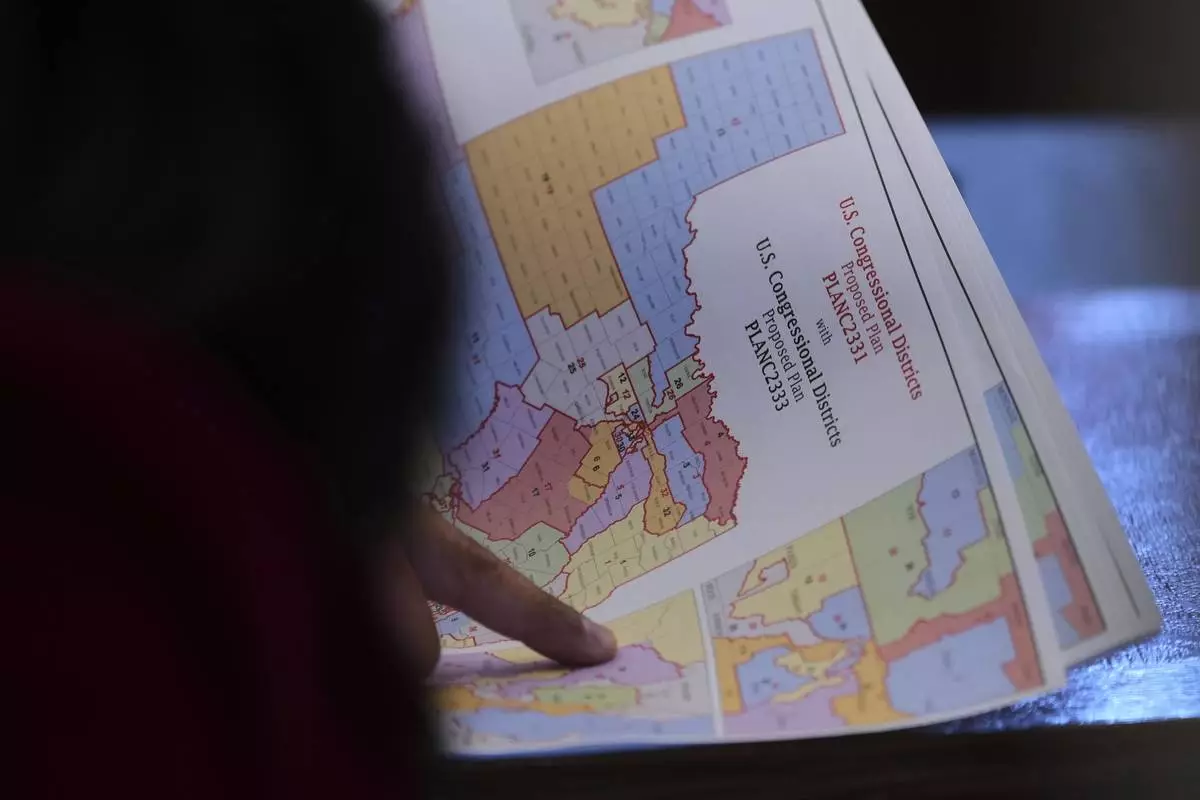
Texas state Rep. Marc LaHood looks over a map as lawmakers prepare to debate a redrawn U.S. congressional map in Texas during a special, Wednesday, Aug. 20, 2025, in Austin, Texas. (AP Photo/Eric Gay)
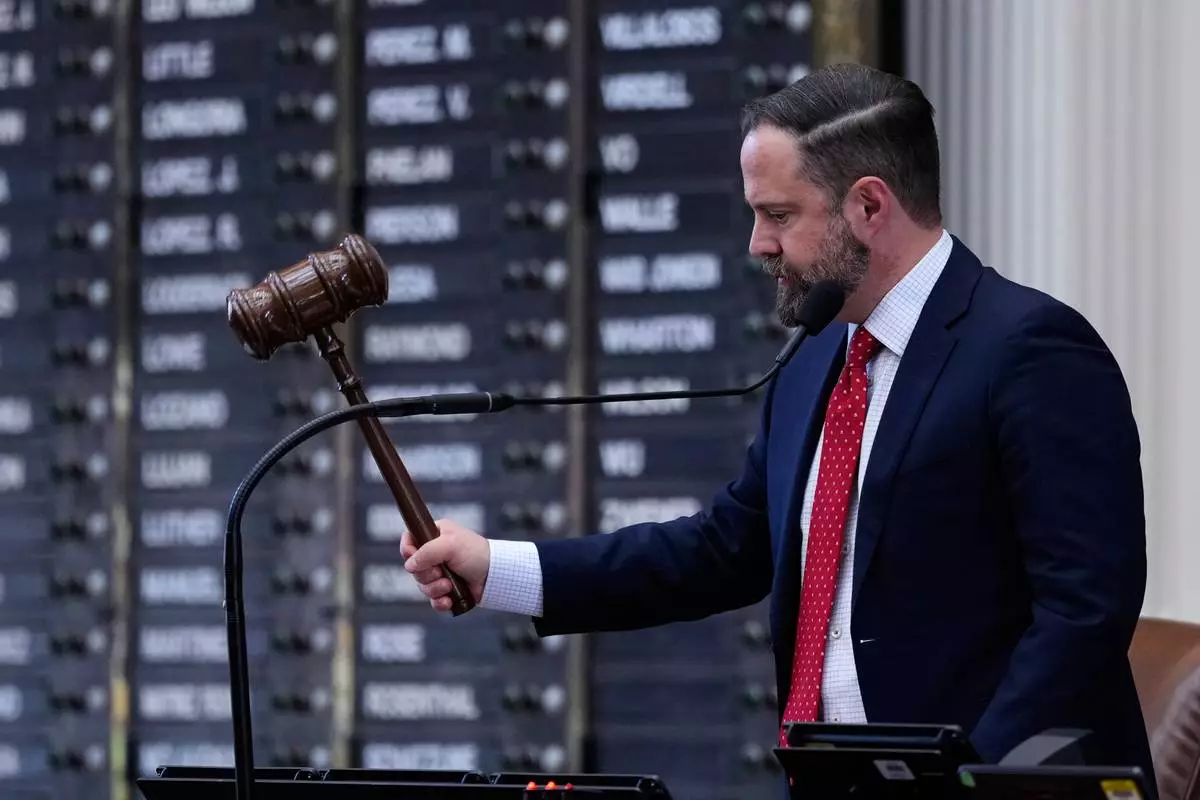
Texas Speaker of the House Dustin Burrows, R-Lubbock, oversees a debate over a redrawn U.S. congressional map in Texas during a special session, Wednesday, Aug. 20, 2025, in Austin, Texas. (AP Photo/Eric Gay)
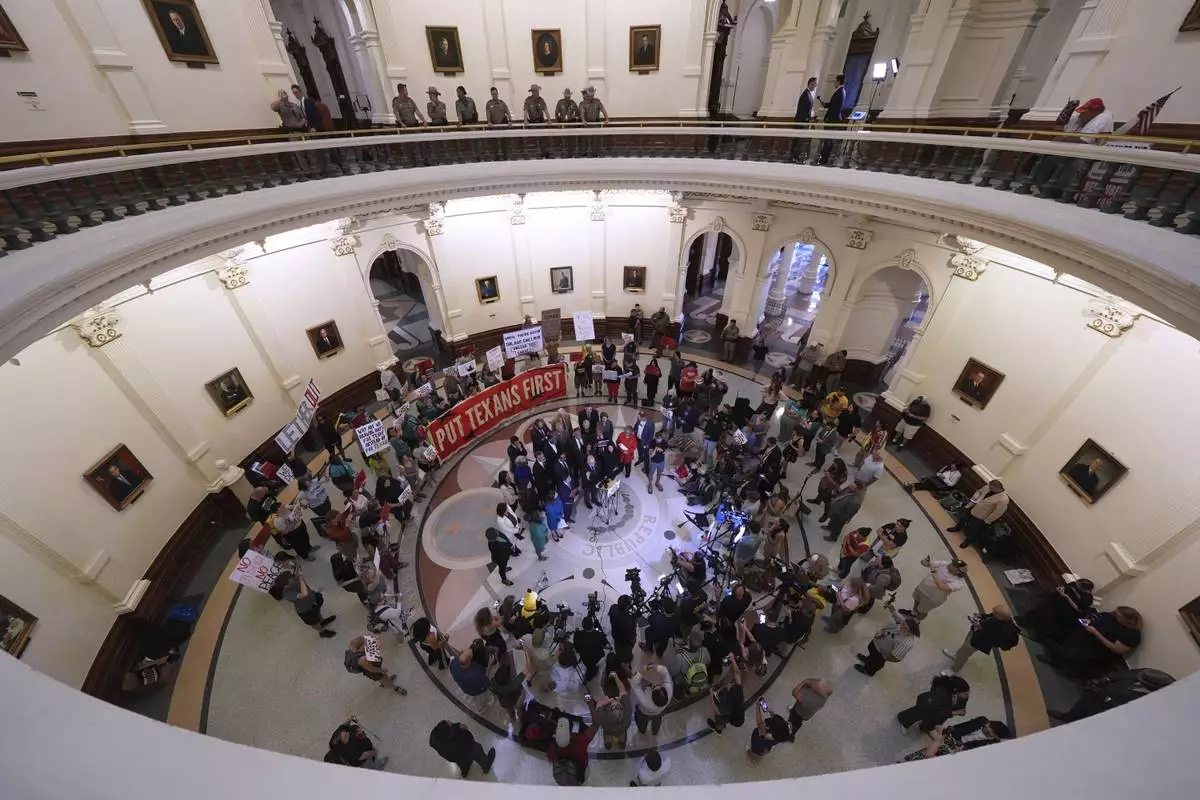
Democratic lawmakers talk to the media and supporters after House Republicans approved a redrawn U.S. congressional map in Texas during a special session, Wednesday, Aug. 20, 2025, in Austin, Texas. (AP Photo/Eric Gay)
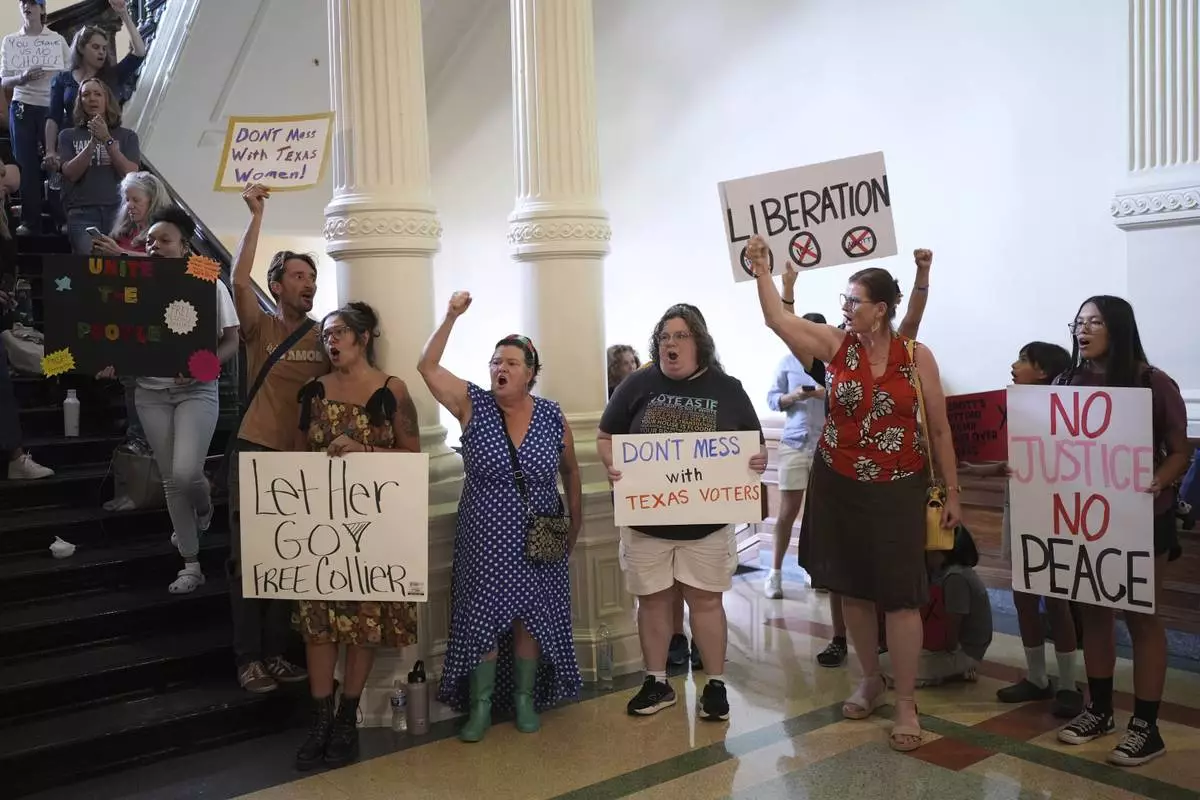
Protesters gather outside of the House Chamber where Democratic Texas state Rep. Nicole Collier refuses to leave due to a required law enforcement escort, Tuesday, Aug. 19, 2025, in Austin, Texas. (AP Photo/Eric Gay)
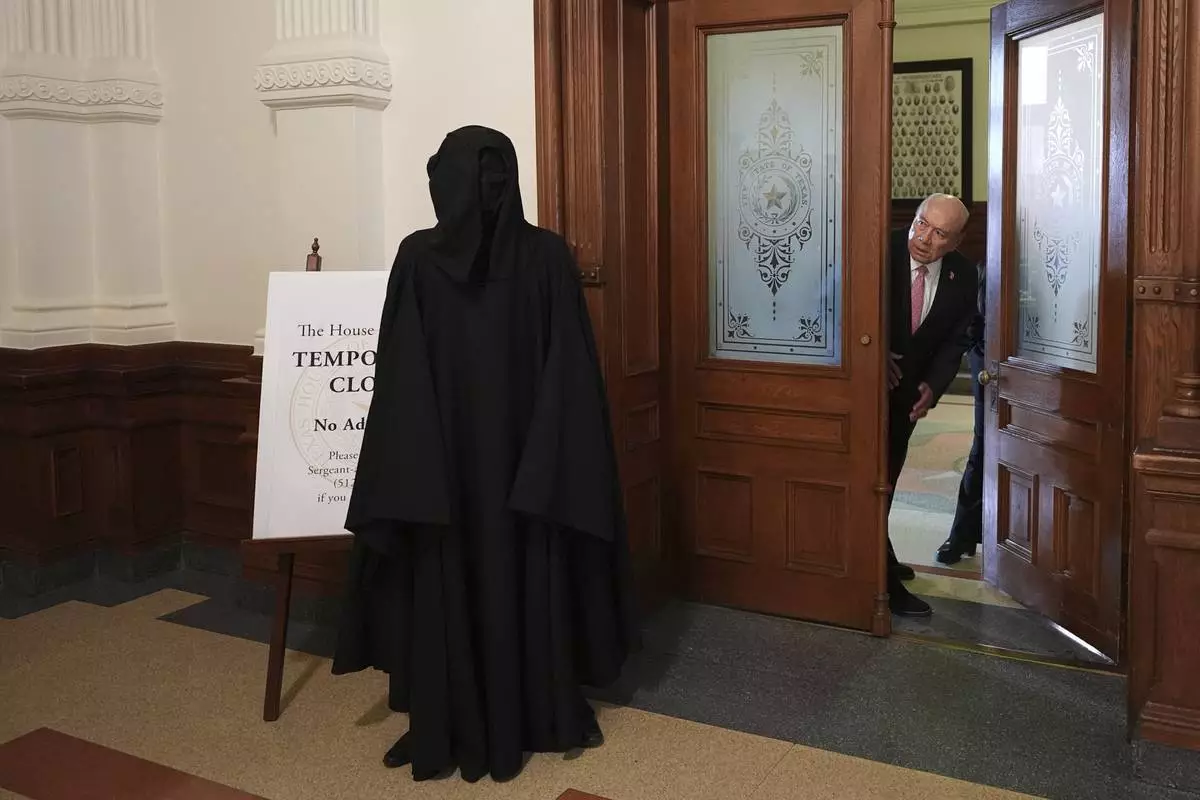
Texas state Sen. Juan "Chuy" Hinojosa, right, looks at a protester dressed as death standing outside of the House Chamber where Democratic Texas state Rep. Nicole Collier refuses to leave due to a required law enforcement escort, Tuesday, Aug. 19, 2025, in Austin, Texas. (AP Photo/Eric Gay)
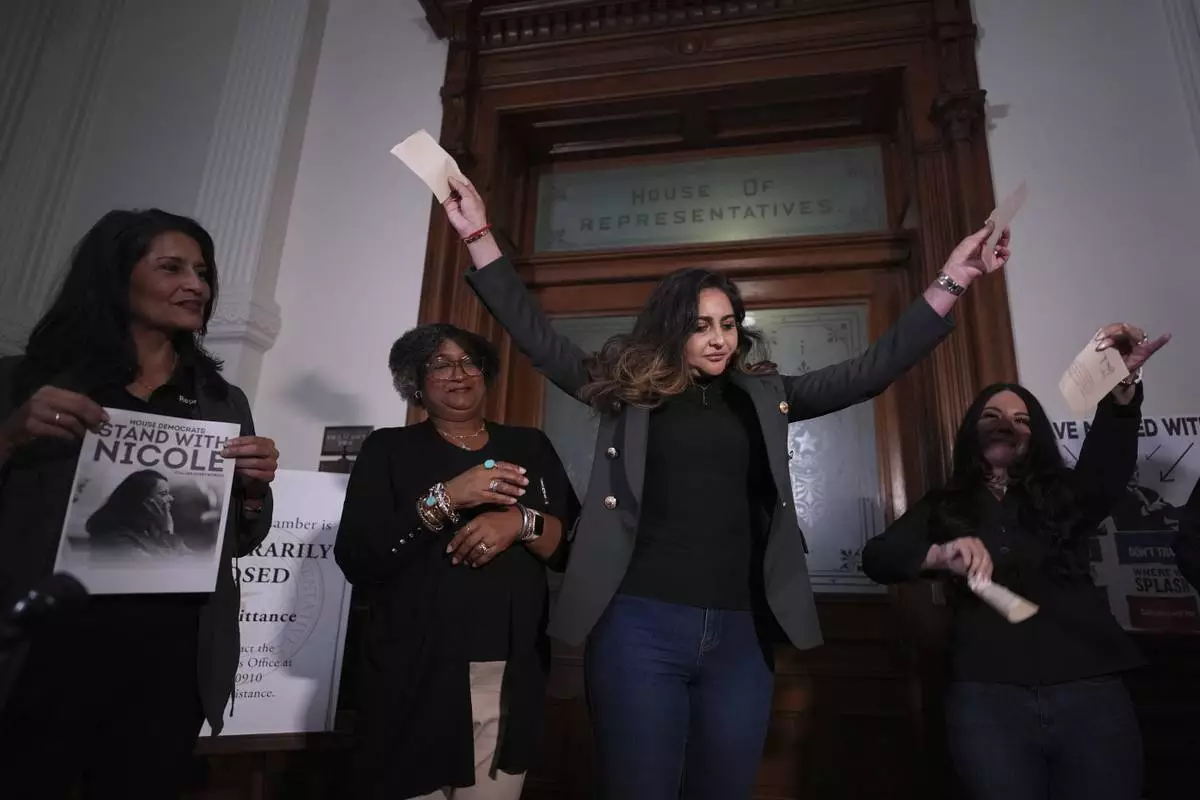
Democratic Texas state Rep. Mihaela Plesa, center, and Rep. Cassandra Garcia Hernandez, right, tear up their 'permission slips' outside of the House Chamber as they plan to join fellow Rep. Nicole Collier who refuses to leave due to a required law enforcement escort, Tuesday, Aug. 19, 2025, in Austin, Texas. (AP Photo/Eric Gay)

Texas Democratic lawmakers return to Texas after leaving two weeks ago to block a vote on a redrawn redistricting map, Monday, Aug. 18, 2025, in Austin, Texas. (AP Photo/Eric Gay)

California Gov. Gavin Newsom speaks during a news conference Thursday, Aug. 14, 2025, in Los Angeles. (AP Photo/Marcio Jose Sanchez)
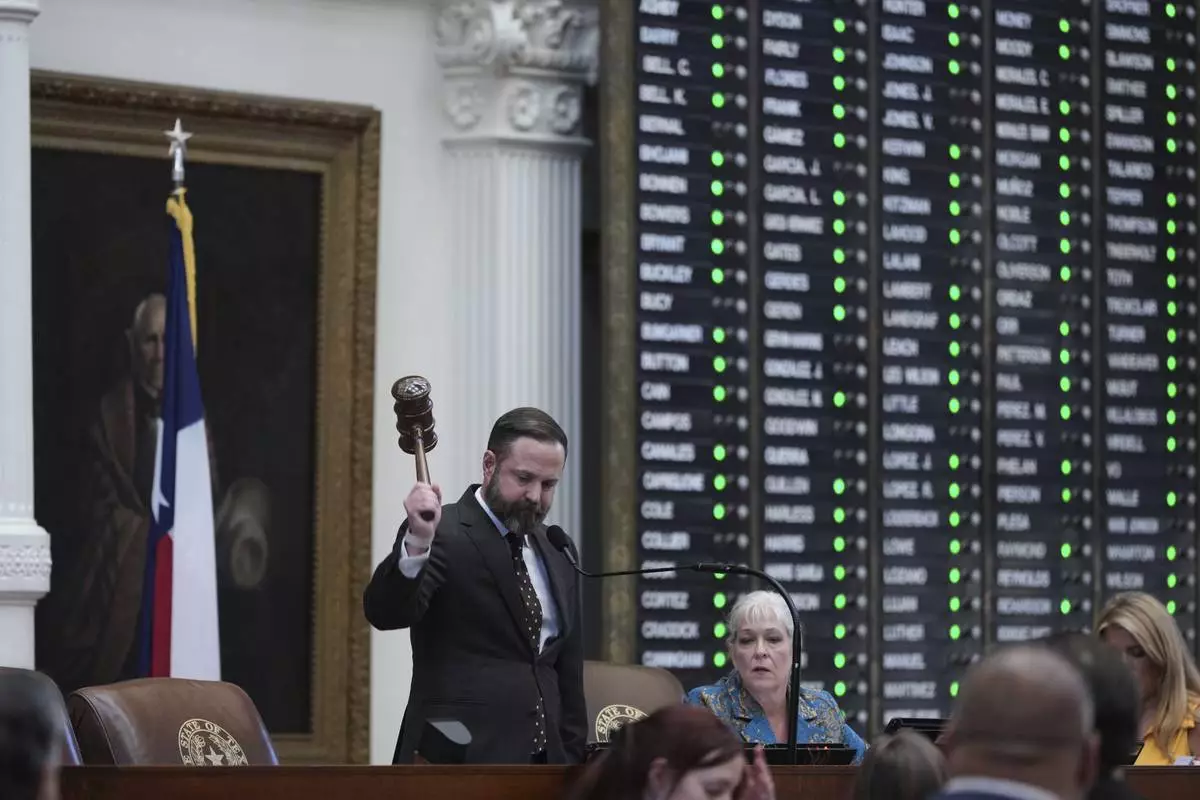
Texas Speaker of the House Dustin Burrows strikes the gavel as the House calls a Special Session with a quorum, Monday, Aug. 18, 2025, in Austin, Texas. (AP Photo/Eric Gay)