Skip to Content Facebook Feature Image

Beshear bans drug in Kentucky that's being targeted by attorneys general across the nation

News

Beshear bans drug in Kentucky that's being targeted by attorneys general across the nation
News

News

Beshear bans drug in Kentucky that's being targeted by attorneys general across the nation

2025-08-19 06:51 Last Updated At:07:10

FRANKFORT, Ky. (AP) — Kentucky Gov. Andy Beshear took emergency action Monday to ban the sale of “designer Xanax,” responding to a request from his state's attorney general who is leading a broader effort to combat the highly potent synthetic drug linked to dozens of overdose deaths last year in the Bluegrass State.

Beshear's action in his state comes as a coalition of 21 attorneys general, led by Kentucky Attorney General Russell Coleman, is urging the U.S. Drug Enforcement Administration to take emergency action banning the unregulated drug. It poses a growing public health threat and is increasingly contributing to overdose deaths, the attorneys general said in a letter dated Monday to DEA Administrator Terry Cole.

“Law enforcement desperately needs the tools to drive this dangerous drug from our neighborhoods,” Coleman, a Republican, said in a news release.

In Kentucky, the classification of bromazolam — widely known as “designer Xanax” — as a Schedule 1 controlled substance took immediate effect following Beshear's emergency regulation. Bromazolam, Coleman has warned, is being passed off as prescription pills including benzodiazepines, which are commonly used to treat conditions such as anxiety disorders, insomnia, and seizures.

He had urged Beshear's administration to ban the drug in Kentucky, and the governor's action on Monday empowers law enforcement to make arrests for selling or possessing the drug, Beshear's office said.

“This deadly drug has no place in our communities, and now we have the tools needed to get it off the streets and protect more lives,” the Democratic governor said in a release.

Beshear, a former Kentucky attorney general now in his second term as governor, is widely seen as a potential candidate for president in 2028.

The drug he and Coleman targeted has been tied to a growing number of fatal overdoses in Kentucky and across the nation, Beshear's office said. It was detected in nearly 50 overdose deaths in Kentucky last year, the office said.

“We live in a moment when as little as one pill can kill – and is killing – our kids,” Coleman said in response to Beshear's action. "I’m glad we could work together to tackle this grave threat.”

In their letter to the head of DEA, the attorneys general said bromazolam is being sold illicitly on the streets and online. It is highly potent and unpredictable, they said, especially when combined with opioids or other central nervous system depressants. Unlike regulated medications, illicitly manufactured bromazolam lacks quality controls, making it particularly lethal for unsuspecting users, they said.

“Despite its clear dangers, bromazolam remains unscheduled at the federal level, creating significant challenges for law enforcement and public health officials trying to respond to this emerging crisis,” the letter said. “Without scheduling, this drug continues to evade traditional regulatory and prosecutorial tools, hindering interdiction efforts and enabling continued distribution through illicit channels.”

Emergency action by the DEA would help law enforcement remove the drug from circulation, give prosecutors the ability to hold traffickers accountable and would “send a clear signal that this dangerous substance has no place on our streets,” the letter said.

Besides Coleman, the request to the DEA included attorneys general from Alabama, Arkansas, Florida, Georgia, Indiana, Iowa, Louisiana, Mississippi, Montana, Nebraska, North Dakota, Ohio, Oklahoma, Pennsylvania, South Carolina, South Dakota, Tennessee, Texas, Virginia and West Virginia, Coleman's office said.
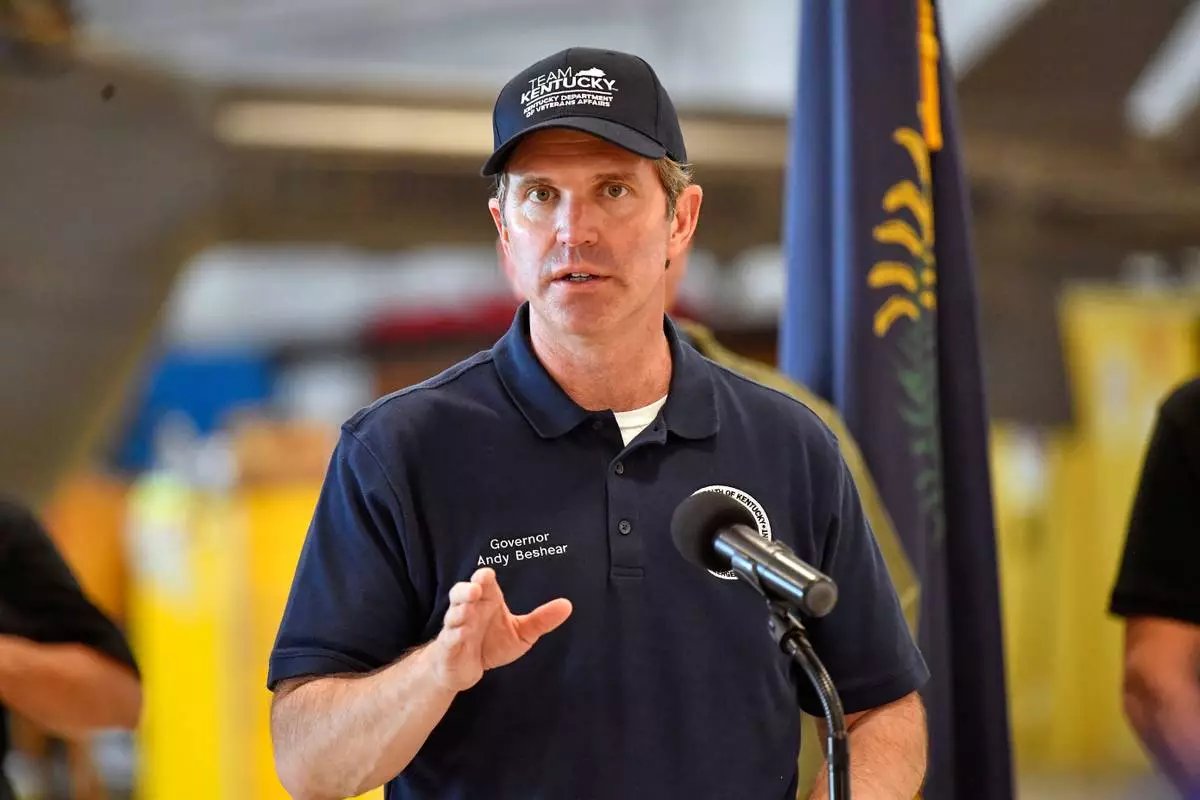
FILE - Gov. Andy Beshear addresses the media at the London Corbin Airport in London, Ky., May 17, 2025. (AP Photo/Timothy D. Easley, File)

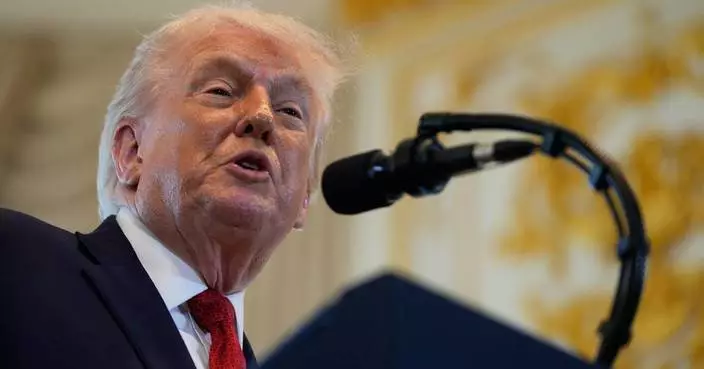
FILE - Gov. Andy Beshear addresses the media at the London Corbin Airport in London, Ky., May 17, 2025. (AP Photo/Timothy D. Easley, File)

OpenAI says it will soon start showing advertisements to ChatGPT users who aren't paying for a premium version of the chatbot.

The artificial intelligence company said Friday it hasn't yet rolled out ads but will start testing them in the coming weeks.

It's the latest effort by the San Francisco-based company to make money from ChatGPT's more than 800 million users, most of whom get it for free.

Though valued at $500 billion, the startup loses more money than it makes and has been looking for ways to turn a profit.

“Most importantly: ads will not influence the answers ChatGPT gives you,” said Fidji Simo, the company’s CEO of applications, in a social media post Friday.

OpenAI said the digital ads will appear at the bottom of ChatGPT's answers “when there’s a relevant sponsored product or service based on your current conversation.”

The ads “will be clearly labeled and separated from the organic answer,” the company said.

Two of OpenAI’s rivals, Google and Meta, have dominated digital advertising for years and already incorporate ads into some of their AI features.

Originally founded as a nonprofit with a mission to safely build better-than-human AI, OpenAI last year reorganized its ownership structure and converted its business into a public benefit corporation. It said Friday that its pursuit of advertising will be “always in support” of its original mission to ensure its AI technology benefits humanity.

But introducing personalized ads starts OpenAI “down a risky path” previously taken by social media companies, said Miranda Bogen of the Center for Democracy and Technology.

“People are using chatbots for all sorts of reasons, including as companions and advisors," said Bogen, director of CDT’s AI Governance Lab. “There’s a lot at stake when that tool tries to exploit users’ trust to hawk advertisers’ goods.”

OpenAI makes some money from paid subscriptions but needs more revenue to pay for its more than $1 trillion in financial obligations for the computer chips and data centers that power its AI services. The risk that OpenAI won’t make enough money to fulfill the expectations of backers like Oracle and Nvidia has amplified investor concerns about an AI bubble.

“It is clear to us that a lot of people want to use a lot of AI and don’t want to pay, so we are hopeful a business model like this can work,” said OpenAI CEO Sam Altman in a post Friday on social platform X. He added that he likes the ads on Meta's Instagram because they show him things he wouldn't have found otherwise.

OpenAI claims it won't use a user's personal information or prompts to collect data for ads, but the question is “for how long,” said Paddy Harrington, an analyst at research group Forrester.

“Free services are never actually free and these public AI platforms need to generate revenue,” Harrington said. “Which leads to the adage: If the service is free, you’re the product.”

FILE - The OpenAI logo is displayed on a mobile phone in front of a computer screen with output from ChatGPT, March 21, 2023, in Boston. (AP Photo/Michael Dwyer, File)

FILE - The OpenAI logo is displayed on a mobile phone in front of a computer screen with output from ChatGPT, March 21, 2023, in Boston. (AP Photo/Michael Dwyer, File)

Recommended Articles