UNITED NATIONS (AP) — A record 383 aid workers were killed in global hotspots in 2024, nearly half of them in Gaza during the war between Israel and Hamas, the U.N. humanitarian office said Tuesday on the annual day honoring the thousands of people who step into crises to help others.
U.N. humanitarian chief Tom Fletcher said the record number of killings must be a wake-up call to protect civilians caught in conflict and all those trying to help them.
“Attacks on this scale, with zero accountability, are a shameful indictment of international inaction and apathy,” Fletcher said in a statement on World Humanitarian Day. “As the humanitarian community, we demand — again — that those with power and influence act for humanity, protect civilians and aid workers and hold perpetrators to account.”
The Aid Worker Security Database, which has compiled reports since 1997, said the number of killings rose from 293 in 2023 to 383 in 2024, including more than 180 in Gaza.
Most of the aid workers killed were national staffers serving their communities who were attacked while on the job or in their homes, according to the U.N. Office for the Coordination of Humanitarian Affairs, known as OCHA.
This year, the figures show no sign of a reversal of the upward trend, OCHA said.
There were 599 major attacks affecting aid workers last year, a sharp increase from the 420 in 2023, the database's figures show. The attacks in 2024 also wounded 308 aid workers and saw 125 kidnapped and 45 detained.
There have been 245 major attacks in the past seven plus months, and 265 aid workers have been killed, according to the database.
One of the deadliest and most horrifying attacks this year took place in the southern Gaza city of Rafah when Israeli troops opened fire before dawn on March 23, killing 15 medics and emergency responders in clearly marked vehicles. Troops bulldozed over the bodies along with their mangled vehicles, burying them in a mass grave. U.N. and rescue workers were only able to reach the site a week later.
“Even one attack against a humanitarian colleague is an attack on all of us and on the people we serve,” the U.N.’s Fletcher said. “Violence against aid workers is not inevitable. It must end.”
According to the database, violence against aid workers increased in 21 countries in 2024 compared with the previous year, with government forces and affiliates the most common perpetrators.
The highest numbers of major attacks last year were in the Palestinian territories with 194, followed by Sudan with 64, South Sudan with 47, Nigeria with 31 and Congo with 27, the database reported.
As for killings, Sudan, where civil war is still raging, was second to Gaza and the West Bank with 60 aid workers losing their lives in 2024. That was more than double the 25 aid worker deaths in 2023.
Lebanon, where Israel and Hezbollah militants fought a war last year, saw 20 aid workers killed compared with none in 2023. Ethiopia and Syria each had 14 killings, about double the number in 2023, and Ukraine had 13 aid workers killed in 2024, up from six in 2023, according to the database.
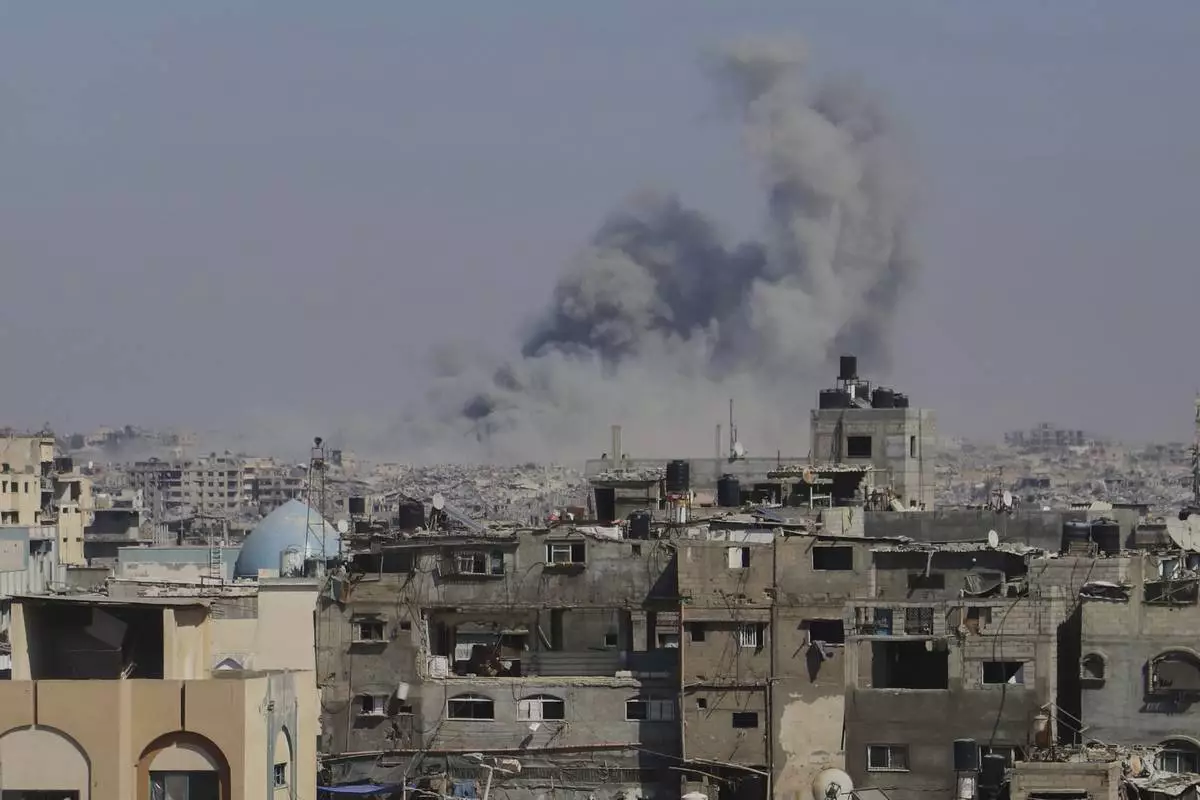
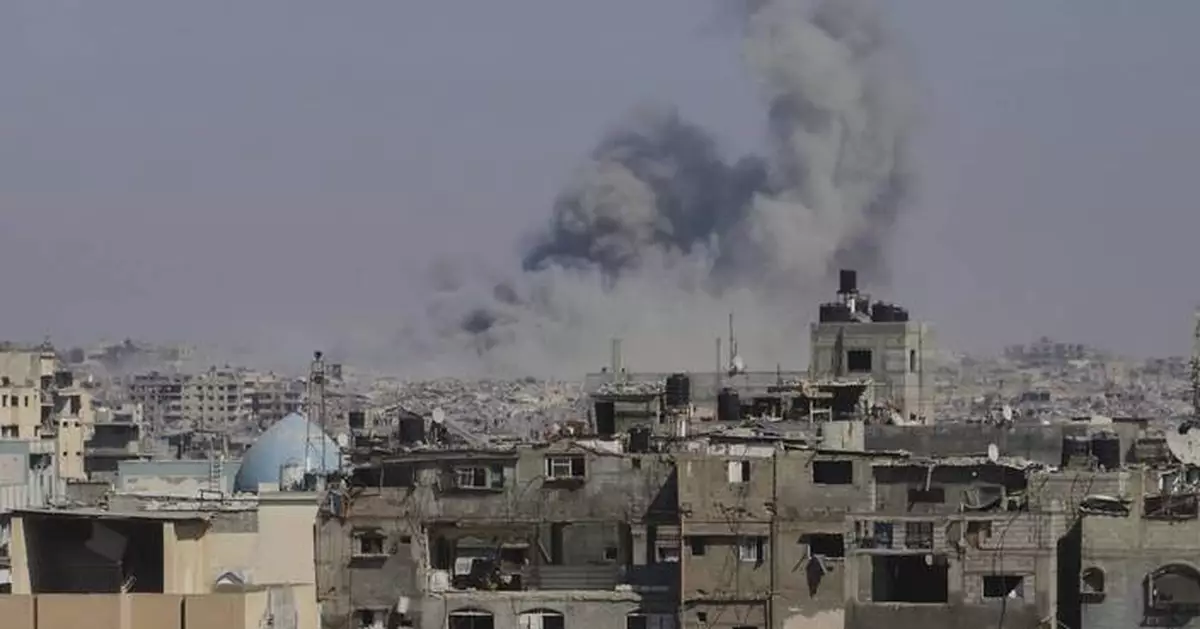
Smoke rises to the sky following an Israeli army airstrike in Khan Younis, in the Gaza Strip, Monday, Aug. 18, 2025. (AP Photo/Mariam Dagga)
CARACAS, Venezuela (AP) — President Donald Trump is set to meet Thursday at the White House with Venezuelan opposition leader María Corina Machado, whose political party is widely considered to have won 2024 elections rejected by then-President Nicolás Maduro before the United States captured him in an audacious military raid this month.
Less than two weeks after U.S. forces seized Maduro and his wife at a heavily guarded compound in Caracas and brought them to New York to stand trial on drug trafficking charges, Trump will host the Nobel Peace Prize laureate Machado, having already dismissed her credibility to run Venezuela and raised doubts about his stated commitment to backing democratic rule in the country.
“She’s a very nice woman,” Trump told Reuters in an interview about Machado. “I’ve seen her on television. I think we’re just going to talk basics.”
The meeting comes as Trump and his top advisers have signaled their willingness to work with acting President Delcy Rodríguez, who was Maduro’s vice president and along with others in the deposed leader's inner circle remain in charge of day-to-day governmental operations.
Rodríguez herself has adopted a less strident position toward Trump and his “America First” policies toward the Western Hemisphere, saying she plans to continue releasing prisoners detained under Maduro — a move reportedly made at the behest of the Trump administration. Venezuela released several Americans this week.
Trump, a Republican, said Wednesday that he had a “great conversation” with Rodríguez, their first since Maduro was ousted.
“We had a call, a long call. We discussed a lot of things,” Trump told reporters. “And I think we’re getting along very well with Venezuela.”
In endorsing Rodríguez, Trump has sidelined Machado, who has long been a face of resistance in Venezuela. She had sought to cultivate relationships with Trump and key advisers like Secretary of State Marco Rubio among the American right wing in a political gamble to ally herself with the U.S. government. She also intends to have a meeting in the Senate on Thursday afternoon.
Despite her alliance with Republicans, Trump was quick to snub her following Maduro’s capture. Just hours afterward, Trump said of Machado that “it would be very tough for her to be the leader. She doesn’t have the support within or the respect within the country. She’s a very nice woman, but she doesn’t have the respect.”
Machado has steered a careful course to avoid offending Trump, notably after winning last year’s Nobel Peace Prize, which Trump coveted. She has since thanked Trump and offered to share the prize with him, a move that has been rejected by the Nobel Institute.
Machado’s whereabouts have been largely unknown since she went into hiding early last year after being briefly detained in Caracas. She briefly reappeared in Oslo, Norway, in December after her daughter received the Nobel Peace Prize on her behalf.
The industrial engineer and daughter of a steel magnate began challenging the ruling party in 2004, when the nongovernmental organization she co-founded, Súmate, promoted a referendum to recall then-President Hugo Chávez. The initiative failed, and Machado and other Súmate executives were charged with conspiracy.
A year later, she drew the anger of Chávez and his allies again for traveling to Washington to meet President George W. Bush. A photo showing her shaking hands with Bush in the Oval Office lives in the collective memory. Chávez considered Bush an adversary.
Almost two decades later, she marshaled millions of Venezuelans to reject Chávez’s successor, Maduro, for another term in the 2024 election. But ruling party-loyal electoral authorities declared him the winner despite ample credible evidence to the contrary. Ensuing anti-government protests ended in a brutal crackdown by state security forces.
Janetsky reported from Mexico City. AP Diplomatic Writer Matthew Lee in Washington contributed to this report.
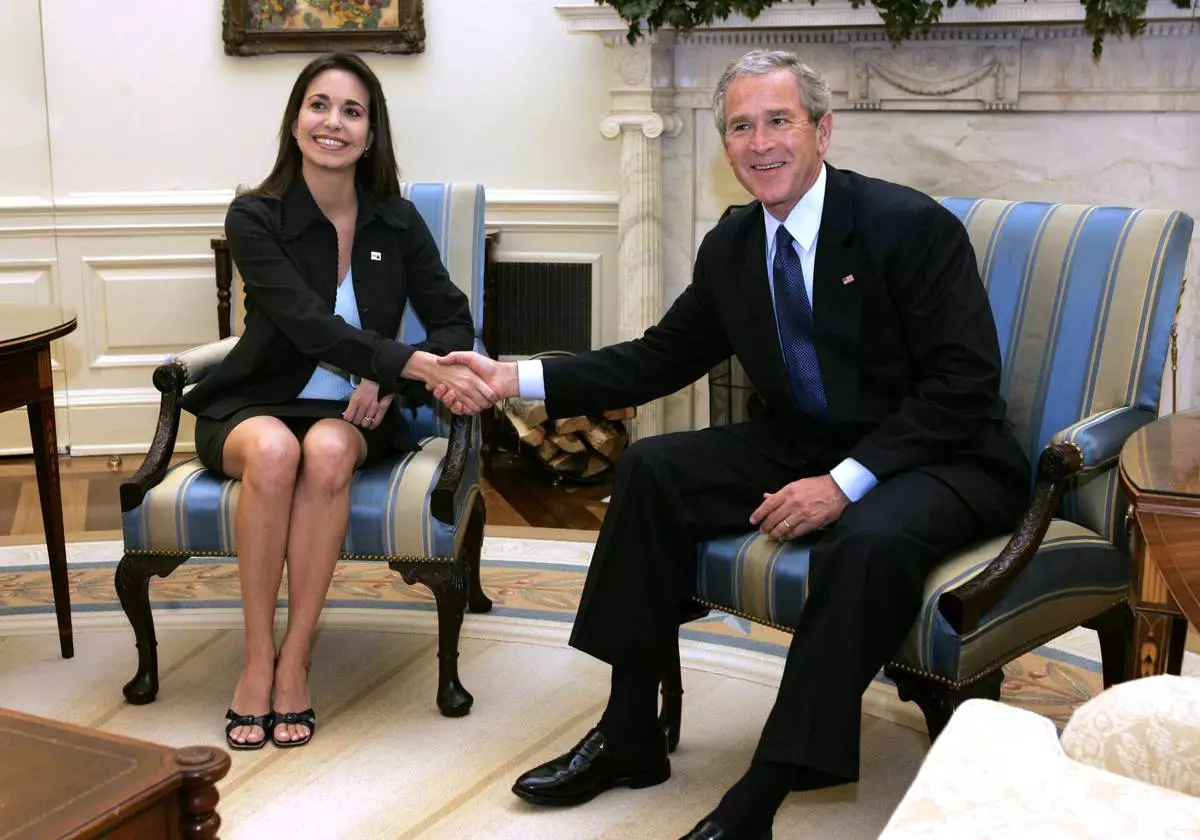
FILE - U.S. President George Bush, right, meets with Maria Corina Machado, executive director of Sumate, a non-governmental organization that defends Venezuelan citizens' political rights, in the Oval Office of the White House, Washington, May 31, 2005. (AP Photo/Charles Dharapak, File)
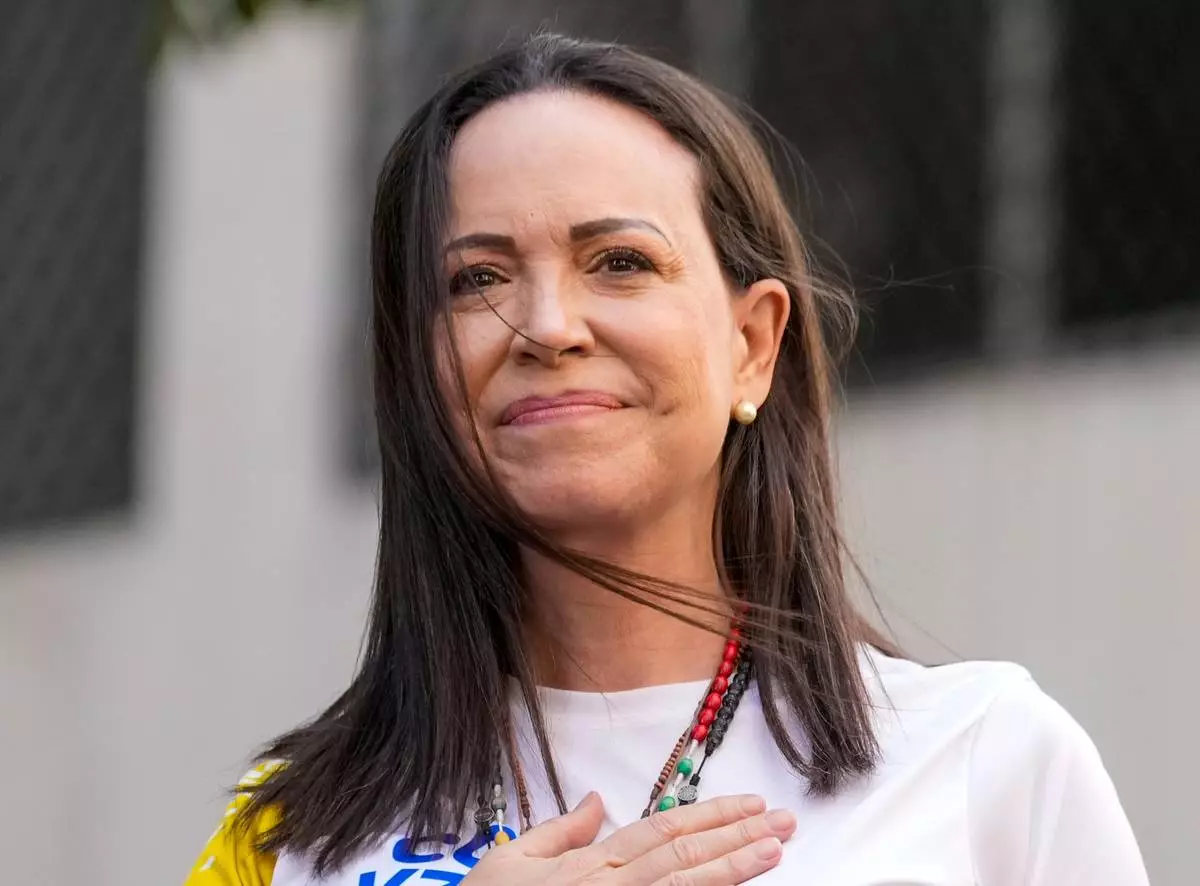
FILE - Opposition leader Maria Corina Machado gestures to supporters during a protest against President Nicolas Maduro the day before his inauguration for a third term, in Caracas, Venezuela, Thursday, Jan. 9, 2025. (AP Photo/Ariana Cubillos, file)