The Port of Hamburg recorded strong growth in container throughput during the first half of the year, despite a sharp decline in cargo trade with the United States, according to data released by Hafen Hamburg Marketing on Monday.
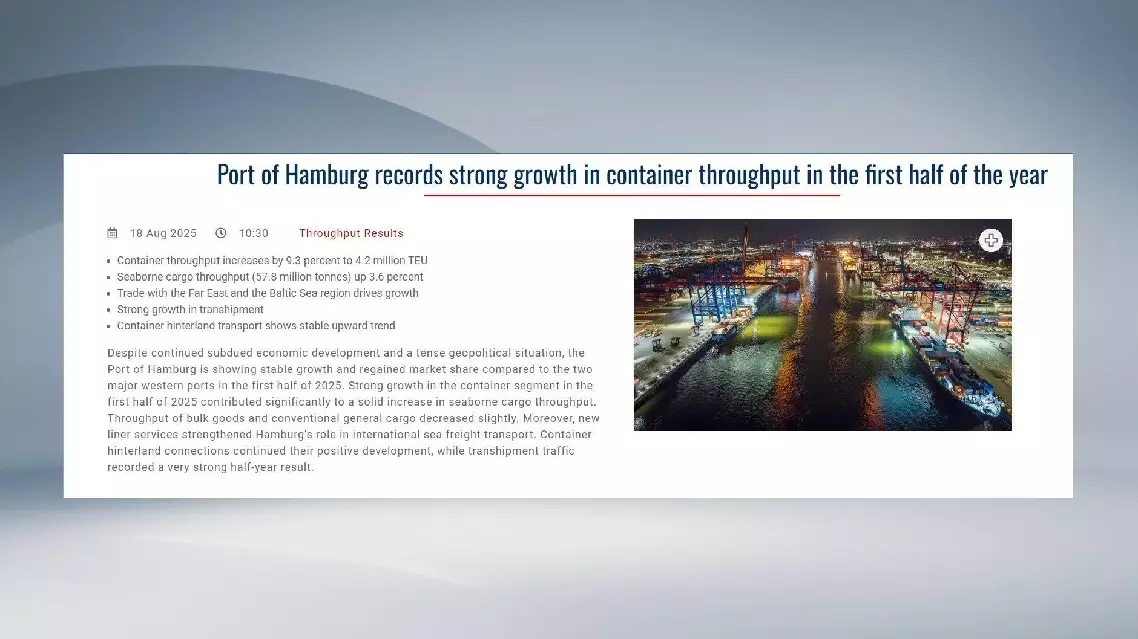
According to the data, container throughput at the Port of Hamburg increased by 9.3 percent to reach 4.2 million TEUs in the first half of the year, despite continued slow economic growth and a tense geopolitical environment.
Meanwhile, seaborne cargo throughput at the port reached 57.8 million tons from January to June, marking a year-on-year increase of 3.6 percent.
Among Hamburg's partner countries, only trade with the United States declined in the first six months, with container throughput dropping 19.3 percent to 275,000 TEUs.
Axel Mattern, CEO of Hafen Hamburg Marketing, attributed this decline to frequent changes in U.S. tariff policies, which not only reflect uncertainties in American trade policies but also negatively impact global seaborne trade.
In the first six months, growth in container throughput at the port was mainly generated by trade lanes with the Far East and the Baltic Sea region.
Container throughput between the Port of Hamburg and China grew by 10.5 percent to 1.2 million TEUs in the first half of the year, accounting for 28.6 percent of the port's total throughput during that period.
China remains the port's largest trading partner and a key driver of its cargo trade growth.
Additionally, new liner services connecting Hamburg's port with the Mediterranean, the Middle East, and India also saw significant increases.
Hamburg Port records strong container throughput growth in H1 despite decline in US Trade
Hamburg Port records strong container throughput growth in H1 despite decline in US Trade
China's top housing authority has pledged to stabilize the real-estate market, rolling out a package of measures centered on city-specific policies to reduce inventories and optimize housing supply.
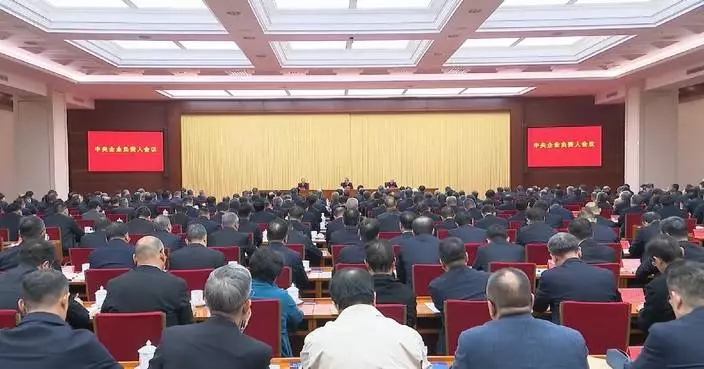
At a national conference held in Beijing on Tuesday, the Ministry of Housing and Urban-Rural Development announced that stabilizing the real estate market will be a central priority next year.
In 2026, local governments across China are expected to focus on city-specific policies aimed at controlling new housing supply, reducing existing inventory, and optimizing housing availability. Efforts will be integrated with urban renewal projects and the redevelopment of urban villages to revitalize and better utilize existing land resources. Authorities will also promote the acquisition of unsold commercial housing stock for conversion into affordable housing, resettlement units, dormitories, and apartments for skilled professionals.
The supply of government-subsidized housing will be optimized and implemented with greater precision, while a national housing quality improvement initiative will advance the orderly construction of "good homes." The role of the real estate project "whitelist" system will be further expanded to support the reasonable financing needs of property developers.
Municipal governments are encouraged to make full use of their autonomy in real estate regulation, adjusting and refining housing policies as appropriate to support both rigid and improvement-oriented housing needs, thereby fostering stable operation across local property markets.
China will also accelerate the formation of a new development model for the real estate sector. This includes building a foundational institutional framework, solidifying the corporate-based project development model, implementing a lead bank system for real estate financing, and promoting the sale of completed homes, effectively reducing the risk of delivery failures. For areas that continue with pre-sale practices, stricter oversight will be applied to the management of pre-sale funds to protect buyers' legal rights.
At the same time, reforms to the housing provident fund system will be deepened. The government will launch a campaign to improve the quality of property services and explore a new model of community governance led by grassroots Party organizations in collaboration with neighborhood committees, homeowners' associations, and property management companies. Moreover, the "property services plus lifestyle services" model will be explored, expanding property-related services into households.

China pledges to stabilize property market