Skip to Content Facebook Feature Image

Qatar urges a Gaza ceasefire after a 'positive response' from Hamas

News

Qatar urges a Gaza ceasefire after a 'positive response' from Hamas
News

News

Qatar urges a Gaza ceasefire after a 'positive response' from Hamas

2025-08-20 11:52 Last Updated At:12:00

JERUSALEM (AP) — A key mediator on Tuesday stressed the urgency of brokering a ceasefire in the Gaza Strip after Hamas showed a “positive response” to a proposal from Arab countries, but Israel has yet to weigh in as its military prepares an offensive in some of the territory's most populated areas.

The prospect of an expanded assault on Gaza City and other areas sheltering hundreds of thousands of civilians has sparked international outrage. Palestinians say there is nowhere to flee after 22 months of war that has already killed tens of thousands and destroyed much of the territory.

More Images
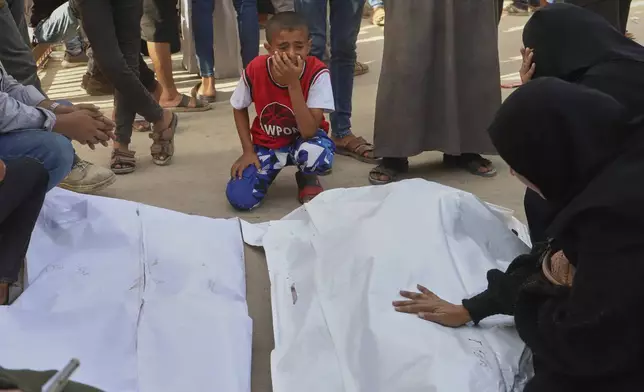
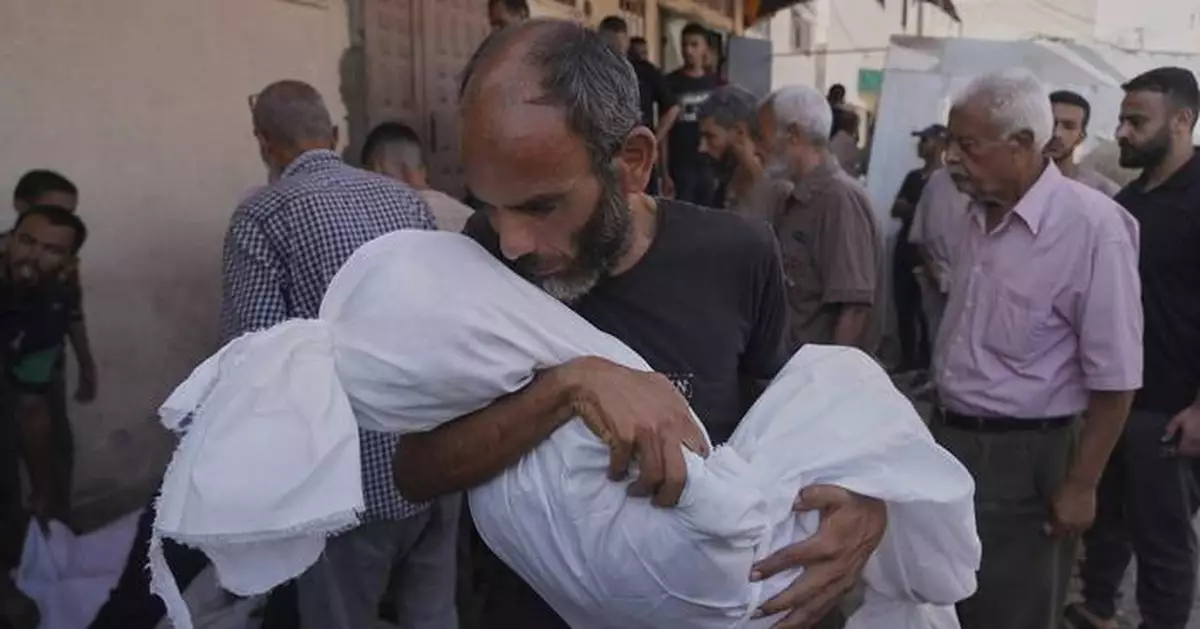
A Palestinian boy mourns over the bodies of his uncle, Mohammad Harb and his cousin Leen Harb, who were killed in an Israeli airstrike, during their funeral at Nasser Hospital, in Khan Younis, in the southern Gaza Strip, Tuesday, Aug. 19, 2025. (AP Photo/Mariam Dagga)
A Palestinian boy mourns over the bodies of his uncle, Mohammad Harb and his cousin Leen Harb, who were killed in an Israeli airstrike, during their funeral at Nasser Hospital, in Khan Younis, in the southern Gaza Strip, Tuesday, Aug. 19, 2025. (AP Photo/Mariam Dagga)

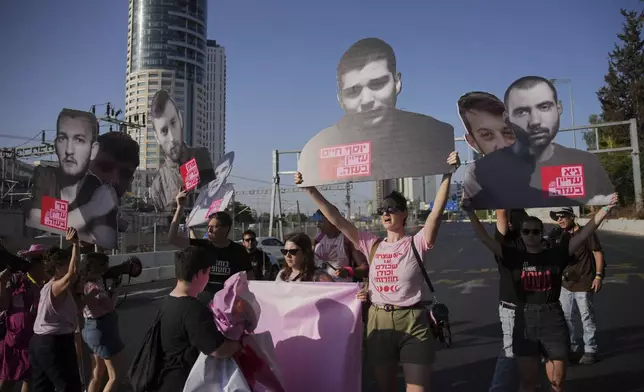
Demonstrators block a road during a protest demanding the immediate release of hostages held by Hamas and calling for the Israeli government to reverse its decision to take over Gaza City and other areas in the Gaza Strip, in Tel Aviv, Israel, Tuesday, Aug. 19, 2025. (AP Photo/Ohad Zwigenberg)
Demonstrators block a road during a protest demanding the immediate release of hostages held by Hamas and calling for the Israeli government to reverse its decision to take over Gaza City and other areas in the Gaza Strip, in Tel Aviv, Israel, Tuesday, Aug. 19, 2025. (AP Photo/Ohad Zwigenberg)

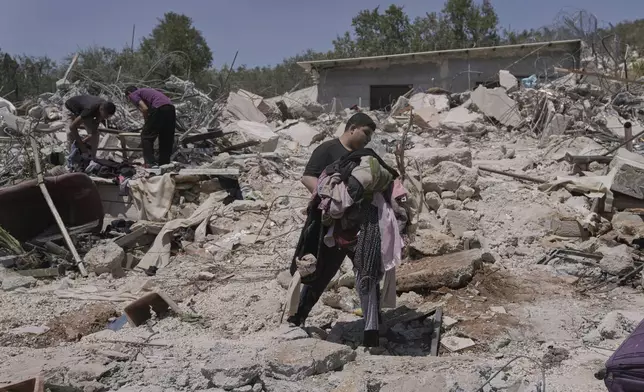
A Palestinian youth carries clothes as he walks over the rubble of a house demolished by the Israeli army in the West Bank village of Beit Sira, near Ramallah, Tuesday, Aug. 19, 2025. (AP Photo/Mahmoud Illean)
A Palestinian youth carries clothes as he walks over the rubble of a house demolished by the Israeli army in the West Bank village of Beit Sira, near Ramallah, Tuesday, Aug. 19, 2025. (AP Photo/Mahmoud Illean)

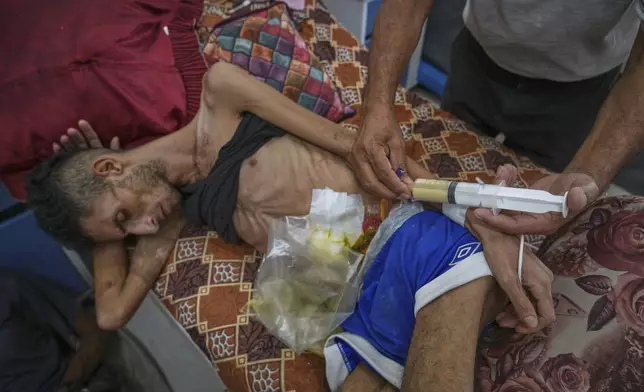
Atef Arhouma feeds his injured son, Karam Arhouma, 22, lentil soup through a syringe at Shifa Hospital, where doctors say he is showing signs of malnutrition, in Gaza City, Monday, Aug. 18, 2025. (AP Photo/Abdel Kareem Hana)
Atef Arhouma feeds his injured son, Karam Arhouma, 22, lentil soup through a syringe at Shifa Hospital, where doctors say he is showing signs of malnutrition, in Gaza City, Monday, Aug. 18, 2025. (AP Photo/Abdel Kareem Hana)

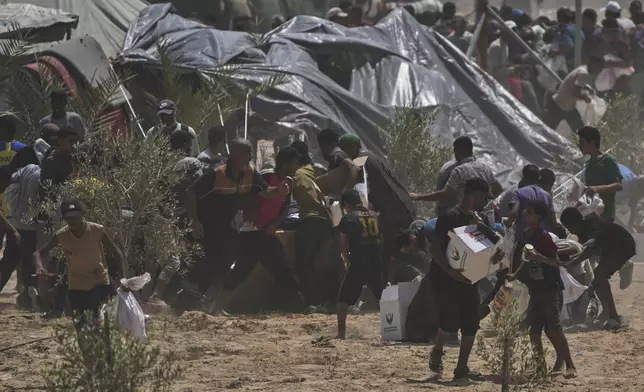
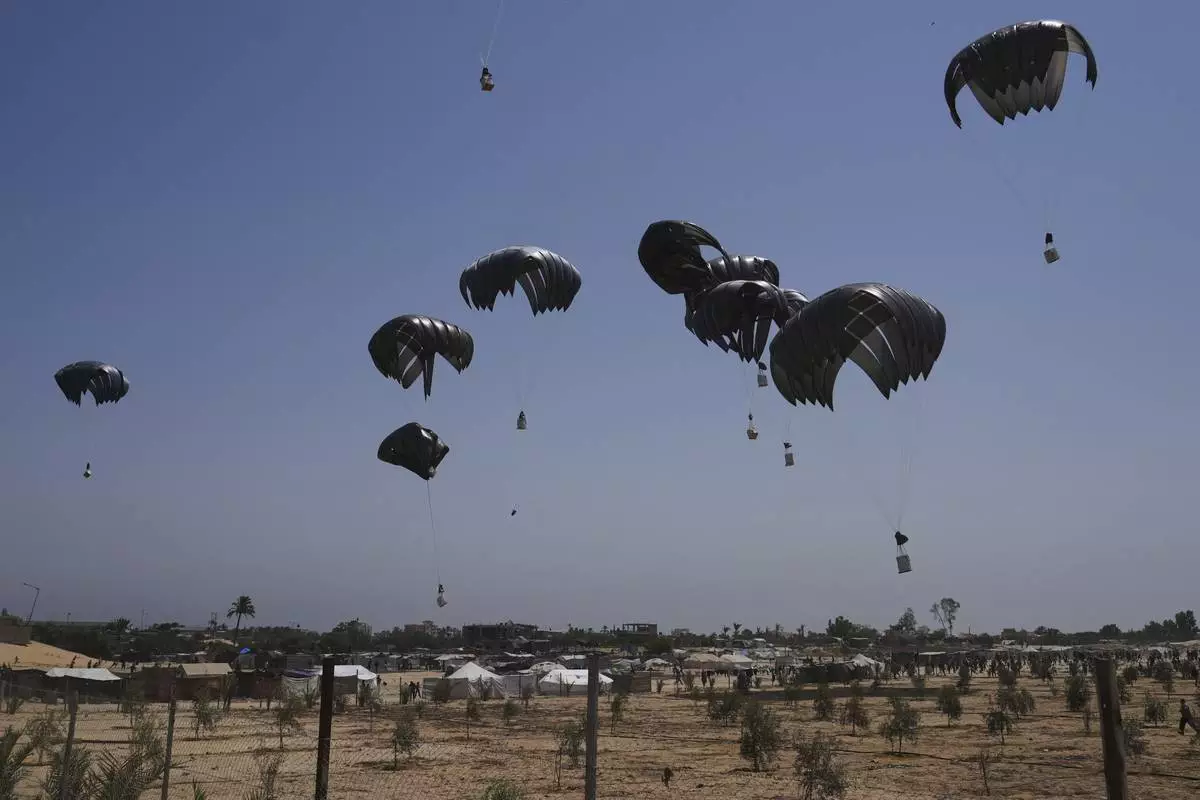
Palestinians rush to collect humanitarian aid packages from the United Arab Emirates, airdropped by parachutes into Deir al-Balah, in the central Gaza Strip, Tuesday, Aug. 19, 2025. (AP Photo/Abdel Kareem Hana)
Palestinians rush to collect humanitarian aid packages from the United Arab Emirates, airdropped by parachutes into Deir al-Balah, in the central Gaza Strip, Tuesday, Aug. 19, 2025. (AP Photo/Abdel Kareem Hana)

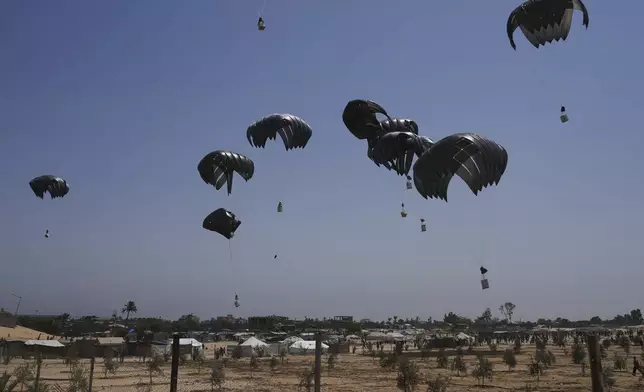
Parachutes drop supplies into Deir al-Balah, central Gaza Strip, Tuesday, Aug. 19, 2025. (AP Photo/Abdel Kareem Hana)
Parachutes drop supplies into Deir al-Balah, central Gaza Strip, Tuesday, Aug. 19, 2025. (AP Photo/Abdel Kareem Hana)

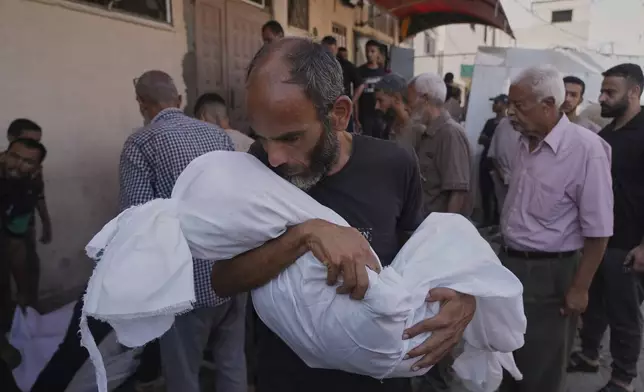
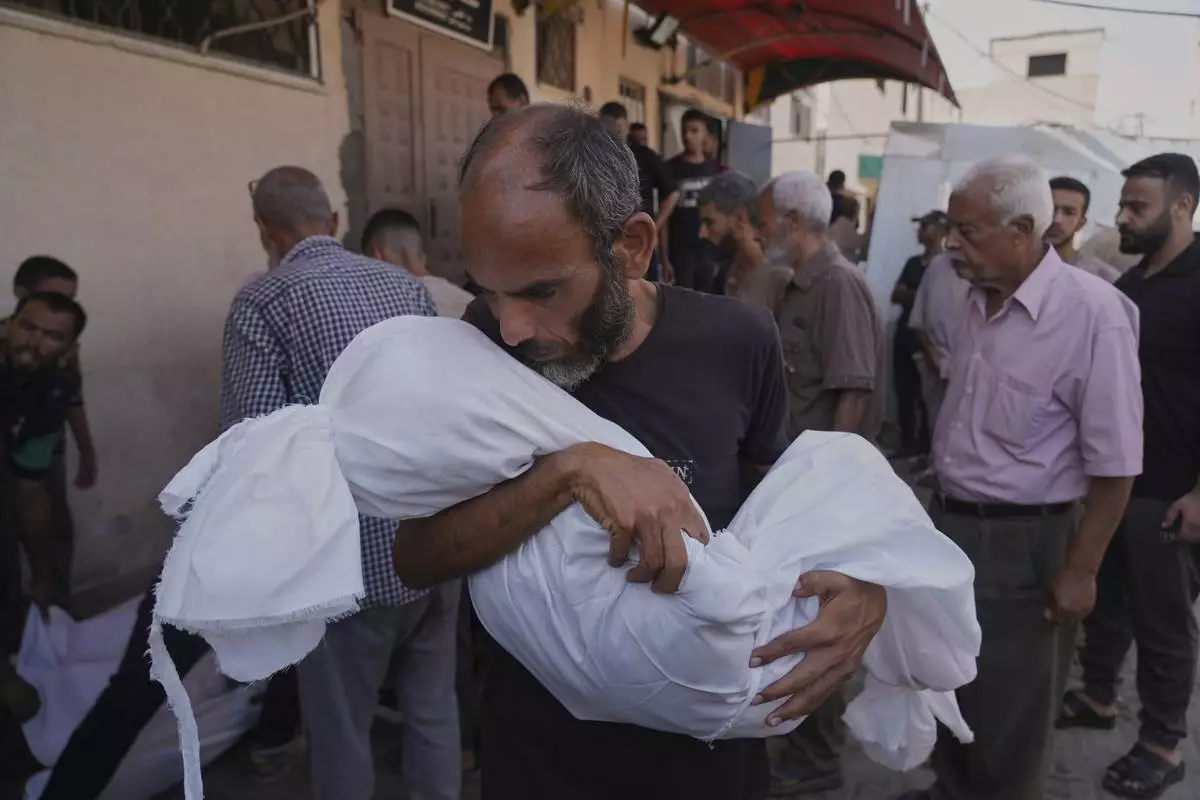
Ahmed Al-Hajj carries the body of his daughter, Dana Al-Hajj, 13, who was killed in an Israeli airstrike in the Gaza Strip, at Al-Aqsa Hospital in Deir al-Balah, Tuesday, Aug. 19, 2025. (AP Photo/Abdel Kareem Hana)

Ahmed Al-Hajj carries the body of his daughter, Dana Al-Hajj, 13, who was killed in an Israeli airstrike in the Gaza Strip, at Al-Aqsa Hospital in Deir al-Balah, Tuesday, Aug. 19, 2025. (AP Photo/Abdel Kareem Hana)

“They are talking about a 60-day truce, and after Israel gets its (hostages) they will strike us again,” said Huda Rishe, who has been displaced four times since the start of the war. “We will return to Gaza City and then leave again. We have lost hope.”

AP reporters saw some families arriving in central Gaza after fleeing Gaza City.

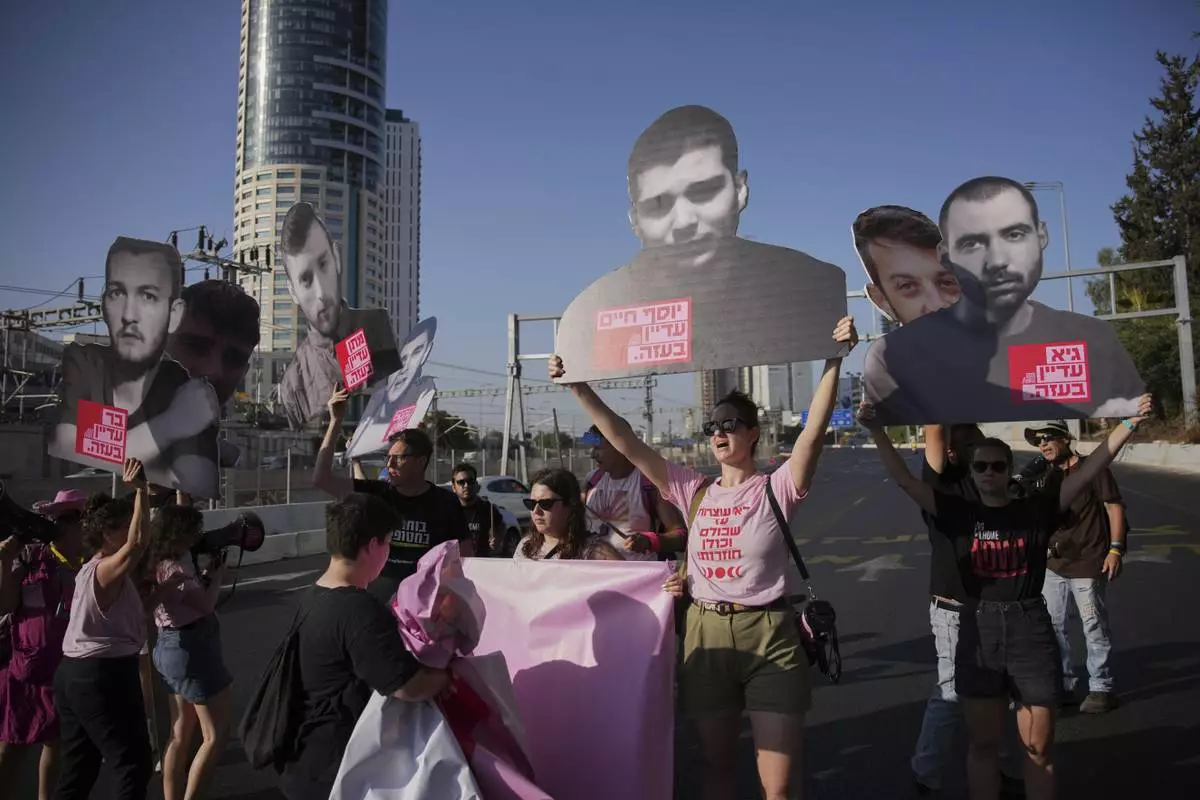
Many Israelis, who rallied in the hundreds of thousands on Sunday, fear the offensive will further endanger the remaining hostages in Gaza. Just 20 of the 50 remaining are thought to be alive.

“If this (ceasefire) proposal fails, the crisis will exacerbate,” Majed al-Ansari, a spokesperson for Qatar's Foreign Ministry, told journalists, adding they have yet to hear from Israel on it.

Al-Ansari said Hamas had agreed to terms under discussion. He declined to provide details but said the proposal was “almost identical” to one previously advanced by U.S. envoy Steve Witkoff.

That U.S. proposal was for a 60-day ceasefire, during which some of the remaining hostages would be released and the sides would negotiate a lasting ceasefire and the return of the rest.

“If we get to a deal, it shouldn’t be expected that it would be instantaneously implemented,” al-Ansari said. “We’re not there yet.”

That cautious assessment came a day after the foreign minister of Egypt, the other Arab country mediating the talks, said they were were pushing for a phased deal and noted that Qatar's prime minister had joined the negotiations with Hamas.

Witkoff has been invited to rejoin the talks, Egyptian Foreign Minister Badr Abdelatty told The Associated Press. Witkoff pulled out of negotiations less than a month ago, accusing Hamas of not acting in good faith. It was not clear how Witkoff has responded to the invitation.

Abdelatty held a series of phone calls Tuesday with foreign ministers from the United Kingdom, Turkey and the European Union, seeking to put pressure on Israel to accept the ceasefire proposal.

“The ball is now in Israel’s court,” Abdelattay said in a statement.

An Israeli official, speaking on condition of anonymity to discuss the sensitive talks, said the government's position has not changed. Prime Minister Benjamin Netanyahu has said he will pause the fighting to facilitate the release of hostages, but that the war will continue until all the hostages are returned and Hamas is defeated and disarmed.

Hospitals in Gaza said they had received the bodies of 34 Palestinians killed Tuesday, including women and children, as Israeli strikes continued across the territory. Nasser Hospital said an airstrike killed a mother, father and three children in their tent overnight in Muwasi, a camp for hundreds of thousands of civilians.

“An entire family was gone in an instant. What was their fault?” the children’s grandfather, Majed al-Mashwakhi, said, sobbing.

Israel’s military did not immediately respond to requests for comment on the strikes.

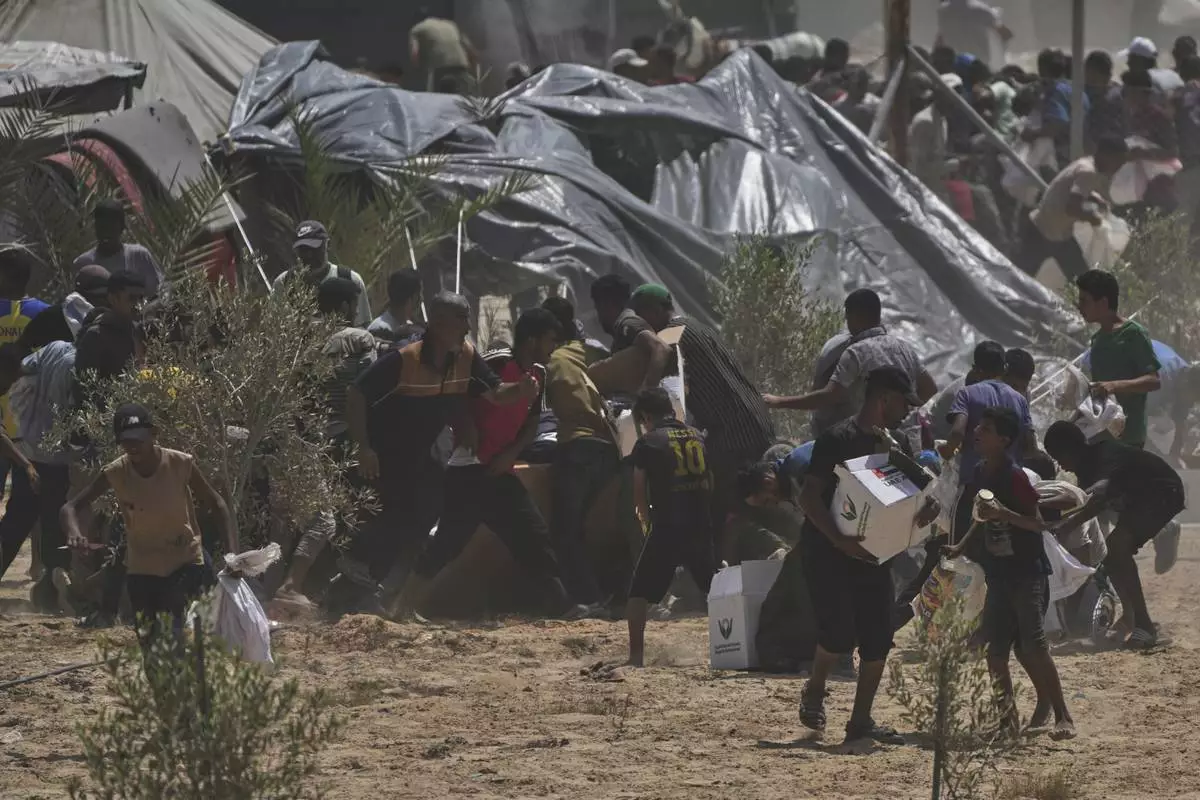
Nasser Hospital said nine people were killed while seeking aid in areas where U.N. convoys have been overwhelmed by looters and desperate crowds, and where people have been shot and killed while heading to sites run by the Gaza Humanitarian Foundation, or GHF, an Israeli-backed American contractor.

Another two people were killed near a GHF site in central Gaza, according to Al-Awda Hospital. GHF said there were no violent incidents at any of its sites on Tuesday.

Witnesses, health officials and the U.N. human rights office say Israeli forces have killed hundreds of people seeking aid from GHF sites and U.N. convoys since Israel eased a 2 1/2 month blockade on Gaza in May. The military says it has only fired warning shots at people who approached its forces.

The overall Palestinian death toll in the war surpassed 62,000 on Monday, according to Gaza’s Health Ministry, which is part of the Hamas-run government and staffed by medical professionals. The ministry does not say how many of the dead were civilians or combatants, but says women and children make up around half of them.

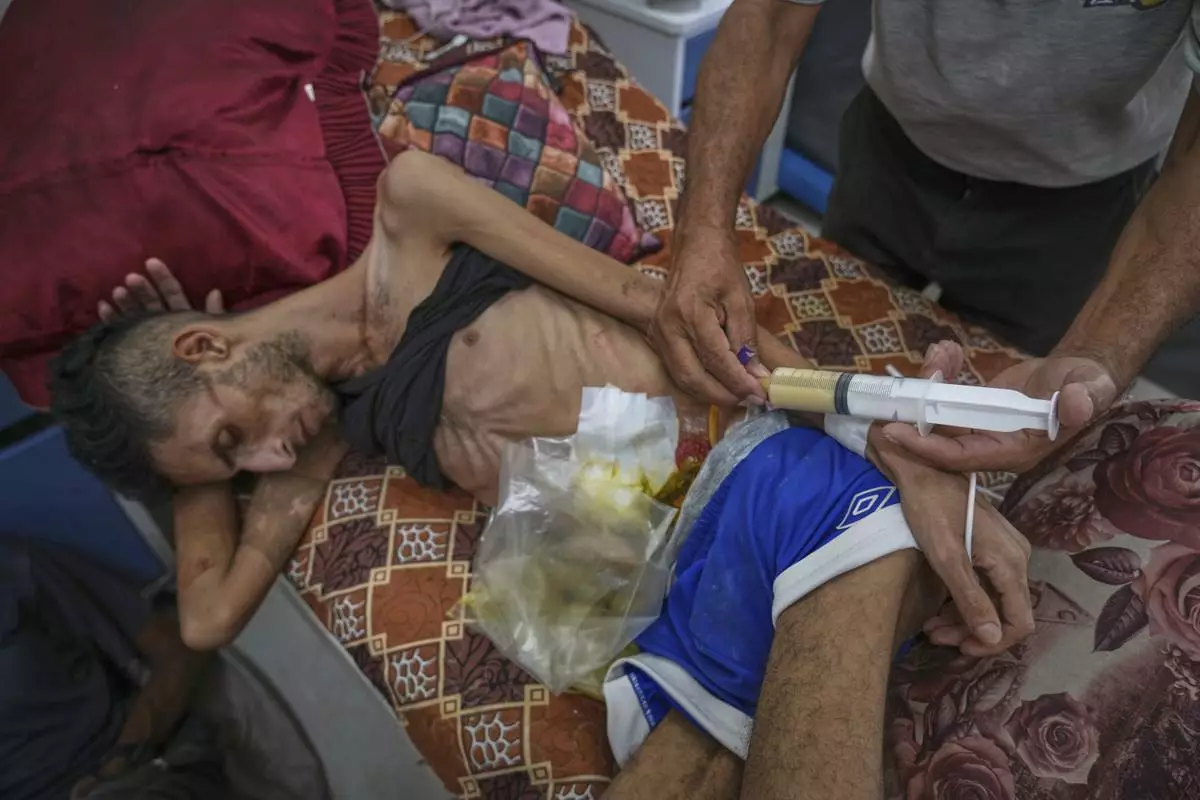
In addition to that toll, other Palestinians have died from malnutrition and starvation, including three reported in the past 24 hours, the ministry said Tuesday. It says 154 adults have died of malnutrition-related causes since late June, when it began counting such deaths, and 112 children have died of malnutrition-related causes since the war began.

Hamas-led militants started the war when they attacked Israel on Oct. 7, 2023, killing some 1,200 people, mostly civilians, and abducting 251. Most of the hostages have been released in ceasefires or other deals. Hamas says it will only free the rest in exchange for a lasting ceasefire and an Israeli withdrawal.

Aid groups continue to struggle to deliver supplies to Gaza, where most of the population is displaced, large swaths are in ruins and experts say the “worst-case scenario of famine is currently playing out."

Israel imposed a full blockade in March, then allowed limited aid to resume two and a half months later. The Israeli military body in charge of humanitarian aid to Gaza, COGAT, said 370 trucks of aid entered Tuesday — still below the 600 per day that the United Nations and partners say is needed.

COGAT said Tuesday that 180 pallets of aid were airdropped into Gaza with help from countries including Jordan, the United Arab Emirates and France. The U.N. and partners have called airdrops expensive, inefficient and even dangerous for people on the ground.

Magdy reported from Cairo and Gambrell from Dubai, United Arab Emirates. Melanie Lidman in Tel Aviv, Israel, and Edith M. Lederer at the United Nations contributed to this report.

Follow AP’s war coverage at https://apnews.com/hub/israel-hamas-war
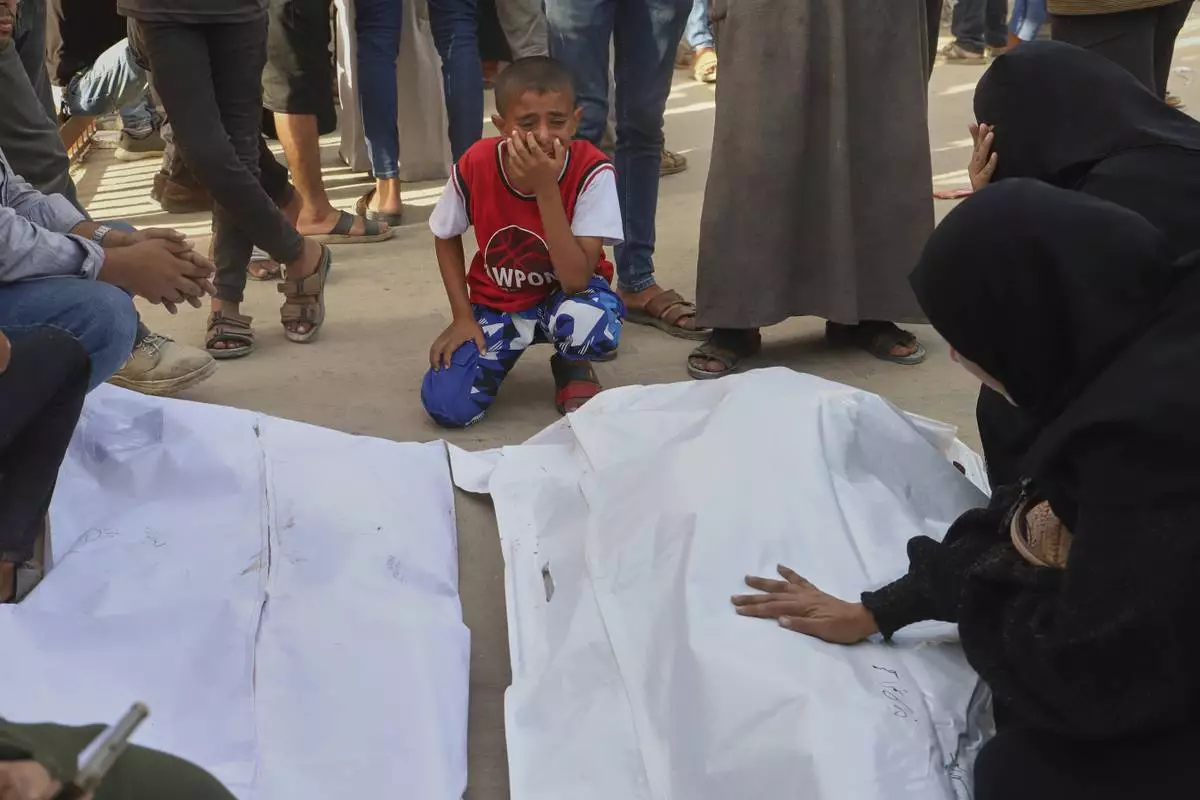
A Palestinian boy mourns over the bodies of his uncle, Mohammad Harb and his cousin Leen Harb, who were killed in an Israeli airstrike, during their funeral at Nasser Hospital, in Khan Younis, in the southern Gaza Strip, Tuesday, Aug. 19, 2025. (AP Photo/Mariam Dagga)
A Palestinian boy mourns over the bodies of his uncle, Mohammad Harb and his cousin Leen Harb, who were killed in an Israeli airstrike, during their funeral at Nasser Hospital, in Khan Younis, in the southern Gaza Strip, Tuesday, Aug. 19, 2025. (AP Photo/Mariam Dagga)

Demonstrators block a road during a protest demanding the immediate release of hostages held by Hamas and calling for the Israeli government to reverse its decision to take over Gaza City and other areas in the Gaza Strip, in Tel Aviv, Israel, Tuesday, Aug. 19, 2025. (AP Photo/Ohad Zwigenberg)
Demonstrators block a road during a protest demanding the immediate release of hostages held by Hamas and calling for the Israeli government to reverse its decision to take over Gaza City and other areas in the Gaza Strip, in Tel Aviv, Israel, Tuesday, Aug. 19, 2025. (AP Photo/Ohad Zwigenberg)

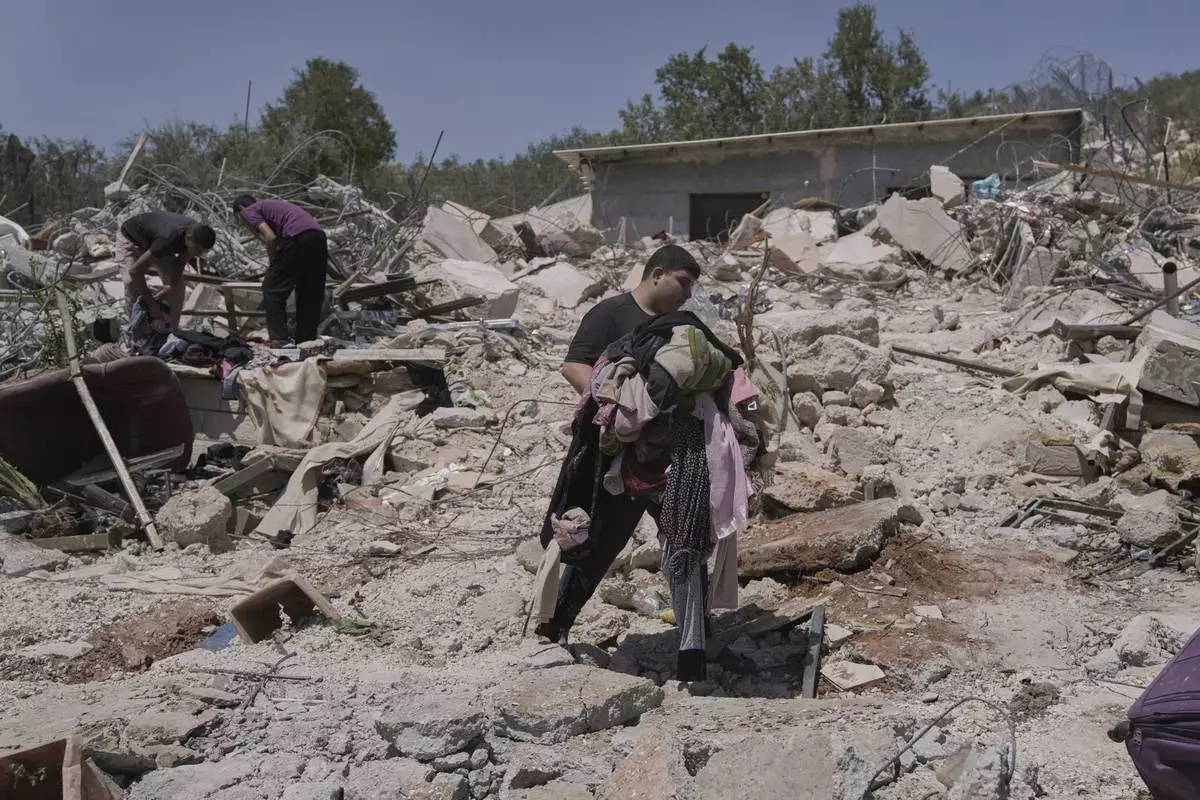
A Palestinian youth carries clothes as he walks over the rubble of a house demolished by the Israeli army in the West Bank village of Beit Sira, near Ramallah, Tuesday, Aug. 19, 2025. (AP Photo/Mahmoud Illean)
A Palestinian youth carries clothes as he walks over the rubble of a house demolished by the Israeli army in the West Bank village of Beit Sira, near Ramallah, Tuesday, Aug. 19, 2025. (AP Photo/Mahmoud Illean)

Atef Arhouma feeds his injured son, Karam Arhouma, 22, lentil soup through a syringe at Shifa Hospital, where doctors say he is showing signs of malnutrition, in Gaza City, Monday, Aug. 18, 2025. (AP Photo/Abdel Kareem Hana)
Atef Arhouma feeds his injured son, Karam Arhouma, 22, lentil soup through a syringe at Shifa Hospital, where doctors say he is showing signs of malnutrition, in Gaza City, Monday, Aug. 18, 2025. (AP Photo/Abdel Kareem Hana)

Palestinians rush to collect humanitarian aid packages from the United Arab Emirates, airdropped by parachutes into Deir al-Balah, in the central Gaza Strip, Tuesday, Aug. 19, 2025. (AP Photo/Abdel Kareem Hana)
Palestinians rush to collect humanitarian aid packages from the United Arab Emirates, airdropped by parachutes into Deir al-Balah, in the central Gaza Strip, Tuesday, Aug. 19, 2025. (AP Photo/Abdel Kareem Hana)

Parachutes drop supplies into Deir al-Balah, central Gaza Strip, Tuesday, Aug. 19, 2025. (AP Photo/Abdel Kareem Hana)
Parachutes drop supplies into Deir al-Balah, central Gaza Strip, Tuesday, Aug. 19, 2025. (AP Photo/Abdel Kareem Hana)

Ahmed Al-Hajj carries the body of his daughter, Dana Al-Hajj, 13, who was killed in an Israeli airstrike in the Gaza Strip, at Al-Aqsa Hospital in Deir al-Balah, Tuesday, Aug. 19, 2025. (AP Photo/Abdel Kareem Hana)
Ahmed Al-Hajj carries the body of his daughter, Dana Al-Hajj, 13, who was killed in an Israeli airstrike in the Gaza Strip, at Al-Aqsa Hospital in Deir al-Balah, Tuesday, Aug. 19, 2025. (AP Photo/Abdel Kareem Hana)
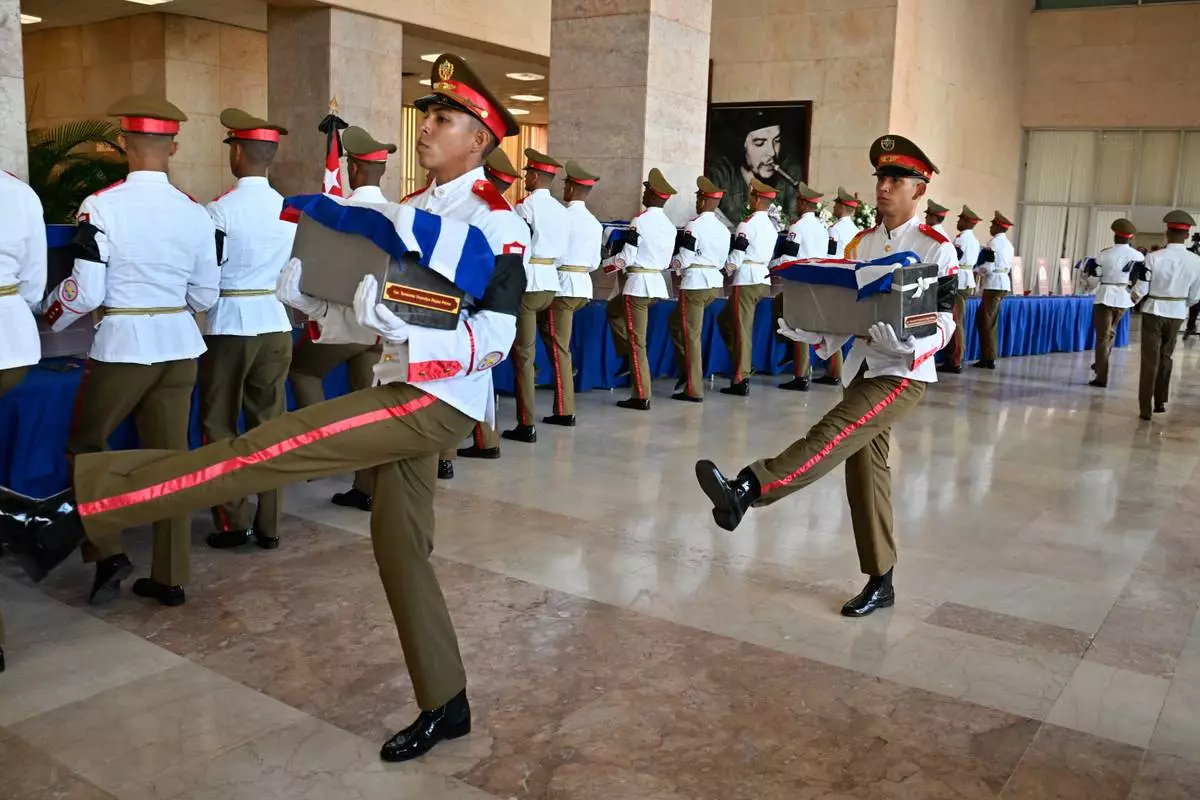
HAVANA (AP) — Cuban soldiers wearing white gloves marched out of a plane on Thursday carrying urns with the remains of the 32 Cuban officers killed during a stunning U.S. attack on Venezuela as trumpets and drums played solemnly at Havana's airport.

Nearby, thousands of Cubans lined one of Havana’s most iconic streets to await the bodies of colonels, lieutenants, majors and captains as the island remained under threat by the administration of U.S. President Donald Trump.

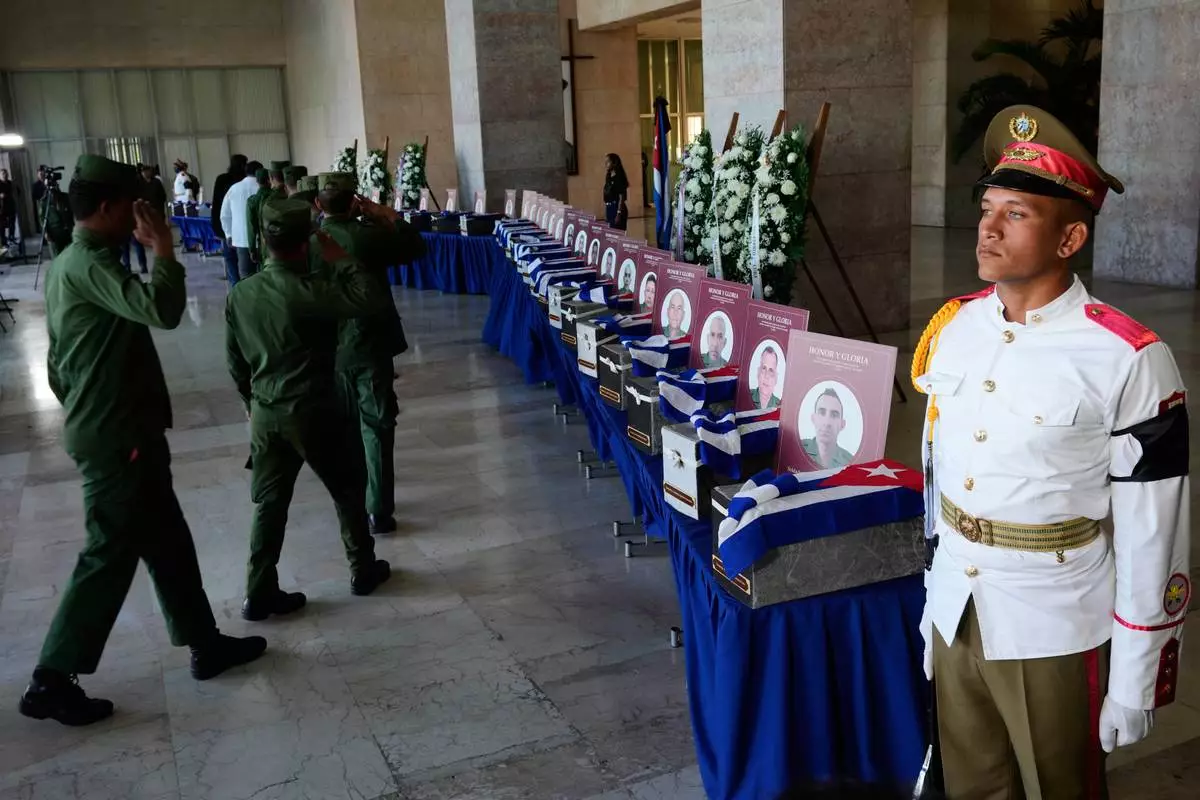
The soldiers' shoes clacked as they marched stiff-legged into the headquarters of the Ministry of the Armed Forces, next to Revolution Square, with the urns and placed them on a long table next to the pictures of those killed so people could pay their respects.

Thursday’s mass funeral was only one of a handful that the Cuban government has organized in almost half a century.

Hours earlier, state television showed images of more than a dozen wounded people described as “combatants” accompanied by Cuban Foreign Minister Bruno Rodríguez arriving Wednesday night from Venezuela. Some were in wheelchairs.

Those injured and the remains of those killed arrived as tensions grow between Cuba and the U.S., with Trump recently demanding that the Caribbean country make a deal with him before it is “too late.” He did not explain what kind of deal.

Trump also has said that Cuba will no longer live off Venezuela's money and oil. Experts warn that the abrupt end of oil shipments could be catastrophic for Cuba, which is already struggling with serious blackouts and a crumbling power grid.

Officials unfurled a massive flag at Havana's airport as President Miguel Díaz-Canel, clad in military garb as commander of Cuba's Armed Forces, stood silent next to former President Raúl Castro, with what appeared to be the relatives of those killed looking on nearby.

Cuban Interior Minister Lázaro Alberto Álvarez Casa said Venezuela was not a distant land for those killed, but a “natural extension of their homeland.”

“The enemy speaks to an audience of high-precision operations, of troops, of elites, of supremacy,” Álvarez said in apparent reference to the U.S. “We, on the other hand, speak of faces, of families who have lost a father, a son, a husband, a brother.”

Álvarez called those slain “heroes,” saying that they were an example of honor and “a lesson for those who waver.”

“We reaffirm that if this painful chapter of history has demonstrated anything, it is that imperialism may possess more sophisticated weapons; it may have immense material wealth; it may buy the minds of the wavering; but there is one thing it will never be able to buy: the dignity of the Cuban people,” he said.

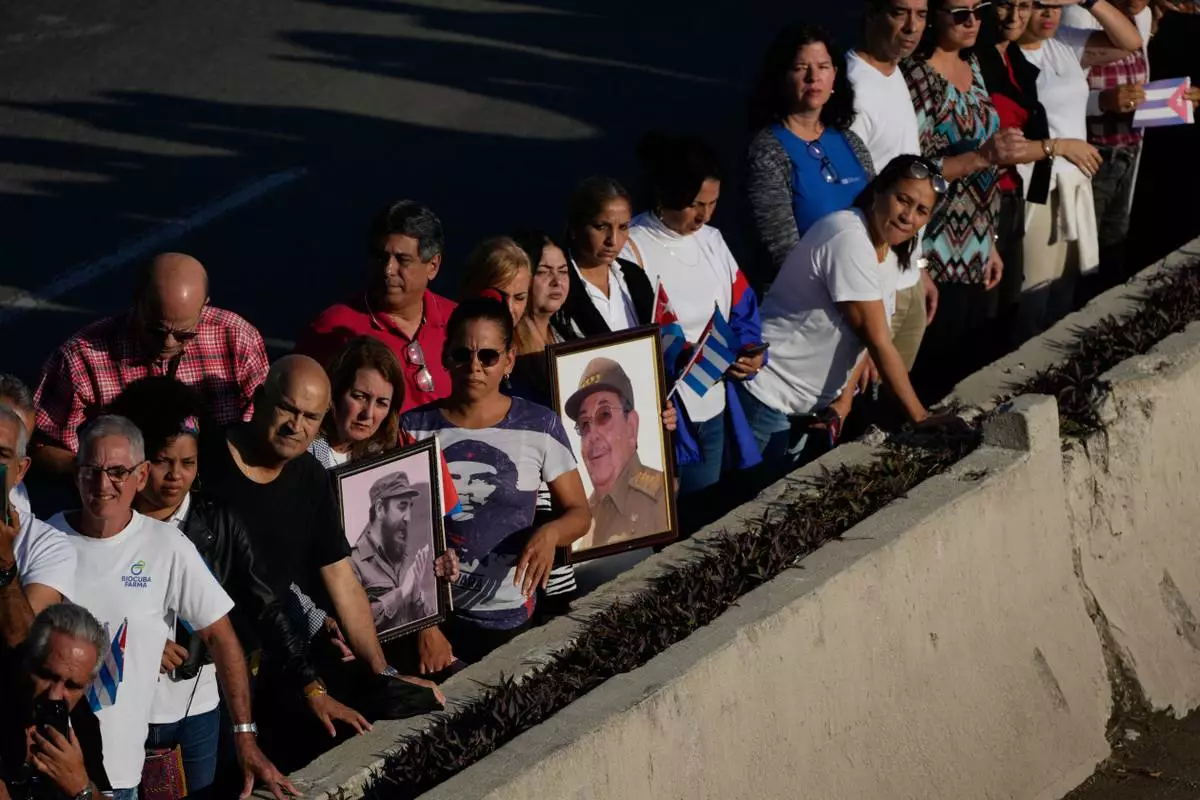
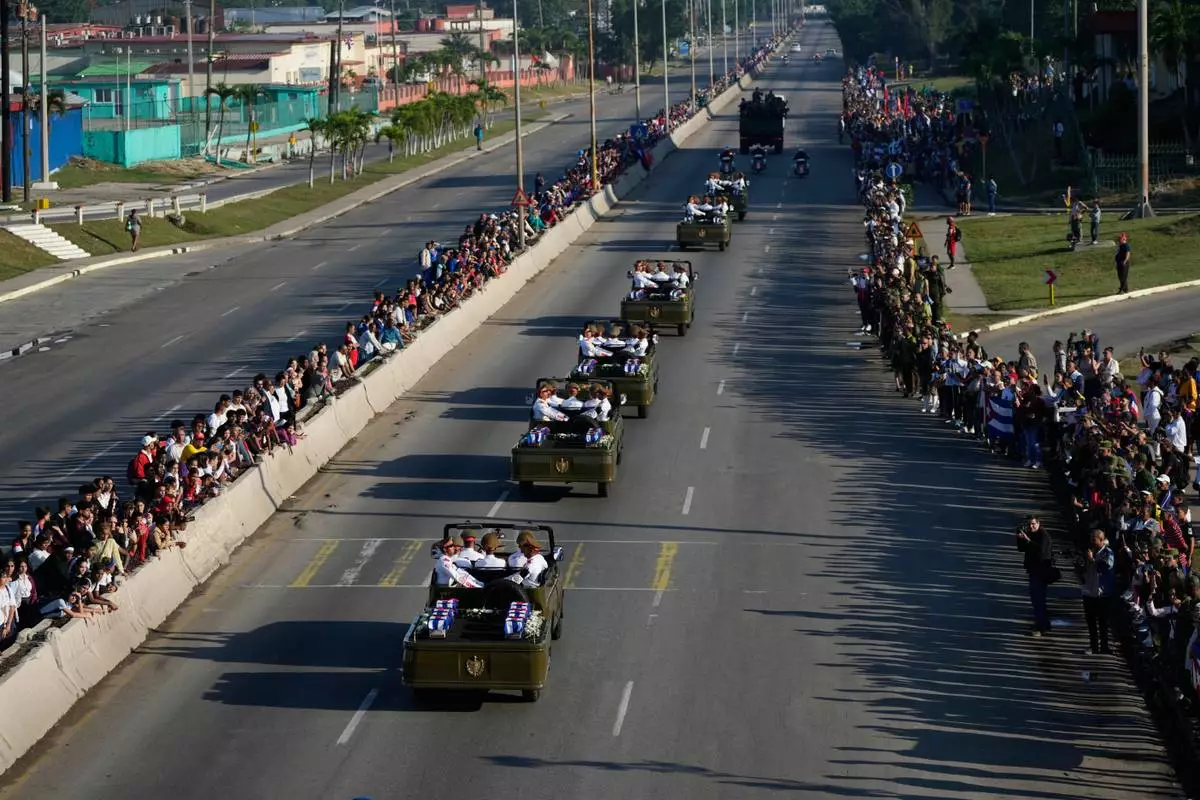
Thousands of Cubans lined a street where motorcycles and military vehicles thundered by with the remains of those killed.

“They are people willing to defend their principles and values, and we must pay tribute to them,” said Carmen Gómez, a 58-year-old industrial designer, adding that she hopes no one invades given the ongoing threats.

When asked why she showed up despite the difficulties Cubans face, Gómez replied, “It’s because of the sense of patriotism that Cubans have, and that will always unite us.”

Cuba recently released the names and ranks of 32 military personnel — ranging in age from 26 to 60 — who were part of the security detail of Venezuelan President Nicolás Maduro during the raid on his residence on January 3. They included members of the Revolutionary Armed Forces and the Ministry of the Interior, the island’s two security agencies.

Cuban and Venezuelan authorities have said that the uniformed personnel were part of protection agreements between the two countries.

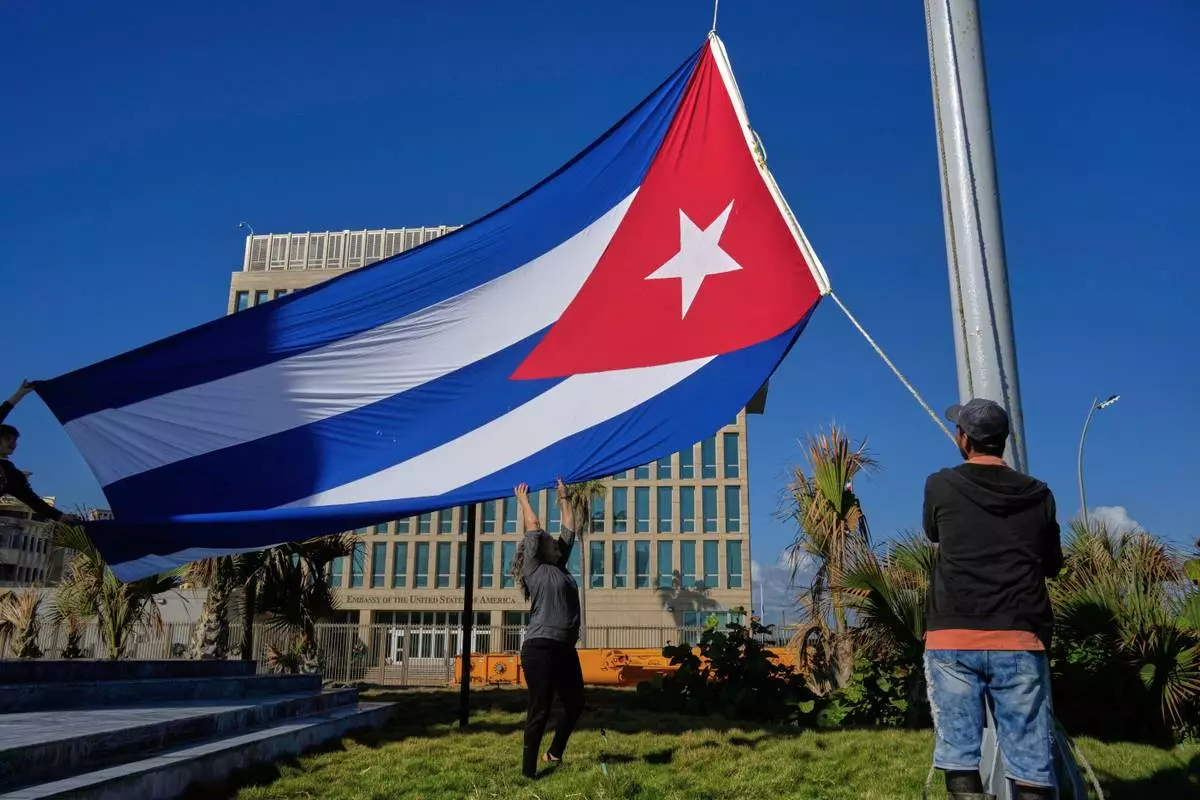
A demonstration was planned for Friday across from the U.S. Embassy in an open-air forum known as the Anti-Imperialist Tribune. Officials have said they expect the demonstration to be massive.

“People are upset and hurt. There’s a lot of talk on social media; but many do believe that the dead are martyrs” of a historic struggle against the United States, analyst and former diplomat Carlos Alzugaray told The Associated Press.

In October 1976, then-President Fidel Castro led a massive demonstration to bid farewell to the 73 people killed in the bombing of a Cubana de Aviación civilian flight financed by anti-revolutionary leaders in the U.S. Most of the victims were Cuban athletes.

In December 1989, officials organized “Operation Tribute” to honor the more than 2,000 Cuban combatants who died in Angola during Cuba’s participation in the war that defeated the South African army and ended the apartheid system. In October 1997, memorial services were held following the arrival of the remains of guerrilla commander Ernesto “Che” Guevara and six of his comrades, who died in 1967.

The latest mass burial is critical to honor those slain, said José Luis Piñeiro, a 60-year-old doctor who lived four years in Venezuela.

“I don’t think Trump is crazy enough to come and enter a country like this, ours, and if he does, he’s going to have to take an aspirin or some painkiller to avoid the headache he’s going to get,” Piñeiro said. “These were 32 heroes who fought him. Can you imagine an entire nation? He’s going to lose.”

A day before the remains of those killed arrived in Cuba, U.S. Secretary of State Marco Rubio announced $3 million in aid to help the island recover from the catastrophic Hurricane Melissa, which struck in late October.

The first flight took off from Florida on Wednesday, and a second flight was scheduled for Friday. A commercial vessel also will deliver food and other supplies.

“We have taken extraordinary measures to ensure that this assistance reaches the Cuban people directly, without interference or diversion by the illegitimate regime,” Rubio said, adding that the U.S. government was working with Cuba's Catholic Church.

The announcement riled Cuban Foreign Minister Bruno Rodríguez.

“The U.S. government is exploiting what appears to be a humanitarian gesture for opportunistic and politically manipulative purposes,” he said in a statement. “As a matter of principle, Cuba does not oppose assistance from governments or organizations, provided it benefits the people and the needs of those affected are not used for political gain under the guise of humanitarian aid.”

Coto contributed from San Juan, Puerto Rico.

Follow AP’s coverage of Latin America and the Caribbean at https://apnews.com/hub/latin-america

Military members pay their last respects to Cuban officers who were killed during the U.S. operation in Venezuela that captured Venezuelan President Nicolas Maduro, at the Ministry of the Revolutionary Armed Forces where the urns containing the remains are displayed during a ceremony in Havana, Cuba, Thursday, Jan. 15, 2026. (AP Photo/Ramon Espinosa)

Military members pay their last respects to Cuban officers who were killed during the U.S. operation in Venezuela that captured Venezuelan President Nicolas Maduro, at the Ministry of the Revolutionary Armed Forces where the urns containing the remains are displayed during a ceremony in Havana, Cuba, Thursday, Jan. 15, 2026. (AP Photo/Ramon Espinosa)

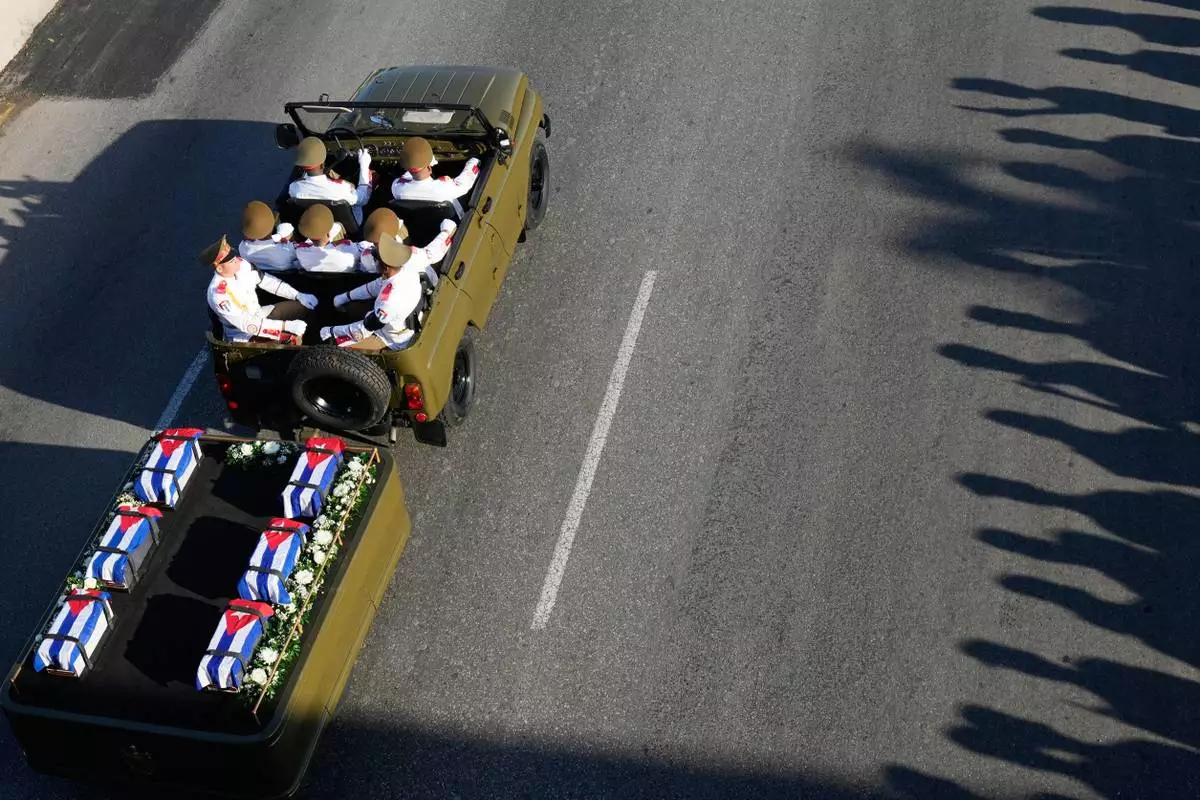
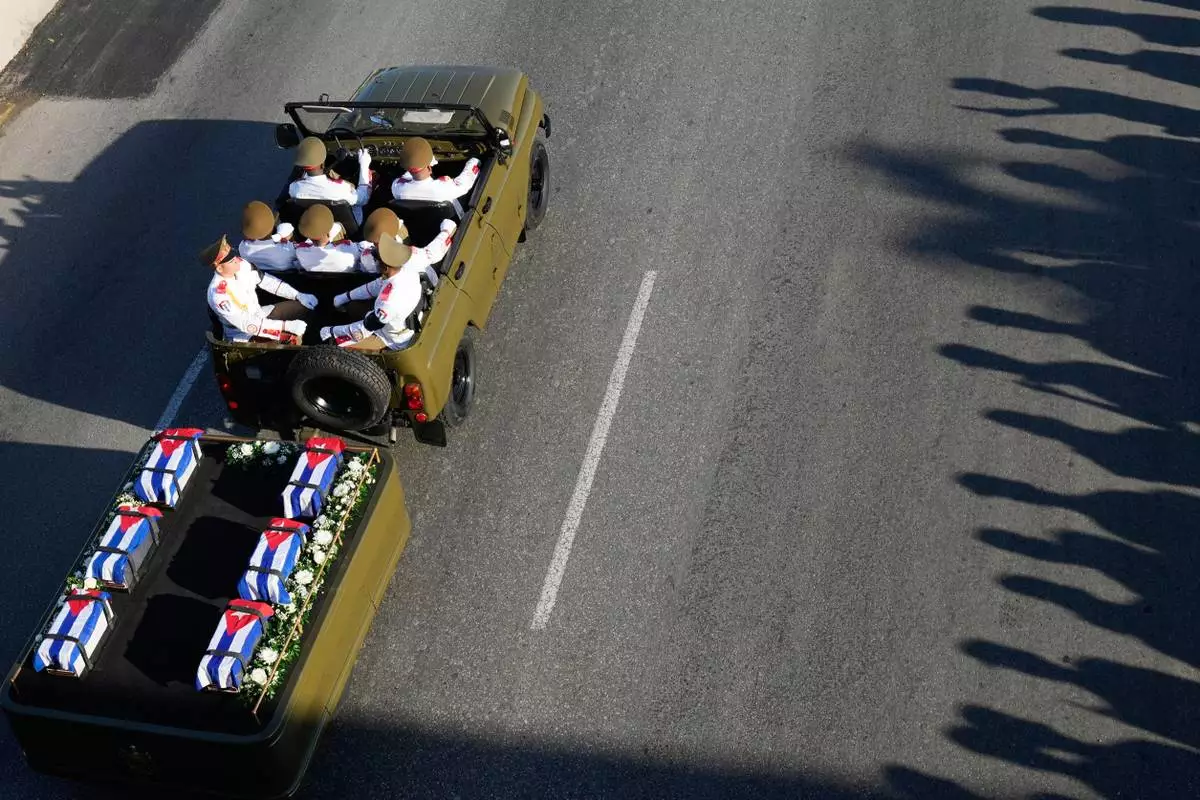
A motorcade transports urns containing the remains of Cuban officers, who were killed during the U.S. operation in Venezuela that captured Venezuelan President Nicolas Maduro, through Havana, Cuba, Thursday, Jan. 15, 2026. (AP Photo/Ramon Espinosa)

A motorcade transports urns containing the remains of Cuban officers, who were killed during the U.S. operation in Venezuela that captured Venezuelan President Nicolas Maduro, through Havana, Cuba, Thursday, Jan. 15, 2026. (AP Photo/Ramon Espinosa)

Soldiers carry urns containing the remains of Cuban officers, who were killed during the U.S. operation in Venezuela that captured Venezuelan President Nicolas Maduro, at the Ministry of the Revolutionary Armed Forces in Havana, Cuba, Thursday, Jan. 15, 2026. (Adalberto Roque /Pool Photo via AP)

Soldiers carry urns containing the remains of Cuban officers, who were killed during the U.S. operation in Venezuela that captured Venezuelan President Nicolas Maduro, at the Ministry of the Revolutionary Armed Forces in Havana, Cuba, Thursday, Jan. 15, 2026. (Adalberto Roque /Pool Photo via AP)

A motorcade transports urns containing the remains of Cuban officers, who were killed during the U.S. operation in Venezuela that captured Venezuelan President Nicolas Maduro, through Havana, Cuba, Thursday, Jan. 15, 2026. (AP Photo/Ramon Espinosa)

A motorcade transports urns containing the remains of Cuban officers, who were killed during the U.S. operation in Venezuela that captured Venezuelan President Nicolas Maduro, through Havana, Cuba, Thursday, Jan. 15, 2026. (AP Photo/Ramon Espinosa)

A motorcade transports urns containing the remains of Cuban officers, who were killed during the U.S. operation in Venezuela that captured Venezuelan President Nicolas Maduro, through Havana, Cuba, Thursday, Jan. 15, 2026. (AP Photo/Ramon Espinosa)

A motorcade transports urns containing the remains of Cuban officers, who were killed during the U.S. operation in Venezuela that captured Venezuelan President Nicolas Maduro, through Havana, Cuba, Thursday, Jan. 15, 2026. (AP Photo/Ramon Espinosa)

People line the streets of Havana, Cuba, Thursday, Jan. 15, 2026, to watch the motorcade carrying urns containing the remains of Cuban officers killed during the U.S. operation in Venezuela that captured Venezuelan President Nicolas Maduro. (AP Photo/Ramon Espinosa)

People line the streets of Havana, Cuba, Thursday, Jan. 15, 2026, to watch the motorcade carrying urns containing the remains of Cuban officers killed during the U.S. operation in Venezuela that captured Venezuelan President Nicolas Maduro. (AP Photo/Ramon Espinosa)

Workers fly the Cuban flag at half-staff at the Anti-Imperialist Tribune near the U.S. Embassy in Havana, Cuba, Monday, Jan. 5, 2026, in memory of Cubans who died two days before in Caracas, Venezuela during the capture of Venezuelan President Nicolas Maduro by U.S. forces. (AP Photo/Ramon Espinosa)

Workers fly the Cuban flag at half-staff at the Anti-Imperialist Tribune near the U.S. Embassy in Havana, Cuba, Monday, Jan. 5, 2026, in memory of Cubans who died two days before in Caracas, Venezuela during the capture of Venezuelan President Nicolas Maduro by U.S. forces. (AP Photo/Ramon Espinosa)

Recommended Articles