NEW YORK (AP) — Nexstar Media Group is buying broadcast rival Tegna for $6.2 billion, bringing together two major players in U.S. television and the country’s local news landscape.
If the transaction is approved, Nexstar will pay $22 in cash for each share of Tegna’s outstanding stock. And the regulatory greenlight could be likely under President Donald Trump's administration, which has long-advocated for loosening industry restrictions.
Announcing the proposed merger Tuesday, Nexstar CEO Perry Sook pointed directly to actions being pursued by the Trump administration, which he said “offer local broadcasters the opportunity to expand reach, level the playing field, and compete more effectively with the Big Tech and legacy Big Media companies that have unchecked reach and vast financial resources.” He added that “Tegna represents the best option for Nexstar to act on this opportunity.”
Nexstar oversees more than 200 owned and partner stations in 116 markets nationwide today and also runs networks like The CW and NewsNation. Meanwhile, Tegna owns 64 news stations across 51 markets.
Consolidation would mean pooling together all of these resources — and that typically includes cutting any “redundancies” identified in the process, explained Paul Hardart, director of the entertainment, media and technology program at New York University's Stern School of Business.
“The good news for Nexstar is that makes it run at a lower cost rate, which they need to do because there’s all these headwinds on the revenue side,” Hardart said. But for local communities that rely on the company's stations, the bad news is that “there will be a homogenization of content," he added.
Other experts note that previous consolidation in the industry has already shown this.
Nexstar, founded in 1996, has itself grow substantially with acquisitions over the latest two decades, becoming the biggest operator of local TV stations in the U.S. after it purchased Tribune Media back in 2019. And Danilo Yanich, professor of public policy at the University of Delaware, says the company is the “biggest duplicator” of news content today — pointing to recent research he worked on that looked at how often local TV news used the exact same words in at least 50% on their broadcasts.
Nexstar's size gives it the most opportunity to syndicate information in this way, Yanich noted, and further duplication seems all but likely as the company looks to "achieve economies of scale," he added.
Nexstar on Tuesday maintained that the deal will also help it give advertisers a bigger variety of local and national broadcast and digital advertising options.
The potential purchase also arrives amid wider regulatory shifts. Brendan Carr, the Trump-appointed chairman the Federal Communications Commission, which will need to give the transaction the green light, has long advocated for loosening industry restrictions. On Aug. 7, the FCC announced that it would be repealing 98 broadcast rules and requirements that it identified as “obsolete, outdated, or unnecessary.”
Some of those rules date back nearly 50 years, the FCC said, and apply to “old technology that is no longer used." Carr maintained that such provisions no longer serve public interest.
In late July, the U.S. Court of Appeals for the Eighth Circuit also vacated the FCC's “top four” rule, which has long prohibited ownership of more than one of the top four stations in a single market. The ruling is still subject to a monthslong assessment by the FCC, but could significantly clear the way for future mergers in the industry.
In company earnings calls held in early August, before Tegna and Nexstar publicly confirmed merger talks, both Tegna CEO Michael Steib and Nexstar's Sook pointed directly to this ruling, and applauded Carr's deregulation agenda as a whole.
“We believe that deregulation is necessary, important and coming,” Steib said in Tegna's Aug. 7 call, noting that local broadcasters are “up against big tech competitors who have absolutely no encumbrances in how they compete."
Beyond their core broadcast TV businesses, both Nexstar and Tegna also boast digital news, mobile app and streaming offerings, all of which have played key roles for the industry as consumers change the way they consume news and other entertainment.
Broadcast TV has been hit particularly hard by “cord-cutting,” with more and more households trading their cable or satellite subscriptions into content they can get via the internet.
“The challenge has been recently of ‘cord cutters' — but the bigger concern is the ‘cord nevers,’ of people who grew up never watching television, or linear television,” said Hardart, noting that most consumers, particularly young people, have just about all the content they want on social media or their phone.
Despite these shifting landscapes, experts like Yanich say the suggestion that tech players “could do what local journalism does simply doesn’t hold up," pointing to the difference in content and reach. Still, he notes that other broadcasters could soon follow Nexstar and Tegna's footsteps, consolidating the industry even further.
Nexstar's proposed purchase of Tegna is expected to close by the second half of 2026. Beyond the regulatory greenlight, it still needs approval from Tegna shareholders.
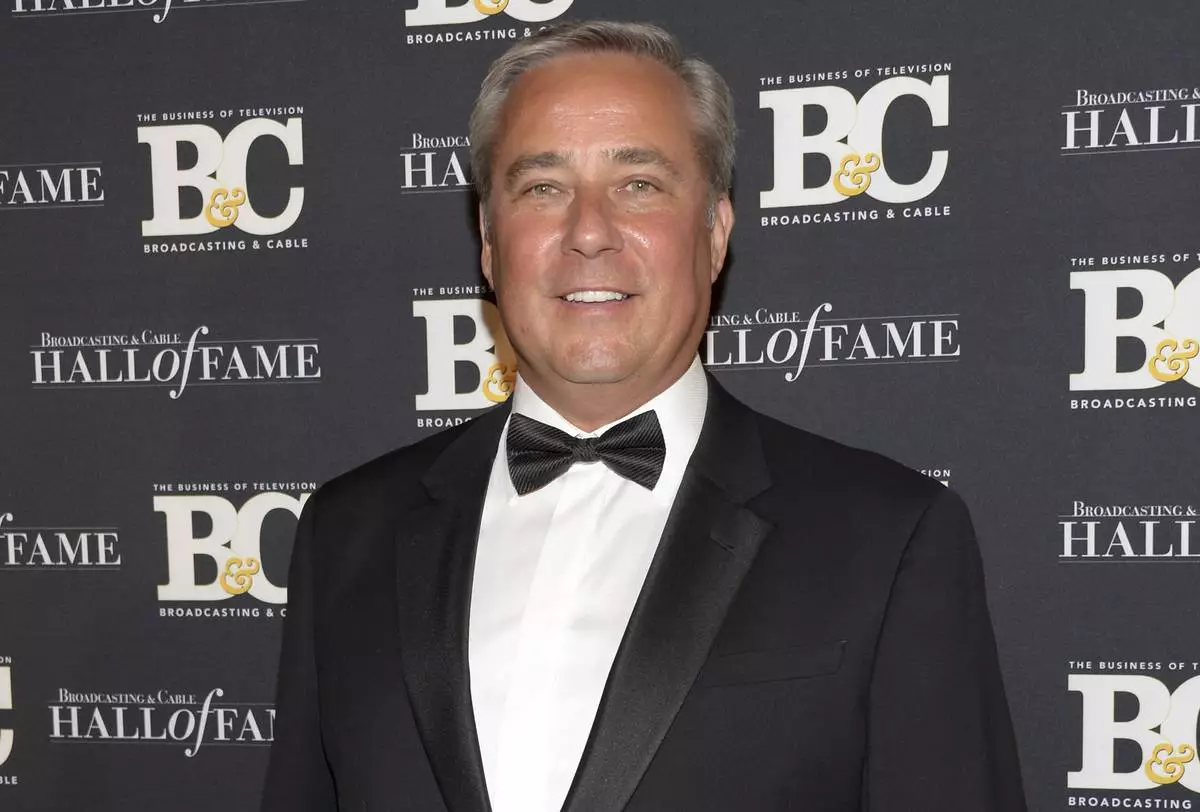
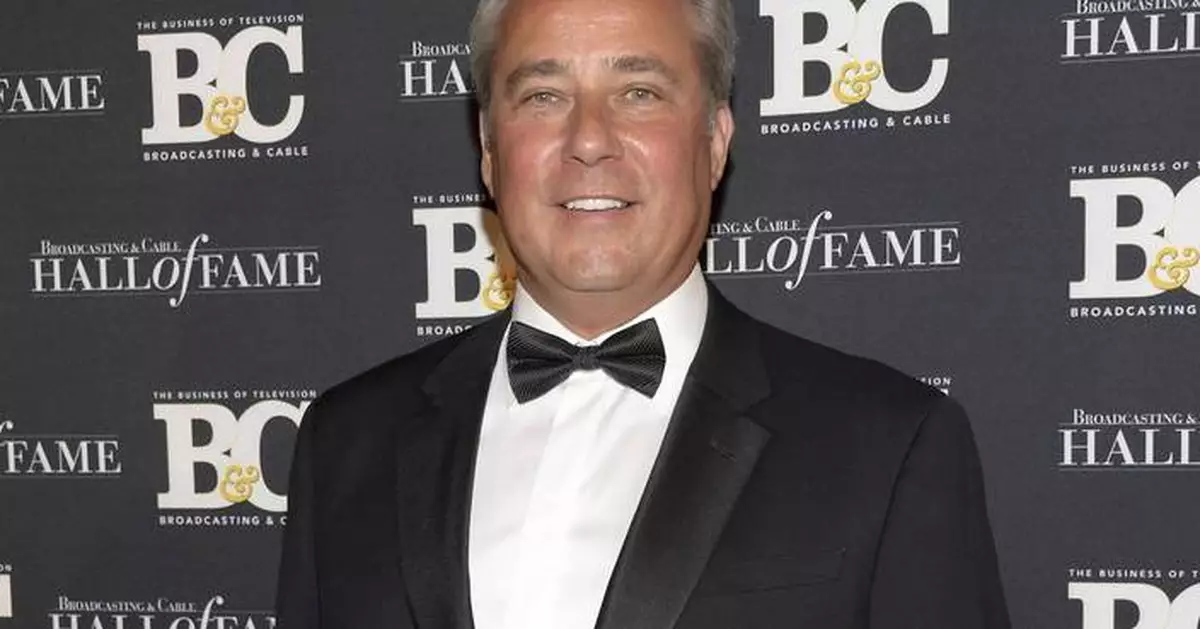
FILE- In this Oct. 29, 2014, file photo honoree Perry Sook, Chairman, President and CEO of Nexstar Broadcasting Group, attends the 24th Annual Broadcasting and Cable Hall of Fame Awards at the Waldorf-Astoria in New York. (Photo by Evan Agostini/Invision/AP, File)
MINNEAPOLIS (AP) — President Donald Trump on Thursday threatened to invoke an 1807 law and deploy troops to quell persistent protests against the federal officers sent to Minneapolis to enforce his administration's massive immigration crackdown.
The threat comes a day after a man was shot and wounded by an immigration officer who had been attacked with a shovel and broom handle. That shooting further heightened the fear and anger that has radiated across the city since an Immigration and Customs Enforcement agent fatally shot Renee Good in the head.
Trump has repeatedly threatened to invoke the Insurrection Act, a rarely used federal law, to deploy the U.S. military or federalize the National Guard for domestic law enforcement, over the objections of state governors.
“If the corrupt politicians of Minnesota don’t obey the law and stop the professional agitators and insurrectionists from attacking the Patriots of I.C.E., who are only trying to do their job, I will institute the INSURRECTION ACT, which many Presidents have done before me, and quickly put an end to the travesty that is taking place in that once great State,” Trump said in social media post.
Presidents have invoked the law more than two dozen times, most recently in 1992 by President George H.W. Bush to end unrest in Los Angeles. In that instance, local authorities had asked for the assistance.
“I’m making a direct appeal to the President: Let’s turn the temperature down. Stop this campaign of retribution. This is not who we are,” Gov. Tim Walz, a Democrat, said on X.
Minnesota Attorney General Keith Ellison said he would challenge any such action in court. He's already suing to try to stop the surge by the Department of Homeland Security, which says officers have arrested more than 2,500 people since Nov. 29 as part of an immigration operation in the Twin Cities called Metro Surge.
The operation grew when ICE sent 2,000 officers and agents to the area early in January. ICE is a DHS agency.
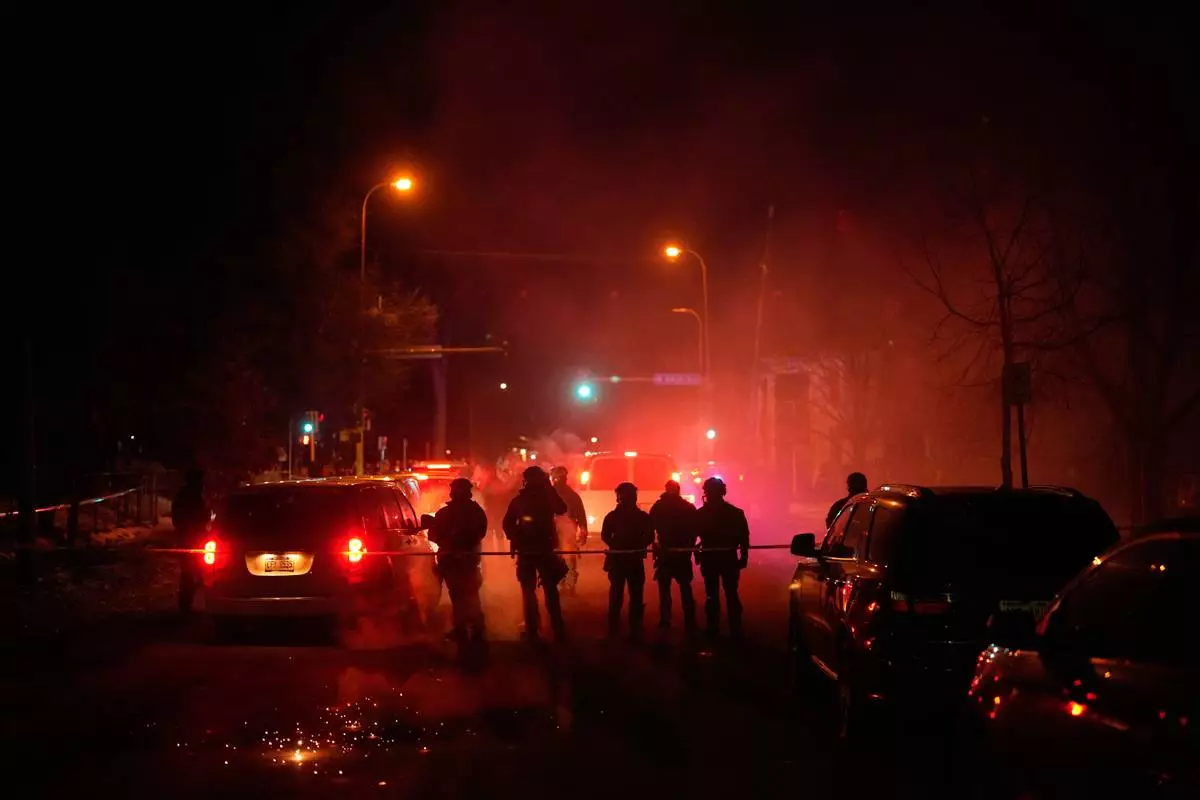
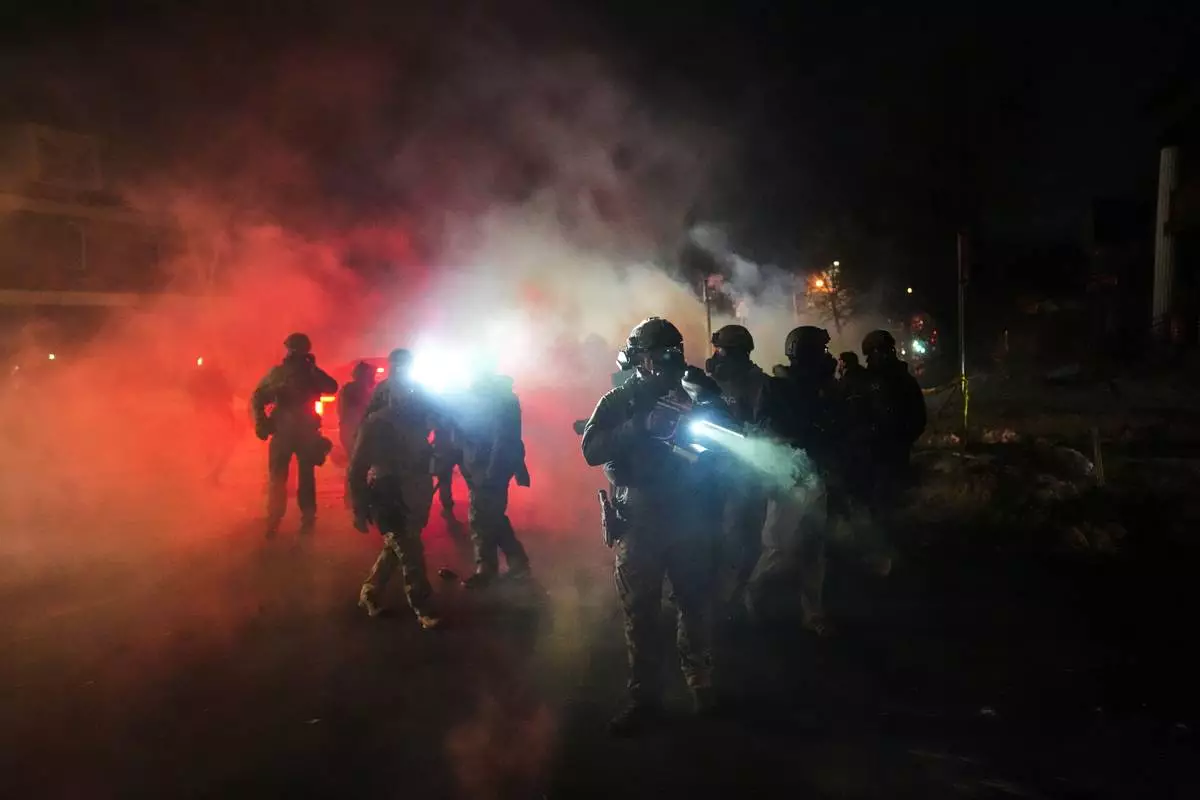
In Minneapolis, smoke filled the streets Wednesday night near the site of the latest shooting as federal officers wearing gas masks and helmets fired tear gas into a small crowd. Protesters responded by throwing rocks and shooting fireworks.
Demonstrations have become common in Minneapolis since Good was fatally shot on Jan. 7. Agents who have yanked people from their cars and homes have been confronted by angry bystanders demanding they leave.
“This is an impossible situation that our city is presently being put in and at the same time we are trying to find a way forward to keep people safe, to protect our neighbors, to maintain order,” Minneapolis Mayor Jacob Frey said.
The American Civil Liberties Union of Minnesota filed a class-action lawsuit on behalf of three people who said they were questioned or detained in recent days. The lawsuit says two are Somali and one is Hispanic; all three are U.S. citizens. The lawsuit seeks an end to what the ACLU describes as a practice of racial profiling and warrantless arrests. The government did not immediately comment.
Homeland Security said in a statement that federal law enforcement officers on Wednesday stopped a driver from Venezuela who is in the U.S. illegally. The person drove off then crashed into a parked car before fleeing on foot, DHS said.
Officers caught up, then two other people arrived and the three started attacking the officer, according to DHS.
“Fearing for his life and safety as he was being ambushed by three individuals, the officer fired a defensive shot to defend his life,” DHS said. The confrontation took place about 4.5 miles (7.2 kilometers) from where Good was killed.
Police chief Brian O’Hara said the man who was shot did not have a life-threatening injury. O’Hara's account of what happened largely echoed that of Homeland Security, which later said the other two men were also in the U.S. illegally from Venezuela.
The FBI said several government vehicles were damaged and property inside was stolen when agents responded to the shooting. Photos show broken windows and insults made with paint. A reward of up to $100,000 is being offered for information. The FBI’s Minneapolis office did not immediately reply to messages seeking more details.
St. Paul Public Schools, with more than 30,000 students, said it would begin offering an online learning option for students who do not feel comfortable coming to school. Schools will be closed next week until Thursday to prepare for those accommodations.
Minneapolis Public Schools, which has a similar enrollment, is also offering temporary remote learning. The University of Minnesota will start a new term next week with different options depending on the class.
Madhani reported from Washington, D.C. Associated Press reporters Sophia Tareen in Chicago; Bill Barrow in Atlanta; Rebecca Santana in Washington; and Ed White in Detroit contributed.
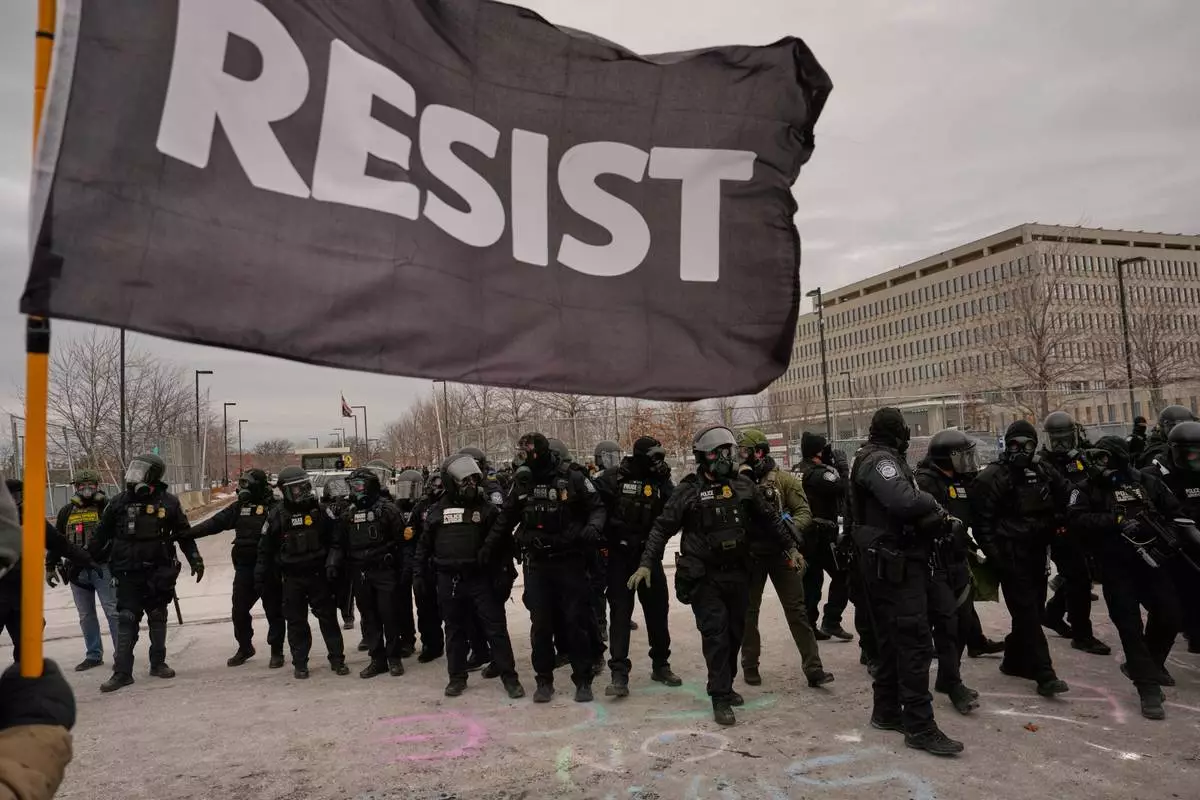
Federal immigration officers confront protesters outside Bishop Henry Whipple Federal Building, Thursday, Jan. 15, 2026, in Minneapolis. (AP Photo/John Locher)
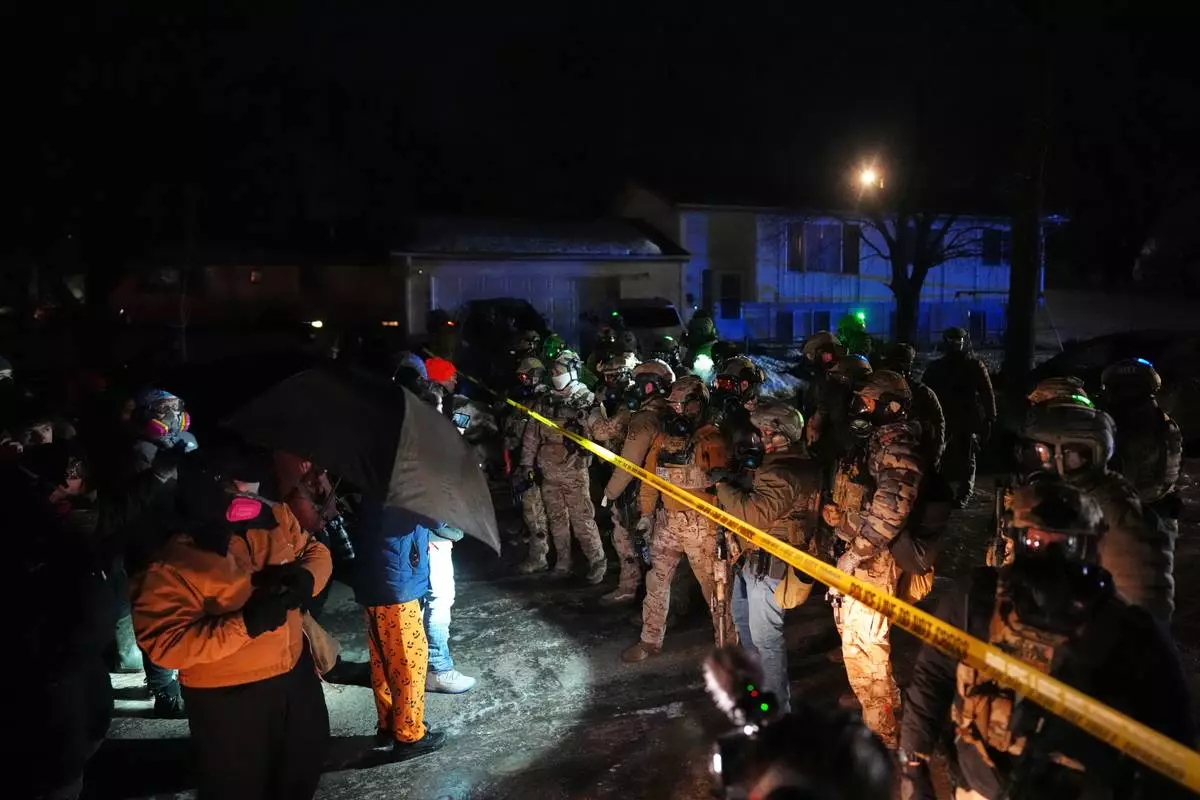
Law enforcement officers at the scene of a reported shooting Wednesday, Jan. 14, 2026, in Minneapolis. (AP Photo/Adam Gray)
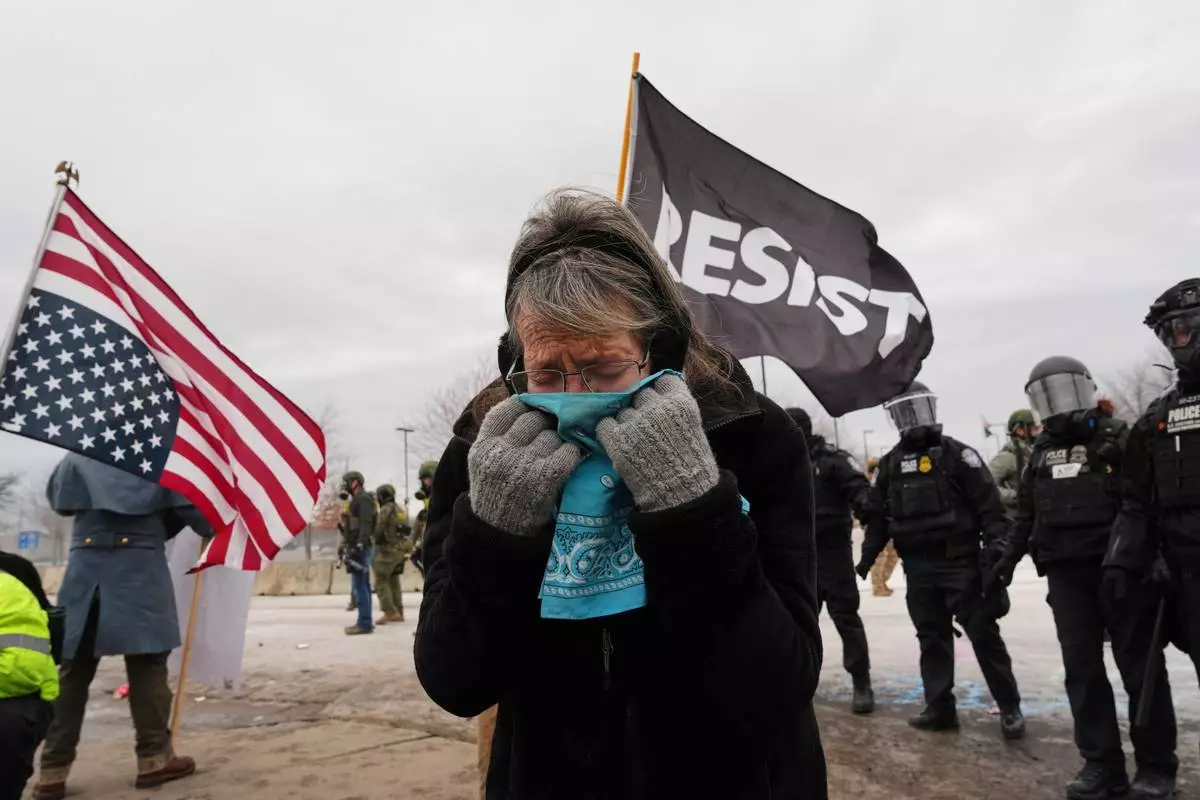
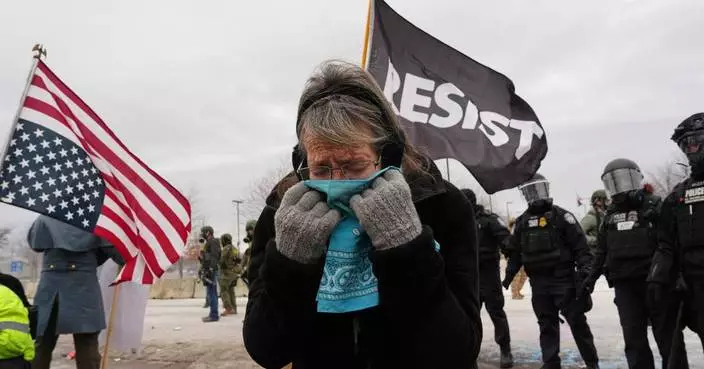
A woman covers her face from tear gas as federal immigration officers confront protesters outside Bishop Henry Whipple Federal Building, Thursday, Jan. 15, 2026, in Minneapolis. (AP Photo/Adam Gray)
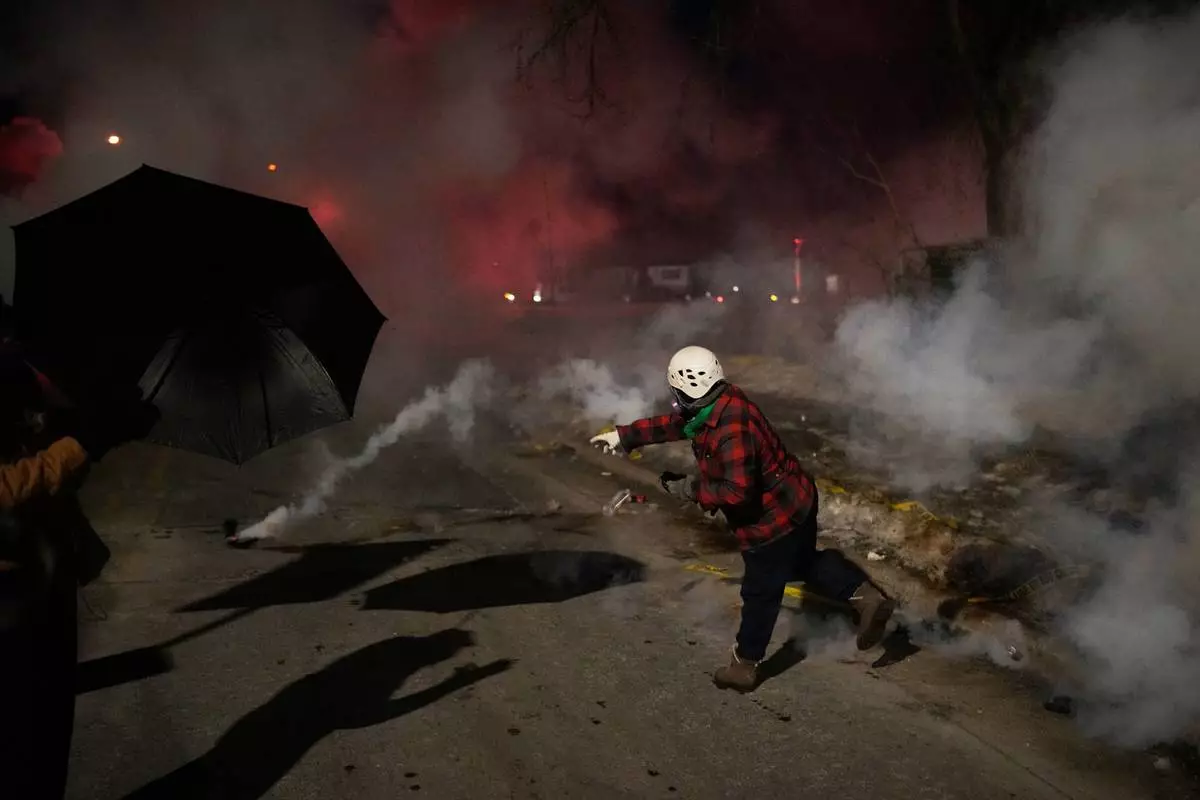
A protester throws back a tear gas canister during a protest after a shooting on Wednesday, Jan. 14, 2026, in Minneapolis. (AP Photo/John Locher)
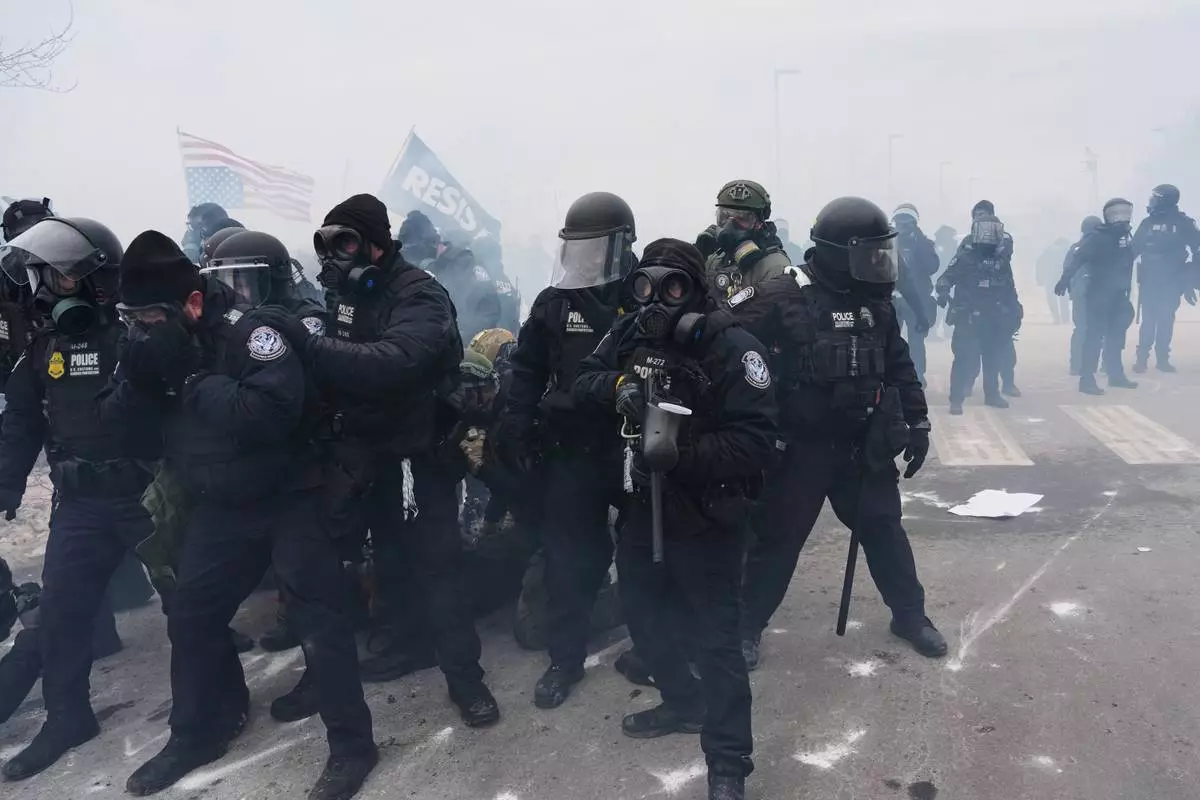
Federal immigration officers confront protesters outside Bishop Henry Whipple Federal Building, Thursday, Jan. 15, 2026, in Minneapolis. (AP Photo/Adam Gray)
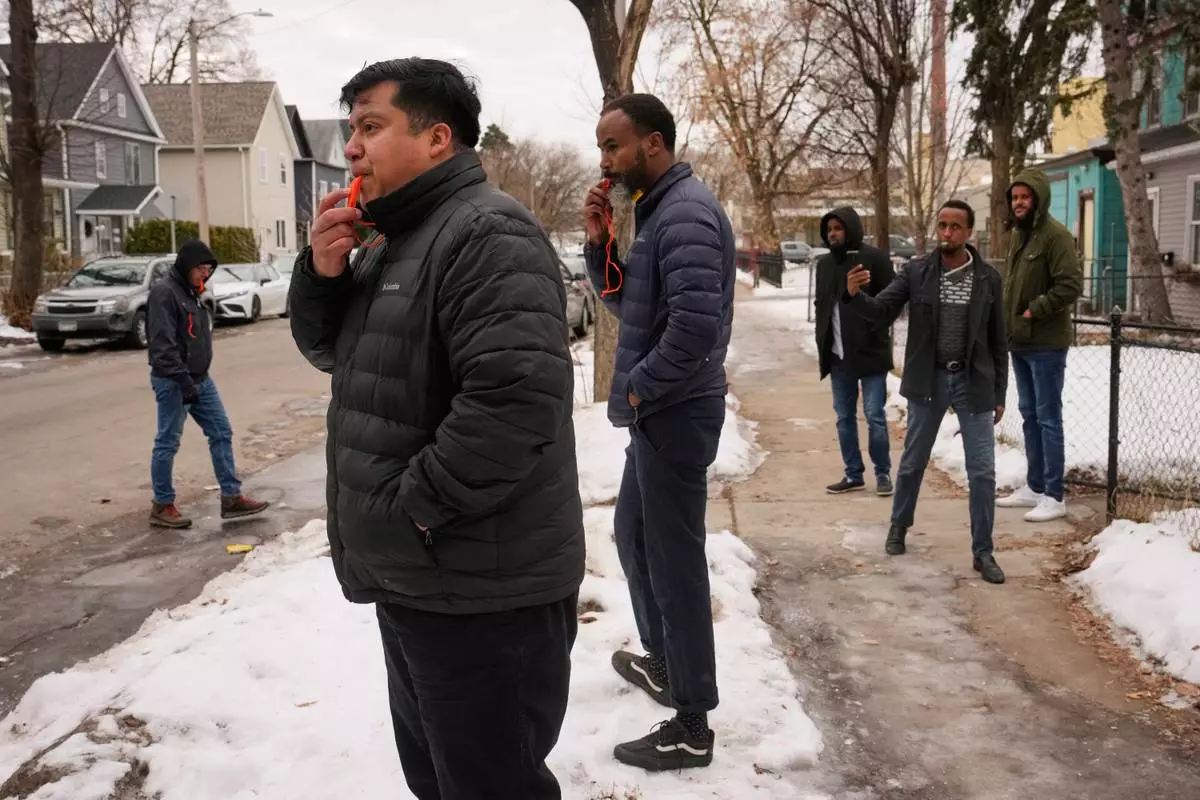
Minneapolis City Council Member Jason Chavez, second from left, blows a whistle with other activists to warn people of federal immigration officers Thursday, Jan. 15, 2026, in Minneapolis. (AP Photo/John Locher)
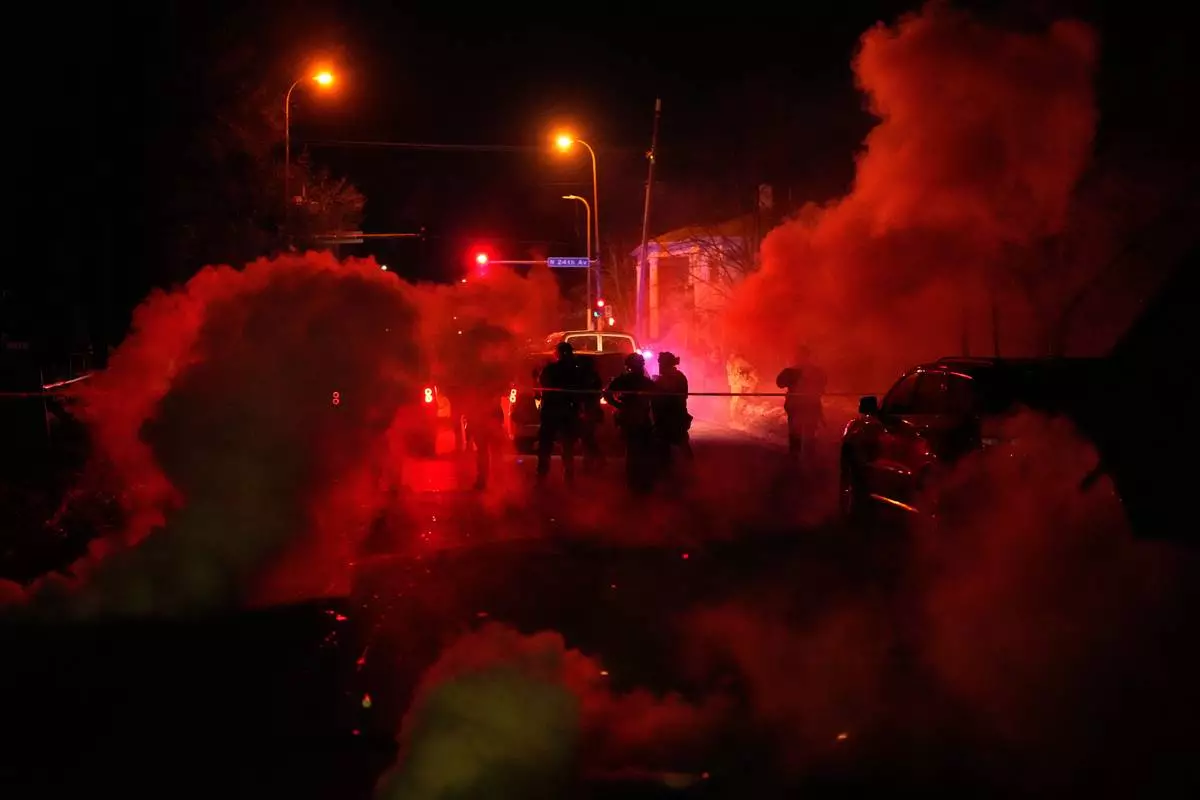
Tear gas surrounds federal law enforcement officers as they leave a scene after a shooting on Wednesday, Jan. 14, 2026, in Minneapolis. (AP Photo/John Locher)
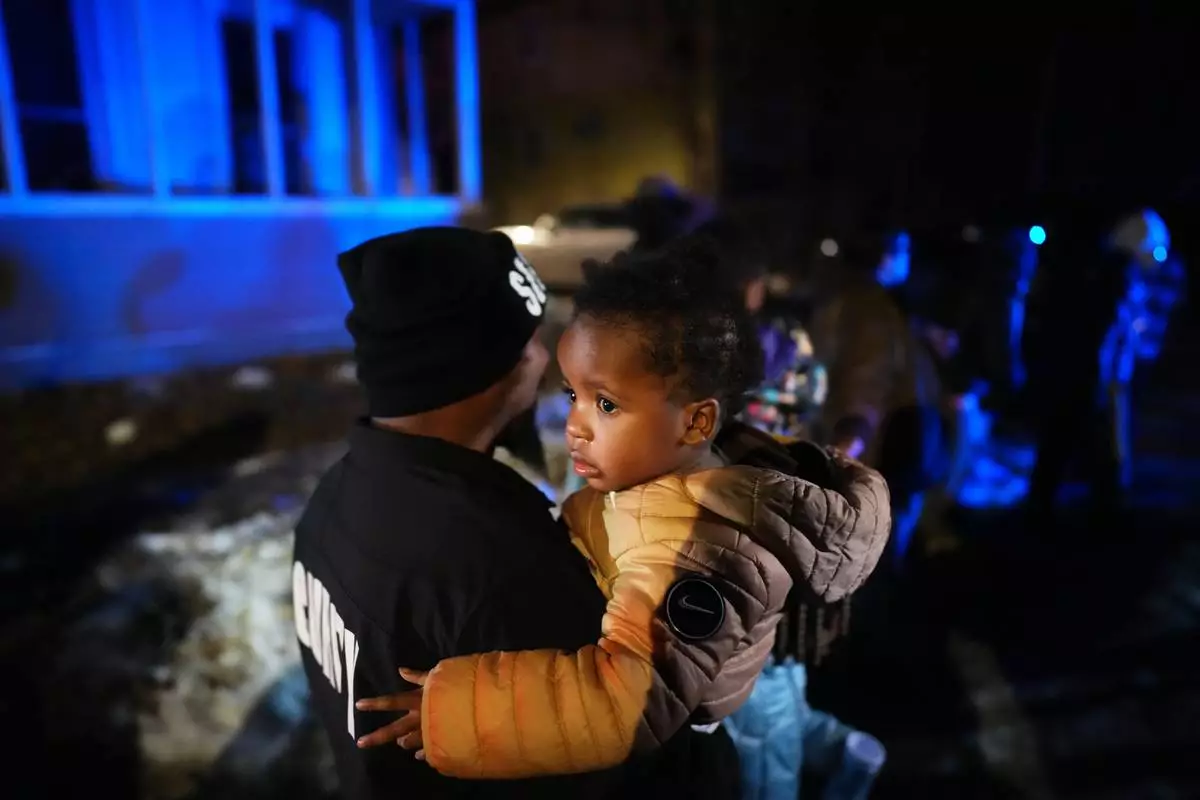
A child and family are escorted away after federal law enforcement deployed tear gas in a neighborhood during protests on Wednesday, Jan. 14, 2026, in Minneapolis. (AP Photo/Adam Gray)
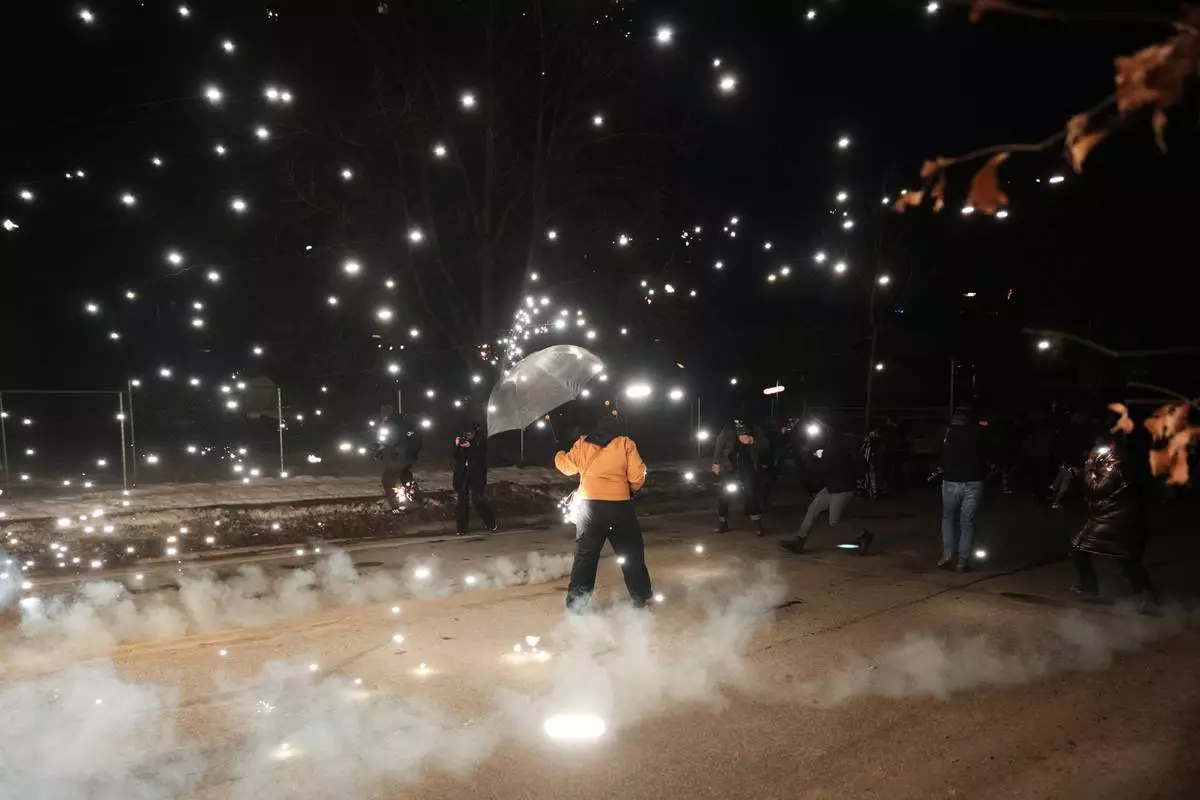
A protester holds an umbrella as sparks fly from a flash bang deployed by law enforcement on Wednesday, Jan. 14, 2026, in Minneapolis. (AP Photo/Adam Gray)
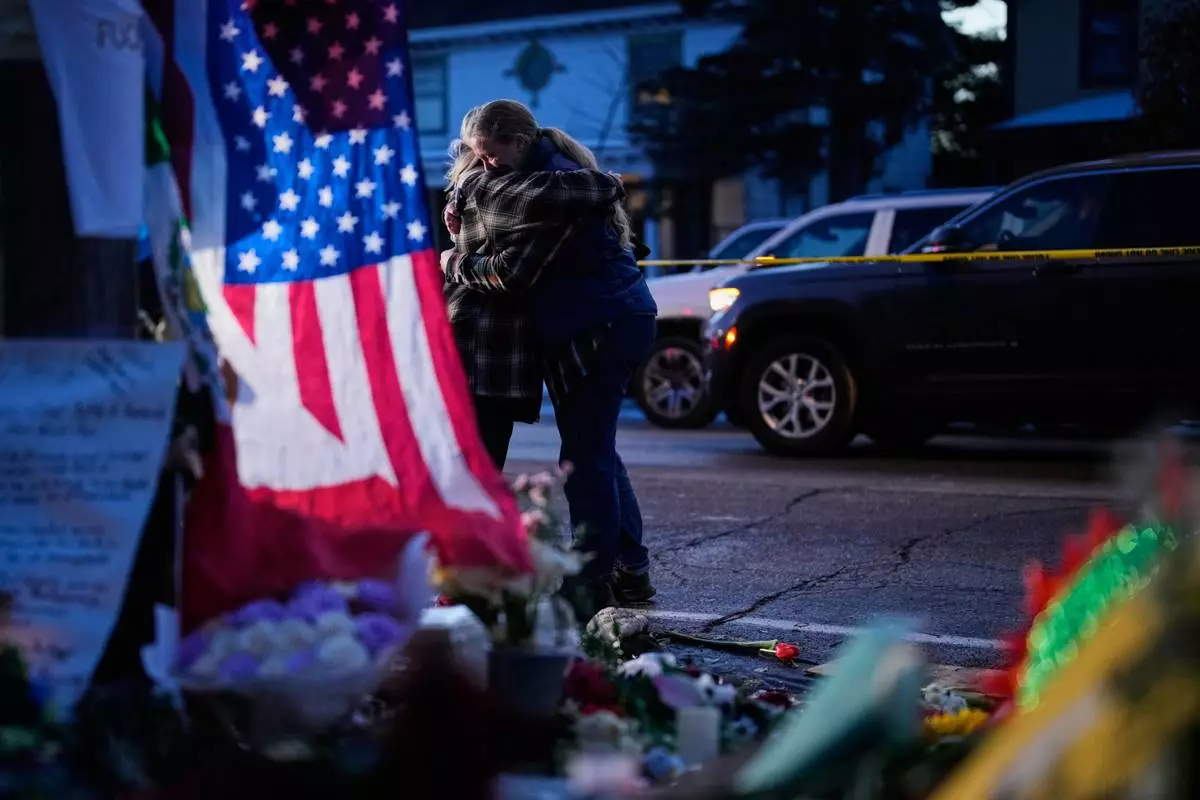
Monica Travis shares an embrace while visiting a makeshift memorial for Renee Good, who was fatally shot by an ICE officer last week, Monday, Jan. 12, 2026, in Minneapolis. (AP Photo/John Locher)
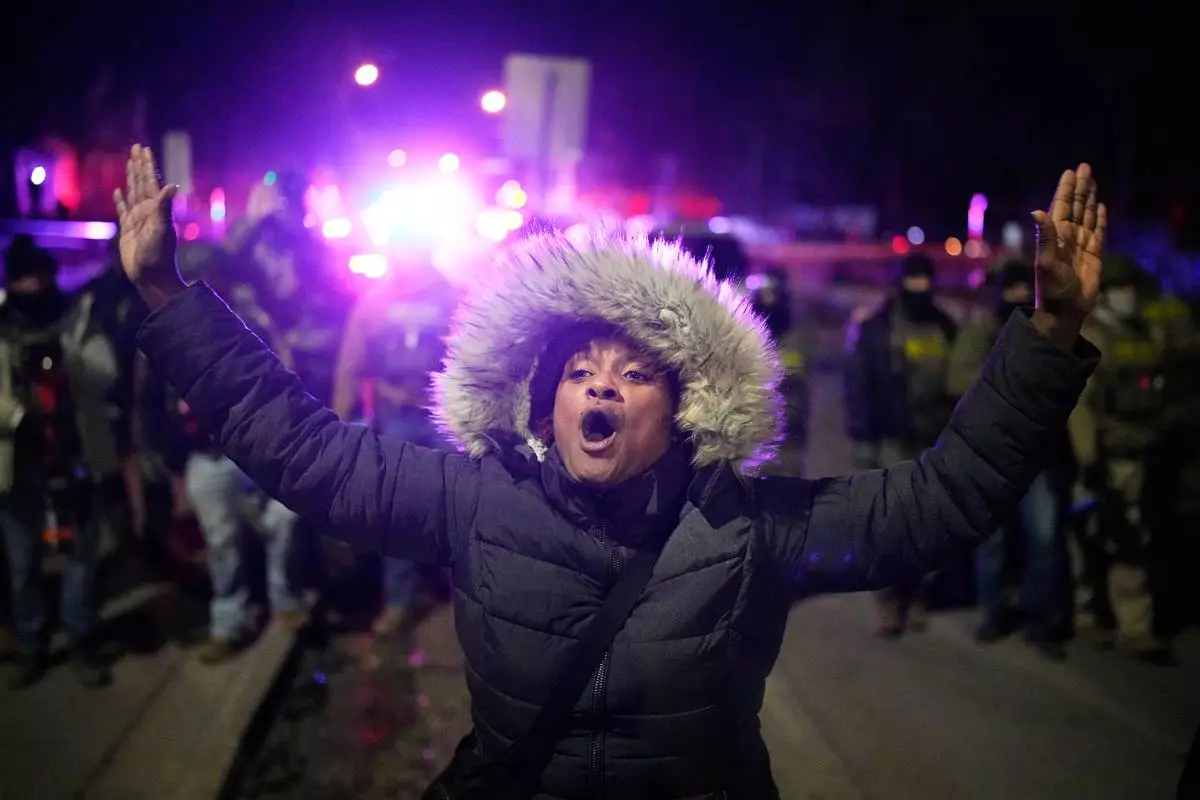
A protester yells in front of law enforcement after a shooting on Wednesday, Jan. 14, 2026, in Minneapolis. (AP Photo/John Locher)
Tear gas surrounds federal law enforcement officers as they leave a scene after a shooting on Wednesday, Jan. 14, 2026, in Minneapolis. (AP Photo/John Locher)
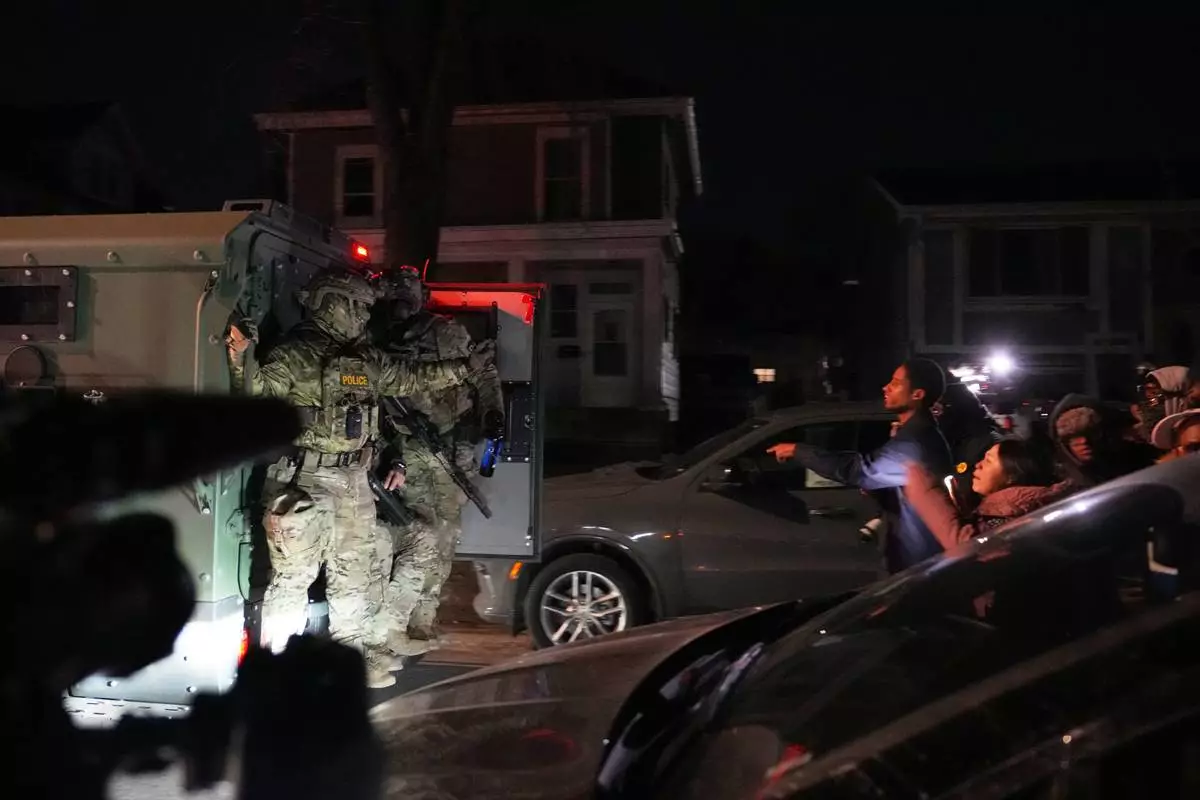
Protesters shout at law enforcement officers after a shooting on Wednesday, Jan. 14, 2026, in Minneapolis. (AP Photo/Abbie Parr)
Law enforcement officers stand amid tear gas at the scene of a reported shooting Wednesday, Jan. 14, 2026, in Minneapolis. (AP Photo/Adam Gray)