CAIRO (AP) — Hamas says it has accepted a proposal from Arab mediators for a ceasefire in the 22-month war sparked by its Oct. 7, 2023, attack into Israel. Israel has not yet responded and says it is still committed to defeating the militant group.
The latest proposal developed by Egypt and Qatar contains only slight modifications to an earlier one advanced by the United States and accepted by Israel, according to Egyptian and Hamas officials who spoke on condition of anonymity to discuss the sensitive talks.
Click to Gallery
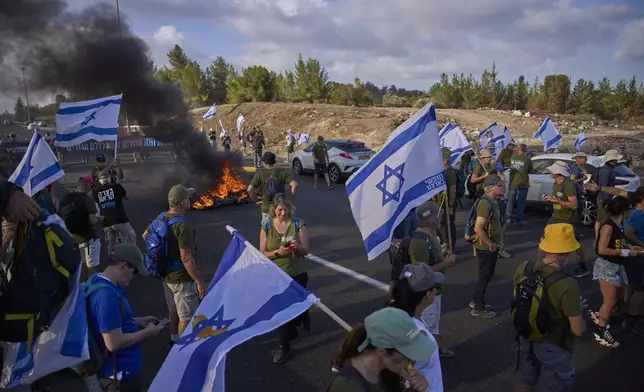
Demonstrators block a road during a protest demanding the immediate release of hostages held by Hamas and calling for the Israeli government to reverse its decision to take over Gaza City and other areas in the Gaza Strip, near Jerusalem, Israel, Sunday, Aug. 17, 2025. (AP Photo/Ohad Zwigenberg)
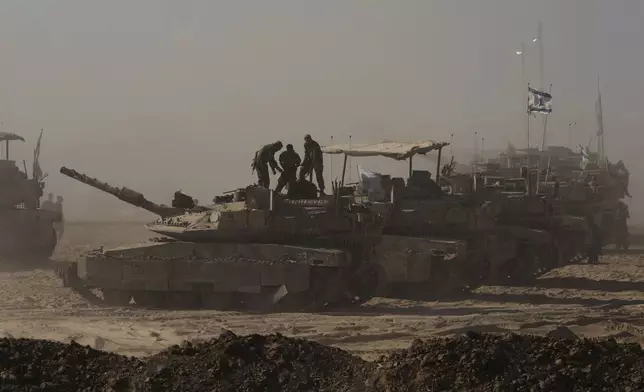
Israeli soldiers stand on the top of a tank parked on an area near the Israeli-Gaza border, as seen from southern Israel, Monday, Aug. 18, 2025. (AP Photo/Maya Levin)
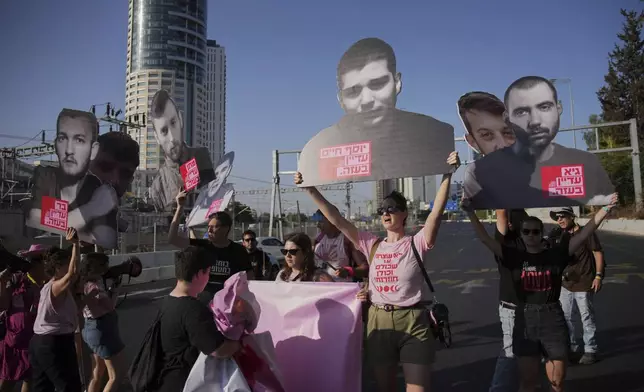
Demonstrators block a road during a protest demanding the immediate release of hostages held by Hamas and calling for the Israeli government to reverse its decision to take over Gaza City and other areas in the Gaza Strip, in Tel Aviv, Israel, Tuesday, Aug. 19, 2025. (AP Photo/Ohad Zwigenberg)
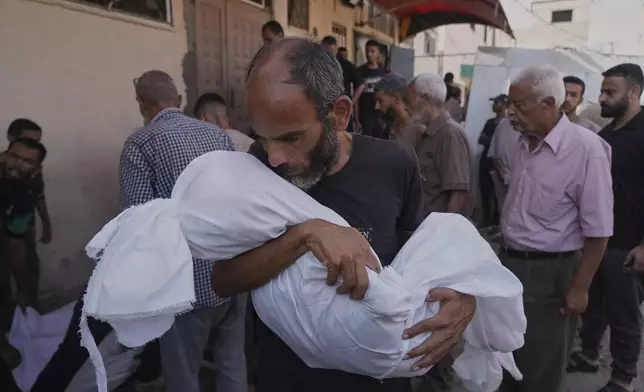
Ahmed Al-Hajj carries the body of his daughter, Dana Al-Hajj, 13, who was killed in an Israeli airstrike in the Gaza Strip, at Al-Aqsa Hospital in Deir al-Balah, Tuesday, Aug. 19, 2025. (AP Photo/Abdel Kareem Hana)
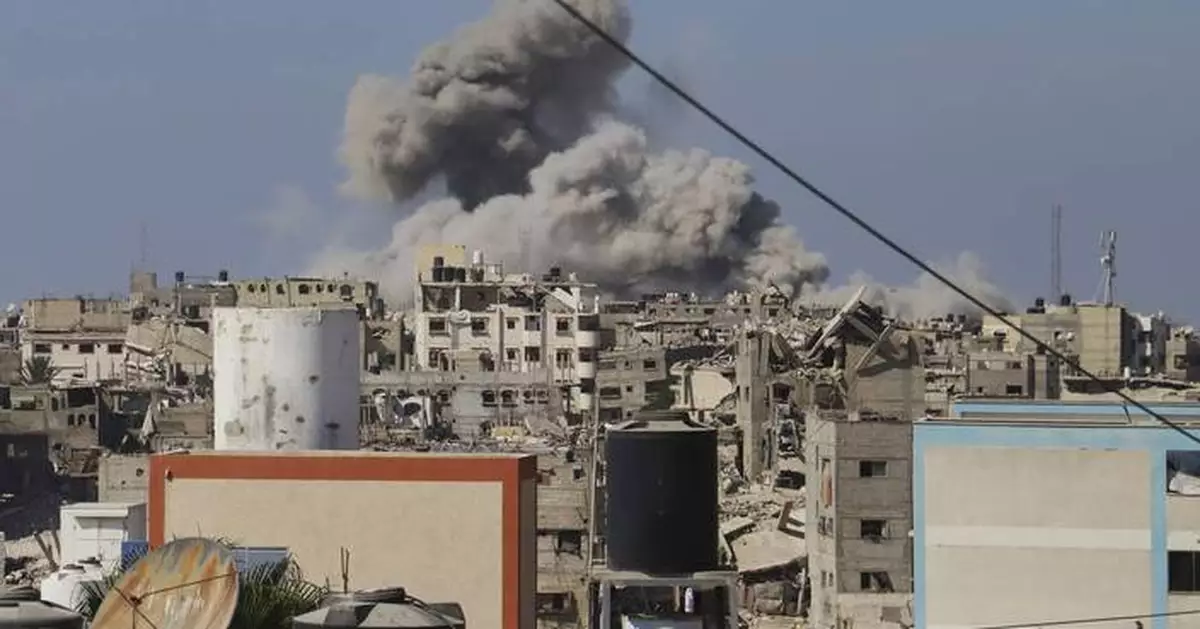
Smoke rises to the sky following an Israeli army airstrike in Khan Younis, in the Gaza Strip, Monday, Aug. 18, 2025. (AP Photo/Mariam Dagga)
The deal would include a 60-day truce, the release of some of the hostages held by Hamas in return for hundreds of Palestinian prisoners, a flood of humanitarian aid into Gaza and talks on a lasting ceasefire.
Israel has vowed to continue the war until all the hostages are returned and Hamas is disarmed. President Donald Trump gave support to those goals Monday in a social media post, saying Hamas must be “confronted and destroyed” to ensure the return of the remaining hostages.
The details of the latest proposal have not been made public, but the two Egyptian officials and two Hamas officials described the broad outlines to The Associated Press.
There would be a 60-day ceasefire in which Israeli forces would pull back to a buffer zone extending 800 meters (875 yards) into Gaza. The officials said Trump's Mideast envoy, Steve Witkoff, had proposed 1,500 meters (1,640 yards) and Hamas countered with 600 meters (656 yards) before the talks stalled last month.
Hamas would release 10 living hostages and the remains of 18 others in phases, in exchange for the release of around 1,700 Palestinians imprisoned by Israel, including 200 serving life sentences after being convicted of deadly attacks.
Hamas-led militants took 251 people hostage in the Oct. 7 attack and killed around 1,200, mostly civilians. Fifty hostages are still in Gaza, around 20 of them believed by Israel to be alive, after most of the rest were released in ceasefires or other deals.
Israel would allow 600 trucks of humanitarian aid to enter each day, a major increase that could help arrest what experts have described as the territory's slide toward famine. Israel allowed a similar amount of aid to enter during a ceasefire earlier this year.
During the temporary ceasefire, the sides would negotiate a lasting truce, the release of the remaining hostages and the further withdrawal of Israeli forces.
Israeli Prime Minister Benjamin Netanyahu has said that while he will halt the fighting temporarily to facilitate the release of hostages, he will not end the war until Hamas has been defeated and disarmed.
Even then, he says Israel will maintain security control over Gaza and facilitate the relocation of much of its population to other countries through what he describes as voluntary emigration. Palestinians and much of the international community view it as forcible expulsion.
Earlier this month, Netanyahu announced plans to occupy Gaza City and other densely populated areas, which would likely result in even more casualties and further waves of mass displacement. Those threats were partly aimed at pressuring Hamas.
Israel's offensive has already killed over 62,000 Palestinians, according to Gaza's Health Ministry. The ministry does not say how many were civilians or combatants but says women and children make up around half of those killed. Vast areas of Gaza have been completely destroyed.
The ministry is part of the Hamas-run government and run by medical professionals. The U.N. and many independent experts view its figures as the most reliable estimate of wartime casualties. Israel disputes them but has not provided its own numbers.
Hamas has suffered heavy losses through nearly two years of war.
Most of its top leaders have been killed, its rocket supplies have been vastly depleted, and Israel has regularly announced the destruction of tunnel complexes and other military infrastructure. Iran and Hamas' other regional allies are in disarray after Israeli and U.S. strikes.
The Israeli military says it now controls at least 75% of Gaza, with much of the population — and the remnants of Hamas' government and police force — largely confined to Gaza City, built-up refugee camps from the 1948 war surrounding Israel's creation and Muwasi, a sprawling tent camp along the coast.
The hostages are Hamas' last bargaining chip and its only hope of emerging from the war with something it can try to portray as a victory.
The militant group has said it will only release the remaining captives in return for more Palestinian prisoners, a lasting ceasefire and a complete Israeli withdrawal. Hamas says it is willing to hand over power to other Palestinians but will not lay down its arms as long as Israel occupies lands the Palestinians want for a future state.
Israel says any arrangement that leaves Hamas intact and armed would allow it to eventually rebuild its forces and launch another Oct. 7-style attack.
Israel has been tight-lipped about the talks, and it's unclear when it will respond. The Security Cabinet, which would need to approve any such deal, usually meets on Thursdays.
In the meantime, all eyes are on Washington.
Trump helped to get a previous ceasefire across the finish line in January after former President Joe Biden's administration and Arab mediators had spent months hammering it out. The U.S. then offered its full support when Israel ended that truce and resumed its air and ground war in March.
Trump alone might be able to convince Israel to halt the war without trying to eradicate Hamas at the cost of countless more Palestinian lives and possibly the remaining hostages.
He says he wants to return the hostages and end the war but has not publicly pressured Israel. In a post Monday on his Truth Social website, Trump appeared once again to express full support for Netanyahu's endgame.
“We will only see the return of the remaining hostages when Hamas is confronted and destroyed!!! The sooner this takes place, the better the chances of success will be,” he wrote. “Play to WIN, or don’t play at all!”
Krauss reported from Ottawa, Ontario. Associated Press writer Melanie Lidman in Tel Aviv, Israel, contributed to this report.
Follow AP’s war coverage at https://apnews.com/hub/israel-hamas-war

Demonstrators block a road during a protest demanding the immediate release of hostages held by Hamas and calling for the Israeli government to reverse its decision to take over Gaza City and other areas in the Gaza Strip, near Jerusalem, Israel, Sunday, Aug. 17, 2025. (AP Photo/Ohad Zwigenberg)

Israeli soldiers stand on the top of a tank parked on an area near the Israeli-Gaza border, as seen from southern Israel, Monday, Aug. 18, 2025. (AP Photo/Maya Levin)
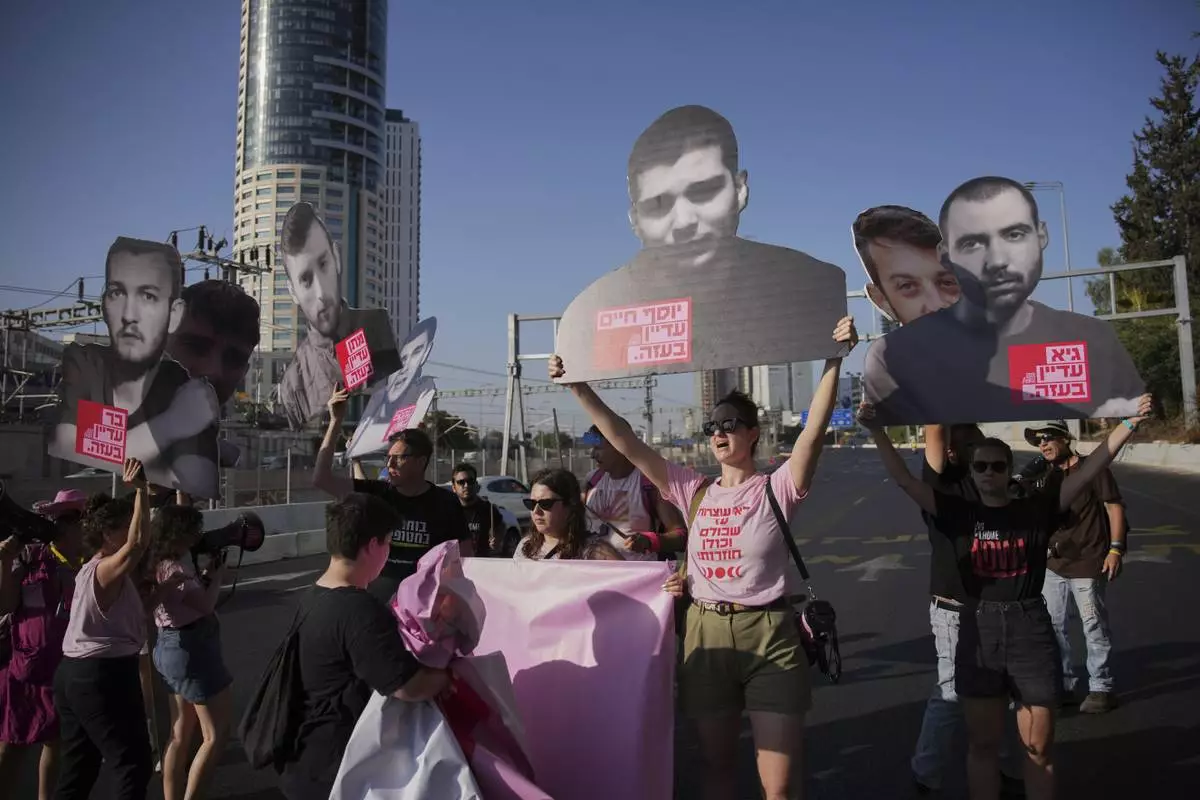
Demonstrators block a road during a protest demanding the immediate release of hostages held by Hamas and calling for the Israeli government to reverse its decision to take over Gaza City and other areas in the Gaza Strip, in Tel Aviv, Israel, Tuesday, Aug. 19, 2025. (AP Photo/Ohad Zwigenberg)
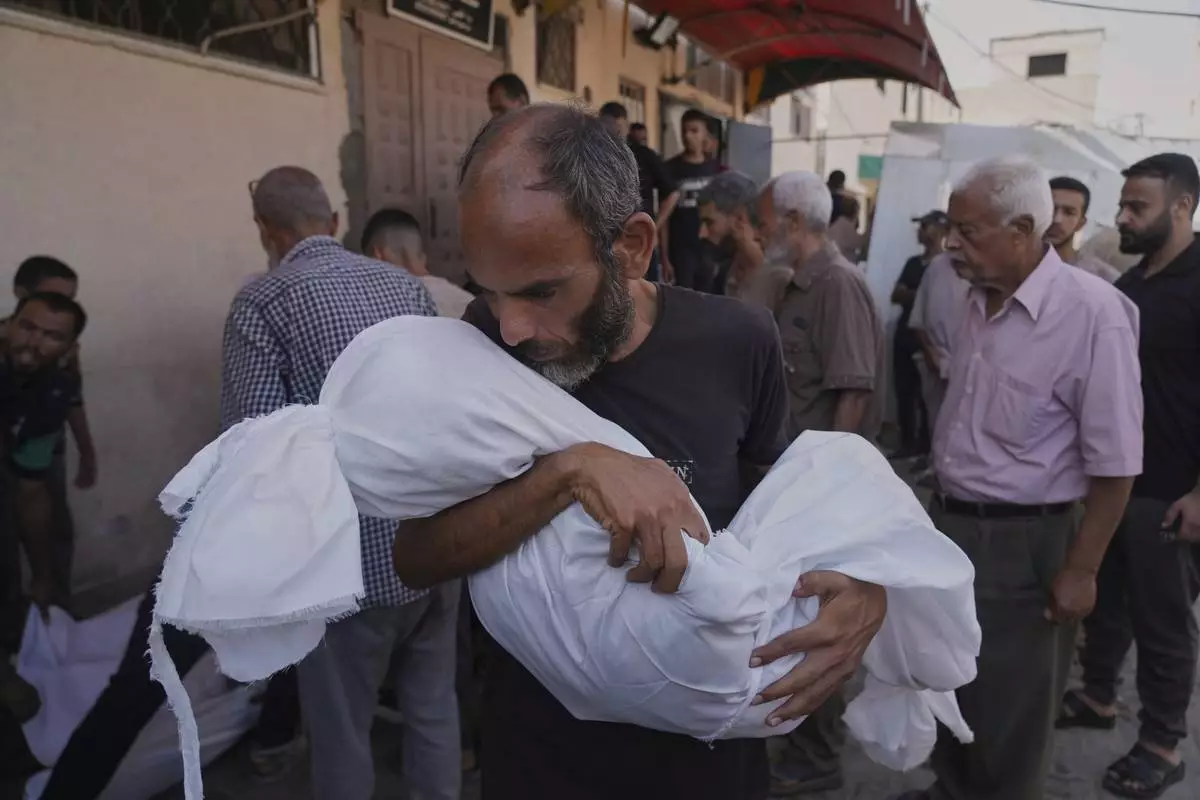
Ahmed Al-Hajj carries the body of his daughter, Dana Al-Hajj, 13, who was killed in an Israeli airstrike in the Gaza Strip, at Al-Aqsa Hospital in Deir al-Balah, Tuesday, Aug. 19, 2025. (AP Photo/Abdel Kareem Hana)
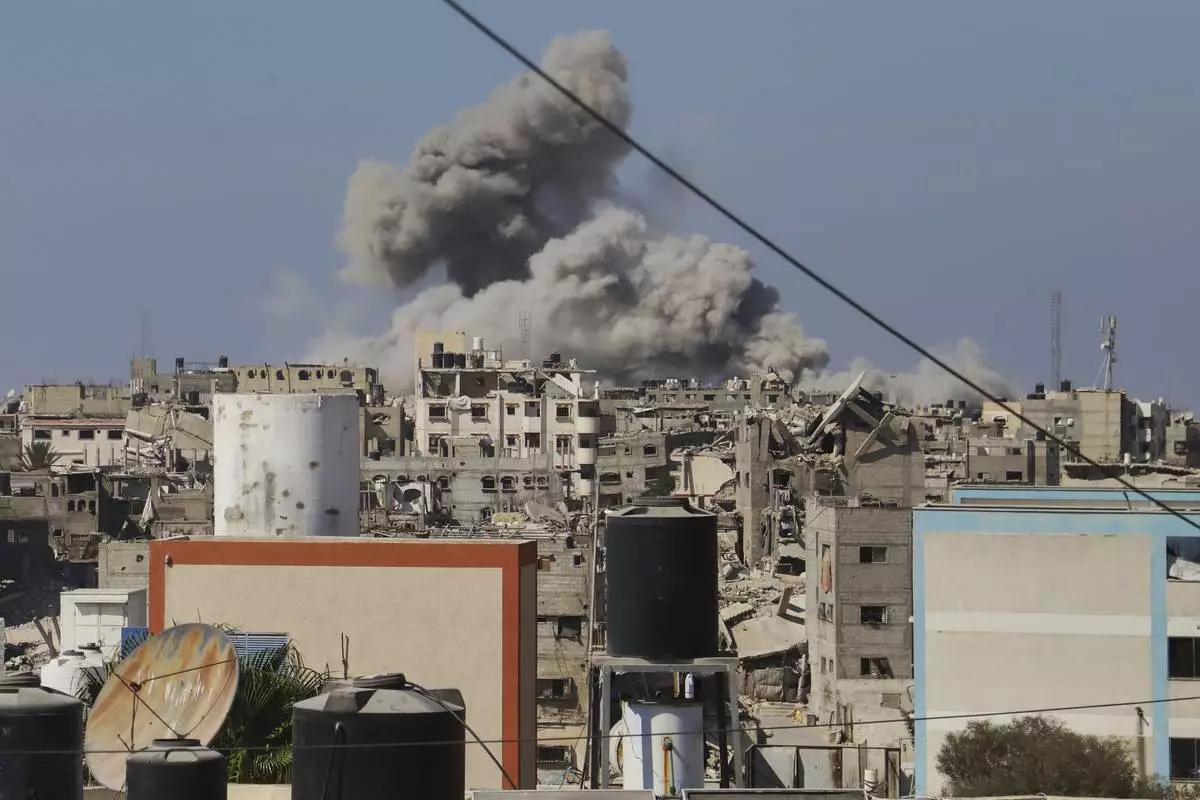
Smoke rises to the sky following an Israeli army airstrike in Khan Younis, in the Gaza Strip, Monday, Aug. 18, 2025. (AP Photo/Mariam Dagga)