South African economists are urging enhanced global cooperation, stressing the urgent need to counter the United States' "weaponization" of trade policies, which has severely disrupted exports and could exacerbate job losses in an already struggling economy.
This appeal follows Standard Bank Group, one of South Africa's leading financial institutions, slashing its 2025 economic growth forecast for the country from 1.7 percent (projected in March) to 0.9 percent, and reducing its 2026 projection from 2.0 percent to 1.3 percent.
The revised outlook comes in response to an executive order signed by U.S. President Donald Trump imposing a 30 percent tariff on imports from multiple countries, including South Africa.
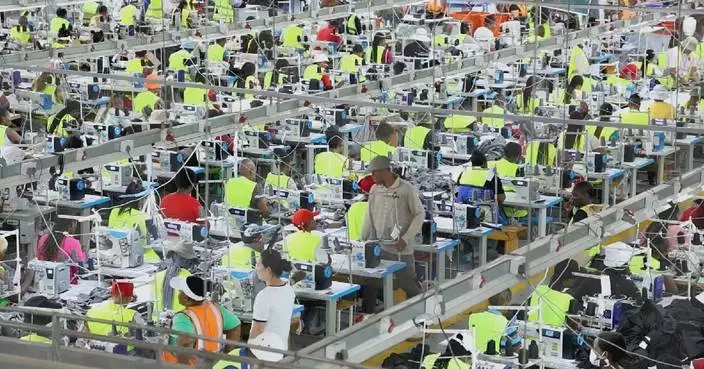
In an interview with China Media Group (CMG), Jannie Rossouw, a Professor of Economics of University of the Witwatersrand in Johannesburg, said the proposed tariffs are expected to severely impact South African vehicle and agricultural exports, leading to job losses in a market already plagued by high unemployment.
"These tariffs will have a severe impact on South African exports, especially vehicle exports, and also on agricultural exports. And unfortunately, people will lose their jobs and will not easily get new employment, because of the huge unemployment problem we have in South Africa," said Rossouw.
Goolam Ballim chief economist for the Standard Bank Group, also pointed out that the United States' so-called "reciprocal tariff" policy weaponizes trade as a political tool.
"Up to two thirds of South Africa's export basket is comprised of mining sector output as well as manufacturing items and most notably automotive products. So these are directly in the crosshairs given the very substantial 30 percent tariff. America is deeply concerned that it, as an empire, is in decline and it wants to arrest its decline, but at the same time stemming the ascendancy of other nations. It's about international competition and there is a weaponization of trade and industrial policy. If we locked out of the United States, we will continue to work to enhancing relationships with, let's call it the Global North excluding the United States and the Global South," Ballim said.

S. African economists urge enhanced global cooperation to counter US trade "weaponization"