A remote village in southwest China's Xizang Autonomous Region has turned its breathtaking surroundings into economic opportunity, drawing in flocks of tourists and boosting incomes through a variety of outdoor adventures.
Jieba Village, meaning "forgotten" in Tibetan, is nestled beside the stunning Basum Tso, a high-altitude lake at 3,700 meters in Gongbujiangda County, Nyingchi City.
Once home to just a handful of family-run guesthouses, it's now a sought-after destination with over 50 boutique homestays to cater to a growing number of tourists.
The upgrading of local businesses has brought tangible benefits for villagers.
"Tourists coming to Jieba Village now have many options. Before the development of tourism, our villagers relied on a mix of farming and herding, with annual income averaging around 1,000 yuan [in 1993]. Now, thanks to tourism, our per capita income is around 29,000 yuan per year. The annual income of our village has exceeded one million yuan," said Luoyang, head of the village.
This transformation began over two decades ago when the local government initiated tourism development. In 2017, Basum Tso was recognized as national 5A-rated natural scenic area, the first in Xizang.
This year, it has embarked on a plan to transform itself into a multifaceted resort destination.
While enjoying view of ancient villages, primeval forests, lush meadows, wetlands, and lakes, visitors can partake in activities like Thangka painting, traditional incense making, and a variety of outdoor adventures.
"We are planning a range of activities according to the needs of holidaymakers, including hiking, camping, rafting, horseback riding, and beach scooters," said Badan Caiwang, director of Gongbujiangda County's culture and tourism department.
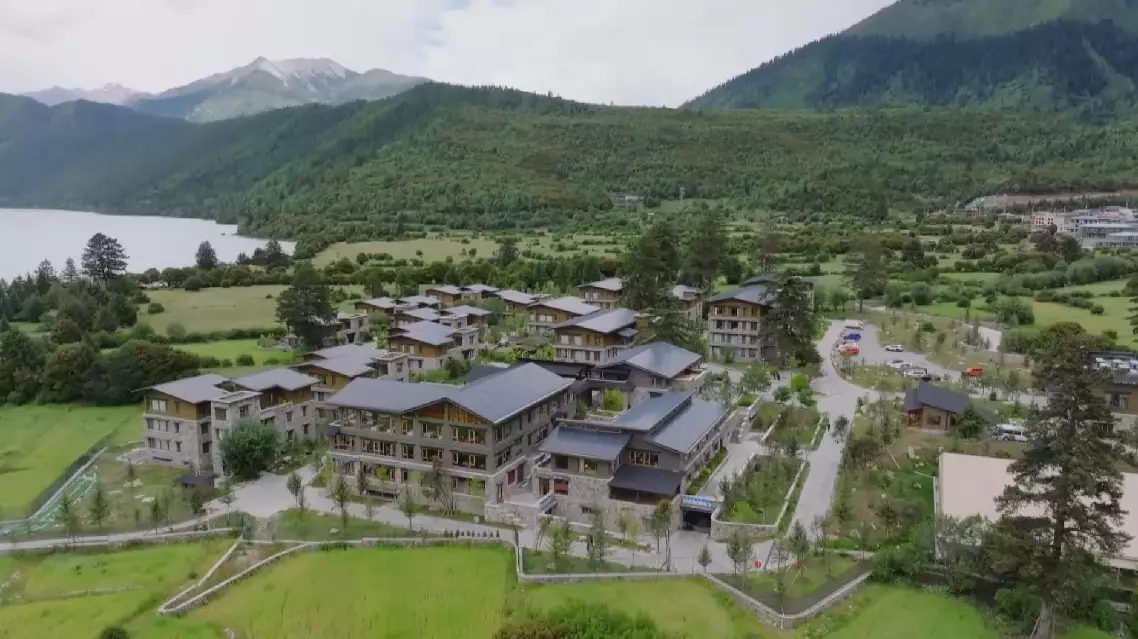
Remote village in Xizang taps into lake resources to boost tourism, local incomes

Newly drafted national standards for China's automotive sector would demand stricter safety specifications, including requirements that car door handles remain operable after collisions or battery thermal incidents.
The proposals, put forth by the Ministry of Industry and Information Technology (MIIT), remain open for comment until Tuesday. The standards are set to reinforce safety benchmarks across the industry, laying a solid foundation for high-quality development.
Meanwhile, the China Automotive Technology and Research Center (CATARC) has launched a series of joint technical verification tests with leading industry players. A key focus of these efforts is testing in the fields of intelligent connected vehicles and new energy vehicles (NEVs).
A series of technical tests are also underway to determine effective safety requirements for combined driving assistance systems, which will be implemented starting from January 1, 2027.
The tests involved an NEV traveling at 90 kilometers per hour and executing a lane change when encountering sudden roadwork ahead, as well as slowing down steadily when faced with an approaching oncoming vehicle.
Experts involved in these testing processes emphasize that well-tested standards are fundamental to safe and effective innovation.
"Standards are the cornerstone of technological development. Over the past five years, we have drafted and revised nearly 1,200 standards for enterprise and led the formulation and refinement of 17 industry standards," said Liang Weipeng, deputy head of the Research and Development Institute under China's leading automaker FAW.
"Technical verification is a crucial link between product design and user experience. Through these efforts, we aim not only to validate product performance but also to showcase the industry's deep research and development capabilities and commitment to quality," said Wang Junlei, chief expert at the CATARC.
China to advance automotive safety standards with new draft regulations