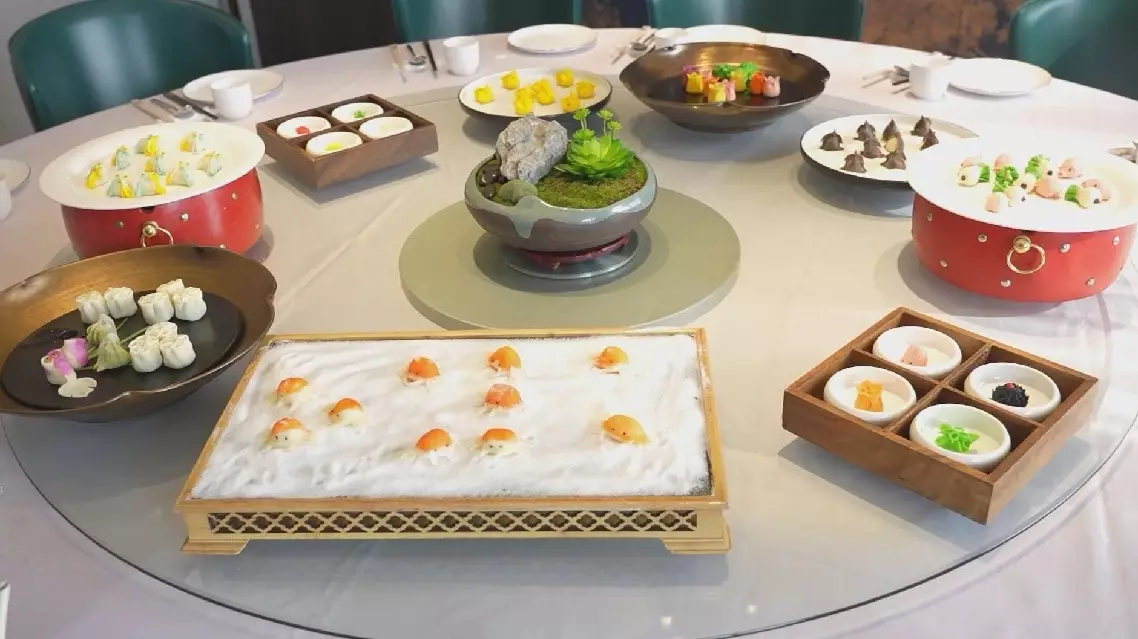
Chinese people across the country are embracing the Winter Solstice on Sunday by celebrating reunion with traditional dishes that vary by region, but all carry the warmth of home.
This year, the winter solstice falls on December 21. As the shortest day of the year, it denotes the beginning of deep winter and a break from farming in traditional agricultural society in Chinese culture. Northern China has maintained the tradition of eating dumplings on this day, while people in southern China eat tangyuan (glutinous rice balls).
In Xi'an of northwest China's Shaanxi Province, the occasion is marked by elaborate dumpling banquets featuring over 300 varieties, crafted by using different doughs, fillings, and cooking methods from boiling to steaming.
In Sunwu County's Yanjiang Daur and Manchu Ethnic Township, Heilongjiang Province in northeast China, families gather to make sticky rice bean buns.
While wrapping the glutinous buns filled with sweet bean paste, neighbors chat and share updates from their lives. Once steamed, the buns are placed outdoors to freeze naturally in northern China's sub-zero temperatures, allowing them to be stored and enjoyed throughout the long winter months.
In Qinghai Province, no winter solstice feast is complete without a steaming bowl of lamb. In Xining, capital of Qinghai Province, the aroma of hand-pulled boiled lamb fills the chilly city streets, with no seasoning required.
"Lamb is at its fattest and tastiest around the winter solstice. It's authentic, seasonal, and absolutely loved by the people of Qinghai," said Ma Zhongying, lamb restaurant owner.
In Fu'an, south China's Fujian Province, the period around the winter solstice marks the peak harvest season for sugarcane. Locals use the freshly cut cane to make traditional brown slab candy with time-honored methods. After boiling the cane juice for nearly three hours, workers pour the syrup onto bamboo mats, then beat it with wooden paddles until it crystallizes. The final product is crisp, sweet, and melts on the tongue.
Locals also enjoy eating tangyuan typically filled with a bit of brown sugar during the winter solstice. The gentle sweetness not only pleases the palate but also carries a deeper meaning, symbolizing wishes for a joyful and sweet life in the year ahead.
China welcomes Winter Solstice with flavors of home